#Altcoins

Grayscale Targets To Corner HYPE ETF Market With Lowest Fee

Grayscale is making a run at the growing Hyperliquid ETF market, filing an amended S-1 registration statement with the Securities and Exchange Commission on Monday that sets a sponsor fee of 0.29% for its Grayscale Hyperliquid Staking ETF, ticker HYPG. The updated filing also confirms the fund will list on Nasdaq, and according to Bloomberg Intelligence ETF analyst James Seyffart, a launch could come as soon as this week.
That fee sits just below the 0.30% charged by 21Shares on its THYP fund, and meaningfully below Bitwise's BHYP, which carries a 0% introductory rate for the first month before jumping to 0.34%. It's a deliberate pricing move, and in a market where basis points can drive significant asset flows, Grayscale is clearly trying to get ahead before the institutional money settles.
Grayscale's entry would make HYPG the third U.S.-listed spot HYPE product, following Bitwise's BHYP and 21Shares' THYP, which launched in May on Nasdaq. Early demand for these funds has been hard to ignore. HYPE-focused ETFs pulled in over $132 million in net inflows in roughly their first month of trading, with zero outflow days recorded during an 8-day streak that coincided with HYPE hitting new all-time highs. For context, that run came while Bitcoin and Ethereum ETFs were actually losing assets.
The 21Shares THYP fund collected more than $5 million within days of its May 12 debut, with Eli Ndinga, the firm's global head of research, describing the early response as evidence of real investor appetite for regulated, round-the-clock exposure to crypto-linked markets. Bitwise's BHYP held more than $40 million in net assets as of late May, while the two funds combined purchased roughly $16 million in spot HYPE in a single 24-hour window as share issuance expanded.
What Is Hyperliquid Anyway?
For people still getting familiar with the name, Hyperliquid is a decentralized derivatives exchange built on its own Layer-1 blockchain. It lets traders open perpetual futures positions entirely on-chain, without the custodial risk of a centralized venue. That 24/7 availability and non-custodial structure has made it increasingly attractive to both retail and institutional traders, particularly as centralized exchange perpetuals volumes dropped roughly 34% in early 2026.
The protocol's native token, HYPE, now ranks among the top 10 cryptocurrencies by market cap, sitting around $16 to $17 billion as of early June. The token has climbed from roughly $20 at the start of 2026 to recent all-time highs above $73, a move that reflects both the platform's surging trading volumes and the structural demand created by HYPE buybacks. Hyperliquid directs nearly all of its trading fee revenue toward buying back and burning HYPE tokens, a mechanism that Grayscale's own research team described as a standout feature in a May 28 report calling the protocol "the breakout success story" of modern crypto.
Hyperliquid logged roughly $2.9 trillion in perpetual futures volume during 2025, and open interest has consistently ranked third globally, behind only Binance and Bybit. At a Bernstein conference in late May, Jeff Sprecher, chief executive of Intercontinental Exchange and owner of the New York Stock Exchange, said the 11-person platform had made a bigger impact on finance than Nasdaq. Whether or not that comparison holds up over time, it signals how seriously traditional finance is paying attention.
Seed Investment and Staking Angle
Grayscale's amended filing isn't just about fees. The firm has also been in discussions to secure a seed investment of around $115 million in HYPE tokens ahead of launch, a figure that would give HYPG substantial early liquidity. The fund's full name, the Grayscale Hyperliquid Staking ETF, suggests it intends to incorporate staking into its strategy, similar to Bitwise's BHYP, which targets staking roughly 70% of fund assets and reports a 2.25% gross staking reward rate. Coinbase is listed as custodian.
The staking component matters because it gives the ETF a yield angle that pure spot exposure does not. With HYPE's token unlock for core contributors worth roughly $684 million scheduled for June 6, near-term price volatility is possible, though analysts note the unlock represents just around 1% of total supply. The protocol's aggressive buyback engine and continued inflows into ETF products remain the more dominant forces.
Fee War Is Just Getting Started
The fee gap between Grayscale, 21Shares, and Bitwise looks small right now, but history suggests that it won't stay there. The same dynamic played out in Bitcoin ETF competition in 2024, where initial fee differentials narrowed sharply as issuers competed for long-term AUM. Grayscale is entering behind competitors who already have first-mover brand recognition in HYPE, so pricing aggressively from day one is arguably the right call.
With Seyffart expecting a launch by the end of the week, HYPG could be live before most investors have had a chance to compare their options. HYPE has generated more institutional interest per dollar of market cap than almost any altcoin this cycle and Grayscale is betting that being the cheapest option in a fast-growing category is enough to corner the market. For now anyway.
HYPE Hits All-Time High as ETF Inflows Hit $53M
Hyperliquid's native token HYPE surged past $62 to reach a new all-time high on Wednesday, posting gains of more than 20% in a single session as a wall of institutional money continued pouring into freshly launched U.S. spot ETFs. The move left most of the crypto market behind, with Bitcoin, Ethereum, Solana, and XRP all sitting deep in negative territory for the year while HYPE climbed more than 100% year-to-date.
The immediate catalyst seemed to be record ETF flow data. U.S. spot Hyperliquid ETFs hauled in $25.5 million in net inflows on Wednesday alone, pushing cumulative flows to $53.5 million within just seven trading days of launch. The figures dwarfed anything the funds had seen in their opening sessions, with Monday drawing only $4.4 million and Tuesday logging $11 million before Wednesday's breakout.
21Shares and Bitwise Lead the Charge
The 21Shares Hyperliquid ETF, trading under the ticker THYP, led Wednesday's haul with $16.7 million in single-day inflows, up sharply from $5.3 million the day before. Bitwise's BHYP fund, which began trading on May 15, added another $8.8 million. Bloomberg senior ETF analyst Eric Balchunas described THYP's volume trajectory as growing "8x over day one," calling it a "really good sign of organic interest."
Analysts noted that on a market-cap-adjusted basis, institutions are absorbing HYPE at a faster clip than they did early bitcoin ETFs, something that would have seemed far-fetched a year ago.
Bitwise made its conviction known in another way, too. The firm said it plans to use 10% of management fees earned from BHYP to purchase and stake HYPE tokens directly on its own balance sheet. That is a very aggressive endorsement from a major asset manager, and Bitwise CIO Matt Hougan has gone even further, publicly labeling HYPE one of crypto's most mispriced assets even after its 77% run this year. Hougan's thesis centers on Hyperliquid's ambition to serve as a "super app" targeting the $600 trillion global asset market rather than just the $3 trillion crypto sector.
Grayscale Accumulates, Goldman Shifts Exposure
The ETF frenzy has drawn in some of the bigger names on Wall Street. Blockchain analytics platforms have flagged wallets linked to Grayscale as having accumulated more than 682,000 HYPE tokens, worth approximately $41.6 million, over the past week. Grayscale is also pursuing regulatory approval for its own Hyperliquid ETF, suggesting the accumulation may serve as pre-positioning ahead of a potential product launch.
Goldman Sachs, meanwhile, disclosed in a recent 13F filing that it had exited its positions in Solana and XRP ETFs and rotated into HYPE treasury via Hyperliquid Strategies. The disclosure added fresh fuel to the narrative that institutional capital is starting to concentrate specifically inside the Hyperliquid ecosystem, a trend that is showing up in relative price performance across the large-cap crypto space.
The Revenue Model That Really Stands Out
Part of what is drawing this level of attention is Hyperliquid's fee structure. The decentralized trading platform funnels 99% of all fees it generates into token buybacks. Annualized, that comes to roughly $618 million in buyback support, according to DefiLlama data. At the token's current market cap of around $13 to $14 billion, that puts the implied buyback yield at a multiple that some analysts think is still too cheap given the platform's growth rate.
Hougan drew a comparison to traditional financial exchanges, noting that Robinhood trades at roughly 37 times earnings and CME at 24 times, neither of which is expanding anywhere near as quickly as Hyperliquid. The argument has gained traction partly because the platform has been quietly broadening its reach. Last week, Coinbase and Circle announced an agreement making Coinbase the official USDC treasury deployer on Hyperliquid, with around 90% of stablecoin reserve yield flowing back to the protocol.
Price Discovery Time?
HYPE's prior all-time high sits at $59.37, set in September 2025. The token pushed passed that today, but settled slightly lower around $57.35, we should see another push at the price soon and the question after is whether the ETF-driven momentum is enough to push it through into fresh record territory or whether a wave of profit-taking will cap the move. The token had fallen to near $20 as recently as January 2026, making this a recovery of more than 150% from those lows in just a few months.
Retail sentiment has also picked up. Chatter on Stocktwits around Hyperliquid moved into what the platform classifies as "extremely bullish" and "extremely high" volume territory, a dynamic that tends to amplify both upside and downside swings. Veteran crypto trader Arthur Hayes this week reiterated a long-term price target of $150 for HYPE, a call that would require roughly a 2.5x move from current levels.
For now, Wall Street seems to be running the show. ETF issuers collectively purchased 2.5 times more HYPE than Hyperliquid's own Assistance Fund acquired and burned over the same period, tightening circulating supply while adding consistent bid-side pressure to markets. We'll see what happens during the next couple of days and if all of this bullish sentiment will push HYPE higher or traders will take profit and wait for another move later.

Bitwise HYPE ETF Near Launch as SEC Filing Advances
Bitwise Asset Management is inching toward what could be a landmark moment for decentralized finance: the first U.S.-listed spot ETF tied to Hyperliquid's HYPE token. Bitwise filed a second amendment to its registration statement with the Securities and Exchange Commission, finalizing two key details: a ticker symbol, $BHYP, and a management fee set at 0.67%.
For people who watch the ETF market closely, these are typically the last things to be done before an ETF goes live. Bloomberg senior ETF analyst Eric Balchunas said on social media that the addition of a ticker and fee often means a launch could be coming soon, with the amended filing adding to signs the firm is preparing to go live. And when Balchunas speaks on ETF timelines, the market pays attention. He made similar calls ahead of the Bitcoin ETF approvals in early 2024.
The trust's stated goal is to give investors exposure to the value of Hyperliquid held by the fund, with staking rewards as a secondary objective. That staking component is extremely interesting. The fund includes a staking component with roughly 85% of staking rewards retained after fees, and custody will be handled by Anchorage Digital. Bitwise amended its earlier filing to include staking, while 21Shares signaled similar plans in its own proposal, suggesting issuers view staking as a way to improve investor returns beyond simple price exposure.
If approved, shares of the Bitwise Hyperliquid ETF are anticipated to list on NYSE Arca.
The competitive landscape of Hyperliquid ETFs is getting crowded fast. Bitwise was the first of the major issuers to submit a Hyperliquid ETF filing with the SEC, doing so back in September. 21Shares followed a month later with its own, while Grayscale submitted its filing in late March. VanEck, under proposed ticker VHYP, has also confirmed plans to pursue a similar product, bringing the total number of competing HYPE ETF applications to four. If any one of these gets approved first, it will be a precedent-setting moment, the first spot ETF approval for a DeFi-native token built around a decentralized exchange. A huge moment for DeFi.
One day before the latest U.S. filing update, Bitwise Europe launched the Bitwise Hyperliquid Staking ETP on Deutsche Boerse Xetra under the same BHYP ticker. The dual-market play suggests Bitwise is building out a coordinated global product strategy around HYPE.
HYPE is up roughly 65% since the start of 2026, trading around $41.96, despite a tough start to the year for the broader crypto market. Over the past 12 months, the price is also up about 182%. Balchunas noted Bitwise was likely "trying to strike while the iron was hot", a good read given where Bitcoin and Ethereum have traded in the same window.
The protocol's fundamentals have kept pace with that price action. A BitMEX research report published in early April revealed that Hyperliquid captured nearly 30% of the traditional finance perpetual swaps market in Q1 2026, posting 953% quarterly volume growth, driven heavily by commodities like gold and silver. Weekly derivatives trading volume on the platform has topped $50 billion, and the chain has dominated in on-chain revenue relative to other major networks.
The 0.67% fee sits above the 0.20-0.25% range common among Bitcoin spot ETFs, though that premium is a bit justified when you consider the staking yield component and the additional complexity of holding a DeFi-native asset in a regulated wrapper.
The regulatory backdrop has also shifted in a way that's helping all of these filings move faster. Under SEC Chair Paul Atkins, the commission has approved generic listing standards for crypto-based exchange-traded products, eliminating the need for asset-specific Section 19(b) rule change filings in many cases and opening the door for a broader wave of altcoin ETF applications.
The SEC has not yet approved the fund. But between the amended filings, the European product launch, and the queue of competing issuers pushing from behind, Bitwise has every incentive to get this across the finish line sooner rather than later. It will be interesting to watch the growing number of products beyond BTC and ETH to see what area of the crypto sector may be interesting to ETF issuers and the investors that use them.

Crypto Markets Drop as Trump Threatens to Hit Iran 'Extremely Hard'

Whatever optimism had crept back into crypto markets over the past two days got wiped out Thursday morning after President Trump's primetime address to the nation offered not a path to peace, but a harder line. Crypto fell. Stocks fell. Oil surged past $106. The familiar cycle repeated itself, for roughly the fifth or sixth time in five weeks.
Bitcoin dropped 3% to around $66,000, giving back the gains it had quietly built on Tuesday. Ethereum fell by a similar margin, sliding to $2,056. BNB shed 4.9% to $580, XRP lost 3.5% to $1.30, and Solana's SOL had the worst session of the major tokens, off 5.2% and now down roughly 13% on the week. It was an ugly morning across the board, and it felt awfully familiar.
A Rally Built on Hope, Not Reality
Tuesday had been, briefly, a good day. Trump had made offhand comments suggesting the Iran conflict could wrap up within weeks and that a formal deal was not necessarily a prerequisite for a resolution. That was enough. Asian equities surged 4%. S&P 500 futures climbed. Bitcoin pushed back toward $69,000. The crypto Fear and Greed Index, which had been pinned at single digits for weeks, got a bit of air.
Then came the Wednesday speech. In nearly 20 minutes, Trump outlined no real shift in Iran policy, offered no pathway to a ceasefire, and gave no timeline for reopening the Strait of Hormuz, the critical oil shipping lane that has been effectively closed since mid-March. He said the strait would reopen 'naturally' once hostilities subside. That was not what markets had priced in and our small rally just went away.
The Real Problem Underneath the Headlines
Analysts and traders increasingly point out that tracking Trump's daily commentary on Iran may be beside the point. The underlying oil market situation has been quietly deteriorating, independent of whatever the president says on any given afternoon. The International Energy Agency's member nations authorized the largest coordinated strategic petroleum reserve release in the organization's 50-year history, around 426 million barrels in total, to compensate for the near-shutdown of Hormuz flows. Those flows represent about 20% of the world's seaborne oil trade.
The problem is that those emergency reserves are expected to run dry within weeks. When that happens, the manageable shortfall of roughly 4.5 to 5 million barrels per day could balloon to 10 or 11 million, which would be an entirely different kind of crisis. Ship insurance premiums for Hormuz transits remain elevated. Tanker traffic through the strait has not recovered. The real-world picture, independent of political statements, is not improving.
Going Nowhere Fast
Bitcoin has essentially traded between $60,000 and $73,000 for the entirety of the conflict, now entering its sixth week. It sells off on escalation headlines, bounces on de-escalation headlines, and ends up more or less where it started. The Fear and Greed Index has been stuck between 8 and 14 for a month, deep in extreme fear territory. The pattern has become almost mechanical at this point.
There are some who see reasons for cautious optimism, and they are not entirely without basis. April has historically been one of Bitcoin's stronger months, finishing green in 10 out of 15 years with an average gain of around 20.9%. Bitcoin also bounced clearly off two-month uptrend support near $60,000 last week and is attempting to reclaim its 50-day moving average. Spot Bitcoin ETFs have seen roughly $2.5 billion in net inflows over the past month, a sign that institutional interest has not collapsed. BlackRock noted this week that large investors are concentrating specifically in Bitcoin and Ether rather than spreading into the broader altcoin market.
But seasonality does not trade against a war. Until the conflict itself shows signs of genuinely unwinding, the pattern of hope, headline, reversal is unlikely to change. Wednesday was just another reminder of that.
The next few weeks will likely be decisive, not because of anything Trump says, but because of what happens with oil supply fundamentals that have been quietly building toward a breaking point regardless of the diplomatic noise.

Bitcoin Rally Builds Ahead of $14B Options Expiry

Bitcoin climbed back toward the $72,000 mark Wednesday as the derivatives market showed telltale signs of growing leverage, putting traders on alert for sharp moves in either direction. The world's largest cryptocurrency rose roughly 1.2% after midnight UTC, mirroring gains across U.S. equity futures, with the Nasdaq 100 up around 1% over the same window. BTC was last seen trading near $71,300, well within the choppy $69,000 to $76,000 band that has defined the market for much of March.
The session's gains carried a cautionary undertone. Futures open interest in bitcoin has climbed to a one-week high, driven in large part by short positioning rather than fresh bullish conviction. Traders who have seen BTC get turned away from $72,000 repeatedly appear to be leaning into those rejections rather than chasing a breakout. Funding rates and cumulative volume delta have stayed flat to muted, two readings that analysts typically cite when the OI build is defensive in nature rather than a signal of aggressive dip-buying.
$14 Billion Options Expiry Looms Large
The backdrop sharpens considerably when you factor in what is sitting on the calendar for Friday. Deribit, the dominant crypto options venue, is set to settle roughly $14.16 billion in bitcoin contracts at 08:00 UTC on March 27, a figure that accounts for nearly 40% of all open interest on the exchange. The quarterly event is the single largest derivatives settlement of Q1 2026, and it arrives with a specific price level commanding outsized attention.
That level is $75,000. According to Deribit, max pain for this Friday's expiry sits right there, meaning it is the price at which the highest number of contracts expire worthless and option writers, typically large funds and institutional players, would owe the least. Deribit Chief Commercial Officer Jean-David Pequignot described the dynamic as a gravitational pull, noting that delta-hedging activity by market makers historically nudges spot prices toward that pain threshold in the hours leading up to settlement.
The gap between where bitcoin is trading now and $75,000 is not trivial, a roughly 5% move from current levels. Whether max pain theory ultimately delivers on that gravitational pull remains a matter of debate even inside the industry. But with nearly 40% of Deribit's open interest scheduled to roll off in one session, the mechanical hedging flows alone are worth watching closely.
Altcoins Showing Stronger Positioning
While Bitcoin grinds sideways with mounting leverage, a more constructive picture is forming in parts of the altcoin market. Ethereum open interest has climbed to multi-month highs, and the positioning profile looks more directionally bullish than what is currently visible in BTC futures. DeFi-adjacent tokens and AI infrastructure projects are outperforming Bitcoin on a short-term basis, with the CoinDesk Computing Select Index, which tracks TAO, FET, and Chainlink, rising about 1.9% Wednesday to lead all major benchmarks.
Chainlink alone accounts for roughly 62% of that index and added 1.5% on the day, while TAO and FET posted gains of 4.9% and 2.9% respectively. The broader CoinDesk 20 benchmark gained around 0.9%, with the altcoin-heavy CoinDesk 80 generally outpacing the bitcoin-heavy CoinDesk 5. The pattern suggests that risk appetite has not evaporated, it is simply migrating toward names where there is clearer near-term narrative momentum.
A Market Trapped Between Catalysts
Zoom out and the picture gets harder to trade comfortably. Bitcoin is on pace to close March in the red, which would extend a losing or flat monthly streak to six consecutive months, the longest such run since the 2022 bear market. The final week of the month carries several potential catalysts, including the U.S. Personal Consumption Expenditures data on March 28, which could shift rate-cut expectations and send ripples through risk assets.
For now, the market appears to be threading a needle between a derivatives setup that could pull prices higher ahead of Friday and a macro backdrop that has not yet given bulls a clean reason to push through resistance with conviction. Rising open interest without corresponding spot demand and funding is historically the kind of configuration that resolves violently, though the direction is rarely obvious until it starts moving. With $14 billion in contracts settling in roughly 48 hours, the next few sessions aren't looking to be very quiet.
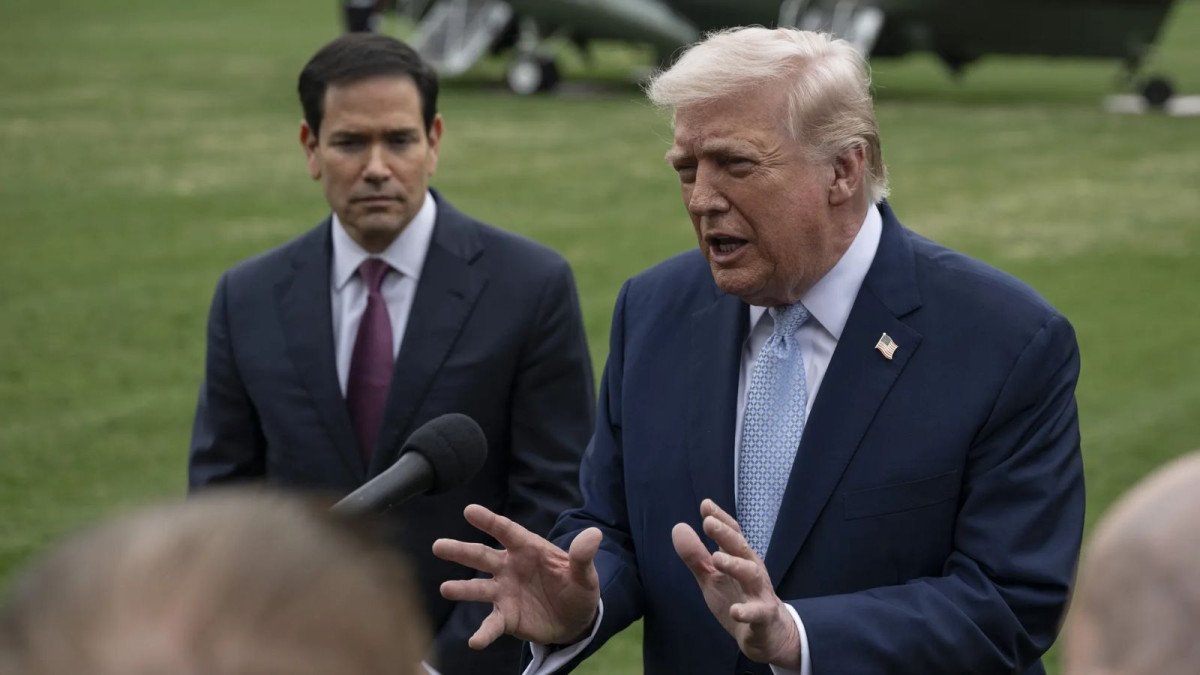
Bitcoin Climbs Past $71,000 as Trump Claims Iran Ceasefire

Bitcoin surged to $71,200 on Monday as investors are optimisitc on de-escalation of the Iran conflict.
The move started when President Trump posted on Truth Social that he had instructed the Department of War to postpone planned strikes against Iranian power plants and energy infrastructure for five days, following what he called "very good and productive" talks with Tehran. Crypto jumped roughly 5% on the news. Ether climbed above $2,100, BNB pushed through $650, and XRP traded above $1.40. Oil plunged around 11%, S&P 500 futures gained nearly 4%, and global markets added an estimated $2.5 trillion in value within about 20 minutes.
Then Iran's state-affiliated Fars News Agency cited an unidentified source denying any talks had taken place. Gains started reversing almost immediately. Bitcoin is now up about 2.5% on the day and down roughly 5% on the week, sitting just under $71,000 after hitting an intraday high of $71,224 per CoinGecko data.
The session is the latest chapter in a conflict that has rattled crypto markets since Operation Epic Fury launched on February 28, when the U.S. and Israel struck targets across Iran and killed Supreme Leader Ali Khamenei. Iran's subsequent blockade of the Strait of Hormuz, a critical chokepoint for global oil flows, has kept energy prices elevated and risk appetite suppressed. The Federal Reserve, meeting earlier this month against that backdrop, revised its 2026 inflation forecast upward to 2.7% and signaled a higher-for-longer stance on rates.
Despite the chaos, Bitcoin has held above its pre-war price level, a fact that has not gone unnoticed. When the strikes began on a Saturday morning and every traditional market was closed, crypto was the only liquid venue available for investors to respond. That 24/7 trading reality, once seen as a volatility risk, has started looking more like a feature.
The five-day pause, if it holds at all, does not end the conflict. Iran continues to strike targets across the Gulf, and Israel would need to sign on to any broader ceasefire. Israel has publicly said it has thousands of remaining targets and requires at least three more weeks of operations. Prediction markets currently favor a ceasefire by late April at the earliest.
Bitcoin's 30-day implied volatility index has bounced to 60%, and $791 million in total leveraged positions have been wiped across crypto markets this session according to CoinGlass, with $425 million of those being longs. The clock on Trump's five-day window is ticking, and so is the market's patience.

CME Expands Crypto Futures With Cardano, Chainlink, and Stellar
CME Pushes Deeper Into Altcoins With Cardano, Chainlink, and Stellar Futures
CME Group is continuing its steady march into crypto markets, this time by adding futures tied to Cardano, Chainlink, and Stellar. The move expands the exchange’s growing lineup of regulated digital asset derivatives and signals that institutional interest is no longer confined to Bitcoin and Ether alone.
The new contracts, which are expected to go live in early February pending regulatory signoff, will include both standard and smaller-sized versions. That approach mirrors CME’s recent strategy across crypto products, offering flexibility for large institutions while also lowering the barrier to entry for smaller trading firms and active investors.
For CME, this is less about chasing headlines and more about meeting demand. As crypto markets mature, firms want tools that look and feel familiar. Regulated futures, clear contract specifications, and centralized clearing still matter a great deal to traditional players, especially when volatility remains a defining feature of the asset class.
Why These Tokens Matter
The choice of Cardano, Chainlink, and Stellar is telling. Each represents a different corner of the crypto ecosystem.
Cardano has positioned itself as a research-driven blockchain focused on scalability and governance. Chainlink underpins a huge portion of decentralized finance by supplying real-world data to smart contracts. Stellar has long emphasized cross-border payments and financial inclusion. Together, they reflect how institutional interest in crypto has broadened beyond simple price exposure to Bitcoin.
CME’s contracts will allow traders to hedge or speculate on these networks without touching the underlying tokens. For many institutions, that distinction is critical. Futures provide exposure while avoiding custody, on-chain risks, and operational complexity.
Part of a Larger Derivatives Push
This latest expansion fits neatly into a much bigger picture. Over the past few years, CME has methodically built out its crypto derivatives suite, starting with Bitcoin, then adding Ether, and gradually branching into other high-profile tokens.
The exchange has also leaned heavily into micro contracts, which have proven popular across asset classes. Smaller contract sizes give traders more precision and flexibility, especially in volatile markets where position sizing matters.
Behind the scenes, crypto derivatives volumes at CME have continued to grow, even during quieter periods in the spot market. That suggests the audience for these products is becoming more structural and less driven by short-term hype.
What It Means for the Market
For institutional investors, the arrival of ADA, LINK, and XLM futures adds another layer of legitimacy to altcoin markets. Regulated futures improve price discovery, enable more sophisticated hedging strategies, and make it easier for funds to justify exposure internally.
Retail and professional traders may also benefit indirectly. As liquidity deepens on regulated venues, pricing tends to become more efficient across the broader market. That can reduce fragmentation between offshore platforms and U.S.-regulated exchanges.
There is also a signaling effect. When CME adds a product, it often becomes a reference point for the rest of the industry. Listing a token does not guarantee long-term success, but it does suggest sustained interest and sufficient market depth.
Looking Ahead
CME’s decision to bring Cardano, Chainlink, and Stellar into its derivatives lineup reinforces a clear trend. Crypto markets are no longer just about Bitcoin dominance. Institutions want diversified exposure, and they want it through familiar, regulated instruments.
As more altcoins find their way into traditional market infrastructure, the line between crypto-native and traditional finance continues to blur. For CME, that is likely the point.

Cardano Outlook Turns Bullish as ETF Exposure and DeFi Infrastructure Strengthen
Cardano rarely gets the same loud attention as some other chains, and honestly, that might be part of the point. While much of the market jumps from trend to trend, Cardano keeps moving in a slower, more deliberate direction. Lately, that approach is starting to pay off in ways that actually matter.
Two recent developments stand out. One is institutional exposure through a major crypto ETF. The other is a meaningful upgrade to Cardano’s DeFi infrastructure through better oracle data. Neither is flashy, but both are important, especially if you care about where this ecosystem is headed over the next few years, not the next few days.
ETF Inclusion Is Not About Hype, It’s About Legitimacy
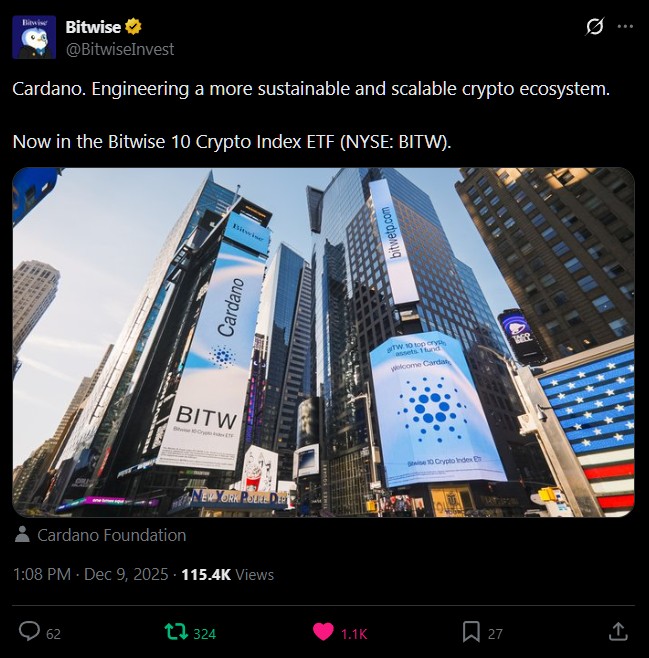
Cardano being included in the Bitwise 10 Crypto Index ETF is easy to brush off if you are only watching price charts. It is not a spot ETF for ADA, and it is not going to send the token flying overnight. But that misses the bigger picture.
This ETF trades on a major U.S. exchange and gives traditional investors exposure to a basket of top crypto assets. Cardano is in that basket. That alone says something. It means ADA is viewed as part of the core crypto market, not a fringe experiment or a temporary narrative.
For a lot of capital out there, this kind of access is the only acceptable way in. Pension funds, advisors, retirement accounts, and conservative investors are not setting up wallets or using decentralized exchanges. They buy ETFs. And now, whether people realize it or not, some of that capital has exposure to Cardano.
It does not flip a switch overnight, but it changes the conversation. Cardano moves from being “one of many altcoins” to being a recognized piece of the broader digital asset landscape.
Better Oracles Are the Kind of Upgrade That Actually Matters

The Pyth Network integration might not get mainstream headlines, but from a technical and ecosystem perspective, this is a big deal.
DeFi lives or dies on data. If price feeds are slow, inaccurate, or unreliable, everything built on top of them suffers. Pyth is designed to solve that problem by delivering real time market data directly from professional trading firms. That is the kind of infrastructure serious financial applications need.
By approving this integration, Cardano is making it easier for developers to build more advanced DeFi products without worrying about shaky inputs. That lowers risk, improves execution, and makes the chain more attractive to teams who want to build things that actually work at scale.
This is the kind of progress that does not pump a token overnight, but it quietly raises the ceiling for what the network can support.
Cardano’s Strategy Is Methodical, and That’s the Point
Cardano has always frustrated people who want instant results. Development takes longer. Decisions move through governance. Features roll out carefully. That pace can feel painful in a market driven by speed and speculation.
But there is another way to look at it. Cardano is building like it expects to still be around years from now.
Institutional access through ETFs and stronger DeFi infrastructure through better oracles are not short term plays. They are foundational moves. They make the ecosystem more resilient, more credible, and more usable.
That does not mean ADA price will go straight up. Nothing in crypto works that way. But it does mean Cardano is improving its position while others chase the next narrative.
Stay Connected
You can stay up to date on all News, Events, and Marketing of Rare Network, including Rare Evo: America’s Premier Blockchain Conference, happening July 28th-31st, 2026 at The ARIA Resort & Casino, by following our socials on X, LinkedIn, and YouTube.
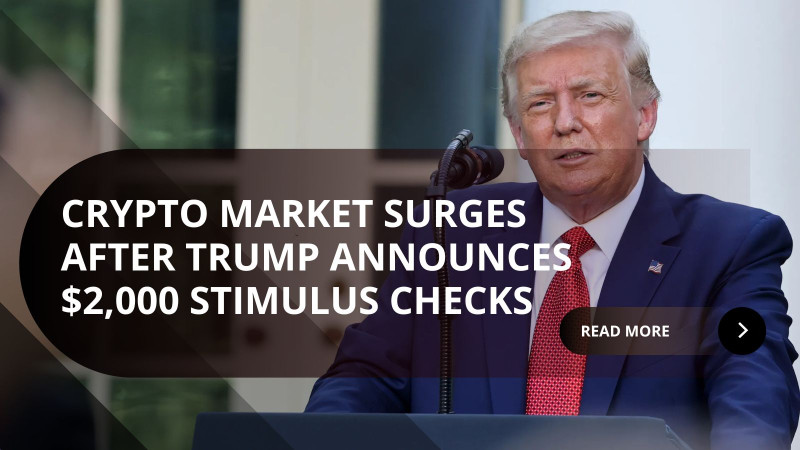
Crypto Prices Surge After Trump Announces Tariff Dividend Plan
Crypto Prices Surge After Trump Announces Tariff Dividend Plan
Crypto markets moved sharply higher after President Trump announced his intent to send “at least” a $2,000 tariff dividend to every American, funded by tariff revenues. Bitcoin climbed roughly 1.7% to trade above $103,000, while Ethereum rose more than 3% to around $3,480. Solana also gained nearly 2%, helping the broader crypto market recover from a difficult week.
The announcement, which Trump described as a “dividend for the American people,” immediately set off speculation about a new wave of consumer stimulus. Market watchers compared the idea to the 2020–2021 stimulus checks that fueled both retail investing and crypto adoption during the pandemic.
What a “Tariff Dividend” Means
The proposal is straightforward: redistribute federal tariff revenue to households in the form of direct payments. The administration framed it as “returning America’s money to Americans,” though the plan would likely require congressional authorization and a detailed funding framework.
In practical terms, this would act much like a stimulus payment, except funded through tariffs rather than new government borrowing. Whether or not it comes to fruition, the market’s reaction suggests traders are already pricing in the possibility of renewed liquidity entering the system.
Why Crypto Reacted: The 2020 Playbook
When the United States issued direct stimulus checks in 2020 and 2021, data showed a measurable uptick in crypto activity. Exchanges recorded surges in $1,200 deposits — the same amount as the first stimulus payment — and analysts noted a wave of new retail wallets buying Bitcoin and Ethereum.
In other words, stimulus checks created a wealth shock that found its way into digital assets. The pattern was clear: free cash plus frictionless access to trading apps equaled inflows into crypto.
If a 2025 “tariff dividend” reaches consumer bank accounts, it could produce a similar reaction:
-
Immediate liquidity shock: Households receive cash, and some percentage of it flows into high-risk, high-reward assets.
-
Ease of access: It is easier than ever to buy crypto directly through apps that support bank transfers and debit cards.
-
Narrative power: Headlines about free money drive social media buzz, which has historically amplified market moves.
-
Altcoin momentum: In 2020 and 2021, retail inflows often rotated into smaller tokens, fueling broader speculative rallies.
How 2025 Differs From 2020
There are important differences between the two environments.
-
Economic backdrop: Interest rates are higher, inflation is more persistent, and households are facing tighter budgets. Liquidity injections might not carry the same purchasing power they did during lockdowns.
-
Policy complexity: A tariff dividend is not an emergency measure. It would require legislation, debate, and administrative systems to distribute funds.
-
Market maturity: Crypto ownership is broader and more institutionalized now. Retail checks could still drive excitement, but large funds and ETFs dominate trading volume.
-
Tariff revenue limits: Total tariff collections may not fully cover such large payments, which could influence how much money actually reaches citizens.
Even with these caveats, the narrative alone can move markets. Traders have a short memory for policy hurdles but a long memory for liquidity events.
Possible Scenarios
Scenario 1: Full $2,000 payments in early 2025.
Expect an immediate increase in retail deposits and small-ticket crypto buys. Bitcoin would likely lead the rally, followed by Ethereum and major Layer 1 tokens. Within days, altcoins could outperform as speculative capital spreads through the market.
Scenario 2: Reduced or delayed payments.
A scaled-down version would still spark optimism, but the impact would be smaller. Prices could rise on anticipation and then fade if payments are limited or phased in over time.
Scenario 3: No payments, only rhetoric.
If Congress rejects or delays the plan, the initial market rally could unwind quickly. Traders would shift focus back to macro factors such as interest rates and ETF inflows.
What to Watch Next
-
Policy developments: Official statements from the White House and Treasury will clarify how serious the proposal is.
-
Legislative signals: Watch for draft bills or congressional discussions that determine timing and funding.
-
Exchange activity: Look for clustering of retail-sized purchases near the proposed check amount, as seen in 2020.
-
Altcoin breadth: If retail flows return, altcoins typically benefit first due to their lower market caps and higher volatility.
-
Tariff policy shifts: Increased tariffs could pressure supply chains and offset some of the stimulus effect, adding complexity to market sentiment.
Final Thoughts
Today’s market reaction shows how sensitive crypto remains to liquidity narratives. History suggests that direct payments to households act as fuel for risk assets, particularly digital currencies.
In 2020, stimulus checks helped ignite one of the strongest bull runs in crypto history. Bitcoin’s price more than tripled in less than a year as new retail investors piled in. If a 2025 “tariff dividend” delivers similar injections of cash, it could trigger another wave of retail-driven buying — especially in the smaller, more speculative corners of the market.
Still, the outcome depends on whether policy turns into action. Until checks start landing, investors should treat this as a potential catalyst rather than a certainty. Yet if history is any guide, the prospect of free money flowing into crypto is enough to remind markets just how powerful liquidity can be.
Stay Connected
You can stay up to date on all News, Events, and Marketing of Rare Network, including Rare Evo: America’s Premier Blockchain Conference, happening July 28th-31st, 2026 at The ARIA Resort & Casino, by following our socials on X, LinkedIn, and YouTube.
Crypto Markets At a Glance: October 28, 2025
Crypto Markets At a Glance
The digital asset market continues to hold its ground at elevated levels, even as investor caution remains front of mind. Bitcoin (BTC) is currently hovering around $115,000, while some altcoins, particularly Hedera (HBAR), are drawing renewed attention amid speculative ETF hopes.
Bitcoin: Firm, But Signs of Fatigue
Bitcoin’s position remains relatively strong. BTC is trading in the $111K to $115K range after previously testing support near $110K. Analysts interpret this as the market holding steady rather than mounting a fresh breakout.
Key Observations
-
Derivatives positioning shows continued bullish conviction. Open interest and call exposure for BTC remain high, suggesting traders are not fully stepping away from risk.
-
At the same time, caution is emerging. Long-term holders are realizing profits, momentum is slowing, and the price is struggling to break key resistance levels.
-
Macro factors are also weighing on sentiment. Tightening liquidity, a stronger U.S. dollar, and global uncertainty have strengthened Bitcoin’s correlation with gold. This reinforces Bitcoin’s “digital gold” narrative but also highlights its sensitivity to global risk trends.
Why This Matters
Bitcoin’s role is evolving. With greater institutional exposure and larger derivatives flows, it is increasingly being treated as a portfolio component rather than a speculative bet. Research shows Bitcoin’s correlation with major financial markets is rising. This supports its mainstream acceptance but also raises questions about its effectiveness as a diversifier in stressed markets.
For now, Bitcoin’s stability without a breakout suggests consolidation. Investors appear to be waiting for a catalyst such as new ETF approvals, larger institutional entry, or supportive macro conditions.
HBAR: Altcoin Spotlight Amid ETF Hopes
While many altcoins remain subdued compared to Bitcoin’s dominance, Hedera’s HBAR token has emerged as a standout. A wave of ETF speculation, institutional filings, and adoption talk has drawn renewed attention to the project.
What’s Driving the HBAR Story
-
HBAR’s recent rally has been fueled by optimism surrounding a potential spot HBAR ETF after Canary Capital said its HBAR ETF will debut on NYSE Arca. Filings and regulatory references have boosted market sentiment despite delays.
-
Technical indicators support the case for renewed strength. Analysts point to bullish pennants and breakout tests that could push prices toward higher targets if confirmed.
-
Even though regulators have delayed ETF decisions, investor interest has remained strong, signaling growing confidence in HBAR’s long-term potential.
Key Technical and Sentiment Dynamics
-
HBAR has broken out of a long consolidation phase, and analysts see potential for further gains if the ETF narrative materializes.
-
On-chain and volume data show increasing institutional participation, stronger liquidity, and rising discussion around tokenized assets built on Hedera.
-
Risks remain. ETF delays, weaker short-term demand, and broader market headwinds could slow momentum. The bullish case is promising but still depends on external factors.
Why This Altcoin Matters
HBAR’s story reflects a broader shift in how investors view altcoins. The new narrative is about utility, tokenization, and institutional access rather than pure speculation. If HBAR manages to capture capital flows through an ETF or similar vehicle, it could serve as a model for how blockchain projects evolve beyond retail-driven cycles.
Macro and Market Crosswinds
Beyond individual tokens, several broader themes are shaping crypto’s direction.
Liquidity and Risk Appetite
Global liquidity conditions remain tight, and a strong U.S. dollar is reducing appetite for risk assets. This has contributed to Bitcoin’s difficulty reclaiming upward momentum. Investors are more selective, favoring assets with clear narratives or institutional support.
Institutional Adoption and Regulation
Institutional interest continues to be a defining force in this cycle. From derivatives and ETFs to tokenization platforms, traditional finance is integrating deeper with crypto infrastructure. Regulation remains a wildcard. Market reactions to SEC and other agency decisions can swing sharply depending on whether rules are seen as enabling or restrictive.
Altcoin Season vs Bitcoin Dominance
Bitcoin’s dominance remains high, hovering near 59 percent. This signals that capital is still concentrated in core assets rather than flowing broadly into altcoins. However, the success of projects like Hedera shows that this cycle’s altcoin rally may be more selective, rewarding real-world utility and institutional credibility over speculation.
Catalysts That Could Move the Market
-
Approval or progress on other altcoin spot crypto ETFs such as ADA, SOL, and XRP
-
Institutional flows into custody, tokenization, or digital asset products
-
Easing monetary policy and improving risk appetite
-
Growth of altcoins tied to tokenization, payments, and enterprise use cases
Risks That Could Derail the Rally
-
Regulatory setbacks or enforcement actions in major markets
-
Macro shocks such as recessions, inflation spikes, or currency disruptions
-
Loss of momentum in leading tokens like Bitcoin or HBAR
-
Weak participation beyond a few trending assets
Final Take
Crypto markets are in a holding pattern. Prices remain elevated, and institutional narratives are taking shape, but sustained momentum has yet to return. Bitcoin’s consolidation reflects a maturing market, while Hedera’s surge highlights how targeted innovation and regulatory developments can still spark excitement.
If Bitcoin breaks key resistance levels and projects like HBAR turn ETF speculation into real adoption, the next phase of growth could begin. Otherwise, expect continued consolidation as the market waits for clarity on regulation, macro trends, and institutional participation.
The broader takeaway is clear: crypto’s foundation is strengthening. The focus is shifting from hype to utility, from volatility to integration, and from short-term speculation to long-term infrastructure.
Stay Connected
You can stay up to date on all News, Events, and Marketing of Rare Network, including Rare Evo: America’s Premier Blockchain Conference, happening July 28th-31st, 2026 at The ARIA Resort & Casino, by following our socials on X, LinkedIn, and YouTube.