#Economy

Indiana Crypto Pension Bill Could Transform Retirement Investing
Indiana’s Bold Move: Crypto in Public Pensions
In early December 2025, Indiana surprised a lot of people by stepping directly into the world of digital assets. A new proposal, House Bill 1042, was introduced by state representative Kyle Pierce, and it does something pretty groundbreaking. It requires public retirement programs to offer crypto linked exchange traded funds, or ETFs, as part of their standard investment lineup.
This means that many public employees, including teachers, government workers, and possibly police and firefighters, would now see crypto related funds sitting right next to traditional retirement options. Instead of crypto being something you explore on your own, Indiana wants it to be a normal part of the overall retirement system.
The bill also outlines a set of protections for everyday crypto users. It limits how much local governments can restrict or interfere with digital asset activity. That includes mining, payments, self custody, and private wallet use. Unless restrictions also apply to traditional financial assets, cities and counties would not be allowed to single out crypto for special limitations.
If this becomes law, Indiana would be the first state in the country to require Bitcoin linked ETFs in public pension systems. That alone sets a bold precedent for how states might approach retirement investing in the future.
A Broader Trend: States Are Warming Up To Crypto
Indiana might feel like it is out ahead, but the move fits into a larger trend. Several other states have already been exploring crypto exposure in different ways.
For example, some states have passed laws allowing retirement systems to purchase Bitcoin ETFs. Others have focused more on legal protections, such as protecting self custody, clarifying how digital assets are classified, or encouraging blockchain adoption within government departments.
What makes Indiana stand out is not the idea of crypto exposure itself, but the fact that the bill attempts to make it a standard part of public retirement offerings. This goes beyond optional access and moves toward normalizing crypto as a core part of long term, institutional investing.
What Supporters Are Saying
Backers of House Bill 1042 believe this is simply a reflection of financial reality. Crypto is becoming a bigger part of the global economy, and Indiana residents should have access to it in the same way they do to other investments.
Supporters argue that this gives people more financial flexibility, especially younger workers who want exposure to assets they believe will appreciate over the next several decades. They also point out that Bitcoin ETFs remove much of the risk and complexity of direct crypto ownership, since they function inside the regulated ETF structure.
The bill also proposes pilot programs to test blockchain technology within state agencies. That includes using distributed ledgers for record keeping, identity management, and improving government transparency and efficiency. Supporters say this could modernize the way public systems operate.
What Critics Are Concerned About
Not everyone is excited about crypto appearing in pension plans. Critics bring up several concerns.
One of the biggest issues is volatility. Cryptocurrencies can swing up or down rapidly, and pension systems are normally built around stability and long term reliability. Some people worry that exposing retirement funds to such unpredictable markets may not serve the best interests of retirees.
There are also questions about long term regulation. National rules around crypto continue to shift, and that uncertainty could create complications for publicly managed funds. Critics say lawmakers should move slowly and avoid building pension plans around assets that still feel risky to many households.
Another concern is whether the state should be responsible for promoting exposure to crypto at all. Some people feel that these decisions should be optional and entirely individual, rather than part of a default menu in a public benefits system.
Why Indiana’s Bill Could Be A Turning Point
If Indiana does pass House Bill 1042, the impact could go far beyond state borders.
It would accelerate the mainstream acceptance of crypto within public institutions. At the same time, it would create a legal framework that protects wallet access, mining, payments, and self custody rights. That combination of investment access and personal rights could easily serve as a template for other states.
It also encourages conversation about what public retirement investing should look like in the future. Some believe this is an opportunity for long term growth. Others feel the risks are too high. Either way, the bill forces the debate into the spotlight.
What To Watch Next
There are several things worth paying attention to in the months ahead.
First, lawmakers may modify the bill. They could adjust the requirement to offer crypto ETFs or turn it into an optional feature instead. They might also place limits on how much of a pension portfolio can be allocated to digital asset funds.
Second, pay attention to how pension administrators respond. Even if the bill passes, the practical process of integrating crypto ETFs will require careful planning.
Third, other states may begin crafting similar laws. Indiana’s move could spark a wave of legislative activity across the country as states look at whether they want to follow the same path.
Finally, federal regulatory changes will play a major role. As national crypto rules evolve, they could strengthen or weaken the long term viability of crypto pension investments.
Indiana’s proposal captures a pivotal moment in the evolution of digital assets. Crypto is no longer viewed as a fringe experiment. It is now part of serious, institutional conversation. Whether this turns out to be a smart long term shift or an overly ambitious leap is something only time will reveal, but it is clear that the landscape of public finance is changing quickly.

Bitcoin for America Act Could Transform U.S. Tax Payments and Create Major Economic Impact
The Bitcoin for America Act: A Potential Game Changer for Crypto and the U.S. Economy
A new bill introduced in the U.S. House of Representatives known as the “Bitcoin for America Act” could usher in a historic shift in how Americans interact with cryptocurrency. Under the legislation, individuals and businesses would be allowed to pay federal taxes in Bitcoin, and the payments would be directed into a proposed U.S. Strategic Bitcoin Reserve. If enacted, the policy has the potential to create unprecedented demand for Bitcoin while bolstering America’s position in the digital asset economy.
What the Bill Proposes and Why It Matters
The bill, introduced by Congressman Warren Davidson of Ohio, sets out to allow taxpayers to settle their federal tax liabilities in Bitcoin (BTC) without triggering capital gains tax on the transaction. In practice this means that someone could pay their IRS tax bill using Bitcoin directly, rather than converting to fiat first and then paying the IRS. Importantly the proceeds from these payments would go toward building a U.S. government held stockpile of Bitcoin, dubbed the Strategic Bitcoin Reserve.
This approach marks a major policy shift for several reasons:
-
For the first time the government would accept crypto assets directly for tax payments.
-
The removal of capital gains liability would make such payments more appealing.
-
The creation of a national Bitcoin reserve elevates Bitcoin from an investment asset into a component of state financial policy.
-
The bill frames crypto adoption as not only financial innovation but also national economic strategy.
Supporters argue that the policy would reduce pressure on the dollar, expand alternative stores of value for U.S. capital, and accelerate the growth of digital infrastructure.
Economic Impact: Could This Really Be a $14-Trillion Boost?
One of the more ambitious claims of the legislation is that it could contribute up to a $14-trillion boost to the U.S. economy over time. The rationale behind this figure includes:
-
The compounding effect of a government-held Bitcoin reserve appreciating alongside institutional demand.
-
Lower costs of capital and inflation hedge benefits that arise from allocating national value into crypto assets.
-
Spillover investment into digital entitlements, blockchain infrastructure, decentralized finance and tokenized real-world assets.
-
A “flywheel effect” where acceptance of Bitcoin for taxes catalyzes corporate and institutional adoption, thereby increasing velocity, liquidity and real economic activity.
While such a number is speculative and depends on many variables, the underlying mechanism is clear: by institutionalizing Bitcoin and giving it official status in economic and fiscal policy, the effect could ripple across investment, technology, and global economic positioning.
Regulatory and Institutional Landscape
Crucially this bill is aligned with broader shifts in U.S. policy and regulatory thinking:
-
The IRS continues to treat digital assets as property and is doubling down on reporting requirements for crypto transactions. While paying taxes in Bitcoin would require major administrative changes, the notion of digital assets interacting with official tax systems is gaining traction.
-
Other legislation such as the BITCOIN Act and proposals to establish a national Bitcoin reserve signal rising bipartisan interest in crypto as a strategic asset rather than just a market speculation.
-
The fact that this tax payment in Bitcoin proposal is being advanced by a sitting Congressman signals that crypto adoption is no longer a fringe topic but is moving toward policy mainstream.
From an institutional standpoint the step from private market crypto investment to tax payments and national reserves is profound. It creates a pathway for cryptocurrencies to be embedded in sovereign financial strategy rather than simply private portfolios.
The Mechanics: How Would Tax Payments in Bitcoin Work?
While the bill’s overview is bold the implementation would require substantive changes:
-
Taxpayers would submit tax liabilities in Bitcoin rather than U.S. dollars.
-
The IRS or Treasury would need to accept BTC, probably by converting it to USD or holding it as an asset.
-
The bill proposes to treat the crypto payment without capital gains tax exposure for the taxpayer, which is a major incentive.
-
Collected Bitcoin would be placed into the Strategic Bitcoin Reserve, converting tax payments into a national digital asset stockpile.
-
Systems and regulatory frameworks would be needed to track and value received crypto, handle refunds, and integrate with existing tax infrastructure.
While the logistics are significant, proponents argue that digital asset infrastructure is already technologically capable of handling such a flow if policy and regulation align.
Risks and Considerations
There are meaningful hurdles and risks that must be considered:
-
Volatility risk: Bitcoin is a volatile asset. Accepting tax payments in BTC exposes the treasury or reserve to price swings.
-
Administrative complexity: Standardizing crypto tax payments across millions of filings requires new systems and raises questions about custody, valuation, tax basis and audit ability.
-
Regulatory clarity: While the bill is ambitious it must pass committee, survive amendments, and contend with the fact that many regulators still treat crypto as property and not currency.
-
Public perception and fairness: Some may question whether allowing Bitcoin payments favors crypto-savvy taxpayers or shifts risks to general taxpayers.
-
Economic numbers may be aspirational: While the $14-trillion potential is headline grabbing the actual outcome depends on broad adoption, global demand, and macroeconomic environment.
Why This Could Be a Turning Point for Crypto Adoption
If this bill passes it would shift several long-standing barriers:
-
Crypto becomes not only an investment asset but a valid means of tax payment, enhancing its legitimacy.
-
Governments participating in crypto expand the ecosystem beyond pockets of enthusiast use into full sovereign inclusion.
-
Institutional and corporate adoption could accelerate dramatically when foundational use cases like tax payments are enabled.
-
The narrative of crypto as volatile and speculative would be countered by its new function in everyday fiscal operations.
In short this is not just a policy tweak; it is a redefinition of how digital assets can interface with government, finance, and economies at large.
Final Thoughts
The Bitcoin for America Act is a bold proposal that could reshape how cryptocurrency interacts with tax systems, government reserves, and the global economy. If implemented it could be a defining moment for the sector.
For investors and observers this is a pivotal moment: the path from niche technology to sovereign asset becomes clearer. While the ambitions are large and the risks real the upside, both for Bitcoin and the broader digital asset industry, is massive.
This is a moment to watch closely. Public policy is aligning with crypto innovation and the tip of the spear could very well be tax payments in Bitcoin and a national digital reserve. If that happens the narrative around crypto will change forever.
Stay Connected
You can stay up to date on all News, Events, and Marketing of Rare Network, including Rare Evo: America’s Premier Blockchain Conference, happening July 28th-31st, 2026 at The ARIA Resort & Casino, by following our socials on X, LinkedIn, and YouTube.

Bitcoin Drops Below $95K as Spot ETFs Log Second-Largest Outflows Ever
Bitcoin Drops Below 95,000 Dollars as Spot ETFs Log Second-Largest Outflows Ever
Bitcoin’s slide below 95,000 dollars comes at the same moment U.S. spot Bitcoin ETFs are seeing their second-largest weekly outflows on record, creating a powerful combination of macro pressure, profit-taking, and structural selling.
This is what is actually happening across markets.
Bitcoin breaks below 95,000 dollars as risk appetite evaporates
Bitcoin has been drifting lower for weeks, but the latest leg down reflects broader stress across global risk markets.
-
BTC recently hit a six-month low, trading near 95,800 dollars, down roughly 24 percent from its all-time high above 126,000 dollars earlier in the fall.
-
A sharp selloff in major tech stocks has spilled into crypto. Falling prices in high-beta names like Tesla and Nvidia dragged the Nasdaq lower, and Bitcoin is moving in correlation.
-
On several trading venues, Bitcoin briefly dipped under the 95,000 dollar level, shaken by fading expectations for a near-term Federal Reserve rate cut.
Macro sentiment is driving it. The Fed has signaled caution, and higher yields make cash and bonds more attractive relative to volatile assets like crypto. Risk capital is stepping back accordingly.
Spot Bitcoin ETFs suffer second-largest outflows since launch
At the same time Bitcoin’s price is weakening, spot Bitcoin ETFs are hemorrhaging capital.
Recent ETF flow data shows:
-
About 1.23 billion dollars in net outflows over a single week, marking the second-largest weekly outflow since spot Bitcoin ETFs launched in early 2024.
-
This reversal comes immediately after a massive 2.7 billion dollar inflow the previous week, showing how rapidly sentiment flipped.
Other analytics platforms confirm the scale:
-
More than 2 billion dollars has exited spot Bitcoin ETFs over a similar seven-day stretch.
-
These outflows were led by major products, including the largest U.S. Bitcoin ETFs.
Put simply, the same ETF vehicles that fueled Bitcoin’s run above 120,000 dollars are now feeding selling pressure.
Why ETF investors are selling
1. Profit taking after a euphoric rally
Bitcoin surged to record highs earlier in the fall. Much of that momentum was driven by strong ETF inflows and speculative leverage. When the rally stalled, ETF holders began locking in gains.
In the past month, sustained inflows flipped into a multi-day streak of heavy outflows totaling more than 2 billion dollars.
2. Macro risk-off environment
The ETF redemptions are unfolding during a broader derisking period.
-
Tech stocks are sliding.
-
Investors are reducing exposure to volatility.
-
Falling expectations for Federal Reserve rate cuts are punishing non-yielding assets.
When institutions derisk, ETFs offer an easy way to trim exposure quickly and in size.
3. Long-term holders are selling, too
On-chain estimates show that long-term BTC holders sold roughly 815,000 BTC over the last month. That is the largest 30-day selling wave by long-term holders in close to a year.
When long-term holders sell while ETFs see redemptions, structural and tactical selling pressures align.
Are ETF outflows causing the price drop?
ETF outflows and price declines are interconnected, but not in a simple cause-and-effect way.
-
When ETFs see inflows, issuers buy Bitcoin on the open market.
-
When ETFs see redemptions, they release or sell Bitcoin, which can weigh on price.
But flows also respond to price, rather than only drive it.
During recent drawdowns, Bitcoin began falling before the biggest ETF outflow prints hit. Markets weakened first, flows followed, and the selling then reinforced the downturn.
The bigger picture is not entirely bearish
Despite the heavy redemptions, ETF-held Bitcoin remains historically large.
-
U.S. spot Bitcoin ETFs still hold well over 130 billion dollars in assets even after the latest outflows.
-
These ETFs still control a significant percentage of the circulating BTC supply.
This means institutions have not abandoned Bitcoin. They are rebalancing, not exiting.
What traders and investors should take away
Short-term traders
Expect higher volatility.
Key levels like 95,000, 90,000 and 85,000 dollars will become focal points for liquidations, panic selling, and sharp reversals.
ETF flow data will continue to be a powerful short-term signal. Large outflows can become self-reinforcing sell triggers.
Long-term investors
This environment looks more like a mid-cycle reset than the end of the trend.
-
ETF holdings remain massive.
-
Institutional allocators are still active.
-
Periods of heavy outflow historically set up longer-term opportunities for patient buyers.
What to watch next
-
Daily spot ETF flows
Look for stabilization or the return of small net inflows. Historically, that has coincided with market bottoms. -
Federal Reserve tone
Rate expectations continue to drive risk appetite. -
On-chain behavior
Whether long-term holders continue selling or begin accumulating again will play a crucial role. -
Equity market sentiment
As long as Bitcoin behaves like a high-beta tech asset, weakness in equities will spill into crypto.
Final thoughts
Bitcoin’s break below 95,000 dollars paired with the second-largest weekly outflow ever recorded in spot Bitcoin ETFs shows that the market is finally cooling after an overheated rally. ETF redemptions and long-term holder selling are contributing to the pressure, but they are unfolding within a broader global derisking trend.
The ETF era has not failed. If anything, this volatility highlights how deeply Bitcoin has become integrated into mainstream portfolios, where selling flows can move quickly in response to macro signals.
For traders, this phase demands discipline. For long-term believers, it is a reminder that institutional adoption does not eliminate corrections. It simply changes their shape and scale.
Stay Connected
You can stay up to date on all News, Events, and Marketing of Rare Network, including Rare Evo: America’s Premier Blockchain Conference, happening July 28th-31st, 2026 at The ARIA Resort & Casino, by following our socials on X, LinkedIn, and YouTube.
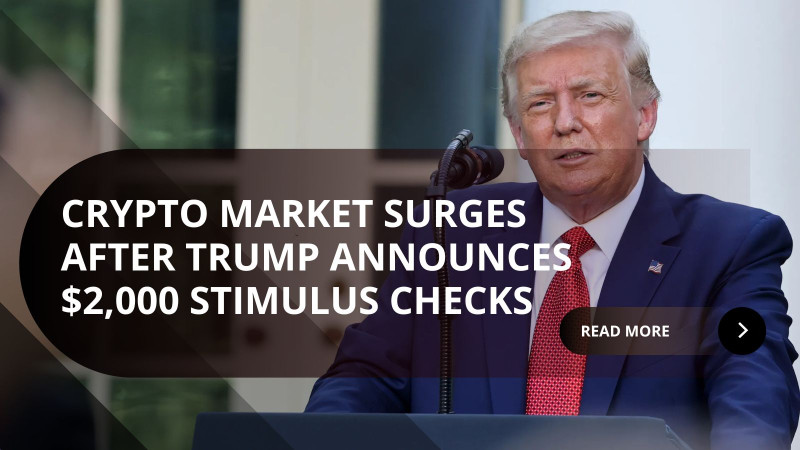
Crypto Prices Surge After Trump Announces Tariff Dividend Plan
Crypto Prices Surge After Trump Announces Tariff Dividend Plan
Crypto markets moved sharply higher after President Trump announced his intent to send “at least” a $2,000 tariff dividend to every American, funded by tariff revenues. Bitcoin climbed roughly 1.7% to trade above $103,000, while Ethereum rose more than 3% to around $3,480. Solana also gained nearly 2%, helping the broader crypto market recover from a difficult week.
The announcement, which Trump described as a “dividend for the American people,” immediately set off speculation about a new wave of consumer stimulus. Market watchers compared the idea to the 2020–2021 stimulus checks that fueled both retail investing and crypto adoption during the pandemic.
What a “Tariff Dividend” Means
The proposal is straightforward: redistribute federal tariff revenue to households in the form of direct payments. The administration framed it as “returning America’s money to Americans,” though the plan would likely require congressional authorization and a detailed funding framework.
In practical terms, this would act much like a stimulus payment, except funded through tariffs rather than new government borrowing. Whether or not it comes to fruition, the market’s reaction suggests traders are already pricing in the possibility of renewed liquidity entering the system.
Why Crypto Reacted: The 2020 Playbook
When the United States issued direct stimulus checks in 2020 and 2021, data showed a measurable uptick in crypto activity. Exchanges recorded surges in $1,200 deposits — the same amount as the first stimulus payment — and analysts noted a wave of new retail wallets buying Bitcoin and Ethereum.
In other words, stimulus checks created a wealth shock that found its way into digital assets. The pattern was clear: free cash plus frictionless access to trading apps equaled inflows into crypto.
If a 2025 “tariff dividend” reaches consumer bank accounts, it could produce a similar reaction:
-
Immediate liquidity shock: Households receive cash, and some percentage of it flows into high-risk, high-reward assets.
-
Ease of access: It is easier than ever to buy crypto directly through apps that support bank transfers and debit cards.
-
Narrative power: Headlines about free money drive social media buzz, which has historically amplified market moves.
-
Altcoin momentum: In 2020 and 2021, retail inflows often rotated into smaller tokens, fueling broader speculative rallies.
How 2025 Differs From 2020
There are important differences between the two environments.
-
Economic backdrop: Interest rates are higher, inflation is more persistent, and households are facing tighter budgets. Liquidity injections might not carry the same purchasing power they did during lockdowns.
-
Policy complexity: A tariff dividend is not an emergency measure. It would require legislation, debate, and administrative systems to distribute funds.
-
Market maturity: Crypto ownership is broader and more institutionalized now. Retail checks could still drive excitement, but large funds and ETFs dominate trading volume.
-
Tariff revenue limits: Total tariff collections may not fully cover such large payments, which could influence how much money actually reaches citizens.
Even with these caveats, the narrative alone can move markets. Traders have a short memory for policy hurdles but a long memory for liquidity events.
Possible Scenarios
Scenario 1: Full $2,000 payments in early 2025.
Expect an immediate increase in retail deposits and small-ticket crypto buys. Bitcoin would likely lead the rally, followed by Ethereum and major Layer 1 tokens. Within days, altcoins could outperform as speculative capital spreads through the market.
Scenario 2: Reduced or delayed payments.
A scaled-down version would still spark optimism, but the impact would be smaller. Prices could rise on anticipation and then fade if payments are limited or phased in over time.
Scenario 3: No payments, only rhetoric.
If Congress rejects or delays the plan, the initial market rally could unwind quickly. Traders would shift focus back to macro factors such as interest rates and ETF inflows.
What to Watch Next
-
Policy developments: Official statements from the White House and Treasury will clarify how serious the proposal is.
-
Legislative signals: Watch for draft bills or congressional discussions that determine timing and funding.
-
Exchange activity: Look for clustering of retail-sized purchases near the proposed check amount, as seen in 2020.
-
Altcoin breadth: If retail flows return, altcoins typically benefit first due to their lower market caps and higher volatility.
-
Tariff policy shifts: Increased tariffs could pressure supply chains and offset some of the stimulus effect, adding complexity to market sentiment.
Final Thoughts
Today’s market reaction shows how sensitive crypto remains to liquidity narratives. History suggests that direct payments to households act as fuel for risk assets, particularly digital currencies.
In 2020, stimulus checks helped ignite one of the strongest bull runs in crypto history. Bitcoin’s price more than tripled in less than a year as new retail investors piled in. If a 2025 “tariff dividend” delivers similar injections of cash, it could trigger another wave of retail-driven buying — especially in the smaller, more speculative corners of the market.
Still, the outcome depends on whether policy turns into action. Until checks start landing, investors should treat this as a potential catalyst rather than a certainty. Yet if history is any guide, the prospect of free money flowing into crypto is enough to remind markets just how powerful liquidity can be.
Stay Connected
You can stay up to date on all News, Events, and Marketing of Rare Network, including Rare Evo: America’s Premier Blockchain Conference, happening July 28th-31st, 2026 at The ARIA Resort & Casino, by following our socials on X, LinkedIn, and YouTube.

Crypto Markets Under Pressure as Bitcoin Falls Below $104,000
Crypto Markets Under Pressure as Bitcoin Falls Below $104,000
The crypto world is showing clear signs of stress. Bitcoin slipped below roughly $104,000, triggering a wave of liquidations and renewed concern over how fragile this market remains.
The Scale of the Liquidations
On-chain analytics and exchange data indicate that over $1.3 billion in positions were liquidated in just a 24-hour window when Bitcoin slipped under $104,000. The bulk of those losses came from long (bullish) bets.
One analysis found that around $600 million of liquidations were directly linked to Bitcoin’s fall under $104,000.
In earlier drops, like when Bitcoin fell under $108,000, at least $320 million in positions were liquidated.
ETF flows also reflected the sentiment, with large outflows of around $186.5 million hitting Bitcoin ETFs as the price dropped.
What’s Driving the Sell-Off
Several factors combined to produce this sharp correction:
-
Excess leverage: Many traders held large leveraged positions expecting the uptrend to continue. When the price broke key support, automatic liquidations accelerated the drop.
-
Technical triggers: The break below $104,000 appears to have been a psychological and technical threshold. Once it was breached, stop-losses and algorithmic selling kicked in.
-
Macroeconomic headwinds: Concerns around global growth, trade tensions, and regulatory uncertainty are making crypto a less comfortable risk asset right now.
-
Liquidity strain: When prices drop rapidly, thin liquidity in some crypto markets magnifies the effect of trades. Large orders or liquidations can push the price further than expected.
Why This Is More Than Just a Price Drop
This is not simply a normal pullback. It points to deeper vulnerabilities within the market.
It shines a spotlight on how exposed leveraged traders are in crypto markets.
It shows that major protocols or large holders are still vulnerable to rapid swings caused by price and sentiment.
It signals that the risk profile of crypto is evolving. Institutional participants and retail investors both face threats from sharp corrections and ecosystem instability, not just price volatility.
What to Watch Moving Forward
-
Support levels: Bitcoin near $100,000 to $104,000 is under the microscope. A sustained bounce could ease pressure, while a break below could trigger the next wave of liquidations.
-
Leverage risk: If more long positions unwind, additional forced selling could occur.
-
Sentiment and volume: Watch indicators like funding rates, open interest in futures, and spreads. When these show stress, the environment becomes more fragile.
-
Macro factors: Crypto is not isolated. Changes in interest rates, global trade shocks, or new regulations can quickly trigger risk-off sentiment.
-
Recovery potential: Some analysts believe this type of leveraged wipeout can be healthy in the long term. It clears excess risk and resets the market for future growth. The key is whether prices stabilize soon.
Final Thoughts
The current correction may not mark the end of the cycle, but it underscores how volatile and interconnected the crypto markets have become.
For anyone trading or investing in this space, success is not only about picking the right asset. It also depends on understanding how the broader system reacts when momentum reverses.
History has already shown how over-leverage can turn optimism into collapse. During the 2021–2022 downturn, major players like Three Arrows Capital (3AC) and Celsius Network imploded after taking on excessive risk through leveraged positions and unsustainable yield strategies. Their collapses erased billions in value, triggered contagion across lenders and exchanges, and shook investor confidence for years.
These events serve as reminders that leverage amplifies both gains and losses. In bull markets, it fuels parabolic rallies and rapid expansion. In downturns, it becomes a chain reaction that accelerates the fall.
The lesson is simple but critical: leverage without risk management always ends badly. The healthiest market growth comes from measured exposure, transparent liquidity, and long-term discipline...not from borrowing against optimism.
In crypto, big moves are not exceptions. They are the rule. The priority now is managing risk carefully, staying alert to signals, and avoiding the assumption that prices will always move higher.
Stay Connected
You can stay up to date on all News, Events, and Marketing of Rare Network, including Rare Evo: America’s Premier Blockchain Conference, happening July 28th-31st, 2026 at The ARIA Resort & Casino, by following our socials on X, LinkedIn, and YouTube.

The Crypto Market Continues October Slump, Will November See Reversal?
The Crypto Market Continues October Slump, Will November See Reversal?
The global cryptocurrency market has taken a sharp downturn, erasing optimism that had been building earlier this month. Total market capitalization dropped to around 3.54 trillion dollars, falling more than four percent in a single day.
Bitcoin fell roughly 3.5 percent, dipping just above 106,000 dollars, while Ethereum declined nearly six percent. Altcoins like Solana and XRP recorded losses of around seven percent, and crypto-linked equities followed the same trend, with companies such as MicroStrategy sliding about five percent ahead of its earnings call.
The downturn caps off what has been one of the weakest Octobers for crypto in recent years, undermining hopes of the so-called “Uptober” rally that traders had been anticipating. More than 300 million dollars in leveraged positions were liquidated as Bitcoin briefly slipped below 108,000 dollars, wiping out many short-term speculative positions.
Why It Happened
Macro headwinds
Even though the Federal Reserve cut interest rates by 25 basis points, investor sentiment remains cautious. The market had already priced in the cut, and comments suggesting that further easing may not come as quickly as hoped left traders disappointed. Meanwhile, the U.S. dollar remains strong, and concerns over inflation and geopolitical tension continue to push investors toward safer assets.
Leverage and liquidations
As often happens in crypto, the decline accelerated once leveraged positions began to unwind. When Bitcoin’s price started to drop, automatic liquidations triggered across exchanges, deepening the fall and pulling other assets down with it.
Shifting sentiment
The broader crypto sentiment has turned noticeably bearish. The industry’s “fear index” has dropped to levels not seen in months. Many investors are adopting a wait-and-see approach, as new catalysts for growth are lacking and market narratives have cooled after a summer of strong gains.
What It Means for the Market
Bitcoin is testing crucial support levels around the 108,000 to 105,000 dollar range. A sustained break below could invite further downside, while a bounce could stabilize the market and prevent additional panic selling.
Some analysts see this dip as a healthy correction after months of optimism. Others warn that it could mark the start of a longer consolidation phase, where prices drift sideways as markets absorb the impact of macroeconomic uncertainty and waning risk appetite.
Institutional interest also appears to be cooling slightly. Outflows from crypto-focused funds and ETFs have increased, suggesting that large investors are scaling back exposure until clearer signals emerge from global markets.
A Moment of Reflection
This decline may not mark the end of the current crypto cycle, but it does highlight how fragile sentiment remains. Despite impressive technological progress across the industry, price action continues to be driven largely by macroeconomic factors and trader psychology.
October’s performance serves as a reminder that crypto’s volatility cuts both ways. Periods of rapid growth often give way to equally sharp corrections. While long-term believers view these downturns as opportunities to accumulate, traders chasing short-term gains are often the first to get washed out.
In the end, volatility is still the rule in crypto. The best way to navigate it is to stay informed, understand the underlying market drivers, and resist reacting to every swing. Whether this downturn becomes a lasting trend or a temporary reset will depend on how quickly confidence and liquidity return in the weeks ahead.
Stay Connected
You can stay up to date on all News, Events, and Marketing of Rare Network, including Rare Evo: America’s Premier Blockchain Conference, happening July 28th-31st, 2026 at The ARIA Resort & Casino, by following our socials on X, LinkedIn, and YouTube.