#Cross-border payments
South Korea’s Jeonbuk Bank Taps Ripple for Cross-Border Payments

Image credit: news1.kr
Jeonbuk Bank, one of South Korea’s commercial banks, has partnered with Ripple to enhance cross-border remittances and enable real-time transaction settlements.
The partnership is aimed at eliminating common bottlenecks associated with the settlement of transactions by traditional institutions, which often involve several intermediaries.

Through the partnership, Jeonbuk Bank plans to leverage the real-time settlement capabilities of Ripple’s blockchain infrastructure, reducing the settlement time for cross-border remittances from minutes to seconds while enabling 24/7 operations.
“With this partnership with Ripple, JB Jeonbuk Bank is ready to move beyond its role as a regional bank and emerge as a digital finance leader that meets global standards,” said Park Choon-won, President of JB Jeonbuk Bank.
“This partnership will become a new growth engine for the bank, and we will lead innovation that reshapes the financial paradigm, going beyond the adoption of new technology.”
Ripple’s partnership with Jeonbuk Bank isn’t the first of its kind with a South Korean institution. In April of this year, Ripple partnered with KBank, South Korea’s first internet-only bank. The partnership aimed to enable KBank to more securely manage its digital assets while leveraging Ripple’s blockchain infrastructure for cross-border remittances.
That same month, Ripple also partnered with Kyobo Life Insurance, one of South Korea’s leading life insurance companies. Through the partnership, Kyobo leveraged Ripple’s blockchain infrastructure to tokenize government bonds.
Institutional Adoption Continues to Grow
Despite South Korea’s tightening regulation around crypto, institutional involvement in the sector continues to grow rapidly in the country.
According to a report from Tiger Research, a South Korean crypto research firm, well over 195 crypto-related partnerships involving approximately 150 institutions had been tracked as of mid-year, with many of these partnerships revolving around stablecoins and cross-border remittances, custody, security token offerings, and real-world asset tokenization.
South Korea’s KB Kookmin Bank Taps JPMorgan's Kinexys Blockchain for Cross-Border Payments

South Korea's largest bank, KB Kookmin Bank, has announced that it will launch a blockchain-based corporate payment service on JPMorgan's Kinexys blockchain for import and export companies.
According to Yonhap, a local news agency, the service is being implemented under the "Business Agreement for Blockchain Remittance Services for Cross-Border Payment Innovation" signed by both companies.
With the launch of the service, KB Kookmin customers will be able to make cross-border remittances in about 10 countries, including South Korea, the United States, Singapore, Saudi Arabia, India, Thailand, Qatar, the United Arab Emirates, Bahrain, and South Africa.
Although Kinexys supports multiple currencies, the partnership will initially focus on U.S. dollar-based cross-border remittances, with a possible expansion to additional currencies in the future.
While this is not the first time KB Kookmin has integrated blockchain technology into its financial infrastructure, it is the first South Korean financial institution to use JPMorgan's Kinexys blockchain for corporate payments.
KB Kookmin was also one of the first banks in South Korea to show interest in blockchain technology. In 2016, it signed a memorandum of understanding with crypto platform Coinplug to jointly develop blockchain-based foreign exchange and overseas remittance services.
In 2021, the bank partnered with blockchain venture capital firm Hashed and technology company Haechi Labs to launch Korea Digital Asset, or KODA, an institutional custody platform for digital assets. KODA has remained a market leader, retaining about 80% of South Korea's institutional digital asset custody market.
JPMorgan's Kinexys blockchain continues to gain adoption among major financial institutions, including Qatar National Bank, South Africa's FirstRand Bank, and the National Bank of Bahrain, all of which have adopted the platform for instant cross-border settlements.
Mitsubishi Corporation also adopted Kinexys for its cash management system. According to Kazuyoshi Kawakami, treasurer at Mitsubishi Corporation, the move was intended to strengthen the company's liquidity management framework.

Hyundai Card Completes First Stablecoin Remittance Pilot

Hyundai Card, the credit card and financial services subsidiary of Hyundai Motor Group, has completed its first cross-border, stablecoin-based remittance pilot between its overseas subsidiaries.
The pilot, designed in two stages, involved Hyundai Card testing cross-border payments between its subsidiaries in the United States and Mexico using stablecoins. Specifically, Hyundai Motor America converted $20,000 into Tether (USDT), which was then sent to Hyundai Mexico, where the stablecoin was converted back into U.S. dollars.
According to Hyundai Card, the pilot was significant because it used stablecoin technology for an actual intercompany settlement at the multinational level. The entire process, from payment to settlement verification, took an average of 7 minutes, compared with conventional bank transfers, which often take 3 to 4 hours.
Hyundai Card was not the only company involved in the pilot. Stablecoin issuer Tether, blockchain platform Avalanche, and blockchain payments infrastructure provider Axiym were also identified by the card issuer as partners in the project.
Together, the companies developed an operational framework to identify and manage potential issues that could arise during live cross-border transactions. Meanwhile, Hyundai Card worked with Hyundai Motor to review the accounting, tax, legal, and internal control requirements for the stablecoin-based settlement infrastructure.
Following the success of the first pilot, Hyundai Card plans to conduct the second stage with its European subsidiaries later this month. In the second pilot, the company will test the practicality of stablecoin-based payments in local currencies and evaluate potential cost savings from lower foreign exchange expenses.
Although Hyundai is the first major South Korean company to conduct a stablecoin pilot of this kind, the move comes as large industrial companies, including automakers, are increasingly adopting and integrating blockchain technology into their operations.
In April, Mitsubishi, one of Japan's largest industrial companies, adopted JPMorgan's Kinexys blockchain network for its cash management system. According to Kazuyoshi Kawakami, Mitsubishi's treasurer, the move is intended to strengthen the company's liquidity management framework and ensure cash flows efficiently across its global subsidiaries.
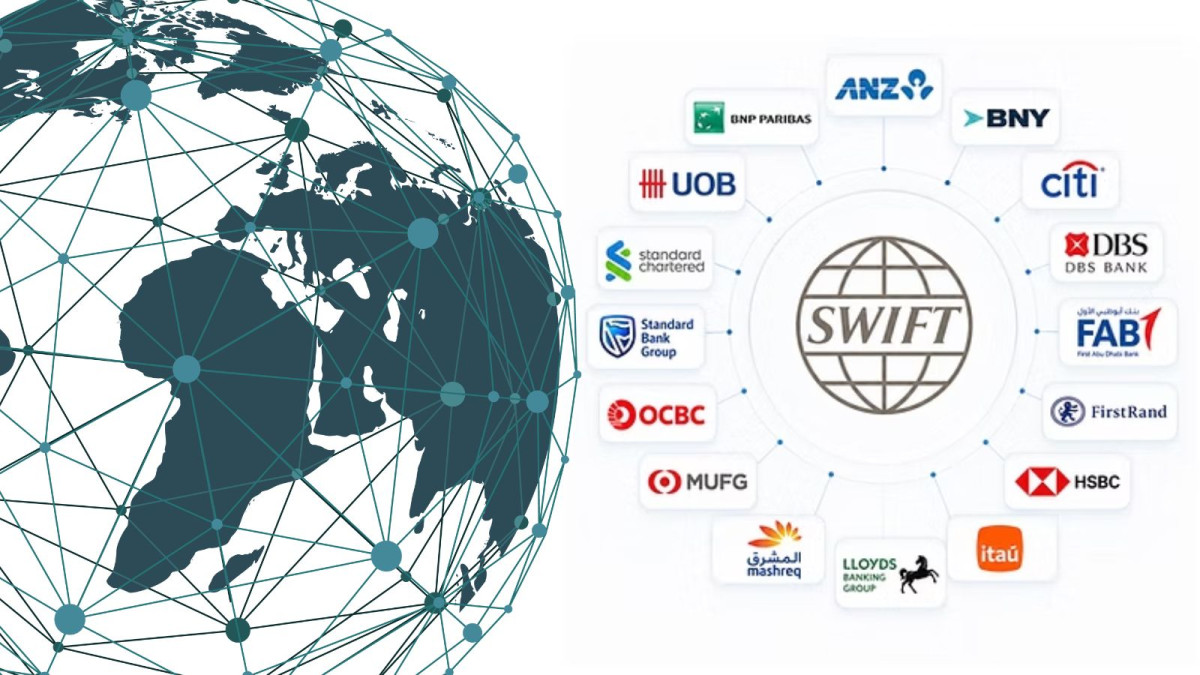
Swift Launches Blockchain Ledger for Cross-Border Payments Pilot With 17 Banks

Swift has launched a blockchain-based ledger that enables banks to execute cross-border payments 24 hours a day, seven days a week, using tokenized deposits while maintaining final settlement on existing infrastructure.

Image credit: x.com
According to Swift, 17 banks from six continents are set to pilot transactions on its blockchain-based ledger. Among the banks participating in the pilot program are Wells Fargo, First Abu Dhabi Bank, Standard Chartered, Bank of New York Mellon, Citibank, HSBC, DBS, and Lloyds Bank, among others.
Swift says the shared ledger will provide participating banks with a secure orchestration layer that allows them to issue tokenized deposits on their respective ledgers, enabling customers' funds to move quickly, including on weekends. Participating banks are also expected to benefit from improved client experience and enhanced global liquidity, without compromising their existing compliance, risk, and operational standards.
"With our new ledger capability, we're extending the trust and stability of established finance into the frontiers of digital money. It allows tokenized value to move across borders with the velocity and flexibility modern commerce expects, while maintaining the same high levels of resiliency, security, and compliance global finance requires," said Thierry Chilosi, Chief Business Officer at Swift.
"The strong support from banks shows the practical value of this approach, one that will help scale benefits globally while creating a foundation for future innovation in areas like programmable money and agentic commerce."
Swift said it took nine months to build the blockchain-based ledger, with the team incorporating feedback from financial institutions throughout the development process. According to the company, 75% of payments on the shared ledger will reach beneficiary banks within 10 minutes, and often within seconds. Swift said it also plans for the network to help meet the G20 target for faster international payments.
About Swift
Swift, short for Society for Worldwide Interbank Financial Telecommunication, is a global entity that enables banks and other institutions to exchange standardized, secure instructions for cross-border payments, securities, trade, and treasury transactions.
Since its inception, Swift has connected more than 11,500 institutions in over 200 countries. Before its most recent blockchain-based ledger pilot, Swift had conducted multiple interoperability pilots, testing tokenized assets, stablecoins, CBDCs, and the integration of traditional financial rails with blockchains.

Trace Finance Raises $32M to Expand Stablecoin Payment Infrastructure

Trace Finance, a U.S.-based infrastructure company for cross-border banking and payments, has raised $32 million in a Series A round led by CoinFund. Other investors involved include Coinbase Ventures, Haun Ventures, Valor Capital, Jump Capital, Paxos, and HOF Capital.
According to the team, the funds will be used to support Trace’s expansion by scaling its transaction capacity and extending its stablecoin infrastructure beyond its current limits. With this funding, the team also aims to advance its vision of connecting the U.S. with Latin America.
Launched in 2021, Trace Finance was created to address settlement challenges such as poor service, high fees, and operational friction that hindered cross-border settlements and international remittances in Latin America. So far, the Trace team has remained focused on its mission, processing more than $10 billion in cross-border volume while serving as a leading provider for four of the largest global payment companies in Latin America.
“The international payments market has transformed profoundly in recent years. Beyond technological advances, flows are becoming increasingly complex, requiring operators to have deep regulatory knowledge and to operate through local regulated structures,” said Bernardo Brites, co-founder and CEO of Trace Finance.
“This round allows us to deepen the payments, compliance, and settlement infrastructure used by the largest technology companies, exchanges, international banks, and payment companies to connect digital settlement with trusted local financial systems.”
The team also plans to strengthen its product capabilities in foreign exchange, banking connectivity, compliance, and international settlement, while expanding its regulated footprint across the United States, Brazil, Latin America, and the Asia Pacific region.
Stablecoin Companies See Continued Investor Interest
Just as Trace Finance has, several crypto startups, especially stablecoin-focused companies, have attracted millions of dollars in investment. Range, a Switzerland-based company building stablecoin treasury and compliance tools for wallets, banks, and exchanges, recently raised $8.3 million in a Series A round.
Last month, OpenTrade, a company building institutional-grade "yield as a service" infrastructure for stablecoins, raised $17 million in a seed round led by a16z crypto. Checker, a company building a platform that allows financial institutions to access stablecoin liquidity, cross-border payments, treasury management, and credit, raised $8 million. To date, Checker has processed over $8 billion.

Ripple Invests in Flutterwave to Boost Africa Payments

Ripple, the leading blockchain technology company that provides blockchain-based solutions to banks and financial institutions, has just invested in Flutterwave, Africa’s biggest fintech unicorn.
The investment, which was part of Flutterwave’s Series E funding round, aligns with the unicorn’s long-term value proposition to build Africa’s leading unified payments infrastructure that connects the continent seamlessly to the global economy.

According to Flutterwave, the partnership is built on three core pillars: embedding Ripple’s RLUSD into Flutterwave’s payment rails to scale large volume payments and remittances; leveraging Ripple’s XRP Ledger for faster transaction clearing; and deploying a unified API that seamlessly bridges Flutterwave’s domestic network with Ripple’s global payment network.
"This investment marks a pivotal moment in our journey, enabling us to significantly scale our infrastructure and expand our stablecoin-enabled payments roadmap,” said Olugbenga "GB" Agboola, Flutterwave’s Founder and CEO.
“By unlocking faster settlement and lower cost cross-border payments, we are building a payment superhighway that connects African commerce directly to the global economy. This partnership is a catalyst for Nigerian and African sovereignty in the digital financial age, ensuring our markets are primary participants in the global digital asset revolution.”
Through partnering with Ripple, Flutterwave takes a significant step towards achieving its “stablecoin first” payment infrastructure that eliminates traditional bottlenecks. By integrating Ripple’s RLUSD stablecoin into its payment infrastructure, Flutterwave aims to deliver immense speed, liquidity, and cost efficiency to Africa’s cross-border payment network, transforming how Africa interacts with global markets.
About Flutterwave
Flutterwave is one of Africa’s leading fintech companies. Launched in 2016, Flutterwave was created to solve fragmented payment systems that limited Africa’s connection to the global economy. Through a single API and platform, Flutterwave enables businesses to accept payments, make payouts, and process cross-border transactions across Africa and internationally.
Since its inception, Flutterwave has raised over $ 500 million through multiple funding rounds and is currently valued at $ 3.2 billion, making it Africa’s most highly valued fintech company. Its services are available in more than 35 African countries, and its payment infrastructure supports over 150 currencies.
MoneyGram Launches MGUSD Stablecoin on Stellar Network

MoneyGram has launched MGUSD, a U.S. dollar pegged stablecoin on the Stellar blockchain network, aimed at facilitating cross border transfers and remittances.
According to MoneyGram, the MGUSD stablecoin is designed to serve non crypto native users, particularly people who regularly move money across borders and those with little or no access to local financial services, including individuals living in high inflation markets.

By launching MGUSD, MoneyGram aims to provide these users with greater financial stability, enabling them to hold and access their dollar denominated MGUSD assets around the clock and convert MGUSD into local currencies whenever they choose, from anywhere in the world and on their own terms.
"The stablecoin market has largely focused on the asset itself. MoneyGram is taking a fundamentally different approach. Starting with our distribution platform, we're using stablecoin as a foundation to build future applications on our global network," said Anthony Soohoo, Chairman and Chief Executive Officer of MoneyGram.
"MGUSD is the stablecoin we built for our customers, for the families sending money home and for the billions of people around the world with limited financial access."
The launch of MGUSD was made possible through partnerships with several companies involved in the project. These include Stellar, which provides the blockchain on which MGUSD is issued; Bridge, a Stripe owned company that serves as the regulated issuer of the stablecoin; M0, which provides the smart contract infrastructure for minting and burning the stablecoin; and Fireblocks, which provides custodial services.
MGUSD will be integrated directly into the MoneyGram app through a self custodial wallet that will allow users to view their dollar denominated balances. Although MGUSD has launched in the U.S. market, MoneyGram said it plans to expand the stablecoin's availability globally.
About MoneyGram
MoneyGram is a global financial services company that provides fast, accessible cross border money transfers, particularly for people with limited access to traditional banking services. Its core mission is to make sending money across borders simple, reliable, and accessible to millions of migrant workers and their families.
In line with this mission, MoneyGram operates one of the world's largest networks, with nearly 500,000 agent locations worldwide and more than 5 billion endpoints. The company serves more than 60 million active users across 200 countries and territories.
Corpay Partners With BVNK to Add Stablecoin Payments

Corpay, the leading corporate payments company, has partnered with stablecoin infrastructure company BVNK to provide stablecoin wallets and settlement capabilities to its global customer base.
The partnership, announced on Monday, will see the integration of stablecoin wallet capabilities into Corpay’s financial platform, enabling its customers to view stablecoin balances alongside their fiat balances, while also providing embedded stablecoin wallets for sending, receiving, storing, and converting stablecoins, all within the platform.

Corpay will also integrate stablecoin rails into its treasury operations, reducing reliance on pre-funded accounts when sending and receiving funds. This is expected to improve capital efficiency and enhance the way funds are moved globally. As a result, customers will no longer be limited to traditional banking hours, as the embedded stablecoin rails will allow them to process transactions even outside these hours.
“At our scale, the ability to move liquidity quickly and reliably is critical,” said Mark Frey, Group President, Corpay Cross Border Solutions. “Stablecoins introduce a 24/7 settlement capability that strengthens our existing infrastructure. BVNK provides the technology and compliance framework we need to deliver this securely and at scale.”
Jesse Hemson Struthers, CEO of BVNK, said in a statement that he believes stablecoins are reshaping the foundation of global payments, and that Corpay’s scale and reach make the two companies ideal partners in bringing these stablecoin capabilities into the mainstream.
What to Know About Corpay and BVNK
Corpay is a global S&P 500 corporate payments company that enables businesses and users to manage and pay expenses in a simple and controlled manner. In 2025, it recorded revenue of about $4.5 billion, a 14% year over year increase, and reported $1.26 billion in revenue last quarter. Corpay currently serves over 800,000 business clients globally.
BVNK, on the other hand, is an enterprise-grade stablecoin payment infrastructure company that enables businesses and corporates to send, receive, store, convert, and settle transactions using stablecoins.
As one of the most notable stablecoin infrastructure companies, BVNK processed about $30 billion in annualized stablecoin payment volume last year and has been integrated into several major traditional finance platforms, including Visa, Mastercard, Worldpay, and Deel.
Brazil Bans Crypto for Cross Border Settlements

Brazil’s central bank, Banco Central do Brasil, has banned the use of cryptocurrencies and stablecoins for settling cross border payments in regulated systems.
The ban follows the issuance of Resolution BCB No. 561, which amends Brazil’s foreign exchange rules. Under the amendment, regulated electronic foreign exchange (eFX) systems in the country will no longer be able to use virtual assets to settle cross border payments and remittances.
While this does not outright ban the use of cryptocurrencies for cross border transfers, the rule restricts their use in foreign exchange settlements. The measure was introduced to strengthen regulatory supervision and oversight and will take effect on October 1, 2026.
This restriction comes shortly after Resolutions BCB 519, 520, and 521 took effect on February 2, 2026. Although the framework was initially published in November last year, it requires all Virtual Asset Service Providers (VASPs), including crypto exchanges and wallet providers, to obtain a Sociedade Prestadora de Serviços de Ativos Virtuais (SPSAV) license from Brazil’s authorities before they can legally operate in the country. Non compliant companies must shut down if they fail to secure the license within a nine month grace period.
The State of Crypto in Latin America
Crypto adoption in Latin America continues to grow strongly. In 2025, the region saw a 60% increase in regional transaction volume, reaching nearly $730 billion.
Since many countries in Latin America have been hit by the harsh effects of inflation, stablecoins have become a backbone for many in the region, acting as digital dollars for households and businesses, and accounting for about 80-90% of the total annual transaction volume in several countries.
Brazil continues to lead crypto adoption in Latin America, accounting for about one third of the total crypto transaction volume in the region, followed by Argentina and Mexico. Through the acquisition of Simpaul in 2025, a Brazilian brokerage firm, Binance became the first global exchange to become a broker dealer in the country, allowing it to expand its financial offerings.
Crypto asset manager Hashdex also launched XRPH11, the world's first spot XRP ETF in Brazil, which was later listed on B3, Brazil’s stock exchange.

Nium Partners With Coinbase to Enable Global USDC Payments

Singapore-based fintech company Nium has partnered with cryptocurrency exchange Coinbase to integrate the USDC stablecoin into its global payment network.
The integration, announced this week, leverages Coinbase’s custody, liquidity, and wallet infrastructure, allowing Nium’s clients and users to perform cross-border payments in USDC and settle transactions in either stablecoins or local currencies.

As Coinbase will provide the wallet infrastructure, Nium clients will be able to fund accounts in USDC within a Coinbase wallet embedded in the Nium platform. The USDC can then be converted to fiat currency by Coinbase and paid out through Nium, all within a single workflow on the platform.
Through this partnership, Nium will enable end-to-end stablecoin-to-fiat payment flows that allow users to send, receive, and convert stablecoins into fiat across more than 190 countries within a single platform.
Speaking about the partnership, Prajit Nanu, CEO of Nium, said it is aimed at providing clients with a more efficient way to move and manage money globally. He added that the collaboration improves capital efficiency while supporting a future in which stablecoins play a central role in Nium’s payment stack.
About Nium
Based in Singapore, Nium is a cross-border payments company that allows users, including retail and institutional clients, to perform cross-border remittances and transactions.
Apart from being a core traditional finance company, Nium has in the past made several pro-crypto moves, especially in the stablecoin space.
In March of this year, it launched a stablecoin card issuance platform that allows companies holding stablecoins to issue spending cards on both the Visa and Mastercard networks through a single API integration on its platform. To enable USDC settlements on its platform, Nium last year participated in Visa’s stablecoin settlement pilot, which eventually made it possible for the company to settle cross-border transactions using stablecoins across different supported blockchain networks.
Like Nium, several other Singapore-based traditional finance companies have taken pro-crypto steps in recent times, integrating blockchain technology and crypto support into their platforms. Notable among them is DBS Bank, Singapore’s largest bank, which launched the DBS Digital Exchange, a platform for asset tokenization, crypto trading, and custody.
Cryptocurrency exchanges, including Kraken, OKX, Binance, and Bybit, have also partnered with traditional finance institutions to help bridge the gap between traditional finance and decentralized finance.

DoorDash Bets on Stablecoin Payouts Via Stripe's Tempo

DoorDash, the food delivery platform that processed nearly $75 billion in merchant sales last year, is partnering with Tempo, the blockchain built by payments giant Stripe and crypto investment firm Paradigm, to roll out stablecoin-powered payouts. The move represents one of the most significant deployments of crypto payment rails by a consumer-facing tech company to date, and it signals just how serious mainstream firms are getting about on-chain money movement.
The announcement, made Tuesday in a Tempo blog post, puts DoorDash alongside Stripe itself, Coastal Community Bank, and Latin American fintech ARQ as companies now running or preparing to run parts of their payment operations on stablecoin rails through Tempo. DoorDash is focusing initially on cross-border flows, where settlement speed and cost are the biggest pain points. Exact timing for when those payouts go live has not been disclosed.
What Is Tempo?
Tempo is not just another blockchain project. It launched publicly last month after a private testnet phase, backed by a $500 million funding round that valued the company at $5 billion. Stripe and Paradigm are the founding investors, with Paradigm co-founder Matt Huang leading a dedicated team. The chain is engineered specifically for payment workloads, targeting over 100,000 transactions per second with sub-second finality. Fees can be paid in any stablecoin rather than a native token, something that sets it apart from general-purpose chains like Ethereum or even high-throughput alternatives like Solana, which Stripe CEO Patrick Collison has said do not meet the company's throughput or payment-specific requirements.
The chain is EVM-compatible and built on Reth, an Ethereum execution client developed by Paradigm. It includes dedicated payment lanes, opt-in transaction privacy, support for memos and access lists, and an enshrined automated market maker to ensure stablecoin neutrality. No single issuer gets a home-field advantage on Tempo's rails, which is important for institutions wary of becoming dependent on any one stablecoin ecosystem.
Why DoorDash, and Why Now
DoorDash operates in more than 40 countries, and getting money across borders has historically meant dealing with fragmented regional banking rails, slow settlement windows, and fees that eat into merchant margins. Stablecoins offer a straightforward fix for that, at least in theory. "There's real promise with stablecoins transforming financial infrastructure," DoorDash co-founder Andy Fang said in a statement tied to the announcement.
Beyond merchant payouts, Tempo is also working with DoorDash on a separate option that would let delivery workers get paid directly in stablecoins. That would be a notable shift for the gig economy, where payroll timing and cross-border income access are persistent problems for workers in markets outside the U.S.
Stripe's Bigger Blockchain Play
This deal sits inside a much larger strategic bet Stripe has been building for a while. The company acquired stablecoin infrastructure firm Bridge for $1.1 billion in 2024, then bought crypto wallet provider Privy. It launched stablecoin financial accounts in 101 countries in May 2025, and has since introduced stablecoin subscription payments for U.S. businesses through USDC on Base and Polygon. Stripe processes close to $2 trillion in payment flows annually, and its head of Connect and money management, Neetika Bansal, has framed Tempo as the vehicle for making global payments "fast, cheap and borderless."
Tempo went live on mainnet last month with infrastructure partners including Mastercard, UBS, Klarna, and Visa already on board. Klarna even launched a bank-issued stablecoin on Tempo to enable cheaper cross-border settlement. The chain is also part of Stripe's pitch for agentic payments, the idea that AI systems will eventually need to transact autonomously at high volume, and that existing financial rails simply aren't built for that.
Stablecoin Interest Is Exploding
Stablecoins are now a $300 billion asset class, and the broader interest from corporate America is unmistakable. Meta, Google, and X are all reportedly exploring stablecoin integrations of their own. Circle, the issuer of USDC, recently completed a successful initial public offering, giving the sector another credibility boost. Tempo is also launching a Stablecoin Advisory service to offer hands-on support for firms looking to move payment flows on-chain, with what the company describes as "forward-deployed" engineers working directly inside client organizations.
Visa, OnePay, Felix, Fifth Third Bank, and Howard Hughes Holdings are also among the companies bringing payment operations onto Tempo's rails, according to information shared with Fortune. The competition is building too. Fireblocks launched a network in late 2025 positioning itself as a stablecoin SWIFT for institutions, and Google is developing its own Universal Ledger for financial assets.
For DoorDash, the bet is fairly straightforward: better rails mean cheaper, faster payouts for merchants and workers, which is a competitive advantage in a market where delivery platforms are fighting hard for both. No one can say if this stablecoin deal moves the needle, but the economics are pretty hard to argue with.

OpenFX Raises $94M to Scale Stablecoin FX Payments

OpenFX, a fintech infrastructure startup founded by Prabhakar Reddy, co-founder of crypto brokerage company FalconX, has raised $94 million to expand its stablecoin-based cross-border foreign exchange (FX) payment rails.
The Series A round, which took place in March, was led by Accel and Atomico, with other investors including Lightspeed Faction, M13, Northzone, and Pantera participating.

The $94 million raised is aimed at expanding OpenFX’s presence in Latin America. Despite the region being a challenging market to enter, OpenFX reported strong success during a test deployment in Mexico, Brazil, and Argentina.
“Within six weeks, LATAM became our highest-volume region. We had succeeded at scale where so many other players were still struggling with proof of concepts,” the company said.
The team attributes its success in the region to its ability to deliver liquidity globally, quickly, and reliably, as well as its deep understanding of what payment service providers (PSPs) and remittance providers require.
OpenFX also plans to expand into Southeast Asia. Despite the region having some of the world’s more developed payment systems, cross-border payments remain slow and fragmented. By building a deep liquidity infrastructure, OpenFX aims to address this issue and has said it will be launching in Singapore, Hong Kong, and the Philippines.
With these expansion plans underway, OpenFX will extend its presence beyond the United States, United Kingdom, the United Arab Emirates, and India, where it currently operates.
The Team’s Progress So Far
Since its launch in 2024, the OpenFx cross-border infrastructure has processed billions of dollars, with an annualized processing volume of $45 billion.
In its first month of operation, the team says it processed $500,000. Eight weeks later, that figure had grown to $500,000 per week. Three months after launch, it was processing $500,000 per day, and today it processes approximately $500,000 per minute, with 98% of transactions settling in under 60 minutes.
The team also says it has onboarded more than 100 global institutional clients to its platform, including fintechs, neobanks, remittance platforms, and payroll processors.
OpenFx has now raised a total of $117 million, including $23 million in 2025 in a funding round led by Accel.