#ARK Invest
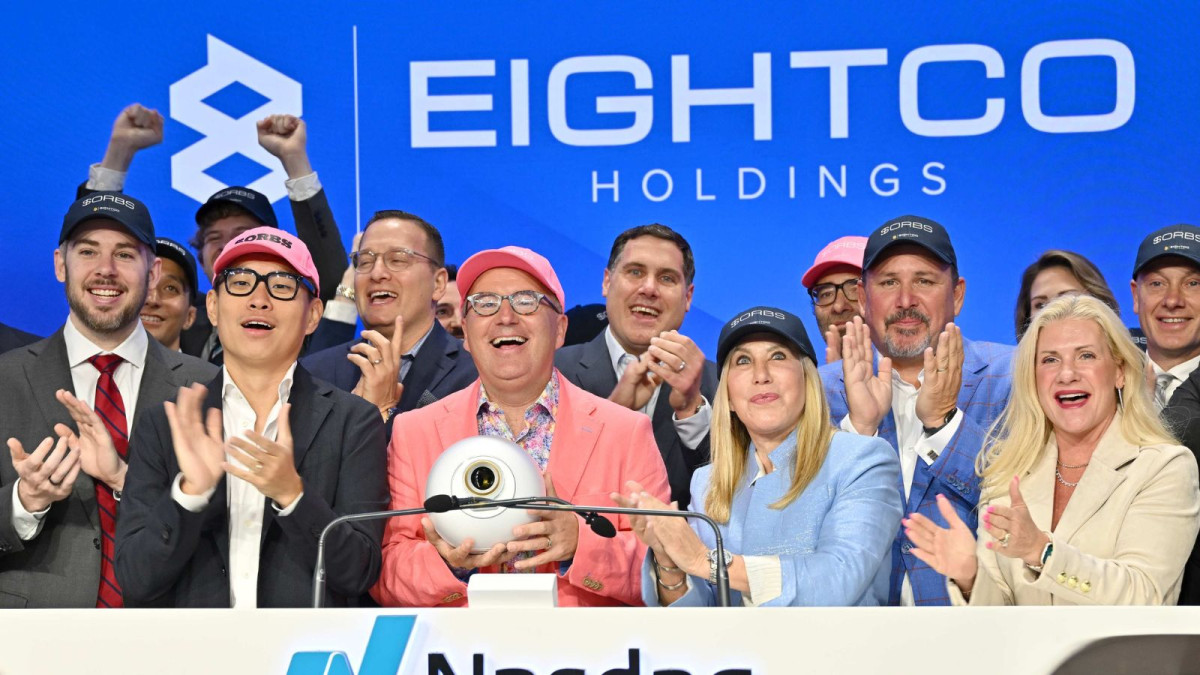
Eightco Shares Jump 25% After $125M Raise Led by Bitmine, ARK Invest, and Kraken

Eightco Holdings (NASDAQ: ORBS) pulled off a real power play on Wall Street Thursday, with shares jumping roughly 25% after the company announced it had locked in $125 million in new institutional commitments from a lineup that includes Bitmine Immersion Technologies, Cathie Wood's ARK Invest, and Payward, the parent company of crypto exchange Kraken.
The raise was led by Bitmine, which committed $75 million, with ARK Invest pledging at least $25 million and Payward rounding out the headline trio with another $25 million of its own. The full investor roster behind ORBS reads like a who's who of the crypto world: Coinfund, Pantera Capital, GSR, FalconX, Discovery Capital Management, and the World Foundation are all listed as backers.
But the capital raise wasn't even the most eyebrow-raising piece of news in Thursday's announcement. Eightco simultaneously disclosed it had already closed initial strategic investments of $50 million into OpenAI and $25 million into MrBeast and Beast Industries.
The OpenAI investment, worth approximately $52.5 million in economic interests in the company's equity, closed on March 6, just days before this announcement.
To understand how we got here, we kind of have to dive a bit deeper. Eightco has had one of the stranger corporate transformations of recent years. The Pennsylvania-based company pivoted from inventory management to cryptocurrencies and is currently developing a universal framework for digital identity and authentication. Not too long ago, its main business was making cardboard boxes through a subsidiary called Ferguson Containers.
Now, the company's identity is built around Worldcoin (WLD), the biometric-based digital identity project co-founded by OpenAI CEO Sam Altman. As of March 5, 2026, Eightco's treasury holdings included 277,222,975 WLD tokens, 11,068 ETH, and $82 million in cash. That WLD position, the company says, represents nearly 10% of the token's circulating supply, making ORBS the largest public market holder of Worldcoin on any exchange.
The company continues to hold Worldcoin and Ethereum as a long-term believer in the world's second-most valuable cryptocurrency, and frames its Worldcoin stake as foundational to a "proof of humanity" authentication layer it's building out.
The vision, as ORBS tells it, is to combine Worldcoin's biometric identity infrastructure with OpenAI's foundational models to create something at the intersection of AI verification, blockchain rails, and mass consumer reach. And it seems that it's clearly a compelling enough pitch to draw in some serious institutional names.
Who's Backing It, and Why
Tom Lee, Chairman of Bitmine, is joining Eightco's Board of Directors, while Brett Winton, Chief Futurist at ARK Invest, will serve as an advisor to the board.
Lee's involvement through Bitmine is notable. Bitmine itself has been on an aggressive crypto treasury strategy of its own, positioning itself as the leading Ethereum treasury company in public markets. Bitmine has combined crypto, cash, and "moonshot" holdings ranging well into the billions, and adding Eightco to that ecosystem tightens the connection between the two companies considerably. Lee getting a board seat means this isn't a passive financial bet.
His take on the investment was direct. Bitmine sees Eightco sitting at the center of some of the most important future needs and developments in AI, with what Lee described as tremendous synergy between Proof of Human via Worldcoin, OpenAI's foundational models, and the reach of the world's biggest content creator in MrBeast.
ARK Invest's Cathie Wood weighed in too, describing ORBS as taking on a unique initiative at the intersection of AI, blockchain, and creator-driven platforms.
Kraken's Arjun Sethi was perhaps the most philosophical about the whole thing. The Payward co-CEO framed it around power-law dynamics, suggesting that a small number of platforms tend to capture a disproportionate share of value in technological revolutions, and that ORBS is trying to position itself at the convergence of AI, cryptographic infrastructure, and global digital distribution.
MrBeast and the Distribution Play
The $25 million bet on Beast Industries deserves its own look. On March 10, Eightco invested approximately $25 million in shares of Beast Industries, with $7 million of that amount structured as committed capital that may be funded within 60 days in exchange for additional stock.
Beast Industries is the broader enterprise behind YouTube megastar Jimmy Donaldson, better known as MrBeast. The company spans entertainment, consumer products, and CPG, with the snack brand Feastables among its faster-growing launches. MrBeast's YouTube channel has over 450 million subscribers and generates more than 5 billion monthly views across all channels.
For a blockchain infrastructure play trying to build out digital identity at scale, having a meaningful stake in the world's most-subscribed YouTube channel is an unusual but not entirely illogical move. Distribution is distribution, and Eightco seems to be betting that the future of human authentication online will require massive consumer reach to actually work.
Taken together, Eightco is making a bold argument that the convergence of AI identity verification, blockchain infrastructure, and mass consumer distribution represents a huge opportunity, and that a small public company out of Pennsylvania is somehow positioned to sit at the center of it.
Whether the OpenAI stake, the MrBeast bet, the Worldcoin treasury, and the Ethereum holdings actually compound into something concrete is still up in the air. The risk disclosures in ORBS's own SEC filings acknowledge this as well, flagging the company's lack of control over private companies where it holds minority stakes, and the ongoing challenges of maintaining Nasdaq listing compliance while burning cash.
But the investor lineup announced today isn't made up of amateurs. Pantera, Brevan Howard, Coinfund, and ARK all know what they're doing, and they all decided this particular combination of bets was worth backing.
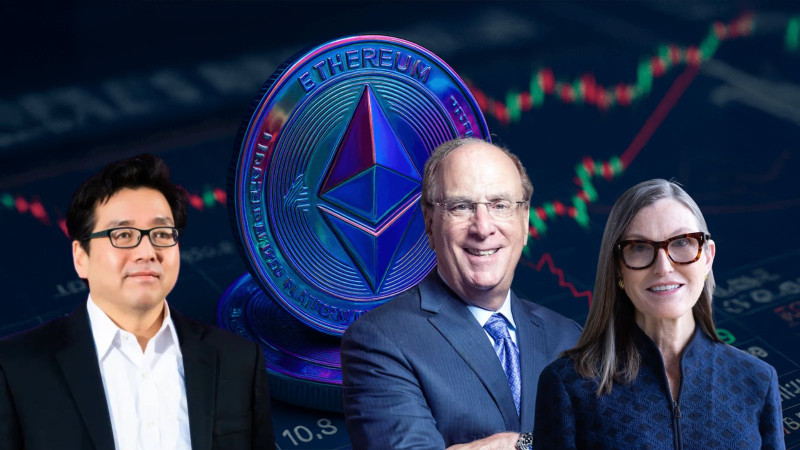
Investors Doubling Down on BitMine, Ethereum

Ethereum has been stuck in a prolonged downtrend. Prices are down more than 60 percent from the August 2025 highs, sentiment is shaky, and some analysts are floating scenarios where ETH could revisit the $1,400 level before finding a durable bottom.
And yet, through all that noise, something else is happening in the background.
Investors are still buying BitMine, as BitMine is buying more Ethereum.
Not trimming. Not waiting. Buying. In some cases, buying aggressively.
Ethereum Weakness Sets the Stage
The broader crypto market has been under pressure for months. Spot Ethereum ETFs have seen notable outflows, a sharp contrast to the steady demand flowing into Bitcoin products. That divergence has reinforced the narrative that institutions are leaning toward relative safety in BTC while treating ETH with more caution.
Ethereum’s price action reflects that hesitation. Lower highs, fading rallies, and persistent risk off positioning have defined the tape. Even bullish long term analysts concede that the near term setup remains fragile.
But the selloff has not scared everyone away.
BitMine Is Doubling Down
BitMine Immersion Technologies, (BMNR), has quietly become one of the largest corporate holders of ETH after pivoting to an Ethereum treasury strategy in 2025 under Chairman Tom Lee.
The company has accumulated millions of tokens, building a balance sheet that is heavily exposed to Ethereum. That exposure has not looked pretty on paper during the drawdown. Reports show billions in unrealized losses as ETH retraced from its highs.
Still, BitMine has continued to add.
Rather than slowing purchases during weakness, the company has leaned into the downturn. The logic appears straightforward. If the long term thesis around Ethereum remains intact, lower prices represent opportunity rather than risk.
It is a classic buy the dip strategy, but on a corporate scale.
Ark Invest Adds More Shares
Cathie Wood’s Ark Invest has reinforced that narrative. The firm has repeatedly increased its exposure to BitMine across multiple ETFs, adding millions of dollars worth of BMNR shares even as Ethereum remained under pressure. The firm bought a total of 212,314 shares across three of its exchange-traded funds, worth $4.2 million based on Thursday's closing price.
Ark has a history of leaning into volatility in high conviction themes. Crypto infrastructure and blockchain exposure remain central to its long horizon strategy. In that context, adding BitMine during a downtrend fits the pattern.
For Ark, the weakness in ETH may be noise relative to the structural growth story around smart contracts, tokenization, and onchain financial rails.
BlackRock Increases Its Stake
It is not just Ark.
BlackRock has also boosted its BMNR position significantly, increasing its holdings by more than 165 percent according to recent disclosures. That scale of increase is difficult to ignore, especially in a market where Ethereum linked products have seen soft flows.
The timing is notable. While some funds reduced direct ETH exposure through ETFs, large asset managers appear comfortable gaining exposure indirectly through equity vehicles like BitMine.
For institutions that prefer regulated equity structures over direct token custody, BMNR offers a levered proxy. It packages Ethereum exposure inside a public company wrapper, complete with traditional reporting and corporate governance.
That structure can matter for mandates that limit direct crypto ownership.
Why Buy BitMine When ETH Is Falling
At first glance, the trade looks counterintuitive. Ethereum is in a downtrend. ETF flows are mixed at best. Volatility remains elevated.
But the bull case rests on a few pillars.
First, long term fundamentals. Ethereum still anchors decentralized finance, stablecoin issuance, and a growing tokenization ecosystem. Institutional advocates argue that the network’s utility has not disappeared simply because price momentum has faded.
Second, balance sheet leverage. BitMine’s growing ETH treasury creates a scenario where equity performance can amplify moves in the underlying asset. For investors who believe ETH eventually reclaims higher levels, BMNR can offer outsized upside.
Third, cycle dynamics. Crypto markets have a history of brutal drawdowns followed by sharp recoveries. Accumulating during periods of pessimism has historically rewarded patient capital, even if timing the bottom is nearly impossible.
Investors are clearly looking past the next few quarters and thinking long term on Ethereum.
The Bottom Line
There is a clear split in the market right now.
Short term traders are reacting to chart levels, macro uncertainty, and ETF flow data. Long term allocators appear to be focusing on strategic positioning.
The continued accumulation of BitMine shares by names like Ark Invest and BlackRock suggests that institutional conviction in Ethereum infrastructure has not broken, even if spot prices have.
That does not guarantee a rebound. Ethereum could test lower levels before sentiment turns. Volatility is part of the asset class.
But the steady bid under BitMine tells its own story.
Even in a downtrend, capital is being deployed...with intent.
For now, Ethereum may be drifting lower. BitMine buyers, however, are still stepping in and definitely betting on Ethereum for the long haul.
ARK Invest Sees a Path to an $11 Trillion Tokenized Market

Tokenization has always sounded bigger than it looked.
For years, crypto insiders talked about putting stocks, bonds, and real-world assets on blockchains as if it were inevitable. In reality, adoption was slow, liquidity was thin, and most experiments never made it past pilot stage. That gap between narrative and execution is starting to close, and ARK Invest appears to think the timing finally matters.
The innovation-focused asset manager has taken a stake in Securitize, a company building the infrastructure to issue and manage tokenized securities. On its own, the investment is modest. In context, it is a clear signal that tokenization is moving out of theory and into serious institutional planning.
From a $30 Billion Market to Something Much Bigger
Today, the tokenized real-world asset market sits at roughly $30 billion, depending on how narrowly you define it. That includes tokenized Treasurys, money market funds, private credit, and a small but growing set of other financial instruments.
ARK’s long-term outlook is far more ambitious. The firm has pointed to projections that tokenization could scale into an $11 trillion market by 2030. That kind of growth does not come from retail speculation or crypto-native assets alone. It requires deep integration with traditional finance.
"In our view, broad based adoption of tokenization is likely to follow the development of regulatory clarity and institutional-grade infrastructure," Ark Invest said in its "Big Ideas 2026" report published Wednesday.
Institutional Momentum Is Picking Up Fast
What is changing most quickly is not the technology, but the pace of institutional involvement.
In just the past few weeks, some of the largest names in global markets have moved from discussion to execution. Earlier this week, the New York Stock Exchange said it is building a blockchain-based trading venue designed to support around-the-clock trading of tokenized stocks and exchange-traded funds. The platform is expected to launch later this year, pending regulatory approval, and would mark one of the most direct integrations of tokenized assets into a major U.S. exchange.
That announcement followed a similar move from F/m Investments, the firm behind the $6.3 billion U.S. Treasury 3-Month Bill ETF. The company said it has asked U.S. regulators for permission to record existing ETF shares on a blockchain. Founded in 2018, F/m manages roughly $18 billion in assets, and its approach signals that tokenization is no longer limited to newly issued products. Existing, actively traded funds are now being considered for on-chain recordkeeping.
Custody and settlement providers are moving in parallel. Last week, State Street said it is rolling out a digital asset platform aimed at supporting money market funds, ETFs, and cash products, including tokenized deposits and stablecoins. Around the same time, London Stock Exchange Group launched its Digital Settlement House, a system designed to enable near-instant settlement across both blockchain-based rails and traditional payment infrastructure.
Taken together, these moves suggest institutions are no longer testing whether tokenization works. They are deciding where it fits.
ARK has noted that tokenized markets today are still dominated by sovereign debt, particularly U.S. Treasurys. That is where the clearest efficiency gains exist and where regulatory risk is lowest. Over the next five years, however, the firm expects bank deposits and global public equities to make up a much larger share of tokenized value as institutions move beyond pilot programs and into scaled deployment.
If that shift plays out, tokenization stops being a niche product category and starts to look like a new operating layer for global markets.

New York Stock Exchange Wants To Go On-Chain
Why This Time Feels Different
Tokenization has gone through hype cycles before, usually tied to broader crypto booms. What stands out now is who is building and who is participating.
Large asset managers are no longer experimenting on the margins. They are issuing real products, allocating real capital, and treating blockchain settlement as a potential efficiency gain rather than a novelty. Tokenized Treasurys and money market funds are leading adoption because they solve real operational problems like settlement speed and collateral mobility.
That is how new financial infrastructure typically gains traction. Slowly, quietly, and through the most boring assets first.
ARK’s involvement fits neatly into that pattern.
The Challenges Have Not Disappeared
None of this means tokenization is inevitable or frictionless.
Liquidity in secondary markets remains limited. Regulatory clarity still varies widely across jurisdictions. Custody, interoperability, and standardization are ongoing challenges. Many tokenized assets trade less frequently than their traditional equivalents, at least for now.
But those challenges look more like growing pains than dead ends. The market is early, not stalled.
Infrastructure Before Impact
If tokenization does reach anything close to $11 trillion by the end of the decade, it will not arrive with fanfare. Most investors will not notice when the shift happens. Trades will just settle faster. Access will widen. Capital will move more freely across systems that used to be siloed.
ARK’s move suggests the firm is less interested in predicting when that happens and more interested in owning the infrastructure that makes it possible.