#Crypto Markets

BlackRock & Fidelity Taking Over Bitcoin ETF Market

When U.S. spot bitcoin exchange-traded funds launched in January 2024, the thinking was pretty straightforward: a dozen or so competing products, a level playing field, and investors picking winners over time. Eighteen months in, that vision has not quite held up. What has emerged instead looks a lot more like a two-firm market, and it is getting more concentrated by the month.
BlackRock's iShares Bitcoin Trust (IBIT) and Fidelity's Wise Origin Bitcoin Fund (FBTC) are now pulling in the overwhelming majority of new institutional capital flowing into the space. The data tells the story plainly. On January 14 of this year, total bitcoin ETF inflows hit $840.6 million, according to Farside Investors. IBIT alone captured $648.4 million of that. FBTC added another $125.4 million. Between them, the two funds accounted for more than 90 cents of every dollar that entered the market that day.
That was not a fluke. On April 17, when total inflows reached $663.9 million, IBIT and FBTC again represented roughly two-thirds of the total. By May 1, the same pattern repeated: combined flows from the pair neared $500 million out of a $629.8 million total. Day after day, the numbers point in the same direction.
Scale Is the Whole Game
The dominance comes down to a few structural advantages that are basically impossible for smaller players to replicate in the short term. BlackRock manages over $10 trillion in assets globally. It has deep, pre-existing relationships with thousands of wealth management platforms, financial advisors, family offices, and institutional allocators. Fidelity brings similar firepower through its massive retail brokerage network and deep roots in retirement savings. Both funds also benefit from the kind of liquidity and trading depth that large institutions need when moving big positions without significant slippage.
IBIT currently commands roughly $54 to $67 billion in assets under management depending on the reporting date, representing close to half of the entire U.S. spot bitcoin ETF market by AUM. FBTC sits in a distant second at around $17 to $18 billion. Together, the pair controls the vast majority of the institutional bitcoin allocation pie, leaving Grayscale's GBTC, Ark's ARKB, Bitwise's BITB, and others fighting over what's left.
For professional allocators, the decision often comes down to factors that have nothing to do with bitcoin itself. Liquidity, bid-ask spreads, trading volume, and issuer reputation weigh heavily. On those metrics, IBIT and FBTC clear the bar for most institutional risk frameworks. Many of the other funds, frankly, do not even come close.
Smaller Funds Are Getting Squeezed Out
The casualty list is getting longer. Funds from Franklin Templeton, VanEck, WisdomTree, and Valkyrie are now regularly posting daily flows measured in single-digit millions, or occasionally not appearing in the inflow tallies at all. Their presence in the market is becoming more of a footnote than a force. Earlier this year, Trump Media and Technology Group scrapped plans for its own spot bitcoin ETF entirely, an early sign that new entrants have correctly sized up what they would be walking into.
This consolidation has been particularly visible during the more turbulent stretches of 2026. Bitcoin is down roughly 29% year-to-date, and the broader ETF complex has lived through several waves of heavy redemptions, including a rough patch between mid-May and early June. During those selloffs, outflows have hit all the major funds, but IBIT has consistently absorbed smaller losses relative to its peers, and in some cases remained net positive on days when rivals saw significant withdrawals.
The Grayscale Factor and What It Tells Us
Worth remembering: when Grayscale converted its GBTC from a closed-end trust to a spot ETF in January 2024, the fund bled roughly $17.5 billion in cumulative outflows as investors rotated away from its 1.5% fee toward cheaper alternatives. The primary beneficiaries of that rotation were IBIT and FBTC, both at 0.25%. That rotation was arguably the founding event that cemented today's hierarchy, and it has proven remarkably sticky.
Both products hold physical bitcoin. Both carry similar expense ratios. Both have comparable tracking records. The difference is distribution, pure and simple. BlackRock and Fidelity had the pipes already built when spot approval came through. Everyone else was starting from scratch.
A Winner-Take-Most Market Takes Shape
What is unfolding in the bitcoin ETF market looks less like a competitive landscape and more like the dynamics you see in index fund or money market businesses, where scale and distribution create a self-reinforcing advantage. The bigger IBIT gets, the more liquid it becomes. The more liquid it becomes, the more institutions gravitate toward it. And the more institutions hold it, the harder it becomes for smaller products to pull capital away.
The implications for smaller issuers are not great. They are not going to disappear overnight, but their ability to influence market direction or attract meaningful institutional allocations looks increasingly limited. Barring a significant product innovation or fee shock, the bitcoin ETF market appears to be settling into a structure where BlackRock and Fidelity call the shots, and everyone else fills out the margins.
For the wide market, that concentration cuts both ways. It means greater stability and predictability from two well-capitalized, highly visible issuers. It also means that sentiment at BlackRock and Fidelity, more than anywhere else, will determine the direction of institutional bitcoin flows for the near future.

Grayscale Targets To Corner HYPE ETF Market With Lowest Fee

Grayscale is making a run at the growing Hyperliquid ETF market, filing an amended S-1 registration statement with the Securities and Exchange Commission on Monday that sets a sponsor fee of 0.29% for its Grayscale Hyperliquid Staking ETF, ticker HYPG. The updated filing also confirms the fund will list on Nasdaq, and according to Bloomberg Intelligence ETF analyst James Seyffart, a launch could come as soon as this week.
That fee sits just below the 0.30% charged by 21Shares on its THYP fund, and meaningfully below Bitwise's BHYP, which carries a 0% introductory rate for the first month before jumping to 0.34%. It's a deliberate pricing move, and in a market where basis points can drive significant asset flows, Grayscale is clearly trying to get ahead before the institutional money settles.
Grayscale's entry would make HYPG the third U.S.-listed spot HYPE product, following Bitwise's BHYP and 21Shares' THYP, which launched in May on Nasdaq. Early demand for these funds has been hard to ignore. HYPE-focused ETFs pulled in over $132 million in net inflows in roughly their first month of trading, with zero outflow days recorded during an 8-day streak that coincided with HYPE hitting new all-time highs. For context, that run came while Bitcoin and Ethereum ETFs were actually losing assets.
The 21Shares THYP fund collected more than $5 million within days of its May 12 debut, with Eli Ndinga, the firm's global head of research, describing the early response as evidence of real investor appetite for regulated, round-the-clock exposure to crypto-linked markets. Bitwise's BHYP held more than $40 million in net assets as of late May, while the two funds combined purchased roughly $16 million in spot HYPE in a single 24-hour window as share issuance expanded.
What Is Hyperliquid Anyway?
For people still getting familiar with the name, Hyperliquid is a decentralized derivatives exchange built on its own Layer-1 blockchain. It lets traders open perpetual futures positions entirely on-chain, without the custodial risk of a centralized venue. That 24/7 availability and non-custodial structure has made it increasingly attractive to both retail and institutional traders, particularly as centralized exchange perpetuals volumes dropped roughly 34% in early 2026.
The protocol's native token, HYPE, now ranks among the top 10 cryptocurrencies by market cap, sitting around $16 to $17 billion as of early June. The token has climbed from roughly $20 at the start of 2026 to recent all-time highs above $73, a move that reflects both the platform's surging trading volumes and the structural demand created by HYPE buybacks. Hyperliquid directs nearly all of its trading fee revenue toward buying back and burning HYPE tokens, a mechanism that Grayscale's own research team described as a standout feature in a May 28 report calling the protocol "the breakout success story" of modern crypto.
Hyperliquid logged roughly $2.9 trillion in perpetual futures volume during 2025, and open interest has consistently ranked third globally, behind only Binance and Bybit. At a Bernstein conference in late May, Jeff Sprecher, chief executive of Intercontinental Exchange and owner of the New York Stock Exchange, said the 11-person platform had made a bigger impact on finance than Nasdaq. Whether or not that comparison holds up over time, it signals how seriously traditional finance is paying attention.
Seed Investment and Staking Angle
Grayscale's amended filing isn't just about fees. The firm has also been in discussions to secure a seed investment of around $115 million in HYPE tokens ahead of launch, a figure that would give HYPG substantial early liquidity. The fund's full name, the Grayscale Hyperliquid Staking ETF, suggests it intends to incorporate staking into its strategy, similar to Bitwise's BHYP, which targets staking roughly 70% of fund assets and reports a 2.25% gross staking reward rate. Coinbase is listed as custodian.
The staking component matters because it gives the ETF a yield angle that pure spot exposure does not. With HYPE's token unlock for core contributors worth roughly $684 million scheduled for June 6, near-term price volatility is possible, though analysts note the unlock represents just around 1% of total supply. The protocol's aggressive buyback engine and continued inflows into ETF products remain the more dominant forces.
Fee War Is Just Getting Started
The fee gap between Grayscale, 21Shares, and Bitwise looks small right now, but history suggests that it won't stay there. The same dynamic played out in Bitcoin ETF competition in 2024, where initial fee differentials narrowed sharply as issuers competed for long-term AUM. Grayscale is entering behind competitors who already have first-mover brand recognition in HYPE, so pricing aggressively from day one is arguably the right call.
With Seyffart expecting a launch by the end of the week, HYPG could be live before most investors have had a chance to compare their options. HYPE has generated more institutional interest per dollar of market cap than almost any altcoin this cycle and Grayscale is betting that being the cheapest option in a fast-growing category is enough to corner the market. For now anyway.
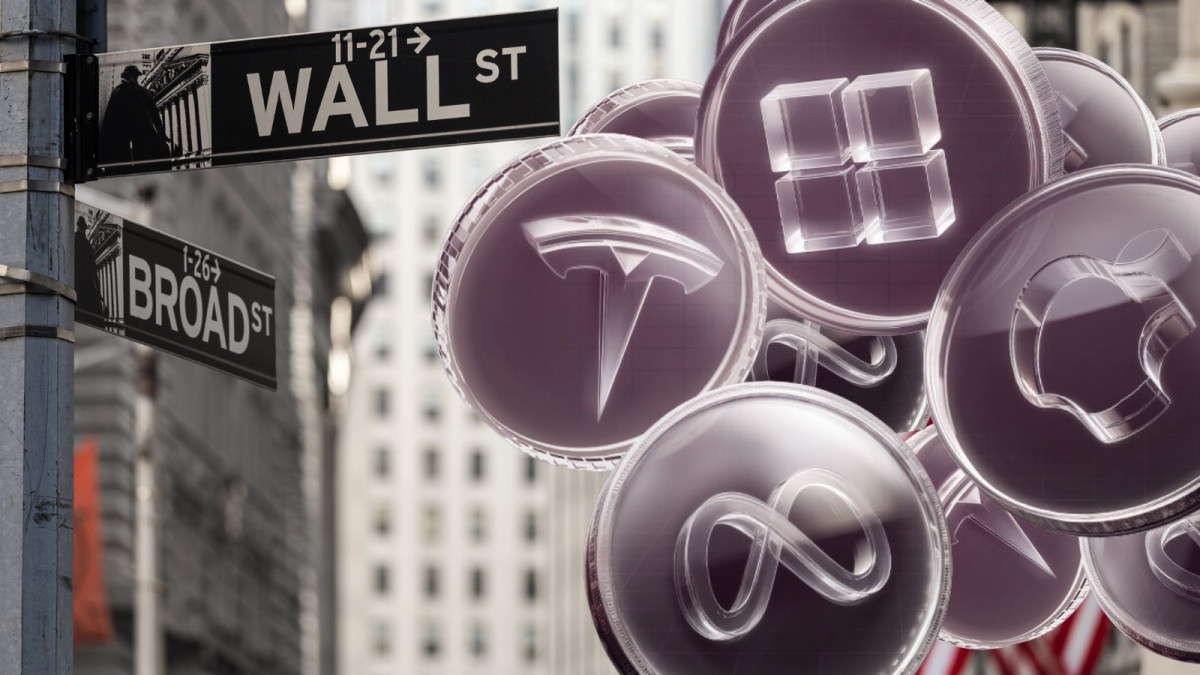
Wall Street Is Going To Tokenize Everything

There was a version of this story...told many moons ago that gets told as a prediction. Some future moment when the old guard of finance finally meets crypto on equal footing, when the suits and the degens find common ground, when a BlackRock executive and a DeFi protocol share the same balance sheet. Well that story is now pretty outdated...it's no longer some vision of an oracle peering into a crystal ball. We are already living in it. The future is here.
What we are seeing happen in global finance with tokenization is not some pilot program or a hedge. It is a structural transformation, and it is accelerating faster than most people outside of these two worlds seem to understand. Wall Street is no longer on the outside looking in, just dipping their toes in, to test the water. They have taken the plunge.
The Old System Was Always Broken
Here is something traditional finance never really wanted to say out loud: the infrastructure holding it together is ancient, slow, and held up largely by institutional inertia. Settlements that take days. Liquidity locked to six-and-a-half-hour trading windows. Layers of intermediaries, each one clipping a fee, each one adding time. For the largest players, those inefficiencies were baked into the cost of doing business. For everyone else, especially retail investors in markets outside the U.S., they were just walls.
Blockchain does not fix all of this overnight. But it offers something that legacy systems fundamentally cannot: a shared, programmable, real-time record of ownership that does not require three middlemen to reconcile. The World Economic Forum, in its 2025 report on asset tokenization, described the transition as potentially the next major phase in the development of financial market architecture, drawing a comparison to the shift away from paper certificates in the 1960s. That is not a crypto inside touting to his followers on X. That is the WEF stating how tokenization could transform finance.
When even the most establishment-facing institutions are framing this as a generational infrastructure shift, it's probably worth paying attention to.
The Institutions Are Not Coming. They Are Here.
BlackRock has a tokenized fund on Ethereum. JPMorgan launched a second tokenized money market product backed by U.S. Treasuries. Fidelity brought its own Digital Interest Token on-chain. Franklin Templeton has been quietly building its tokenized money market fund, BENJI, across multiple blockchains for years. These are live products managing real capital.
The total market for tokenized real-world assets crossed $75 billion in 2025. Projections from market analysts put the long-term ceiling at $18.9 trillion by 2033, and some estimates, citing the total addressable market of traditional finance, go much higher. Larry Fink has publicly stated, more than once, that he believes every financial asset can eventually be tokenized. When the CEO of the world's largest asset manager says that with conviction, the rest of the industry listens.The total crypto market sits at just shy of $2.6 trillion right now, to add some perspective to the type of volume tokenization can bring to the space.
And the whole idea behind this is not ideological. It is practical. Blockchain cuts settlement time, removes redundant intermediaries, enables fractional ownership, and allows assets to be composable across different financial products. For institutions moving hundreds of billions, those efficiency gains compound into something very significant, very quickly.
xStocks and the Part Where It Gets Really Interesting
Tokenized treasuries and money market funds are the institutional on-ramp. But the development that best captures where all of this is truly heading is xStocks, and it is worth understanding why it matters as much as it does.
Launched in June 2025 by Backed Finance, a Swiss RWA issuer, xStocks put more than 60 fully collateralized U.S. equities on Solana as SPL tokens. Apple. Tesla. Nvidia. Amazon. Each one backed 1:1 by real shares held under regulated custody. Not synthetic. Not a derivative. The actual stock, on-chain. Available the same day on Kraken and Bybit to users in over 185 countries, and within hours, live across Solana's DeFi ecosystem on Raydium, Jupiter, and Kamino.
The numbers since launch have been hard to argue with. Over $25 billion in total transaction volume. More than 80,000 unique on-chain holders. The platform has since expanded to 100 fully backed listings, and xStocks recently launched xChange, a unified execution layer for tokenized equities running 24/5 across Ethereum and Solana with atomic settlement built in. And we'll go back to the numbers. xStocks is amazing. It's done over $25 billion in volume. But daily stock market volume just in the U.S. is roughly $500-700 billion. Daily. Just in the U.S. Starting to get the big picture here? The much, much bigger picture?
What makes this genuinely different from everything that came before it is composability. With a brokerage account, you own a stock and that is more or less the end of the story. With xStocks inside Solana's DeFi ecosystem, you can use Nvidia as collateral in a lending protocol, provide liquidity with Apple against a stablecoin, or swap Tesla for SOL without touching a broker, a clearinghouse, or a trading window. That kind of programmable financial infrastructure does not exist in traditional markets. It simply never has.
Who This Actually Opens the Door For
For investors in the U.S., this is interesting. For investors everywhere else, it is potentially transformative. Access to U.S. equity markets has historically required meeting regulatory hurdles, working through licensed brokers, and navigating banking infrastructure that many parts of the world simply do not have. xStocks changes that math entirely. Trading starts at one euro. Dividends reinvest automatically. No broker required. No minimum account size. Just a wallet and a connection.
Franklin Templeton's partnership with Kraken, announced in early 2026, is another data point worth noting here. The two are exploring on-chain versions of Franklin's financial products, including tokenized stocks, yield instruments, and compliant custody solutions. A legacy asset manager and a crypto exchange building joint infrastructure is the kind of thing that a few years ago would have sounded like a very optimistic projection. Now it is a press release.
The Narrative Has Shifted. Permanently.
Crypto spent a long time fighting to be taken seriously by traditional finance. That fight is over, and crypto won it on the merits. What is replacing it is something more interesting: a negotiation over what the merged system actually looks like, who controls it, and how fast it scales.
The regulatory environment is improving. Interoperability between chains is being worked out. Liquidity in tokenized asset markets is growing month over month. The WEF framed the barriers as real but solvable, pointing to legacy infrastructure integration, inconsistent global standards, and cross-chain friction as the remaining friction points. None of those are permanent problems. They are engineering and coordination challenges, and the talent and capital now focused on solving them is enormous.
The General Manager of xStocks said it about as cleanly as it can be said: the question is no longer whether equities belong on-chain, but how fast they can be scaled. With 100 listings and $25 billion in volume already behind the platform, the model is proven. The next stage is expansion to every major U.S. equity and, eventually, global equities across international markets.
That is not a roadmap for some distant future version of crypto. That is the roadmap for the next few years. And if the last twelve months are any indication, it will probably move faster than anyone is currently projecting, including myself. As bullish as I am on all of this, I have a feeling that the transition to tokenize the world will be bigger than anything I could ever imagine.

Strategy Buys Back $1.5B Bonds, May Sell Bitcoin

Strategy Inc. dropped a notable filing on Friday, announcing it has agreed to repurchase approximately $1.5 billion of its 0% Convertible Senior Notes due 2029 in a series of privately negotiated transactions with select noteholders. The buyback price comes in at roughly $1.38 billion in cash, meaning the company is retiring the debt at around 92 cents on the dollar. It is a discount, and that matters.
The notes in question were originally issued back in November 2024 with a $3 billion notional size and a 0% coupon rate. They carry a conversion price of $672.40 per share and mature December 2, 2029. With MSTR shares currently sitting around $183, that conversion price is a long way off. The decision to buy these back now, below face value, reflects what appears to be an active effort to tighten up the balance sheet while the opportunity exists.
Bitcoin Sales Back on the Table
Here is where it gets interesting. Strategy listed three possible funding sources for the repurchase: available cash reserves, proceeds from its at-the-market equity offering programs, and potentially the sale of bitcoin. That last part is drawing attention.
Executive Chairman Michael Saylor has long positioned the firm as a relentless accumulator of BTC, not a seller. At the Bitcoin 2026 conference, he stated that even if Strategy were to sell one bitcoin, it would be buying 10 to 20 more. That framing is still technically intact, but the formal inclusion of bitcoin sales as a stated funding mechanism in an SEC filing is a different kind of signal than a conference soundbite.
Strategy currently holds 818,869 BTC, acquired at a total cost of roughly $61.81 billion, or an average price around $75,537 per coin. At current prices near $80,400, the company is sitting on unrealized gains. Whether it actually taps those holdings remains to be seen, but the option is now formally on the table in a public document.
STRC Momentum and JPMorgan Projections Add Context
The announcement comes just one day after Strategy's Variable Rate Series A Perpetual Stretch Preferred Stock, known as STRC, hit a record single-day trading volume of $1.53 billion on Thursday. That beat the prior record of $1.1 billion set on April 13. Saylor flagged the milestone on X, calling it a sign of growing institutional confidence in the instrument.
The STRC instrument has become a key capital-raising tool for Strategy, helping fund a significant portion of its bitcoin accumulation over recent months. The company has added more than 101,000 BTC since March alone, with over 56,770 of those purchases occurring after April. JPMorgan analysts have projected Strategy's total bitcoin purchases for 2026 could reach $30 billion, citing the capital efficiency of its preferred equity programs.
Settlement Expected Around May 19
The final repurchase price is still subject to adjustment based on the volume-weighted average price of Strategy's Class A common stock over a designated measurement period, so the $1.38 billion figure could shift modestly before everything closes. Once settlement occurs, expected on or around May 19, the repurchased notes will be cancelled. That leaves approximately $1.5 billion of the 2029 notes still outstanding, implying the company held close to $3 billion in the instrument before this transaction.
MSTR shares were down roughly 2% in pre-market trading Friday, moving in line with a broader overnight dip in bitcoin. Analysts note that retiring the notes at a discount reduces future dilution risk, given the gap between the conversion price and current share levels, while also signaling that management is actively managing liabilities rather than simply letting them ride to maturity.
For a company that has built its entire identity around bitcoin accumulation, even the possibility of selling BTC to service debt is a nuance worth watching. Whether it stays hypothetical or not will likely depend on how bitcoin trades in the weeks ahead.

CFTC Works to Prevent Sports Prediction Market Abuse

The U.S. Commodity Futures Trading Commission has been making the rounds. CFTC Chairman Michael Selig confirmed this month that his agency is in active talks with all major professional sports leagues in the United States, as regulators scramble to get ahead of potential insider trading problems on prediction markets.
"We're talking to all the sports leagues because it's critical that they've got the best information as to what's manipulable in their markets and where the insider trading risks are," Selig said on the Faro Radio podcast. The comments come after months of escalating alarm in Washington over the explosion of prediction market trading tied to sports, politics, and military events.
A Market That Grew Too Fast
The numbers tell the story. Monthly trading volume on prediction markets has jumped from around $1.2 billion in early 2025 to over $20 billion by January 2026, according to blockchain research firm TRM Labs. Sports event contracts alone now make up nearly 90% of all bets placed on Kalshi over the past year, according to the Congressional Research Service. That kind of scale, combined with the potential for people with inside knowledge to profit on it, has made regulators nervous.
"The biggest issue that comes up is manipulation and insider trading in these markets," Selig told Front Office Sports. And the regulator isn't just talking. In March 2026, the CFTC and Major League Baseball entered into a first-of-its-kind memorandum of understanding, establishing a formal framework for confidential information-sharing between the federal agency and the league. It was a signal that more deals could be coming.
Leagues Are Moving, Too
The NHL, MLS, and MLB have all inked prediction market partnerships with Polymarket and Kalshi over the past several months. The NBA is reportedly in active talks with both platforms. The NFL has been the notable holdout, citing integrity concerns, and Selig declined to confirm whether those conversations are ongoing. What is clear is that the agency sees league cooperation as essential. The CFTC has told prediction markets it expects them to share information with leagues about which categories of individuals should be restricted from trading, including players, coaches, referees, trainers, and data partners.
The platforms themselves moved to tighten their own rules in March. Kalshi introduced new technological guardrails to block athletes from trading on contracts tied to their own leagues, and politicians from betting on their own races. Polymarket updated its rulebook the same day to prohibit trading on any information that would "violate a preexisting duty or obligation of trust," even when that information was obtained secondhand.
The urgency is partly driven by what has already happened in other markets. In April 2026, the CFTC filed its first-ever insider trading complaint involving event contracts, charging an active-duty U.S. Army soldier with using classified intelligence about a military operation in Venezuela to trade Polymarket contracts, generating more than $400,000 in profit. The DOJ has since signaled it will pursue criminal prosecutions for insider trading on prediction markets as well. Jay Clayton, the U.S. Attorney for the Southern District of New York, said in February that his office expects to bring fraud cases tied to prediction market trading.
Sports have precedent of their own. The NBA's lifetime ban of Jontay Porter and the federal charges hanging over former Miami Heat guard Terry Rozier both stem from sports betting misconduct. Prediction markets are a different product legally, but the underlying concern, that people with privileged access to information are using it to profit, is exactly the same.
Congress Is Watching
Capitol Hill is paying attention, too. A coalition of Democratic lawmakers sent a letter to the CFTC in late April urging the agency to issue a formal rule prohibiting certain types of event contracts and curbing insider trading. The letter, led by Sen. Jeff Merkley of Oregon, described the rapid growth of prediction markets as an "erosion of integrity" that demands regulatory action. Separate legislation has been introduced that would bar government officials from using prediction markets entirely and prohibit event contracts tied to elections, war, and sports.
The CFTC, for its part, published an Advanced Notice of Proposed Rulemaking in March seeking public comment on whether to amend regulations governing prediction market event contracts. Selig has framed the issue in stark terms, drawing comparisons to the offshore drift that plagued crypto markets before FTX. "I'm concerned we'll see the same with prediction markets if we keep pushing it offshore into the unregulated space," he said.
For now, the talks with sports leagues continue. Whether they translate into formal agreements on the scale of the MLB deal, and how quickly, may determine how effectively the CFTC can police the fastest-growing corner of the derivatives market before the next scandal breaks.

Nakamoto Taps Bitwise and Kraken for its Bitcoin Derivatives Program

Nakamoto, a Bitcoin treasury company listed on the Nasdaq, recently announced the details of its Bitcoin derivatives program, a program designed to generate recurring volatility income from a defined portion of Nakamoto’s Bitcoin holdings while hedging some portion of the company’s downside exposure to Bitcoin price risk.
While the Bitcoin derivatives program had already begun in the first quarter of the year, Nakamoto will be partnering with Bitwise Asset Management and the crypto exchange Kraken, with Bitwise running the derivatives strategy and Kraken offering its custody solution that will hold a portion of Nakamoto’s Bitcoin holdings that will be used for the derivatives program.
The derivatives program, according to Nakamoto, is aimed at achieving two main objectives: (1) monetizing Bitcoin volatility and (2) mitigating downside risk.
By systematically writing covered calls and call spreads against a portion of its Bitcoin holdings, Nakamoto’s Bitcoin derivatives program aims to convert the volatility in the Bitcoin options market into recurring income, which the company says can be reinvested into its Bitcoin treasury or used for its everyday operational costs.
The program also aims to mitigate downside risk due to a decline in the Bitcoin price by maintaining a defined allocation of Nakamoto’s Bitcoin holdings to protective puts and put spreads, supporting the stability of Nakamoto’s net asset value and reducing the risk of forced deleveraging, especially during stressed market conditions.
"Bitcoin's implied volatility is one of the most persistently mispriced assets in capital markets," said Tyler Evans, chief investment officer of Nakamoto and UTXO Management.
"Working with institutional grade partners like Bitwise and Kraken, we have built a disciplined framework to harvest that premium systematically, at scale, and convert that opportunity into long term value for shareholders. This program is just one component of a broader effort to identify and execute on opportunities to generate yield on our Bitcoin holdings."
Nakamoto as a Bitcoin Treasury Company
Nakamoto Inc is a publicly traded company that operates a Bitcoin treasury strategy as its core business. The company currently holds approximately 5,342 BTC on its balance sheet, valued at roughly $467.5 million.
It made its first major Bitcoin purchase in August 2025 when it purchased 5,743.91 BTC worth approximately $679 million through its subsidiary Nakamoto Holdings. However, it recently sold 284 BTC for $20 million last month, with the proceeds used to support its working capital and fund its business operations.
Bitcoin Risk Signals Flash Bullish: Is a Rally Coming?

Something may have shifted in the Bitcoin market. After months of grinding sideways action and periodic dips that had retail investors questioning their convictions, a handful of closely watched indicators are quietly aligning in the same direction, and it's not bearish.
Glassnode's proprietary Risk Index, which quantifies systemic market risk on a scale of 0 to 100, has dropped to zero. That's the floor. The firm's Moderate Strategy tracker has simultaneously flipped from "Moderate" to "High Confidence" for the first time since October 10, a combination analysts at the on-chain data firm are calling a "cleared risk landscape." The last time these two signals aligned, Bitcoin was on the cusp of a significant leg higher.
"This is an excellent window for strategic accumulation rather than chasing deeper dips," said Lacie Zhang, research analyst at Bitget Wallet. Zhang added the firm holds "a strong conviction for a positive close to 2026," pointing to improving market structure and mounting institutional confidence as the two pillars that could drive Bitcoin to a fresh all-time high before year-end.

Institutions Are Loading Up, Quietly
While retail sentiment has been mixed at best, institutional players appear to have decided the discount is too good to ignore. Strategy, Michael Saylor's Bitcoin-focused firm, made its largest BTC purchase since late 2024 in April, acquiring 34,164 coins for roughly $2.54 billion at an average price near $74,395. That brings the firm's total stash to over 815,000 BTC, a figure that continues to tighten long-term supply in ways that matter.
U.S. spot Bitcoin ETFs have also recorded five consecutive days of net inflows, with BlackRock's IBIT leading the charge at $256 million in a single session. Cumulative net inflows have now eclipsed $57.98 billion. For a market that spent much of Q1 2026 dealing with outflows and persistent selling pressure, that's a meaningful reversal. Exchange balances are declining, on-chain data shows addresses holding more than 1,000 BTC have grown by roughly 3.2% month-over-month, and stablecoin supply sitting on the sidelines has been creeping higher. The classic setup, in other words.
Sentiment Thaws as Geopolitical Clouds Part
It's not just the on-chain picture that's improving. The macro backdrop has started to cooperate too, at least at the margins. The Crypto Fear and Greed Index has climbed from "extreme fear" at the start of April to simply "fear," which doesn't sound like much but actually represents a significant thaw in how traders are feeling. Bitcoin briefly touched $79,388 on Wednesday, its highest print in over three months. It is currently sitting just below that around $78,300 at time of writing.
Separately, CryptoQuant's Bull Score Index, which blends ten different on-chain metrics, has climbed to a neutral reading of 50 for the first time since Bitcoin was trading above $126,000. Reaching neutral from a structurally bearish position is, in CryptoQuant's framework, confirmation that the bear market may have ended. The bounce from near $60,000 to current levels is, by that measure, something more than a dead-cat rally.
Easing tensions in the Middle East are helping too. "As the US-Iran conflict subsides, bullish bets will continue to propel the market upward in the near term," said Jeff Mei, COO at crypto exchange BTSE. Prediction markets appear to agree, with users on one popular platform assigning a 74% probability that Bitcoin extends its rally to $84,000 in the near term.
The Path to $80K and Beyond
Analysts are cautiously optimistic about what comes next. A clean break and hold above $80,000 would serve as both a technical and psychological trigger, opening up the road toward $90,000 and ultimately a retest of all-time highs. The technical structure supports it, with Bitcoin forming higher lows through the April consolidation and the MACD histogram beginning to flatten from negative territory.
Longer-term forecasts remain ambitious. Standard Chartered carries a $100,000 year-end target, while Bernstein has maintained $150,000, arguing that spot ETFs, corporate treasury adoption, and structured capital products have changed the underlying market structure in ways that make cycle drawdowns shallower and recoveries faster. JPMorgan's volatility-adjusted Bitcoin-to-gold framework puts implied fair value even higher, somewhere north of $170,000.
Momentum from Bitcoin’s recent rally could spill into the altcoin market, which could see gains of as much as 60% if Bitcoin continues to rise, according to a crypto analyst.
“I think this leg has enough room to continue to $86K, and altcoins to run 30-60% from here,” MN Trading Capital founder Michael van de Poppe said on Thursday. A move to that $86K price would only be a 9% increase.
The Risks Haven't Gone Away
That said, nobody credible is calling this a certainty, certainly not this guy...who has been in the space long enough to know that NO ONE has a crystal ball. Glassnode's own data shows 54% of recent buyers are currently sitting in profit, and short-term holders' realized profit has spiked to $4.4 million, three times the $1.5 million level that marked every local top so far in 2026. Those numbers suggest the market is not without vulnerability, particularly in the absence of a fresh demand catalyst.
A flare-up in Middle East hostilities, any disruption to oil flows that sparks renewed inflation, and the broader uncertainty around Federal Reserve policy. The potential CLARITY Act, Fed rate cuts, and a lasting geopolitical resolution remain the three catalysts most often cited by analysts as what the market needs to convincingly clear $80,000 and hold.
For now, the risk landscape has cleared at the indicator level. Whether the price follows is the only question that matters.

Strategy Buys Another $1 Billion in Bitcoin, Holdings Cross 780,000 BTC

Michael Saylor is not slowing down. Strategy disclosed on Monday that it bought another 13,927 BTC last week, spending roughly $1 billion at an average price of $71,902 per coin. The purchase brings total holdings to 780,897 BTC, acquired for a cumulative $59.02 billion at an average cost basis of $75,577.
The announcement came just hours after Saylor posted his now-familiar "Think Bigger" message on X alongside the company's orange-dot BTC purchase history chart. For anyone who has followed Strategy closely, the post was less of a hint and more of a countdown. He has used the same signal before every major acquisition since 2020, and this time was no different.
Strategy raised $1 billion through sales of its STRC preferred stock product, known internally as Stretch, to finance the buy entirely. The STRC instrument requires only about a 2.05% annual Bitcoin return to cover its dividend obligations. In other words, as long as Bitcoin does not flatline or fall steadily for years on end, the math works in Saylor's favor, at least in theory.
Still, the numbers are not exactly comfortable right now. Strategy disclosed $14.46 billion in unrealized losses on its digital assets for the first quarter of 2026 in a recent SEC filing. With Bitcoin trading near $71,000 and the company's average cost sitting above $75,500, the bulk of its position remains underwater. Saylor has not blinked. He declared earlier this month that "Bitcoin has won" and that the traditional four-year halving cycle is essentially dead, replaced by a market now driven primarily by institutional capital flows.
The scale of Strategy's accumulation in 2026 is hard to ignore. The company added 89,599 BTC year-to-date through late March, compared to roughly 8,484 BTC for BlackRock's IBIT over the same period. That pace puts Strategy more than 7x ahead of the world's largest asset manager in terms of 2026 Bitcoin accumulation. The gap between the two largest holders has narrowed to around 20,000 BTC, and at the current rate, Strategy could overtake IBIT as the single largest holder before summer.
To put the buying pace another way: in March alone, Strategy accumulated 46,233 BTC while the entire global Bitcoin mining network produced approximately 16,200 BTC. A single company absorbed nearly three times the newly minted supply in a single month. That kind of pressure should, theoretically, move markets. But it has not, at least not consistently.
The question of why Strategy's purchases fail to push the price higher has become something of a standing puzzle in crypto markets. CoinDesk analysts pointed to a few reasons: Strategy accounts for only about 7% of gross inflows into Bitcoin, meaning its purchases are still relatively small against the total market. More importantly, capital has been leaving the ecosystem. Bitcoin's realized cap saw a $29 billion drawdown since February, and BlackRock's IBIT open interest dropped over $4 billion in the same window. Those outflows have largely swamped the buying pressure Strategy generates.
U.S.-listed spot Bitcoin ETFs did manage $1.32 billion in net inflows during March, ending four consecutive months of outflows. But price action stayed flat for the month regardless, reinforcing the point that the link between inflows and price is neither direct nor immediate. Saylor's confident framing of Bitcoin as a new form of permanent institutional capital may be accurate in the long run. Whether it holds up in 2026's choppy macro environment, with geopolitical tensions running high and BTC sitting below his average cost, remains a much harder question to answer.
With 780,897 BTC now on its books, Strategy controls approximately 3.7% of Bitcoin's total circulating supply of about 20 million coins. MSTR shares were down roughly 2.5% in pre-market trading on Monday following the disclosure. The stock has become a proxy for leveraged Bitcoin exposure and tends to amplify both the upside and the pain. At the current pace, Strategy could push past 800,000 BTC before the end of April. Saylor, it seems, is just getting started.

Bitget To Offer Exposure To SpaceX IPO

Crypto exchange Bitget has launched a new product called IPO Prime, and its debut offering could, quite literally, be a moon shot. It's preSPAX, a tokenized instrument giving retail investors synthetic exposure to SpaceX ahead of what could be the largest initial public offering in stock market history.
SpaceX filed confidentially with the U.S. Securities and Exchange Commission on April 1, targeting a June 2026 listing at a valuation of roughly $1.75 trillion. Yes, you read that right. If that figure holds at the close of the first trading day, SpaceX would rank as the sixth most valuable publicly traded company on earth, behind only Nvidia, Apple, Alphabet, Microsoft and Amazon. The deal is being internally codenamed "Project Apex" and has drawn 21 banks competing for underwriting roles, according to Reuters.
What preSPAX Actually Is
Worth pausing on the structure here, because the word "exposure" does a lot of heavy lifting in the marketing and isn't quite what you would expect in traditional terms. preSPAX, issued through Republic, which is a tokenized private markets platform valued at over $1 billion, is a synthetic instrument. It tracks a reference index tied to SpaceX's economic performance after a qualifying event, such as an IPO or acquisition. Holders receive no equity, no voting rights, and no direct ownership stake in SpaceX. The company itself has not endorsed or authorized the product in any way.
The subscription window opens April 18 and closes April 21, with token distribution and OTC trading scheduled to begin on the same day it closes. Bitget has set aside 94,000 tokens priced at $650 each, implying a total subscription value of around $61.1 million and an implied SpaceX valuation of $1.5 trillion for the purposes of the sale.
Bitget CEO Gracy Chen described the launch by saying that, "Pre-IPO exposure used to be limited to small circles, but tokenization has changed that," she said in a statement. "preSPAX is our first offering and we will be bringing more such opportunities to our users this year." The exchange has already signaled plans to add OpenAI and xAI tokens to the platform by Q3 2026.
SpaceX Is A Financial Rocket Ship
For those keeping track, SpaceX's valuation has moved at a velocity that mirrors its own rockets. The company was worth roughly $46 billion in 2020. By early 2025 that figure had ballooned to $800 billion. Then came February 2026, and with it, SpaceX's all-stock acquisition of Elon Musk's AI venture xAI, a deal that reset the combined entity's valuation at $1.25 trillion overnight. Six weeks later, the IPO target sits at $1.75 trillion.
The core revenue driver is Starlink. By the end of 2025, the satellite internet constellation had accumulated 9.2 million active subscribers across 125 countries, doubling its user base in under 15 months and generating north of $10 billion in annual revenue. Analysts at Bloomberg and Quilty Space project that figure could climb to somewhere between $15.9 billion and $24 billion in 2026. Morgan Stanley analyst Adam Jonas, who has tracked space equities for over a decade, has been vocal: Starlink alone, he argues, would justify a $500 billion valuation as a standalone business.
Layer in the launch monopoly, Starship's development trajectory, and the xAI integration, and the $1.75 trillion figure becomes at least a coherent argument, if not an easy one to accept on traditional metrics. At that valuation, SpaceX trades at roughly 90x 2025 revenue of $15.5 billion. For context, Nvidia, the AI darling of the current cycle, trades at around 30x forward revenue. Federal contract data compiled by FedScout shows SpaceX has racked up more than $24.4 billion in government awards since 2008, spanning NASA, the Air Force and Space Force.
Crypto And Wall Street
The push to bridge crypto infrastructure and traditional capital markets has been accelerating across the industry. Coinbase launched stock trading at the end of 2025 and repositioned its wallet as an "everything app." Kraken rolled out 11,000 US-listed stocks and ETFs with commission-free trading in April 2025. Bitpanda added around 10,000 stocks and ETFs to its platform in January. Republic, the partner behind preSPAX, previously launched rSPAX Mirror Tokens on Solana for as little as $50 per unit.
The competitive landscape for pre-IPO SpaceX exposure is getting crowded fast. On the crypto side, Solana-based PreStocks and Orderbook offer comparable products. On the traditional side, Forge Global, EquityZen and Nasdaq Private Market all provide secondary market access to SpaceX shares, though exclusively to accredited investors. That last detail is where the regulatory picture gets a bit fuzzy.
Risks Probably Worth Reading Twice
The structure behind preSPAX runs three layers deep: Bitget, then Republic, then the reference index tied to SpaceX performance. Settlement depends on the lockup period of the underlying debt asset expiring after a SpaceX IPO, at which point the issuer converts value into tokens or USDT based on SpaceX's market price at the time.
The product's structure fits relatively cleanly under the SEC's Howey Test definition of a security: an investment in a common enterprise with profit expectations derived from the efforts of others. Traditional platforms like Forge Global restrict SpaceX pre-IPO access to accredited investors. Bitget's product, by contrast, is technically available to its reported 125 million users, many of whom will not meet that threshold. The SEC intensified its scrutiny of tokenized securities structures throughout 2025, and similar hybrid instruments have been flagged as operating in a gray area that can move quickly toward enforcement territory.
There is also the small matter of whether SpaceX actually lists on schedule. The company's confidential filing gives it runway to address SEC comments privately before going public with its prospectus, which must be released at least 15 days before the roadshow begins. Prediction markets currently have 88% odds on SpaceX closing its first trading day above a $1.3 trillion market cap, which says a lot about where sentiment sits right now. Whether preSPAX holders ultimately benefit depends entirely on how that listing plays out, and when.
For the broader market, a successful SpaceX debut at $1.75 trillion would be a seismic event. It would arrive as the sixth most valuable public company on earth, trigger automatic S&P 500 inclusion discussions within months, and likely dominate institutional allocation budgets at a moment when OpenAI and Anthropic are both queuing up their own landmark listings. The IPO wave is building. And Bitget, for one, is not waiting for it to break.

Crypto Markets Drop as Trump Threatens to Hit Iran 'Extremely Hard'

Whatever optimism had crept back into crypto markets over the past two days got wiped out Thursday morning after President Trump's primetime address to the nation offered not a path to peace, but a harder line. Crypto fell. Stocks fell. Oil surged past $106. The familiar cycle repeated itself, for roughly the fifth or sixth time in five weeks.
Bitcoin dropped 3% to around $66,000, giving back the gains it had quietly built on Tuesday. Ethereum fell by a similar margin, sliding to $2,056. BNB shed 4.9% to $580, XRP lost 3.5% to $1.30, and Solana's SOL had the worst session of the major tokens, off 5.2% and now down roughly 13% on the week. It was an ugly morning across the board, and it felt awfully familiar.
A Rally Built on Hope, Not Reality
Tuesday had been, briefly, a good day. Trump had made offhand comments suggesting the Iran conflict could wrap up within weeks and that a formal deal was not necessarily a prerequisite for a resolution. That was enough. Asian equities surged 4%. S&P 500 futures climbed. Bitcoin pushed back toward $69,000. The crypto Fear and Greed Index, which had been pinned at single digits for weeks, got a bit of air.
Then came the Wednesday speech. In nearly 20 minutes, Trump outlined no real shift in Iran policy, offered no pathway to a ceasefire, and gave no timeline for reopening the Strait of Hormuz, the critical oil shipping lane that has been effectively closed since mid-March. He said the strait would reopen 'naturally' once hostilities subside. That was not what markets had priced in and our small rally just went away.
The Real Problem Underneath the Headlines
Analysts and traders increasingly point out that tracking Trump's daily commentary on Iran may be beside the point. The underlying oil market situation has been quietly deteriorating, independent of whatever the president says on any given afternoon. The International Energy Agency's member nations authorized the largest coordinated strategic petroleum reserve release in the organization's 50-year history, around 426 million barrels in total, to compensate for the near-shutdown of Hormuz flows. Those flows represent about 20% of the world's seaborne oil trade.
The problem is that those emergency reserves are expected to run dry within weeks. When that happens, the manageable shortfall of roughly 4.5 to 5 million barrels per day could balloon to 10 or 11 million, which would be an entirely different kind of crisis. Ship insurance premiums for Hormuz transits remain elevated. Tanker traffic through the strait has not recovered. The real-world picture, independent of political statements, is not improving.
Going Nowhere Fast
Bitcoin has essentially traded between $60,000 and $73,000 for the entirety of the conflict, now entering its sixth week. It sells off on escalation headlines, bounces on de-escalation headlines, and ends up more or less where it started. The Fear and Greed Index has been stuck between 8 and 14 for a month, deep in extreme fear territory. The pattern has become almost mechanical at this point.
There are some who see reasons for cautious optimism, and they are not entirely without basis. April has historically been one of Bitcoin's stronger months, finishing green in 10 out of 15 years with an average gain of around 20.9%. Bitcoin also bounced clearly off two-month uptrend support near $60,000 last week and is attempting to reclaim its 50-day moving average. Spot Bitcoin ETFs have seen roughly $2.5 billion in net inflows over the past month, a sign that institutional interest has not collapsed. BlackRock noted this week that large investors are concentrating specifically in Bitcoin and Ether rather than spreading into the broader altcoin market.
But seasonality does not trade against a war. Until the conflict itself shows signs of genuinely unwinding, the pattern of hope, headline, reversal is unlikely to change. Wednesday was just another reminder of that.
The next few weeks will likely be decisive, not because of anything Trump says, but because of what happens with oil supply fundamentals that have been quietly building toward a breaking point regardless of the diplomatic noise.

Prediction Markets Top $20 Billion In Monthly Volume

Prediction markets used to be weird section of the internet where die-hard political junkies placed small bets on election outcomes. That version appears to be gone. According to new data from blockchain intelligence firm TRM Labs, prediction markets have now cracked $20 billion in monthly trading volume, and the category driving most of that activity is not sports or elections but geopolitics.
That says something real about how the world has changed. Traders are no longer just wagering on who wins a Senate seat. They are pricing the odds of a Russia-Ukraine ceasefire, assessing the likelihood of a Chinese military action in Taiwan, and putting money on whether Iran's Supreme Leader survives the year. These are not just fringe markets. They are, increasingly, some of the most liquid on the entire platform landscape.
The shift reflects a broader transformation in how both retail and institutional participants are using prediction markets. According to TRM Labs, geopolitics now accounts for the majority of activity by volume, a reversal from even 18 months ago when political elections and sports dominated the leaderboard. The firm's report points to a world in which macro uncertainty, military escalation, and trade conflict have become reliable generators of trading interest.
The numbers behind this story are hard to argue with. The global prediction market industry processed roughly $63.5 billion in total notional trading volume across 2025, up from about $15.8 billion the year prior. Yes, that's correct...four times the amount. In a single year. In 2022, the entire sector did around $500 million. The growth is extraordinary.
Two platforms sit at the center of all this. Polymarket and Kalshi together accounted for approximately 97.5 percent of total industry volume in 2025, according to aggregated data tracked by multiple research outlets. Kalshi, the CFTC-regulated exchange backed by a $1 billion Series E led by Paradigm, processed over $23 billion in notional volume last year. Polymarket, the blockchain-based platform that operates globally and recently cleared its U.S. legal hurdles following the change in administration, brought in comparable figures, though some of its reported numbers are complicated by a structural double-counting issue flagged by Paradigm in December.

By February 2026, the combined monthly run rate for the two platforms had climbed to roughly $16.8 billion, with Kalshi accounting for about $9.8 billion of that and Polymarket the remaining $7 billion. At that pace, the sector is on track to top $200 billion in annual volume, with some forecasts reaching $325 billion if growth continues. A report cited by CNBC projects prediction markets could approach $1.1 trillion in annual volume by the end of the decade.
What makes the TRM Labs data particularly interesting is the composition of what is being traded. The firm has been tracking prediction market activity not just for volume but for what that volume reveals about where geopolitical risk is being priced. As the Ukraine conflict has dragged on and tariff uncertainty under the current U.S. administration has remained elevated, contracts tied to those outcomes have attracted serious capital. Russia-Ukraine ceasefire contracts on Polymarket have shifted repeatedly in response to diplomatic signals, functioning in a way that closely mirrors how traditional derivatives respond to macro news. Some institutional desks now watch these contracts alongside oil futures and sovereign bond spreads.
The Council on Foreign Relations noted earlier this year that prediction markets had demonstrated real forecasting credibility in a high-profile case. When the Trump administration was weighing strikes on Iran's nuclear program in mid-2025, many analysts dismissed the prospect as unlikely. Prediction markets assigned a 58 percent probability to strikes by the end of that week. Seven B-2 stealth bombers were already airborne.
That kind of accuracy does not happen every time, and anyone betting on these platforms should know that. Liquidity constraints still limit reliability on smaller or more obscure contracts, and the platforms have faced criticism over resolution disputes and rules design that has occasionally left winning bettors on the losing side. But on major geopolitical events where information is widely available and traders are motivated to get it right, the markets have shown a notable ability to aggregate collective judgment quickly.
The regulatory backdrop in the United States has shifted considerably in the past year. The Biden-era hostility to prediction markets has given way to a CFTC posture that is, by most accounts, far more permissive. Polymarket, which had been operating outside the U.S. and faced a federal investigation that included a raid on its founder's apartment, was cleared to operate domestically in late 2025. Kalshi, which had won its own legal battle over political markets in late 2024, has since integrated with Robinhood and Webull, putting its contracts in front of tens of millions of retail brokerage users.
The competition is intensifying. DraftKings and FanDuel have entered prediction markets, though analysts have suggested the two sports betting giants may have arrived too late to challenge Polymarket and Kalshi's entrenched liquidity. CertiK, the blockchain security firm, published a report in early 2026 flagging structural questions about sustainability once platform incentives fade, and noted that wash trading had inflated some Polymarket volumes in prior periods. Those are legitimate concerns for anyone trying to assess whether the sector's growth is as clean as the headline numbers suggest.
Still, the direction of travel is clear. Prediction markets have moved past the stage where they can be dismissed as a gambling novelty. The data from TRM Labs, taken alongside the broader market statistics, describes a financial layer that is increasingly responsive to the same forces that move bond markets and currency pairs. Geopolitics has always moved markets. What is new is that there is now a market specifically for geopolitics itself.
Franklin Templeton and Ondo Bring 24/7 Stocks Onchain

Franklin Templeton, one of the largest asset managers on the planet, has formally partnered with Ondo Finance to bring tokenized versions of its exchange-traded funds to blockchain networks, allowing investors to hold and trade exposure to traditional financial products directly through crypto wallets, at any hour of the day or night. The announcement, made Wednesday, marks a meaningful escalation in the firm's already aggressive push into digital asset infrastructure.
Under the arrangement, Ondo will purchase shares of five Franklin Templeton ETFs, including FFOG, FLQL, FDGL, FLHY, and INCE, then issue blockchain-based tokens through a special purpose vehicle. Those tokens pass along the economic exposure, so holders receive the return stream of the underlying fund but do not technically own the underlying shares directly. Liquidity will be supported by Ondo's network of market makers, including during windows when traditional exchanges are closed.
The platform powering this is Ondo Global Markets, which launched in September 2025 and has already reported more than $620 million in total value locked and north of $12 billion in cumulative trading volume across roughly 60,000 users. That kind of traction, relatively early in its life, helps explain why Franklin Templeton was willing to put its name on this deal.
Sandy Kaul, Franklin Templeton's head of innovation, framed the initial ETF lineup in straightforward terms: the chosen funds offer a broad mix of exposures and a useful test case to see what actually resonates with a new audience. The products will initially be available in Europe, Asia-Pacific, the Middle East, and Latin America. U.S. availability, the firm said, hinges on further regulatory clarity around how third parties can distribute registered funds on-chain.
Making Moves
For those tracking Franklin Templeton's blockchain strategy, this is less a sudden pivot and more the next logical chapter. The firm launched its Benji Technology Platform back in 2021 and with it the first U.S.-registered money market fund to run on a public blockchain, the Franklin OnChain U.S. Government Money Fund. That fund has since grown to $557 million in assets as of February 2026, not a trivial number for a product built on infrastructure that most institutional investors were still treating with skepticism just a few years ago.
Kaul also made waves at the Ondo Summit in New York in February, where she argued that the next evolution of asset management would be what she called "wallet-native": a world where stocks, bonds, private funds, and more are all held and managed through tokenized digital wallets rather than fragmented across brokerage accounts, banks, and paper records. The Franklin Templeton-Ondo partnership is a direct expression of that vision, and it is now live.
The Race Is On
Franklin Templeton is not operating in a vacuum. BlackRock's BUIDL fund has surpassed $2 billion in assets under management. JPMorgan rolled out its My OnChain Net Yield Fund on Ethereum late last year, crossing $100 million in short order. WisdomTree and Fidelity have both signaled similar intentions. And just this week, the New York Stock Exchange announced a partnership with Securitize to enable tokenized securities trading on its platform. The momentum is real and it is accelerating.
For Ondo, landing Franklin Templeton as a partner is a significant credibility stamp. The firm's ONDO token carries a market cap above $1.2 billion, and the broader real-world asset tokenization market has grown to over $15 billion in total assets according to RWA data, up sharply over the past year. The question now is whether tokenized fund structures can attract meaningful adoption beyond the crypto-native crowd that already lives in wallets.
What This All Means
None of this is without complication. Tokenized ETFs do not immunize investors from market volatility. Bitcoin hit an all-time high near $126,000 in October 2025 and was trading around $70,500 by late March 2026. Easy access to assets at any hour cuts both ways. Regulatory uncertainty in the U.S. remains a genuine constraint, with questions around compliance, investor identification, and how registered funds interact with decentralized infrastructure still unsettled.
Franklin Templeton has also partnered with Binance to allow tokenized fund shares to serve as collateral for institutional trades, which introduces new connections between regulated finance and crypto exchange infrastructure. That might be efficient under normal conditions, but critics will rightly note that interconnected systems have a history of amplifying stress in bad times. The 2022 crypto collapse left lessons that the industry has not fully metabolized.
Still, when a firm managing $1.7 trillion commits to blockchain as a primary distribution channel rather than a side experiment, competitors pay attention. The walls between traditional finance and crypto markets are getting thinner fast, and the Franklin Templeton-Ondo deal may end up being one of the more consequential ones to watch as this story unfolds.