#ipo

SpaceX Files for the Largest IPO in Stock Market History

SpaceX filed its long-awaited IPO registration with the Securities and Exchange Commission on Wednesday, officially kicking off what many are already calling the most consequential stock market debut in decades. Elon Musk's rocket and satellite giant is targeting a valuation north of $1.75 trillion and plans to raise up to $75 billion, figures that would shatter every previous IPO record by a massive margin.
To add some perspective, Saudi Aramco held the prior record when it raised roughly $29 billion in 2019. SpaceX is aiming for more than double that. The company plans to list on the Nasdaq under the ticker symbol SPCX, with shares expected to price on June 11 and trading set to begin June 12.
A Company That's Changed Dramatically
The SpaceX going public today is not the same company investors were tracking two years ago. In February 2026, SpaceX completed an all-stock merger with xAI, the artificial intelligence firm Musk founded in 2023. That deal valued SpaceX at $1 trillion and xAI at $250 billion, creating a combined entity worth $1.25 trillion at closing. The jump to a $1.75 trillion IPO target reflects market expectations around continued Starlink revenue growth and the AI premium investors are attaching to the xAI component.
The company also recently announced a collaboration with Tesla on an advanced chip manufacturing facility, signaling that the boundaries between Musk's various ventures are blurring in ways that make traditional valuation frameworks feel inadequate. Wedbush analyst Dan Ives went as far as suggesting that a SpaceX and Tesla merger could follow after the IPO completes, pointing to Tesla's $2 billion xAI investment that converted to SpaceX shares after the acquisition.
Starlink Is the Engine. AI Is the Story.
Starlink, the satellite internet service that now counts more than 9 million users globally, accounted for the majority of SpaceX's $18.67 billion in revenue last year and remains the core commercial engine of the business. The IPO filing identifies connectivity through Starlink as a $1.6 trillion addressable market opportunity. But that figure is almost a footnote compared to the AI ambitions outlined in the prospectus.
The company's total addressable market is pegged at $28.5 trillion across all its business lines. A striking $26.5 trillion of that is tied to AI, including $22.7 trillion in enterprise AI applications and $2.4 trillion in AI infrastructure. Whether those numbers are realistic or optimistic is a debate that will play out over the coming decades, but for IPO purposes, they give underwriters a lot of room to work with.
There is a catch buried in the otherwise impressive revenue story. Despite generating $18.67 billion in revenue last year, SpaceX reported a loss of roughly $4.9 billion as capital expenditures nearly doubled to $20.7 billion in 2025. That compares to a profit of around $791 million in 2024. The xAI unit continues to lose money as well, and the filing is pretty blunt about the execution risks that come with building space-based AI data centers and pushing Starship toward operational status.
As a retail access angle, Musk has reportedly expressed a desire to reserve up to 30% of IPO shares for individual investors, a move that would be unusual at this scale but would fit his populist branding. The company has also conducted a 5-for-1 stock split, bringing the per-share price down to roughly $105 from over $526, making the listing more accessible to everyday buyers on platforms like Robinhood and Fidelity.
What Comes Next
Goldman Sachs is leading the underwriting, with Morgan Stanley, Bank of America, Citi, and JPMorgan among the other major banks involved. The roadshow kicks off June 4, and if everything goes to plan, SpaceX will begin trading the following week. The IPO is internally known as Project Apex, managed by a syndicate of at least 21 banks.
For the wider market, the SpaceX debut is expected to be the first of a potential trio of landmark tech IPOs, with OpenAI and Anthropic also eyeing public listings. For crypto and digital asset markets, this IPO is worth watching too. A company of this scale going public at a $1.75 trillion valuation, with explicit AI ambitions and a Musk-controlled governance structure, is the kind of macro event that tends to shift risk sentiment across asset classes. We'll see if SPCX delivers on the hype or falters under the weight of its own valuation...but it will be interesting to watch, either way.
Bitget To Offer Exposure To SpaceX IPO
Crypto exchange Bitget has launched a new product called IPO Prime, and its debut offering could, quite literally, be a moon shot. It's preSPAX, a tokenized instrument giving retail investors synthetic exposure to SpaceX ahead of what could be the largest initial public offering in stock market history.
SpaceX filed confidentially with the U.S. Securities and Exchange Commission on April 1, targeting a June 2026 listing at a valuation of roughly $1.75 trillion. Yes, you read that right. If that figure holds at the close of the first trading day, SpaceX would rank as the sixth most valuable publicly traded company on earth, behind only Nvidia, Apple, Alphabet, Microsoft and Amazon. The deal is being internally codenamed "Project Apex" and has drawn 21 banks competing for underwriting roles, according to Reuters.
What preSPAX Actually Is
Worth pausing on the structure here, because the word "exposure" does a lot of heavy lifting in the marketing and isn't quite what you would expect in traditional terms. preSPAX, issued through Republic, which is a tokenized private markets platform valued at over $1 billion, is a synthetic instrument. It tracks a reference index tied to SpaceX's economic performance after a qualifying event, such as an IPO or acquisition. Holders receive no equity, no voting rights, and no direct ownership stake in SpaceX. The company itself has not endorsed or authorized the product in any way.
The subscription window opens April 18 and closes April 21, with token distribution and OTC trading scheduled to begin on the same day it closes. Bitget has set aside 94,000 tokens priced at $650 each, implying a total subscription value of around $61.1 million and an implied SpaceX valuation of $1.5 trillion for the purposes of the sale.
Bitget CEO Gracy Chen described the launch by saying that, "Pre-IPO exposure used to be limited to small circles, but tokenization has changed that," she said in a statement. "preSPAX is our first offering and we will be bringing more such opportunities to our users this year." The exchange has already signaled plans to add OpenAI and xAI tokens to the platform by Q3 2026.
SpaceX Is A Financial Rocket Ship
For those keeping track, SpaceX's valuation has moved at a velocity that mirrors its own rockets. The company was worth roughly $46 billion in 2020. By early 2025 that figure had ballooned to $800 billion. Then came February 2026, and with it, SpaceX's all-stock acquisition of Elon Musk's AI venture xAI, a deal that reset the combined entity's valuation at $1.25 trillion overnight. Six weeks later, the IPO target sits at $1.75 trillion.
The core revenue driver is Starlink. By the end of 2025, the satellite internet constellation had accumulated 9.2 million active subscribers across 125 countries, doubling its user base in under 15 months and generating north of $10 billion in annual revenue. Analysts at Bloomberg and Quilty Space project that figure could climb to somewhere between $15.9 billion and $24 billion in 2026. Morgan Stanley analyst Adam Jonas, who has tracked space equities for over a decade, has been vocal: Starlink alone, he argues, would justify a $500 billion valuation as a standalone business.
Layer in the launch monopoly, Starship's development trajectory, and the xAI integration, and the $1.75 trillion figure becomes at least a coherent argument, if not an easy one to accept on traditional metrics. At that valuation, SpaceX trades at roughly 90x 2025 revenue of $15.5 billion. For context, Nvidia, the AI darling of the current cycle, trades at around 30x forward revenue. Federal contract data compiled by FedScout shows SpaceX has racked up more than $24.4 billion in government awards since 2008, spanning NASA, the Air Force and Space Force.
Crypto And Wall Street
The push to bridge crypto infrastructure and traditional capital markets has been accelerating across the industry. Coinbase launched stock trading at the end of 2025 and repositioned its wallet as an "everything app." Kraken rolled out 11,000 US-listed stocks and ETFs with commission-free trading in April 2025. Bitpanda added around 10,000 stocks and ETFs to its platform in January. Republic, the partner behind preSPAX, previously launched rSPAX Mirror Tokens on Solana for as little as $50 per unit.
The competitive landscape for pre-IPO SpaceX exposure is getting crowded fast. On the crypto side, Solana-based PreStocks and Orderbook offer comparable products. On the traditional side, Forge Global, EquityZen and Nasdaq Private Market all provide secondary market access to SpaceX shares, though exclusively to accredited investors. That last detail is where the regulatory picture gets a bit fuzzy.
Risks Probably Worth Reading Twice
The structure behind preSPAX runs three layers deep: Bitget, then Republic, then the reference index tied to SpaceX performance. Settlement depends on the lockup period of the underlying debt asset expiring after a SpaceX IPO, at which point the issuer converts value into tokens or USDT based on SpaceX's market price at the time.
The product's structure fits relatively cleanly under the SEC's Howey Test definition of a security: an investment in a common enterprise with profit expectations derived from the efforts of others. Traditional platforms like Forge Global restrict SpaceX pre-IPO access to accredited investors. Bitget's product, by contrast, is technically available to its reported 125 million users, many of whom will not meet that threshold. The SEC intensified its scrutiny of tokenized securities structures throughout 2025, and similar hybrid instruments have been flagged as operating in a gray area that can move quickly toward enforcement territory.
There is also the small matter of whether SpaceX actually lists on schedule. The company's confidential filing gives it runway to address SEC comments privately before going public with its prospectus, which must be released at least 15 days before the roadshow begins. Prediction markets currently have 88% odds on SpaceX closing its first trading day above a $1.3 trillion market cap, which says a lot about where sentiment sits right now. Whether preSPAX holders ultimately benefit depends entirely on how that listing plays out, and when.
For the broader market, a successful SpaceX debut at $1.75 trillion would be a seismic event. It would arrive as the sixth most valuable public company on earth, trigger automatic S&P 500 inclusion discussions within months, and likely dominate institutional allocation budgets at a moment when OpenAI and Anthropic are both queuing up their own landmark listings. The IPO wave is building. And Bitget, for one, is not waiting for it to break.
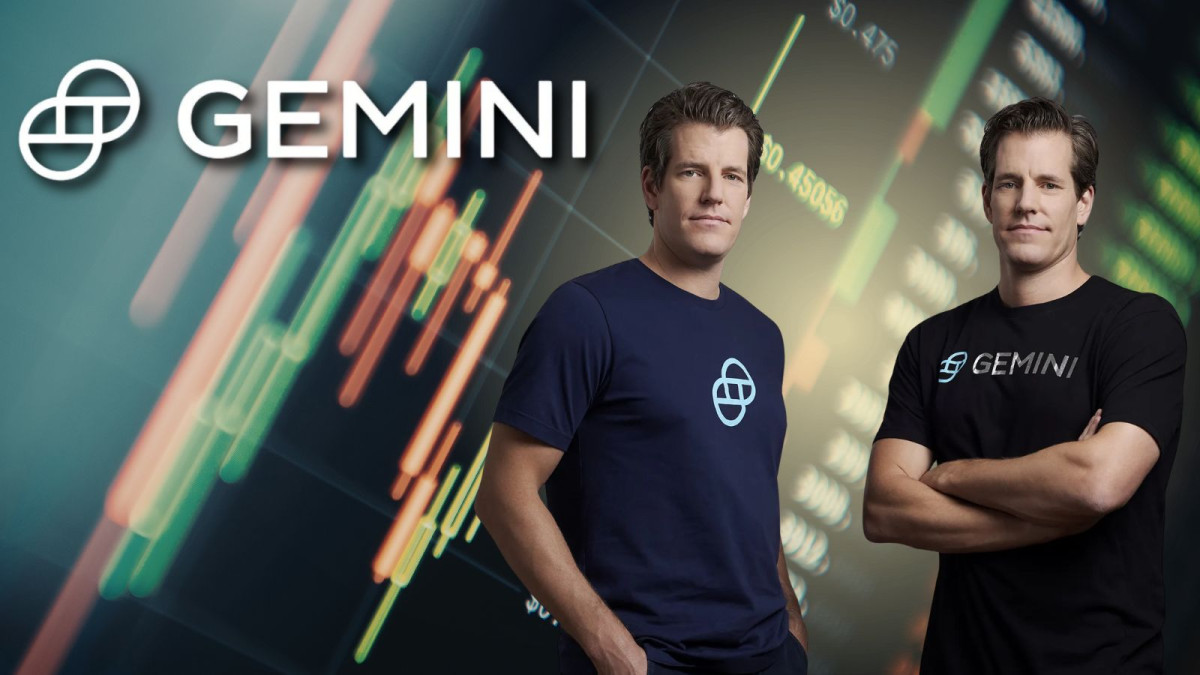
Gemini Stock Rises After Hours on Q4 Results as Investors Back Pivot

Gemini Space Station (NASDAQ: GEMI) got a real boost from Wall Street on Thursday evening. Shares jumped roughly 7% in after-hours trading, climbing to $6.45 after the company reported its fourth-quarter results and laid out a vision for where it is headed next. For a stock that has been taking a real beating the last few months, this feels like it could be a turning point, or at least the beginning of one.
The company went public on the Nasdaq in September 2025, raising around $425 million and generating a lot of excitement. The stock has since pulled back significantly, but Thursday's earnings report finally gave investors something that they can feel good about again.
Gemini Is Moving Beyond Being Just A Crypto Exchange
The headline from the results was not actually about trading at all. For the first time ever, revenue from Gemini's services and interest-based products surpassed what it made from trading fees. Services revenue rose 33% compared to the prior quarter, hitting $26.5 million. That might sound like dry accounting detail, but it matters a lot. It means Gemini is no longer entirely dependent on whether people are actively buying and selling crypto on any given day. That is a big deal for a business trying to grow steadily rather than just riding the waves of a notoriously volatile market.
A lot of that services growth came from Gemini's credit card, which functions like a rewards card but pays cashback in cryptocurrency instead of airline miles or cash. That product processed over $1.2 billion in transactions throughout 2025. Total revenue for the full year came in at $179.6 million, up 26% from the year before, and services revenue more than doubled over the same period. The company is building something that looks less like a pure-play crypto exchange and more like a broader financial platform, one that works even when the crypto market is quiet.
Beyond the credit card, the move that has really captured investors' imaginations is Gemini's push into prediction markets.
Gemini launched its prediction markets product, called Gemini Predictions, in December 2025 after its affiliate Gemini Titan received official approval from the U.S. Commodity Futures Trading Commission. This approval was five years in the making; the company first applied for the license back in March 2020. Receiving it placed Gemini in a very small club of fully regulated prediction market operators in the United States.
The early traction is genuinely encouraging. More than 15,000 users have already traded contracts covering categories from crypto prices to politics to sports. In the shareholder letter published Thursday, Tyler and Cameron Winklevoss made a bold pitch for why they believe this could be one of the most significant financial products in a generation. They argue that prediction markets forecast the future more accurately and more quickly than traditional experts, pollsters, or media organizations, and that Gemini is positioned at the center of that shift. It is an ambitious claim, but the regulatory foundation they have built gives them a real head start over most competitors.
When the CFTC approval was announced back in December, GEMI shares surged nearly 32% in a single session. The market clearly sees the prediction markets business as a meaningful growth engine, and Thursday's results confirmed that the product is gaining real users not just the new, shiny thing with a fancy launch.
Focusing On What Works
One of the things investors responded well to on Thursday was evidence that management is making tough decisions to streamline the business. In February, Gemini announced it would be cutting roughly 25% of its global workforce and closing its exchange operations in the United Kingdom, the European Union, and Australia. It is closing those regional operations and partnering with eToro, another regulated trading platform, to help affected customers transfer their assets.
The Winklevoss brothers described the move plainly: those international markets were hard to compete in, and trying to win them was stretching the company too thin. By pulling back to focus on the U.S., where Gemini has the strongest regulatory footing and the largest user base, management believes it can move faster and reach profitability sooner. The restructuring costs around $11 million, most of it in the first quarter of 2026, but the expected savings over time are significantly larger.
The company's full-year 2025 revenue of $179.6 million came in at the top end of its own preliminary estimates, a small but positive sign that the business is not deteriorating further. Operating expenses were higher than many investors would have liked, but the direction of travel looks more controlled heading into 2026 with the restructuring largely complete.
What's Next?
Gemini is not without its challenges. The company is dealing with several class action lawsuits filed by shareholders who believe the IPO documents did not fully reflect the scale of the restructuring that was coming. A management conference call is scheduled for Friday morning, and investors will want straight answers on the legal strategy, a timeline for replacing several senior executives who departed in February, and more detail on how fast the prediction markets business is actually growing.
Still, the picture Thursday evening was meaningfully better than it has been for most of the past six months. The company is generating real growth in non-trading revenue, it has a licensed and operational prediction markets platform at a time when that category is attracting serious investor and user interest, and management is finally showing a willingness to make hard cuts rather than try to compete on every front at once.
Prediction markets as a category have grown explosively over the past couple of years. Platforms like Kalshi and Polymarket have demonstrated real user demand, and regulators under the current administration have signaled a permissive approach to the space. Gemini's CFTC license gives it a compliance advantage that most rivals cannot replicate quickly, and its existing crypto user base is a ready-made pool of customers who already understand event-based trading.
Whether Gemini can fully execute on the vision Tyler and Cameron Winklevoss have laid out is still an open question. But for the first time in a while, Thursday's report gave investors something to point to beyond the headline loss number, and the after-hours market seemed to appreciate that. The stock sits more than 75% below its IPO price, so there is a lot of ground to recover. A rerating like that does not happen overnight. What Thursday showed, at least, is that the foundation for one might finally be taking shape.

BitGo NYSE IPO Signals Wall Street’s Renewed Appetite for Crypto Infrastructure

BitGo’s first day on the New York Stock Exchange was not just another IPO. It was a signal that Wall Street is once again willing to place real bets on crypto, provided the business is grounded in infrastructure, regulation, and steady revenue rather than hype.
The digital asset custody firm began trading under the ticker BTGO after pricing its IPO at $18 per share, above its expected range. That pricing put BitGo’s valuation at roughly $2 billion, with early trading pushing the figure even higher as shares jumped shortly after the opening bell.
For an industry that has spent the past two years navigating regulatory pressure, market volatility, and investor fatigue, BitGo’s reception felt like a turning point.
A Different Kind of Crypto Company
Founded in 2013 by Mike Belshe, BitGo is not a trading platform or a token issuer. Its business sits deeper in the crypto stack. The company provides custody, wallet infrastructure, staking services, and institutional trading tools for hedge funds, asset managers, exchanges, and other large crypto holders.
At the time of its public debut, BitGo was safeguarding close to $100 billion in digital assets. That scale matters. Custody is one of the few crypto businesses that can grow regardless of whether bitcoin is rising or falling, as long as institutions remain involved.
This infrastructure-first model has increasingly appealed to traditional investors who want exposure to digital assets without directly touching price risk.
Strong Demand at the Open
BitGo sold roughly 11.8 million Class A shares, raising just over $200 million in gross proceeds. Demand was strong enough that the deal priced above its initial range, a notable outcome given the cautious tone that has defined much of the IPO market over the past year.
Once trading began, shares quickly moved higher, at one point climbing more than 20 percent. That early momentum pushed BitGo’s market capitalization closer to $2.5 billion, at least on paper, reinforcing the view that institutional investors see value in crypto plumbing even when token prices are under pressure.
Regulation as a Selling Point
Part of BitGo’s appeal comes from its long-running focus on compliance. The company has spent years positioning itself as a bridge between crypto markets and traditional finance.
Late last year, BitGo received conditional approval to operate as a federally regulated trust bank in the United States. That status allows it to offer custody services nationwide under a single regulatory framework, rather than navigating a patchwork of state licenses.
In an industry often criticized for moving faster than regulators can respond, BitGo’s willingness to work within existing rules has become a competitive advantage.
A Test Case for Crypto IPOs
BitGo is widely viewed as the first major crypto IPO of 2026, and its performance is already being watched closely by other companies considering public listings.
Over the past year, several crypto firms have quietly prepared for IPOs, waiting for a moment when investor sentiment improved. BitGo’s debut suggests that moment may be arriving, at least for firms with mature business models and predictable revenue streams.
Market analysts have also pointed to a broader reopening of the IPO window across technology, fintech, and artificial intelligence. Crypto may not lead that wave, but BitGo’s success shows it is no longer sidelined either.
Financial Momentum Behind the Story
Behind the market excitement is a company that has quietly improved its financial position. BitGo reported strong revenue growth heading into its IPO, with custody, staking, and institutional services driving recurring income. The company also posted periods of profitability in recent years, a rarity among crypto-native firms.
That financial discipline likely helped reassure investors who remain wary after previous cycles of overleveraged crypto startups and sudden collapses.
What It Means for the Industry
BitGo’s NYSE debut sends a clear message. Crypto infrastructure, when paired with regulation and institutional demand, can still command investor confidence.
The listing does not mean the industry’s challenges are over. Regulatory clarity remains incomplete, and market volatility is never far away. But BitGo’s reception suggests that public markets are willing to reward companies building the backbone of digital finance, even if they remain cautious about the assets themselves.
For now, BitGo has become a benchmark. Its performance in the months ahead may determine whether other crypto firms follow it onto Wall Street or return to waiting on the sidelines.
Kraken Acquires Backed Finance to Expand Tokenized Equities Ahead of IPO
Kraken Moves Deeper Into Tokenized Equities With Backed Finance Acquisition
Kraken is making a major push into the tokenization market with its agreement to acquire Backed Finance, the company behind the xStocks product line.
This move gives Kraken full control over a growing category of tokenized equities and positions the exchange for rapid expansion as it prepares for a public listing.
A Strategic Acquisition With Clear Intent
Backed Finance specializes in issuing tokens tied to real world assets, mainly public company stocks and ETFs. These assets are backed by real shares held in custody, allowing users to hold digital representations of traditional securities inside a blockchain environment.
By bringing Backed Finance in house, Kraken gains control over the entire tokenization stack. Issuance, collateral, custody, compliance, and product architecture will all operate under one roof. This eliminates reliance on an external provider and strengthens Kraken’s ability to innovate and scale. The exchange has been building aggressively in Europe and other global markets, and the acquisition aligns with its larger ambition to make tokenized securities a core part of its ecosystem.
Why Kraken Is Doubling Down on Tokenization
Tokenized assets have gained momentum as traders and institutions look for a more flexible way to access traditional financial instruments. The benefit is simple. Stocks can be traded on chain, around the clock, with global reach and fewer barriers.
Kraken’s recent capital raise brought its valuation to roughly twenty billion dollars. The company has been preparing for a public offering targeted for 2026, and expanding into real world asset tokenization helps diversify its revenue streams before going public. Backed Finance already holds meaningful market share in the tokenized equity space, which gives Kraken a strong foundation to build on.
The acquisition formalizes a partnership Kraken has spent the past year expanding. Backed has powered xStocks since launch, supporting products that have now generated more than $5 billion in cumulative trading volume on Kraken.
The Broader Market Context
Interest in real world asset tokenization has surged through 2025, but the sector still faces challenges. Liquidity varies widely across tokenized securities. Some assets trade actively, while others see thin volume. This raises questions about whether tokenization alone can deliver deeper markets.
Regulatory frameworks are also evolving. Tokenized shares do not always offer the same rights as traditional equities, such as voting or regular dividend distribution. As more platforms introduce tokenized stocks, market fragmentation becomes a risk, since liquidity can spread across multiple chains and issuers.
These challenges do not diminish the potential, but they highlight the need for stronger standards, clearer rules, and well capitalized issuers.
What This Means for the Future
Kraken’s acquisition signals that tokenized equities are becoming a long term strategic priority rather than a side experiment. If successful, Kraken could set the standard for a hybrid financial model where traditional assets move seamlessly across blockchain infrastructure.
BlackRock executives Larry Fink and Rob Goldstein recently said tokenization could reshape financial markets as profoundly as the early internet reshaped information.
Kraken's users may gain access to more global equities, greater flexibility, fractional ownership, and always available markets. Institutions may find a more programmable way to issue and settle securities. The industry may see a blueprint for bridging regulated markets with decentralized technology.
The path will not be simple. Liquidity, compliance, and investor protections will remain central areas of focus. However, Kraken’s move shows that major players believe the future of equities includes both traditional exchanges and blockchain based markets working together.
Stay Connected
You can stay up to date on all News, Events, and Marketing of Rare Network, including Rare Evo: America’s Premier Blockchain Conference, happening July 28th-31st, 2026 at The ARIA Resort & Casino, by following our socials on X, LinkedIn, and YouTube.