#kraken
London Stock Exchange Partners With Payward to Expand Onchain Access to Stocks

The London Stock Exchange (LSE) has partnered with Payward, the parent company of cryptocurrency exchange Kraken, to expand access to stocks through tokenized equities.
Through the partnership, the LSE will provide traders with access to stocks of the 100 largest companies listed on its exchange through xStocks, Kraken’s tokenized equities framework, which provides 1:1 backing for publicly traded stocks and exchange traded funds (ETFs).
“Tokenization has the potential to change how investors access, and how issuers use, financial markets, but it must develop in a way that preserves the trust, rights and role of regulated markets,” said Julia Hoggett, CEO of the London Stock Exchange.
“By working with Payward, and continuing to collaborate across the market infrastructure ecosystem, we are exploring how issuers and investors can benefit from new forms of access while maintaining the standards that underpin public markets.”
Subject to regulatory approval, the London Stock Exchange will, in the coming weeks, begin listing xStocks on LSE 24, the exchange’s recently launched 24 hour trading venue.
Once live, the suite of supported xStocks will comprise tokenized equities of companies listed in the U.S., EU, UK and Hong Kong, in addition to several other asset classes, enabling traders to interact with global markets from a regulated and familiar trading environment.
xStocks 1 Year Performance
Launched in June 2025 by Payward, xStocks is a tokenized equities framework that issues 1:1 backed tokens representing publicly traded assets and ETFs. It was launched to bridge traditional finance with crypto and make tokenized equities more accessible.
Since its launch, xStocks has recorded impressive growth, with total transaction volume exceeding $40 billion and on-chain transaction volume reaching roughly $20.5 billion. The platform has also launched more than 700 tokenized stocks, ETFs and related assets across multiple blockchain networks, including Solana, Ethereum and TON.
Robinhood Cuts 10% of Workforce in Efficiency Push

Robinhood Markets, Inc. will cut its staff by 10 percent as the company seeks to operate more efficiently and achieve greater impact from a lean workforce.
In a note shared by Robinhood’s communications team on behalf of chief executive officer Vlad Tenev, the company said it can no longer continue operating as a heavily layered organization.
“We must be a lean, hyper-focused team where every single individual is empowered to make a massive impact,” Tenev said in the note. “Our execution is strong today, but our ambitions require us to continuously raise our own bar. To achieve that, today we are flattening our organizational structure and reducing our overall team size by 10 percent of headcount.”
About 290 employees are expected to be affected. According to a Form 8-K filing with the United States Securities and Exchange Commission, the restructuring will cost 20 million dollars in cash severance benefits and 8 million dollars in equity-based compensation.
Robinhood’s layoff comes as the cryptocurrency industry continues to see workforce reductions. Last month, Kraken reduced its staff by about 5 percent, or roughly 150 employees. Coinbase cut its global workforce by about 14 percent, resulting in the loss of approximately 700 jobs. Some reports have linked recent restructuring efforts in the sector to a broader shift toward AI initiatives, though companies have also cited cost-control and efficiency goals.
Several other cryptocurrency-focused companies have also carried out layoffs, including Crypto.com, Dune, Algorand, and Block. According to an industry tracking report, more than 5,000 jobs have been cut across dozens of companies.
Despite the reduction, Robinhood’s chief executive said the company will continue to hire strategically and invest in top-tier talent. Robinhood recently acquired WonderFi, expanding its presence in the Canadian market. The company’s growth metrics remain strong, reporting net revenue of $1.07 billion in the first quarter, up approximately 15% from $927 million in the same period a year earlier.
Kraken Becomes Official Crypto Exchange Supporter of FIFA 2026

Kraken has been named the official cryptocurrency exchange supporter of the FIFA 2026 World Cup, which is scheduled to begin on June 11.
In a blog post announcing the partnership, Kraken said the collaboration will allow it to leverage its digital technology to enhance the fan experience for the global audience expected to tune in to this year’s World Cup tournament, which will be hosted across three countries: Canada, Mexico, and the United States. The tournament is expected to reach more than 6 billion people worldwide.

“Innovation has always played a central role in how FIFA evolves and enhances the fan experience. As we prepare to welcome the world to the biggest FIFA World Cup in history, we are delighted to partner with Kraken, an organization that shares our commitment to innovation and technology,” said Romy Gai, FIFA Chief Business Officer.
“Together, we look forward to exploring new ways to connect supporters with the tournament, creating memorable experiences that bring fans closer to the game and the moments that make the FIFA World Cup so special.”
With Kraken becoming the official cryptocurrency exchange supporter of this year’s World Cup, the company said it will deliver a series of fan-focused product experiences across North America and Europe. Kraken said the initiatives are designed to introduce new audiences to digital assets while strengthening the connection between football engagement and financial participation.
About Kraken
Kraken is one of the world’s oldest global cryptocurrency exchanges. Launched in 2011, the exchange operates as a full-service digital asset platform offering spot trading, margin trading, futures, staking, over-the-counter services, tokenized equities, and stocks. Its mission is to accelerate the global adoption of crypto by enabling broader access to financial services and promoting financial inclusion.
Since its launch, Kraken has grown to serve millions of users worldwide. Its services are currently available in more than 190 countries and serve over 13 million users globally. To provide non-U.S. users with access to U.S.-listed stocks and IPO opportunities, Kraken launched xChange, a platform that offers tokenized representations of real U.S. stocks and exchange-traded funds to eligible non-U.S. users.
Wall Street Is Going To Tokenize Everything

There was a version of this story...told many moons ago that gets told as a prediction. Some future moment when the old guard of finance finally meets crypto on equal footing, when the suits and the degens find common ground, when a BlackRock executive and a DeFi protocol share the same balance sheet. Well that story is now pretty outdated...it's no longer some vision of an oracle peering into a crystal ball. We are already living in it. The future is here.
What we are seeing happen in global finance with tokenization is not some pilot program or a hedge. It is a structural transformation, and it is accelerating faster than most people outside of these two worlds seem to understand. Wall Street is no longer on the outside looking in, just dipping their toes in, to test the water. They have taken the plunge.
The Old System Was Always Broken
Here is something traditional finance never really wanted to say out loud: the infrastructure holding it together is ancient, slow, and held up largely by institutional inertia. Settlements that take days. Liquidity locked to six-and-a-half-hour trading windows. Layers of intermediaries, each one clipping a fee, each one adding time. For the largest players, those inefficiencies were baked into the cost of doing business. For everyone else, especially retail investors in markets outside the U.S., they were just walls.
Blockchain does not fix all of this overnight. But it offers something that legacy systems fundamentally cannot: a shared, programmable, real-time record of ownership that does not require three middlemen to reconcile. The World Economic Forum, in its 2025 report on asset tokenization, described the transition as potentially the next major phase in the development of financial market architecture, drawing a comparison to the shift away from paper certificates in the 1960s. That is not a crypto inside touting to his followers on X. That is the WEF stating how tokenization could transform finance.
When even the most establishment-facing institutions are framing this as a generational infrastructure shift, it's probably worth paying attention to.
The Institutions Are Not Coming. They Are Here.
BlackRock has a tokenized fund on Ethereum. JPMorgan launched a second tokenized money market product backed by U.S. Treasuries. Fidelity brought its own Digital Interest Token on-chain. Franklin Templeton has been quietly building its tokenized money market fund, BENJI, across multiple blockchains for years. These are live products managing real capital.
The total market for tokenized real-world assets crossed $75 billion in 2025. Projections from market analysts put the long-term ceiling at $18.9 trillion by 2033, and some estimates, citing the total addressable market of traditional finance, go much higher. Larry Fink has publicly stated, more than once, that he believes every financial asset can eventually be tokenized. When the CEO of the world's largest asset manager says that with conviction, the rest of the industry listens.The total crypto market sits at just shy of $2.6 trillion right now, to add some perspective to the type of volume tokenization can bring to the space.
And the whole idea behind this is not ideological. It is practical. Blockchain cuts settlement time, removes redundant intermediaries, enables fractional ownership, and allows assets to be composable across different financial products. For institutions moving hundreds of billions, those efficiency gains compound into something very significant, very quickly.
xStocks and the Part Where It Gets Really Interesting
Tokenized treasuries and money market funds are the institutional on-ramp. But the development that best captures where all of this is truly heading is xStocks, and it is worth understanding why it matters as much as it does.
Launched in June 2025 by Backed Finance, a Swiss RWA issuer, xStocks put more than 60 fully collateralized U.S. equities on Solana as SPL tokens. Apple. Tesla. Nvidia. Amazon. Each one backed 1:1 by real shares held under regulated custody. Not synthetic. Not a derivative. The actual stock, on-chain. Available the same day on Kraken and Bybit to users in over 185 countries, and within hours, live across Solana's DeFi ecosystem on Raydium, Jupiter, and Kamino.
The numbers since launch have been hard to argue with. Over $25 billion in total transaction volume. More than 80,000 unique on-chain holders. The platform has since expanded to 100 fully backed listings, and xStocks recently launched xChange, a unified execution layer for tokenized equities running 24/5 across Ethereum and Solana with atomic settlement built in. And we'll go back to the numbers. xStocks is amazing. It's done over $25 billion in volume. But daily stock market volume just in the U.S. is roughly $500-700 billion. Daily. Just in the U.S. Starting to get the big picture here? The much, much bigger picture?
What makes this genuinely different from everything that came before it is composability. With a brokerage account, you own a stock and that is more or less the end of the story. With xStocks inside Solana's DeFi ecosystem, you can use Nvidia as collateral in a lending protocol, provide liquidity with Apple against a stablecoin, or swap Tesla for SOL without touching a broker, a clearinghouse, or a trading window. That kind of programmable financial infrastructure does not exist in traditional markets. It simply never has.
Who This Actually Opens the Door For
For investors in the U.S., this is interesting. For investors everywhere else, it is potentially transformative. Access to U.S. equity markets has historically required meeting regulatory hurdles, working through licensed brokers, and navigating banking infrastructure that many parts of the world simply do not have. xStocks changes that math entirely. Trading starts at one euro. Dividends reinvest automatically. No broker required. No minimum account size. Just a wallet and a connection.
Franklin Templeton's partnership with Kraken, announced in early 2026, is another data point worth noting here. The two are exploring on-chain versions of Franklin's financial products, including tokenized stocks, yield instruments, and compliant custody solutions. A legacy asset manager and a crypto exchange building joint infrastructure is the kind of thing that a few years ago would have sounded like a very optimistic projection. Now it is a press release.
The Narrative Has Shifted. Permanently.
Crypto spent a long time fighting to be taken seriously by traditional finance. That fight is over, and crypto won it on the merits. What is replacing it is something more interesting: a negotiation over what the merged system actually looks like, who controls it, and how fast it scales.
The regulatory environment is improving. Interoperability between chains is being worked out. Liquidity in tokenized asset markets is growing month over month. The WEF framed the barriers as real but solvable, pointing to legacy infrastructure integration, inconsistent global standards, and cross-chain friction as the remaining friction points. None of those are permanent problems. They are engineering and coordination challenges, and the talent and capital now focused on solving them is enormous.
The General Manager of xStocks said it about as cleanly as it can be said: the question is no longer whether equities belong on-chain, but how fast they can be scaled. With 100 listings and $25 billion in volume already behind the platform, the model is proven. The next stage is expansion to every major U.S. equity and, eventually, global equities across international markets.
That is not a roadmap for some distant future version of crypto. That is the roadmap for the next few years. And if the last twelve months are any indication, it will probably move faster than anyone is currently projecting, including myself. As bullish as I am on all of this, I have a feeling that the transition to tokenize the world will be bigger than anything I could ever imagine.
OKX Eyes Coinone Stake as Crypto M&A Boom Accelerates

Global cryptocurrency exchange OKX and Korea Investment & Securities are reportedly looking to acquire approximately 20% stakes each in Coinone, a cryptocurrency exchange based in South Korea.
To maximize capital flow, the acquisition will involve Coinone issuing new equity shares to OKX and its acquisition partner, rather than selling shares held by existing shareholders. Although the acquisition is, for now, just a financial investment, some industry observers have opined that OKX may become more involved in the exchange’s managerial activities in the future.
Currently, The One Group, a private investment company managed by Cha Myung hoon, Coinone’s founder, owns about 34.30% of Coinone, followed by Com2uS Holdings, a South Korean gaming firm, which owns 21.95%, and Com2uS Plus, one of its entities, which owns 16.47 percent. Coinone's CEO, Cha Myung-hoon, owns 19.14%.
If successful, this will be the third time a global cryptocurrency exchange has acquired a stake in a South Korean exchange. In 2022, crypto exchange Crypto.com fully acquired OK BIT, a small South Korean crypto exchange, while in 2025, Binance acquired a 67% majority stake in Gopax, one of South Korea’s top five crypto exchanges.
Crypto Acquisitions on the Rise
The partial acquisition of Coinone by OKX comes at the same time as Hana Bank, one of South Korea’s largest commercial banks, announced a 6.55% stake acquisition in Dunamu, the parent company of Upbit, the largest cryptocurrency exchange in South Korea.
Kraken, through its parent company Payward, has also agreed to acquire Reap, a payments infrastructure firm based in Hong Kong, for about $600 million, just a few weeks after it acquired Bitnomial for $550 million in April.
Several other crypto entities have also been involved in acquisitions, including the crypto exchange Bullish, which acquired Equiniti for $4.2 billion, and MoonPay, which recently acquired Dawn Labs.
According to a report from Architect Partners, about 89 crypto acquisition deals were completed in the previous quarter, with approximately $3.2 billion spent on crypto-related acquisitions, a significant increase from the first quarter of 2025, which recorded 61 deals and $2.2 billion in deal value.
Payward and Franklin Templeton Expand Tokenized Asset Market

Payward, the parent company of the cryptocurrency exchange Kraken, has partnered with Franklin Templeton, the leading global investment management company, bringing traditional financial products on-chain.
The partnership, which aims to converge traditional finance and digital asset markets and expand the utility of tokenized assets, leverages Franklin Templeton’s decades of experience as a global investment manager and leader in the tokenization space, alongside Payward’s crypto-native trading, custodial, and on-chain infrastructure.
Since tokenization is at the center of the partnership, the companies will explore launching several new actively managed investment strategies on xStocks, Payward’s tokenized asset platform. As a result, the two companies are expected to introduce tokenized yield-focused products and equities available to institutional clients through Kraken’s Prime and over-the-counter services. To offer the best investment experience, these tokenized products will be transparent, flexible, and programmable.
“Payward and Franklin Templeton are building toward a model of finance where the distinction between traditional assets and digital infrastructure no longer holds,” said Arjun Sethi, Co CEO of Payward and Kraken.
“The convergence between these two worlds is only going to deepen, and what collaborations like this one unlock is a new class of products that would not have been possible even three years ago: assets that carry the credibility of multi-decade managers and the programmability of digital infrastructure.”
BENJI Integration to Follow
Part of the partnership plans will involve integrating BENJI into Kraken's infrastructure. BENJI is a digital token created by Franklin Templeton that represents ownership of, or shares held by, an investor in a regulated money market fund. It is what investors actually hold and trade on-chain.
By integrating BENJI into Kraken, Franklin Templeton makes it easier for institutions to access and use the BENJI money market fund within its trading and custody systems, increasing capital efficiency and the fund's utility.
“The focus should be on making on-chain assets more functional for the full range of market participants once they are there,” said Sandy Kaul, Head of Digital Assets and Innovation at Franklin Templeton.
“By expanding the utility of BENJI and exploring new tokenized products, our work with Payward reflects the growing need to serve both digital native and institutional customers with solutions built for how capital increasingly moves on-chain.”
Kraken Moves Into Regulated Crypto Custody

Payward, the parent company of the crypto exchange Kraken, has filed an application with the Office of the Comptroller of the Currency (OCC) seeking to establish a national trust company.
If approved, the OCC will grant Payward federal fiduciary powers under the U.S. Trust Powers statute to establish the Payward National Trust Company (PNTC), allowing Payward to provide custodial services to institutional clients and individuals seeking regulated bank level custody and trust services for digital assets. Payward aims to leverage its existing infrastructure, risk management systems, compliance programs, and regulated affiliates to deliver institutional grade, secure, and compliant custodial services.
Speaking on the OCC application, Arjun Sethi, Co CEO of Payward and Kraken, said, “Our long held belief has always been that the right path forward for digital assets runs through robust, transparent regulation. A national trust company provides the certainty institutions require and establishes the infrastructure to build the next generation of custody. This is not about being first. It is about getting the framework right so markets can scale with clarity, interoperability, and a long term vision for what clients will demand as these systems mature.”
The OCC application builds on the regulatory foundation that Payward has already established through Kraken Financial, one of its entities. Through Kraken Financial, Kraken achieved several milestones, including becoming the first crypto company to receive a Wyoming Special Purpose Depository Institution charter. This allowed Kraken Financial to operate as a separate entity and become the first digital asset bank to gain access to the Federal Reserve payment system.
“Kraken Financial and what we are building with the OCC are complementary pillars of Payward’s regulated banking strategy aimed at advancing an efficient and accessible digitally native financial system,” said Arjun Sethi, Payward and Kraken co CEO.
“Our Wyoming SPDI and Federal Reserve master account represent a genuinely unique foundation, and the addition of a national trust company expands what we can offer our clients under an evolving U.S. regulatory framework.”
Kraken Joins Race to Offer Custodial Services
Payward is not the first crypto company to file an application with the Office of the Comptroller of the Currency, as companies like Ripple, BitGo, Stripe, Crypto, and Coinbase have also filed, with some receiving conditional approvals to provide custodial services.
Morgan Stanley Digital Trust also filed an application with the Office of the Comptroller of the Currency in February of this year, seeking approval to provide digital asset custody, with the application currently pending.
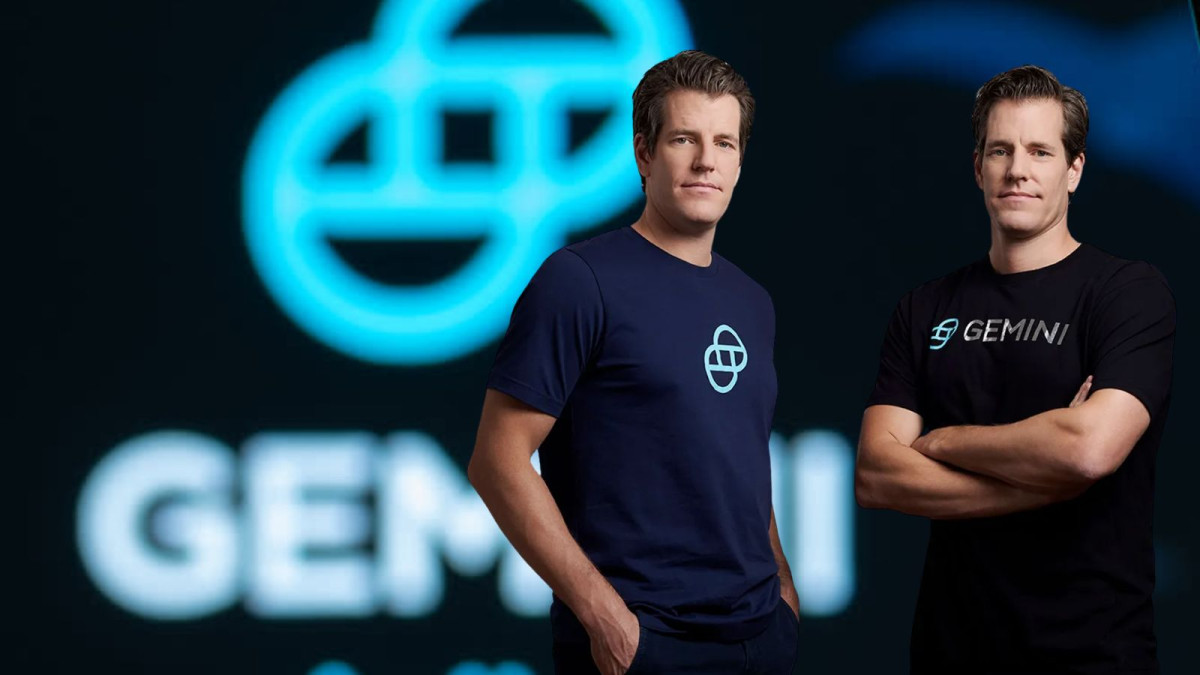
Gemini Secures License for Crypto Derivatives

Gemini Olympus, LLC, an affiliate of the Gemini cryptocurrency exchange, has recently received a Derivatives Clearing Organization license from the Commodity Futures Trading Commission, enabling it to act as the clearinghouse for Gemini’s regulated derivatives trading, including prediction markets.
“Today marks a major milestone in Gemini’s marketplace expansion. In addition to our crypto spot marketplace, Gemini now has a full-stack, end-to-end marketplace for predictions as well as futures, options, and more,” said Cameron Winklevoss, Gemini’s president. He added that the DCO license is a major stepping stone toward Gemini achieving its goal of building a super app that allows users to fulfill all their existing and future financial needs in one place.

With this newly secured DCO license, together with the Designated Contract Market license that Gemini Titan, LLC, another Gemini entity, secured around December of last year, Gemini is now one step closer to obtaining the full suite of CFTC derivatives licenses.
Once it secures the Futures Commission Merchant license, the final component of the CFTC derivatives licensing framework, the company would be able to position itself as a fully regulated derivatives platform in the United States, offering U.S. customers a range of products, including crypto futures, options, and perpetual futures.
Gemini Joins Exchanges in Crypto Derivatives Push
With the Derivatives Clearing Organization license now secured and the Futures Commission Merchant license in sight, Gemini has joined a host of other crypto exchanges, including Kraken, Crypto.com, and the Chicago Mercantile Exchange, in the race to position themselves as all-in-one derivatives platforms.
To break into the derivatives market, Payward, the parent company of the cryptocurrency exchange Kraken, acquired Bitnomial, a U.S.-based derivatives exchange, for $550 million last month. Like Kraken, Coinbase has also taken the acquisition route to enter the crypto derivatives market, acquiring Deribit Exchange for $2.9 billion and The Clearing Company for an undisclosed amount.
The race to provide complete crypto derivatives offerings is not unique to cryptocurrency exchanges, as prediction market companies like Kalshi and Polymarket are also making efforts to enter the crypto derivatives market.
Through Kinetic Markets LLC, one of its affiliates, Kalshi recently secured the Futures Commission Merchant license, along with the Designated Contract Market license it already holds, with efforts underway to secure the Derivatives Clearing Organization license, which is the final license required.
Nakamoto Taps Bitwise and Kraken for its Bitcoin Derivatives Program

Nakamoto, a Bitcoin treasury company listed on the Nasdaq, recently announced the details of its Bitcoin derivatives program, a program designed to generate recurring volatility income from a defined portion of Nakamoto’s Bitcoin holdings while hedging some portion of the company’s downside exposure to Bitcoin price risk.
While the Bitcoin derivatives program had already begun in the first quarter of the year, Nakamoto will be partnering with Bitwise Asset Management and the crypto exchange Kraken, with Bitwise running the derivatives strategy and Kraken offering its custody solution that will hold a portion of Nakamoto’s Bitcoin holdings that will be used for the derivatives program.
The derivatives program, according to Nakamoto, is aimed at achieving two main objectives: (1) monetizing Bitcoin volatility and (2) mitigating downside risk.
By systematically writing covered calls and call spreads against a portion of its Bitcoin holdings, Nakamoto’s Bitcoin derivatives program aims to convert the volatility in the Bitcoin options market into recurring income, which the company says can be reinvested into its Bitcoin treasury or used for its everyday operational costs.
The program also aims to mitigate downside risk due to a decline in the Bitcoin price by maintaining a defined allocation of Nakamoto’s Bitcoin holdings to protective puts and put spreads, supporting the stability of Nakamoto’s net asset value and reducing the risk of forced deleveraging, especially during stressed market conditions.
"Bitcoin's implied volatility is one of the most persistently mispriced assets in capital markets," said Tyler Evans, chief investment officer of Nakamoto and UTXO Management.
"Working with institutional grade partners like Bitwise and Kraken, we have built a disciplined framework to harvest that premium systematically, at scale, and convert that opportunity into long term value for shareholders. This program is just one component of a broader effort to identify and execute on opportunities to generate yield on our Bitcoin holdings."
Nakamoto as a Bitcoin Treasury Company
Nakamoto Inc is a publicly traded company that operates a Bitcoin treasury strategy as its core business. The company currently holds approximately 5,342 BTC on its balance sheet, valued at roughly $467.5 million.
It made its first major Bitcoin purchase in August 2025 when it purchased 5,743.91 BTC worth approximately $679 million through its subsidiary Nakamoto Holdings. However, it recently sold 284 BTC for $20 million last month, with the proceeds used to support its working capital and fund its business operations.
Bitnomial Launches First INJ Futures in US Market

Bitnomial, the Chicago based cryptocurrency exchange, has launched the first Injective (INJ) futures contracts in the United States, regulated by the Commodity Futures Trading Commission.
Although access is currently limited to institutional clients, with retail traders expected to gain access in the future, the newly launched INJ futures contracts allow users to gain exposure to the Injective Protocol underlying INJ token without directly holding it.

The futures contracts settle in INJ with monthly expiries. This means that while the INJ futures contracts are tradable on the Bitnomial exchange, each contract has an expiry date. When this date is reached each month, the contract expires and settles.
The INJ futures contracts can also be margined in crypto or United States dollars, which means traders can choose to deposit either United States dollars or other supported cryptocurrencies as collateral when they open and maintain leveraged positions on the Bitnomial platform.
The launch of the Injective INJ futures contracts is one of several futures contract launches by Bitnomial this year, with the exchange having launched XRP futures contracts last month and Tezos and Aptos futures contracts earlier in the year.
What the Injective Protocol is
The Injective protocol is a high performance layer 1 blockchain built for decentralized finance DeFi and other advanced financial applications. The Injective chain was built to support complex blockchain infrastructures such as decentralized exchanges DEXs, derivatives trading, perpetual futures, spot markets, prediction markets, lending, and real world assets RWAs.
Since its launch, several blockchain protocols have been built on the Injective chain, including Helix, a decentralized exchange, DojoSwap, an automated market maker, and Astroport.
Kraken in Deal to Acquire Bitnomial
In its latest acquisition move, Payward, the parent company of cryptocurrency exchange Kraken, has agreed to acquire Bitnomial for 550 million dollars in a deal expected to close before the end of the quarter.

Through this acquisition, Kraken aims to establish a fully vertically integrated United States crypto derivatives platform under full Commodity Futures Trading Commission regulation. The acquisition is intended to help Kraken accelerate the development of its derivatives business in the United States.
Bitnomial’s strong regulatory framework and compliance structure are among the factors influencing the deal. The company operates a Designated Contract Market, a Derivatives Clearing Organization, and a Futures Commission Merchant that supports its brokerage services.
Since Bitnomial already has these infrastructures in place, its acquisition is expected to be pivotal for Kraken in advancing its derivatives exchange objectives.
Eightco Shares Jump 25% After $125M Raise Led by Bitmine, ARK Invest, and Kraken

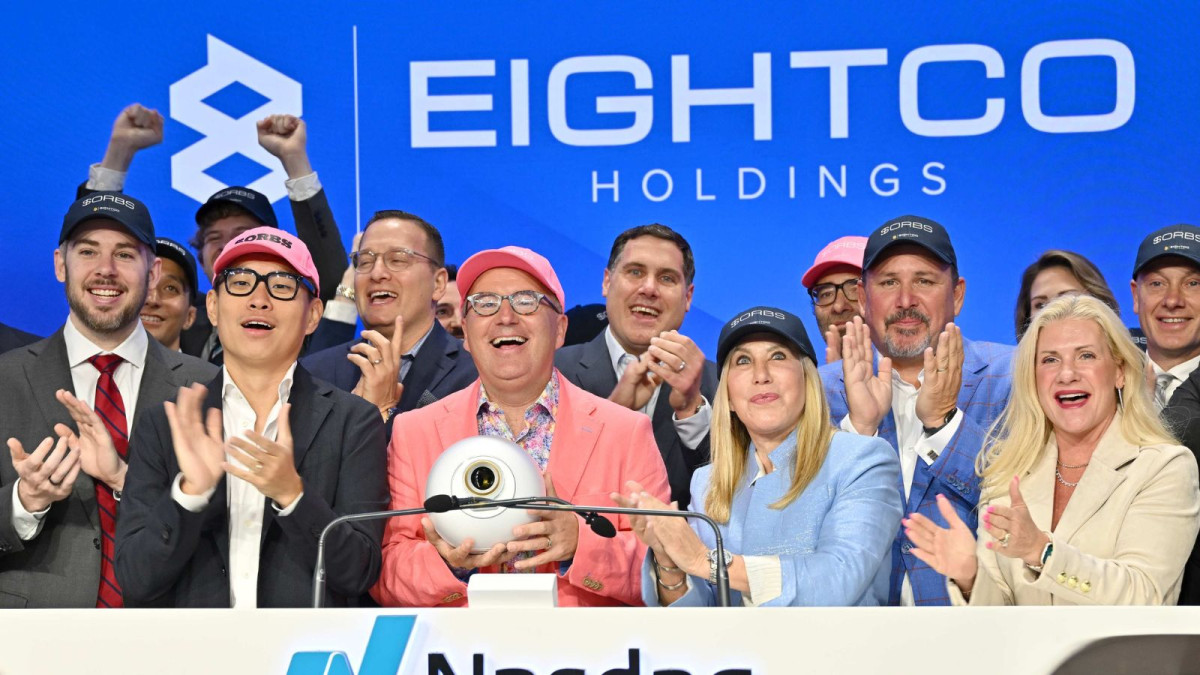
Eightco Holdings (NASDAQ: ORBS) pulled off a real power play on Wall Street Thursday, with shares jumping roughly 25% after the company announced it had locked in $125 million in new institutional commitments from a lineup that includes Bitmine Immersion Technologies, Cathie Wood's ARK Invest, and Payward, the parent company of crypto exchange Kraken.
The raise was led by Bitmine, which committed $75 million, with ARK Invest pledging at least $25 million and Payward rounding out the headline trio with another $25 million of its own. The full investor roster behind ORBS reads like a who's who of the crypto world: Coinfund, Pantera Capital, GSR, FalconX, Discovery Capital Management, and the World Foundation are all listed as backers.
But the capital raise wasn't even the most eyebrow-raising piece of news in Thursday's announcement. Eightco simultaneously disclosed it had already closed initial strategic investments of $50 million into OpenAI and $25 million into MrBeast and Beast Industries.
The OpenAI investment, worth approximately $52.5 million in economic interests in the company's equity, closed on March 6, just days before this announcement.
To understand how we got here, we kind of have to dive a bit deeper. Eightco has had one of the stranger corporate transformations of recent years. The Pennsylvania-based company pivoted from inventory management to cryptocurrencies and is currently developing a universal framework for digital identity and authentication. Not too long ago, its main business was making cardboard boxes through a subsidiary called Ferguson Containers.
Now, the company's identity is built around Worldcoin (WLD), the biometric-based digital identity project co-founded by OpenAI CEO Sam Altman. As of March 5, 2026, Eightco's treasury holdings included 277,222,975 WLD tokens, 11,068 ETH, and $82 million in cash. That WLD position, the company says, represents nearly 10% of the token's circulating supply, making ORBS the largest public market holder of Worldcoin on any exchange.
The company continues to hold Worldcoin and Ethereum as a long-term believer in the world's second-most valuable cryptocurrency, and frames its Worldcoin stake as foundational to a "proof of humanity" authentication layer it's building out.
The vision, as ORBS tells it, is to combine Worldcoin's biometric identity infrastructure with OpenAI's foundational models to create something at the intersection of AI verification, blockchain rails, and mass consumer reach. And it seems that it's clearly a compelling enough pitch to draw in some serious institutional names.
Who's Backing It, and Why
Tom Lee, Chairman of Bitmine, is joining Eightco's Board of Directors, while Brett Winton, Chief Futurist at ARK Invest, will serve as an advisor to the board.
Lee's involvement through Bitmine is notable. Bitmine itself has been on an aggressive crypto treasury strategy of its own, positioning itself as the leading Ethereum treasury company in public markets. Bitmine has combined crypto, cash, and "moonshot" holdings ranging well into the billions, and adding Eightco to that ecosystem tightens the connection between the two companies considerably. Lee getting a board seat means this isn't a passive financial bet.
His take on the investment was direct. Bitmine sees Eightco sitting at the center of some of the most important future needs and developments in AI, with what Lee described as tremendous synergy between Proof of Human via Worldcoin, OpenAI's foundational models, and the reach of the world's biggest content creator in MrBeast.
ARK Invest's Cathie Wood weighed in too, describing ORBS as taking on a unique initiative at the intersection of AI, blockchain, and creator-driven platforms.
Kraken's Arjun Sethi was perhaps the most philosophical about the whole thing. The Payward co-CEO framed it around power-law dynamics, suggesting that a small number of platforms tend to capture a disproportionate share of value in technological revolutions, and that ORBS is trying to position itself at the convergence of AI, cryptographic infrastructure, and global digital distribution.
MrBeast and the Distribution Play
The $25 million bet on Beast Industries deserves its own look. On March 10, Eightco invested approximately $25 million in shares of Beast Industries, with $7 million of that amount structured as committed capital that may be funded within 60 days in exchange for additional stock.
Beast Industries is the broader enterprise behind YouTube megastar Jimmy Donaldson, better known as MrBeast. The company spans entertainment, consumer products, and CPG, with the snack brand Feastables among its faster-growing launches. MrBeast's YouTube channel has over 450 million subscribers and generates more than 5 billion monthly views across all channels.
For a blockchain infrastructure play trying to build out digital identity at scale, having a meaningful stake in the world's most-subscribed YouTube channel is an unusual but not entirely illogical move. Distribution is distribution, and Eightco seems to be betting that the future of human authentication online will require massive consumer reach to actually work.
Taken together, Eightco is making a bold argument that the convergence of AI identity verification, blockchain infrastructure, and mass consumer distribution represents a huge opportunity, and that a small public company out of Pennsylvania is somehow positioned to sit at the center of it.
Whether the OpenAI stake, the MrBeast bet, the Worldcoin treasury, and the Ethereum holdings actually compound into something concrete is still up in the air. The risk disclosures in ORBS's own SEC filings acknowledge this as well, flagging the company's lack of control over private companies where it holds minority stakes, and the ongoing challenges of maintaining Nasdaq listing compliance while burning cash.
But the investor lineup announced today isn't made up of amateurs. Pantera, Brevan Howard, Coinfund, and ARK all know what they're doing, and they all decided this particular combination of bets was worth backing.
Nasdaq and Kraken Are Building the Bridge Between Wall Street and DeFi

Wall Street and crypto have been circling each other for years. On Monday, they shook hands.
Nasdaq and Kraken's parent company Payward announced a partnership to develop what they're calling an equities transformation gateway, a piece of infrastructure designed to let tokenized versions of publicly listed stocks move between the traditional, regulated financial system and the open, permissionless world of decentralized finance. The deal is one of the most significant convergences between a legacy exchange operator and a major crypto platform the industry has seen, and it arrives at a moment when several of the world's biggest exchanges appear to be racing to plant flags in the tokenized securities space.
Nasdaq President Tal Cohen said the exchange believes tokenization "has the potential to unlock the benefits of an always-on financial ecosystem" and to improve how investors access markets and how issuers engage with shareholders. The equity token design, which Nasdaq expects to become operational in the first half of 2027, is designed to preserve issuer control, existing regulatory frameworks, and the underlying rights associated with company shares.
What's Actually Being Built
Nasdaq's equity token design is not just about putting a blockchain wrapper around a stock. The initiative is structured so that blockchain records are integrated directly into the issuer's official share register, meaning a transfer of the token represents an actual transfer of the underlying security itself. Full legal and regulatory equivalence is the goal, not a synthetic approximation of it.
Kraken's xStocks framework powers the permissionless side of that equation. Since launching less than a year ago, xStocks has processed more than $25 billion in total transaction volume, with over $4 billion of that settled directly on-chain. More than 85,000 unique holders across supported networks have used the product, which currently covers more than 70 tokenized equities and ETFs, each backed 1:1 by the underlying asset. Fractional shares are available from $1. Trading runs around the clock on-chain, and dividends flow back automatically as additional tokens.
Under the partnership, the equities transformation gateway will allow clients in eligible jurisdictions to swap tokenized equities between the regulated, permissioned Nasdaq environment and the permissionless DeFi ecosystem. Payward Services will handle KYC and AML onboarding for participants accessing the gateway. Kraken will serve as the primary settlement layer for Nasdaq equity token transactions for an initial period, in the markets where xStocks are available.
It's worth being precise about geography. xStocks are not registered under the U.S. Securities Act and are not available to U.S. persons or in the United Kingdom. The initial rollout targets Europe and other international markets where Payward holds the relevant registrations and licenses.
The Regulatory Foundation Is Already Laid
None of this is happening in a vacuum. Nasdaq filed a proposal with the SEC in September 2025 that sought to allow tokenized versions of its listed stocks and ETFs to trade alongside traditional shares and settle through the Depository Trust and Clearing Corporation. That proposal argued for working within existing rules rather than around them, a notable contrast to tokenization projects that have tried to carve out space outside traditional regulatory structures.
The regulatory environment has also shifted meaningfully. The SEC's 2026 Staff Statement on Tokenized Securities classifies tokenized equities the same as regular equity securities under federal law, giving the Nasdaq initiative a cleaner legal runway than it might have had even a year ago. SEC Chairman Paul Atkins has been publicly supportive of American leadership in digital financial technology, and the commission has asked staff to work with firms on tokenized securities distribution.
Nasdaq's equity token design is set up as an issuer-sponsored, voluntary program. Public companies listed on Nasdaq would be able to opt in as the framework develops. The exchange plans to engage issuers, transfer agents, regulators, and market infrastructure providers as the project evolves.
Kraken's Vertical Integration Play
For Kraken, the Nasdaq partnership is the latest move in what looks increasingly like a deliberate strategy to own the entire tokenized equity stack. In December 2025 the company acquired Backed Finance, the Swiss issuer that sits behind the xStocks product, deepening its vertical integration along the tokenization value chain. In February of this year it expanded xStocks to the 360X platform operated by Deutsche Boerse Group. And in late 2025 Kraken launched what it described as the world's first regulated tokenized equity perpetual futures, offering up to 20x leverage for non-U.S. clients across more than 110 countries.
Kraken also became the first crypto company to secure approval for a Federal Reserve master account, a regulatory win that drew criticism from several U.S. banking groups but also marked a genuine shift in how regulators are thinking about the boundary between crypto platforms and the traditional banking system. The company is separately targeting a public listing in 2026.
Arjun Sethi, Kraken's Co-CEO, framed the Nasdaq deal in terms of capital efficiency as much as access. His argument is that equities today sit largely frozen inside brokerage systems where their utility is limited to directional exposure and, in some cases, venue-specific margin. Tokenized equities on programmable infrastructure, he suggested, can function as collateral across a much broader set of trading, lending, and hedging environments simultaneously, without the capital fragmentation that comes when each venue requires isolated collateral deposits.
"When collateral can move programmatically between systems," Sethi said, "settlement friction decreases and capital can move more dynamically between strategies and markets."
The Race Is On
The Nasdaq-Kraken announcement does not exist in isolation. It arrived in a week that saw the Intercontinental Exchange, the parent company of the New York Stock Exchange, make a strategic investment in OKX at a reported $25 billion valuation, signing a deal to bring tokenized NYSE-listed stocks and crypto futures to OKX's platform. ICE separately announced development of a new digital trading platform combining the NYSE's Pillar matching engine with blockchain-based post-trade systems. That platform would support 24/7 trading of U.S.-listed equities and ETFs, instant settlement via tokenized capital, and stablecoin-based funding. ICE said it would seek regulatory approvals for the venue, with NYSE-linked tokenized shares targeting availability in the second quarter of 2026.
Nasdaq also separately announced a partnership with Seturion, the tokenized settlement platform operated by Boerse Stuttgart Group, to connect its European trading venues to infrastructure supporting trading and settlement of tokenized securities.
What's emerging is something that looked improbable even two years ago: a genuine competition among the world's largest exchange operators over who gets to own the infrastructure layer for tokenized securities. The race is less about whether tokenized equities will happen and more about which institutions get to control the plumbing.
If the Nasdaq-Kraken infrastructure reaches full operation, the implications for how capital markets function could be substantial. Tokenized equities with 24/7 on-chain settlement would, in theory, compress the settlement cycle that still takes two business days in conventional U.S. equity markets. Shareholders would retain full governance rights, including proxy voting and dividend entitlements, automated through smart contract logic rather than managed through layers of intermediaries.
For international retail investors in markets where traditional brokerage distribution is limited or expensive, access to tokenized U.S. equities through a crypto exchange represents a potentially meaningful expansion of the investable universe. Fractional share availability starting at $1 removes one of the practical barriers that has kept some investors out of high-priced stocks.
The more speculative scenario, and the one Sethi seems most interested in, is what happens when tokenized equities can be used as collateral across DeFi lending protocols, perpetual futures markets, and other on-chain financial applications. The argument is that programmable collateral is more efficient than static collateral, and that the firms which build the infrastructure to move it across venues will capture a meaningful slice of the value created.
There's obviously a long way to go. The Nasdaq equity token design isn't expected to be operational until mid-2027. Regulatory approvals still need to be worked through. Issuer adoption is voluntary and therefore uncertain. The U.S. market itself remains off-limits for xStocks. And building genuine liquidity in tokenized equity markets, as Sethi himself acknowledged, requires more than technology alone.
Still, the direction of travel is increasingly clear. The question is no longer whether traditional exchange operators will engage with blockchain-based infrastructure. It's who gets there first, and whose plumbing ends up underneath everyone else's trades.