#Starlink
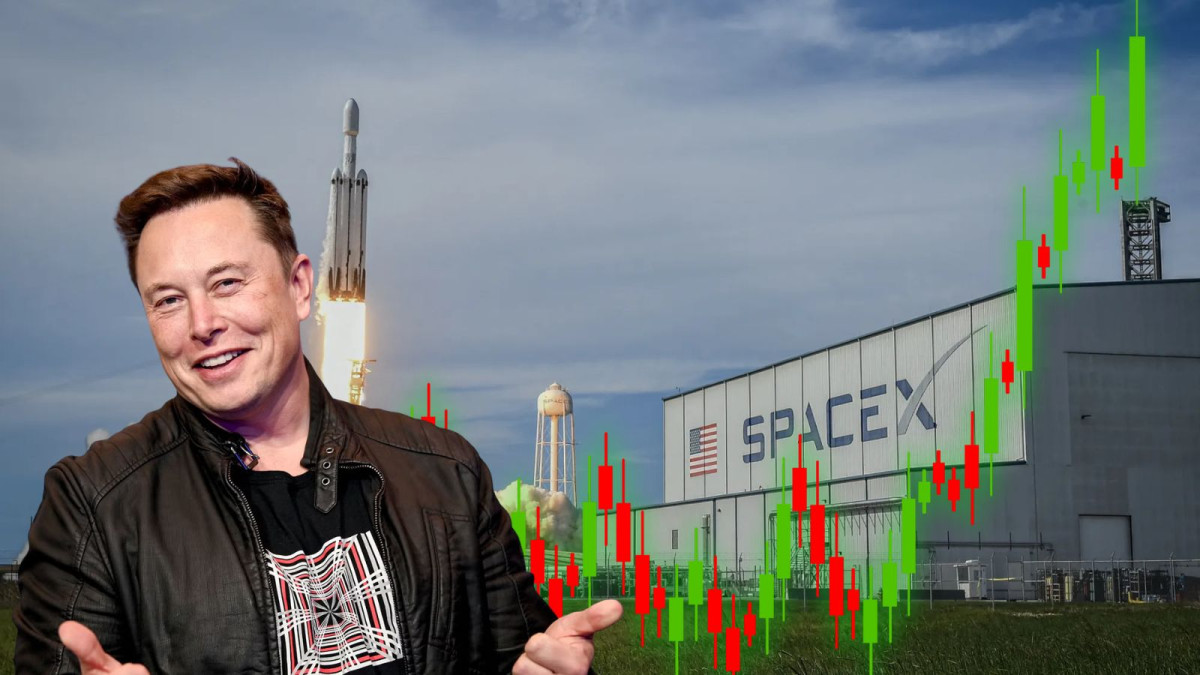
SpaceX Files for the Largest IPO in Stock Market History

SpaceX filed its long-awaited IPO registration with the Securities and Exchange Commission on Wednesday, officially kicking off what many are already calling the most consequential stock market debut in decades. Elon Musk's rocket and satellite giant is targeting a valuation north of $1.75 trillion and plans to raise up to $75 billion, figures that would shatter every previous IPO record by a massive margin.
To add some perspective, Saudi Aramco held the prior record when it raised roughly $29 billion in 2019. SpaceX is aiming for more than double that. The company plans to list on the Nasdaq under the ticker symbol SPCX, with shares expected to price on June 11 and trading set to begin June 12.
A Company That's Changed Dramatically
The SpaceX going public today is not the same company investors were tracking two years ago. In February 2026, SpaceX completed an all-stock merger with xAI, the artificial intelligence firm Musk founded in 2023. That deal valued SpaceX at $1 trillion and xAI at $250 billion, creating a combined entity worth $1.25 trillion at closing. The jump to a $1.75 trillion IPO target reflects market expectations around continued Starlink revenue growth and the AI premium investors are attaching to the xAI component.
The company also recently announced a collaboration with Tesla on an advanced chip manufacturing facility, signaling that the boundaries between Musk's various ventures are blurring in ways that make traditional valuation frameworks feel inadequate. Wedbush analyst Dan Ives went as far as suggesting that a SpaceX and Tesla merger could follow after the IPO completes, pointing to Tesla's $2 billion xAI investment that converted to SpaceX shares after the acquisition.
Starlink Is the Engine. AI Is the Story.
Starlink, the satellite internet service that now counts more than 9 million users globally, accounted for the majority of SpaceX's $18.67 billion in revenue last year and remains the core commercial engine of the business. The IPO filing identifies connectivity through Starlink as a $1.6 trillion addressable market opportunity. But that figure is almost a footnote compared to the AI ambitions outlined in the prospectus.
The company's total addressable market is pegged at $28.5 trillion across all its business lines. A striking $26.5 trillion of that is tied to AI, including $22.7 trillion in enterprise AI applications and $2.4 trillion in AI infrastructure. Whether those numbers are realistic or optimistic is a debate that will play out over the coming decades, but for IPO purposes, they give underwriters a lot of room to work with.
There is a catch buried in the otherwise impressive revenue story. Despite generating $18.67 billion in revenue last year, SpaceX reported a loss of roughly $4.9 billion as capital expenditures nearly doubled to $20.7 billion in 2025. That compares to a profit of around $791 million in 2024. The xAI unit continues to lose money as well, and the filing is pretty blunt about the execution risks that come with building space-based AI data centers and pushing Starship toward operational status.
As a retail access angle, Musk has reportedly expressed a desire to reserve up to 30% of IPO shares for individual investors, a move that would be unusual at this scale but would fit his populist branding. The company has also conducted a 5-for-1 stock split, bringing the per-share price down to roughly $105 from over $526, making the listing more accessible to everyday buyers on platforms like Robinhood and Fidelity.
What Comes Next
Goldman Sachs is leading the underwriting, with Morgan Stanley, Bank of America, Citi, and JPMorgan among the other major banks involved. The roadshow kicks off June 4, and if everything goes to plan, SpaceX will begin trading the following week. The IPO is internally known as Project Apex, managed by a syndicate of at least 21 banks.
For the wider market, the SpaceX debut is expected to be the first of a potential trio of landmark tech IPOs, with OpenAI and Anthropic also eyeing public listings. For crypto and digital asset markets, this IPO is worth watching too. A company of this scale going public at a $1.75 trillion valuation, with explicit AI ambitions and a Musk-controlled governance structure, is the kind of macro event that tends to shift risk sentiment across asset classes. We'll see if SPCX delivers on the hype or falters under the weight of its own valuation...but it will be interesting to watch, either way.
Bitget To Offer Exposure To SpaceX IPO
Crypto exchange Bitget has launched a new product called IPO Prime, and its debut offering could, quite literally, be a moon shot. It's preSPAX, a tokenized instrument giving retail investors synthetic exposure to SpaceX ahead of what could be the largest initial public offering in stock market history.
SpaceX filed confidentially with the U.S. Securities and Exchange Commission on April 1, targeting a June 2026 listing at a valuation of roughly $1.75 trillion. Yes, you read that right. If that figure holds at the close of the first trading day, SpaceX would rank as the sixth most valuable publicly traded company on earth, behind only Nvidia, Apple, Alphabet, Microsoft and Amazon. The deal is being internally codenamed "Project Apex" and has drawn 21 banks competing for underwriting roles, according to Reuters.
What preSPAX Actually Is
Worth pausing on the structure here, because the word "exposure" does a lot of heavy lifting in the marketing and isn't quite what you would expect in traditional terms. preSPAX, issued through Republic, which is a tokenized private markets platform valued at over $1 billion, is a synthetic instrument. It tracks a reference index tied to SpaceX's economic performance after a qualifying event, such as an IPO or acquisition. Holders receive no equity, no voting rights, and no direct ownership stake in SpaceX. The company itself has not endorsed or authorized the product in any way.
The subscription window opens April 18 and closes April 21, with token distribution and OTC trading scheduled to begin on the same day it closes. Bitget has set aside 94,000 tokens priced at $650 each, implying a total subscription value of around $61.1 million and an implied SpaceX valuation of $1.5 trillion for the purposes of the sale.
Bitget CEO Gracy Chen described the launch by saying that, "Pre-IPO exposure used to be limited to small circles, but tokenization has changed that," she said in a statement. "preSPAX is our first offering and we will be bringing more such opportunities to our users this year." The exchange has already signaled plans to add OpenAI and xAI tokens to the platform by Q3 2026.
SpaceX Is A Financial Rocket Ship
For those keeping track, SpaceX's valuation has moved at a velocity that mirrors its own rockets. The company was worth roughly $46 billion in 2020. By early 2025 that figure had ballooned to $800 billion. Then came February 2026, and with it, SpaceX's all-stock acquisition of Elon Musk's AI venture xAI, a deal that reset the combined entity's valuation at $1.25 trillion overnight. Six weeks later, the IPO target sits at $1.75 trillion.
The core revenue driver is Starlink. By the end of 2025, the satellite internet constellation had accumulated 9.2 million active subscribers across 125 countries, doubling its user base in under 15 months and generating north of $10 billion in annual revenue. Analysts at Bloomberg and Quilty Space project that figure could climb to somewhere between $15.9 billion and $24 billion in 2026. Morgan Stanley analyst Adam Jonas, who has tracked space equities for over a decade, has been vocal: Starlink alone, he argues, would justify a $500 billion valuation as a standalone business.
Layer in the launch monopoly, Starship's development trajectory, and the xAI integration, and the $1.75 trillion figure becomes at least a coherent argument, if not an easy one to accept on traditional metrics. At that valuation, SpaceX trades at roughly 90x 2025 revenue of $15.5 billion. For context, Nvidia, the AI darling of the current cycle, trades at around 30x forward revenue. Federal contract data compiled by FedScout shows SpaceX has racked up more than $24.4 billion in government awards since 2008, spanning NASA, the Air Force and Space Force.
Crypto And Wall Street
The push to bridge crypto infrastructure and traditional capital markets has been accelerating across the industry. Coinbase launched stock trading at the end of 2025 and repositioned its wallet as an "everything app." Kraken rolled out 11,000 US-listed stocks and ETFs with commission-free trading in April 2025. Bitpanda added around 10,000 stocks and ETFs to its platform in January. Republic, the partner behind preSPAX, previously launched rSPAX Mirror Tokens on Solana for as little as $50 per unit.
The competitive landscape for pre-IPO SpaceX exposure is getting crowded fast. On the crypto side, Solana-based PreStocks and Orderbook offer comparable products. On the traditional side, Forge Global, EquityZen and Nasdaq Private Market all provide secondary market access to SpaceX shares, though exclusively to accredited investors. That last detail is where the regulatory picture gets a bit fuzzy.
Risks Probably Worth Reading Twice
The structure behind preSPAX runs three layers deep: Bitget, then Republic, then the reference index tied to SpaceX performance. Settlement depends on the lockup period of the underlying debt asset expiring after a SpaceX IPO, at which point the issuer converts value into tokens or USDT based on SpaceX's market price at the time.
The product's structure fits relatively cleanly under the SEC's Howey Test definition of a security: an investment in a common enterprise with profit expectations derived from the efforts of others. Traditional platforms like Forge Global restrict SpaceX pre-IPO access to accredited investors. Bitget's product, by contrast, is technically available to its reported 125 million users, many of whom will not meet that threshold. The SEC intensified its scrutiny of tokenized securities structures throughout 2025, and similar hybrid instruments have been flagged as operating in a gray area that can move quickly toward enforcement territory.
There is also the small matter of whether SpaceX actually lists on schedule. The company's confidential filing gives it runway to address SEC comments privately before going public with its prospectus, which must be released at least 15 days before the roadshow begins. Prediction markets currently have 88% odds on SpaceX closing its first trading day above a $1.3 trillion market cap, which says a lot about where sentiment sits right now. Whether preSPAX holders ultimately benefit depends entirely on how that listing plays out, and when.
For the broader market, a successful SpaceX debut at $1.75 trillion would be a seismic event. It would arrive as the sixth most valuable public company on earth, trigger automatic S&P 500 inclusion discussions within months, and likely dominate institutional allocation budgets at a moment when OpenAI and Anthropic are both queuing up their own landmark listings. The IPO wave is building. And Bitget, for one, is not waiting for it to break.
World Mobile Stratospheric Could Disrupt Starlink and Transform Global Connectivity
World Mobile Stratospheric Could Disrupt Starlink and Transform the Future of Global Connectivity
A new wave of high-altitude connectivity is beginning to emerge, and it could challenge everything we thought we knew about satellite internet. World Mobile Stratospheric, an initiative within the World Mobile ecosystem, is developing stratospheric aircraft and airships that beam internet and mobile service from the sky. These platforms could deliver lower latency, broader coverage, and cheaper deployment than satellite networks, including SpaceX’s Starlink. World Mobile Stratospheric say they are on the verge of making internet-beaming from the stratosphere, the layer of Earth's atmosphere roughly 6 miles to 31 miles above the planet, a reality. They also claim their approach will be better and more affordable than satellite megaconstellations in low Earth orbit, and another huge step forward towards their goal of connecting the world’s unconnected.
If successful, this approach may not only compete with Starlink, it could outperform it in many real-world scenarios and reshape the future of global connectivity.
What World Mobile Stratospheric Is Building
World Mobile Stratospheric is a program built around high-altitude aircraft and drones designed to operate around 60,000 feet. At this altitude, the aircraft can cover enormous geographic areas, potentially up to 15,000 square kilometers per platform, using steerable radio beams that deliver 5G, broadband, and mobile connectivity directly to user devices.
This aerial layer connects to the World Mobile Chain, a decentralized network that uses a combination of ground nodes, community-run AirNodes, and blockchain-based incentives. By combining telecom infrastructure with decentralized economics, World Mobile offers a model where communities and individuals participate in coverage and receive rewards for contributing bandwidth and infrastructure.
In simple terms, the system blends high-altitude platforms with a decentralized telecom economy to create a flexible, cost-effective connectivity network.
Why Stratospheric Aircraft Could Outperform Starlink
Starlink remains a powerful solution for fixed broadband and rural homes, but it has limitations that World Mobile’s architecture directly addresses.
Lower Latency and Faster Response
Stratospheric aircraft are far closer to Earth than low-Earth-orbit satellites. That shorter distance means lower latency, faster speeds, and a better experience for latency-sensitive applications. While LEO satellites perform better than traditional satellite internet, they still cannot match the physics of a platform tens of thousands of feet away instead of hundreds of miles.
Cheaper Deployment and Greater Flexibility
Launching satellites is extremely expensive, and updating or repairing them is even more costly. Stratospheric aircraft can land, undergo maintenance, be repositioned, or even be replaced at a fraction of that cost. This allows for rapid deployment, rapid scaling, and easy optimization when coverage needs change.
Better for Emerging Markets and Rural Regions
Remote and underserved regions are expensive to cover with ground towers or satellite networks. World Mobile Stratospheric has a stronger economic case for developing countries because it requires less capital than building tower networks and does not need a massive satellite constellation.
Mobile-Friendly, Not Just Broadband
While Starlink focuses primarily on fixed broadband, World Mobile’s airborne platforms are designed to integrate directly with mobile networks. They can deliver 5G or LTE signals straight to phones, something Starlink cannot currently do without additional hardware or specialized spectrum agreements.
Stratospheric platforms may not fully replace satellite networks in every case, but they have a strong chance to outperform them in several mass-market use cases, especially where mobile connectivity is essential.
If WMS scales globally, Starlink may lose dominance in the mobility and emerging-market segments of the connectivity economy.
The Role of World Mobile Chain and Decentralized Infrastructure
A major differentiator for World Mobile is its decentralized model. Instead of relying solely on a centralized operator, World Mobile distributes infrastructure across community operators. AirNodes, EarthNodes, and third-party operators help run the system while earning rewards through the World Mobile Chain.
This makes the network more resilient, more economically inclusive, and more scalable. It turns connectivity into a shared community resource rather than a top-down service offered only by large corporations.
This model pairs naturally with stratospheric platforms, which serve as ultra-high-coverage layers that tie all ground infrastructure together.
Key Milestones and Industry Signals
World Mobile Stratospheric is gaining momentum with several important developments:
-
Multiple test flights and trials have demonstrated high-altitude connectivity performance and long-range coverage.
-
A partnership with Protelindo positions World Mobile to serve Indonesia, one of the world’s most challenging geographies for telecom infrastructure.
-
Flight tests scheduled with Britten-Norman aircraft aim to validate 5G connectivity, multi-beam broadcasting, and integration with local mobile networks.
-
Reports indicate the system may support more than half a million simultaneous mobile connections per platform.
These milestones reflect growing confidence that stratospheric platforms can operate at scale.
Challenges That Still Need to Be Solved
While the promise is enormous, World Mobile Stratospheric must address important challenges:
-
Aviation and spectrum regulations require coordination with multiple authorities.
-
Long-duration high-altitude flight must be validated for safety and reliability.
-
Ground integration must be seamless across different regions and mobile operators.
-
Large-scale manufacturing and aircraft deployment must reach commercial feasibility.
-
Competition from other high-altitude platform providers, as well as Starlink’s future upgrades, will remain intense.
The technology must prove itself not only in isolated trials, but in real-world, long-term commercial deployment.
Final Thoughts
World Mobile Stratospheric represents one of the most innovative connectivity models in the world. By combining high-altitude aircraft, decentralized telecom infrastructure, and blockchain-powered economics, WMS is aiming to reshape how the world connects.
Starlink changed the satellite industry. World Mobile now wants to change the entire connectivity ecosystem.
If high-altitude platforms can deliver the performance, cost efficiency, and flexibility promised, they could disrupt satellite broadband and become the preferred solution for mobile coverage, rural connectivity, and rapid deployment around the globe.
The future of the internet may not be in orbit. It may be floating quietly above the clouds, bringing fast and affordable connectivity to the entire world, allowing the world to reclaim power over their connectivity.
Stay Connected
You can stay up to date on all News, Events, and Marketing of Rare Network, including Rare Evo: America’s Premier Blockchain Conference, happening July 28th-31st, 2026 at The ARIA Resort & Casino, by following our socials on X, LinkedIn, and YouTube.
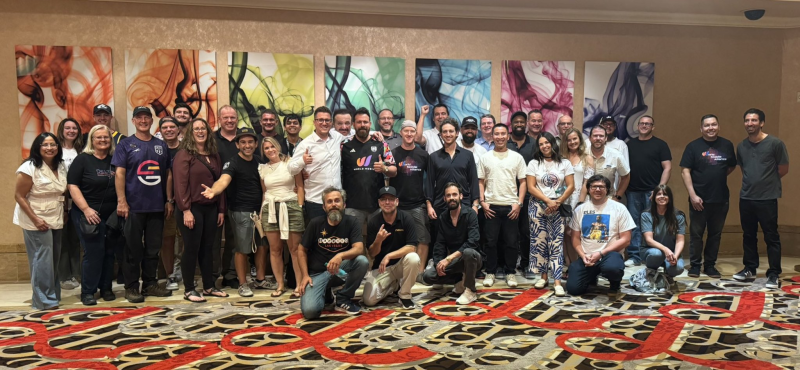
World Mobile - A Community Driven Revolution

The World Mobile Alliance (WMA) has grown from a small community gathering into a major force within the World Mobile Network ecosystem. What started as a chance meeting at Rare Evo in Denver in 2022 has now transformed into an organized movement that actively supports and promotes World Mobile’s mission of decentralizing telecom infrastructure through blockchain technology.
We had the privilege to sit down with Rob and Clover Nodes of WMA to learn about the roots of the alliance and how community is the driving force of this ever-growing business. Here’s what we got:
The Birth of the World Mobile Alliance
The World Mobile Alliance came to life when a handful of passionate individuals discovered that Will Reid, a World Mobile team member, would be attending Rare Evo in Denver in 2022. Seeing this as an opportunity, a group of enthusiasts—including Clover, Rob, and others—organized an impromptu meetup by a waterfall, drawing 13 attendees who mostly held Earth Node reservations.
This was the first in-person gathering of community members planning to operate within the World Mobile Network. At the time, engagement with World Mobile was limited to occasional AMAs and promotional videos, leaving the community craving more interaction. The WMA quickly took matters into their own hands, organizing weekly Twitter Spaces and live streams, which became the backbone of a vibrant, growing community.
Expanding the Alliance
Encouraged by their initial success, the WMA pushed for greater involvement at Rare Evo 2023 in Denver. They lobbied the World Mobile team, securing a booth and a main-stage speech by Micky Watkins, World Mobile CEO. Their relentless advocacy ensured that the community had a place at the table, hosting dedicated meetups for Earth Node operators and fostering a deeper connection among supporters.
By Rare Evo 2024 in Las Vegas, the Alliance had cemented itself as a key player, running a booth gifted by the Rare Evo team. Recognizing their commitment and influence, World Mobile decided to hand over booth operations entirely to the Alliance, placing their trust in the community to represent the brand. The success of this collaboration has set the stage for an even bigger presence at Rare Evo 2025, marking the fourth consecutive year of WMA’s involvement.
Unprecedented Growth and Global Reach
The Alliance has experienced exponential growth, with attendance at meetups doubling or tripling each year. From the original 13 attendees, the numbers have skyrocketed, with projections indicating another doubling in 2025 as members from Europe, South America, and beyond join the movement.
A testament to World Mobile’s commitment to decentralization, the company has consistently empowered the community. Micky Watkins once observed Alliance members engaging attendees at a booth and later remarked, “You guys get it; we don’t even need to be here.” This confidence led to the WMA’s official role in hosting booths at major events, showcasing the depth of community expertise and dedication.
How the Community Can Get Involved
Participation in the World Mobile ecosystem extends beyond running booths. The Alliance is spearheading initiatives such as World Mobile Day at Rare Evo 2025, which will feature:
- Educational seminars
- Meetups for Earth Node operators, Air Node operators, and Hex Guardians
- Collaborations with projects like Minutes Network
- Networking opportunities to enhance adoption
Additionally, WMA continues to host weekly X Spaces and bi-weekly YouTube live streams, providing platforms for project discussions, discussing blockchain-based ventures, and the launch of the World Mobile Chain.
Understanding World Mobile’s Technology
World Mobile operates on a sharing economy model, incentivizing individuals to participate in telecom infrastructure rather than just subscribing to it. Here’s how:
- Earth Nodes: The blockchain backbone of the network, responsible for processing and storing data securely on-chain. Operators are rewarded in WTMX, the World Mobile cryptocurrency.
- Air Nodes: Physical broadcast devices that transmit the World Mobile network signal. Owners can host them locally or remotely, earning a share of network revenue.
- Hexes and Scanning: The world is divided into hexagonal coverage zones, and users can scan and map network availability using a mobile app, earning rewards while providing critical data for deployment.
By leveraging these technologies, World Mobile is building a decentralized, community-powered telecom network, rewarding those who contribute to its expansion.
The Road Ahead: Rare Evo 2025 and Beyond
As the Alliance prepares for Rare Evo 2025, they plan to make an even greater impact. The vision includes:
- World Mobile Day with panels, workshops, and networking events
- Expanding educational efforts on blockchain-based telecom solutions
- Engaging new markets and international communities
- Organizing social and networking events, ensuring strong community bonds
From just 13 individuals in 2022 to potentially over 200 dedicated members in 2025, the World Mobile Alliance has transformed from a grassroots initiative into an influential decentralized movement. As they say, “We’re here because of each other, and we’re bringing more people into the vision of a truly decentralized, community-run mobile network.”
For those looking to join the movement, follow @WorldMobilers on X for updates and engagement opportunities.