#Ethereum

MetaMask Becomes Standalone Company as Consensys Splits

Consensys Software Inc. (CSI) has announced plans to split into two independent companies, each with a separate focus and leadership team.
Announcing the split in a press release published on the MetaMask blog, Consensys Software Inc. said it will be rebranded as MetaMask, with Joe Lubin serving as Chairman and Chief Executive Officer.
The second company, which will retain the Consensys name, will be a newly formed entity comprising CSI’s Protocols Group and institutional blockchain infrastructure business, including Linea and its broader portfolio of enterprise and Ethereum protocol infrastructure. Mike Kriak will serve as CEO, David Cunningham as President, and Joe Lubin as Executive Chairman.
Speaking about what both companies are expected to become, Joe Lubin, Chairman and CEO of MetaMask and Executive Chairman of Consensys, said MetaMask will grow beyond being just a self-custodial wallet and become a platform where users can not only hold their assets but also manage their money in diverse forms and across different aspects of their financial lives.
As for the new Consensys entity, Lubin said the company will continue to operate as a protocols company, with the newly formed team bringing Ethereum, Hyperledger Besu, and Linea protocol development together to enable enterprises and institutions to collaborate more effectively.
What Comes Next for Both Companies
MetaMask will continue to be an Ethereum first product company, providing self-custody services that allow users to hold and manage their assets on the platform.
The team will also continue working on its Open Money platform, which represents the company’s vision of transforming the wallet into a platform where users can hold, move, spend, save, invest, and grow their money in one place. As a step toward this goal, the team launched the MetaMask Money Account in June, enabling users to gain greater control over their finances.
Consensys will continue playing a key role in advancing Ethereum and other Ethereum related protocols, including the development of decentralized applications and protocols on the Ethereum blockchain network.
The team will also expand its work helping financial institutions and enterprises deploy blockchain infrastructure, including helping institutions such as banks, asset managers, payment providers, and market infrastructure firms access tokenized financial markets and stablecoins.
Standard Chartered Launches Institutional Spot Trading in the UAE

Standard Chartered, the British multinational banking and financial services group, has expanded its presence in the UAE by launching institutional spot trading for Bitcoin and Ether.
While this is not the first time institutional BTC and ETH spot trading has been launched in the UAE, Standard Chartered’s launch is unique, as it is the first Global Systemically Important Bank (G-SIB) to offer institutional Bitcoin and Ether deliverable spot trading in the region and is currently the only global bank offering such capabilities in the Emirates.
By launching these institutional grade spot trading services, Standard Chartered enables eligible institutional clients to access deliverable Bitcoin and Ether spot trading through its electronic trading channels.
“The UAE has developed a clear digital assets regulatory framework that supports institutional participation and innovation,” Rola Abu Manneh, Chief Executive Officer, UAE, Middle East and Pakistan at Standard Chartered, said.
“Extending our Bitcoin and Ether spot trading capability to institutional clients is a significant step in broadening our regulated digital asset proposition in the market. By combining execution with secure custody, governance and the connectivity of a global bank, we are providing clients with a more integrated way to participate in digital asset markets.”
The launch of Standard Chartered’s institutional spot trading service came just a few days after the bank became the first authorized bank distributor of the HKD-backed stablecoin developed by Anchorpoint Financial Limited.
Standard Chartered has also been involved in several pro crypto and tokenization friendly moves, launches and partnerships. Notable among these was its acquisition of Zodia Custody in May, a move designed to support institutional clients.

Coinbase Launches Derivatives Contracts in Canada

Global cryptocurrency exchange Coinbase has launched derivatives contracts for eligible Canadian investors seeking to trade and speculate on a trusted platform.

The derivatives contracts, which will be offered through Coinbase Financial Markets, are the first of their kind from a crypto native platform in Canada, giving investors access to highly liquid and regulated contracts, including 23 perpetual and dated futures covering assets such as Bitcoin, ETH, and SOL; five commodity futures covering gold, silver, and oil; and index futures.
Regarding the features of the newly launched derivatives contracts, Coinbase said in a blog post that the contracts are regulated by its financial markets arm, an entity registered with the U.S. Commodity Futures Trading Commission (CFTC). The contracts will also be flexible, with nano sized contracts designed for investors with lower upfront capital requirements.
Coinbase’s derivatives contract launch comes at a time when the exchange has rolled out more customizable charting and interface features on Coinbase Advanced.
Rather than forcing every trader to use the same chart setup, the rollout is aimed at making it easier for traders to customize their trading screens. Traders can switch between candlestick and line charts, change time frames, adjust chart settings and technical indicators, and use drawing tools.
The benefits of these features are that traders can spot market trends faster, identify potential entry and exit points, and analyze market movements more effectively.

Term Labs Loses $8.5 Million in Governance Exploit

Blockchain protocol Term Labs has lost an estimated $8.5 million after suffering a governance exploit that allowed hackers to gain control of the protocol’s vaults and drain funds.
According to blockchain security firm PeckShieldAlert, the attackers first built up enough voting power to take full control of four of the five USDC vaults and approximately 91% of the protocol’s Ethereum Meta vaults.

With this much voting power, the attackers were able to pass proposals, eventually enabling them to drain approximately 2,843 ETH, worth $6.87 million, and an additional $1.68 million in funds.
In response to the exploit, Term Labs acknowledged the incident. Although the team said it would share more details as the incident is being investigated, it advised all of its customers, as a safety precaution, to revoke all approval contracts associated with the protocol.
Governance exploits, which often involve attackers gaining enough voting power to execute malicious proposals, have become increasingly prevalent in recent times.
Prior to the Term Labs exploit, BonkDAO, a decentralized autonomous organization, also lost an estimated $20 million to $21 million from its treasury after attackers spent roughly $4.4 million buying enough BONK tokens to gain control of the votes and pass malicious proposals.

Summer Finance Hit by $6 Million Exploit

Summer Finance, a DeFi yield optimization protocol, was hit by an exploit that affected the protocol's USDC vaults, resulting in an estimated loss of roughly $6 million.
The exploit was confirmed by several blockchain security firms, including Blockaid, Cyvers, and CertiK. According to Cyvers, the attack appears to have been caused by the exploitation of a shared accounting vulnerability. The stolen funds were eventually swapped for the DAI stablecoin and transferred to the attacker's wallet.
Although all vaults across the Lazy Summer Protocol were immediately paused after the exploit was confirmed, the team later released a post-mortem report detailing how the attack occurred, its scope and impact, the response actions taken, and ongoing fund recovery efforts.

Image credit: x.com
According to the post-mortem report, the exploit targeted two Lazy Summer Protocol USDC vaults on the Ethereum mainnet. The attack, which is believed to have been planned over a period of about 3 months, was executed using a $65 million flash loan. Of that amount, approximately $64.8 million was deposited into Summer's vaults.
The attacker then deposited Varlamore USDC (vgUSDC) Growth tokens, which were essentially worthless, into the vulnerable Silo Ark vault, which had been partially shut down. Because the vault's accounting logic incorrectly treated the fake vgUSDC tokens as legitimate assets with real value, the attacker was able to withdraw genuine funds from the protocol.
In response, the Summer Finance team took several measures to contain the impact, including pausing vaults across the Ethereum, Base, Arbitrum, and Sonic networks. The team has also launched an investigation and begun tracing the stolen funds.
The Summer Finance exploit occurred around the same time that the BonkDAO treasury was drained of approximately $20 million. In that incident, the attacker reportedly purchased $4.4 million worth of BONK tokens, allowing them to meet the DAO's low quorum threshold. The attacker then passed a malicious governance proposal, BIP 76, which automatically transferred approximately $20 million from the treasury.

Ethereum Foundation Cuts 20% of Staff in Major Restructure

The Ethereum Foundation is cutting its workforce by 20% and laying off about 54 staff members following a month-long reorganization.
The layoffs aim to make the foundation leaner, aligning with the foundation’s March updated Mandate and Treasury Management Policy, which together eliminate activities that fall outside the foundation’s core priorities. Affected staff will still be able to contribute to the Ethereum ecosystem from outside the EF, with the foundation stating that plans are in place to compensate those who have been laid off.
“In order to make sure those who are leaving are set up well for the transition, we are offering a package comprising severance and transition support. The severance is the higher of one month’s pay per year worked at the EF and the amount locally mandated by the individual’s jurisdiction,” the Ethereum Foundation wrote in a blog post.
“This is the same severance we offered to the colleagues who left the EF in the past few months. The transition support includes help finding a new place to contribute in the ecosystem, plus a small transition grant earmarked to cover individual transition expenses.”
The New 5-Cluster System
As part of its restructuring effort, the Ethereum Foundation will adopt a five-cluster system that effectively divides the foundation into five layers or domains of work. The clusters include:
Protocol Layer: This layer will focus on the protocol’s core priorities, playing a key role in scaling and hardening Ethereum while preserving the protocol’s core features, including censorship resistance, privacy, and security. Members of this cluster will also be involved in the safe deployment of protocol upgrades, addressing toxic MEV, reducing complexity and trust dependencies, and advancing long-term research.
Access Layer: The main role of this layer is to ensure self-sovereignty for users and agents. Team members in this cluster will work to ensure that key protocol actions, such as reading chain state, transacting privately, and delegating authority, are possible without relying on unverifiable intermediaries.
User Layer: This layer will be responsible for bridging the gap between what Ethereum provides and its relevance and usefulness to users. Team members in this cluster will conduct research on user segments and use cases, and focus on education, to ensure that protocol decisions reflect users’ needs and choices.
Community Layer: This layer will manage the foundation’s external presence and relationships. Team members in this cluster will help clarify and advocate for what the Ethereum Foundation represents and how it differs from financial or corporate crypto organizations. They will also focus on building the foundation’s relationships beyond the crypto sector.
Institutional Layer: This layer will manage the foundation’s engagement with institutions, including financial firms, enterprises, governments, universities, and nonprofit organizations. To support large-scale adoption, members of this cluster will work to ensure Ethereum meets institutional needs while complying with regulatory standards.
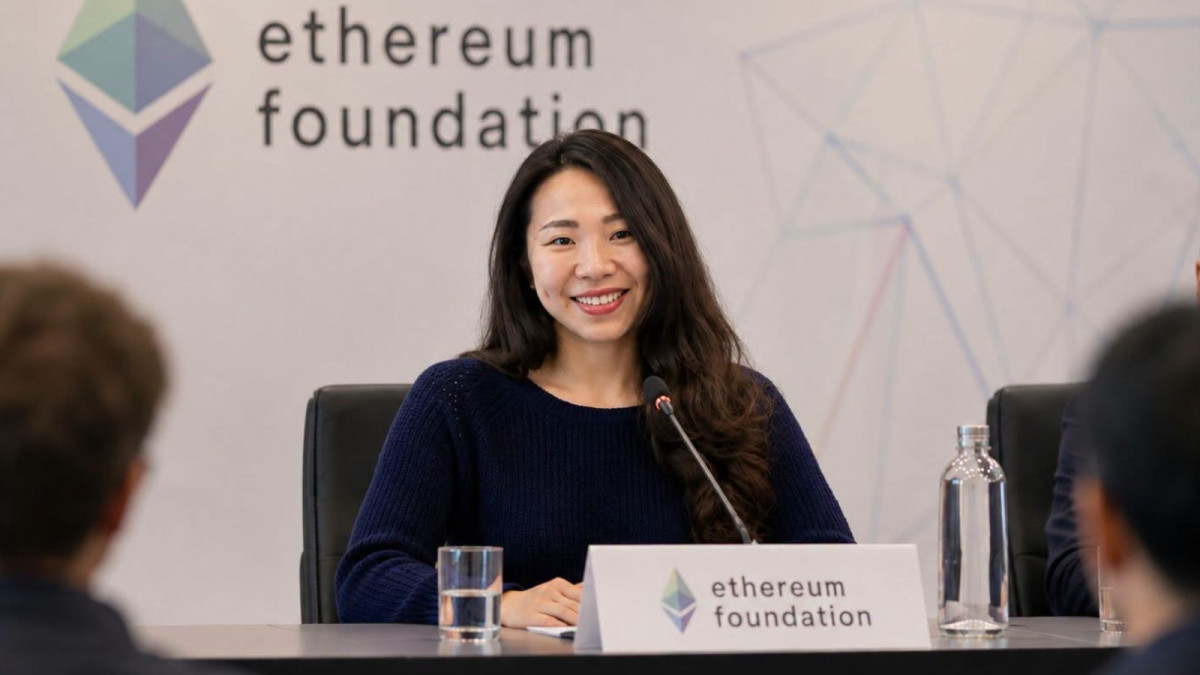
Hsiao Wei Wang Leaves Ethereum Foundation Leadership
Hsiao Wei Wang, co-executive director and board member of the Ethereum Foundation (EF), has announced her departure from the foundation, shortly after co-executive director Tomasz Stańczak left in February this year.
“After my sabbatical, I have decided to step down as co-executive director and board member of the Ethereum Foundation, effective today,” Wang wrote in an X post.
“Serving as EF co-executive director let me see the bigger picture of how the Ethereum community collaborates. I’m proud of what we’ve accomplished, not only at the EF, but across the builders, researchers, educators, validators, users, and many other contributors who have helped build, maintain, secure, and use the infrastructure and applications on top of it.”
Wang joined the EF research team in 2017, where she worked on protocol design, consensus mechanisms, sharding proofs-of-concept, and distributed systems. In March 2025, she was appointed co-executive director and board member alongside Tomasz Stańczak. During her time at the EF, Wang contributed to a range of projects, including sharding research, data availability sampling, EIP 4844, ETHTaipei, and the Taipei Seminar.
Reacting to her departure, Ethereum co-founder Vitalik Buterin commended Wang for her contributions to the foundation. “I still remember her early days in the Ethereum research community, first outside the Foundation and then inside it, and the thought and care she put into making Ethereum research and consensus work more organized and legible,” Buterin wrote in an X post.
“Last year, she, along with Stańczak, voluntarily took on the burden of what is perhaps the most challenging position in the Ethereum Foundation, at one of the most challenging times for Ethereum and, realistically, a challenging time for all of humanity. She handled the task skillfully and gracefully, and has constantly strived to find and insist on outcomes that are right both for the Ethereum protocol and for the human beings who build and maintain it.”
Wang’s departure from the Ethereum Foundation comes as several notable researchers have left the organization, including Tomasz Stańczak and Josh Stark, who departed in April. So far, at least eight senior researchers have left the Ethereum Foundation this year.
Morpho Raises $175M to Expand DeFi Lending Network

Morpho, a leading decentralized finance lending protocol, has raised $175 million in a funding round led by Paradigm, a16z crypto, and Ribbit Capital. Other firms involved in the round include Apollo Funds, Circle Ventures, VanEck, Ledger Cathay, Variant, Wintermute Ventures, Prelude, IOSG, HashKey, Mirana, NJJ Capital, SBI Group, Bpifrance, and Bam Azizi.

With the funds raised, Morpho aims to further deepen its technical and commercial integrations with strategic partners and continue its mission of developing and strengthening the on-chain infrastructure businesses need to build programmable credit products.
“The true value of finance has always been held back by outdated infrastructure, fragmented systems, and extractive intermediaries,” says Paul Frambot, co-founder of Morpho. “We started Morpho to change that. We’re building the open credit network for the world, connecting those with excess capital to those who need financing globally.”
About Morpho
Morpho is a leading decentralized, permissionless lending protocol operating across Ethereum, Base, and other EVM-compatible blockchain networks. Launched in 2021, Morpho aims to efficiently connect lenders and borrowers globally through its decentralized credit network.
Morpho claims to have facilitated more than $11 billion in deposits since its launch. Its decentralized lending platform is currently used by several institutional clients, including Bitwise, Galaxy, Anchorage Digital, Ledger, Trezor, Bitpanda, Coinbase, Kraken, and Binance. In total, Morpho has raised more than $244 million, with a valuation of approximately $2 billion.
The State of DeFi Lending
On-chain lending remains one of the largest and most mature sectors in decentralized finance. According to data from DeFiLlama, the total value locked in DeFi lending across more than 600 protocols stands at approximately $35.5 billion to $35.8 billion, with Aave, Morpho, and SparkLend holding the largest market shares in the sector.
Institutional adoption in DeFi lending has also accelerated significantly, with blockchain protocols such as Morpho launching Morpho Blue and MetaMorpho vaults, which allow easier integration of the Morpho platform with other centralized finance and institutional platforms. SparkLend has also launched dedicated products targeting institutional clients.
Several other companies, including Gemini, Crypto.com, Fireblocks, Bitwise, J.P. Morgan, and VanEck, have also become involved in institutional DeFi lending through partnerships or the launch of DeFi lending products.
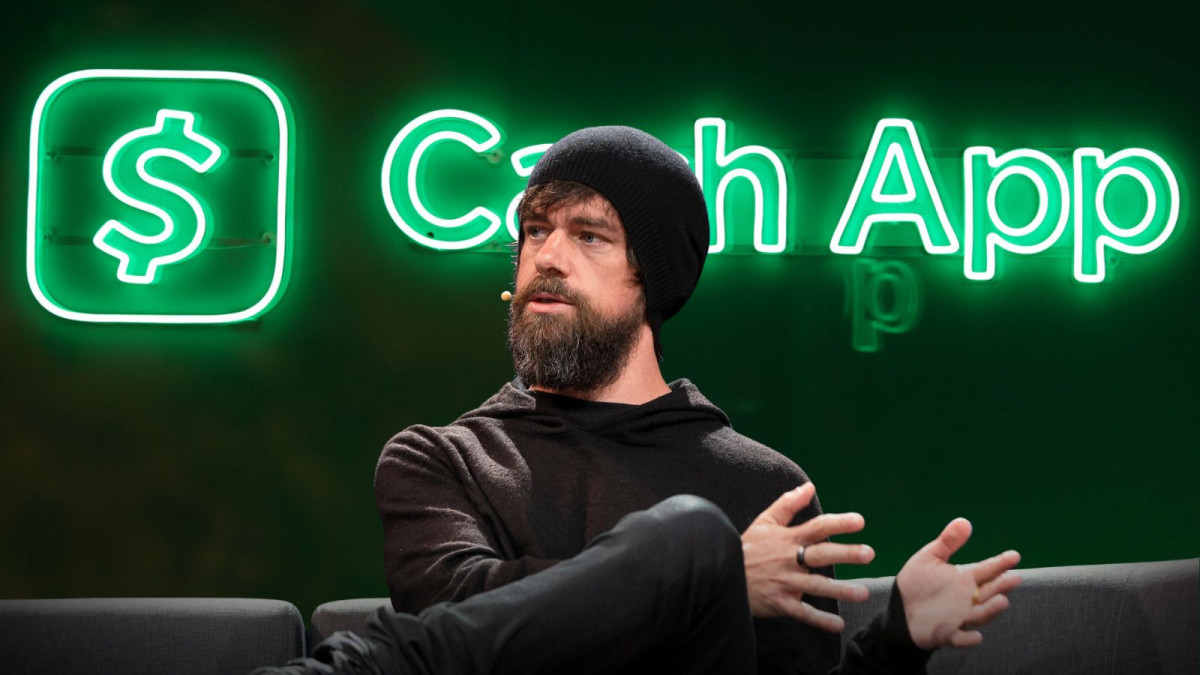
Cash App Goes Live With USDC For 60M Users

Block's Cash App has officially begun rolling out USDC stablecoin payments to its nearly 60 million monthly users. The feature went live today for roughly 25% of the platform's user base, with full availability expected by the end of the week.
The rollout covers four blockchain networks: Solana, Ethereum, Polygon, and Arbitrum. Users can now send USDC from their Cash App wallet to external wallets on any of the supported chains, and incoming USDC is automatically converted into a dollar balance within the app. No separate transfer fee applies, at least for now.
A Reluctant Pivot, Years in the Making
The launch carries some ideological weight. Jack Dorsey, Block's CEO and longtime Bitcoin maximalist, spent years positioning Cash App as a Bitcoin-first platform. He built out Bitcoin trading, backed mining hardware development, and integrated Lightning Network support for Square merchants globally. Stablecoins were not part of that vision.
That changed, grudgingly. In March, Dorsey publicly acknowledged the shift. "I don't like that we're going to support stablecoins but our customers want to use them," he said. "I don't think it's wise to go from one gatekeeper to another." The comment was candid in a way that's rare for major fintech announcements, and it framed the product addition less as strategic enthusiasm and more as a concession to market demand.
Block first hinted at the feature on the Cash App website late last year, describing stablecoins strictly as a payments mechanism rather than an investment tool. But that early hint has carried through to the live product.
Why Solana (and Why Not Just Solana)
Solana started as the sole chain involved with Cash App. Back in November 2025, Solana confirmed its involvement after sharing a demo by Circle's Jeremy Allaire showcasing a USDC transfer on the network. The choice made sense: Solana transactions typically cost under a cent and settle in under a second, conditions well-suited for the kind of peer-to-peer and remittance use cases Cash App serves.
But Block's Miles Suter framed the company's stance as "chain- and coin-agnostic" from the beginning. Solana was a starting point, not a commitment. The live rollout now includes Ethereum, Polygon, and Arbitrum alongside Solana, giving users flexibility across networks with different cost and speed profiles. Ethereum's gas fees can still spike during congestion, which is precisely why Layer 2 options like Arbitrum and Polygon matter.
The multi-chain approach also future-proofs the integration somewhat. If one network faces congestion or reliability issues at scale, users and the platform aren't locked in.
The Guardrails Are Real
Cash App is not positioning this as a DeFi on-ramp. The feature comes with meaningful restrictions. Sending is capped at $2,000 per day and $5,000 per week; receiving tops out at $10,000 weekly. The service is currently unavailable in New York and on sponsored accounts. Identity verification is required.
Perhaps most importantly, the app warns users that blockchain transactions are irreversible. Funds sent to a wrong address or unsupported network are gone permanently. That's a steep hill to climb for a consumer platform serving tens of millions of people who may be encountering on-chain transfers for the first time.
Stablecoins Are Here To Stay...and Thrive
Cash App's move lands against a backdrop of surging stablecoin adoption. As of this week, the total market value of stablecoins has hit a record $322 billion, exceeding the foreign exchange reserves of 95 nations, including the UK and Canada. USDC, issued by Circle, is the second-largest stablecoin and already sees over $14 billion in liquidity on Solana alone.
Western Union launched Solana-based remittances in the first half of 2026. Stripe has added USDC support across multiple chains. Visa has integrated Solana for stablecoin settlements. The regulatory picture has also clarified somewhat, with the GENIUS Act signed in July 2025 establishing a clearer federal framework for stablecoin issuance.
Taken together, this feels less like a novelty launch and more like a platform making its peace with where consumer payments are heading. Dorsey may not love it, but the product is live, the networks are there, and 60 million people now have a relatively frictionless path to on-chain dollar transfers whether they know what a blockchain is or not.

Attempted Kidnapping Targets Sandbox Co-Founder’s Wife

The wife of Sébastien Borget, co-founder and chief operating officer of The Sandbox, an Ethereum-based virtual world platform, reportedly narrowly escaped being kidnapped at the couple’s home in Villenoy, Seine-et-Marne, France, this week.
According to Le Journal du Dimanche, a local French newspaper, one of the kidnappers disguised as a deliveryman wearing a branded vest, knocked on the couple’s home.
On opening the gate, five other hooded accomplices charged at Borget’s wife in an attempt to forcefully drag her into a vehicle. However, her cries alerted neighbors, forcing the group to scatter and leave the victim behind.
Four suspects escaped in the vehicle, while two others fled on foot and hid nearby. The two suspects attempted to book a ride-hailing car but were later captured by officers from the Meaux Anti-Crime Brigade.
The two suspects arrested were identified as Mateo V. and Walid H., reportedly born in 2010 and 2009, respectively, and are both residents of Pantin in Seine-Saint-Denis. They were found carrying a fake handgun, zip tie restraints, and balaclavas.
While investigations are ongoing, local news reports have linked the attempted kidnapping to cryptocurrencies, citing an increase in crypto-related wrench attacks and kidnapping incidents reported this year.
France Remains a Hotspot for Crypto Wrench Attacks
There has been an increase in attacks on crypto holders, with France leading and becoming the global epicenter.
In just the first four months of this year, between 41 and 47 incidents were reported in France, an average of one incident every 2.5 days. The French authorities have also charged 88 suspects, including more than 10 minors, across 12 major investigations, with 75 in pretrial detention.
Jameson Lopp, cofounder and chief security officer of Casa, a well-known blockchain security company, has long been tracking these crypto-wrench attacks in a GitHub repository named "physical bitcoin attacks." According to the repository, there have been about 35 recorded incidents this year, with France accounting for 74 percent of those, or 26 incidents in total.
To help combat the increasing number of wrench attacks, Binance recently added a withdrawal protection feature to the Binance wallet that activates a lockdown period, preventing withdrawals from the wallet, especially by intruders.
Deloitte Taps Blocknative Team to Advance Web3 and AI Strategy

Deloitte, one of the Big Four professional services firms, has acquired Blocknative, a crypto infrastructure company, in a talent acquisition deal following Blocknative’s plan to wind down its operations.
The acquisition is not a full company buyout but rather a transfer of Blocknative’s talent pool to Deloitte, with the former Blocknative team set to drive Web3 innovation across Deloitte’s client portfolio.

The move, according to Blocknative, is aimed at leveraging blockchain and cryptographic technology to address the trust, coordination, and verification problems that hinder enterprise adoption of agentic artificial intelligence, particularly as several traditional financial institutions, including JPMorgan, Goldman Sachs, and Morgan Stanley, develop their own agentic AI solutions.
“This chapter of our work in the ecosystem is coming to a close: on mempool visibility, transaction orchestration, block building, MEV auctions, private order flow, transaction pricing, and more,” said Matt Cutler, Blocknative founder and chief executive officer.
“That work was shaped by our customers, the protocol teams, wallet builders, researchers, and institutions who pushed for better answers.”
With Blocknative winding down its operations, the company has announced that it will shut down its application programming interface (API) services on June 19, 2026, alongside its gas network, which relies on the API. Teams and companies that depend on the Blocknative API have been advised to begin migration planning, including testing, swapping, and confirming operational readiness, before the June 19 deadline.
The shutdown of Blocknative comes amid a wave of crypto company closures over the past few months. The last quarter saw more than 20 crypto companies restructuring or shutting down due to declining market conditions, high operational costs, and strategic pivots toward artificial intelligence, including Dmail, Balancer Labs, Magic Eden, and Tally.
About Blocknative
Blocknative is a San Francisco-based blockchain infrastructure company that specializes in real-time observability and optimization tools for public blockchains, particularly Ethereum and other EVM-compatible Layer 1 and Layer 2 networks.
Before its planned shutdown, Blocknative had raised around 34 million dollars from investors and built a decentralized oracle gas network that provides real-time gas pricing data across more than 40 networks.
It has also served several notable blockchain companies, including the Ethereum Foundation, Curve Finance, and Tally.
Ethereum Foundation Names Three New Co-Leads
The Ethereum Foundation has appointed Will Corcoran, Kev Wedderburn, and Fredrik as co-leads of its protocol cluster, following the departure of some of its prominent engineers.
“While Barnabé and Tim are moving on from the Ethereum Foundation soon, and Alex Stokes will be on sabbatical, the Protocol cluster, as it exists today, is in large part due to their work. Under their coordination, Protocol launched tracks and helped to ship Fusaka to mainnet in December 2025, introducing PeerDAS and raising the mainnet gas limit on the path to 200M and beyond,” the foundation wrote in a blog post.
“Tim, Barnabé, and Alex shaped Protocol in ways that will outlast their time as cluster leads. We are grateful, and we are looking forward to what each of them takes on next.”
What to Know About the New Co-Leads
Will Corcoran is a research coordinator within the protocol, with experience working on zkVM proving, post quantum consensus, and the Fast Confirmation Rule. He has also facilitated numerous community calls, breakout rooms, and in-person protocol events, giving him a deep understanding of how the protocol works.
Kev Wedderburn leads the zkEVM team in the protocol and has experience working at the intersection of research and engineering, while Fredrik leads the protocol’s security and has been deeply involved in cross-cluster work.
About the Protocol Cluster
The protocol cluster, often called the protocol, is the core group within the Ethereum Foundation responsible for designing, researching, coordinating, and developing Ethereum's base layer, or L1, blockchain protocol. After its rebranding in 2025, it had one goal: to tackle Ethereum's biggest challenges.
To address these challenges, the protocol prioritizes three main areas: enhancing Ethereum's scalability, improving user experience, and strengthening the security and resilience of the Ethereum blockchain network.
The protocol also oversees several technical domains, including AllCoreDevs meetings, cryptography, prototyping, security, zkEVM, and peer-to-peer systems. It is currently working on Glamsterdam, the next major Ethereum L1 upgrade, which will introduce features such as enshrined proposer builder separation, known as ePBS under EIP 7732, and gas repricing to support higher gas limits.
The restructuring of the Ethereum protocol comes shortly after key figures in the foundation, Josh Stark, last month, and Tomasz K. Stańczak, more recently, left the protocol. Other developers within the foundation have also departed to join other Layer 1 blockchain projects such as Tempo.