#digital assets
Kakao Group, Fireblocks Sign MoU to Explore Stablecoin Opportunities in Korea

Kakao Pay and Kakao Bank have signed a memorandum of understanding (MoU) with stablecoin infrastructure firm Fireblocks to explore secure digital asset infrastructure in Korea.
Under the agreement, the three companies will jointly explore business opportunities based on Korea’s market conditions and infrastructure demand.

With a focus on stablecoins, the trio will explore digital asset distribution frameworks that comply with the country’s regulatory and security requirements, while also developing a proof of concept (PoC) to assess the applicability of these frameworks to South Korea’s digital economy.
"For banks and payment platforms in Korea, leveraging reliable digital asset infrastructure that is engineered to meet institutional requirements from day one is critically important," said Michael Shaulov, CEO and Co-Founder of Fireblocks. "This is the prerequisite for widespread adoption, and Kakao Pay and Kakao Bank are setting the groundwork now."
By leveraging Fireblocks’ unique institutional-grade infrastructure for the secure issuance of stablecoins and digital assets, alongside Kakao’s wide reach, the trio aims to establish secure on-chain infrastructure for Korea’s emerging digital asset market.
Crypto Adoption Surges in South Korea
South Korea has emerged as a hub for pro-crypto and blockchain initiatives, with several local companies rapidly adopting and integrating blockchain technology into their infrastructure.
Notable among these developments is Hana Bank, one of the country’s major commercial banks, issuing its first digital bond on a blockchain and completing same-day settlement.
Like Kakao, other major South Korean institutions have entered strategic partnerships to expand into crypto and blockchain. In July, KB Kookmin Bank, South Korea’s largest bank, partnered with JPMorgan’s Kinexys Blockchain to facilitate cross-border payments.
Jeonbuk Bank, also one of South Korea’s leading commercial banks, partnered with Ripple to facilitate cross-border remittances and settlements.
Bastion Receives Conditional Approval for National Trust Bank Charter

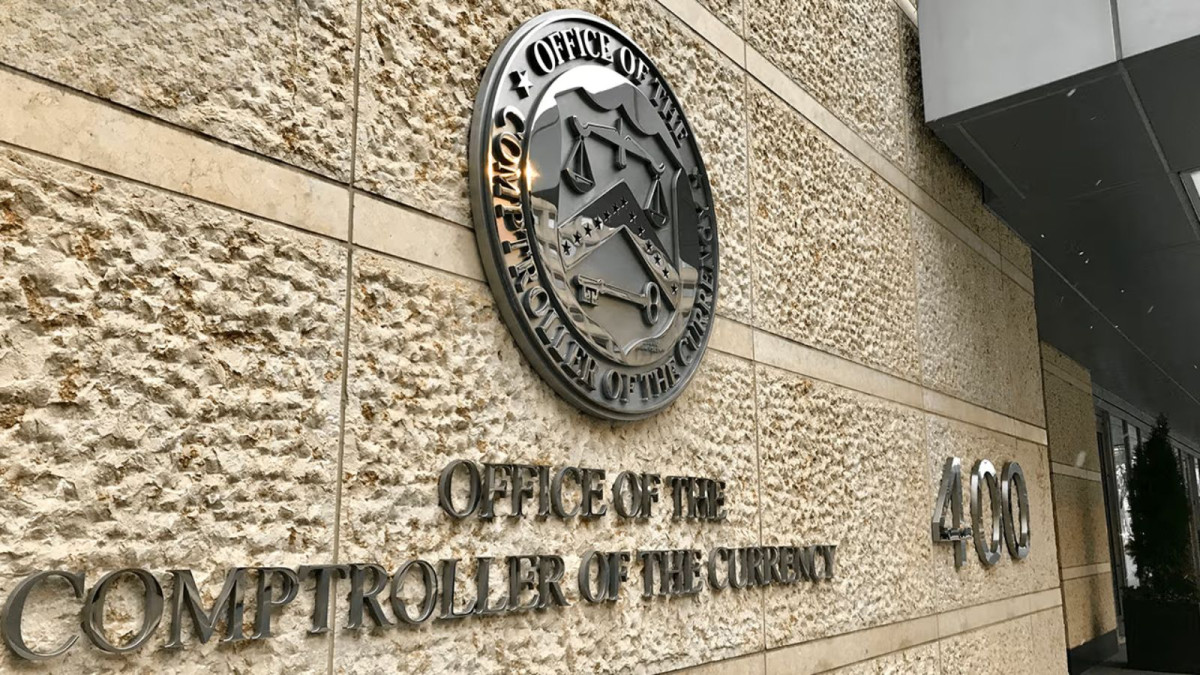
Bastion, the stablecoin infrastructure provider for global enterprises and financial institutions, has received preliminary conditional approval from the Office of the Comptroller of the Currency (OCC) to establish a national trust bank.

Following the approval, Bastion, through the Bastion Platforms National Trust Company, will now offer regulated digital asset services under OCC supervision, including stablecoin wallets and custody, payment infrastructure, and white-label issuance.
"Enterprises and financial institutions can now access stablecoins through a federally regulated counterparty, with the controls and oversight they already expect from their banks. We’ve built Bastion for this moment from day one,” said Nassim Eddequiouaq, CEO of Bastion.
With OCC approval now in the bag, enterprise clients and financial institutions can fully access Bastion’s products, including its wallet and issuance services such as minting, redemption, and conversion between stablecoins and fiat, with services that meet required regulatory and compliance standards.
Prior to receiving the conditional charter from the OCC, Bastion had secured a limited purpose trust company charter from the New York State Department of Financial Services, which enabled it to offer certain fiduciary and trust services.
It was during that period that Bastion acquired Dibbs Trust Company, which was eventually renamed Bastion Platforms Trust Company, the entity that is now playing a pivotal role in Bastion’s OCC-regulated fiduciary offerings.
Like Bastion, several other financial institutions have received similar conditional or even full trust charters from the OCC, notably Trump-backed World Liberty Financial, Catena, and Agora.
S&P Global to Acquire Blockchain Security Firm OpenZeppelin

S&P Global, the leading financial information services company, has agreed to acquire blockchain security company OpenZeppelin for an amount that has yet to be disclosed.
According to an S&P press release, the acquisition is aimed at complementing the company’s global risk assessment and ecosystem development capabilities in the digital asset market.
The deal will also enable S&P Global to create the next generation of on chain security assessments and benchmarks while delivering essential intelligence, especially as the capital market moves on chain.

"Our digital assets strategy centers on bringing trusted data, benchmarks and transparent risk assessment to markets as they move on chain," said Yann Le Pallec, President of S&P Global Ratings.
"As digital assets and tokenized markets continue to mature, OpenZeppelin's technology and expertise will complement our smart contract and on-chain technology risk assessment capabilities, giving traditional financial institutions and DeFi native companies alike the confidence to build and transact in this new environment."
Although the terms of the transaction have yet to be disclosed and the deal remains subject to closing conditions, OpenZeppelin will continue to operate under the OpenZeppelin name, with its CEO, Demian Brener, leading the company.
About OpenZeppelin
Founded in 2015, OpenZeppelin is a leading blockchain security firm that promotes secure development practices for teams aiming to build safely and securely on-chain.
Prior to this acquisition deal with S&P Global, OpenZeppelin had achieved several milestones, including launching OpenZeppelin Contracts, the first major open-source smart contracts library that eventually became the de facto industry standard for secure smart contracts.
The firm also pioneered professional smart contract security audits, which audited over $37 trillion in cumulative value, while also conducting over 900 security audits that identified more than 10,000 vulnerabilities.
OpenZeppelin powers 9 of the top 10 stablecoins, including Circle USDC, Ripple RLUSD, PayPal USD (PYUSD), Ethena USDe, BitGo USD1, and 10 of the top 10 tokenized funds, including BlackRock BUIDL, Centrifuge Anemoy JTRSY, Circle USYC, and Ondo OUSG and USDY.
Deutsche Bank Set to Launch Crypto Custody Service for Institutions

Deutsche Bank has just announced its plan to launch its digital asset custody solution this year, depending on how soon it completes the necessary regulatory requirements.
Making the announcement in a press release this Wednesday, the bank said the new custody solution will provide its institutional and corporate clients with secure and regulated custody services for their digital assets, with Deutsche Bank managing the clients’ wallets and private keys.
“Digital assets are not a replacement for the traditional financial system but an important complement to it. We see them as new rails that can coexist with existing market infrastructures while benefiting from the trust, security and safeguards that regulated financial institutions provide. Our aim is to offer clients a secure and regulated gateway to this evolving market,” said Gerald Podobnik, Co-Head of Corporate Bank at Deutsche Bank.
At launch, the custody solution will support only a selected range of digital assets, including Bitcoin and Ether, as well as a few stablecoin assets such as USDC, EURC and EURAU, with possible expansion to support more assets depending on clients’ demand and regulatory processes. Tokenized financial instruments are also included in the bank’s roadmap.
Security Measures to Protect Clients' Assets
To enhance the safety and security of clients’ assets under its custody, Deutsche Bank will implement multiple layers of security for the custodial solution, with the bank stating that these security mechanisms will operate under strict governance.
Among the various security measures that will be implemented to safeguard clients’ assets are secure key generation and hardware-based protection, segregation of duties, multi-person approval processes, separate warm and cold storage environments, and controlled backup and recovery arrangements.
As its initial focus, the custodial solution will be made available first to qualified Deutsche Bank institutional clients across Europe, including corporates, asset managers, hedge funds, custodians, brokers and sovereign institutions.
Kaiko Raises $110M in Extended Series B Round

Kaiko, a digital asset and analytics company, has secured $110 million in funding in an extended Series B round that initially raised $53 million around May or June 2022.
The round, which was led by S&P Global, also involved several investors, including Alura Capital, BNP Paribas, Bpifrance, Broadridge, Canton Foundation, Coinbase Ventures, DRW Venture Capital, Nasdaq Ventures, Royal Bank of Canada, among others.

Announcing the funding round in a press release, Kaiko said the funds raised will be used to strengthen its institutional grade market data business for digital assets and expand its data infrastructure offering for on chain and tokenized capital markets.
“The investors in this strategic round work across the core functions of digital asset markets: pricing, trading, capital allocation, and blockchain development. They are backing both the company Kaiko has built and our vision to provide the data infrastructure layer for on chain capital markets,” said Ambre Soubiran, CEO of Kaiko.
Kaiko’s $110 million funding comes at a time when the company recently closed two major acquisitions: Cometh, a European MiCA and CASP licensed provider of regulated DeFi infrastructure, which it acquired in May, and Amberdata, a digital asset data and analytics provider it acquired in June.
Like Kaiko, several other crypto companies have received funding from investors recently. Notable among these is TRM Labs, which recently completed a Series C round that saw the blockchain intelligence and analytics company reach a valuation of $2 billion, although the amount raised remains undisclosed.
Solana-Based Hey Wallet Announces Shutdown

Hey Wallet, the non-custodial Solana-based social wallet, has announced it will be shutting down all of its products after nearly five years of operation.
Hey Wallet, which was launched in 2021 during a Solana hackathon, was founded to make sending cryptocurrencies as simple as using social media by allowing people to transfer SOL directly via Twitter/X handles.
Thus, instead of having to copy long wallet addresses, Hey Wallet leverages users' X handles or social usernames. Since it was linked to users' social accounts, Hey Wallet enabled transactions to occur seamlessly in-app through users' social accounts, while allowing users to retain control of their private keys.

Although the team did not explicitly state the reason for the closure, Hey Wallet's shutdown comes at a time when several crypto companies, including crypto wallets, have shut down or strategically pivoted into other sectors such as AI.
On September 1 of this year, the non-custodial wallet Cosmostation ceased its operations after previously announcing that users should export their private keys and assets before the shutdown, a similar move made by Cyberwallet last month.
Other crypto wallets, such as Magic Eden Wallet, have had to repivot and change their operational focus, shifting from being a multi-chain wallet to a Solana-focused wallet.
Coinbase and MetaMask have also made similar changes to their wallet operations. For Coinbase, the Base App was rebranded back to Coinbase Wallet, with a focus on multi-chain trading, while MetaMask split from its parent company, Consensys, and continued operating as an independent consumer-focused wallet company.
Italy’s Second Largest Bank UniCredit Weighs Crypto Custody

UniCredit, Italy’s second largest bank, is reportedly considering entering the crypto and digital asset custody market, according to a Bloomberg report.
Although UniCredit has yet to publicly announce its intention to offer crypto custody services, Bloomberg, citing people familiar with the matter, reported that the bank is already selecting a provider to build custodial infrastructure that would allow it not only to hold digital assets but also facilitate their buying and selling.
In addition to custodial services, Bloomberg also reported that the bank is considering other areas of crypto, including tokenized investment products and fixed income securities, the use of stablecoins, and exposure to cryptocurrencies, as possible areas of expansion.
UniCredit’s expansion into crypto custody comes at a time when financial institutions are also considering expanding into the sector.
Just recently, Jack Dorsey owned financial technology company Block formally applied to the Office of the Comptroller of the Currency (OCC) to establish a National Trust Bank that would allow it to offer crypto custody services.
In August, Citibank also announced plans to launch a native Bitcoin custody service that would allow its clients to hold Bitcoin alongside traditional assets such as stocks and bonds.
While UniCredit has yet to officially issue a public statement regarding the move, speculation surrounding the bank’s plans to expand into crypto custody could be a significant development for the crypto industry if successful, as it would enhance crypto adoption, bridging the gap between blockchain-based finance and traditional finance.

MetaMask Becomes Standalone Company as Consensys Splits

Consensys Software Inc. (CSI) has announced plans to split into two independent companies, each with a separate focus and leadership team.
Announcing the split in a press release published on the MetaMask blog, Consensys Software Inc. said it will be rebranded as MetaMask, with Joe Lubin serving as Chairman and Chief Executive Officer.
The second company, which will retain the Consensys name, will be a newly formed entity comprising CSI’s Protocols Group and institutional blockchain infrastructure business, including Linea and its broader portfolio of enterprise and Ethereum protocol infrastructure. Mike Kriak will serve as CEO, David Cunningham as President, and Joe Lubin as Executive Chairman.
Speaking about what both companies are expected to become, Joe Lubin, Chairman and CEO of MetaMask and Executive Chairman of Consensys, said MetaMask will grow beyond being just a self-custodial wallet and become a platform where users can not only hold their assets but also manage their money in diverse forms and across different aspects of their financial lives.
As for the new Consensys entity, Lubin said the company will continue to operate as a protocols company, with the newly formed team bringing Ethereum, Hyperledger Besu, and Linea protocol development together to enable enterprises and institutions to collaborate more effectively.
What Comes Next for Both Companies
MetaMask will continue to be an Ethereum first product company, providing self-custody services that allow users to hold and manage their assets on the platform.
The team will also continue working on its Open Money platform, which represents the company’s vision of transforming the wallet into a platform where users can hold, move, spend, save, invest, and grow their money in one place. As a step toward this goal, the team launched the MetaMask Money Account in June, enabling users to gain greater control over their finances.
Consensys will continue playing a key role in advancing Ethereum and other Ethereum related protocols, including the development of decentralized applications and protocols on the Ethereum blockchain network.
The team will also expand its work helping financial institutions and enterprises deploy blockchain infrastructure, including helping institutions such as banks, asset managers, payment providers, and market infrastructure firms access tokenized financial markets and stablecoins.

Tether-Backed Exchange Orionx Shuts Down After $7M Custody Shortfall

Tether-backed Chilean cryptocurrency exchange Orionx has announced its shutdown after a forensic audit confirmed the outflow of more than $7 million from the exchange to wallets not under the company’s control.
Announcing the closure, Orionx said in an official statement that it had filed a complaint with Chile’s Public Prosecutor’s Office against the exchange’s former executives and co-founders, Roberto Zibert and Joaquín Díaz, accusing them of disloyal administration.

In the complaint, the exchange accused its former executives of moving customers’ crypto assets, including Bitcoin, Ether, XRP, and Polygon, between 2018 and 2021. Orionx said the transactions were concealed from the exchange and that the assets were transferred to wallets that did not belong to the company.
Although a breakdown of Deloitte’s $7 million shortfall has yet to be published, several Chilean news outlets, including La Tercera and BioBioChile, reported that the shortfall included $3.93 million worth of Bitcoin, $2.29 million worth of Ether, and approximately $201 worth of Polygon.
Closure Plans
As part of its shutdown plans, Orionx has temporarily suspended withdrawals from the exchange. While the asset closure and restitution plans have already been reported to the relevant authority, the exchange said it would do everything in its power to return as many assets as possible to its clients.
Prior to its closure announcement, Chile’s Financial Market Commission (CMF) rejected Orionx SpA’s application in June to register with the Registry of Financial Service Providers and obtain authorization under the Fintech Law.
Orionx was one of seven companies whose applications were rejected by the CMF due to observations that the companies failed to remedy during the evaluation process, as well as failures to submit the necessary documentation.
.png)
Binance Signs MoU With Kazakhstan to Expand Digital Asset Cooperation

Binance, the world’s largest cryptocurrency exchange, has signed three memorandums of understanding with key entities and institutions in Kazakhstan.
In a blog post announcing the agreements, Binance said the MoUs focus on key sectors of Kazakhstan’s economy and were signed with the Ministry of Artificial Intelligence and Digital Development, the National Bank of Kazakhstan, and the Astana International Financial Centre (AIFC).
Under the memorandum signed with Kazakhstan’s Ministry of Artificial Intelligence and Digital Development, Binance will cooperate on digital assets, digital and computing infrastructure, and innovative payment solutions, while exploring the possibility of issuing a stablecoin backed by the Kazakhstani tenge.
The second memorandum, signed with the National Bank of Kazakhstan, focuses on building payment and digital financial infrastructure, with Binance and the National Bank potentially exploring opportunities to position Kazakhstan as a regional payments and fintech hub.
To ensure the initiative is practically implemented and moves beyond a paper plan, Binance and the National Bank of Kazakhstan have already created a roadmap outlining the different phases for building payment infrastructure, obtaining licenses, and launching new payment products.
The third memorandum, signed between Binance and the Astana International Financial Centre (AIFC), is aimed at strengthening cooperation under the Investment Tax Residency Programme and expanding the potential use of digital assets as part of Kazakhstan’s modern investment infrastructure.
According to Renat Bekturov, Governor of the Astana International Financial Centre, the expansion will enable investors to better access new opportunities within the AIFC ecosystem and contribute to the further development of Kazakhstan’s digital asset market.
Standard Chartered Launches Institutional Spot Trading in the UAE

Standard Chartered, the British multinational banking and financial services group, has expanded its presence in the UAE by launching institutional spot trading for Bitcoin and Ether.
While this is not the first time institutional BTC and ETH spot trading has been launched in the UAE, Standard Chartered’s launch is unique, as it is the first Global Systemically Important Bank (G-SIB) to offer institutional Bitcoin and Ether deliverable spot trading in the region and is currently the only global bank offering such capabilities in the Emirates.
By launching these institutional grade spot trading services, Standard Chartered enables eligible institutional clients to access deliverable Bitcoin and Ether spot trading through its electronic trading channels.
“The UAE has developed a clear digital assets regulatory framework that supports institutional participation and innovation,” Rola Abu Manneh, Chief Executive Officer, UAE, Middle East and Pakistan at Standard Chartered, said.
“Extending our Bitcoin and Ether spot trading capability to institutional clients is a significant step in broadening our regulated digital asset proposition in the market. By combining execution with secure custody, governance and the connectivity of a global bank, we are providing clients with a more integrated way to participate in digital asset markets.”
The launch of Standard Chartered’s institutional spot trading service came just a few days after the bank became the first authorized bank distributor of the HKD-backed stablecoin developed by Anchorpoint Financial Limited.
Standard Chartered has also been involved in several pro crypto and tokenization friendly moves, launches and partnerships. Notable among these was its acquisition of Zodia Custody in May, a move designed to support institutional clients.

21 Banks, Including Goldman Sachs, Citi, Form Joint Venture for 2027 Stablecoin Launch

A consortium of 21 banks and financial institutions has formed a joint venture to potentially launch a stablecoin in the first half of 2027.
The consortium, which was first announced in October 2025 and initially comprised just 10 banks, has grown to include 21 major banks across multiple jurisdictions, including North America, Europe, Africa, East Asia and the Middle East.
Some of the financial institutions that make up the consortium include Bank of America, Citi, Goldman Sachs, Wells Fargo, Capital One, PNC, Fidelity Investments, WisdomTree, Deutsche Bank, BBVA, MUFG Bank and Standard Bank, among others.
With its member institutions now fully established, the consortium plans to launch a yet to be named company in the second half of this year, subject to fulfilling various regulatory requirements.
Once established, the company will launch a stablecoin backed by the U.S. dollar for cross border payments and settlements across wholesale, retail and institutional markets in early 2027. Euro pegged stablecoins will follow, paving the way for the launch of stablecoins denominated in other G7 currencies.
The formation of this 21 institution consortium comes at a time when other financial institutions are coming together to support the launch of their own stablecoins.
Notable among these consortia is Qivalis, a consortium made up of 37 banks targeting the launch of a euro pegged stablecoin before the end of the year.
There is also the Open Standard consortium, made up of 140 companies supporting the launch of Open USD, a recently launched stablecoin that allows its members to share in the earnings generated from its reserves.