#Crypto Derivatives

CoinMarketCap Acquires CoinGlass, Expands Crypto Derivatives Data

CoinMarketCap, the world’s most referenced price tracking platform for cryptocurrencies, has completed its acquisition of the crypto derivatives data platform CoinGlass.
While details of the deal have yet to be disclosed, the acquisition, according to CoinMarketCap, is aimed at providing its over 115 million monthly users with access to derivatives market data, including the positions of leveraged traders, the movement of liquidation clusters, and funding rates, alongside the prices they already track.

"Derivatives are where most of the market's risk is taken, and CoinGlass is where most people go to see it," said Rush, Chief Executive Officer of CoinMarketCap.
"CoinGlass built the most trusted view of positioning in crypto by doing one thing very well. Our job is to make that view available to many more people, not to change it. CoinGlass stays CoinGlass, and nothing changes for its users."
CoinMarketCap’s acquisition of CoinGlass comes at a time when the annualized trading volume of the crypto derivatives market reached $35.08 trillion in the first half of the year, generating about $18.63 trillion in actual trading volume. That is about 9.6 times the volume generated by spot trading during the same period.
Like CoinMarketCap, several other companies have made similar acquisitions to expand their crypto market data offerings, notable among which is Kaiko’s acquisition of Amberdata in June, a move that was aimed at strengthening Kaiko’s institutional-grade derivatives market offerings.
About CoinMarketCap and CoinGlass
Launched in 2013, CoinMarketCap (CMC), often referred to as the “Home of Crypto,” is one of the world’s leading cryptocurrency data platforms that tracks prices, market capitalizations, trading volumes, and other crypto-related metrics of thousands of crypto assets.
Due to its influence in the crypto industry, Binance acquired CMC for an undisclosed amount that was reportedly speculated to be up to $400 million. According to Changpeng Zhao (CZ), Binance’s co-founder, CMC had more users than any other crypto product at the time.
CoinGlass is a crypto derivatives data analytics platform that aggregates real-time and historical crypto metrics, including open interest, funding rates, liquidations, ETF flows, and more. Prior to its acquisition, the platform was serving over 5 million monthly users and 10K+ API customers across 28 exchanges and 2,500+ instruments.

Coinbase Launches Derivatives Contracts in Canada

Global cryptocurrency exchange Coinbase has launched derivatives contracts for eligible Canadian investors seeking to trade and speculate on a trusted platform.

The derivatives contracts, which will be offered through Coinbase Financial Markets, are the first of their kind from a crypto native platform in Canada, giving investors access to highly liquid and regulated contracts, including 23 perpetual and dated futures covering assets such as Bitcoin, ETH, and SOL; five commodity futures covering gold, silver, and oil; and index futures.
Regarding the features of the newly launched derivatives contracts, Coinbase said in a blog post that the contracts are regulated by its financial markets arm, an entity registered with the U.S. Commodity Futures Trading Commission (CFTC). The contracts will also be flexible, with nano sized contracts designed for investors with lower upfront capital requirements.
Coinbase’s derivatives contract launch comes at a time when the exchange has rolled out more customizable charting and interface features on Coinbase Advanced.
Rather than forcing every trader to use the same chart setup, the rollout is aimed at making it easier for traders to customize their trading screens. Traders can switch between candlestick and line charts, change time frames, adjust chart settings and technical indicators, and use drawing tools.
The benefits of these features are that traders can spot market trends faster, identify potential entry and exit points, and analyze market movements more effectively.
Coinbase Launches Derivatives for UK Professional Investors

Coinbase has announced the launch of a new suite of derivatives that will be available exclusively to eligible traders in the United Kingdom.

Announcing the rollout, Coinbase said the launch of these derivatives aligns with its goal of building a unified, borderless, and fully transparent derivatives ecosystem that gives professional traders the tools they need to navigate any market.
“The launch continues our effort to launch the ‘Everything Exchange’ in the UK. Our vision is to make Coinbase a single place where everyone from first-time crypto investors to the most sophisticated traders can access and manage all of their assets.”
As part of its rollout plans, Coinbase revealed that eligible professional traders will gain access to these derivatives in the coming months, including perpetuals, dated futures, and crypto options.
According to the exchange, eligible traders will have 24/7 access to more than 170 supported assets across crypto, commodities, equities, and foreign exchange, with leverage of up to 50x for perpetuals and up to 20x for dated futures.
The rollout of these derivatives comes shortly after Coinbase secured a Markets in Financial Instruments Directive (MiFID) investment services authorisation from the UK Financial Conduct Authority (FCA). The authorisation provides Coinbase with the regulatory permissions needed to offer derivatives to eligible UK clients.
As Coinbase continues to pursue its goal of becoming an “Everything Exchange” that serves users globally, the company has also received regulatory approval to expand its operations in Australia and Abu Dhabi.
It has also expanded access to more than 4,000 tokenised US stocks and exchange-traded funds (ETFs) for non-US residents.

BitMEX to Shut Down Permanently After 12 Years

BitMEX, one of the leading cryptocurrency derivatives exchanges, has announced that it will permanently shut down operations on September 23, 2026.
While the company did not provide an explicit reason for the decision, it said in a blog post that the move followed a strategic review of the business and the broader cryptocurrency industry conducted by the board of HDR Global Trading Limited, BitMEX's parent company.

Image credit: x.com
Following the announcement, BitMEX urged users to close all open positions and withdraw their funds from the platform as soon as possible.
To ensure an orderly wind-down, the exchange said it will begin applying risk limits, including allowing users only to reduce existing positions and preventing them from opening new ones. Any positions that remain open after the closure date will be forcibly closed, and the company added that it will not be responsible for any losses incurred during the process.
For users who have completed Know Your Customer verification but fail to withdraw their funds, BitMEX said it will charge an annual account maintenance fee equal to the greater of $50 or 1% of the account balance. Although all trading positions will be closed by the September 23 deadline, users will still be able to log in to their accounts and view their wallet balances.
About BitMEX
BitMEX, or Bitcoin Mercantile Exchange, is a cryptocurrency derivatives trading platform co-founded in 2014 by Arthur Hayes, a former derivatives trader at Deutsche Bank, Ben Delo, and Samuel Reed, who are both software engineers.
Following the collapse of the then-largest cryptocurrency exchange, Mt. Gox, Hayes and his team co-founded BitMEX to provide professional-grade derivatives tools that were seriously lacking in the crypto industry at the time.
Despite offering various crypto derivatives, including pioneering perpetual swaps with up to 100x leverage, and becoming one of the most notable derivatives exchanges with no recorded security breaches, BitMEX faced severe regulatory scrutiny from U.S. authorities over alleged anti-money laundering and know-your-customer violations.
Due to these regulatory challenges, its founders were charged, and the company was fined more than $100 million. These challenges eventually led BitMEX to lose its market dominance and liquidity, and to several unsuccessful attempts to sell the company.

Gemini Secures License for Crypto Derivatives

Gemini Olympus, LLC, an affiliate of the Gemini cryptocurrency exchange, has recently received a Derivatives Clearing Organization license from the Commodity Futures Trading Commission, enabling it to act as the clearinghouse for Gemini’s regulated derivatives trading, including prediction markets.
“Today marks a major milestone in Gemini’s marketplace expansion. In addition to our crypto spot marketplace, Gemini now has a full-stack, end-to-end marketplace for predictions as well as futures, options, and more,” said Cameron Winklevoss, Gemini’s president. He added that the DCO license is a major stepping stone toward Gemini achieving its goal of building a super app that allows users to fulfill all their existing and future financial needs in one place.

With this newly secured DCO license, together with the Designated Contract Market license that Gemini Titan, LLC, another Gemini entity, secured around December of last year, Gemini is now one step closer to obtaining the full suite of CFTC derivatives licenses.
Once it secures the Futures Commission Merchant license, the final component of the CFTC derivatives licensing framework, the company would be able to position itself as a fully regulated derivatives platform in the United States, offering U.S. customers a range of products, including crypto futures, options, and perpetual futures.
Gemini Joins Exchanges in Crypto Derivatives Push
With the Derivatives Clearing Organization license now secured and the Futures Commission Merchant license in sight, Gemini has joined a host of other crypto exchanges, including Kraken, Crypto.com, and the Chicago Mercantile Exchange, in the race to position themselves as all-in-one derivatives platforms.
To break into the derivatives market, Payward, the parent company of the cryptocurrency exchange Kraken, acquired Bitnomial, a U.S.-based derivatives exchange, for $550 million last month. Like Kraken, Coinbase has also taken the acquisition route to enter the crypto derivatives market, acquiring Deribit Exchange for $2.9 billion and The Clearing Company for an undisclosed amount.
The race to provide complete crypto derivatives offerings is not unique to cryptocurrency exchanges, as prediction market companies like Kalshi and Polymarket are also making efforts to enter the crypto derivatives market.
Through Kinetic Markets LLC, one of its affiliates, Kalshi recently secured the Futures Commission Merchant license, along with the Designated Contract Market license it already holds, with efforts underway to secure the Derivatives Clearing Organization license, which is the final license required.

Blockchain.com Adds Perps Trading to DeFi Wallet

Crypto platform Blockchain.com has rolled out a new perpetual futures trading feature within its non-custodial DeFi wallet, allowing traders to open leveraged positions directly from the wallet.
The new feature, according to Blockchain.com, allows traders to trade perpetual futures directly where their assets are held, eliminating the need to continuously move or convert funds between exchanges and platforms. Traders on Blockchain.com can now access more than 190 crypto markets with leverage of up to 40x, without futures contracts expiring.

The newly launched feature is powered by the decentralized exchange Hyperliquid and is aimed at removing friction associated with derivatives and futures trading.
"We have spent the last decade focused on making crypto easy and borderless for everyone," said Nic Cary, co-founder and vice chairman of Blockchain.com. "We want to make the jump from holding your crypto to actually using it feel instant," he added. "By letting you fund your account with your own Bitcoin while keeping full control of your keys, we are proving that managing your own money can actually be the easiest way to trade."
Some of the features of this new perpetual futures trading offering include real-time pricing, flexible leverage options, and intuitive risk management tools, all designed to operate seamlessly within the wallet interface. Users can open, manage, and close positions while maintaining full control of their private keys.
The Perps Space is Extremely Active
Perpetual futures, which involve speculating on the price of an asset using leverage without directly owning that asset, have grown in recent times.
According to a report from CryptoQuant, perpetual futures trading volume reached $61.7 trillion in 2025, a 29% increase from the previous year and a 232% increase compared to the $18.6 trillion spot crypto trading volume for that year. There has also been an increase in institutions offering perpetual futures trading.
Just this week, prediction market platform Polymarket announced its expansion into perpetual futures trading. Meanwhile, last week, Payward, the parent company of cryptocurrency exchange Kraken, announced it would acquire crypto derivatives platform Bitnomial for up to $550 million, as part of Kraken’s broader strategy to expand into perpetual futures trading.
CME to Launch AVAX and SUI Futures

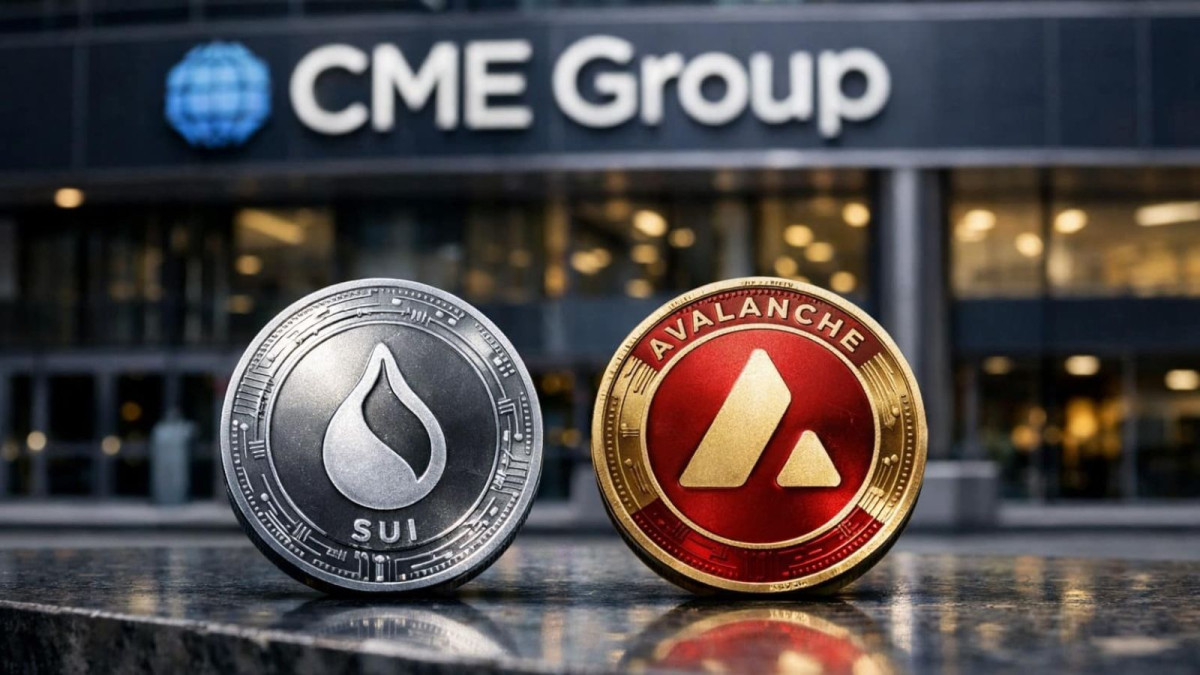
The Chicago Mercantile Exchange (CME), the world’s largest financial derivatives marketplace, has announced plans to launch Avalanche (AVAX) and Sui (SUI) futures contracts on May 4, pending regulatory review by the Commodity Futures Trading Commission (CFTC).
The launch of these contracts, the company says, will allow market participants and traders the option to choose between micro-sized and larger-sized futures contracts, including AVAX futures sized at 5,000 AVAX and micro AVAX futures sized at 500 AVAX, as well as SUI futures contracts sized at 50,000 SUI and micro SUI futures contracts sized at 5,000 SUI.
According to Giovanni Vicioso, CME Group Global Head of Cryptocurrency Products, the launch of this new set of futures contracts is aimed at providing clients and market participants with greater flexibility and more market options, as well as improved capital efficiency across the deeply liquid CME derivatives market.
"We continue to see strong volumes as market participants turn to our markets to manage risk and pursue opportunities, with March average daily volume up 19 percent year over year and nearly $8 billion in average notional value traded daily,” Vicioso said.
The nearly $8 billion in average notional value traded is not insignificant, as CME is one of the most liquid derivatives exchanges. According to a February trading report, the CME derivatives trading platform recorded an all-time daily trading peak of 29.6 million futures contracts in January of this year, a 15 percent year over year increase compared with January of the previous year.
The launch of the Avalanche and Sui contracts comes shortly after CME Group launched Cardano (ADA) futures, Chainlink (LINK) futures, and Stellar (XLM) futures contracts on February 9 of this year, as part of the firm’s ongoing strategy of providing trusted, regulated crypto products to all kinds of market participants.
Crypto Derivatives Market Continues to Boom
The crypto derivatives trading market, primarily the futures and options market, has continued to boom. In the first quarter of this year, crypto derivatives trading accounted for almost 90 percent of the total $20.57 trillion traded in that period, reaching $18.63 trillion, while spot trading accounted for $1.94 trillion.
There has also been an increase in the number of large institutions in recent times, including traditional finance institutions that have moved to tap into this vast section of the crypto market.
In October 2025, the global investment bank Goldman Sachs, in collaboration with DBS Bank, launched the first-ever over-the-counter interbank cryptocurrency options trade. In December last year, JPMorgan Chase, America’s largest bank, also began exploring the launch of crypto spot and derivatives trading services for its institutional clients.

Binance Australia Fined $10M Over Client Misclassification

The Federal Court of Australia has ordered Oztures Trading Pty Ltd, the company behind Binance Australia Derivatives, to pay 10 million Australian dollars (about $6.9 million USD). The penalty follows the company’s admission that it misclassified 85% of its Australian clients.
According to the Australian Securities and Investments Commission (ASIC), around 524 retail investors were incorrectly classified as wholesale clients. Of these, 460 were categorized as sophisticated investors and 33 as wealthy traders between July 2022 and April 2023.
ASIC said the misclassification exposed these retail investors to high-risk crypto derivatives they should not have accessed. The regulator reported that the affected investors suffered losses exceeding $6 million and paid roughly $2.6 million in trading fees.
In a statement of agreed facts, Binance also admitted to several other compliance failures, including not fully disclosing information to retail clients, failing to maintain a compliant dispute resolution system, and not making a target market determination as an operational crypto entity.

Image credit: ASIC
Binance, through its Australian entity Oztures, was also found to have failed to comply with the country’s regulator’s requirements regarding employee training.
“Binance’s senior compliance staff provided inadequate oversight or review of client applications and supporting documentation, further weakening the onboarding and classification processes,” ASIC wrote on its official website.
Binance Previous Settlement With the Australian Regulator
The $6.9 million penalty imposed by the country’s regulator on Binance comes three years after the company paid $9 million in compensation to affected clients.
Although the misclassification issue, which began in 2023, was self-identified, Binance had its operating license withdrawn by Australian authorities, in addition to the compensation it paid.
Countries Intensify Crackdown on Compliance Violators
The crackdown on Binance’s Australian operations by the country’s financial regulator is one of several regulatory actions targeting crypto firms in recent weeks. Just a few weeks earlier, South Korean regulators fined Bithumb $25 million for anti-money laundering (AML) and compliance violations.
Regulators in multiple jurisdictions have taken action against crypto-related companies.
In Canada, the Financial Transactions and Reports Analysis Centre of Canada (FINTRAC), the country’s financial intelligence unit and anti–money laundering regulator, has revoked the registrations of 47 crypto-linked money services businesses this year, accounting for the majority of its 50 total revocations.
The agency has indicated it will continue enforcement actions against non-compliant entities. Prediction market companies have also faced increased regulatory scrutiny, including restrictions and bans, amid concerns over compliance and regulatory violations.

SEC Greenlights Unlimited Crypto ETF Options on NYSE

NYSE Arca filed a rule change with the Securities and Exchange Commission to strip out the 25,000-contract position and exercise limits that had been capping options tied to 11 spot Bitcoin and Ether exchange-traded funds. NYSE American submitted an identical proposal the same day. The SEC did not bother with its usual 30-day review window. The changes went live immediately.
That kind of regulatory speed is not something markets see often, and it tells you something about where things stand right now.
The products covered read like a who’s who of the crypto ETF space: BlackRock’s iShares Bitcoin Trust (IBIT), Fidelity’s Wise Origin Bitcoin Fund (FBTC), ARK 21Shares Bitcoin ETF (ARKB), Grayscale Bitcoin Trust, Grayscale Bitcoin Mini Trust ETF, Bitwise Bitcoin ETF, Grayscale Ethereum Trust, Grayscale Ethereum Mini Trust, Bitwise Ethereum ETF, iShares Ethereum Trust, and Fidelity’s Ethereum Fund. Together they represent hundreds of billions in assets under management and the bulk of institutional Bitcoin and Ether exposure in the U.S. market.
What Does This Mean?
The 25,000-contract cap was put in place when crypto ETF options first launched, partly as a precaution against volatility, partly as a way for regulators to ease into unfamiliar territory. It made sense at the time. It does not make much sense anymore.
Under the new framework, position limits for these products will be set under the same standard rules that govern other equity options, a formula tied to each fund’s trading volume and shares outstanding. For something as liquid as IBIT, that could mean position limits north of 250,000 contracts. The practical effect is that institutions can now build and hedge far larger positions without running into hard ceilings.
The other big change is FLEX options. These are customizable contracts where traders can set their own strike prices, expiration dates, and exercise styles rather than being locked into standardized terms. FLEX options have long been available for commodity ETFs like the SPDR Gold Trust (GLD) and iShares Silver Trust (SLV). Bringing that same capability to crypto ETFs is not a minor footnote. It opens the door to the kind of structured product engineering that institutional desks have been waiting to apply to digital assets.
For a hedge fund running a long Bitcoin position through an ETF, the ability to hedge efficiently via options is not optional. It is a basic operational requirement. The old 25,000-contract cap was not just a theoretical constraint, it was the kind of friction that makes compliance officers nervous and portfolio managers frustrated.
Removing it changes the calculus. Risk systems that already handle equity options can now be applied to crypto ETF products using the same logic. Legal teams work within a rulebook they already understand. That reduction in operational overhead is not trivial for large-scale participants.
FLEX options matter for a slightly different reason. They are what you need to build structured products, overlay programs, and basis trades at scale. Banks and asset managers have been doing this with gold and silver ETFs for years.
Moving In One Driection
NYSE Arca and NYSE American are not doing anything in isolation here. MEMX filed comparable changes in February. Cboe did the same in March. With Monday’s filings, every major U.S. options exchange has now completed the same transition. That kind of synchronized movement across competing venues is a signal, not a coincidence.
Separately, Nasdaq ISE has a proposal still under SEC review that would push the position limit for IBIT options specifically to one million contracts. If that goes through, it would put IBIT options in the same tier as the largest traditional equity products in the market.
None of the core investor protections have been removed. Large position holders still face reporting requirements. Exchanges continue to monitor for manipulation. Broker-dealer capital requirements for carrying options positions remain in place. The architecture of oversight has not changed, only the room to operate within it.
The Big Picture
It was not long ago that getting a spot Bitcoin ETF approved in the United States felt like it might never happen. Then in January 2024, it did. Since then, the market has moved faster than most people expected. Options launched. Volume grew. Institutional flows came in. And now the plumbing is being upgraded to handle what those institutions actually need.
The crypto ETF options market is not just a retail product anymore, if it ever really was. The rule changes this week confirm what the trading data has been suggesting for a while: serious money is here, and the infrastructure is catching up to meet it.
What comes next is worth watching. With FLEX trading unlocked and position limits tied to real liquidity metrics rather than arbitrary caps, the product design possibilities open up considerably. Yield-generating strategies, principal-protected notes, volatility overlays, all of it becomes more viable when the options market can actually absorb the size.

Ripple Integrates Hyperliquid for Institutional DeFi Access

Ripple is pushing further into decentralized markets.
The company said it will support Hyperliquid through Ripple Prime, its institutional brokerage platform, giving professional trading firms access to on-chain derivatives without having to interact directly with DeFi infrastructure.
For Ripple, the move is about meeting institutional demand where it already exists. Many hedge funds and asset managers want exposure to decentralized markets, but they still operate inside traditional risk, margin, and reporting systems. Ripple Prime is designed to sit between those worlds.
With Hyperliquid now supported, Ripple Prime clients can trade decentralized perpetual futures while managing exposure alongside more familiar products like FX and cleared derivatives.
What Changes for Institutions
The biggest shift here is not access, but structure.
Instead of setting up wallets, managing smart contracts, or splitting capital across multiple venues, institutions can route trades through Ripple Prime and maintain a single counterparty relationship. Margin, collateral, and reporting remain centralized, even though execution happens onchain.
That matters for firms that are comfortable trading derivatives but not interested in rebuilding their internal processes for DeFi. It also reduces capital inefficiencies that come from isolating on-chain positions from the rest of a trading book.
This is not retail access. It is aimed squarely at professional desks.
Why Hyperliquid Keeps Showing Up
Hyperliquid has become one of the more active decentralized derivatives platforms in crypto, largely because it does not feel like most DeFi exchanges.
It runs an on-chain order book instead of an automated market maker, which allows for tighter spreads and execution that better suits high-volume traders. Perpetual futures on major assets make up most of the activity, with new markets continuing to roll out.
That combination has drawn liquidity, which is still the hardest thing to build in decentralized markets. For institutions, liquidity tends to matter more than ideology.
Ripple’s support puts Hyperliquid in front of firms that may not have considered trading on a decentralized venue before.
Part of a Bigger Institutional Shift
This announcement fits into a wider trend across crypto infrastructure.
Firms that serve institutions are no longer treating DeFi as a separate category. Instead, they are trying to make it another venue, similar to how traditional desks access exchanges, clearing houses, or OTC markets.
Ripple’s approach reflects that thinking. The company is not asking institutions to learn DeFi. It is packaging DeFi in a way that looks familiar enough to be usable.
That model is starting to show up more often, especially as tokenized assets and on-chain credit products gain traction.
What It Means for XRP Markets
For XRP, deeper on-chain liquidity and derivatives access matter.
Derivatives tend to pull in more sophisticated traders, which can tighten spreads and improve price discovery over time. Connecting XRP-related markets to high-performance decentralized venues adds another layer to its institutional story.
It also shows how fragmented crypto markets are slowly being stitched together, with execution happening in one place and risk managed somewhere else.
Risks Are Still There
Decentralized derivatives come with obvious risks.
Leverage, liquidations, and volatility can move fast, and regulatory attention around perpetual futures is not going away. Even with a prime brokerage layer in front, institutions are still exposed to market dynamics that can get messy.
Ripple’s platform can simplify access and controls, but it does not remove those risks.
The Bottom Line
Ripple’s Hyperliquid support is not a flashy consumer announcement. It is infrastructure work.
It points to a future where on-chain markets are accessed the same way institutions already access everything else, through familiar systems, familiar counterparties, and familiar controls.
Whether that future scales depends on liquidity, regulation, and market demand. But for now, Ripple is clearly positioning itself to be part of that next phase.

CME Expands Crypto Futures With Cardano, Chainlink, and Stellar
CME Pushes Deeper Into Altcoins With Cardano, Chainlink, and Stellar Futures
CME Group is continuing its steady march into crypto markets, this time by adding futures tied to Cardano, Chainlink, and Stellar. The move expands the exchange’s growing lineup of regulated digital asset derivatives and signals that institutional interest is no longer confined to Bitcoin and Ether alone.
The new contracts, which are expected to go live in early February pending regulatory signoff, will include both standard and smaller-sized versions. That approach mirrors CME’s recent strategy across crypto products, offering flexibility for large institutions while also lowering the barrier to entry for smaller trading firms and active investors.
For CME, this is less about chasing headlines and more about meeting demand. As crypto markets mature, firms want tools that look and feel familiar. Regulated futures, clear contract specifications, and centralized clearing still matter a great deal to traditional players, especially when volatility remains a defining feature of the asset class.
Why These Tokens Matter
The choice of Cardano, Chainlink, and Stellar is telling. Each represents a different corner of the crypto ecosystem.
Cardano has positioned itself as a research-driven blockchain focused on scalability and governance. Chainlink underpins a huge portion of decentralized finance by supplying real-world data to smart contracts. Stellar has long emphasized cross-border payments and financial inclusion. Together, they reflect how institutional interest in crypto has broadened beyond simple price exposure to Bitcoin.
CME’s contracts will allow traders to hedge or speculate on these networks without touching the underlying tokens. For many institutions, that distinction is critical. Futures provide exposure while avoiding custody, on-chain risks, and operational complexity.
Part of a Larger Derivatives Push
This latest expansion fits neatly into a much bigger picture. Over the past few years, CME has methodically built out its crypto derivatives suite, starting with Bitcoin, then adding Ether, and gradually branching into other high-profile tokens.
The exchange has also leaned heavily into micro contracts, which have proven popular across asset classes. Smaller contract sizes give traders more precision and flexibility, especially in volatile markets where position sizing matters.
Behind the scenes, crypto derivatives volumes at CME have continued to grow, even during quieter periods in the spot market. That suggests the audience for these products is becoming more structural and less driven by short-term hype.
What It Means for the Market
For institutional investors, the arrival of ADA, LINK, and XLM futures adds another layer of legitimacy to altcoin markets. Regulated futures improve price discovery, enable more sophisticated hedging strategies, and make it easier for funds to justify exposure internally.
Retail and professional traders may also benefit indirectly. As liquidity deepens on regulated venues, pricing tends to become more efficient across the broader market. That can reduce fragmentation between offshore platforms and U.S.-regulated exchanges.
There is also a signaling effect. When CME adds a product, it often becomes a reference point for the rest of the industry. Listing a token does not guarantee long-term success, but it does suggest sustained interest and sufficient market depth.
Looking Ahead
CME’s decision to bring Cardano, Chainlink, and Stellar into its derivatives lineup reinforces a clear trend. Crypto markets are no longer just about Bitcoin dominance. Institutions want diversified exposure, and they want it through familiar, regulated instruments.
As more altcoins find their way into traditional market infrastructure, the line between crypto-native and traditional finance continues to blur. For CME, that is likely the point.