#crypto custody
Deutsche Bank Set to Launch Crypto Custody Service for Institutions

Deutsche Bank has just announced its plan to launch its digital asset custody solution this year, depending on how soon it completes the necessary regulatory requirements.
Making the announcement in a press release this Wednesday, the bank said the new custody solution will provide its institutional and corporate clients with secure and regulated custody services for their digital assets, with Deutsche Bank managing the clients’ wallets and private keys.
“Digital assets are not a replacement for the traditional financial system but an important complement to it. We see them as new rails that can coexist with existing market infrastructures while benefiting from the trust, security and safeguards that regulated financial institutions provide. Our aim is to offer clients a secure and regulated gateway to this evolving market,” said Gerald Podobnik, Co-Head of Corporate Bank at Deutsche Bank.
At launch, the custody solution will support only a selected range of digital assets, including Bitcoin and Ether, as well as a few stablecoin assets such as USDC, EURC and EURAU, with possible expansion to support more assets depending on clients’ demand and regulatory processes. Tokenized financial instruments are also included in the bank’s roadmap.
Security Measures to Protect Clients' Assets
To enhance the safety and security of clients’ assets under its custody, Deutsche Bank will implement multiple layers of security for the custodial solution, with the bank stating that these security mechanisms will operate under strict governance.
Among the various security measures that will be implemented to safeguard clients’ assets are secure key generation and hardware-based protection, segregation of duties, multi-person approval processes, separate warm and cold storage environments, and controlled backup and recovery arrangements.
As its initial focus, the custodial solution will be made available first to qualified Deutsche Bank institutional clients across Europe, including corporates, asset managers, hedge funds, custodians, brokers and sovereign institutions.
Italy’s Second Largest Bank UniCredit Weighs Crypto Custody

UniCredit, Italy’s second largest bank, is reportedly considering entering the crypto and digital asset custody market, according to a Bloomberg report.
Although UniCredit has yet to publicly announce its intention to offer crypto custody services, Bloomberg, citing people familiar with the matter, reported that the bank is already selecting a provider to build custodial infrastructure that would allow it not only to hold digital assets but also facilitate their buying and selling.
In addition to custodial services, Bloomberg also reported that the bank is considering other areas of crypto, including tokenized investment products and fixed income securities, the use of stablecoins, and exposure to cryptocurrencies, as possible areas of expansion.
UniCredit’s expansion into crypto custody comes at a time when financial institutions are also considering expanding into the sector.
Just recently, Jack Dorsey owned financial technology company Block formally applied to the Office of the Comptroller of the Currency (OCC) to establish a National Trust Bank that would allow it to offer crypto custody services.
In August, Citibank also announced plans to launch a native Bitcoin custody service that would allow its clients to hold Bitcoin alongside traditional assets such as stocks and bonds.
While UniCredit has yet to officially issue a public statement regarding the move, speculation surrounding the bank’s plans to expand into crypto custody could be a significant development for the crypto industry if successful, as it would enhance crypto adoption, bridging the gap between blockchain-based finance and traditional finance.
Zodia Custody Secures Luxembourg Payment License for EU Expansion

Zodia Custody, a company that provides institutional custody for cryptocurrencies and digital assets, has secured a payment license from Luxembourg’s Commission de Surveillance du Secteur Financier (CSSF), the country’s primary financial regulator.

With this payment license secured, Zodia Custody is set to expand beyond crypto custody, its main offering, and is now moving into both the custody and seamless transfer of electronic money tokens and stablecoins within the European Union.
“Institutional adoption of crypto assets demands infrastructure that meets the highest standards of regulatory adherence and operational efficiency,” said Ami Nagata, Managing Director, Luxembourg at Zodia Custody Europe.
“Securing a Payment Institution license alongside our MiCA CASP authorization is a critical step in bridging our capabilities across crypto asset safekeeping. With both licenses in place, our clients have the certainty they need to manage their electronic money token and crypto asset strategies across Europe, with full confidence that their assets are safeguarded within a bank-grade environment.”
Alongside the payment license and the MiCA license it secured in December last year, Zodia Custody is now well-positioned to serve as a core infrastructure provider for institutional digital finance. Securing these licenses removes structural barriers and counterparty risks commonly associated with crypto asset service providers.
The securing of the Luxembourg payment license comes shortly after Standard Chartered made a non-binding offer to acquire Zodia Custody. Although the acquisition cost was not publicly disclosed, the offer has already been accepted by Zodia Custody shareholders.
Zodia Custody currently serves a number of institutional clients, including 21Shares, Re7 Capital, Bitwise, and BitMEX. In April of this year, Zodia Custody partnered with BitMEX to integrate the Interchange platform into BitMEX's infrastructure to enable off-exchange trading, a move that enhances the safety of clients' assets on the BitMEX platform, especially in the event of a security breach.

Minnesota Approves Crypto Custody Services for Banks

Minnesota has enacted a law that allows banks and credit unions in the state to offer cryptocurrency custody services, with the law expected to take effect on Aug. 1, 2026.
The bill, HF 3709, was signed into law on Friday by Minnesota state governor Tim Walz, with the state legislature’s website stating that cryptocurrency custody services may now be offered and performed in the state.
While this is a significant milestone for crypto adoption in the state, the law also requires banks and credit unions interested in offering crypto custody services to submit a written notice detailing their risk management frameworks to the Minnesota Commissioner of Commerce at least 60 days before commencing such services.
The Minnesota Commissioner of Commerce will serve as the primary regulator, overseeing crypto custody services offered by banks and credit unions in the state.
Banks and credit unions interested in offering crypto custody services are also required to maintain a comprehensive written policy covering their internal controls, security, risk management, and compliance frameworks, while also segregating their clients’ assets from institutionally owned assets.
According to Representative Bernie Perryman, one of the primary sponsors of HF 3709, the legislation aims to establish a trustworthy framework that enables financial institutions to work with and safeguard Minnesotans' crypto assets, especially as crypto becomes more mainstream.
“House File 3709 is about ensuring that Minnesota-based financial institutions are allowed to evolve alongside their customers and members rather than forcing Minnesotans to rely on unregulated, out-of-state or offshore providers for services that are already in use today,” Perryman said in a March press release.
The passage of HF 3709 comes just a few weeks after the Minnesota governor banned the use and ownership of crypto kiosks and ATMs across the state, citing their growing use in fraud.
With the passage of this bill, Minnesota now joins Wyoming, New York, and Virginia, which have passed similar bills that allow banks and credit unions to offer crypto custody services.

Kraken Moves Into Regulated Crypto Custody

Payward, the parent company of the crypto exchange Kraken, has filed an application with the Office of the Comptroller of the Currency (OCC) seeking to establish a national trust company.
If approved, the OCC will grant Payward federal fiduciary powers under the U.S. Trust Powers statute to establish the Payward National Trust Company (PNTC), allowing Payward to provide custodial services to institutional clients and individuals seeking regulated bank level custody and trust services for digital assets. Payward aims to leverage its existing infrastructure, risk management systems, compliance programs, and regulated affiliates to deliver institutional grade, secure, and compliant custodial services.
Speaking on the OCC application, Arjun Sethi, Co CEO of Payward and Kraken, said, “Our long held belief has always been that the right path forward for digital assets runs through robust, transparent regulation. A national trust company provides the certainty institutions require and establishes the infrastructure to build the next generation of custody. This is not about being first. It is about getting the framework right so markets can scale with clarity, interoperability, and a long term vision for what clients will demand as these systems mature.”
The OCC application builds on the regulatory foundation that Payward has already established through Kraken Financial, one of its entities. Through Kraken Financial, Kraken achieved several milestones, including becoming the first crypto company to receive a Wyoming Special Purpose Depository Institution charter. This allowed Kraken Financial to operate as a separate entity and become the first digital asset bank to gain access to the Federal Reserve payment system.
“Kraken Financial and what we are building with the OCC are complementary pillars of Payward’s regulated banking strategy aimed at advancing an efficient and accessible digitally native financial system,” said Arjun Sethi, Payward and Kraken co CEO.
“Our Wyoming SPDI and Federal Reserve master account represent a genuinely unique foundation, and the addition of a national trust company expands what we can offer our clients under an evolving U.S. regulatory framework.”
Kraken Joins Race to Offer Custodial Services
Payward is not the first crypto company to file an application with the Office of the Comptroller of the Currency, as companies like Ripple, BitGo, Stripe, Crypto, and Coinbase have also filed, with some receiving conditional approvals to provide custodial services.
Morgan Stanley Digital Trust also filed an application with the Office of the Comptroller of the Currency in February of this year, seeking approval to provide digital asset custody, with the application currently pending.
BitMEX Unlocks Safer Trading With Zodia Custody Deal

BitMEX, a derivatives-focused cryptocurrency exchange, has partnered with Zodia Custody, an institutional-first digital assets custody firm, to enable off-exchange trading and secure asset custody for BitMEX’s clients.
The partnership, announced this week, will see the integration of Zodia Custody’s Interchange platform into BitMEX. Interchange is an off-venue settlement solution that allows institutional and professional clients to trade directly on BitMEX while keeping their digital assets securely held off-exchange with Zodia Custody.

This partnership, according to Stephan Lutz, BitMEX CEO, draws on lessons learned from past market failures, especially the collapse of the FTX cryptocurrency exchange and the 1.4 billion dollar Bybit hack. These events, Lutz said, exposed the risks associated with unsegregated or compromised exchange-held funds and are key examples of how custody failures or security threats can put client funds at risk.
Through this partnership and the integration of the Interchange platform, BitMEX clients, especially institutional clients that often trade with large amounts of money, do not have to worry about the safety of their funds on the exchange in the event of a hack, as their digital assets are secured in Zodia Custody’s cold, segregated storage wallets.
The partnership also serves to bridge the gap between institutional-grade security and crypto-native liquidity, allowing BitMEX’s professional and institutional clients to access BitMEX’s deep crypto derivatives liquidity while eliminating the need to pre-fund the exchange before trading.
The Growing Need for Security on Crypto Exchanges
Security has been one of the major challenges faced by cryptocurrency platforms over the years. In 2025, over $4 billion was stolen from crypto platforms. This represents a 34 percent increase compared with 2024, when losses stood at $2.2 billion. Unfortunately, the recovery rate of stolen crypto funds remains very low, at less than 8 percent. This is even worse for centralized exchanges, which are often high value targets.
By integrating Zodia Custody’s interchange platform into its crypto infrastructure and allowing clients’ digital assets to be stored in Zodia Custody’s segregated vaults, BitMEX eliminates the trade offs institutional clients face when choosing between derivatives trading access and the safety of their assets. Since Zodia handles the custody of clients’ assets, BitMEX faces minimal damage in the event of a security breach or hack.

U.S. Marshals Investigate Alleged $40M Seized Crypto Theft Tied To Son of Government Contractor

U.S. law enforcement is quietly trying to sort through a messy and uncomfortable situation involving seized cryptocurrency, a government contractor, and allegations that tens of millions of dollars were improperly siphoned from wallets controlled by federal authorities.
At the center of the case is a claim that more than $40 million in seized crypto was moved out of government-linked wallets without authorization. The U.S. Marshals Service has confirmed it is reviewing the allegations, though no charges have been announced and the investigation remains in its early stages.
The claims surfaced publicly after blockchain investigators began flagging unusual on-chain movements tied to wallets believed to be associated with assets seized by the U.S. government in prior criminal cases.
Blockchain Trails and a Familiar Name
Much of the attention comes from independent blockchain investigators who traced large transfers from wallets associated with seized funds to addresses allegedly controlled by a single individual. According to multiple blockchain intelligence reports, the individual at the center of this incident is identified as John Daghita, known in crypto circles by the alias “Lick”. Analysts such as ZachXBT, an independent blockchain investigator, publicly tied on-chain movements from government-controlled cryptocurrency addresses to wallets controlled by Daghita.
ZachXBT’s investigation reportedly traced back transactions involving tens of millions of dollars to wallet addresses that received $24.9 million from a U.S. government account in March 2024. This particular government account is linked to assets seized after the 2016 Bitfinex hack, one of the largest cryptocurrency thefts in history, where authorities later seized funds connected to that case.
“Meet the threat actor John (Lick), who was caught flexing $23M in a wallet address directly tied to $90M+ in suspected thefts from the US Government in 2024 and multiple other unidentified victims from Nov 2025 to Dec 2025”, ZachXBT wrote on X.
According to on-chain analysis shared publicly, one wallet received roughly $25 million from a government-controlled address in March 2024. Investigators say the source wallet appears to be tied to cryptocurrency seized in connection with the 2016 Bitfinex hack, a case that has continued to ripple through the crypto industry nearly a decade later.
The situation escalated after a dispute in a Telegram group, where the individual allegedly disclosed wallet details that appeared to confirm control over large balances of ether and other digital assets. Once those wallet addresses were public, blockchain analysts quickly began connecting dots.
While blockchain data can show where funds move, it cannot on its own establish intent or legality. That distinction has become especially important as the story gains traction.
The Contractor Connection
What has made the case particularly sensitive is a reported family link to a government contractor.
John Daghita is said to be the son of Dean Daghita, president of Command Services and Support, a Virginia-based firm that holds a federal contract connected to the handling of seized cryptocurrency for the U.S. Marshals Service. The company was awarded that contract in late 2024, following a competitive procurement process that drew objections from rival bidders.
The contract reportedly covers the management and liquidation of certain seized digital assets, particularly smaller or less liquid tokens that are not typically handled by large exchanges.
There is no public evidence that the contractor itself is under investigation or that the alleged misconduct occurred as part of official company operations. Still, the overlap between government custody, private contractors, and family relationships has raised uncomfortable questions about access controls and oversight.
A Broader Problem for Seized Crypto
The allegations land at a time when the U.S. Marshals Service is already under scrutiny for how it manages digital assets. The agency plays a central role in handling property seized in criminal cases, including cryptocurrency tied to fraud, ransomware, darknet markets, and hacking incidents.
Over the years, the Marshals Service has accumulated billions of dollars worth of crypto, including large bitcoin holdings seized in high-profile cases. But audits and reporting have repeatedly shown that tracking, accounting, and securing these assets is far from simple.
Internal systems were not originally designed for blockchain-based assets, and oversight bodies have previously flagged weaknesses in inventory tracking and custody procedures. In some cases, the agency has struggled to provide a clear accounting of exactly how much crypto it holds at a given time.
Those challenges have become more visible as the value of seized crypto has soared and as debates continue in Washington over whether the government should hold, sell, or strategically manage these assets.
What Happens Next
For now, the U.S. Marshals Service is keeping its comments limited. Officials have acknowledged the allegations and confirmed that they are being reviewed, but they have not said whether criminal charges are expected or whether any funds have been recovered.
Key questions remain unanswered. Investigators will need to determine whether the alleged transfers involved unauthorized access, compromised credentials, or insider misuse of systems tied to crypto custody. Another open issue is whether the case points to individual misconduct or deeper structural weaknesses in how seized digital assets are handled.
Until law enforcement provides more clarity, much of the public narrative will continue to be shaped by blockchain analysts and online investigators. As with many crypto-related cases, the transparency of the blockchain offers clues, but not conclusions.
What is clear is that the case highlights the growing pains of government agencies adapting to digital assets. As crypto seizures become more common and more valuable, the systems designed to safeguard them are being tested in very real ways.

How US Crypto Regulation Changed in 2025 and What Comes Next
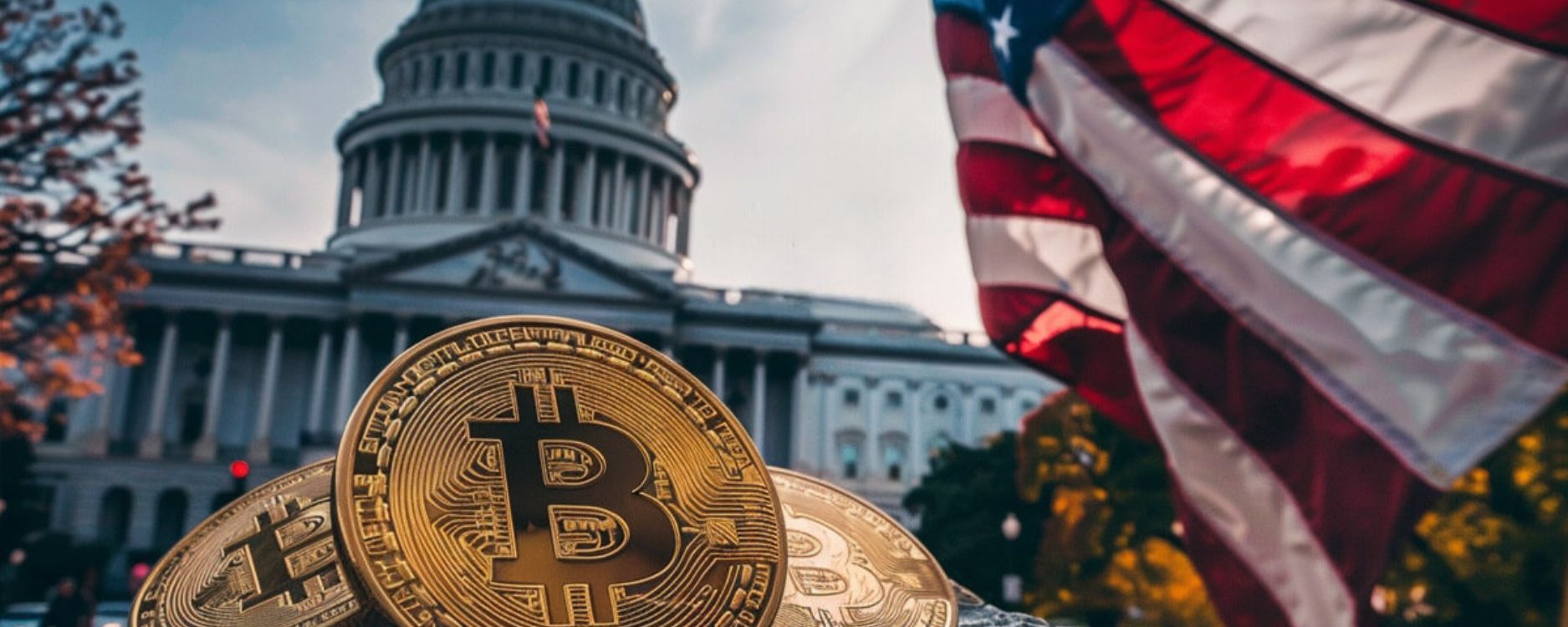
For years, crypto regulation in the United States felt stuck in a loop. Regulators argued over definitions. Courts weighed in after the fact. Companies tried to guess how existing rules might be applied to new technology. Progress was slow, uneven, and often reactive.
In 2025, something changed.
Instead of debating what crypto is, lawmakers and regulators began focusing on how crypto markets actually function. The shift was not loud or dramatic, but it was meaningful. And it made 2025 one of the most consequential years for U.S. crypto regulation so far.
From Debate to Infrastructure
The defining feature of crypto regulation in 2025 was its practicality.
Regulators spent the year tackling questions that are not especially flashy but matter enormously for market growth. Who is allowed to issue a digital dollar. What backs a stablecoin in real terms. How quickly exchange traded products can be approved. What custody looks like when ownership is defined by control of a private key.
These are not philosophical debates. They are infrastructure decisions. And infrastructure is what determines whether a market stays niche or becomes part of the financial system.
That shift did not mean regulators became more permissive. It meant they became more operational.
A Fragmented System, With Clearer Edges
The U.S. regulatory structure remains fragmented. Congress sets the legal framework, but oversight is split across agencies.
- The Securities and Exchange Commission oversees securities markets.
- The Commodity Futures Trading Commission regulates commodities and derivatives.
- The Internal Revenue Service governs tax treatment.
- Banking regulators supervise insured institutions and their subsidiaries.
That structure did not change in 2025. A single digital asset can still fall under multiple regimes depending on how it is traded, marketed, custodied, or used.
What did change is that the parts of crypto that intersect most directly with traditional finance began to get clearer boundaries and processes.
Stablecoins Became a Federal Issue
The most significant development of the year was the passage of the GENIUS Act, which established the first federal framework for payment stablecoins in the United States.
Before this law, stablecoins largely operated under state level money transmission rules or informal regulatory expectations. Issuers relied on disclosures and attestations. Banks stayed cautious, unsure how supervisors might view their involvement.
The new framework set expectations around who can issue payment stablecoins, how reserves must be held, and how redemption works under supervision. In practical terms, it began to treat stablecoins less like an experiment and more like financial infrastructure.
That matters because stablecoins sit at the center of crypto trading, payments, and settlement. Clear federal rules make it easier for banks and regulated firms to engage without risking regulatory surprises.
Investment Products Got More Predictable
Crypto investment products also moved forward.
The SEC approved generic listing standards for certain commodity based trust products. That change reduced the need for one off negotiations for every new exchange traded product and made approval timelines more predictable.
Predictability may not generate headlines, but it changes behavior. It lowers legal costs, shortens timelines, and makes firms more willing to launch products beyond the most obvious ones. It also makes advisers and institutions more comfortable allocating capital through standardized structures.
Tax treatment improved as well. The IRS introduced a staking safe harbor for certain trust structures, allowing proof of stake assets to generate yield without automatically breaking tax classification. That adjustment brought tax rules closer to how these networks actually operate.
Custody Finally Moved Into Focus
Custody has long been one of crypto’s most difficult issues.
Traditional finance is built around regulated custodians, clear chains of control, and established customer protection rules. Crypto does not fit neatly into that model, since control is defined by private keys rather than physical possession or centralized records.
In late 2025, regulators began addressing this gap more directly. The SEC provided guidance on how broker dealers should approach custody of crypto asset securities. Banking regulators outlined how institutions could apply to issue stablecoins through supervised subsidiaries.
These steps did not eliminate complexity, but they replaced ambiguity with process. In regulated markets, that distinction is crucial.
What Was Left Unfinished
Not everything was resolved.
The largest unresolved issue remains market structure, particularly the line between SEC and CFTC jurisdiction. The Digital Asset Market Clarity Act advanced in Congress but did not become law in 2025. That uncertainty continues to influence how companies list tokens and design compliance programs.
Still, the fact that market structure legislation remained active suggests the debate has moved from whether crypto should be regulated to how best to finish the framework.
Why 2025 Mattered
Most of the regulatory changes in 2025 were not about enforcement actions or penalties. They were about building rules that allow institutions to participate without improvisation.
Stablecoins gained a federal framework. Investment products became more standardized. Custody moved closer to supervision rather than theory.
Taken together, these steps made crypto look less like a legal edge case and more like emerging financial infrastructure.
Looking Ahead
If 2025 was about laying groundwork, 2026 will be about implementation.
The next phase will involve rulemaking, supervision, and real world deployment. Stablecoin issuers will apply for licenses. Banks will test new payment rails. Product sponsors will launch under clearer standards.
The momentum from 2025 created something the U.S. crypto market has lacked for years: a sense that the rules, while still evolving, are becoming legible.
That may not satisfy everyone. But for a market that thrives on scale, clarity is often more valuable than certainty.
Where the Conversation Continues
For anyone trying to understand where crypto regulation and policy are actually headed, these conversations are no longer abstract. They are happening in real time, often face to face.
That is part of what makes Rare Evo stand out.
Rare Evo takes place July 28-31, 2026, in Las Vegas at The ARIA Resort & Casino, and has become one of the premier industry event where regulators, policymakers, and blockchain builders share the same room. It is not just a conference about price action or product launches. It is a place to hear directly from the people shaping policy, alongside the teams building the technology those policies will govern.
Panels and discussions at Rare Evo tend to focus on how regulation works in practice, what regulators are actually thinking, and how the industry can engage constructively rather than reactively. For anyone serious about long term adoption, it is one of the more valuable rooms to be in.
You can learn more about the event and purchase tickets at https://rareevo.io/buy-tickets
Alongside that conversation is the role of Rare PAC.
Rare PAC focuses on supporting policymakers who understand digital assets and who are willing to engage seriously with the work of building clear, workable rules in the United States. It is not about opposing regulation. It is about avoiding regulation by confusion or enforcement after the fact.
As 2026 approaches, the progress made in 2025 will only matter if it is protected and extended. That requires continued participation, education, and engagement from people who care about the future of crypto in the US.
For those interested in learning more or getting involved, information is available at https://rarepac.io
If 2025 was the year crypto regulation became practical, the next phase will depend on whether that momentum is carried forward. Conversations like the ones at Rare Evo, and efforts like Rare PAC, are part of how that happens.