#Crypto exchanges

Sui Co-Founder Unveils Havenex Exchange for Institutional Clients

Kostas Chalkias, co-founder and chief cryptographer of Mysten Labs, the company behind the Sui blockchain, has announced Havenex, an exchange designed for institutional clients.
Announcing Havenex, which is currently in the development and pre-launch stage, Chalkias said the exchange is not intended to become another Coinbase, Binance, Bybit, or Kraken.
According to the Sui co-founder, Havenex is designed to enable financial institutions to offer digital and traditional financial assets to their customers while meeting high standards of regulation, security, and transparency.

Giving a hint about the exchange's infrastructure, Chalkias said Havenex will have multisig enabled by default, quantum safe keys, hardware 2FA wallets, 100% multichain support, verifiable custody, as well as self custody and key loss protection mechanisms.
Despite Havenex still being in the development stage, the exchange is currently undergoing the necessary authorization process with Austria's Financial Market Authority (FMA). Once it receives the green light from the FMA, Havenex will have the legal basis to offer regulated financial services, including institutional custody, trading, and other related digital asset services.
Havenex is also currently conducting its first Series A funding round.
Although details regarding how much is being raised and the investors involved remain undisclosed, several reports have speculated that the round could be oversubscribed, particularly given Chalkias’ involvement as a co-founder of Mysten Labs, which raised $336 million to support the development of the Sui blockchain.
OKX Eyes Coinone Stake as Crypto M&A Boom Accelerates

Global cryptocurrency exchange OKX and Korea Investment & Securities are reportedly looking to acquire approximately 20% stakes each in Coinone, a cryptocurrency exchange based in South Korea.
To maximize capital flow, the acquisition will involve Coinone issuing new equity shares to OKX and its acquisition partner, rather than selling shares held by existing shareholders. Although the acquisition is, for now, just a financial investment, some industry observers have opined that OKX may become more involved in the exchange’s managerial activities in the future.
Currently, The One Group, a private investment company managed by Cha Myung hoon, Coinone’s founder, owns about 34.30% of Coinone, followed by Com2uS Holdings, a South Korean gaming firm, which owns 21.95%, and Com2uS Plus, one of its entities, which owns 16.47 percent. Coinone's CEO, Cha Myung-hoon, owns 19.14%.
If successful, this will be the third time a global cryptocurrency exchange has acquired a stake in a South Korean exchange. In 2022, crypto exchange Crypto.com fully acquired OK BIT, a small South Korean crypto exchange, while in 2025, Binance acquired a 67% majority stake in Gopax, one of South Korea’s top five crypto exchanges.
Crypto Acquisitions on the Rise
The partial acquisition of Coinone by OKX comes at the same time as Hana Bank, one of South Korea’s largest commercial banks, announced a 6.55% stake acquisition in Dunamu, the parent company of Upbit, the largest cryptocurrency exchange in South Korea.
Kraken, through its parent company Payward, has also agreed to acquire Reap, a payments infrastructure firm based in Hong Kong, for about $600 million, just a few weeks after it acquired Bitnomial for $550 million in April.
Several other crypto entities have also been involved in acquisitions, including the crypto exchange Bullish, which acquired Equiniti for $4.2 billion, and MoonPay, which recently acquired Dawn Labs.
According to a report from Architect Partners, about 89 crypto acquisition deals were completed in the previous quarter, with approximately $3.2 billion spent on crypto-related acquisitions, a significant increase from the first quarter of 2025, which recorded 61 deals and $2.2 billion in deal value.
Upbit Partners With Optimism to Launch Giwa Chain

South Korea’s largest cryptocurrency exchange, Upbit, has partnered with the Optimism Foundation to build Giwa Chain, a new Ethereum-based Layer 2 blockchain network.
Giwa Chain, which will be built on Optimism’s open source OP Stack, will be the first of its kind built on the self-managed tier of Optimism’s OP Enterprise and stems from the growing need for exchanges to build their own blockchains.

While crypto exchanges using shared chains are not inherently problematic, issues arise as usage increases, making it difficult for these networks to handle the growing workloads of exchanges, including institutional transaction volumes, compliance requirements, and fee economics, which often compound as an exchange scales. For a global exchange like Upbit, which serves more than 13 million users and ranks among the top exchanges by spot trading volume, owning and managing its own blockchain is critical for performance and scalability.
By partnering with Optimism to build a self-managed chain, Upbit allows Optimism to manage key technical aspects of the chain’s infrastructure, including tooling and engineering support, while still retaining sovereignty over the chain’s control and overseeing key functions such as the primary sequencer, chain configuration, and operational authority.
“Operating our own Giwa Chain is a strategic move for Upbit. Our goal is to provide institutional and retail users with a level of performance and compliance consistent with our existing platform,” said Minseok Jung, Chief Operating Officer of Dunamu Inc.
“The Optimism Foundation’s self-managed tier provides a suitable framework, allowing us to maintain operational control while building on established infrastructure. This approach aligns with our requirements for scalability and oversight.”
Giwa Chain is currently live on testnet, with mainnet deployment to follow. Dunamu, the parent company of Upbit, has also signed a memorandum of understanding with the Optimism Foundation on May 4, outlining key aspects of Giwa Chain, including its architecture reviews, performance benchmarking, and security audits.
Crypto Exchanges Building Their Own Chains
There has been an increase in the number of cryptocurrency exchanges building their own layer 2 blockchains, with many doing so for improved infrastructural performance and to gain control over fees, transaction sequencing, user experience, and compliance.
The OP Stack has been instrumental in this development, with the Optimism Foundation stating that its OP Stack currently houses over 32 layer 2 blockchain networks, including Binance’s opBNB chain, Kraken’s Ink chain, Gate.io’s Gate Layer, and OKX’s X Layer.
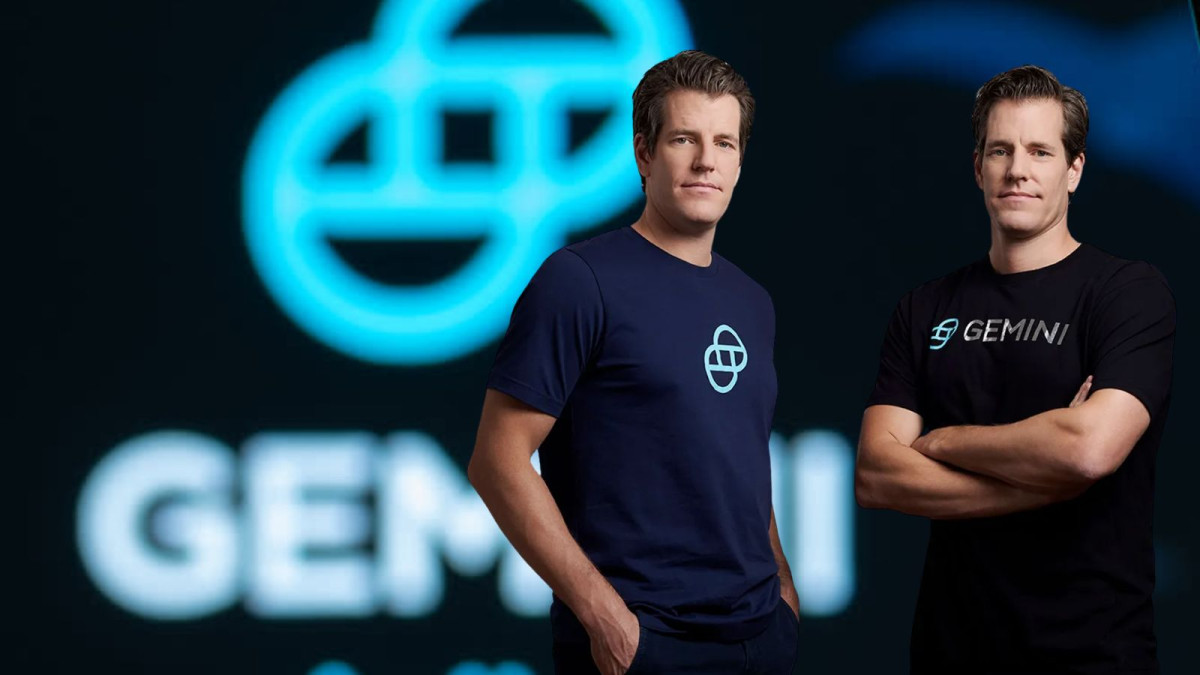
Gemini Secures License for Crypto Derivatives

Gemini Olympus, LLC, an affiliate of the Gemini cryptocurrency exchange, has recently received a Derivatives Clearing Organization license from the Commodity Futures Trading Commission, enabling it to act as the clearinghouse for Gemini’s regulated derivatives trading, including prediction markets.
“Today marks a major milestone in Gemini’s marketplace expansion. In addition to our crypto spot marketplace, Gemini now has a full-stack, end-to-end marketplace for predictions as well as futures, options, and more,” said Cameron Winklevoss, Gemini’s president. He added that the DCO license is a major stepping stone toward Gemini achieving its goal of building a super app that allows users to fulfill all their existing and future financial needs in one place.

With this newly secured DCO license, together with the Designated Contract Market license that Gemini Titan, LLC, another Gemini entity, secured around December of last year, Gemini is now one step closer to obtaining the full suite of CFTC derivatives licenses.
Once it secures the Futures Commission Merchant license, the final component of the CFTC derivatives licensing framework, the company would be able to position itself as a fully regulated derivatives platform in the United States, offering U.S. customers a range of products, including crypto futures, options, and perpetual futures.
Gemini Joins Exchanges in Crypto Derivatives Push
With the Derivatives Clearing Organization license now secured and the Futures Commission Merchant license in sight, Gemini has joined a host of other crypto exchanges, including Kraken, Crypto.com, and the Chicago Mercantile Exchange, in the race to position themselves as all-in-one derivatives platforms.
To break into the derivatives market, Payward, the parent company of the cryptocurrency exchange Kraken, acquired Bitnomial, a U.S.-based derivatives exchange, for $550 million last month. Like Kraken, Coinbase has also taken the acquisition route to enter the crypto derivatives market, acquiring Deribit Exchange for $2.9 billion and The Clearing Company for an undisclosed amount.
The race to provide complete crypto derivatives offerings is not unique to cryptocurrency exchanges, as prediction market companies like Kalshi and Polymarket are also making efforts to enter the crypto derivatives market.
Through Kinetic Markets LLC, one of its affiliates, Kalshi recently secured the Futures Commission Merchant license, along with the Designated Contract Market license it already holds, with efforts underway to secure the Derivatives Clearing Organization license, which is the final license required.
BitMEX Unlocks Safer Trading With Zodia Custody Deal

BitMEX, a derivatives-focused cryptocurrency exchange, has partnered with Zodia Custody, an institutional-first digital assets custody firm, to enable off-exchange trading and secure asset custody for BitMEX’s clients.
The partnership, announced this week, will see the integration of Zodia Custody’s Interchange platform into BitMEX. Interchange is an off-venue settlement solution that allows institutional and professional clients to trade directly on BitMEX while keeping their digital assets securely held off-exchange with Zodia Custody.

This partnership, according to Stephan Lutz, BitMEX CEO, draws on lessons learned from past market failures, especially the collapse of the FTX cryptocurrency exchange and the 1.4 billion dollar Bybit hack. These events, Lutz said, exposed the risks associated with unsegregated or compromised exchange-held funds and are key examples of how custody failures or security threats can put client funds at risk.
Through this partnership and the integration of the Interchange platform, BitMEX clients, especially institutional clients that often trade with large amounts of money, do not have to worry about the safety of their funds on the exchange in the event of a hack, as their digital assets are secured in Zodia Custody’s cold, segregated storage wallets.
The partnership also serves to bridge the gap between institutional-grade security and crypto-native liquidity, allowing BitMEX’s professional and institutional clients to access BitMEX’s deep crypto derivatives liquidity while eliminating the need to pre-fund the exchange before trading.
The Growing Need for Security on Crypto Exchanges
Security has been one of the major challenges faced by cryptocurrency platforms over the years. In 2025, over $4 billion was stolen from crypto platforms. This represents a 34 percent increase compared with 2024, when losses stood at $2.2 billion. Unfortunately, the recovery rate of stolen crypto funds remains very low, at less than 8 percent. This is even worse for centralized exchanges, which are often high value targets.
By integrating Zodia Custody’s interchange platform into its crypto infrastructure and allowing clients’ digital assets to be stored in Zodia Custody’s segregated vaults, BitMEX eliminates the trade offs institutional clients face when choosing between derivatives trading access and the safety of their assets. Since Zodia handles the custody of clients’ assets, BitMEX faces minimal damage in the event of a security breach or hack.

Korea Proposes Crypto Circuit Breakers After Bithumb Error

The Bank of Korea (BOK), South Korea’s central bank, has proposed the introduction of crypto circuit breakers for domestic cryptocurrency exchanges, months after the Bithumb Bitcoin blunder.
In its recently published 2025 Payment and Settlement Systems Report, the bank recommended introducing system-level safeguards similar to the Korea Exchange (KRX) stock market circuit breakers that would automatically halt trading on crypto exchanges, especially during sharp price swings or abnormal transactions caused by large volume or erroneous trades.
Referencing the massive payout mishap at Bithumb in February, the BOK argued that this feature would help prevent such incidents from repeating, citing the crypto market’s lack of sufficient safeguards compared to traditional finance. It also suggested including the proposal in South Korea’s pending Digital Asset Basic Act.
“The virtual asset industry has inadequate internal control systems and faces weaker regulatory oversight compared to traditional financial institutions,” the bank said.
“It is necessary to consider introducing systemic mechanisms such as the Korea Exchange’s circuit breaker, which can block abnormal trades such as large orders or halt trading in the event of sudden fluctuations in virtual asset prices.”
Bithumb February Bitcoin Blunder
On February 6, 2026, Bithumb, one of South Korea’s largest cryptocurrency exchanges, was running its routine “Random Box” promotional giveaway. The plan was to distribute small cash prizes totaling 620,000 Korean won (KRW), worth approximately 423 to 460 US dollars, to about 600 qualified users, with each user receiving between 2,000 and 50,000 KRW, or about 1.37 to 34 US dollars.
However, the situation escalated when an employee mistakenly entered “BTC” as the currency unit instead of “KRW.” As a result, the system instantly credited approximately 620,000 Bitcoin to users, with each user receiving roughly 2,000 Bitcoin.
Bithumb detected the error within minutes and promptly restricted trading and withdrawals on the affected accounts. The exchange was able to recover 99.7 percent of the distributed Bitcoin, while the remaining 1,788 Bitcoin that had already been sold by users were covered by the exchange’s corporate reserves.
While the introduction of stock-style circuit breakers for cryptocurrency exchanges appears to be motivated by a desire to protect markets, many experts argue that such measures run counter to the decentralized and borderless nature of cryptocurrency.
Some warn that these guardrails could amplify risks and create price discrepancies between domestic exchanges and global markets. This, in turn, could lead to arbitrage opportunities and confusion, particularly when South Korean exchanges halt trading while the rest of the world continues.
Charles Schwab To Launch Spot Bitcoin & Ethereum Trading

Charles Schwab, the Texas-based brokerage giant with more than $12.2 trillion in assets under management, confirmed Friday it is on track to roll out spot Bitcoin and Ethereum trading for U.S. clients before the end of Q2. It is, by any measure, a significant moment for the digital asset industry, though the market's reaction has been muted so far.
"We remain on track to launch our spot crypto offer in the first half of 2026, starting with Bitcoin and Ethereum," a company spokesperson told reporters Friday. Clients looking for early access can now join a waitlist through the newly launched Schwab Crypto page, which has quietly appeared under the firm's Investment Products section online.
A Phased Rollout
CEO Rick Wurster, confirmed the launch will start in Q2 with a limited client pilot before widening to the broader investor base. Before that even happens, the firm plans to test the product internally with its own employees, a cautious approach that is very much in line with how Schwab tends to operate.
The service will be operated through Charles Schwab Premier Bank, SSB, a regulated banking subsidiary. Although, not everyone in the U.S. will have access at launch. Residents of New York and Louisiana are excluded from the signup form, due to tight state-level regulatory considerations that have long complicated crypto product rollouts in those markets.
What This Actually Means for Crypto Exchanges
The competitive implications here are real. Schwab is not some fintech startup trying to chip away at Coinbase's market share from the margins. This is a firm with tens of millions of existing retail and institutional clients who already trust it with their stocks, bonds, and retirement accounts. Bringing Bitcoin and Ethereum into that same account view, without needing a separate wallet or a new platform login, removes one of the biggest friction points keeping traditional investors on the sidelines.
Bloomberg ETF analyst Eric Balchunas has flagged pricing as the key variable to watch. Schwab already offers zero-commission stock and ETF trading. If the firm prices spot crypto below 50 basis points, the pressure on crypto-native exchanges could be significant, particularly for casual retail traders who are cost-sensitive and already comfortable inside the Schwab ecosystem.
Are Stablecoins Next?
Spot trading is likely just the opening move. Wurster signaled during an earnings call late last year that the firm wants exposure to stablecoins as well, describing them as something that will likely play a role in transacting on blockchains. A stablecoin offering, if it materializes, would put Schwab in even more direct competition with crypto-native platforms and potentially with payment networks.
The firm has also been expanding through acquisitions. Earlier this year, Schwab announced a $660 million deal to buy private shares platform Forge Global, aimed at giving clients access to pre-IPO investments. Wurster has said Schwab remains open to further deals in the crypto space if the right opportunity and valuation align.
Where Bitcoin and Ethereum Stand Right Now
At the time of writing, Bitcoin was trading near $67,000, down roughly 47% from its all-time high of $126,080. Ethereum sat around $2,050, off nearly 59% from its own peak set last August. Both assets have had a difficult few months, which makes the timing of Schwab's entry intriguing. The firm is coming in during a period of weakness, not euphoria, which could prove to be well-timed when the market recovers.
Schwab shares closed Thursday up about 1.5%, trading near $93.77, representing roughly a 19% gain over the past year. That compares favorably with Bitcoin's 18.5% decline over the same stretch. The brokerage's stock has, for now, outperformed the very asset class it is preparing to offer its clients.
Whether Schwab's entry into spot crypto ultimately proves to be a turning point for mainstream adoption, or just another incremental step in a long institutional migration into digital assets, remains to be seen.
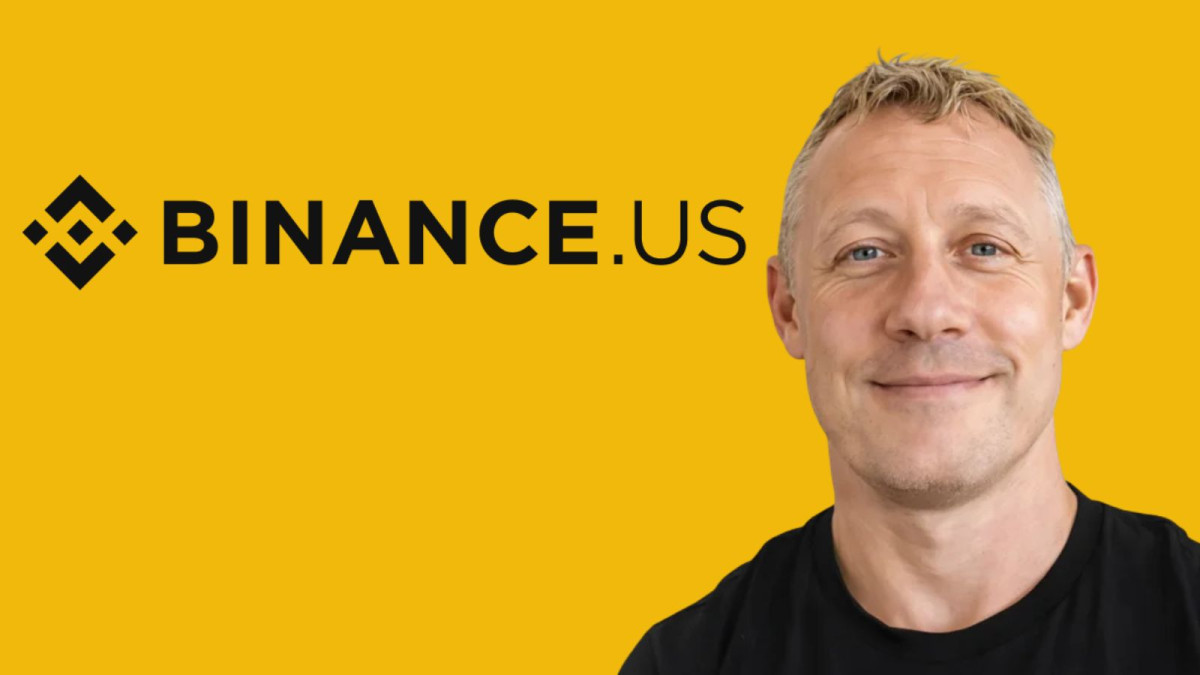
Binance.US Appoints Stephen Gregory as New CEO

The world's largest cryptocurrency exchange, Binance, has appointed Stephen Gregory as the chief executive officer (CEO) of its U.S. affiliate, Binance.US.
On Tuesday, March 11, Binance.US announced the appointment of compliance lawyer Stephen Gregory as CEO of the exchange. Stephen will take over from Norman Reed, who, according to the exchange, is stepping down to serve in an advisory role.
“I am honored to lead the Binance.US team as we write the next chapter for what we believe is the best platform for U.S. crypto investors to buy, trade, and earn digital assets,” Stephen said. “The Binance.US brand is extremely powerful, with a founder, Changpeng Zhao (CZ), who has continuously advocated for making the U.S. the crypto capital of the world,” he added.
Norman, the former Binance.US CEO, also expressed confidence in Stephen. “As we look to the next phase of growth for Binance.US, Stephen brings an entrepreneurial approach to leadership that I am confident will deliver for our customers in a meaningful way,” Norman said.
About Stephen Gregory
Stephen is a lawyer with nearly two decades of experience in the compliance industry. Before entering the crypto and fintech sectors, he worked in the U.S. Senate as a staff member for Senators Paul G. Kirk and Ted Kennedy and held roles at other government-affiliated agencies.
He later transitioned into private practice, working as a litigation and regulatory law expert for several law firms, including D'Ambrosio Brown LLP, McCormick & O'Brien LLP, Quinn Emanuel Urquhart & Sullivan, and Gage Spencer & Fleming LLP.
Entering into Crypto
In 2016, Stephen entered the crypto industry as a compliance officer at Gemini, where he helped the exchange navigate regulations and secure licenses for its U.S. crypto operations.
He did, however, move up the ranks in the compliance industry, serving as Chief Compliance Officer at crypto exchange CEX.IO, where he led the company’s global compliance program and oversaw its regulatory frameworks, including Anti-Money Laundering (AML) and Know Your Customer (KYC) programs.
In 2021, Stephen joined Currency.com as CEO, where he led the exchange’s U.S. operations, oversaw regulatory strategy, and expanded its services in the United States before its acquisition by CXNEST Ltd in May 2025.

Coinbase Shareholder Sues Executives Over Compliance Issues

A Coinbase shareholder has filed a derivative lawsuit against several top executives and board members of the crypto exchange, alleging compliance and disclosure failures by the company’s leadership.
On Tuesday, Kevin Meehan, one of Coinbase’s shareholders, filed a complaint in a U.S. district court in New Jersey. The court filing cited several of Coinbase’s top directors, including CEO Brian Armstrong, co-founder Fred Ehrsam, Chief Legal Officer Paul Grewal, and Chief Financial Officer Alesia Haas, among other executives.

Image credit: PACER
According to the filing, the plaintiff accused the defendants of making false and misleading statements between April 2021, when the exchange became a publicly traded company, and June 2023. The complainant alleged that a compliance failure by the exchange's leadership exposed the company to several stringent regulatory actions.
On behalf of Coinbase, the complainant, Kevin, is seeking damages, requesting that the court implement corporate governance reforms, and requesting recovery of any profits the exchange's leadership may have obtained during the period when the exchange faced these compliance cases.
However, since this is a shareholder derivative lawsuit, any financial recovery from Coinbase's directors will go to Coinbase rather than directly to the shareholders.
Coinbase Battle With Compliance
Over the past few years, Coinbase has faced several legal and compliance challenges, paying millions of dollars in damages and penalties.
In January 2023, the New York State Department of Financial Services sued the exchange for major failures in its Anti-Money Laundering (AML) program. The regulator accused Coinbase of having weak Know-Your-Customer (KYC) checks and failing to properly review suspicious transactions.
As part of the settlement, Coinbase agreed to pay $100 million: $50 million in penalties and $50 million to improve its compliance checks and systems.
In June 2023, Coinbase was hit with a $5 million penalty by the New Jersey Bureau of Securities. The regulator accused the exchange of allowing the trading of unregistered securities on its platform, prompting several other states to impose restrictions on its staking services at the time.
Coinbase has also faced legal challenges from the U.S. Securities and Exchange Commission (SEC). In 2023, the SEC filed a lawsuit against the company, alleging it operated an unregistered exchange. Following the announcement, Coinbase’s stock dropped sharply, falling from over $60 to under $50 within minutes of the news breaking.

Crypto Withdrawals Surge After US-Israel Airstrikes in Iran

There was a surge in crypto withdrawals minutes after the U.S. and Israel launched targeted military airstrikes in Tehran, Iran’s capital, last Saturday.
In a recent post, London-based blockchain analytics company Elliptic gave a report on the aftermath of the airstrikes in Iran. Elliptic reported a significant increase in crypto withdrawals from Nobitex, Iran's largest cryptocurrency exchange.
According to the firm, outgoing transaction volume from Nobitex spiked by over 700% within minutes after the first airstrike hit Tehran on Saturday, with crypto outflows reaching nearly $3 million in a single hour that same day.

Image credit: elliptic.co
Further tracing these funds, Elliptic reported that most of the withdrawals were sent to foreign crypto exchanges, potentially indicating intense capital flight amid uncertainty in the region.
"Nobitex allows rials to be converted to cryptoassets, which can then be withdrawn to any external wallet…initial tracing of recent outflows from Nobitex suggests that the funds are being sent to overseas cryptoasset exchanges," Elliptic stated.
Although this outflow persisted for most of that day, it fell sharply afterward, an event attributed to the nation's widespread internet outage. Yes, there was a 99% decline in internet connectivity in the country.
However, contrary to the "capital flight" situation being reported by Elliptic, blockchain intelligence firm TRM Labs seems to hold a different view and cautions against drawing a "capital flight" conclusion.
"It appears that the country's crypto ecosystem is not showing signs of acceleration or capital flight, but instead is experiencing a downturn in both transactions and volume as the regime enforces strict internet blackouts," TRM Labs said.
The State of Crypto in Iran
Despite ongoing unrest, the Iranian cryptocurrency economy appears to be among the largest crypto markets in the world. In 2025, over $10 billion in volume was processed, with Nobitex processing over $5 billion.
Iranian crypto exchanges have had to deal with massive crypto outflows, the largest of which occurred on January 9 of this year, after the nationwide demonstrations in the country.

Image credit: elliptic.co
To adapt to changing events, cryptocurrency exchanges in the country have had to make operational adjustments and move to risk-containment modes.
Wallex, a domestic crypto exchange, suspended crypto withdrawals until further notice, citing infrastructure instability. Nobitex, Aban Tether, and Ramzinex, which are all Iranian-based cryptocurrency exchanges, have also had to suspend deposits and withdrawals.
However, despite these challenges, cryptocurrencies and digital assets have come to the rescue of many who have had to cope with the several economic sanctions plaguing the country.

Coinbase Acquires Echo for $375 Million to Build On-Chain Capital Raising
Coinbase Global has entered into an agreement to acquire Echo for approximately $375 million, a deal made in a combination of cash and stock. Echo is a blockchain-based investment platform that enables crypto startups and token-based projects to raise capital through private and public token sales.
What Echo Brings to the Table
Founded by crypto influencer and trader Jordan Fish, better known as “Cobie,” Echo has rapidly grown in the crypto startup funding space. Its platform has helped projects raise more than $200 million across roughly 300 deals.
Echo offers two major fundraising modes:
-
Private token raises for selected investors.
-
Public token sales via its Sonar product, enabling broader community access.
This dual approach positions Echo as a full-stack capital formation platform for crypto startups — from raising funds to launching tokens.
Why Coinbase Is Making the Move
For Coinbase, the acquisition is part of a broader ambition to expand beyond being solely a trading platform. The deal reflects several strategic goals:
-
Capital-raising infrastructure: By acquiring Echo, Coinbase gains direct access to the infrastructure that allows projects to fundraise on-chain and later trade tokens in secondary markets.
-
Expanded services: Coinbase intends to serve both investors and early-stage projects, creating a one-stop shop for launching, funding and trading.
-
Ecosystem growth: Echo’s on-chain fundraising model supports Coinbase’s push into tokenized securities and real-world assets, areas identified as growth drivers.
-
Acquisition strategy: The deal is part of an ongoing series of acquisitions, reflecting an aggressive strategy to expand Coinbase’s role in crypto infrastructure.
Potential Impact and Key Considerations
Impact
-
For startups: Easier access to capital through Coinbase’s global reach and brand reputation.
-
For investors: Potential to access token sales and new asset classes in a secure and regulated environment.
-
For Coinbase: Broader user engagement, diversified revenue streams, and a stronger position in the ecosystem.
Considerations
-
Execution risk: Integration of Echo’s model into Coinbase’s platform will require careful execution.
-
Regulation: Token sales and tokenized securities face ongoing regulatory scrutiny, which could shape how the service operates.
-
Competition: Other platforms also offer fundraising services, raising questions about how much advantage Coinbase will gain.
-
Integration workload: Combining Echo’s systems with Coinbase’s compliance and infrastructure will take time and resources.
What This Means for the Industry
The acquisition highlights broader trends in crypto:
-
On-chain capital formation is becoming a mainstream strategy, bridging the gap between venture funding and community token sales.
-
Exchanges are evolving into full-stack financial service providers, covering fundraising, investment, and trading.
-
Ecosystem-building through developer support and early-stage funding is now central to major crypto firms’ growth strategies.
Conclusion
Coinbase’s acquisition of Echo for $375 million is a significant milestone in the evolution of crypto finance. For Coinbase, it strengthens its position as more than just an exchange, aligning it with a future where raising capital, launching tokens, and trading all occur seamlessly on-chain. For startups and investors, it promises expanded opportunities — though success will depend on execution, regulatory clarity, and market adoption.

Solana Co-Founder Anatoly Yakovenko Reveals Percolator, a New Perp DEX Design
Anatoly Yakovenko, co-founder of Solana, has introduced a blueprint for a decentralized perpetual futures exchange called Percolator. The design was released publicly and is positioned as a potential Solana-native alternative to established platforms such as Hyperliquid and Aster.
A Solana-Native Exchange Concept
Percolator is described as an “implementation-ready” framework for a perpetual futures DEX that runs directly on Solana. Unlike centralized exchanges, it would rely on a sharded architecture to distribute trading activity across multiple “slabs.” Each slab acts as an independent engine, handling its own set of markets in parallel.
A router layer would manage collateral, portfolio margining, and the routing of trades between slabs. The goal is to achieve low-latency execution at scale, reduce congestion during high demand, and allow users to retain custody of their assets while trading.
Yakovenko has suggested that this design could enable centralized-exchange-level speeds within a fully decentralized structure. If implemented, it would represent a step forward in marrying the performance advantages of Solana with the growing demand for decentralized derivatives.
Addressing a Market Gap
Perpetual futures have become one of the most active areas of crypto trading, often accounting for a large share of overall derivatives volume. Platforms such as Hyperliquid and Aster have attracted significant activity, but Solana has not yet established a dominant native alternative in this space.
Percolator is seen as a way to change that. By offering a blueprint for a scalable and efficient perp DEX, the design could strengthen Solana’s DeFi ecosystem and attract more sophisticated traders. It would also broaden the network’s use cases beyond its reputation for high-speed transactions and meme coin speculation.
Open Development Approach
One notable feature of Yakovenko’s announcement was the decision to publish the design openly on GitHub. Rather than launching Percolator as a closed project, he invited developers to experiment, adapt, and build upon the code.
This open-source approach aligns with Solana’s broader strategy of encouraging community-driven innovation. It positions Percolator not just as a single potential product, but as a framework that could inspire multiple teams and projects across the ecosystem.
Challenges and Risks
Despite the enthusiasm, there are several challenges. Yakovenko himself has downplayed expectations, noting that the release was experimental and not necessarily a commitment to launching a production-ready DEX.
Regulatory pressure is another factor. Perpetual futures are leveraged products that have drawn scrutiny from regulators worldwide. Operating such markets in a decentralized structure could bring legal uncertainty, especially if they attract high volumes.
Technical risks also remain. Building and maintaining a sharded DEX with multiple trading engines introduces complexity, and it is unclear how the design would perform under sustained high-volume trading. Competition is also fierce, with other perp DEXs already establishing liquidity and user bases.
The Outlook for Solana
Even with these risks, Percolator underscores Solana’s ambition to expand into more advanced financial infrastructure. The release highlights the network’s strengths in throughput and efficiency, while showing a willingness to experiment in areas that are becoming increasingly important to crypto markets.
If the concept develops into a working platform, it could elevate Solana’s role in decentralized finance and attract a new wave of derivatives traders. Even if it does not, the blueprint has already sparked discussion about what is possible when high-performance blockchains are combined with open-source collaboration.
Conclusion
Percolator is not yet a product, but it is a statement of intent. It reflects Yakovenko’s ongoing focus on technical experimentation and Solana’s drive to compete at the highest levels of decentralized finance. Whether it emerges as a functioning exchange or remains a reference design, it signals a move toward more complex, scalable infrastructure that could shape the future of on-chain derivatives.