#Cryptocurrency Regulation

UK Cracks Down on Illegal Crypto Trading

The UK Financial Conduct Authority (FCA) has conducted multiple raids across London, disrupting illegal peer-to-peer crypto trading in the capital city.
According to a press release from the regulatory watchdog, the crackdown was not conducted alone, as it involved collaboration with HM Revenue & Customs (HMRC) and the Metropolitan Police Service.
“Working with partners, we continue to track and disrupt illegal crypto activity. Anyone running an unregistered peer-to-peer crypto business should assume we are looking at them,” said Steve Smart, executive director of enforcement and market oversight at the FCA.

Following raids at three locations where these illegal crypto trading activities were being carried out, the FCA said it issued cease and desist letters ordering the operators of these trading activities to stop.
Although peer-to-peer (P2P) cryptocurrency trading is not entirely banned in the UK, P2P trading is only allowed if it is conducted on a registered platform. However, the agency warns against P2P trading activities conducted directly between two users due to their potential to facilitate illicit activities such as money laundering.
The raid by the FCA is not the first of its kind this year. In April, the agency conducted a more intense crackdown on illegal crypto trading businesses, raiding eight locations across the UK where these illegal crypto trading activities were being carried out.
Similar Crackdowns Outside the UK
Outside the UK, several other regulatory agencies have also been going hard on illegal crypto businesses, with Australia, the United States, and India being in the news recently.
In Australia, the Australian financial intelligence agency (AUSTRAC) recently suspended or cancelled the registrations of 45 virtual asset service providers (VASPs), shutting down 96 CryptoLink ATMs across the country due to compliance and regulatory violations.
In the United States, the U.S. Department of the Treasury’s Office of Foreign Assets Control (OFAC), in collaboration with the Department of Justice (DOJ) and the U.S. Secret Service, coordinated action against Xinbi Guarantee, a large Chinese-language Telegram-based illicit marketplace reportedly linked to scams, money laundering, and other cyber-related crimes.

BitGo Secures South Korea VASP License

BitGo Korea, the South Korean entity of global digital asset infrastructure company BitGo, has secured a Virtual Asset Service Provider (VASP) license from the country’s regulator.
The license, issued by the Korea Financial Intelligence Unit, an entity under the Financial Services Commission, allows BitGo to operate as a recognized virtual asset service provider in the country, offering services such as virtual asset custody, transfers, and management.

“For a global company seeking to operate its business in Korea over the long term, it is essential to have its technology and systems validated within Korea’s regulatory framework,” said Chen Fang, CEO of BitGo Korea and chief revenue officer at BitGo.
“We believe BitGo’s VASP registration will go beyond being simply a case of an individual company entering Korea and serve as a model for establishing standards of regulatory compliance and accountability for foreign companies entering the Korean market.”
While BitGo is not the only virtual asset service provider in the country, with approximately 29 registered virtual asset providers operating in South Korea, its VASP registration is significant because it marks the first time a foreign company has secured a VASP registration directly.
Unlike the usual approach taken by foreign VASPs, which often acquire a local Korean operator, BitGo entered the market directly by securing a VASP registration from South Korea’s Financial Intelligence Unit.
In entering the Korean market, BitGo had the support of Hana Financial Group, one of South Korea’s five largest financial holding companies, and SK Telecom, one of the country’s largest telecommunications companies.
As major shareholders, Hana Financial Group acquired a 25 percent stake in BitGo, while SK Telecom acquired a 10 percent stake in BitGo Korea.
BitGo’s entry into the Korean market comes at a time when the country maintains strict regulations for digital asset firms, with authorities cracking down on violators. This was evident on Monday when South Korean authorities restricted access to Polymarket over the company’s alleged violation of the country’s sports promotion laws.
Circle Secures New York Trust Charter

Circle Internet Group, the global financial technology company and issuer of the USDC stablecoin, has secured a limited purpose trust charter from the New York Department of Financial Services (NYDFS).

Image credit: x.com
With this approval, Circle Internet Trust Company LLC, Circle's trust subsidiary, can now operate as a regulated New York trust company, providing fiduciary, custody, and asset management services.
However, because the charter is limited in purpose, Circle will not be able to accept traditional customer deposits or make loans like a full service commercial bank.
"Earning a New York trust charter has been a longstanding objective for Circle given the regulatory clarity that comes with it," said Jeremy Allaire, Circle's co-founder and CEO.
"NYDFS is an international standard setter for digital asset regulation, and New York is Circle's global headquarters. This charter reflects more than a decade of regulatory commitment and positions USDC within a strong, respected framework as digital dollars become central to the global financial system."
Circle's New York trust charter comes shortly after it received approval for a national trust bank charter from the U.S. Office of the Comptroller of the Currency (OCC) last month. The OCC charter allows Circle to establish and operate a national trust bank focused on fiduciary digital asset custody services under federal oversight.
Commenting on the national trust bank charter, Allaire said the move was pivotal to bringing blockchain technology and digital assets into the core of the U.S. financial system.
"Federal oversight of our trust bank sets a new standard for transparency, governance, and scale for Circle's infrastructure and unlocks a new phase of adoption, where leading financial institutions can build on public blockchains with clarity and confidence," he said.
Bank of Thailand Launches Stablecoin Transaction Audits in Illicit Finance Crackdown

The Bank of Thailand (BOT) has announced that it will audit high-volume stablecoin transactions as it moves to curb the use of digital assets in illicit finance.
According to Witai Rattanaporn, Governor of the Bank of Thailand, the move is aimed at addressing the country’s structural problems, while the apex bank also seeks to reduce the grey economy's role in contributing to these issues.
The grey economy, which refers to economic activities outside the fully legal and regulated system, is not always completely illegal. However, its lack of government oversight makes it a potential avenue for facilitating illicit activities, which the BOT aims to prevent. Rattanaporn said he does not want financial institutions to continue serving as channels that enable the grey economy.
Rattanaporn stated that the Bank of Thailand had begun implementing measures to control cash withdrawals since April. For cash withdrawals of 5 million baht or more, banks must verify the necessity of the customer’s request, including why the customer chose cash withdrawals over bank transfers or cheques. Withdrawals will be permitted if the funds are deemed to be for legitimate purposes.
Since the introduction of the new rule, cash withdrawals have declined by approximately 35%, Rattanaporn said. In the coming quarter, Rattanaporn noted that customers depositing 5 million baht or more may be required to explain the source of the funds.
Regarding the use of digital assets to evade scrutiny, Rattanaporn said the Bank of Thailand is currently working with the country’s Securities and Exchange Commission (SEC) to use data analytics to monitor stablecoin transactions and investigate unusually high transaction volumes.
Cryptocurrency Use in Thailand
Although cryptocurrency trading in Thailand is generally permitted on licensed exchanges, the country maintains strict rules on the use of digital assets. For example, cryptocurrencies and stablecoins cannot be used as valid payment instruments. Digital asset firms are also prohibited from facilitating payments in cryptocurrencies.
Thailand remains one of the leading crypto markets in Southeast Asia. According to a report citing data from the Securities and Exchange Commission (SEC), more than 7 million digital asset accounts are currently registered, representing approximately 12% to 18% of the country’s population. The report also noted that the Bank of Thailand is expected to introduce a baht-backed stablecoin before the end of this year.
Brazil Court Orders Coinbase to Refund $100K Lost From a User's Wallet

A São Paulo state court has ordered cryptocurrency exchange Coinbase to refund nearly $100,000 that a user alleged was deposited into their wallet but later went missing.
According to the complainant, about 507,000 reais, or nearly $100,000, deposited into their Coinbase wallet disappeared without authorization. However, Coinbase claimed it had nothing to do with the missing funds, arguing that the user’s private key was fully under the user’s control.
Although Coinbase contended that it had no access to users’ wallet private keys and could not control blockchain transactions, it failed to prove that the compromised wallet was equipped with essential security features, such as two-factor authentication. As a result, Coinbase was unable to prove that the complainant had authorized the transactions.
The court, presided over by Judge Ju Hyeon Lee, ruled that Coinbase must reimburse the full amount of the missing funds in accordance with Brazil’s Customer Protection Code. The exchange was also ordered to cover court costs, which amounted to 10% of the claim, as well as any applicable legal fees.
Responding to the court ruling, Raphael Souza, a cryptocurrency-specialized lawyer, spoke to Portal do Bitcoin, one of Brazil’s leading cryptocurrency news platforms, highlighting the significance of the decision and its potential impact on crypto companies operating in Brazil.
Souza said the ruling dismantled two common arguments used by crypto companies. “The first is that a self-custody portfolio does not generate liability. Anyone who develops and puts a product on the market is responsible for its security, regardless of how the technical architecture works behind it.” According to Souza, this applies to Coinbase because it is a registered entity in Brazil.
The second argument Souza said the ruling challenged is that technical documents alone are insufficient in cases like this if companies fail to provide a thorough, understandable explanation.
“Coinbase had every opportunity to prove that the investor authorized the transaction, explain the technical records, and inform where the funds went. It chose not to do any of that,” Souza asserted.
While Coinbase has not suffered any major security breach in recent times that resulted in the loss of customer funds, some of the company’s rogue overseas employees were allegedly bribed by attackers to gain access to its internal support systems.
The unauthorized access allowed the attackers to obtain customers’ sensitive data, including names, contact information, and account details. Although the attackers demanded a $20 million ransom, which Coinbase refused to pay, the company said the incident cost it between $180 million and $400 million, largely due to remediation efforts and customer reimbursements.
Housing Bill Containing CBDC Ban Becomes Law Without Trump's Signature

A major housing bill, the 21st Century ROAD to Housing Act, which contains a provision prohibiting the Federal Reserve from creating a central bank digital currency (CBDC), has become law without the president's signature.
The 21st Century ROAD to Housing Act, which was sent to the White House, was not signed by President Trump despite receiving overwhelming bipartisan support in both the House of Representatives and the Senate. The bill passed the House by a vote of 358 to 32 and the Senate by a vote of 85 to 5.
Despite the wide margin of support in Congress, President Trump declined to sign the bill, saying he did so in protest of lawmakers' failure to pass separate election legislation.
"I will not sign the Housing Bill, which has been fully approved by Congress and sent to the White House, in PROTEST over the fact that the United States Senate is not capable of passing THE SAVE AMERICA ACT," Trump wrote on Truth Social.
Trump had repeatedly urged Congress to pass the SAVE America Act, which would require proof of citizenship to vote in federal elections and impose voter identification requirements. However, the bill failed to secure the 60 votes needed to advance in the Senate.
Under the U.S. Constitution, a bill becomes law without the president's signature if the president neither signs nor vetoes it within 10 days, excluding Sundays, while Congress remains in session. Because the 21st Century ROAD to Housing Act was sent to the White House in late June and the 10-day period expired while Congress was still in session, it became law without the president's signature.
How the Bill Affects Crypto
While the core of the bill was housing affordability, it included a provision that prevents the Board of Governors of the Federal Reserve System and the regional Federal Reserve Banks from issuing or creating a central bank digital currency (CBDC), either directly or indirectly through an intermediary.
The law also makes clear that nothing in the legislation should prevent an "open, permissionless, and private United States dollar-denominated currency" designed to preserve privacy protections similar to those of physical cash.
Although the ban on a CBDC is not permanent and will remain in effect through December 31, 2030, the bill's passage is noteworthy because it marks the first time the U.S. Congress has passed a law explicitly barring the Federal Reserve from issuing a central bank digital currency.
Ripple Secures Full MiCA CASP License in Europe

Ripple, the leading blockchain technology company building digital infrastructure for cross-border payments, has secured a full Crypto Asset Service Provider (CASP) license from the Commission de Surveillance du Secteur Financier in Luxembourg.

Image credit: x.com
The full CASP authorization, announced on Monday, comes shortly after Ripple received preliminary approval from Luxembourg's financial regulator in June. With this license, Ripple is now fully compliant with the Markets in Crypto Assets (MiCA) regulation, enabling it to offer its crypto services to businesses and institutions across all 30 countries of the European Economic Area.
"This CASP authorization means Ripple enters the post-transitional MiCA era fully compliant and ready to scale," said Cassie Craddock, Managing Director for the United Kingdom and Europe at Ripple.
"The institutions we work with across Europe are looking to build their digital asset services alongside regulated partners, and Ripple is licensed and ready to meet that demand."
Ripple now joins a small group of digital asset firms, including Coinbase, Kraken, Crypto.com, Bitstamp, and OKX, that have obtained full authorization under MiCA. The company says it now holds more than 75 regulatory licenses worldwide, in addition to the Electronic Money Institution (EMI) license it secured in February.
Elsewhere on the regulatory front, the MiCA July 1 deadline is now fully in effect, with unlicensed digital asset firms required to stop serving clients in the European Union. It is estimated that more than 80 percent of the approximately 1,200 previously registered firms that lacked full licenses by late June have either exited the European Union or restricted their operations there.
Ripple's full CASP license comes shortly after the company was named among more than 140 members of the Open Standard consortium, a group of companies collaborating on the launch of OpenUSD (OUSD), a dollar-pegged stablecoin. The company also recently invested in Flutterwave, Africa's largest fintech unicorn.
Zodia Custody Secures Luxembourg Payment License for EU Expansion

Zodia Custody, a company that provides institutional custody for cryptocurrencies and digital assets, has secured a payment license from Luxembourg’s Commission de Surveillance du Secteur Financier (CSSF), the country’s primary financial regulator.

With this payment license secured, Zodia Custody is set to expand beyond crypto custody, its main offering, and is now moving into both the custody and seamless transfer of electronic money tokens and stablecoins within the European Union.
“Institutional adoption of crypto assets demands infrastructure that meets the highest standards of regulatory adherence and operational efficiency,” said Ami Nagata, Managing Director, Luxembourg at Zodia Custody Europe.
“Securing a Payment Institution license alongside our MiCA CASP authorization is a critical step in bridging our capabilities across crypto asset safekeeping. With both licenses in place, our clients have the certainty they need to manage their electronic money token and crypto asset strategies across Europe, with full confidence that their assets are safeguarded within a bank-grade environment.”
Alongside the payment license and the MiCA license it secured in December last year, Zodia Custody is now well-positioned to serve as a core infrastructure provider for institutional digital finance. Securing these licenses removes structural barriers and counterparty risks commonly associated with crypto asset service providers.
The securing of the Luxembourg payment license comes shortly after Standard Chartered made a non-binding offer to acquire Zodia Custody. Although the acquisition cost was not publicly disclosed, the offer has already been accepted by Zodia Custody shareholders.
Zodia Custody currently serves a number of institutional clients, including 21Shares, Re7 Capital, Bitwise, and BitMEX. In April of this year, Zodia Custody partnered with BitMEX to integrate the Interchange platform into BitMEX's infrastructure to enable off-exchange trading, a move that enhances the safety of clients' assets on the BitMEX platform, especially in the event of a security breach.
U.S. Seizes $1B in Crypto From Iran

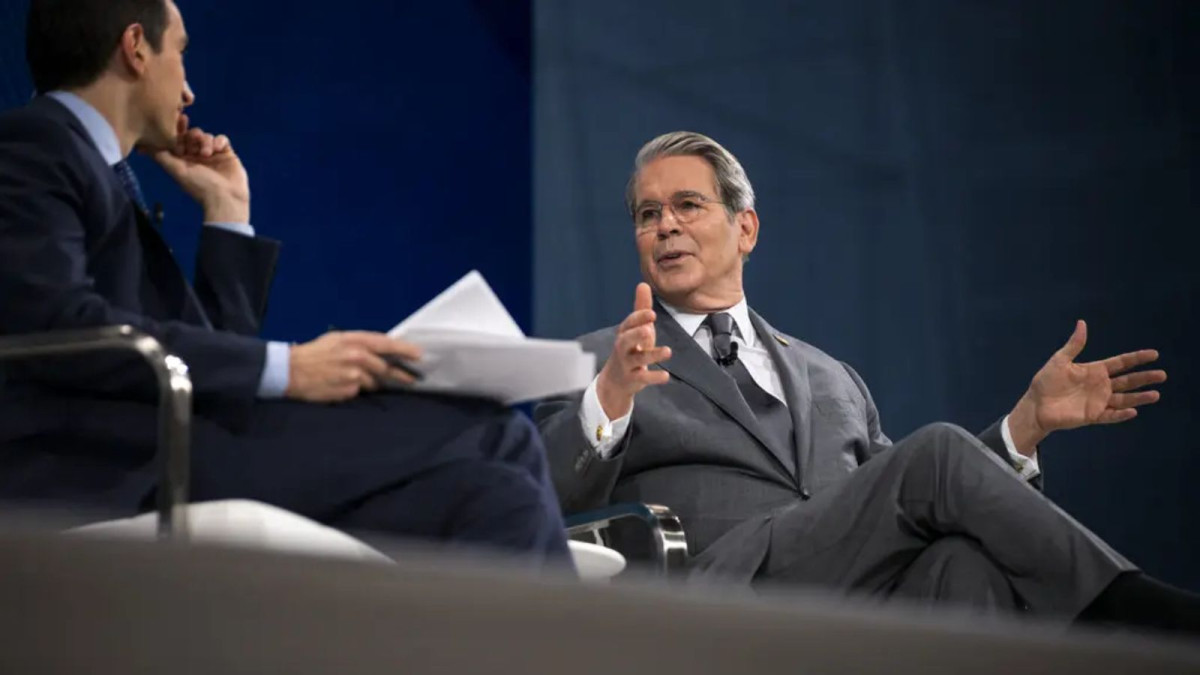
Speaking at the 2026 Reagan National Economic Forum in Simi Valley, California, Treasury Secretary Scott Bessent told Fox Business host Larry Kudlow that the United States has seized roughly $1 billion worth of cryptocurrency from entities linked to Iran's military since conflict broke out in February.
"We just outright grabbed the wallets," Bessent said. "Some of them may be typing in right now, and they might not have realized that their wallet had been grabbed."
Operation Economic Fury
The seizures Bessent referenced didn't happen overnight. They are the product of a campaign called Operation Economic Fury, a Treasury-led financial pressure initiative that kicked off around March 2025 under the Trump administration's direction. The goal, broadly, has been to cut off Iran's ability to move money internationally by targeting its revenue streams, weapons funding infrastructure, and sanctions evasion networks.
Before this campaign intensified, Iran had reportedly been routing $400 million to $500 million per month through crypto, primarily USDT on the Tron blockchain, to fund oil sales and Islamic Revolutionary Guard Corps operations. It's a shadow banking pipeline built on a stablecoin that, for various reasons, became the preferred dollar substitute in sanctioned economies around the world.
The Treasury's Office of Foreign Assets Control has since sanctioned more than 1,000 Iran-linked entities and wallet addresses. It has also gotten some notable help from the private sector.
Tether as a Sanctions Tool
On April 24, 2026, Tether froze $344 million in USDT across two Tron blockchain addresses tied to Iran's IRGC and the Central Bank of Iran. One wallet held approximately $213 million; the other, $131 million. Blockchain analytics firm Chainalysis had flagged the addresses based on on-chain patterns consistent with known Iranian military wallets, and the freeze was coordinated directly with U.S. law enforcement and updated OFAC designations published the same day.
USDT circulates heavily on Tron precisely because it became a preferred rail for cross-border transfers in regions where traditional dollar-based banking is unavailable or restricted. By working with Tether to freeze those wallets, the Treasury effectively turned the world's largest stablecoin into a live sanctions enforcement mechanism. That's a significant shift in how financial pressure campaigns work in the digital asset era.
The implications go beyond Iran. Tether's cooperation confirms, in practice, that USDT is not a neutral financial instrument. It is subject to the same policy levers as the dollar-based correspondent banking system it was often pitched as an alternative to.
Bitcoin, Hormuz, and the Limits of "Untraceable" Crypto
The IRGC's crypto ambitions have not been limited to stablecoins. In April, the Financial Times reported that Iran was planning to require oil tankers passing through the Strait of Hormuz to pay transit fees in Bitcoin. An Iranian official quoted at the time said the fees "can't be traced or confiscated due to sanctions." That quote aged poorly.
This month, Iran's state-affiliated Fars news agency reported that the IRGC promoted a Bitcoin-settled maritime insurance platform called Hormuz Safe. The scheme is a direct response to the ongoing blockade of the waterway, through which roughly 20% of the world's oil flows. With oil revenues choked and the regime under mounting financial pressure, digital assets have become one of the few remaining channels to keep funds moving.
Bessent did not directly link the $1 billion in seizures to the Bitcoin toll scheme. He also did not confirm whether Bitcoin itself was among the seized assets. Those details remain unspecified. What he did confirm is that the campaign is ongoing, that the seizures are substantial, and that some of those holding the funds may still be unaware.
Legal Fallout and Frozen Funds
The frozen Tether tranche is already the subject of a legal battle. A group of American terrorism victims, families connected to a 1997 Hamas bombing in Jerusalem, filed a motion in Manhattan federal court in mid-May seeking to have the $344 million transferred directly to their attorneys. Their unpaid court judgments against Iran total more than $2.4 billion across multiple terrorism-related cases. The plaintiffs served restraining notices on Tether just three days after the original freeze.
It is a legally complex situation. Tether froze the wallets by blacklisting the addresses at the smart contract level. Whether those funds can be redirected to private plaintiffs rather than held by the government is an open question, and one that federal courts will likely spend considerable time untangling.
Where This Leaves Iran, and Crypto
Bessent's comments Friday came as negotiations over a potential ceasefire deal were apparently inching forward. Reports citing Axios indicated that negotiators had reached a preliminary agreement pending Trump's approval. Whether that changes the pace of seizures is unclear.
What is clear is that Iran's crypto holdings are larger than the seized amount. Estimates put total Iranian digital asset holdings at roughly $7.7 billion, with about half attributed to the IRGC. The billion seized so far is meaningful pressure but not a knockout blow.
For the broader crypto market, the episode lands as a reminder that the "permissionless" framing of digital assets has always had limits. When the asset is a dollar-pegged stablecoin issued by a centralized company, and that company cooperates with the U.S. Treasury, the network rails may be decentralized but the kill switch is not. That reality is going to shape how governments, firms, and bad actors all think about crypto infrastructure for years to come.
Kraken Moves Into Regulated Crypto Custody

Payward, the parent company of the crypto exchange Kraken, has filed an application with the Office of the Comptroller of the Currency (OCC) seeking to establish a national trust company.
If approved, the OCC will grant Payward federal fiduciary powers under the U.S. Trust Powers statute to establish the Payward National Trust Company (PNTC), allowing Payward to provide custodial services to institutional clients and individuals seeking regulated bank level custody and trust services for digital assets. Payward aims to leverage its existing infrastructure, risk management systems, compliance programs, and regulated affiliates to deliver institutional grade, secure, and compliant custodial services.
Speaking on the OCC application, Arjun Sethi, Co CEO of Payward and Kraken, said, “Our long held belief has always been that the right path forward for digital assets runs through robust, transparent regulation. A national trust company provides the certainty institutions require and establishes the infrastructure to build the next generation of custody. This is not about being first. It is about getting the framework right so markets can scale with clarity, interoperability, and a long term vision for what clients will demand as these systems mature.”
The OCC application builds on the regulatory foundation that Payward has already established through Kraken Financial, one of its entities. Through Kraken Financial, Kraken achieved several milestones, including becoming the first crypto company to receive a Wyoming Special Purpose Depository Institution charter. This allowed Kraken Financial to operate as a separate entity and become the first digital asset bank to gain access to the Federal Reserve payment system.
“Kraken Financial and what we are building with the OCC are complementary pillars of Payward’s regulated banking strategy aimed at advancing an efficient and accessible digitally native financial system,” said Arjun Sethi, Payward and Kraken co CEO.
“Our Wyoming SPDI and Federal Reserve master account represent a genuinely unique foundation, and the addition of a national trust company expands what we can offer our clients under an evolving U.S. regulatory framework.”
Kraken Joins Race to Offer Custodial Services
Payward is not the first crypto company to file an application with the Office of the Comptroller of the Currency, as companies like Ripple, BitGo, Stripe, Crypto, and Coinbase have also filed, with some receiving conditional approvals to provide custodial services.
Morgan Stanley Digital Trust also filed an application with the Office of the Comptroller of the Currency in February of this year, seeking approval to provide digital asset custody, with the application currently pending.

UK Bans Crypto Donations in Politics After Security Review

The UK government has imposed a moratorium, or temporary ban, on cryptocurrency donations in politics following findings from an independent review.
Commissioned by UK Secretary of State Steve Reed in December 2025, the Rycroft review, led by former Permanent Secretary Philip Rycroft, investigated “foreign financial influence and interference in UK politics.”
The findings of the review, published on Wednesday, highlighted how active hostile states are attempting to influence UK democracy and identified political crypto donations as a vulnerability. Since such donations are difficult to trace, the review recommended a temporary ban or moratorium on political crypto contributions.
Following a recommendation from the Rycroft Review for a ban on political crypto donations, the UK government has announced a moratorium on political cryptocurrency contributions. The ban, which takes immediate effect, was confirmed by Prime Minister Keir Starmer.
"I can tell the House we will act decisively to protect our democracy. That will include a moratorium on all political donations made through cryptocurrencies," Starmer said during Prime Minister’s Questions on Wednesday.

Prime Minister’s Questions. Image credit: Youtube
In a statement on its official website, the UK government said British citizens living abroad will face an annual cap of £100,000 on donations and on regulated transactions, including loans. The government said the measure aims to "protect the country's democracy from the scourge of foreign actors and financial influence."
Next Stage: Bill Moves Toward Law
Although the ban is already in effect as a temporary measure, the Representation of the People Act will need to be amended for it to become permanent law. The Representation of the People Act is a UK law that governs how elections are conducted, who can vote, and how political parties operate, including rules on donations and campaign financing.
Once the amended bill passes both the House of Commons and the House of Lords, it will be sent to King Charles III for royal assent. On becoming a law, political entities will have a 30 day deadline to return any political crypto donations received during the moratorium period.
"Once the legislation comes into force, political parties and regulated entities, such as candidates and MPs, will have 30 days to return any unlawful donations received in the interim, after which enforcement action may be taken, the UK government wrote on its website."
This moratorium comes amid calls from top politicians in the country who have long sought a ban on political crypto donations, notable among whom are Parliament member Rushanara Ali, Matt Western, Labour MP and committee chair, among others.