#Capital Markets
Nasdaq and Kraken Are Building the Bridge Between Wall Street and DeFi

Wall Street and crypto have been circling each other for years. On Monday, they shook hands.
Nasdaq and Kraken's parent company Payward announced a partnership to develop what they're calling an equities transformation gateway, a piece of infrastructure designed to let tokenized versions of publicly listed stocks move between the traditional, regulated financial system and the open, permissionless world of decentralized finance. The deal is one of the most significant convergences between a legacy exchange operator and a major crypto platform the industry has seen, and it arrives at a moment when several of the world's biggest exchanges appear to be racing to plant flags in the tokenized securities space.
Nasdaq President Tal Cohen said the exchange believes tokenization "has the potential to unlock the benefits of an always-on financial ecosystem" and to improve how investors access markets and how issuers engage with shareholders. The equity token design, which Nasdaq expects to become operational in the first half of 2027, is designed to preserve issuer control, existing regulatory frameworks, and the underlying rights associated with company shares.
What's Actually Being Built
Nasdaq's equity token design is not just about putting a blockchain wrapper around a stock. The initiative is structured so that blockchain records are integrated directly into the issuer's official share register, meaning a transfer of the token represents an actual transfer of the underlying security itself. Full legal and regulatory equivalence is the goal, not a synthetic approximation of it.
Kraken's xStocks framework powers the permissionless side of that equation. Since launching less than a year ago, xStocks has processed more than $25 billion in total transaction volume, with over $4 billion of that settled directly on-chain. More than 85,000 unique holders across supported networks have used the product, which currently covers more than 70 tokenized equities and ETFs, each backed 1:1 by the underlying asset. Fractional shares are available from $1. Trading runs around the clock on-chain, and dividends flow back automatically as additional tokens.
Under the partnership, the equities transformation gateway will allow clients in eligible jurisdictions to swap tokenized equities between the regulated, permissioned Nasdaq environment and the permissionless DeFi ecosystem. Payward Services will handle KYC and AML onboarding for participants accessing the gateway. Kraken will serve as the primary settlement layer for Nasdaq equity token transactions for an initial period, in the markets where xStocks are available.
It's worth being precise about geography. xStocks are not registered under the U.S. Securities Act and are not available to U.S. persons or in the United Kingdom. The initial rollout targets Europe and other international markets where Payward holds the relevant registrations and licenses.
The Regulatory Foundation Is Already Laid
None of this is happening in a vacuum. Nasdaq filed a proposal with the SEC in September 2025 that sought to allow tokenized versions of its listed stocks and ETFs to trade alongside traditional shares and settle through the Depository Trust and Clearing Corporation. That proposal argued for working within existing rules rather than around them, a notable contrast to tokenization projects that have tried to carve out space outside traditional regulatory structures.
The regulatory environment has also shifted meaningfully. The SEC's 2026 Staff Statement on Tokenized Securities classifies tokenized equities the same as regular equity securities under federal law, giving the Nasdaq initiative a cleaner legal runway than it might have had even a year ago. SEC Chairman Paul Atkins has been publicly supportive of American leadership in digital financial technology, and the commission has asked staff to work with firms on tokenized securities distribution.
Nasdaq's equity token design is set up as an issuer-sponsored, voluntary program. Public companies listed on Nasdaq would be able to opt in as the framework develops. The exchange plans to engage issuers, transfer agents, regulators, and market infrastructure providers as the project evolves.
Kraken's Vertical Integration Play
For Kraken, the Nasdaq partnership is the latest move in what looks increasingly like a deliberate strategy to own the entire tokenized equity stack. In December 2025 the company acquired Backed Finance, the Swiss issuer that sits behind the xStocks product, deepening its vertical integration along the tokenization value chain. In February of this year it expanded xStocks to the 360X platform operated by Deutsche Boerse Group. And in late 2025 Kraken launched what it described as the world's first regulated tokenized equity perpetual futures, offering up to 20x leverage for non-U.S. clients across more than 110 countries.
Kraken also became the first crypto company to secure approval for a Federal Reserve master account, a regulatory win that drew criticism from several U.S. banking groups but also marked a genuine shift in how regulators are thinking about the boundary between crypto platforms and the traditional banking system. The company is separately targeting a public listing in 2026.
Arjun Sethi, Kraken's Co-CEO, framed the Nasdaq deal in terms of capital efficiency as much as access. His argument is that equities today sit largely frozen inside brokerage systems where their utility is limited to directional exposure and, in some cases, venue-specific margin. Tokenized equities on programmable infrastructure, he suggested, can function as collateral across a much broader set of trading, lending, and hedging environments simultaneously, without the capital fragmentation that comes when each venue requires isolated collateral deposits.
"When collateral can move programmatically between systems," Sethi said, "settlement friction decreases and capital can move more dynamically between strategies and markets."
The Race Is On
The Nasdaq-Kraken announcement does not exist in isolation. It arrived in a week that saw the Intercontinental Exchange, the parent company of the New York Stock Exchange, make a strategic investment in OKX at a reported $25 billion valuation, signing a deal to bring tokenized NYSE-listed stocks and crypto futures to OKX's platform. ICE separately announced development of a new digital trading platform combining the NYSE's Pillar matching engine with blockchain-based post-trade systems. That platform would support 24/7 trading of U.S.-listed equities and ETFs, instant settlement via tokenized capital, and stablecoin-based funding. ICE said it would seek regulatory approvals for the venue, with NYSE-linked tokenized shares targeting availability in the second quarter of 2026.
Nasdaq also separately announced a partnership with Seturion, the tokenized settlement platform operated by Boerse Stuttgart Group, to connect its European trading venues to infrastructure supporting trading and settlement of tokenized securities.
What's emerging is something that looked improbable even two years ago: a genuine competition among the world's largest exchange operators over who gets to own the infrastructure layer for tokenized securities. The race is less about whether tokenized equities will happen and more about which institutions get to control the plumbing.
If the Nasdaq-Kraken infrastructure reaches full operation, the implications for how capital markets function could be substantial. Tokenized equities with 24/7 on-chain settlement would, in theory, compress the settlement cycle that still takes two business days in conventional U.S. equity markets. Shareholders would retain full governance rights, including proxy voting and dividend entitlements, automated through smart contract logic rather than managed through layers of intermediaries.
For international retail investors in markets where traditional brokerage distribution is limited or expensive, access to tokenized U.S. equities through a crypto exchange represents a potentially meaningful expansion of the investable universe. Fractional share availability starting at $1 removes one of the practical barriers that has kept some investors out of high-priced stocks.
The more speculative scenario, and the one Sethi seems most interested in, is what happens when tokenized equities can be used as collateral across DeFi lending protocols, perpetual futures markets, and other on-chain financial applications. The argument is that programmable collateral is more efficient than static collateral, and that the firms which build the infrastructure to move it across venues will capture a meaningful slice of the value created.
There's obviously a long way to go. The Nasdaq equity token design isn't expected to be operational until mid-2027. Regulatory approvals still need to be worked through. Issuer adoption is voluntary and therefore uncertain. The U.S. market itself remains off-limits for xStocks. And building genuine liquidity in tokenized equity markets, as Sethi himself acknowledged, requires more than technology alone.
Still, the direction of travel is increasingly clear. The question is no longer whether traditional exchange operators will engage with blockchain-based infrastructure. It's who gets there first, and whose plumbing ends up underneath everyone else's trades.
Citadel and Tether Back LayerZero’s Zero Chain

LayerZero is making a very clear statement about where crypto infrastructure is headed.
On February 10, the interoperability protocol unveiled Zero, a new Layer 1 blockchain built specifically for global financial markets. The pitch is ambitious. Zero is not positioning itself as another DeFi playground or NFT chain. It is being framed as infrastructure capable of handling institutional trading, settlement, tokenization and eventually AI-driven financial activity at serious scale.
The launch is backed by an unusually heavyweight group: Citadel Securities, Intercontinental Exchange, DTCC, Google Cloud, ARK Invest and, in a separate but closely related move, a strategic investment from Tether.
Taken together, it feels less like a crypto product launch and more like a coordinated push to bring capital markets on chain.
What Zero Is Actually Trying to Do
LayerZero’s core business has always been interoperability. It allows different blockchains to communicate and move assets across ecosystems. Zero is the next step. Instead of simply connecting chains, LayerZero now wants to build one optimized for institutional throughput.
The headline claim is scale. The company says Zero can theoretically handle millions of transactions per second across multiple execution zones, with transaction costs measured in fractions of a cent. Those numbers put it in the conversation with traditional market infrastructure rather than typical public blockchains.
The architectural shift is key. Zero uses a heterogeneous validator design that separates transaction execution from verification. In simple terms, not every node has to reprocess every transaction. Zero relies heavily on zero-knowledge proofs and a proprietary performance system referred to internally as Jolt. The goal is to reduce redundancy while preserving security guarantees.
If it works as described, it addresses one of the longest standing criticisms of blockchain systems in institutional finance: replication requirements make them too slow and too expensive for serious trading environments.
Zones, Specialization and Market Structure
Zero is expected to launch with specialized “zones” tailored to different use cases.
One zone will support general EVM compatibility for smart contracts. Another is designed with trading and settlement workloads in mind. There are also plans for privacy-focused rails, which could be important for institutions that need compliance controls and data segmentation.
The broader idea is modular financial infrastructure. Instead of forcing all activity into one monolithic execution environment, Zero segments performance based on purpose.
That design choice mirrors how traditional exchanges and clearinghouses operate. Different systems handle matching, clearing and reporting. Zero appears to be borrowing from that playbook.
Citadel, ICE and the Institutional Signal
The involvement of Citadel Securities carries weight.
Citadel is one of the largest market makers in the world. Its participation includes a strategic investment in ZRO, the token associated with the Zero ecosystem. More importantly, the firm plans to explore how Zero’s architecture could support trading and post-trade workflows.
DTCC’s participation signals interest in settlement and collateral chains. ICE, the parent company of the New York Stock Exchange, is evaluating how 24/7 tokenized markets might fit into existing exchange infrastructure.
These are not crypto native firms experimenting on the margins. They are core components of global market plumbing. Their engagement does not guarantee adoption, but it does suggest serious evaluation.
ARK Invest joining the advisory board adds another familiar name from the digital asset side of finance. Google Cloud’s involvement introduces the cloud infrastructure layer that most enterprise systems still depend on.
Tether Steps In
On the same day Zero was unveiled, Tether Investments announced a strategic investment in LayerZero Labs.
This piece is significant for a different reason.
Tether has been expanding beyond issuing USDT. It has been investing in infrastructure that strengthens cross-chain liquidity. LayerZero’s omnichain framework already underpins USDt0, an omnichain version of USDT that can move natively across dozens of blockchains without traditional wrapping mechanisms.
Since launch, USDt0 has reportedly facilitated more than $70 billion in cross-chain transfers. That figure gives Tether a direct interest in ensuring LayerZero’s technology remains reliable and scalable.
The investment is not just financial. It reinforces Tether’s strategy to make USDT the default settlement layer across ecosystems. If liquidity can move frictionlessly across chains, USDT remains central to that movement.
There is also a forward looking element. Both companies have referenced “agentic finance,” a concept where autonomous AI agents transact, rebalance portfolios and execute strategies using stablecoins without constant human input. It sounds futuristic, but the underlying requirement is simple: programmable money that can move instantly across networks.
LayerZero provides the interoperability rails. Tether provides the liquidity.
Market Reaction and Token Dynamics
ZRO saw a bump following the announcement, reflecting renewed investor interest. The token has been volatile since launch, like most mid-cap crypto assets, but institutional validation tends to draw short-term momentum.
More broadly, the story has reinforced a narrative that infrastructure tokens tied to interoperability and institutional use cases may have stronger staying power than purely speculative assets.
That said, performance claims are still unproven at scale. Throughput numbers in the millions sound impressive, but real world stress testing in live markets will matter far more than whitepaper metrics.
The Bottom Line
Zero arrives at a moment when tokenization is moving from pilot projects to actual deployment conversations. Asset managers are experimenting with tokenized funds. Exchanges are exploring extended trading hours. Settlement windows remain a friction point in global markets.
Blockchain infrastructure that can operate continuously, reduce reconciliation layers and support programmable settlement has appeal. The question is whether it can integrate with regulatory frameworks and legacy systems without creating new risks.
Cross-chain interoperability introduces additional complexity. Bridges and cross-chain systems have historically been attack vectors. LayerZero argues its design mitigates many of those risks, but scrutiny will be intense.
Tether’s involvement also draws attention. While USDT remains dominant in stablecoin markets, it is often at the center of regulatory and transparency debates. Aligning closely with infrastructure providers increases both influence and responsibility.
What stands out about the Zero announcement is not just the technology. It is the alignment.
Interoperability infrastructure. Stablecoin liquidity. Market makers. Exchanges. Clearinghouses. Cloud providers.
This is crypto’s infrastructure stack starting to resemble traditional finance architecture, but rebuilt with on-chain components.
Zero has not launched into full production yet. Much of what has been announced is roadmap and partnership exploration. The real test will be deployment, integration and regulatory navigation over the next year.
Still, the signal is hard to ignore. Crypto infrastructure is no longer trying to disrupt finance from the outside. It is attempting to rebuild parts of it from within.
NYSE Plans 24/7 Tokenized Stock and ETF Trading on Blockchain

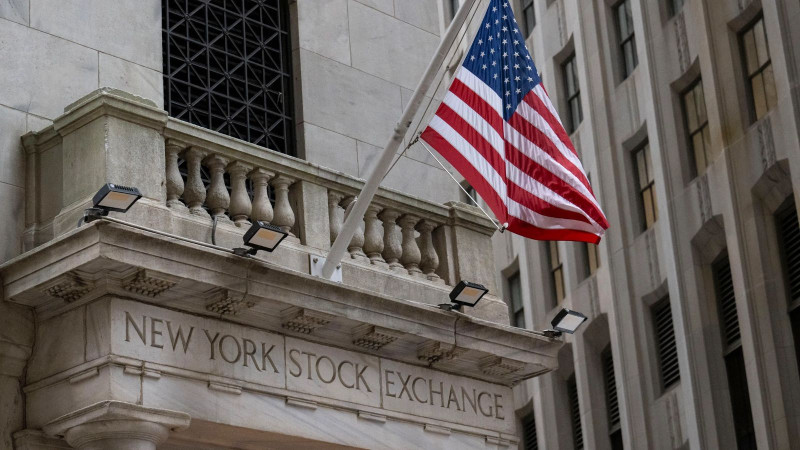
The New York Stock Exchange is imagining a world without a closing bell.
NYSE, through its parent company Intercontinental Exchange, is building a blockchain-powered platform that would allow stocks and ETFs to trade 24/7 in tokenized form. If regulators sign off, it would be one of the clearest signals yet that traditional finance is no longer just experimenting with crypto infrastructure, it is actively rebuilding around it.
The pitch is straightforward but far-reaching. Take real stocks and ETFs, represent them as blockchain tokens, and let them trade continuously. No market open. No market close. No waiting a day for settlement to finish in the background.
For an institution that has defined how markets work for more than 200 years, this is a radical shift.
This Is Not a Side Project
This is not NYSE dipping a toe into crypto.
ICE is designing a separate trading platform that merges NYSE’s core matching technology with blockchain-based settlement, custody, and clearing. Orders still look familiar, bids and asks meet in an order book, but what happens after execution is where things change.
Instead of the standard T+1 settlement cycle, ownership could move almost instantly onchain. Stablecoins are expected to handle funding, allowing trades to clear at any hour without relying on traditional banking rails. Investors may also be able to place dollar-based orders instead of buying whole shares, making fractional ownership the default rather than an add-on.
Structurally, it starts to resemble how crypto markets already operate, just wrapped around regulated assets.
Why Tokenized Stocks Are a Big Deal
Tokenized stocks are not new, but they have mostly lived at the edges of the financial system.
What changes here is credibility. When the NYSE moves toward tokenization, blockchain stops looking like an alternative system and starts looking like core infrastructure.
Tokenization allows equities and ETFs to trade globally, settle instantly, and operate without the friction built into traditional market plumbing. It removes time zone barriers. It compresses settlement risk. It turns stocks into programmable financial objects.
For investors who already trade crypto around the clock, the idea that equities shut down every afternoon feels increasingly outdated.
Crypto Trained the Market to Expect 24/7
This move did not come out of nowhere.
Crypto markets have normalized nonstop trading. Platforms like Robinhood and Coinbase are already pushing toward tokenized equities and extended hours. Asset managers are testing onchain settlement in private markets and fund structures.
Meanwhile, traditional clearing and settlement remain slow, expensive, and operationally complex. Blockchain promises efficiency, but only if institutions are willing to rethink the system rather than patch it.
NYSE’s entry into this space suggests legacy exchanges see the risk clearly. If liquidity, trading volume, and investor attention move onchain elsewhere, exchanges that stay static risk being left behind.
Regulation Decides Everything
For now, all of this lives in proposal form.
Tokenized stocks are still securities. That means U.S. securities laws apply, even if the assets settle on a blockchain. Continuous trading raises hard questions around surveillance, volatility controls, investor protections, and systemic risk. Stablecoins add another regulatory layer.
How regulators respond to an NYSE-backed tokenized market will likely shape how far and how fast tokenization spreads across public markets.
What Happens If This Actually Works
If this platform launches and gains traction, it could reshape how markets function.
Stocks that trade nonstop would change liquidity patterns and price discovery. Global participation would increase. Settlement could become faster, cheaper, and more transparent. Post-trade infrastructure might finally catch up with the digital age.
There are tradeoffs. Continuous markets can amplify volatility. Liquidity could fragment across venues. Retail investors may face more noise and fewer natural breaks.
Still, the direction feels unmistakable.
Crypto infrastructure is no longer sitting outside the financial system. It is being welded into it.
The NYSE is not turning stocks into memecoins. But it is signaling that the future of equities looks more onchain, more global, and far less dependent on a bell ringing at 4 p.m. Eastern.
The wall between crypto markets and traditional markets is thinning fast, and one of the oldest institutions in finance just acknowledged it.