#Nasdaq
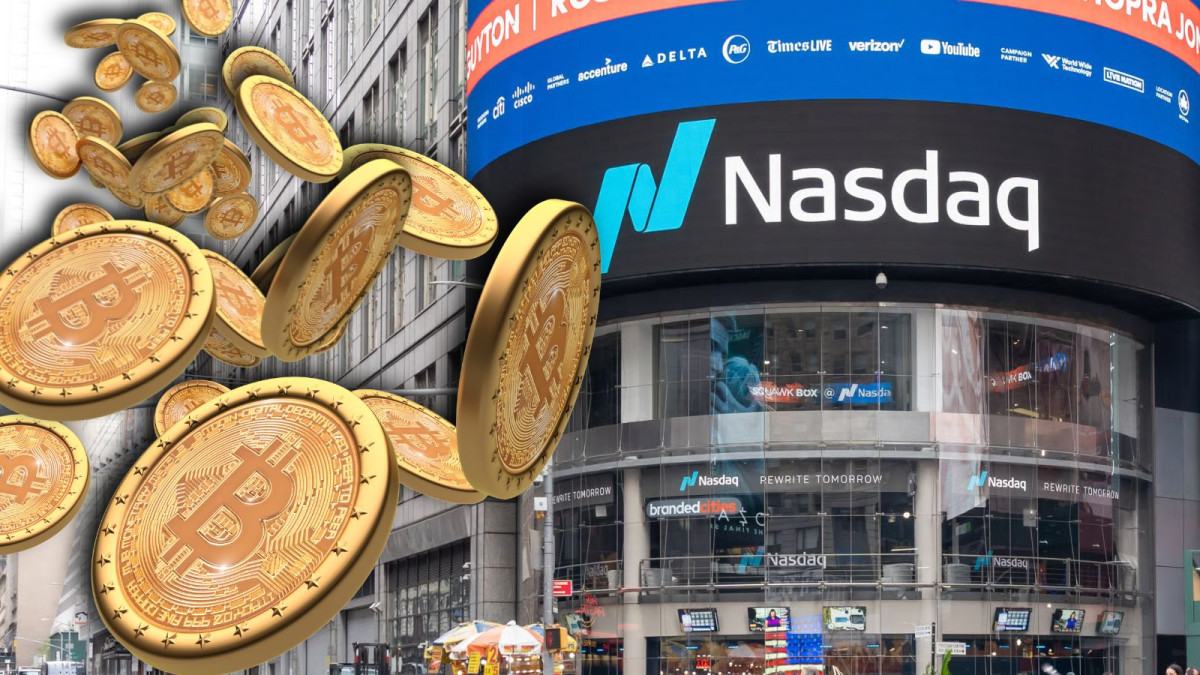
Bitcoin Options Are Coming to NASDAQ

The SEC just greenlighted cash-settled Bitcoin iindex options on NASDAQ.
On May 22, the U.S. Securities and Exchange Commission published a 34-page order clearing Nasdaq PHLX to list cash-settled bitcoin index options under the ticker QBTC. The order hands everyday brokerage account holders a direct path to trade bitcoin volatility right alongside their Apple and Nvidia shares, no separate accounts, no crypto wallets, no extra steps.
The approval came on an accelerated basis under SEC Chairman Paul Atkins, and it is conditional. Before a single QBTC contract can trade, the Commodity Futures Trading Commission still needs to grant exemptive relief. Bitcoin is legally classified as a commodity in the U.S., so the CFTC gets a say. No timeline has been announced for that step. But the direction things are moving is pretty hard to misread at this point.
What QBTC Actually Is
QBTC options are European-style and cash-settled. There is no physical delivery of bitcoin at expiration. When a contract expires, the exchange credits or debits the dollar difference between the strike price and the final index value. No bitcoin wallet. No custody headaches. The contracts track the Nasdaq Bitcoin Index, which represents one one-hundredth of the CME CF Bitcoin Real Time Index, a benchmark pulling aggregated order book data from eight regulated venues roughly every 200 milliseconds.
Unlike options tied to individual spot bitcoin ETFs (say, BlackRock's IBIT), these contracts reference the broader bitcoin market directly. That gives institutional managers a cleaner hedge against general bitcoin price exposure without fund-specific tracking differences bleeding into their positions. It is a subtle but meaningful difference for anyone running a real book.
Size Is the Real Story Here
This is where retail traders should actually pay attention. Each QBTC contract delivers exposure equal to exactly one bitcoin, using a 1/100th index scaling factor with a standard $100 multiplier. CME's standard bitcoin options are sized at five bitcoin per contract. At current prices, one CME contract can represent several hundred thousand dollars in notional exposure. Fine for a large hedge fund, not so practical for smaller shops or individual investors trying to manage a position with any precision.
CME's bitcoin options also require a dedicated derivatives account, which is another layer of friction before anyone can even place a trade. QBTC options will sit on the same Nasdaq platform as the technology stocks most investors already own. Your existing brokerage account should work. That is a real accessibility improvement, not just a marketing claim.
For the record: the per-side position limit is set at 24,000 contracts, which the SEC noted works out to roughly 0.12% of bitcoin's outstanding supply. Minimum price increment is $0.01. The mechanics are deliberately designed to feel familiar to anyone who has ever traded index options.
The Regulatory Picture Is Messy, but Getting Better
The road to approval was not totally smooth. CME Group submitted a comment letter last October arguing these contracts fall under the CFTC's exclusive jurisdiction. The SEC pushed back, leaning on Section 717 of the Dodd-Frank Act to argue that shared jurisdiction is permissible when the CFTC provides exemptive relief. That jurisdictional tension is still technically unresolved, which is exactly why CFTC sign-off remains the final hurdle.
The SEC approval itself came nine months after Nasdaq PHLX originally filed back in September 2025, following multiple rounds of public commentary and extension periods. Nine months is actually fast by historical standards for a novel derivative product. The original spot bitcoin ETF approvals took something like four years from first filing to clearance, under the Gensler administration's much more skeptical posture toward crypto.
People following this space closely see QBTC as part of a broader shift that started taking shape in early 2025. The Atkins-led SEC has dropped numerous enforcement actions against crypto firms and moved toward more permissive regulatory frameworks. Add in the ongoing CLARITY Act discussions in Congress, and it feels less like a string of isolated approvals and more like a deliberate effort to build out the full institutional crypto stack inside traditional market infrastructure.
What Happens Next
A realistic launch window is probably the second half of 2026, assuming CFTC exemptive relief comes through on a normal timeline. Once trading begins, any U.S. options broker supporting index options should be able to facilitate QBTC trades without any special setup required on the user end.
The longer-term picture is worth thinking about. Crypto options volume has grown sharply over the past two years, driven by institutional demand for hedging tools and yield strategies. With QBTC in the mix, investors would have access to spot bitcoin ETFs, ETF-specific options, CME futures, and now broad index-linked options, all sitting within traditional exchange infrastructure. The institutional crypto derivatives stack is starting to look, piece by piece, a lot like what already exists for gold and oil.
How quickly the CFTC moves on exemptive relief will say a lot about whether the two agencies are genuinely coordinated on crypto or just moving in parallel. The market is watching that closely. And given everything that has happened over the past 18 months, it would be surprising if this one got stuck for long.

SpaceX Files for the Largest IPO in Stock Market History

SpaceX filed its long-awaited IPO registration with the Securities and Exchange Commission on Wednesday, officially kicking off what many are already calling the most consequential stock market debut in decades. Elon Musk's rocket and satellite giant is targeting a valuation north of $1.75 trillion and plans to raise up to $75 billion, figures that would shatter every previous IPO record by a massive margin.
To add some perspective, Saudi Aramco held the prior record when it raised roughly $29 billion in 2019. SpaceX is aiming for more than double that. The company plans to list on the Nasdaq under the ticker symbol SPCX, with shares expected to price on June 11 and trading set to begin June 12.
A Company That's Changed Dramatically
The SpaceX going public today is not the same company investors were tracking two years ago. In February 2026, SpaceX completed an all-stock merger with xAI, the artificial intelligence firm Musk founded in 2023. That deal valued SpaceX at $1 trillion and xAI at $250 billion, creating a combined entity worth $1.25 trillion at closing. The jump to a $1.75 trillion IPO target reflects market expectations around continued Starlink revenue growth and the AI premium investors are attaching to the xAI component.
The company also recently announced a collaboration with Tesla on an advanced chip manufacturing facility, signaling that the boundaries between Musk's various ventures are blurring in ways that make traditional valuation frameworks feel inadequate. Wedbush analyst Dan Ives went as far as suggesting that a SpaceX and Tesla merger could follow after the IPO completes, pointing to Tesla's $2 billion xAI investment that converted to SpaceX shares after the acquisition.
Starlink Is the Engine. AI Is the Story.
Starlink, the satellite internet service that now counts more than 9 million users globally, accounted for the majority of SpaceX's $18.67 billion in revenue last year and remains the core commercial engine of the business. The IPO filing identifies connectivity through Starlink as a $1.6 trillion addressable market opportunity. But that figure is almost a footnote compared to the AI ambitions outlined in the prospectus.
The company's total addressable market is pegged at $28.5 trillion across all its business lines. A striking $26.5 trillion of that is tied to AI, including $22.7 trillion in enterprise AI applications and $2.4 trillion in AI infrastructure. Whether those numbers are realistic or optimistic is a debate that will play out over the coming decades, but for IPO purposes, they give underwriters a lot of room to work with.
There is a catch buried in the otherwise impressive revenue story. Despite generating $18.67 billion in revenue last year, SpaceX reported a loss of roughly $4.9 billion as capital expenditures nearly doubled to $20.7 billion in 2025. That compares to a profit of around $791 million in 2024. The xAI unit continues to lose money as well, and the filing is pretty blunt about the execution risks that come with building space-based AI data centers and pushing Starship toward operational status.
As a retail access angle, Musk has reportedly expressed a desire to reserve up to 30% of IPO shares for individual investors, a move that would be unusual at this scale but would fit his populist branding. The company has also conducted a 5-for-1 stock split, bringing the per-share price down to roughly $105 from over $526, making the listing more accessible to everyday buyers on platforms like Robinhood and Fidelity.
What Comes Next
Goldman Sachs is leading the underwriting, with Morgan Stanley, Bank of America, Citi, and JPMorgan among the other major banks involved. The roadshow kicks off June 4, and if everything goes to plan, SpaceX will begin trading the following week. The IPO is internally known as Project Apex, managed by a syndicate of at least 21 banks.
For the wider market, the SpaceX debut is expected to be the first of a potential trio of landmark tech IPOs, with OpenAI and Anthropic also eyeing public listings. For crypto and digital asset markets, this IPO is worth watching too. A company of this scale going public at a $1.75 trillion valuation, with explicit AI ambitions and a Musk-controlled governance structure, is the kind of macro event that tends to shift risk sentiment across asset classes. We'll see if SPCX delivers on the hype or falters under the weight of its own valuation...but it will be interesting to watch, either way.

Polymarket and Nasdaq Launch Private Company Prediction Markets

Polymarket, the world’s largest prediction market company, has partnered with Nasdaq, the global financial technology company, to launch the first prediction markets that track the performance and milestones of private companies.

Prior to the launch of this new offering, only institutions and high-net-worth investors had exclusive access to invest in private, high-growth companies before they went public. However, with the launch of this new offering, individuals, including retail traders, can now access some of the most sought-after private companies before they go public.
The new offering also provides real-time signals to institutional investors on how private markets are unfolding, helping them make informed investment decisions and better manage their risks. Users can now access and monitor events in the high-growth company market, which currently comprises over 1,700 unicorns globally.
"Prediction markets are one of the most powerful tools we have for democratizing access to financial information and opportunity," said Shayne Coplan, Founder and CEO of Polymarket. "Today’s launch brings that power to one of the last frontiers of financial markets that retail participants have never been able to access. For the first time, anyone can engage with the outcomes driving value at the world's most consequential private companies."
And with the Nasdaq Private Market serving as the resolution data provider for private company markets, users can access private companies through the Polymarket platform. The “privates” section on Polymarket currently has about 20 active private markets, including SpaceX, OpenAI, Anthropic, Stripe, Anduril, and Canva.
Hence, users can now transparently engage with verifiable private company events, including taking positions in a company’s valuation milestones, Initial Public Offering (IPO), and other secondary market activity.
“Nasdaq Private Market has established itself as a trusted source of liquidity and investment infrastructure across the private market ecosystem,” said Tom Callahan, CEO of Nasdaq Private Market. “Polymarket has built a platform that can open access to a broader audience. We are proud to provide the data that ensures every market resolves accurately. When retail participants enter any market, high-integrity data matters.”
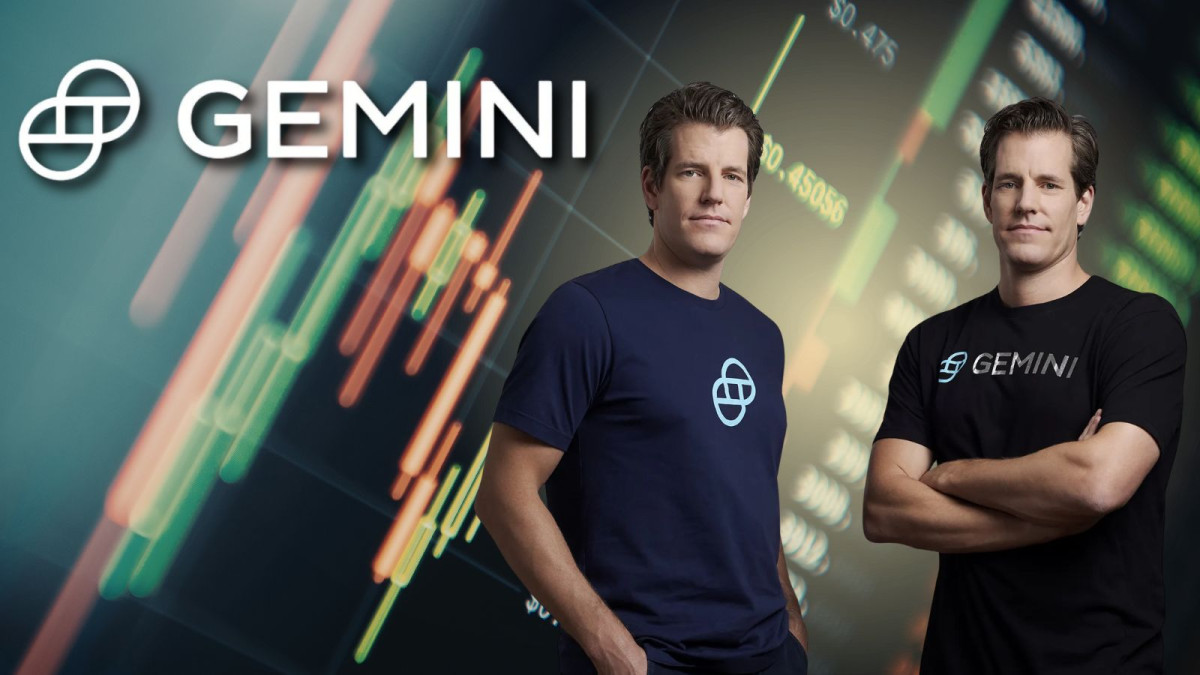
Gemini Stock Rises After Hours on Q4 Results as Investors Back Pivot

Gemini Space Station (NASDAQ: GEMI) got a real boost from Wall Street on Thursday evening. Shares jumped roughly 7% in after-hours trading, climbing to $6.45 after the company reported its fourth-quarter results and laid out a vision for where it is headed next. For a stock that has been taking a real beating the last few months, this feels like it could be a turning point, or at least the beginning of one.
The company went public on the Nasdaq in September 2025, raising around $425 million and generating a lot of excitement. The stock has since pulled back significantly, but Thursday's earnings report finally gave investors something that they can feel good about again.
Gemini Is Moving Beyond Being Just A Crypto Exchange
The headline from the results was not actually about trading at all. For the first time ever, revenue from Gemini's services and interest-based products surpassed what it made from trading fees. Services revenue rose 33% compared to the prior quarter, hitting $26.5 million. That might sound like dry accounting detail, but it matters a lot. It means Gemini is no longer entirely dependent on whether people are actively buying and selling crypto on any given day. That is a big deal for a business trying to grow steadily rather than just riding the waves of a notoriously volatile market.
A lot of that services growth came from Gemini's credit card, which functions like a rewards card but pays cashback in cryptocurrency instead of airline miles or cash. That product processed over $1.2 billion in transactions throughout 2025. Total revenue for the full year came in at $179.6 million, up 26% from the year before, and services revenue more than doubled over the same period. The company is building something that looks less like a pure-play crypto exchange and more like a broader financial platform, one that works even when the crypto market is quiet.
Beyond the credit card, the move that has really captured investors' imaginations is Gemini's push into prediction markets.
Gemini launched its prediction markets product, called Gemini Predictions, in December 2025 after its affiliate Gemini Titan received official approval from the U.S. Commodity Futures Trading Commission. This approval was five years in the making; the company first applied for the license back in March 2020. Receiving it placed Gemini in a very small club of fully regulated prediction market operators in the United States.
The early traction is genuinely encouraging. More than 15,000 users have already traded contracts covering categories from crypto prices to politics to sports. In the shareholder letter published Thursday, Tyler and Cameron Winklevoss made a bold pitch for why they believe this could be one of the most significant financial products in a generation. They argue that prediction markets forecast the future more accurately and more quickly than traditional experts, pollsters, or media organizations, and that Gemini is positioned at the center of that shift. It is an ambitious claim, but the regulatory foundation they have built gives them a real head start over most competitors.
When the CFTC approval was announced back in December, GEMI shares surged nearly 32% in a single session. The market clearly sees the prediction markets business as a meaningful growth engine, and Thursday's results confirmed that the product is gaining real users not just the new, shiny thing with a fancy launch.
Focusing On What Works
One of the things investors responded well to on Thursday was evidence that management is making tough decisions to streamline the business. In February, Gemini announced it would be cutting roughly 25% of its global workforce and closing its exchange operations in the United Kingdom, the European Union, and Australia. It is closing those regional operations and partnering with eToro, another regulated trading platform, to help affected customers transfer their assets.
The Winklevoss brothers described the move plainly: those international markets were hard to compete in, and trying to win them was stretching the company too thin. By pulling back to focus on the U.S., where Gemini has the strongest regulatory footing and the largest user base, management believes it can move faster and reach profitability sooner. The restructuring costs around $11 million, most of it in the first quarter of 2026, but the expected savings over time are significantly larger.
The company's full-year 2025 revenue of $179.6 million came in at the top end of its own preliminary estimates, a small but positive sign that the business is not deteriorating further. Operating expenses were higher than many investors would have liked, but the direction of travel looks more controlled heading into 2026 with the restructuring largely complete.
What's Next?
Gemini is not without its challenges. The company is dealing with several class action lawsuits filed by shareholders who believe the IPO documents did not fully reflect the scale of the restructuring that was coming. A management conference call is scheduled for Friday morning, and investors will want straight answers on the legal strategy, a timeline for replacing several senior executives who departed in February, and more detail on how fast the prediction markets business is actually growing.
Still, the picture Thursday evening was meaningfully better than it has been for most of the past six months. The company is generating real growth in non-trading revenue, it has a licensed and operational prediction markets platform at a time when that category is attracting serious investor and user interest, and management is finally showing a willingness to make hard cuts rather than try to compete on every front at once.
Prediction markets as a category have grown explosively over the past couple of years. Platforms like Kalshi and Polymarket have demonstrated real user demand, and regulators under the current administration have signaled a permissive approach to the space. Gemini's CFTC license gives it a compliance advantage that most rivals cannot replicate quickly, and its existing crypto user base is a ready-made pool of customers who already understand event-based trading.
Whether Gemini can fully execute on the vision Tyler and Cameron Winklevoss have laid out is still an open question. But for the first time in a while, Thursday's report gave investors something to point to beyond the headline loss number, and the after-hours market seemed to appreciate that. The stock sits more than 75% below its IPO price, so there is a lot of ground to recover. A rerating like that does not happen overnight. What Thursday showed, at least, is that the foundation for one might finally be taking shape.
SEC Approves Nasdaq Tokenized Stock Trading Pilot

The U.S. Securities and Exchange Commission (SEC) on Wednesday approved Nasdaq’s proposal to launch a pilot program for tokenized stock trading.
The proposal, first filed in September 2025, sought SEC approval to allow trading of both traditional and tokenized versions of high-volume stocks on the Nasdaq exchange. With the program now approved, traders will be able to trade both traditional stocks and their tokenized counterparts on the Nasdaq.

These tokenized stocks, according to the approval filing, will trade on the same order book at the same price, under the same ticker, with the same identifying number and rights as their traditional counterparts.
The pilot program will not be open to everyone. According to the SEC approval filing, participation will be limited to eligible participants. While Nasdaq has not disclosed the criteria, participants are likely to include Nasdaq-approved broker-dealers and firms approved by the Depository Trust Company (DTC).
It is also important to note that these tokenized stocks will be limited to securities in the Russell 1000 index, which tracks the 1,000 largest publicly traded companies in the United States, as well as exchange-traded funds that track the S&P 500 and Nasdaq-100 indices.
The Booming Tokenized Stocks Market
The tokenized stocks and equities market has experienced a remarkable surge over the past few months, growing from around $32 million at the start of 2025 to $963 million by January 2026, an increase of approximately 3,000%.
This growth has been attributed to the wider accessibility and faster settlement times offered by tokenized stocks compared with their traditional counterparts.
A wave of large fintech and crypto companies has also entered the tokenized equity market. In 2024, the cryptocurrency exchange Robinhood built a custom layer-2 blockchain for tokenization and began offering tokenized U.S. stocks to European users the following year.
Other cryptocurrency exchanges, including Kraken, Gemini, and eToro, have also begun offering tokenized U.S. stocks across multiple blockchains, such as Solana, BNB Chain, Arbitrum, and Ethereum. Most recently, Kraken, in partnership with Backed Finance, launched xChange, an on-chain trading engine for tokenized equities.
With the rapid attention and growth the tokenized equities market has seen, its market capitalization is projected by multiple research reports to reach trillions of dollars in the coming years.
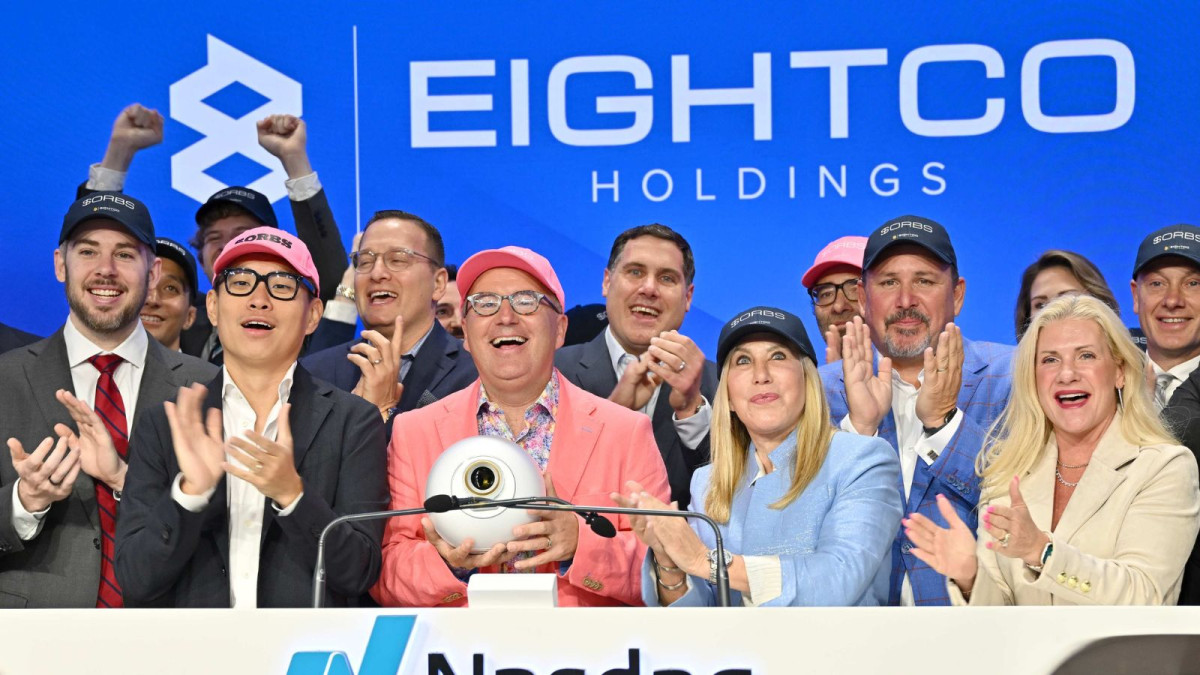
Eightco Shares Jump 25% After $125M Raise Led by Bitmine, ARK Invest, and Kraken

Eightco Holdings (NASDAQ: ORBS) pulled off a real power play on Wall Street Thursday, with shares jumping roughly 25% after the company announced it had locked in $125 million in new institutional commitments from a lineup that includes Bitmine Immersion Technologies, Cathie Wood's ARK Invest, and Payward, the parent company of crypto exchange Kraken.
The raise was led by Bitmine, which committed $75 million, with ARK Invest pledging at least $25 million and Payward rounding out the headline trio with another $25 million of its own. The full investor roster behind ORBS reads like a who's who of the crypto world: Coinfund, Pantera Capital, GSR, FalconX, Discovery Capital Management, and the World Foundation are all listed as backers.
But the capital raise wasn't even the most eyebrow-raising piece of news in Thursday's announcement. Eightco simultaneously disclosed it had already closed initial strategic investments of $50 million into OpenAI and $25 million into MrBeast and Beast Industries.
The OpenAI investment, worth approximately $52.5 million in economic interests in the company's equity, closed on March 6, just days before this announcement.
To understand how we got here, we kind of have to dive a bit deeper. Eightco has had one of the stranger corporate transformations of recent years. The Pennsylvania-based company pivoted from inventory management to cryptocurrencies and is currently developing a universal framework for digital identity and authentication. Not too long ago, its main business was making cardboard boxes through a subsidiary called Ferguson Containers.
Now, the company's identity is built around Worldcoin (WLD), the biometric-based digital identity project co-founded by OpenAI CEO Sam Altman. As of March 5, 2026, Eightco's treasury holdings included 277,222,975 WLD tokens, 11,068 ETH, and $82 million in cash. That WLD position, the company says, represents nearly 10% of the token's circulating supply, making ORBS the largest public market holder of Worldcoin on any exchange.
The company continues to hold Worldcoin and Ethereum as a long-term believer in the world's second-most valuable cryptocurrency, and frames its Worldcoin stake as foundational to a "proof of humanity" authentication layer it's building out.
The vision, as ORBS tells it, is to combine Worldcoin's biometric identity infrastructure with OpenAI's foundational models to create something at the intersection of AI verification, blockchain rails, and mass consumer reach. And it seems that it's clearly a compelling enough pitch to draw in some serious institutional names.
Who's Backing It, and Why
Tom Lee, Chairman of Bitmine, is joining Eightco's Board of Directors, while Brett Winton, Chief Futurist at ARK Invest, will serve as an advisor to the board.
Lee's involvement through Bitmine is notable. Bitmine itself has been on an aggressive crypto treasury strategy of its own, positioning itself as the leading Ethereum treasury company in public markets. Bitmine has combined crypto, cash, and "moonshot" holdings ranging well into the billions, and adding Eightco to that ecosystem tightens the connection between the two companies considerably. Lee getting a board seat means this isn't a passive financial bet.
His take on the investment was direct. Bitmine sees Eightco sitting at the center of some of the most important future needs and developments in AI, with what Lee described as tremendous synergy between Proof of Human via Worldcoin, OpenAI's foundational models, and the reach of the world's biggest content creator in MrBeast.
ARK Invest's Cathie Wood weighed in too, describing ORBS as taking on a unique initiative at the intersection of AI, blockchain, and creator-driven platforms.
Kraken's Arjun Sethi was perhaps the most philosophical about the whole thing. The Payward co-CEO framed it around power-law dynamics, suggesting that a small number of platforms tend to capture a disproportionate share of value in technological revolutions, and that ORBS is trying to position itself at the convergence of AI, cryptographic infrastructure, and global digital distribution.
MrBeast and the Distribution Play
The $25 million bet on Beast Industries deserves its own look. On March 10, Eightco invested approximately $25 million in shares of Beast Industries, with $7 million of that amount structured as committed capital that may be funded within 60 days in exchange for additional stock.
Beast Industries is the broader enterprise behind YouTube megastar Jimmy Donaldson, better known as MrBeast. The company spans entertainment, consumer products, and CPG, with the snack brand Feastables among its faster-growing launches. MrBeast's YouTube channel has over 450 million subscribers and generates more than 5 billion monthly views across all channels.
For a blockchain infrastructure play trying to build out digital identity at scale, having a meaningful stake in the world's most-subscribed YouTube channel is an unusual but not entirely illogical move. Distribution is distribution, and Eightco seems to be betting that the future of human authentication online will require massive consumer reach to actually work.
Taken together, Eightco is making a bold argument that the convergence of AI identity verification, blockchain infrastructure, and mass consumer distribution represents a huge opportunity, and that a small public company out of Pennsylvania is somehow positioned to sit at the center of it.
Whether the OpenAI stake, the MrBeast bet, the Worldcoin treasury, and the Ethereum holdings actually compound into something concrete is still up in the air. The risk disclosures in ORBS's own SEC filings acknowledge this as well, flagging the company's lack of control over private companies where it holds minority stakes, and the ongoing challenges of maintaining Nasdaq listing compliance while burning cash.
But the investor lineup announced today isn't made up of amateurs. Pantera, Brevan Howard, Coinfund, and ARK all know what they're doing, and they all decided this particular combination of bets was worth backing.
Nasdaq and Kraken Are Building the Bridge Between Wall Street and DeFi

Wall Street and crypto have been circling each other for years. On Monday, they shook hands.
Nasdaq and Kraken's parent company Payward announced a partnership to develop what they're calling an equities transformation gateway, a piece of infrastructure designed to let tokenized versions of publicly listed stocks move between the traditional, regulated financial system and the open, permissionless world of decentralized finance. The deal is one of the most significant convergences between a legacy exchange operator and a major crypto platform the industry has seen, and it arrives at a moment when several of the world's biggest exchanges appear to be racing to plant flags in the tokenized securities space.
Nasdaq President Tal Cohen said the exchange believes tokenization "has the potential to unlock the benefits of an always-on financial ecosystem" and to improve how investors access markets and how issuers engage with shareholders. The equity token design, which Nasdaq expects to become operational in the first half of 2027, is designed to preserve issuer control, existing regulatory frameworks, and the underlying rights associated with company shares.
What's Actually Being Built
Nasdaq's equity token design is not just about putting a blockchain wrapper around a stock. The initiative is structured so that blockchain records are integrated directly into the issuer's official share register, meaning a transfer of the token represents an actual transfer of the underlying security itself. Full legal and regulatory equivalence is the goal, not a synthetic approximation of it.
Kraken's xStocks framework powers the permissionless side of that equation. Since launching less than a year ago, xStocks has processed more than $25 billion in total transaction volume, with over $4 billion of that settled directly on-chain. More than 85,000 unique holders across supported networks have used the product, which currently covers more than 70 tokenized equities and ETFs, each backed 1:1 by the underlying asset. Fractional shares are available from $1. Trading runs around the clock on-chain, and dividends flow back automatically as additional tokens.
Under the partnership, the equities transformation gateway will allow clients in eligible jurisdictions to swap tokenized equities between the regulated, permissioned Nasdaq environment and the permissionless DeFi ecosystem. Payward Services will handle KYC and AML onboarding for participants accessing the gateway. Kraken will serve as the primary settlement layer for Nasdaq equity token transactions for an initial period, in the markets where xStocks are available.
It's worth being precise about geography. xStocks are not registered under the U.S. Securities Act and are not available to U.S. persons or in the United Kingdom. The initial rollout targets Europe and other international markets where Payward holds the relevant registrations and licenses.
The Regulatory Foundation Is Already Laid
None of this is happening in a vacuum. Nasdaq filed a proposal with the SEC in September 2025 that sought to allow tokenized versions of its listed stocks and ETFs to trade alongside traditional shares and settle through the Depository Trust and Clearing Corporation. That proposal argued for working within existing rules rather than around them, a notable contrast to tokenization projects that have tried to carve out space outside traditional regulatory structures.
The regulatory environment has also shifted meaningfully. The SEC's 2026 Staff Statement on Tokenized Securities classifies tokenized equities the same as regular equity securities under federal law, giving the Nasdaq initiative a cleaner legal runway than it might have had even a year ago. SEC Chairman Paul Atkins has been publicly supportive of American leadership in digital financial technology, and the commission has asked staff to work with firms on tokenized securities distribution.
Nasdaq's equity token design is set up as an issuer-sponsored, voluntary program. Public companies listed on Nasdaq would be able to opt in as the framework develops. The exchange plans to engage issuers, transfer agents, regulators, and market infrastructure providers as the project evolves.
Kraken's Vertical Integration Play
For Kraken, the Nasdaq partnership is the latest move in what looks increasingly like a deliberate strategy to own the entire tokenized equity stack. In December 2025 the company acquired Backed Finance, the Swiss issuer that sits behind the xStocks product, deepening its vertical integration along the tokenization value chain. In February of this year it expanded xStocks to the 360X platform operated by Deutsche Boerse Group. And in late 2025 Kraken launched what it described as the world's first regulated tokenized equity perpetual futures, offering up to 20x leverage for non-U.S. clients across more than 110 countries.
Kraken also became the first crypto company to secure approval for a Federal Reserve master account, a regulatory win that drew criticism from several U.S. banking groups but also marked a genuine shift in how regulators are thinking about the boundary between crypto platforms and the traditional banking system. The company is separately targeting a public listing in 2026.
Arjun Sethi, Kraken's Co-CEO, framed the Nasdaq deal in terms of capital efficiency as much as access. His argument is that equities today sit largely frozen inside brokerage systems where their utility is limited to directional exposure and, in some cases, venue-specific margin. Tokenized equities on programmable infrastructure, he suggested, can function as collateral across a much broader set of trading, lending, and hedging environments simultaneously, without the capital fragmentation that comes when each venue requires isolated collateral deposits.
"When collateral can move programmatically between systems," Sethi said, "settlement friction decreases and capital can move more dynamically between strategies and markets."
The Race Is On
The Nasdaq-Kraken announcement does not exist in isolation. It arrived in a week that saw the Intercontinental Exchange, the parent company of the New York Stock Exchange, make a strategic investment in OKX at a reported $25 billion valuation, signing a deal to bring tokenized NYSE-listed stocks and crypto futures to OKX's platform. ICE separately announced development of a new digital trading platform combining the NYSE's Pillar matching engine with blockchain-based post-trade systems. That platform would support 24/7 trading of U.S.-listed equities and ETFs, instant settlement via tokenized capital, and stablecoin-based funding. ICE said it would seek regulatory approvals for the venue, with NYSE-linked tokenized shares targeting availability in the second quarter of 2026.
Nasdaq also separately announced a partnership with Seturion, the tokenized settlement platform operated by Boerse Stuttgart Group, to connect its European trading venues to infrastructure supporting trading and settlement of tokenized securities.
What's emerging is something that looked improbable even two years ago: a genuine competition among the world's largest exchange operators over who gets to own the infrastructure layer for tokenized securities. The race is less about whether tokenized equities will happen and more about which institutions get to control the plumbing.
If the Nasdaq-Kraken infrastructure reaches full operation, the implications for how capital markets function could be substantial. Tokenized equities with 24/7 on-chain settlement would, in theory, compress the settlement cycle that still takes two business days in conventional U.S. equity markets. Shareholders would retain full governance rights, including proxy voting and dividend entitlements, automated through smart contract logic rather than managed through layers of intermediaries.
For international retail investors in markets where traditional brokerage distribution is limited or expensive, access to tokenized U.S. equities through a crypto exchange represents a potentially meaningful expansion of the investable universe. Fractional share availability starting at $1 removes one of the practical barriers that has kept some investors out of high-priced stocks.
The more speculative scenario, and the one Sethi seems most interested in, is what happens when tokenized equities can be used as collateral across DeFi lending protocols, perpetual futures markets, and other on-chain financial applications. The argument is that programmable collateral is more efficient than static collateral, and that the firms which build the infrastructure to move it across venues will capture a meaningful slice of the value created.
There's obviously a long way to go. The Nasdaq equity token design isn't expected to be operational until mid-2027. Regulatory approvals still need to be worked through. Issuer adoption is voluntary and therefore uncertain. The U.S. market itself remains off-limits for xStocks. And building genuine liquidity in tokenized equity markets, as Sethi himself acknowledged, requires more than technology alone.
Still, the direction of travel is increasingly clear. The question is no longer whether traditional exchange operators will engage with blockchain-based infrastructure. It's who gets there first, and whose plumbing ends up underneath everyone else's trades.
Canary Capital XRP Spot ETF Set to Begin Trading November 13
Canary Capital XRP Spot ETF Set for Trading on November 13th
Canary Capital is poised to launch what could become the first major U.S. spot ETF tied to XRP on November 13, 2025. The firm updated its S-1 registration to remove a delaying amendment that previously gave the U.S. Securities and Exchange Commission (SEC) indefinite discretion over timing. With that procedural hurdle cleared, the launch date now stands as scheduled, assuming final exchange filings are completed without new regulatory objections.
What changed in the filing
-
The updated S-1 submission eliminates the “delaying amendment” that prevented automatic effectiveness under Section 8(a) of the Securities Act of 1933.
-
Without that clause, the filing can become auto-effective after a 20-day waiting period unless the SEC raises substantial comments.
-
With this obstacle removed, the fund is tracking toward a November 13 launch, contingent on approval of its Form 8-A listing with the Nasdaq Stock Market and final clearance from the exchange.
-
The timing follows the same process used by other altcoin spot ETFs launched by Canary Capital, including products for Solana, Litecoin and Hedera. These also relied on the auto-effective mechanism.
Why it matters for XRP and the crypto market
-
A spot ETF for XRP dramatically expands investor access by enabling exposure through standard brokerage accounts. Investors will not need self-custody or direct interaction with crypto exchanges.
-
Institutional demand is expected to be significant. XRP has one of the largest global user bases in the digital asset sector. Many analysts believe the ETF could attract substantial inflows during its first months of trading.
-
The launch arrives during a broader shift in U.S. regulatory policy. Regulators have recently approved generic listing standards for spot crypto ETFs, creating a path for assets other than Bitcoin and Ethereum.
-
If the listing proceeds as planned, November 13 could become a landmark moment for altcoin investment products and a sign that regulated crypto ETFs are entering mainstream financial markets.
Launch mechanics and product details
-
The ETF will trade on Nasdaq or another major U.S. exchange under a ticker that Canary Capital has not yet confirmed. Several filings suggest the ticker may be “XRPC.”
-
The fund is structured as a Delaware statutory trust and will hold direct spot XRP. No futures or synthetic exposure will be used.
-
Custodial providers and market makers are reportedly in place to support liquidity and orderly trading on the first day.
-
The removal of the delaying amendment gives the fund a direct legal path to launch. Unless the SEC issues new comments, the product will go live automatically on the expected date.
Risks and remaining conditions
-
Although the date is targeted and procedurally aligned, the launch still depends on final exchange filings such as Form 8-A and the absence of additional SEC review. Any new staff comments could delay effectiveness.
-
The auto-effective pathway speeds up the process, but it does not guarantee that the SEC will not exercise its authority to halt or modify the filing.
-
As with all crypto-related ETFs, the product carries risks such as volatility, liquidity fluctuations, custody risk and potential tracking differences between the ETF and spot XRP.
-
High expectations may pose additional pressure. If initial trading performance does not meet market enthusiasm, sentiment could shift quickly.
What to watch next
-
Official confirmation of the ETF ticker and the listing exchange.
-
Announcements from authorized participants and liquidity providers, which will shape the ETF’s trading quality.
-
Secondary market trading volume and creation-unit activity once the fund opens.
-
XRP price action as markets react to the upcoming launch and investors position ahead of the date.
-
Additional regulatory updates that may impact this ETF or future altcoin ETFs.
Final thoughts
Canary Capital’s spot XRP ETF represents one of the most significant steps yet toward expanding regulated crypto products beyond Bitcoin and Ethereum. If the ETF goes live on November 13, 2025, it will open the door for broader institutional involvement in XRP and potentially set the stage for additional altcoin ETFs.
For XRP holders, the launch could bring new sources of liquidity, price discovery and market legitimacy. For the industry at large, it signals a shift toward regulated access points for digital assets. Success, however, will depend on smooth execution, clear communication from regulators and strong market participation once trading begins.
All indicators suggest that the launch is on track. Unless regulators introduce unexpected changes, November 13 could become a historic date for crypto investment products.
Stay Connected
You can stay up to date on all News, Events, and Marketing of Rare Network, including Rare Evo: America’s Premier Blockchain Conference, happening July 28th-31st, 2026 at The ARIA Resort & Casino, by following our socials on X, LinkedIn, and YouTube.