#fintech
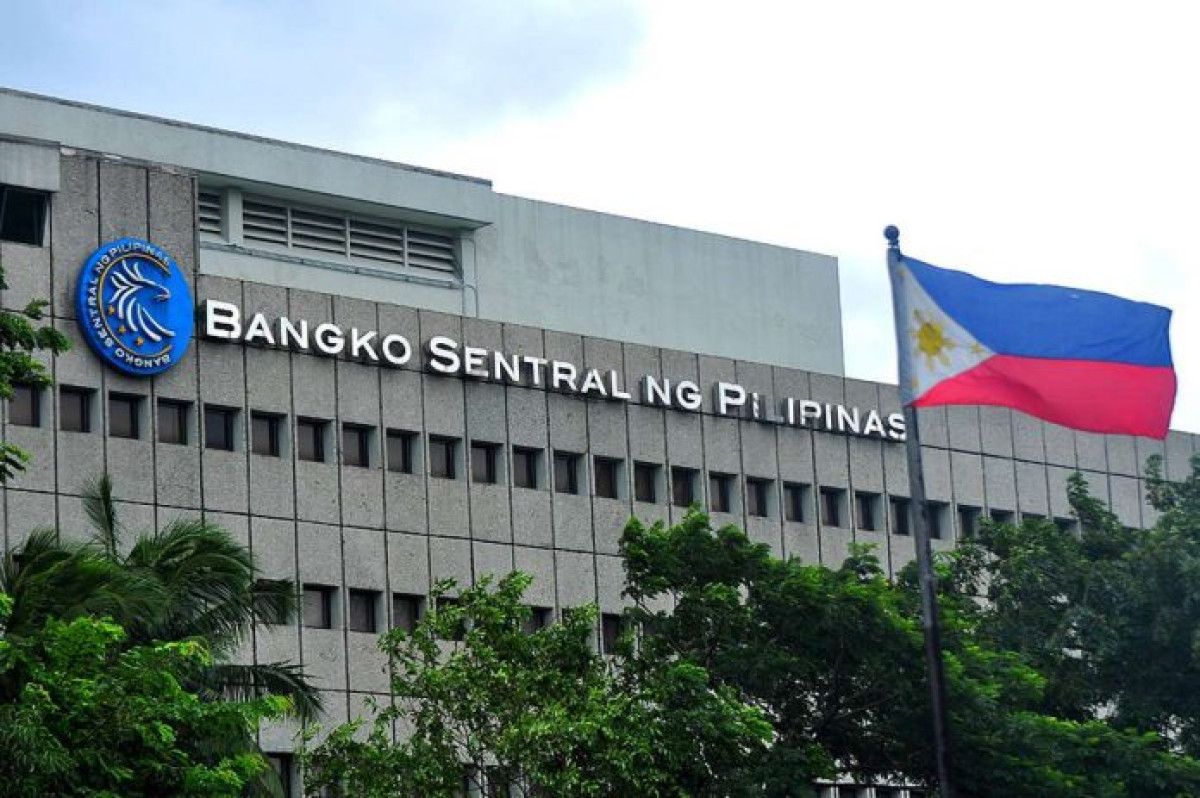
Philippines Tightens Crypto Rules, Proposes 12-Month Operator Freeze

Bangko Sentral ng Pilipinas (BSP), the central bank of the Philippines, has proposed a one-year suspension on the registration of new payment system operators in the country through a draft circular.
The draft, titled “Regulations to Strengthen Integrity Controls in Payment Transactions,” circulated this Monday, is part of the bank’s efforts to make merchant payments, including those involving virtual asset service providers, traceable and to curb fraud and illicit transactions.

According to the BSP, the move is aimed at ensuring a holistic review of the taxonomy and licensing framework for payment system operators, including the associated risk management and regulatory considerations.
The bank also proposed a centralized database for merchants accepting quick response (QR) code payments and stricter controls over payment arrangements involving intermediaries between financial institutions and sellers.
A key requirement proposed by the BSP is for institutions under its supervision to constantly identify the actual merchants behind a payment and the entity to which the payment is made.
If certain information about the payer and payee is missing, inaccurate, or inaccessible, the institution facilitating the payment is expected to reject or suspend the transaction, except in cases involving temporary technical problems covered by documented safeguards approved under its incident management framework.
“A BSP authorized to engage in merchant acquisition shall not process or continue to process a transaction where the merchant cannot be identified or where the transaction cannot be attributed and reconciled to the same merchant,” the BSP said.
Under the proposed rules, the central bank would also bar intermediaries responsible for facilitating transactions from delegating or subcontracting merchant acquisition to another entity, including the addition of another intermediary tier. However, ancillary support services could still be outsourced in accordance with applicable BSP rules.
.png)
Binance Signs MoU With Kazakhstan to Expand Digital Asset Cooperation

Binance, the world’s largest cryptocurrency exchange, has signed three memorandums of understanding with key entities and institutions in Kazakhstan.
In a blog post announcing the agreements, Binance said the MoUs focus on key sectors of Kazakhstan’s economy and were signed with the Ministry of Artificial Intelligence and Digital Development, the National Bank of Kazakhstan, and the Astana International Financial Centre (AIFC).
Under the memorandum signed with Kazakhstan’s Ministry of Artificial Intelligence and Digital Development, Binance will cooperate on digital assets, digital and computing infrastructure, and innovative payment solutions, while exploring the possibility of issuing a stablecoin backed by the Kazakhstani tenge.
The second memorandum, signed with the National Bank of Kazakhstan, focuses on building payment and digital financial infrastructure, with Binance and the National Bank potentially exploring opportunities to position Kazakhstan as a regional payments and fintech hub.
To ensure the initiative is practically implemented and moves beyond a paper plan, Binance and the National Bank of Kazakhstan have already created a roadmap outlining the different phases for building payment infrastructure, obtaining licenses, and launching new payment products.
The third memorandum, signed between Binance and the Astana International Financial Centre (AIFC), is aimed at strengthening cooperation under the Investment Tax Residency Programme and expanding the potential use of digital assets as part of Kazakhstan’s modern investment infrastructure.
According to Renat Bekturov, Governor of the Astana International Financial Centre, the expansion will enable investors to better access new opportunities within the AIFC ecosystem and contribute to the further development of Kazakhstan’s digital asset market.
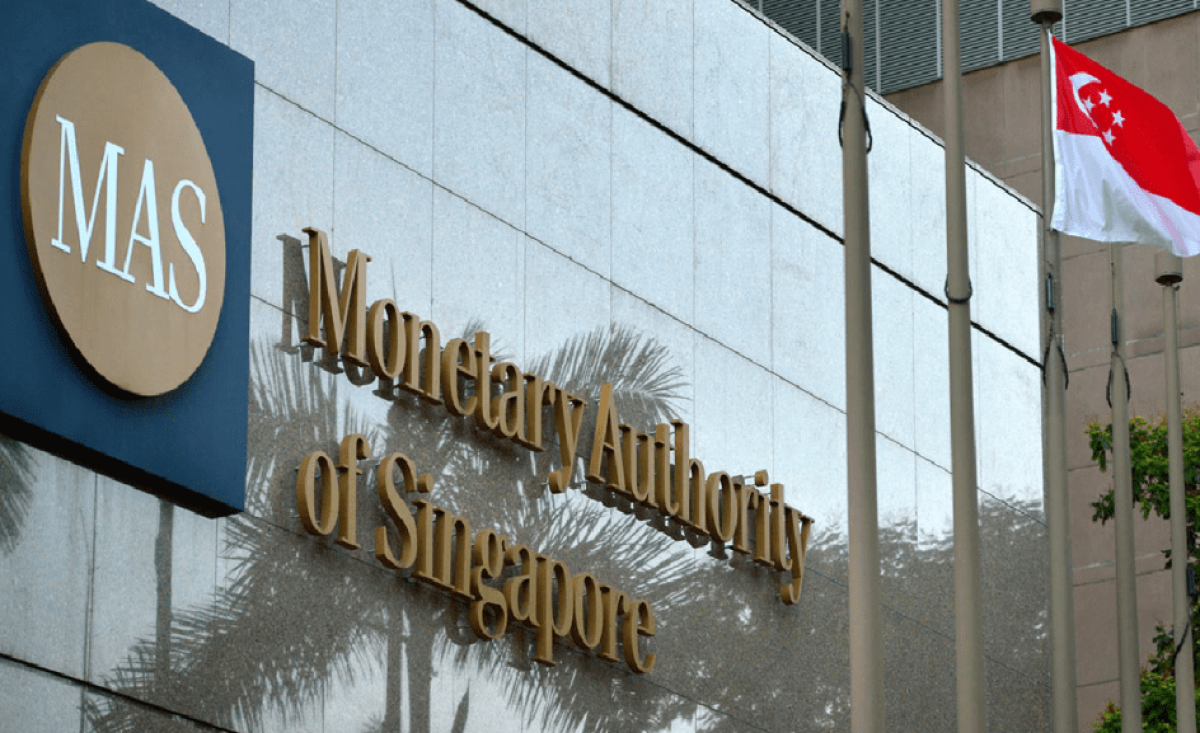
Singapore Commits $173 Million to Boost Fintech Innovation Over Next Three Years

The Monetary Authority of Singapore (MAS) has announced a S$220 million, roughly $173 million, fund aimed at supporting the country’s fintech ecosystem.
The fund, which is part of Singapore’s renewed Financial Sector Technology and Innovation Scheme (FSTI 4.0), aims to strengthen the country’s fintech sector and accelerate innovation and technology adoption across its financial sector.
According to MAS, FSTI 4.0 is designed around four main goals: scaling innovation across Singapore, accelerating financial technology adoption, developing technology infrastructure to support innovation, and supporting talent development.
To support the implementation of FSTI 4.0, MAS said the scheme will be implemented across six tracks covering different areas, including institutional innovation, artificial intelligence adoption, platforms, and talent development.
Singapore has consistently ranked among the leading global fintech hubs. With more than 1,800 fintech companies, the country recorded approximately $2.3 billion in fintech investment in 2025.
Elsewhere in Southeast Asia, Vietnam’s new crypto penalty rules, officially known as Decree No. 284/2026/ND-CP, will take effect on September 1. The decree establishes administrative fines for violations of the country’s crypto asset regulations.
Some of the key provisions include fines of up to VND 200 million, roughly $7,700, for organizations and VND 100 million, roughly $3,800, for individuals who violate the country’s digital asset rules.
Providing crypto asset services or advertising such services without approval from Vietnam’s Ministry of Finance may attract a fine of up to VND 180 million to VND 200 million, roughly $7,000. Meanwhile, domestic investors who trade outside licensed platforms may face fines of VND 30 million to VND 50 million, roughly $1,100 to $1,900.

JPMorgan Signals Potential Stablecoin Launch

JPMorgan Chase, the largest bank in the United States, has signaled its interest in the possibility of launching its own stablecoin, the Wall Street Journal (WSJ) reported.
Although the bank has made no official announcement and has no active plans to launch a stablecoin at present, a JPMorgan spokesperson reportedly told the WSJ that the bank recently held a preliminary discussion about the possibility of creating its own stablecoin.
“While we have no plans to issue a stablecoin, depending on customer demand and the evolution of the regulatory landscape, we would of course evaluate all options in the future.”
If JPMorgan ever decides to move ahead with a stablecoin launch, the stablecoin will be very different from JPM Coin, a digital deposit token the bank launched on its permissioned Kinexys blockchain in 2019 to modernize institutional payments and settlements.
Growing Stablecoin Interest Among U.S. Banks
Like JPMorgan, several other U.S. banks and financial institutions have also been considering launching their own stablecoins.
Bank of America, Wells Fargo, and Santander have formed a global stablecoin venture comprising more than a dozen financial institutions.
Through this venture, the financial institutions plan to launch a dollar backed stablecoin, with possible expansion to stablecoins pegged to the euro and other G7 currencies over time.
Stablecoins have seen growing adoption among large financial institutions in recent times.
According to a recent Fireblocks survey covering about 295 executives from banks and financial institutions, about 49% of these institutions actively use stablecoins for payments, while 23% are reportedly in the pilot phase and 18% plan to integrate stablecoins soon.
Revolut Launches EURR Stablecoin in 3 European Markets

Global fintech company Revolut has rolled out its MiCA-compliant, euro-denominated stablecoin EURR across Denmark, Poland and Portugal.
Announcing the rollout in a Wednesday post on X, Revolut said the launch aims to make stablecoins more accessible to its customers, giving them more options beyond the dominant dollar-backed stablecoins.
With the launch of EURR, Revolut customers across the three European countries will now be able to move more value on-chain, with the company hinting at a potential expansion into other European markets later this year.
"EURR connects 80 million Revolut customers directly to on-chain finance," Emil Urmanshin, Head of Crypto at Revolut, said.
"By combining our global scale and licensed banking infrastructure with instant euro-denominated access to the crypto ecosystem, we are unlocking real-world stablecoin utility that no traditional bank or crypto-native company can match."
The EURR stablecoin will be issued by Bridge Building S.A., the stablecoin infrastructure company acquired by Stripe for $1.1 billion in October of last year. For a start, EURR will only be available on Ethereum and Polygon, with support for more blockchains expected over time.
Institutional Interest in Euro-Pegged Stablecoins Grows
Despite accounting for only about 0.2% of the total stablecoin market, euro-pegged stablecoins have received growing interest from financial institutions looking to create more options for users beyond dollar-backed stablecoins.
Prior to the launch of EURR, EURXT, a stablecoin also pegged to the euro, was launched by Crédit Agricole, one of Europe’s largest banks, in July of this year.
Efforts are underway by other institutions to launch euro-denominated stablecoins, notable among them is the Qivalis consortium, made up of about 37 banks, which is targeting the launch of a euro-pegged stablecoin in the second half of this year.
Revolut Receives French Banking License
Revolut Bank S.A., an entity of global fintech company Revolut, has received a full banking license from the European Central Bank (ECB), following an assessment conducted jointly by the ECB and the French Prudential Supervision and Resolution Authority (ACPR).

Announcing the receipt of the license in a press release on Monday, Revolut said the approval creates a foundation for the company to better serve its clients in Western Europe while maintaining the highest regulatory and operational standards. The company added that the license supports its goal of becoming one of Europe’s largest and most trusted banks.
Commenting on the license, Nik Storonsky, Revolut’s founder and CEO, said, “This licence gives us the foundation to build the next generation of banking for more than 30 million customers across Western Europe.”
“France has become a leading financial hub, supported by a dynamic financial ecosystem and a robust regulatory framework. It is the ideal platform to accelerate Revolut's next phase of growth, bringing us one step closer to our ambition of becoming one of Europe's largest and most trusted banks.”
With the approval, Revolut, through its French entity Revolut Bank S.A., can now operate as a fully authorized local bank in France and provide a full range of banking services.
Revolut currently serves more than 75 million customers across more than 40 countries globally, with Western Europe representing one of its largest and fastest growing markets.
The company plans to reach 100 million customers across 100 countries by mid 2027. According to the company, Revolut Bank S.A. will progressively expand its operations across Europe, starting with France.
Mastercard Completes Acquisition of BVNK

Mastercard has completed its acquisition of stablecoin payment infrastructure company BVNK.
According to Mastercard, the acquisition marks a step toward advancing the company's strategy of enabling seamless value exchange between people and businesses through interoperability between fiat and digital currencies.
"In a multi-money world where fiat, stablecoins, tokenised deposits, and other forms of value coexist, the next payments paradigm will be defined by how effectively each rail, network, or form of money connects and works together," said Jorn Lambert, chief product officer at Mastercard.
"By combining Mastercard's global network with BVNK's on-chain infrastructure and stablecoin native technology, we can deliver a more efficient, trusted, and seamless payment experience."
Mastercard's acquisition of BVNK comes five months after it announced that it had reached a definitive agreement to acquire BVNK for $1.8 billion. The agreement was reached after Coinbase, the principal contender that had also been pursuing an acquisition of BVNK, mutually ended acquisition talks.
About BVNK
Founded in 2021, BVNK is a London-based crypto infrastructure company that bridges the gap between traditional finance and blockchain finance.
Through its stablecoin payment infrastructure, BVNK makes stablecoins compliant and practical for real-world use. The company also provides the infrastructure that enables businesses, fintechs, and payment service providers to receive, convert, and settle payments across fiat and digital currencies.
Prior to its acquisition, BVNK had raised more than $90 million across two seed funding rounds. By the end of 2025, the company had reached an annualised payment volume of nearly $30 billion, onboarded 226 new enterprise clients during the year, and supported payments in more than 230 countries.

Tether Backs Ualá as Fintech Unicorn Hits $3.2 Billion Valuation

Stablecoin issuer Tether has invested $20 million in Latin American fintech company Ualá. The funding is part of Ualá's recently completed Series F round, led by Allianz X, which raised $197 million and valued the company at $3.2 billion.
According to a press release, the funds will be used to accelerate Ualá's growth and expand its financial ecosystem across Latin America. Ualá currently serves more than 11 million customers and plans to expand into additional Latin American countries beyond Argentina, Mexico, and Colombia, where it already operates under full banking licenses.
Explaining the rationale behind the investment, Tether CEO Paolo Ardoino said, "Ualá has built one of the most ambitious and widely used digital financial platforms in Latin America."
"Its growth reflects the enormous demand across the region for financial services that are more accessible, efficient, and designed around the needs of consumers. We are pleased to support the Ualá team as they continue investing in technology and expanding their reach."
Tether's investment in Ualá comes shortly after it led Neura Robotics' Series C funding round, which reportedly raised $1.4 billion, making it the largest funding round Tether has participated in so far this year.
About Ualá
Headquartered in Buenos Aires, Argentina, Ualá offers a mobile-friendly financial ecosystem designed to promote financial inclusion across Latin America. Its user-friendly app allows customers to make debit and credit card payments, send peer-to-peer transfers, access loans and credit, invest, and perform a range of other financial services.
Since its launch, Ualá has raised more than $1.1 billion across several funding rounds. It has also grown to serve about 11 million users, with more than 20% of Argentina's adult population, or about 7 million people, using the platform.

Fomo Raises $75M Series B to Expand On-Chain Trading

Fomo, a cryptocurrency trading platform, has raised $75 million in a Series B funding round led by Index Ventures, with Union Square Ventures and Benchmark also participating.

According to the team, the new funding will be used to expand Fomo’s asset classes, including equities, perpetuals, and prediction markets, while scaling its engineering team and further investing in its trading and social platform.
Through its consumer-focused platform and the removal of some technical barriers associated with on-chain trading, such as unpredictable gas fees, fragmented blockchains, and complex token bridges, Fomo aims to seamlessly onboard users on-chain.
“Most trading products aren’t built with the user in mind. They are dull, hard to understand, and make you want to rip your hair out,” said Paul Erlanger, Co-founder and CEO of Fomo.
“Each decision we make at Fomo is made to bring our users joy. Fomo is accessible, social, and understandable in 15 minutes. We believe people should be able to access global markets instantly, share opinions and convictions through their network, and participate without needing to understand the technical complexity underneath it all.”
By unifying liquidity, automatically routing transactions, and supporting familiar traditional payment methods such as Apple Pay, Fomo aims to make on-chain trading more accessible. With the inclusion of new asset classes, Fomo is positioned to reach more users globally.
About Fomo
Fomo is a consumer-focused, social-first crypto trading app designed to make on-chain trading simple and accessible. Everything it does revolves around its goal of simplifying crypto trading. To achieve this, Fomo integrates social trading features that allow users on the platform to discover trending assets, connect with top-performing traders, and track open positions.
Since launching last year, Fomo has done several impressive things, including becoming the largest cross-chain crypto trading app, raising more than $90 million in seed funding, growing its user base to more than 625,000, and processing over $4 billion in trading volume to date.

Trace Finance Raises $32M to Expand Stablecoin Payment Infrastructure

Trace Finance, a U.S.-based infrastructure company for cross-border banking and payments, has raised $32 million in a Series A round led by CoinFund. Other investors involved include Coinbase Ventures, Haun Ventures, Valor Capital, Jump Capital, Paxos, and HOF Capital.
According to the team, the funds will be used to support Trace’s expansion by scaling its transaction capacity and extending its stablecoin infrastructure beyond its current limits. With this funding, the team also aims to advance its vision of connecting the U.S. with Latin America.
Launched in 2021, Trace Finance was created to address settlement challenges such as poor service, high fees, and operational friction that hindered cross-border settlements and international remittances in Latin America. So far, the Trace team has remained focused on its mission, processing more than $10 billion in cross-border volume while serving as a leading provider for four of the largest global payment companies in Latin America.
“The international payments market has transformed profoundly in recent years. Beyond technological advances, flows are becoming increasingly complex, requiring operators to have deep regulatory knowledge and to operate through local regulated structures,” said Bernardo Brites, co-founder and CEO of Trace Finance.
“This round allows us to deepen the payments, compliance, and settlement infrastructure used by the largest technology companies, exchanges, international banks, and payment companies to connect digital settlement with trusted local financial systems.”
The team also plans to strengthen its product capabilities in foreign exchange, banking connectivity, compliance, and international settlement, while expanding its regulated footprint across the United States, Brazil, Latin America, and the Asia Pacific region.
Stablecoin Companies See Continued Investor Interest
Just as Trace Finance has, several crypto startups, especially stablecoin-focused companies, have attracted millions of dollars in investment. Range, a Switzerland-based company building stablecoin treasury and compliance tools for wallets, banks, and exchanges, recently raised $8.3 million in a Series A round.
Last month, OpenTrade, a company building institutional-grade "yield as a service" infrastructure for stablecoins, raised $17 million in a seed round led by a16z crypto. Checker, a company building a platform that allows financial institutions to access stablecoin liquidity, cross-border payments, treasury management, and credit, raised $8 million. To date, Checker has processed over $8 billion.

Robinhood Cuts 10% of Workforce in Efficiency Push

Robinhood Markets, Inc. will cut its staff by 10 percent as the company seeks to operate more efficiently and achieve greater impact from a lean workforce.
In a note shared by Robinhood’s communications team on behalf of chief executive officer Vlad Tenev, the company said it can no longer continue operating as a heavily layered organization.
“We must be a lean, hyper-focused team where every single individual is empowered to make a massive impact,” Tenev said in the note. “Our execution is strong today, but our ambitions require us to continuously raise our own bar. To achieve that, today we are flattening our organizational structure and reducing our overall team size by 10 percent of headcount.”
About 290 employees are expected to be affected. According to a Form 8-K filing with the United States Securities and Exchange Commission, the restructuring will cost 20 million dollars in cash severance benefits and 8 million dollars in equity-based compensation.
Robinhood’s layoff comes as the cryptocurrency industry continues to see workforce reductions. Last month, Kraken reduced its staff by about 5 percent, or roughly 150 employees. Coinbase cut its global workforce by about 14 percent, resulting in the loss of approximately 700 jobs. Some reports have linked recent restructuring efforts in the sector to a broader shift toward AI initiatives, though companies have also cited cost-control and efficiency goals.
Several other cryptocurrency-focused companies have also carried out layoffs, including Crypto.com, Dune, Algorand, and Block. According to an industry tracking report, more than 5,000 jobs have been cut across dozens of companies.
Despite the reduction, Robinhood’s chief executive said the company will continue to hire strategically and invest in top-tier talent. Robinhood recently acquired WonderFi, expanding its presence in the Canadian market. The company’s growth metrics remain strong, reporting net revenue of $1.07 billion in the first quarter, up approximately 15% from $927 million in the same period a year earlier.

Ripple Invests in Flutterwave to Boost Africa Payments

Ripple, the leading blockchain technology company that provides blockchain-based solutions to banks and financial institutions, has just invested in Flutterwave, Africa’s biggest fintech unicorn.
The investment, which was part of Flutterwave’s Series E funding round, aligns with the unicorn’s long-term value proposition to build Africa’s leading unified payments infrastructure that connects the continent seamlessly to the global economy.

According to Flutterwave, the partnership is built on three core pillars: embedding Ripple’s RLUSD into Flutterwave’s payment rails to scale large volume payments and remittances; leveraging Ripple’s XRP Ledger for faster transaction clearing; and deploying a unified API that seamlessly bridges Flutterwave’s domestic network with Ripple’s global payment network.
"This investment marks a pivotal moment in our journey, enabling us to significantly scale our infrastructure and expand our stablecoin-enabled payments roadmap,” said Olugbenga "GB" Agboola, Flutterwave’s Founder and CEO.
“By unlocking faster settlement and lower cost cross-border payments, we are building a payment superhighway that connects African commerce directly to the global economy. This partnership is a catalyst for Nigerian and African sovereignty in the digital financial age, ensuring our markets are primary participants in the global digital asset revolution.”
Through partnering with Ripple, Flutterwave takes a significant step towards achieving its “stablecoin first” payment infrastructure that eliminates traditional bottlenecks. By integrating Ripple’s RLUSD stablecoin into its payment infrastructure, Flutterwave aims to deliver immense speed, liquidity, and cost efficiency to Africa’s cross-border payment network, transforming how Africa interacts with global markets.
About Flutterwave
Flutterwave is one of Africa’s leading fintech companies. Launched in 2016, Flutterwave was created to solve fragmented payment systems that limited Africa’s connection to the global economy. Through a single API and platform, Flutterwave enables businesses to accept payments, make payouts, and process cross-border transactions across Africa and internationally.
Since its inception, Flutterwave has raised over $ 500 million through multiple funding rounds and is currently valued at $ 3.2 billion, making it Africa’s most highly valued fintech company. Its services are available in more than 35 African countries, and its payment infrastructure supports over 150 currencies.