Former U.K. Prime Minister Boris Johnson has called Bitcoin a Ponzi scheme, claiming it has far less value than gold and even Pokémon cards, which he said are more widely recognized.
In a recent Daily Mail article, former UK Prime Minister Boris Johnson called Bitcoin a Ponzi scheme with no real value, saying it relied on a “supply of new and credulous investors.” He also shared the story of a friend who lost about $26,000 in a crypto investment scam.
Johnson shared a story about a retired man from a village in Oxfordshire who initially handed over £500 (about $661) to someone who promised to double the money through Bitcoin investments. Johnson said the man went on to invest £20,000 (around $26,450) over three and a half years but ultimately received nothing in return.
The former prime minister also questioned the credibility of Bitcoin, calling it “a string of numbers stored in a series of computers.” “Who can we turn to if someone decrypts the crypto?” Johnson asked. “There’s no one except Nakamoto, who might be nothing more than Pikachu or Charmander.”
Since the pseudonymous creator of Bitcoin, Satoshi Nakamoto, lacked institutional backing, Johnson questioned Bitcoin’s credibility as a tradable asset. According to Johnson, Pokémon cards, which fascinated children thirty years ago and still do today, are a more tradable asset than Bitcoin.
“These curious little Japanese cartoon beasties hold the same fascination for five-year-olds as they did 30 years ago. The kids are obsessed with them. They boast and squabble about them,” Boris said.
“Even if you remain pretty impervious to the charm of Pikachu, you can just about see why a decades-old Pikachu card is still a tradeable asset,” he added.
While many social media users have ridiculed Boris’ understanding of cryptocurrency, some have offered clearer explanations of why Bitcoin cannot be called a Ponzi scheme.
Michael Saylor, founder of MicroStrategy, also sought to clarify the issue.
“Bitcoin is not a Ponzi scheme. A Ponzi requires a central operator promising returns and paying early investors with funds from later ones,” Saylor wrote on X.
“Bitcoin has no issuer, no promoter, and no guaranteed return—just an open, decentralized monetary network driven by code and market demand,” he added.

Sam Bankman-Fried, the former CEO of the defunct crypto exchange FTX, filed a motion in February seeking a retrial in his case. However, the request is reportedly being opposed by some U.S. prosecutors.
Some U.S. prosecutors have filed a motion in the United States District Court for the Southern District of New York, seeking to block Bankman-Fried’s latest request for a retrial, Bloomberg reports.
According to the prosecutors, Bankman-Fried’s argument that new witnesses could change the outcome of his case does not meet the standard for a retrial. They said the two witnesses he wants to call, Daniel Chapsky and Ryan Salame, both former FTX executives, do not qualify as new witnesses because they were already known to the defense and could have testified at the original trial.
“The defense’s decision not to put the witnesses on his witness list or compel their testimony forecloses any claim that their post-trial views are newly discovered,” prosecutors said.
The prosecutors also rejected Bankman Fried's claim that he was being weaponized by the Department of Justice, calling it "incoherent."
"The defendant was one of the largest Democratic donors in 2020 and 2022, and his campaign finance crimes were in furtherance of making those contributions, so the notion he was targeted for his Democratic politics by the prior presidential administration is fanciful," prosecutors added.
Although the motion has just been filed, the judge has not ruled on whether it will proceed. Nevertheless, this is Bankman-Fried’s third attempt to appeal his case.
After President Trump granted a presidential pardon to Changpeng Zhao, founder of Binance, rumors circulated that he might also pardon Sam Bankman-Fried.
Trump, however, has dismissed these rumors in several interviews, stating that he has no plans to pardon Bankman-Fried. Despite this, some online groups continue to speculate about a potential, well-funded effort to secure a pardon.
Until a pardon is issued, Bankman-Fried’s legal options remain limited to filing appeal motions. Otherwise, he must continue serving his 25-year prison sentence on multiple federal charges, including fraud, conspiracy, and money laundering.

The world's largest cryptocurrency exchange, Binance, has appointed Stephen Gregory as the chief executive officer (CEO) of its U.S. affiliate, Binance.US.
On Tuesday, March 11, Binance.US announced the appointment of compliance lawyer Stephen Gregory as CEO of the exchange. Stephen will take over from Norman Reed, who, according to the exchange, is stepping down to serve in an advisory role.
“I am honored to lead the Binance.US team as we write the next chapter for what we believe is the best platform for U.S. crypto investors to buy, trade, and earn digital assets,” Stephen said. “The Binance.US brand is extremely powerful, with a founder, Changpeng Zhao (CZ), who has continuously advocated for making the U.S. the crypto capital of the world,” he added.
Norman, the former Binance.US CEO, also expressed confidence in Stephen. “As we look to the next phase of growth for Binance.US, Stephen brings an entrepreneurial approach to leadership that I am confident will deliver for our customers in a meaningful way,” Norman said.
Stephen is a lawyer with nearly two decades of experience in the compliance industry. Before entering the crypto and fintech sectors, he worked in the U.S. Senate as a staff member for Senators Paul G. Kirk and Ted Kennedy and held roles at other government-affiliated agencies.
He later transitioned into private practice, working as a litigation and regulatory law expert for several law firms, including D'Ambrosio Brown LLP, McCormick & O'Brien LLP, Quinn Emanuel Urquhart & Sullivan, and Gage Spencer & Fleming LLP.
In 2016, Stephen entered the crypto industry as a compliance officer at Gemini, where he helped the exchange navigate regulations and secure licenses for its U.S. crypto operations.
He did, however, move up the ranks in the compliance industry, serving as Chief Compliance Officer at crypto exchange CEX.IO, where he led the company’s global compliance program and oversaw its regulatory frameworks, including Anti-Money Laundering (AML) and Know Your Customer (KYC) programs.
In 2021, Stephen joined Currency.com as CEO, where he led the exchange’s U.S. operations, oversaw regulatory strategy, and expanded its services in the United States before its acquisition by CXNEST Ltd in May 2025.

Wells Fargo has filed a trademark application for "WFUSD" with the U.S. Patent and Trademark Office, covering a broad slate of cryptocurrency services.
The 'USD" within the filling leads to huge speculation about stablecoins as it follows the same naming convention used by Tether's USDT and Circle's USDC, the two more notable stablecoins account for the vast majority of the roughly $200 billion stablecoin market. Whether Wells Fargo is building toward a consumer-facing stablecoin product, an institutional settlement layer, or something else entirely, is not clear, and all just speculation.
The trademark was filed just months after President Trump signed the GENIUS Act into law in July 2025, the first comprehensive federal framework for payment stablecoins in U.S. history. The law opened a clear path for bank subsidiaries to issue dollar-pegged digital tokens under regulatory oversight, and Wells Fargo's trademark application reads like a bank that intends to walk through that door.
A Long History, A New Gear
Wells Fargo is not a newcomer to blockchain experimentation. Back in 2019, the bank unveiled Wells Fargo Digital Cash, a dollar-linked stablecoin built on R3's Corda blockchain designed to handle internal book transfers and cross-border settlements within its global network. The pilot worked. The bank successfully ran test transactions between its U.S. and Canadian accounts. But it stayed internal, never touching retail customers or external counterparties.
That earlier project had a narrow scope to try to reduce friction in the bank's own back-office transfers. The WFUSD trademark filing feels different. The scope covers cryptocurrency exchange services, digital asset transfers, payment processing, tokenization, blockchain transaction verification, and digital wallet services. That is not a description of an internal settlement tool. It is a description of a full-spectrum digital asset platform.
Wells Fargo's own research analysts had been tracking the stablecoin market closely well before the trademark filing surfaced. In a note published in May 2025, analysts led by Andrew Bauch wrote that stablecoin momentum had reached what they called "must-monitor levels," pointing to a 16% jump in total stablecoin market capitalization that year and a 43% rise over the prior twelve months. The report flagged payments companies including Mastercard, Visa, and PayPal as stocks with the most strategic exposure to the stablecoin wave. Whether those analysts knew about internal trademark discussions is unclear, but the research and the filing tell a consistent story about where the bank's thinking may have landed.
Wells Fargo is not acting alone. In May 2025, the Wall Street Journal reported that JPMorgan Chase, Bank of America, Citigroup, and Wells Fargo were in early discussions about building a jointly operated U.S. dollar stablecoin, with payment infrastructure providers including Zelle and The Clearing House also at the table. Sources familiar with the matter described the conversations as exploratory, but the ambition was clear: create a bank-backed digital dollar that would compete with the success of crypot-native products.
JPMorgan has the most developed track record in this space, having operated JPM Coin since 2019 as an internal settlement instrument for institutional clients. The bank has reportedly settled more than $200 billion in transactions through the system.
The GENIUS Act, which passed the Senate with a bipartisan vote of 68 to 30 and the House 308 to 122 before Trump signed it on July 18, 2025, created the regulatory framework that banks had been waiting for. Under the law, bank subsidiaries can issue payment stablecoins under the supervision of their primary federal banking regulator.
Issuers must maintain one-to-one reserves in highly liquid assets like Treasury bills, submit to regular audits, and comply with anti-money laundering and Bank Secrecy Act requirements. The law also gave stablecoin holders priority claims over other creditors in any insolvency proceeding, a significant consumer protection provision.
For a bank like Wells Fargo, that framework essentially legalizes and licenses what its trademark filing envisions. The FDIC has already approved a proposed rulemaking to implement the GENIUS Act's application procedures for supervised institutions seeking to issue stablecoins, moving the machinery toward full implementation by January 2027 as the law prescribes.
Competition or Collaboration with Crypto?
While the big four banks have been circling the stablecoin market, crypto-native firms have been circling the banking sector. Circle, the issuer of USDC, has been in discussions about obtaining a bank charter. Coinbase, BitGo, and Paxos are all reportedly pursuing various forms of banking licensure that would let them compete more directly with traditional institutions for deposits and payment volumes. And, most notably, Kraken just recentlly received a Federal Reserve master account, gaining direct access to the Federal Reserve's payment infrastructure.
That competitive dynamic is partly what has given the joint stablecoin exploration among the major banks its urgency. A dollar-denominated stablecoin backed by federally chartered banks would carry a different kind of institutional weight than products issued by crypto firms, regardless of how well those firms have managed their reserves.
Still, the incumbents face real headwinds. The GENIUS Act, while giving banks a clear path to issue stablecoins, also permits nonbank firms like fintechs and crypto companies to issue them under OCC oversight. Grant Thornton's national blockchain and digital assets practice leader, Markus Veith, noted after the law passed that banks could face serious competition from nonbank entities that don't carry the same regulatory burden or capital requirements. Stablecoins from USDT and USDC already saw their combined market share dip from 89% to under 84% over the past year as newer entrants gained traction.
What WFUSD Could Become
The trademark itself, of course, is not a product. Banks and large corporations file trademarks for concepts that never reach the market all the time, and a filing covering cryptocurrency services does not obligate Wells Fargo to ship a stablecoin by any particular date. The application does, however, reserve the commercial rights to the WFUSD brand across a spectrum of digital asset services, which is a form of strategic positioning that serious companies do when they intend to eventually use what they are protecting.
If Wells Fargo does build out WFUSD into a live product, the most likely initial form would be an institutional-grade settlement and payment layer, mirroring what Wells Fargo Digital Cash did internally but opening it to corporate clients and potentially other financial institutions. Cross-border payments represent the most obvious near-term use case. The market for global cross-border transactions was roughly $44 trillion in 2023 according to McKinsey estimates cited by the bank's own research team, and stablecoins offer demonstrably faster settlement, lower funding costs, and programmability through smart contracts compared to the correspondent banking infrastructure that currently handles most of that volume.
A consumer-facing version would require more work and more time. Wells Fargo analysts themselves noted in their May research note that everyday consumer adoption of stablecoins is likely still a decade away. But the infrastructure being built now, the trademarks being registered, the regulatory licenses being sought, the interoperability frameworks being designed, will determine who is positioned to serve that market when it arrives.
What Comes Next?
For Wells Fargo specifically, WFUSD represents the most concrete public signal of the bank's digital asset intentions to date.
Whether the bank ultimately issues WFUSD as a standalone product, folds it into a larger bank consortium stablecoin, or uses the trademark as a branding vehicle for a custody and trading platform remains to be seen. The competitive pressure from both crypto-native firms building toward bank charters and fellow Wall Street institutions building their own digital dollar products means the bank can't afford to stay in patent-pending limbo for too long.
The name was chosen carefully. When the fourth-largest bank in the United States puts its initials on a dollar-pegged ticker and files it with the federal government, it is placing a bet on where finance is going. The question now is how fast it gets there.

The room at the Marriott Marquis in Washington was full of community bankers on Tuesday, and Senator Angela Alsobrooks walked straight into the lion's den. Speaking at the American Bankers Association's annual Washington Summit, the Maryland Democrat delivered a message neither side particularly wanted to hear: everyone involved in the Digital Asset Market Clarity Act is going to have to walk away a little bit unhappy.
It was a remarkably candid thing to say in front of 1,400 people who have spent the better part of three months trying to kill the very provision that's been holding up the bill. But Alsobrooks, along with Republican Senator Thom Tillis of North Carolina, is now the central figure in a late-stage push to get the Clarity Act off the Senate Banking Committee floor and into an actual markup hearing before the legislative window closes for good.
The two senators confirmed Tuesday they're actively working on compromise language around stablecoin yield which keeps coming up as the main issue that has stalled what was supposed to be a landmark piece of crypto regulation.
A Bill In Limbo
The Digital Asset Market Clarity Act, or CLARITY Act, was supposed to have its Senate Banking Committee markup in January. That session got pulled at the last minute. The reason was stablecoin yield, specifically, amendments co-sponsored by Alsobrooks and Tillis that would restrict crypto firms from offering interest-like returns to customers who simply hold dollar-pegged digital tokens like USDC or USDT.
Banks had been lobbying hard against any provision that allowed that kind of reward. Their argument, which they've pushed loudly and repeatedly, is that stablecoins offering yield would function like bank accounts without the regulatory obligations of bank accounts. Executives at JPMorgan and Bank of America have cited Treasury Department modeling that suggested banks could lose up to $6.6 trillion in deposits if stablecoin yield programs went mainstream. Their argument is that it would starve the lending market and ultimately destabilize smaller regional banks that are particularly dependent on deposit funding.
The crypto industry dismisses most of that as fearmongering. Coinbase CEO Brian Armstrong called out the banking lobby publicly for what he characterized as anticompetitive blocking tactics and has pulled his support for the bill. In January at Davos, JPMorgan's Jamie Dimon reportedly told Armstrong he was, in quite colorful terms, wrong. The anecdote leaked out and became something of a symbol for just how personal this fight had gotten.
"We absolutely have to have these protections to prevent the deposit flight, but we're going to probably have to make some compromises." — Senator Angela Alsobrooks, D-Md.
The White House Steps In, Then Gets Rejected
By late February, the White House had grown impatient. Administration officials spent weeks brokering what they hoped would be an acceptable middle ground: allow stablecoin yield in limited contexts, particularly for activity tied to payments and transactions, while banning rewards on idle balances that look more like savings accounts. Crypto firms signed off on the framework. The banks did not.
On March 3rd, President Trump went public with his frustration. In a Truth Social post, he wrote that banks should not be trying to undercut the GENIUS Act or hold the CLARITY Act hostage, a shot across the bow that was notable both for its directness and for the fact that it did essentially nothing to move the American Bankers Association. Two days later, the ABA formally rejected the White House compromise anyway.
The March 1st deadline the White House had set for a resolution passed without published compromise text. Prediction markets, which had briefly priced Clarity Act passage at around 80% odds, fell back toward 55% as the stalemate hardened.
What the ABA rejection didn't do, however, is kill the legislation outright. Congress has passed bills over banking lobby opposition before. The question, as analysts and lobbyists have been pointing out all week, is whether there are enough Senate votes to do it again — and whether the calendar allows the time to find out.
Can We Get A Compromise?
The emerging deal that Alsobrooks and Tillis are proposing is a slimmed-down version of what the White House tried. Under the framework being discussed, yield on stablecoin holdings that closely resemble bank deposits would remain prohibited. But rewards tied to specific activities, like using stablecoins for payments or transactions on a given platform, could remain eligible for some form of customer incentive.
Both senators and many crypto advocates actually agree on the premise that pure holding rewards that look and function like savings account interest are a problem. The dispute is over where exactly to draw the line and how to define the categories well enough that neither side can game them after the fact.
Cody Carbone, the CEO of the Digital Chamber, said this week that Tillis has been very receptive to discussions about stablecoin yield and that he's optimistic the industry can get to yes on the bill. Summer Mersinger, the CEO of the Blockchain Association, noted that the White House weighing in on the negotiations and pushing banks to engage in good faith adds important momentum as talks continue.
The banks have maintained, publicly at least, that those assurances aren't enough. Their representatives at the ABA summit this week underlined again what they see as the risks of any yield loophole to their business model. The question of whether a markup hearing happens in late March or gets delayed again, depends entirely on whether Alsobrooks and Tillis can produce language the committee will actually vote on.
Timing Is An Issue
Behind every conversation about the Clarity Act this week is an unspoken anxiety about time. The Senate calendar is tight. Midterm elections are in November, and lawmakers will start dispersing from meaningful legislating sometime around May or June as campaign season accelerates. Unfortunately it seems, Congress prefers to stop working as they try to convince voters to keep them in their jobs. I know, makes perfect sense. If a markup isn't held and a floor vote isn't scheduled by sometime in April, realistically the bill is looking at the next Congress which could be a completely different party in power. And complicating things even more. Despite which party ends up winning the midterms, this could mean another 12 to 18 months of regulatory uncertainty for an industry that has been waiting years for a clear legal framework.
That timeline matters not just for the crypto industry's domestic ambitions, but for its competitive positioning globally. Under the European Union's MiCA framework, stablecoin yield products that are restricted or banned in the U.S. are already legal in European jurisdictions. Coinbase and others have been explicit about the risk that continued regulatory ambiguity in the U.S. will push capital, talent, and product development offshore. Trump made a version of the same argument in his Truth Social post last week, warning that failure would drive the industry to China.
There's also a strategic Bitcoin Reserve angle sitting quietly in the background. According to people familiar with the situation, the Trump administration has determined it needs congressional action to operationalize the planned Strategic Bitcoin Reserve that the president signed an executive order for over a year ago. That creates at least some White House motivation to see the broader Clarity Act process succeed.
What Happens Next
The Senate Banking Committee is targeting a late-March markup. Whether that happens depends on whether the Alsobrooks-Tillis compromise language satisfies enough members to call the vote. If it does, the bill would then need to be merged with a version that already passed the Senate Agriculture Committee on a party-line vote in late 2025. The combined text would require significant Democratic support to clear a full Senate vote, always a tall ask in the current politcal environment and the fact that seven Democratic senators have separately raised concerns about potential conflicts of interest involving senior government officials, including the president himself, who have financial ties to the crypto industry.
Even if the Senate acts, the bill still needs the House, where an earlier version of the CLARITY Act passed committee last year but has yet to reach the floor. The path to a signed law before November is narrow but not impossible. It requires the Senate Banking Committee to move in the next few weeks, the combined bill to hold together politically, and a Senate floor schedule that is packed with little wiggle room.
For the moment, all of it hinges on two senators and a room full of bankers in Washington D.C., trying to decide how much compromise is actually compromise and if they can all agree to leave a bit unhappy about the results for the greater good. Typically the best compromises do make both sides a bit unhappy. In Washington, that usually means the deal is closer than it looks. It also usually means it's harder than it sounds.

Flow Foundation is seeking a court order in Seoul to halt the planned delisting of the FLOW token on three South Korean exchanges following an exploit on the protocol in December.
The Flow Foundation and its parent company, Dapper Labs, filed a motion with the Seoul Central District Court on Monday to block the delisting of the FLOW token from three South Korean exchanges.
This move is coming months after the Layer 1 blockchain protocol suffered a security incident in December, which led to several exchanges temporarily stopping the trading of the FLOW token at the time. However, three major Korean exchanges; Upbit, Bithumb, and Coinone, have moved to permanently stop the trading of the token on their exchanges on March 16.
On December 27, 2025, Flow suffered a protocol-level exploit that resulted in losses of about $3.9 million. The breach was caused by a flaw in the smart-contract runtime within Flow’s execution layer, which allowed the attacker to exploit vulnerabilities in Cadence.
Cadence is Flow’s smart contract runtime. By exploiting the flaw in Cadence, the attacker was able to duplicate Flow tokens instead of properly minting them.
After duplicating the tokens, the attacker attempted to bridge them out of the protocol using cross-chain bridges such as Celer, deBridge, Relay, and Stargate. However, this abnormal activity was detected by Flow’s validator network, which placed the blockchain in read-only mode, halting further asset transfers.
This incident led to a sharp decline in the price of the FLOW token. Prior to the breach, FLOW was trading at around $0.17, but it fell over 40% to roughly $0.097 within hours of the exploit being announced.
Image credit: Tradingview
The incident also affected the token’s market cap. Before the breach, FLOW had a market cap of around $280–284 million. After the breach, it fell to approximately $164–170 million. Although the breach directly resulted in a $3.9 million loss, the protocol’s total market value dropped by over $110 million.
Image credit: Coingecko
Following remediation efforts after the incident, the Flow Foundation claimed that every major global exchange has independently reviewed and restored FLOW token trading on their platforms.
According to the foundation, the FLOW token remains fully available and tradeable on major exchanges, including Binance, Coinbase, Kraken, OKX, Gate.io, HTX, and Bybit, with Korbit being the only Korean exchange still supporting the trading of FLOW.

Florida lawmakers have cleared Senate Bill 314 (SB-314), a state-level stablecoin bill, with final approval now pending from the governor.
In a recent post on X, Samuel Armes, founder of the Florida Blockchain Association, said the Florida Senate had cleared Senate Bill 314 with a unanimous 37–0 vote. With this clearance, the bill now awaits final approval from Governor Ron DeSantis.
According to Armes, “the bill has now passed the Senate and the House and will be signed by DeSantis within the next 30 days.” Once signed by DeSantis, SB-314 will become law.
Introduced by Senator Bryan Burton on October 31, 2025, Senate Bill 314 (SB 314) creates a state regulatory framework for companies issuing stablecoins in Florida.
SB 314 was introduced to ensure clarity in how stablecoins are issued amid ongoing regulatory disparities, particularly at the state level.
By approving SB 314, the Florida Legislature aims to:
1. Provide regulatory clarity for crypto businesses operating in the state.
2. Prevent fraud and financial instability. The bill requires stablecoin issuers to hold actual reserves, protecting users’ funds.
3. Position Florida as a crypto-friendly hub, attracting both blockchain and fintech companies.
If SB-314 eventually gets signed into law, stablecoin companies would need Florida’s licensing and approval before they can operate.
And to get licensed, these companies would need to show proof of 1:1 reserves backing their stablecoins, have their reserves independently audited, and maintain clear redemption policies that allow users to convert stablecoins to dollars.
Remember the TerraUSD collapse, one of the largest stablecoin failures in 2022, which resulted in losses exceeding $40 billion after the UST coin lost its dollar peg? The SB-314 bill aims to prevent similar events by requiring stablecoin issuers to have their reserves regularly audited.
Unlike some U.S. states that have imposed strict anti-crypto policies, Florida has positioned itself as one of the most crypto-friendly.
In January 2023, the Florida Senate amended the state's Money Services Business (MSB) law to include virtual currency, defining it at the state level and reducing regulatory ambiguity for crypto businesses.
In October 2025, the Florida Senate filed House Bill 183, concerning crypto investment authority, and House Bill 175, aimed at stablecoin registration flexibility. If signed into law, the bills would allow Florida’s Chief Financial Officer to allocate up to 10% of certain state funds into Bitcoin and other digital assets, while also easing compliance requirements for stablecoin issuers.

Spot Bitcoin exchange-traded funds have attracted roughly $1.7 billion in net inflows since February 24, ending a prolonged stretch of redemptions and renewing confidence that institutional buyers are stepping back in.
The reversal has been sharp. After months of steady outflows, nearly every major U.S. spot Bitcoin ETF is now recording net positive flows for 2026. That matters because ETF flow data has become, more than any other metric, the closest thing to a real-time read on institutional sentiment toward Bitcoin.
BlackRock's iShares Bitcoin Trust (IBIT) is doing most of the heavy lifting. On March 4 alone, IBIT absorbed $306.60 million, roughly 66% of that day's total inflows across all spot Bitcoin products. Since February 24, BlackRock has accumulated a net 21,814 BTC through the fund, valued at approximately $1.55 billion at current prices. Year-to-date, IBIT has added around $300 million in capital even as Bitcoin itself fell about 16% over the same period.
The timing is notable. Bitcoin has traded around $72,000 this week, bouncing from lows near $60,000 earlier in the year. That low represented a roughly 52% pullback from its all-time high of $122,000 reached last year — a correction that, by historical standards, was relatively contained. Past cycles saw declines of 80% to 90% from peak. The smaller drawdown this cycle has been widely attributed to the stabilizing influence of institutional ownership through regulated vehicles.
The inflow pattern itself tells a story. Exchange balances have stayed relatively flat while ETF custodians accumulate, suggesting the capital flowing in isn't being deployed through spot crypto exchanges. These are investors using traditional brokerage accounts and registered vehicles, the pension funds, registered investment advisors, and wealth managers who entered the market only after last year's ETF approvals made it operationally feasible.
Three consecutive days of $1.1 billion in net inflows at the end of February set the pace. IBIT alone captured roughly $652 million over that stretch. Fidelity's FBTC and Ark Invest's ARKB recorded positive flows too, though significantly smaller.
Whether the inflow trend holds depends partly on what happens at the Federal Reserve. On March 18, the Fed will announce its latest interest rate decision. Markets have been pricing in at least a pause in rate hikes after the central bank eased its tightening stance in late 2025, and any signal of cuts could accelerate flows into risk assets including crypto.
There's also the regulatory backdrop. The Digital Asset Market Clarity Act, which would formally divide crypto assets into SEC-regulated securities and CFTC-regulated commodities, remains stalled in the Senate after a markup was delayed in January with no rescheduled date. Clarity on that front would likely deepen institutional participation further. Until then, ETF flows remain the clearest signal of where the institutional money is going.
Right now, it's going into Bitcoin.

Dubai’s digital asset regulator has instructed KuCoin and all entities associated with the exchange to cease their crypto operations in the Emirates, stating that the platform operated an illegal, unlicensed virtual asset service.
In a recent news alert, the Virtual Assets Regulatory Authority (VARA), Dubai’s digital assets regulator, warned residents about the unlicensed crypto operations of KuCoin and its affiliated entities: Phoenixfin Pte Ltd, MEK Global Limited, Peken Global Limited, and KuCoin EU GmbH.
Image credit: VARA
According to VARA, KuCoin and its entities lacked the necessary regulatory approvals to operate in the region and that they misled the public about their licensing status.
"In accordance with Dubai Law No. (4) of 2022 and Cabinet Resolution No. 111/2022, all virtual asset service providers must be licensed to operate legally in this jurisdiction. KuCoin does not meet these legal requirements and is not authorised to provide any virtual asset services in or from Dubai," the regulator said.
Since KuCoin lacked the regulatory approval required to operate in the United Arab Emirates, the regulator clarified that any promotion, advertising, or solicitation related to the exchange and its virtual asset products was illegal.
Thus, KuCoin has been instructed to cease and desist from all unlicensed virtual asset activities in the region. The regulator also urged Dubai residents and investors to consult its public register of licensed and approved VASPs before engaging with any platform.
KuCoin has had its own battles with regulatory compliance in recent years. In February 2024, Austria’s Financial Market Authority temporarily restricted the exchange from onboarding new customers to its platform.
According to the regulator, KuCoin lacked key compliance personnel responsible for anti-money laundering (AML), counter-terrorist financing (CTF), and sanctions monitoring. The exchange was therefore found to be non-compliant with regulatory obligations under the EU crypto framework. As a result, KuCoin had to temporarily halt its operations until full compliance was achieved.
In 2025, Canada’s Financial Transactions and Reports Analysis Centre (FINTRAC) imposed a $19.6 million fine on KuCoin, accusing the exchange of serious anti-money laundering (AML) violations and failing to register as a money services business. The fine came three years after the exchange was permanently banned in Ontario.
KuCoin also had to exit the U.S. market in 2025 after being accused of operating an unlicensed money-transmitting business and other anti-money-laundering violations. It paid a $300 million fine and agreed to remain out of the U.S. market for at least two years.

A Coinbase shareholder has filed a derivative lawsuit against several top executives and board members of the crypto exchange, alleging compliance and disclosure failures by the company’s leadership.
On Tuesday, Kevin Meehan, one of Coinbase’s shareholders, filed a complaint in a U.S. district court in New Jersey. The court filing cited several of Coinbase’s top directors, including CEO Brian Armstrong, co-founder Fred Ehrsam, Chief Legal Officer Paul Grewal, and Chief Financial Officer Alesia Haas, among other executives.
Image credit: PACER
According to the filing, the plaintiff accused the defendants of making false and misleading statements between April 2021, when the exchange became a publicly traded company, and June 2023. The complainant alleged that a compliance failure by the exchange's leadership exposed the company to several stringent regulatory actions.
On behalf of Coinbase, the complainant, Kevin, is seeking damages, requesting that the court implement corporate governance reforms, and requesting recovery of any profits the exchange's leadership may have obtained during the period when the exchange faced these compliance cases.
However, since this is a shareholder derivative lawsuit, any financial recovery from Coinbase's directors will go to Coinbase rather than directly to the shareholders.
Over the past few years, Coinbase has faced several legal and compliance challenges, paying millions of dollars in damages and penalties.
In January 2023, the New York State Department of Financial Services sued the exchange for major failures in its Anti-Money Laundering (AML) program. The regulator accused Coinbase of having weak Know-Your-Customer (KYC) checks and failing to properly review suspicious transactions.
As part of the settlement, Coinbase agreed to pay $100 million: $50 million in penalties and $50 million to improve its compliance checks and systems.
In June 2023, Coinbase was hit with a $5 million penalty by the New Jersey Bureau of Securities. The regulator accused the exchange of allowing the trading of unregistered securities on its platform, prompting several other states to impose restrictions on its staking services at the time.
Coinbase has also faced legal challenges from the U.S. Securities and Exchange Commission (SEC). In 2023, the SEC filed a lawsuit against the company, alleging it operated an unregistered exchange. Following the announcement, Coinbase’s stock dropped sharply, falling from over $60 to under $50 within minutes of the news breaking.

After nearly three years of legal battle, the U.S. Securities and Exchange Commission officially dismissed its civil fraud claims against Tron founder Justin Sun, the Tron Foundation, and the BitTorrent Foundation on Thursday. The resolution, entered by the U.S. District Court for the Southern District of New York, comes with one notable condition: Rainberry Inc., the entity that developed the BitTorrent protocol and the BTT cryptocurrency token under Sun's direction, agreed to pay a $10 million civil penalty to the agency.
The final judgment still requires approval from a federal judge, but the terms represent a clean exit from what had been one of the higher-profile enforcement actions of the Gensler-era SEC. Rainberry, previously known as BitTorrent Inc. and acquired by Sun in June 2018, will also be permanently barred from engaging in deceptive market practices for securities, though it did not admit guilt as part of the agreement. Critically, the dismissal against Sun himself and the two foundations was entered "with prejudice," meaning the SEC cannot refile the same allegations in this federal court.
A Case History
The commission first filed the lawsuit in March 2023, during former Chairman Gary Gensler's tenure. The charges were sweeping. The SEC accused Sun and his related entities of orchestrating the unregistered offer and sale of two crypto assets, Tronix (TRX) and BitTorrent (BTT), which it classified as securities. Beyond that, regulators alleged Sun personally directed employees to execute hundreds of thousands of coordinated wash trades in TRX, generating roughly $31 million in artificial trading proceeds and inflating the appearance of legitimate market activity. The complaint also alleged Sun paid celebrity endorsers to promote his tokens without publicly disclosing those payments — a violation of securities laws that require such arrangements to be made transparent to investors.
The SEC argued that Sun had tight personal control over each of the entities involved, calling Tron Foundation, BitTorrent Foundation, and Rainberry his "alter egos" and noting that he had spent significant time on U.S. soil during the relevant period, including approximately 180 days in 2019 alone. The agency said a reasonable investor would have seen Sun as the unified face of the entire TRX and BTT ecosystem.
Sun's legal team did not take the charges quietly. In early 2024, Tron Foundation and Sun's lawyers moved to dismiss the suit on jurisdictional grounds, arguing that the SEC had no authority over Sun as a foreign national residing abroad and that the agency had failed to prove Sun exercised meaningful control over the Tron and BitTorrent networks. Rainberry, incorporated in California, did not contest jurisdiction but sought dismissal on different grounds — primarily that the company had no fair notice that its activities could be subject to securities claims.
The SEC pushed back on those arguments aggressively in an amended complaint filed in April 2024, countering that Sun's physical presence in the United States over multiple years was extensive and well-documented, and that his dominance over each entity was impossible to dispute given his public profile and behavior at industry events.
By late 2024 and early 2025, the political climate had shifted dramatically. Donald Trump's return to the White House brought with it a sharp reversal in the SEC's posture toward crypto enforcement. Gary Gensler stepped down, and the commission came under the acting leadership of Commissioner Mark Uyeda before Paul Atkins, a Washington lawyer widely seen as supportive of the digital asset industry, was confirmed as chairman. In February 2025, the SEC and Sun's legal team jointly asked Judge Edgardo Ramos in Manhattan to put the case on hold while both sides explored a potential resolution, citing the interests of both parties and the public.
What Comes Next For Tron and Sun
The resolution closes a legal chapter, but Sun's year has not been without turbulence. The relationship with World Liberty Financial grew complicated in September 2025 when, days after WLFI tokens became publicly tradable, blockchain data revealed that Sun's wallet address holding roughly 595 million unlocked WLFI tokens was blacklisted by the project's smart contracts. WLFI had fallen sharply from its debut price, and on-chain data showed Sun had made several outbound transfers, including one worth approximately $9 million, to addresses associated with exchanges. The WLFI team cited concerns about suspicious activity. Sun denied any manipulation, publicly appealing to the team to restore his access and invoking the decentralization principles the project claimed to champion. As of late 2025, his tokens reportedly remained frozen and had declined significantly in value.
For the Tron and BitTorrent ecosystems themselves, the dismissal removes a substantial legal overhang. TRX and BTT holders had long operated under uncertainty about whether the tokens could ultimately be classified as securities in federal court. While the settlement does not resolve broader policy debates in Washington about how digital tokens should be classified, it does remove the specific threat of a federal court ruling in this case.
The $10 million Rainberry penalty is notable primarily for what it is not. Given the scale of what was alleged, including hundreds of millions of dollars in token distributions and deliberate wash trading to manipulate market prices, the fine is modest. Critics are likely to point to the figure as further evidence that the current SEC has little appetite for meaningful accountability in the crypto space, while supporters of the settlement structure will argue it brings resolution without years of additional litigation that may have yielded uncertain outcomes anyway.
For Sun, the outcome is a practical victory, even if the legal-ese technically routes the penalty through Rainberry rather than through him directly. He emerged without personal liability in a case where the SEC had once described him as the singular controlling force behind everything. Whether the political dynamics that contributed to that outcome constitute a coincidence or something more transactional is a question that Senate and House oversight committees appear intent on pressing in the months ahead

Fintech giant Revolut announced Thursday that it had officially filed for a U.S. banking license.
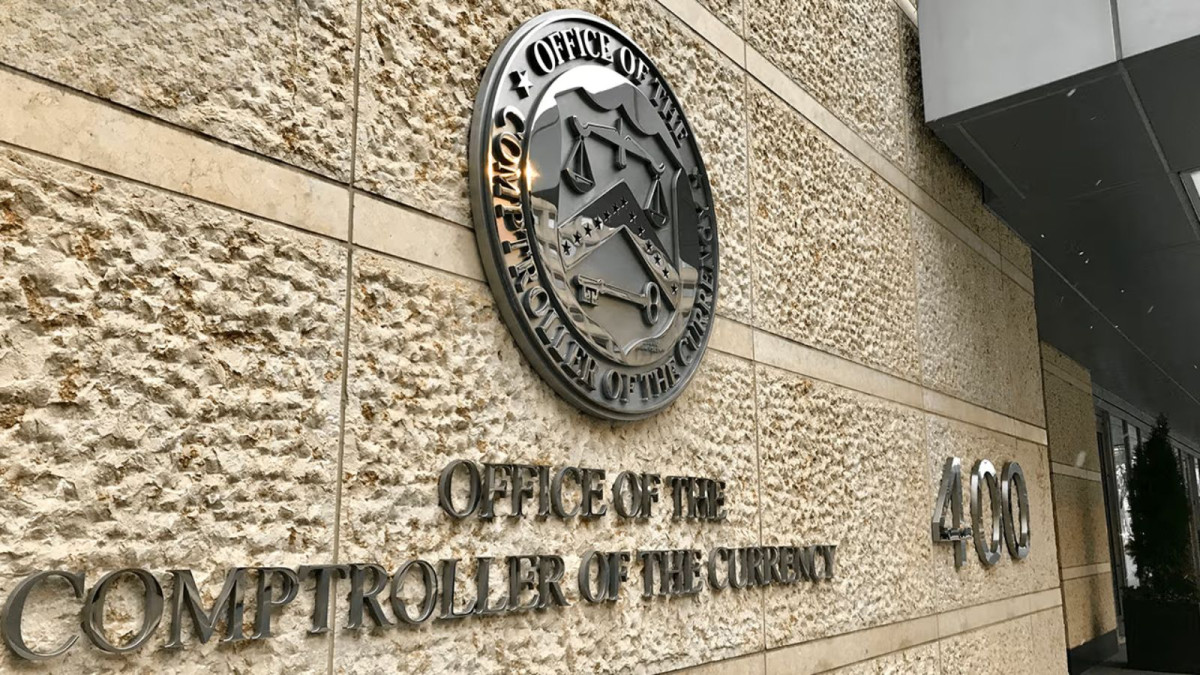
Revolut filed its application with both the Office of the Comptroller of the Currency and the Federal Deposit Insurance Corporation, seeking to operate across all 50 states under the name Revolut Bank US, N.A. The filing represents what the company is calling a "de novo" charter, meaning it's building a new banking entity from scratch rather than acquiring an existing institution.
As recently as January, Revolut had reportedly been exploring the acquisition of an existing U.S. bank, which would have been a faster path to full banking status. The company scrapped those plans in favor of the de novo route, a decision that likely reflects the OCC's growing willingness under the current administration to greenlight new entrants. The OCC has already granted conditional approval to several stablecoin issuers seeking bank charters, signaling a more permissive stance toward crypto-adjacent financial firms.
Approval of a charter would mark one of Revolut's biggest regulatory milestones outside Europe. The company already holds banking licenses across parts of Europe and secured a restricted U.K. banking license from the Prudential Regulation Authority in 2024, though it is still working through the mobilization phase required before that becomes a full license. The U.S. is a different beast entirely.
Right now, Revolut operates in the United States through a partnership with Lead Bank, a Kansas City-based institution. That arrangement gets the job done for basic accounts and payments, but it's a ceiling, not a foundation. A license would give Revolut direct access to payment networks such as Fedwire and the Automated Clearing House, systems that move trillions of dollars between banks each year.
More importantly, the charter would let Revolut shed its dependency on third-party partners entirely and start acting like a real bank. Customer deposits would be insured by the FDIC, strengthening trust and regulatory protection for users, and the company could begin offering credit cards and personal loans directly to consumers.
For a company that has built its reputation around being a financial super-app, the inability to offer federally insured deposits or extend credit in America has been a glaring gap. Revolut's European customers can access a full stack of financial products. U.S. customers get a stripped-down version. The charter is meant to fix that.
By securing a federal charter, Revolut aims to bypass the fragmented state-by-state regulatory landscape in favor of a single national framework, providing the infrastructure necessary to scale its suite of retail and business services.
The Crypto Angle
Revolut isn't just a digital bank. It's one of the more crypto-integrated financial platforms in the world, offering trading for dozens of digital assets, and it has been selected by the U.K.'s Financial Conduct Authority as one of four companies to test stablecoin services under proposed regulations.
In that context, the timing of Thursday's filing is striking. It came just one day after Kraken became the first crypto-native firm to secure a Federal Reserve master account, a development that sent a loud signal about where U.S. regulators are headed.
Kraken's approval lets its banking arm speed up deposits and withdrawals for large traders and institutional clients, though the account is limited, with Kraken not earning interest on reserves or accessing the Fed's emergency lending. Still, the symbolic weight of a crypto exchange plugging directly into Fed payment rails cannot be overstated.
Securing a full banking license would position Revolut to more deeply embed crypto services within a regulated framework, potentially easing concerns for both users and policymakers about the safety and soundness of hybrid platforms.
That's the broader story here. We're watching the lines between traditional banking, fintech, and crypto blur in real time, and it's happening faster than most observers expected even a year ago.
Revolut's U.S. chief executive at the time of the filing, Sid Jajodia, was blunt about the timing in comments to the Financial Times. Jajodia said the timing of the application had been boosted by the White House's willingness to back new entrants to the regulated banking system, welcoming greater regulatory clarity, including around crypto.
That's a diplomatic way of saying what much of the fintech industry has been saying privately for months: the Biden-era posture toward crypto and non-traditional banking entrants was a significant deterrent, and the current administration's approach has opened a window that may not stay open forever.
Revolut isn't the only one moving through it. Firms like PayPal and Coinbase are pursuing similar charters following regulatory changes introduced under Donald Trump. ZeroHash, a Chicago-based crypto infrastructure company, has applied for a National Trust Bank Charter from the OCC as well, seeking a federal framework for its stablecoin and digital asset services.
New Leadership, New Commitment
Alongside the charter filing, Revolut announced a significant leadership shuffle for its American operation. Cetin Duransoy has been named the new U.S. CEO, stepping in as Jajodia moves into a global chief banking officer role. Duransoy previously served as the U.S. CEO of fintech marketplace Raisin and held senior leadership roles at both Capital One and Visa.
The hire is deliberate. Getting a de novo bank charter through the OCC is a long and grinding process, requiring extensive scrutiny of capital adequacy, risk management frameworks, and compliance programs. Having someone with deep institutional banking experience at the helm of the U.S. operation sends a message to regulators that Revolut is not approaching this casually.
Revolut plans to invest $500 million in the U.S. market over the next three to five years. That's a serious number, and a significant commitment for a company that has had to walk away from a U.S. banking effort before.
Why Past Attempts Failed, and Why This One Might Stick
Revolut's first U.S. banking license attempt, which began with California regulators in 2021, unraveled by 2023 amid concerns about the company's internal controls and compliance infrastructure. Those issues have since been widely characterized as growing pains typical of a fast-scaling startup that had not yet built the back-office rigor expected of a regulated bank.
The company's trajectory since then, the UK banking license milestone, the dramatic financial turnaround, the global licensing push, suggests that those structural weaknesses have largely been addressed. Experts note that while European digital banks like N26 and Monzo have previously struggled to crack the U.S. market, Revolut's massive 70-million global customer base gives it a level of power and self-confidence that its predecessors lacked.
There's also the multi-currency angle. Revolut's strong brand recognition and product breadth, including support for multi-currency services, will appeal to digital, mobile, and globally-minded customers, filling a gap in North America where domestic neobanks still offer a limited range of private banking products.
That said, skeptics remain. Some analysts have warned that the current rush to acquire U.S. banking licenses is partly a function of regulatory optimism that may not translate into sustained approval rates once the OCC and FDIC begin their detailed reviews. The regulatory process for a de novo bank charter typically takes years, not months, and the political environment in Washington can shift.
The OCC's review process will be comprehensive. Revolut will need to demonstrate adequate capital levels, a robust compliance program, a credible business plan, and a management team capable of running a federally regulated bank. Given its prior withdrawal, the company will almost certainly face additional scrutiny around its internal controls and audit functions.
If approved, the broader implications reach well beyond Revolut's bottom line. For U.S. regulators, granting or denying the application will send an important signal about how open the system is to globally active, crypto-friendly fintechs seeking full bank status. The decision will likely take into account not only Revolut's financial strength and compliance track record, but also broader debates about innovation, competition and consumer protection.
The fact that a crypto exchange now sits on the Fed's payment rails, and that a $75 billion crypto-integrated neobank is simultaneously knocking on the OCC's door, suggests we are entering a genuinely new phase in the relationship between digital finance and the traditional banking system.
Whether the regulators are ready for that, or whether the window closes before the paperwork clears, is the question that will define the next chapter for Revolut, and for the broader industry watching closely behind it.