#MrBeast
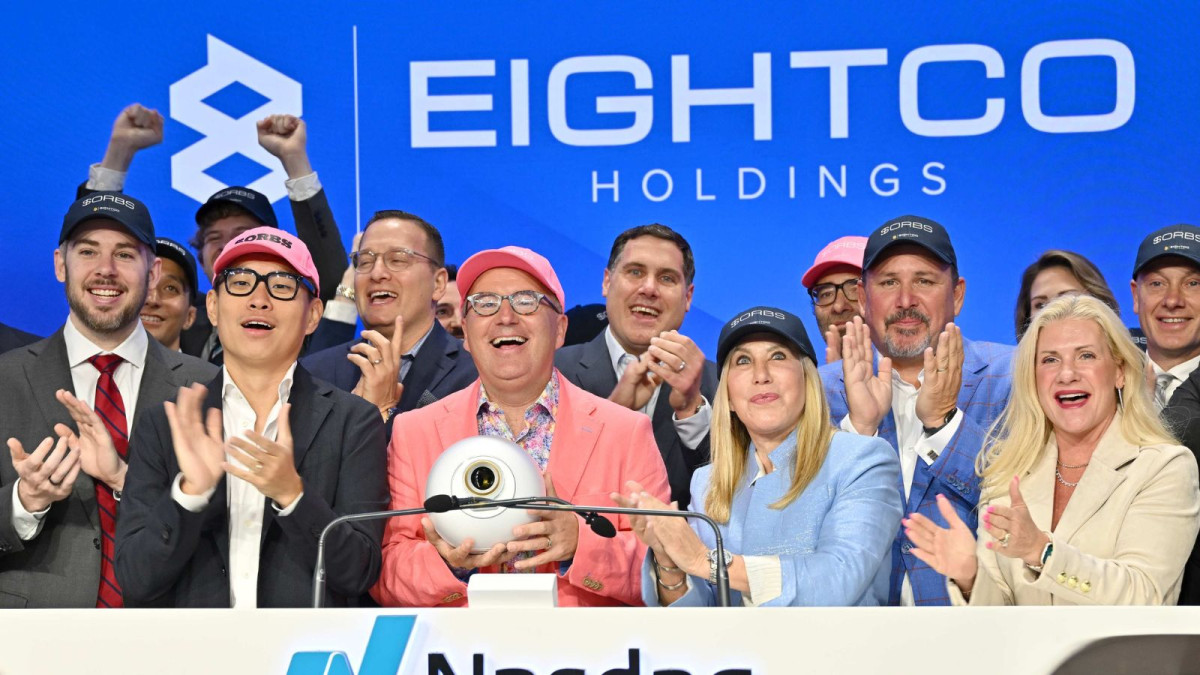
Eightco Shares Jump 25% After $125M Raise Led by Bitmine, ARK Invest, and Kraken

Eightco Holdings (NASDAQ: ORBS) pulled off a real power play on Wall Street Thursday, with shares jumping roughly 25% after the company announced it had locked in $125 million in new institutional commitments from a lineup that includes Bitmine Immersion Technologies, Cathie Wood's ARK Invest, and Payward, the parent company of crypto exchange Kraken.
The raise was led by Bitmine, which committed $75 million, with ARK Invest pledging at least $25 million and Payward rounding out the headline trio with another $25 million of its own. The full investor roster behind ORBS reads like a who's who of the crypto world: Coinfund, Pantera Capital, GSR, FalconX, Discovery Capital Management, and the World Foundation are all listed as backers.
But the capital raise wasn't even the most eyebrow-raising piece of news in Thursday's announcement. Eightco simultaneously disclosed it had already closed initial strategic investments of $50 million into OpenAI and $25 million into MrBeast and Beast Industries.
The OpenAI investment, worth approximately $52.5 million in economic interests in the company's equity, closed on March 6, just days before this announcement.
To understand how we got here, we kind of have to dive a bit deeper. Eightco has had one of the stranger corporate transformations of recent years. The Pennsylvania-based company pivoted from inventory management to cryptocurrencies and is currently developing a universal framework for digital identity and authentication. Not too long ago, its main business was making cardboard boxes through a subsidiary called Ferguson Containers.
Now, the company's identity is built around Worldcoin (WLD), the biometric-based digital identity project co-founded by OpenAI CEO Sam Altman. As of March 5, 2026, Eightco's treasury holdings included 277,222,975 WLD tokens, 11,068 ETH, and $82 million in cash. That WLD position, the company says, represents nearly 10% of the token's circulating supply, making ORBS the largest public market holder of Worldcoin on any exchange.
The company continues to hold Worldcoin and Ethereum as a long-term believer in the world's second-most valuable cryptocurrency, and frames its Worldcoin stake as foundational to a "proof of humanity" authentication layer it's building out.
The vision, as ORBS tells it, is to combine Worldcoin's biometric identity infrastructure with OpenAI's foundational models to create something at the intersection of AI verification, blockchain rails, and mass consumer reach. And it seems that it's clearly a compelling enough pitch to draw in some serious institutional names.
Who's Backing It, and Why
Tom Lee, Chairman of Bitmine, is joining Eightco's Board of Directors, while Brett Winton, Chief Futurist at ARK Invest, will serve as an advisor to the board.
Lee's involvement through Bitmine is notable. Bitmine itself has been on an aggressive crypto treasury strategy of its own, positioning itself as the leading Ethereum treasury company in public markets. Bitmine has combined crypto, cash, and "moonshot" holdings ranging well into the billions, and adding Eightco to that ecosystem tightens the connection between the two companies considerably. Lee getting a board seat means this isn't a passive financial bet.
His take on the investment was direct. Bitmine sees Eightco sitting at the center of some of the most important future needs and developments in AI, with what Lee described as tremendous synergy between Proof of Human via Worldcoin, OpenAI's foundational models, and the reach of the world's biggest content creator in MrBeast.
ARK Invest's Cathie Wood weighed in too, describing ORBS as taking on a unique initiative at the intersection of AI, blockchain, and creator-driven platforms.
Kraken's Arjun Sethi was perhaps the most philosophical about the whole thing. The Payward co-CEO framed it around power-law dynamics, suggesting that a small number of platforms tend to capture a disproportionate share of value in technological revolutions, and that ORBS is trying to position itself at the convergence of AI, cryptographic infrastructure, and global digital distribution.
MrBeast and the Distribution Play
The $25 million bet on Beast Industries deserves its own look. On March 10, Eightco invested approximately $25 million in shares of Beast Industries, with $7 million of that amount structured as committed capital that may be funded within 60 days in exchange for additional stock.
Beast Industries is the broader enterprise behind YouTube megastar Jimmy Donaldson, better known as MrBeast. The company spans entertainment, consumer products, and CPG, with the snack brand Feastables among its faster-growing launches. MrBeast's YouTube channel has over 450 million subscribers and generates more than 5 billion monthly views across all channels.
For a blockchain infrastructure play trying to build out digital identity at scale, having a meaningful stake in the world's most-subscribed YouTube channel is an unusual but not entirely illogical move. Distribution is distribution, and Eightco seems to be betting that the future of human authentication online will require massive consumer reach to actually work.
Taken together, Eightco is making a bold argument that the convergence of AI identity verification, blockchain infrastructure, and mass consumer distribution represents a huge opportunity, and that a small public company out of Pennsylvania is somehow positioned to sit at the center of it.
Whether the OpenAI stake, the MrBeast bet, the Worldcoin treasury, and the Ethereum holdings actually compound into something concrete is still up in the air. The risk disclosures in ORBS's own SEC filings acknowledge this as well, flagging the company's lack of control over private companies where it holds minority stakes, and the ongoing challenges of maintaining Nasdaq listing compliance while burning cash.
But the investor lineup announced today isn't made up of amateurs. Pantera, Brevan Howard, Coinfund, and ARK all know what they're doing, and they all decided this particular combination of bets was worth backing.
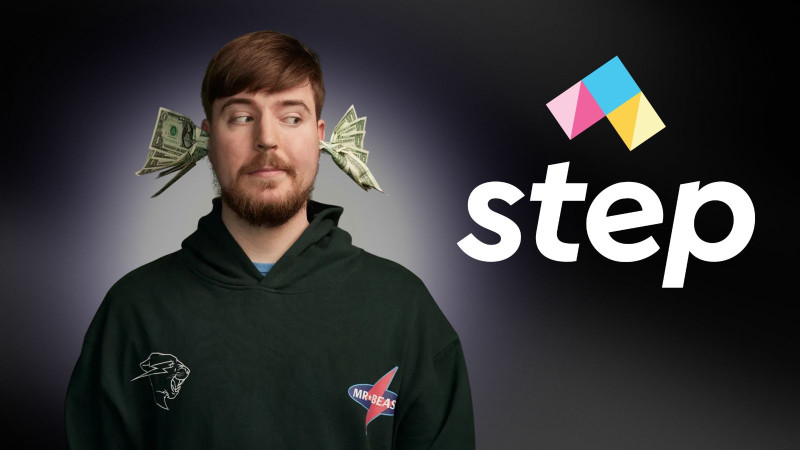
MrBeast Enters Fintech With Eyes on Crypto and Gen Z
MrBeast has never been subtle about scale. Giveaways get bigger, productions get more expensive, audiences get larger. So when Jimmy Donaldson starts drifting into financial services, it is probably worth paying attention.
Quietly, through his company Beast Industries, MrBeast has acquired Step, a mobile banking app aimed mostly at teenagers and young adults. On its own, that might look like a straightforward fintech acquisition. But paired with recent trademark filings tied to crypto and digital finance and a $200 million investment from Tom Lee's Ethereum investment company, Bitmine Immersion Technologies, it starts to look like something more deliberate.
Why Step Matters More Than It Looks
Step is not a household name, but in fintech circles it has been around for a while. The app was built to help younger users manage money early, offering basic banking features, debit cards, and tools meant to make finance feel less intimidating.
Like many consumer fintech startups, Step grew fast when money was cheap and slowed when markets tightened. That made it a candidate for acquisition, especially by a company with a built-in distribution engine the size of MrBeast’s audience.
For Beast Industries, Step is a shortcut. It already has users, regulatory relationships, and a working product. MrBeast does not have to start from zero or ask people to trust a brand new financial app. He is buying something real and then putting his brand behind it.
That is a very different approach from the usual influencer playbook.
The Crypto Part Is Not Front and Center, Yet
So far, there is no MrBeast token, no flashy crypto launch, no giveaways tied to wallets or NFTs. That is probably intentional.
Instead, trademark filings for “MrBeast Financial” outline a much broader vision. Banking, payments, investing, crypto trading, even decentralized finance concepts are all on the table. It reads less like a meme project and more like a blueprint for a full financial platform.
If this eventually launches, crypto would likely sit alongside traditional services rather than replace them. Think less about hype cycles and more about gradual exposure. Users open an account, use it like a normal banking app, and over time gain access to digital assets in a familiar environment.
Given how badly celebrity crypto projects have burned users in the past, that restraint may be the smartest part of the strategy.
A Perfect Fit for His Audience
MrBeast’s audience is young, global, and extremely online. Many of them have never walked into a bank branch. They are comfortable with apps, digital payments, and online money, even if they are still figuring out how finance works.
That overlap with Step’s original target market is almost too neat.
There is also the education angle. MrBeast has built an entire career on making people pay attention to things they normally would not. Financial literacy is not exciting. But challenges, rewards, and gamified learning are very much his lane.
If anyone can make budgeting or saving feel like content instead of homework, it is probably him.
This Is Where Things Get Complicated
Of course, finance is not YouTube.
Banking and crypto both come with heavy regulatory baggage. Expanding Step into something larger would require licenses, compliance teams, partners, and patience. Crypto adds another layer of scrutiny, especially in the US, where regulators are still defining the rules in real time.
Trademark filings do not guarantee execution. Plenty of companies file broadly and never ship half of what they outline.
Still, the direction is hard to ignore. This is not a casual experiment. Buying a banking app is a commitment.
The Bottom Line
If MrBeast follows through, this could change how crypto reaches mainstream users. Not through exchanges or speculation, but through everyday financial tools tied to a brand people already trust.
It also hints at where the creator economy might be heading next. After ads, merch, food brands, and mobile services, financial products may be the next frontier. They are harder to build, harder to regulate, and much harder to unwind.
Which may be exactly why someone like MrBeast is interested.
For now, there are more questions than answers. No launch dates, no confirmed features, no official crypto roadmap. But the pieces are starting to line up.
MrBeast is stepping into finance, and if he is anything like his past ventures, this will not stay small for long.
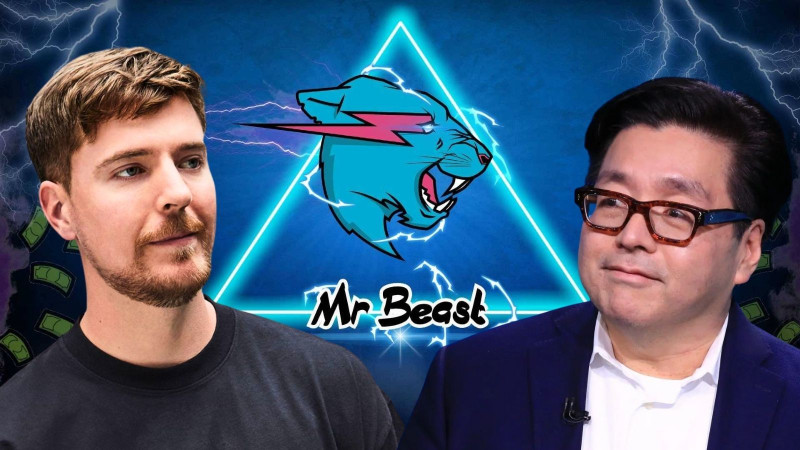
MrBeast, DeFi, and a $200M Investment by BitMine
A public company best known for holding large amounts of Ethereum is now placing a very different kind of bet, one that sits at the intersection of crypto, finance, and the creator economy.
BitMine Immersion Technologies, a crypto treasury firm chaired by Fundstrat’s Tom Lee, says it plans to invest $200 million into Beast Industries, the company behind YouTube creator MrBeast. The goal, according to executives, is to explore how decentralized finance could play a role in a future financial services platform tied to one of the internet’s largest audiences.
This is not a meme coin launch or a celebrity endorsement deal. It looks more like a strategic attempt to combine capital markets, Ethereum infrastructure, and massive consumer distribution.
Why a crypto treasury firm is backing a creator company
BitMine has been repositioning itself as an Ethereum-focused treasury company, following a playbook that investors have seen before in Bitcoin-heavy balance sheet strategies. The difference is scale and ambition.
The firm holds a substantial amount of ETH and has spoken publicly about building staking infrastructure and validator operations. But simply holding crypto is no longer enough to sustain investor interest, especially as enthusiasm around treasury-style trades has cooled.
The next step is finding ways to turn those holdings into something operational. That is where Beast Industries comes in.
MrBeast is not just a YouTuber. His business spans media, merchandise, and consumer brands, and it reaches hundreds of millions of people, many of them young and digitally native. For a company looking to build or support crypto-based financial products, that kind of distribution is hard to ignore.
What Beast Industries appears to be exploring
Executives at Beast Industries have been clear that the company is looking at financial services. Trademark filings and past reporting suggest a wide scope, including payments, lending, insurance, and potentially crypto-related offerings.
The key word is explore. There is no product launch yet, and there is no guarantee that every idea becomes reality. Still, the language around incorporating DeFi suggests interest in crypto-native rails rather than simply slapping a brand on traditional products.
In practice, that could mean crypto-powered payments, wallet functionality, token-based rewards, or lending products that lean on blockchain infrastructure behind the scenes. It could also mean partnerships with existing fintech or crypto firms to avoid the heavy regulatory lift of building financial institutions from scratch.
DeFi as a distribution play, not a technical flex
In this context, DeFi should probably be read less as a commitment to complex on-chain protocols and more as a distribution strategy.
For years, crypto has struggled to reach mainstream users without relying on exchanges or speculative narratives. A creator-led platform flips that equation. The audience already exists. The challenge becomes offering products that are simple, compliant, and trustworthy enough to meet that audience where it is.
That trust component matters. MrBeast’s brand is built on transparency and goodwill. Any financial product under that banner would be judged harshly if it felt confusing, risky, or exploitative. Crypto’s history with celebrity-adjacent scams only raises the stakes.
The risks on both sides of the deal
For Beast Industries, entering finance is not trivial. Even lightweight financial products come with regulatory scrutiny, reputational risk, and long-term obligations to users. A misstep could damage a brand that has taken years to build.
For BitMine, the risk is different. Crypto treasury strategies have gone in and out of favor, often tracking the price of the underlying asset more than business fundamentals. Investors have shown signs of fatigue toward companies whose primary strategy is buying and holding crypto.
Backing a creator-led financial push is an attempt to move beyond that narrative. Whether markets reward that shift remains an open question.
Why this matters beyond one deal
This investment fits into a broader trend where crypto companies are looking for real-world distribution and cash-flow-adjacent businesses, while creators are looking for ways to turn attention into durable platforms.
Ethereum sits in the middle of that equation. It provides the infrastructure for staking, tokenization, and programmable finance, all of which appeal to firms trying to rethink how financial products are built and delivered.
The unusual part is seeing a public crypto treasury company and a creator empire meet at that intersection.
What to watch next
Several things will determine whether this becomes a defining moment or a footnote.
First is structure. How the investment is deployed, and what BitMine actually receives in return, will shape how investors interpret the move.
Second is execution. A vague commitment to DeFi means little without a clear product vision and compliance strategy.
Third is messaging. Any hint of speculative tokens or unclear financial incentives could quickly undermine trust.
The bigger picture
BitMine’s $200 million bet is a sign that crypto treasury firms are searching for their next evolution. Holding Ethereum is one thing. Building products, platforms, and distribution around it is another.
MrBeast brings something crypto rarely has in abundance: mainstream attention paired with trust at scale. Whether that combination can be turned into sustainable financial services without repeating the industry’s past mistakes is the real test.
For now, the deal signals that crypto’s next phase may be less about balance sheets and more about who controls distribution.
Stay Connected
You can stay up to date on all News, Events, and Marketing of Rare Network, including Rare Evo: America’s Premier Blockchain Conference, happening July 28th-31st, 2026 at The ARIA Resort & Casino, by following our socials on X, LinkedIn, and YouTube.