#Inflation
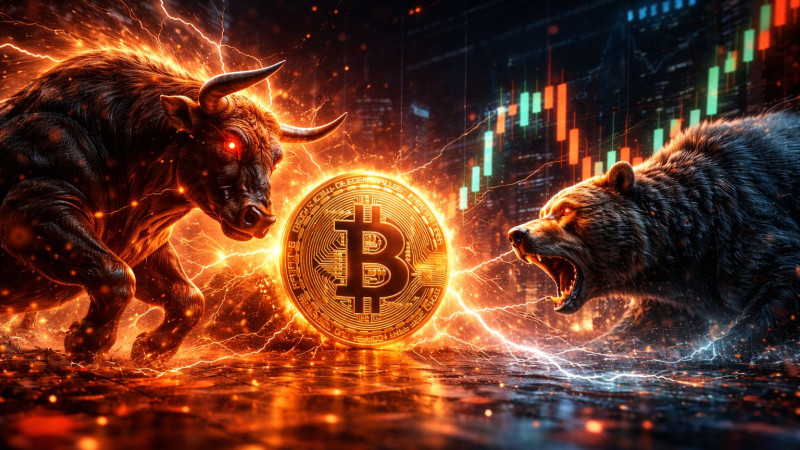
Bitcoin May Face a Volatile Day as Macro Events Stack Up

Bitcoin is waking up to a market that feels unusually fragile.
Price itself looks calm enough. The range has been tight, daily swings have been muted, and nothing on the surface screams urgency. But anyone paying attention to today’s calendar knows this kind of calm can disappear quickly.
Several macro events are stacked into the U.S. session, all tied to interest rates, inflation, and risk appetite. When those forces collide, Bitcoin rarely sits still.
This is shaping up to be one of those days where volatility does not need a single dramatic headline. It just needs friction.
A Morning That Rarely Stays Quiet
The first real test arrives early, when U.S. jobs data hits the tape around the start of the New York session.
Employment numbers still carry outsized influence over markets. They shape expectations around how tight financial conditions will remain and how much flexibility the Federal Reserve really has. Bitcoin has become increasingly sensitive to these shifts, especially when liquidity is thin.
The initial reaction is often fast and emotional. Sometimes it sticks. Sometimes it fades within minutes. Either way, it tends to wake the market up.
From there, the morning does not get any simpler.
As the session develops, attention turns to Washington. A Supreme Court ruling related to tariffs is expected during the late morning hours. While not crypto-specific, tariff decisions feed directly into inflation assumptions, and inflation is still one of the most important variables in global markets.
Around the same window, a Federal Reserve official is scheduled to speak. That overlap matters. When legal decisions, inflation narratives, and Fed messaging collide, markets can struggle to find a clean interpretation. Bitcoin often reflects that confusion in real time.
Why This Timing Matters for Bitcoin
What makes today feel different is not just the events themselves, but how close together they land.
Bitcoin thrives on liquidity and clear narratives. Days like this offer neither. Instead, traders are forced to process multiple signals that may not point in the same direction.
That is when volatility tends to rise.
A strong jobs report followed by cautious Fed language. A soft report paired with inflation concerns. Even outcomes that are mostly expected can trigger sharp moves if positioning is wrong.
Bitcoin does not need certainty to move. It needs imbalance.
The Quiet Role of Liquidity
Another reason this day feels risky is what has been happening quietly in the background.
Spot Bitcoin ETFs have seen periods of outflows recently, reducing a layer of steady demand that helped stabilize price during previous pullbacks. With that cushion thinner, price reacts more aggressively to macro headlines.
That cuts both ways. Breakouts can extend faster. Pullbacks can feel heavier. The same headline that barely moved Bitcoin a month ago can suddenly matter a lot more.
Midday Calm Can Be Misleading
If Bitcoin survives the morning without a major break, it would not be surprising to see price settle into a narrow range through the middle of the day.
That lull can be deceptive.
Often, midday calm simply reflects traders waiting for confirmation, not confidence that the danger has passed. Volatility can resurface later as markets digest positioning data and prepare for the next global session.
Bitcoin has a habit of making its real move when attention starts to drift.
A Market That Feels Coiled
Recent price action tells a familiar story. Bitcoin has struggled to push decisively higher, but sellers have not taken control either. The result is a compressed range that feels increasingly unstable.
Historically, these conditions do not resolve gently.
When volatility returns after a long period of compression, it tends to overshoot. Direction is still uncertain, but movement feels inevitable.
The Bigger Picture
This is not about predicting whether Bitcoin goes up or down today. It is about recognizing the environment.
Macro pressure is building. Liquidity is thinner. Volatility has been suppressed for too long. And the calendar is packed with catalysts that can disrupt the balance.
For traders, today is about staying alert, not getting comfortable.
For long-term holders, it is another reminder that Bitcoin often chooses moments like this to reassert its personality.
The market may look calm right now, but we'll see how the day plays out. Jobs reports, Supreme Court decisions, and Fed Talks should make it very interesting either way.
Stay Connected
You can stay up to date on all News, Events, and Marketing of Rare Network, including Rare Evo: America’s Premier Blockchain Conference, happening July 28th-31st, 2026 at The ARIA Resort & Casino, by following our socials on X, LinkedIn, and YouTube.
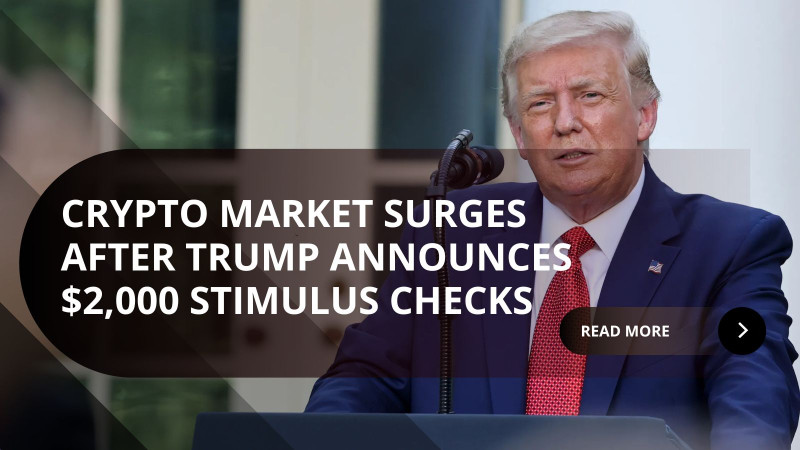
Crypto Prices Surge After Trump Announces Tariff Dividend Plan
Crypto Prices Surge After Trump Announces Tariff Dividend Plan
Crypto markets moved sharply higher after President Trump announced his intent to send “at least” a $2,000 tariff dividend to every American, funded by tariff revenues. Bitcoin climbed roughly 1.7% to trade above $103,000, while Ethereum rose more than 3% to around $3,480. Solana also gained nearly 2%, helping the broader crypto market recover from a difficult week.
The announcement, which Trump described as a “dividend for the American people,” immediately set off speculation about a new wave of consumer stimulus. Market watchers compared the idea to the 2020–2021 stimulus checks that fueled both retail investing and crypto adoption during the pandemic.
What a “Tariff Dividend” Means
The proposal is straightforward: redistribute federal tariff revenue to households in the form of direct payments. The administration framed it as “returning America’s money to Americans,” though the plan would likely require congressional authorization and a detailed funding framework.
In practical terms, this would act much like a stimulus payment, except funded through tariffs rather than new government borrowing. Whether or not it comes to fruition, the market’s reaction suggests traders are already pricing in the possibility of renewed liquidity entering the system.
Why Crypto Reacted: The 2020 Playbook
When the United States issued direct stimulus checks in 2020 and 2021, data showed a measurable uptick in crypto activity. Exchanges recorded surges in $1,200 deposits — the same amount as the first stimulus payment — and analysts noted a wave of new retail wallets buying Bitcoin and Ethereum.
In other words, stimulus checks created a wealth shock that found its way into digital assets. The pattern was clear: free cash plus frictionless access to trading apps equaled inflows into crypto.
If a 2025 “tariff dividend” reaches consumer bank accounts, it could produce a similar reaction:
-
Immediate liquidity shock: Households receive cash, and some percentage of it flows into high-risk, high-reward assets.
-
Ease of access: It is easier than ever to buy crypto directly through apps that support bank transfers and debit cards.
-
Narrative power: Headlines about free money drive social media buzz, which has historically amplified market moves.
-
Altcoin momentum: In 2020 and 2021, retail inflows often rotated into smaller tokens, fueling broader speculative rallies.
How 2025 Differs From 2020
There are important differences between the two environments.
-
Economic backdrop: Interest rates are higher, inflation is more persistent, and households are facing tighter budgets. Liquidity injections might not carry the same purchasing power they did during lockdowns.
-
Policy complexity: A tariff dividend is not an emergency measure. It would require legislation, debate, and administrative systems to distribute funds.
-
Market maturity: Crypto ownership is broader and more institutionalized now. Retail checks could still drive excitement, but large funds and ETFs dominate trading volume.
-
Tariff revenue limits: Total tariff collections may not fully cover such large payments, which could influence how much money actually reaches citizens.
Even with these caveats, the narrative alone can move markets. Traders have a short memory for policy hurdles but a long memory for liquidity events.
Possible Scenarios
Scenario 1: Full $2,000 payments in early 2025.
Expect an immediate increase in retail deposits and small-ticket crypto buys. Bitcoin would likely lead the rally, followed by Ethereum and major Layer 1 tokens. Within days, altcoins could outperform as speculative capital spreads through the market.
Scenario 2: Reduced or delayed payments.
A scaled-down version would still spark optimism, but the impact would be smaller. Prices could rise on anticipation and then fade if payments are limited or phased in over time.
Scenario 3: No payments, only rhetoric.
If Congress rejects or delays the plan, the initial market rally could unwind quickly. Traders would shift focus back to macro factors such as interest rates and ETF inflows.
What to Watch Next
-
Policy developments: Official statements from the White House and Treasury will clarify how serious the proposal is.
-
Legislative signals: Watch for draft bills or congressional discussions that determine timing and funding.
-
Exchange activity: Look for clustering of retail-sized purchases near the proposed check amount, as seen in 2020.
-
Altcoin breadth: If retail flows return, altcoins typically benefit first due to their lower market caps and higher volatility.
-
Tariff policy shifts: Increased tariffs could pressure supply chains and offset some of the stimulus effect, adding complexity to market sentiment.
Final Thoughts
Today’s market reaction shows how sensitive crypto remains to liquidity narratives. History suggests that direct payments to households act as fuel for risk assets, particularly digital currencies.
In 2020, stimulus checks helped ignite one of the strongest bull runs in crypto history. Bitcoin’s price more than tripled in less than a year as new retail investors piled in. If a 2025 “tariff dividend” delivers similar injections of cash, it could trigger another wave of retail-driven buying — especially in the smaller, more speculative corners of the market.
Still, the outcome depends on whether policy turns into action. Until checks start landing, investors should treat this as a potential catalyst rather than a certainty. Yet if history is any guide, the prospect of free money flowing into crypto is enough to remind markets just how powerful liquidity can be.
Stay Connected
You can stay up to date on all News, Events, and Marketing of Rare Network, including Rare Evo: America’s Premier Blockchain Conference, happening July 28th-31st, 2026 at The ARIA Resort & Casino, by following our socials on X, LinkedIn, and YouTube.