#World Liberty Financial
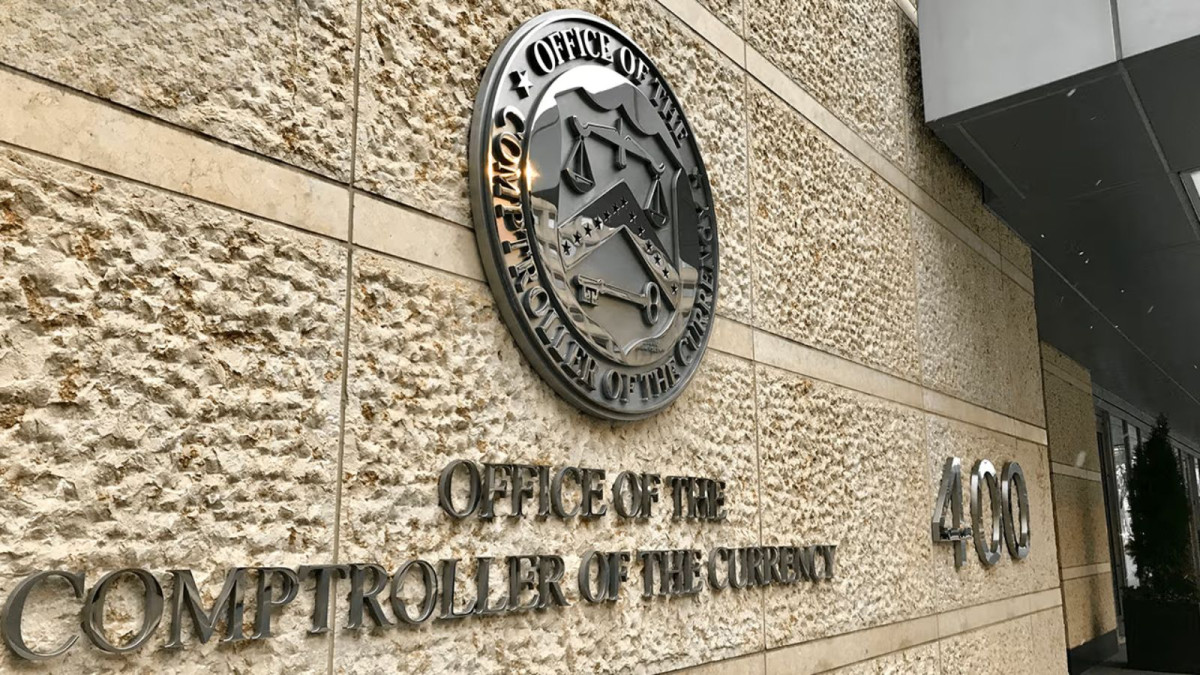
OCC Greenlights Conditional Trust Bank Charter for World Liberty Financial

The Office of the Comptroller of the Currency (OCC) has granted President Trump-backed World Liberty Financial preliminary conditional approval to establish World Liberty Trust Company, N.A., a national trust bank that would oversee its USD1 stablecoin operations.
Since the charter is conditional, World Liberty Trust Company will serve as a limited purpose national trust bank, handling the fiduciary and trust aspects of the USD1 stablecoin, including the issuance and redemption of the stablecoin, management of the reserves backing USD1, and custody services for institutional clients using USD1.
Regarding the regulatory milestone, Zach Witkoff, CEO and co-founder of World Liberty Financial, wrote in an X post, “Rigorous oversight, institutional controls and clear accountability are how stablecoins become trusted financial infrastructure.”
“Our ambition is clear: to build the most trusted and widely used digital dollar in the world while strengthening the role of the U.S. dollar across the global economy.”
As part of the conditions stated by the OCC in its approval letter, World Liberty Trust Company must restrict its activities strictly to those relating to trust activities. If it intends to deviate from these activities, the bank must provide the OCC with 60 days’ prior notice.
Before any executive is appointed, World Liberty Trust Company must submit information about the executives to the OCC and receive a non-objection letter from the regulator.
The trust bank will initially be governed by a five member team: Zach Witkoff, who will serve as board chair; Scott Alper, President and Chief Investment Officer of Witkoff Group; Robert Witkoff, former Co-Chief Investment Officer of The Chubb Corporation; Jeffrey Weiner, former Chairman and CEO of Marcum LLP, one of the largest accounting firms in the U.S.; and Erin Baskett, a member of the FINRA Board of Governors and founder of brokerage firm Sine Qua Non Capital.

SEC Drops Justin Sun Fraud Charges as Rainberry Pays $10M Fine

After nearly three years of legal battle, the U.S. Securities and Exchange Commission officially dismissed its civil fraud claims against Tron founder Justin Sun, the Tron Foundation, and the BitTorrent Foundation on Thursday. The resolution, entered by the U.S. District Court for the Southern District of New York, comes with one notable condition: Rainberry Inc., the entity that developed the BitTorrent protocol and the BTT cryptocurrency token under Sun's direction, agreed to pay a $10 million civil penalty to the agency.
The final judgment still requires approval from a federal judge, but the terms represent a clean exit from what had been one of the higher-profile enforcement actions of the Gensler-era SEC. Rainberry, previously known as BitTorrent Inc. and acquired by Sun in June 2018, will also be permanently barred from engaging in deceptive market practices for securities, though it did not admit guilt as part of the agreement. Critically, the dismissal against Sun himself and the two foundations was entered "with prejudice," meaning the SEC cannot refile the same allegations in this federal court.
A Case History
The commission first filed the lawsuit in March 2023, during former Chairman Gary Gensler's tenure. The charges were sweeping. The SEC accused Sun and his related entities of orchestrating the unregistered offer and sale of two crypto assets, Tronix (TRX) and BitTorrent (BTT), which it classified as securities. Beyond that, regulators alleged Sun personally directed employees to execute hundreds of thousands of coordinated wash trades in TRX, generating roughly $31 million in artificial trading proceeds and inflating the appearance of legitimate market activity. The complaint also alleged Sun paid celebrity endorsers to promote his tokens without publicly disclosing those payments — a violation of securities laws that require such arrangements to be made transparent to investors.
The SEC argued that Sun had tight personal control over each of the entities involved, calling Tron Foundation, BitTorrent Foundation, and Rainberry his "alter egos" and noting that he had spent significant time on U.S. soil during the relevant period, including approximately 180 days in 2019 alone. The agency said a reasonable investor would have seen Sun as the unified face of the entire TRX and BTT ecosystem.
Sun's legal team did not take the charges quietly. In early 2024, Tron Foundation and Sun's lawyers moved to dismiss the suit on jurisdictional grounds, arguing that the SEC had no authority over Sun as a foreign national residing abroad and that the agency had failed to prove Sun exercised meaningful control over the Tron and BitTorrent networks. Rainberry, incorporated in California, did not contest jurisdiction but sought dismissal on different grounds — primarily that the company had no fair notice that its activities could be subject to securities claims.
The SEC pushed back on those arguments aggressively in an amended complaint filed in April 2024, countering that Sun's physical presence in the United States over multiple years was extensive and well-documented, and that his dominance over each entity was impossible to dispute given his public profile and behavior at industry events.
By late 2024 and early 2025, the political climate had shifted dramatically. Donald Trump's return to the White House brought with it a sharp reversal in the SEC's posture toward crypto enforcement. Gary Gensler stepped down, and the commission came under the acting leadership of Commissioner Mark Uyeda before Paul Atkins, a Washington lawyer widely seen as supportive of the digital asset industry, was confirmed as chairman. In February 2025, the SEC and Sun's legal team jointly asked Judge Edgardo Ramos in Manhattan to put the case on hold while both sides explored a potential resolution, citing the interests of both parties and the public.
What Comes Next For Tron and Sun
The resolution closes a legal chapter, but Sun's year has not been without turbulence. The relationship with World Liberty Financial grew complicated in September 2025 when, days after WLFI tokens became publicly tradable, blockchain data revealed that Sun's wallet address holding roughly 595 million unlocked WLFI tokens was blacklisted by the project's smart contracts. WLFI had fallen sharply from its debut price, and on-chain data showed Sun had made several outbound transfers, including one worth approximately $9 million, to addresses associated with exchanges. The WLFI team cited concerns about suspicious activity. Sun denied any manipulation, publicly appealing to the team to restore his access and invoking the decentralization principles the project claimed to champion. As of late 2025, his tokens reportedly remained frozen and had declined significantly in value.
For the Tron and BitTorrent ecosystems themselves, the dismissal removes a substantial legal overhang. TRX and BTT holders had long operated under uncertainty about whether the tokens could ultimately be classified as securities in federal court. While the settlement does not resolve broader policy debates in Washington about how digital tokens should be classified, it does remove the specific threat of a federal court ruling in this case.
The $10 million Rainberry penalty is notable primarily for what it is not. Given the scale of what was alleged, including hundreds of millions of dollars in token distributions and deliberate wash trading to manipulate market prices, the fine is modest. Critics are likely to point to the figure as further evidence that the current SEC has little appetite for meaningful accountability in the crypto space, while supporters of the settlement structure will argue it brings resolution without years of additional litigation that may have yielded uncertain outcomes anyway.
For Sun, the outcome is a practical victory, even if the legal-ese technically routes the penalty through Rainberry rather than through him directly. He emerged without personal liability in a case where the SEC had once described him as the singular controlling force behind everything. Whether the political dynamics that contributed to that outcome constitute a coincidence or something more transactional is a question that Senate and House oversight committees appear intent on pressing in the months ahead
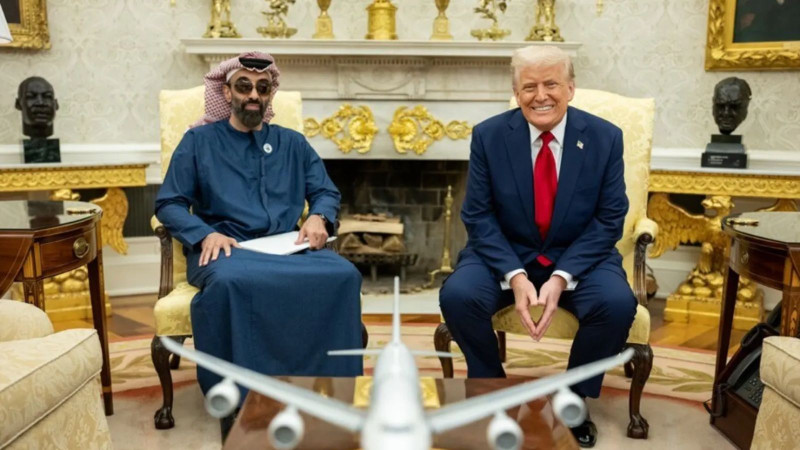
UAE Sheikh’s Stake in Trump-Linked Crypto Firm Raises Questions

A few days before Donald Trump was sworn in for his second term, a little-known crypto company tied to his family quietly changed hands in a very big way.
According to reporting from The Wall Street Journal, an investment network linked to Sheikh Tahnoon bin Zayed al Nahyan, one of the most powerful figures in the United Arab Emirates, agreed to acquire a 49 percent stake in World Liberty Financial, a Trump-associated crypto venture. The price tag was roughly $500 million. The deal was not disclosed at the time.
On its own, that might sound like another splashy foreign investment in crypto. But when you line up the timing, the players involved, and what happened next in Washington, the story is far less routine.
The deal that surfaced after the fact
World Liberty Financial has been marketed as a crypto and stablecoin project aligned with the Trump brand. It has drawn attention before for its political overtones, but the WSJ reporting introduced a new layer entirely.
The Journal reported that the agreement gave Emirati-linked investors just under half the company, enough to wield serious influence without triggering automatic control disclosures. Under the agreement, half of the $500 million was paid upfront, with $187 million flowing to Trump family-controlled entities and at least $31 million going to entities affiliated with the family of Steve Witkoff, the real estate magnate who co-founded World Liberty and was later named U.S. Special Envoy to the Middle East. Witkoff's son Zach is the current CEO of the project.
The timing did not help the optics. The deal was reached days before inauguration, when policy direction for the next four years was coming into focus and foreign governments were jockeying for position.
David Wachsman, a spokesperson for World Liberty Financial, said the company moved forward with Aryam’s investment because it believes the deal supports World Liberty’s long-term growth. He pushed back on the idea that the company should be held to a higher bar than other privately held U.S. firms when raising capital, calling that notion unreasonable and out of step with core American business principles.
Wachsman said neither President Trump nor Steve Witkoff played any role in the transaction, and that neither has been involved in World Liberty Financial’s operations since taking office. He added that Witkoff has never held an operational role at the company. According to Wachsman, the investment does not give any party access to government decision-making or policy influence, and the company follows the same rules and regulatory requirements as others in the industry.
Who is Sheikh Tahnoon?
Sheikh Tahnoon is not a Silicon Valley VC taking a flier on tokens. He is the UAE’s national security adviser, a senior royal, and a central figure in Abu Dhabi’s intelligence, defense, and investment apparatus.
He also oversees or influences a web of firms operating at the intersection of AI, data infrastructure, and geopolitics. That includes G42, an Emirati AI company that has faced scrutiny in the past over its international ties and access to advanced computing technology.
A person familiar with the investment of World Liberty said Sheikh Tahnoon and his team spent months reviewing World Liberty Financial’s business plans before committing capital, ultimately completing the deal alongside several co-investors. The person said the investment did not involve funds from G42.
The source also said the investment was never discussed with President Trump, either during the due diligence process or afterward, and described Tahnoon as a significant investor in the crypto sector.
The AI chip question hovering over everything
One reason this story has legs beyond crypto is what happened after the investment.
Following Trump’s return to office, the administration moved on policies involving advanced AI chips, an area where the UAE has been actively lobbying for expanded access. These chips are tightly controlled, highly strategic, and essential for modern AI development.
No reporting has established a direct quid pro quo. There is no document that says money went in and policy came out.
From a governance perspective, this is exactly the kind of situation ethics experts warn about. Even if no one crosses a legal line, foreign investors with deep political ties may gain goodwill, access, or priority simply by being financially intertwined with the president’s broader business ecosystem.
The legal fight may be narrow, the political fallout less so
Some legal scholars cited in reporting have raised the emoluments clause, the constitutional provision meant to prevent U.S. officials from receiving benefits from foreign states. Trump’s defenders counter that he is not directly receiving payments and that the structure insulates him from day-to-day involvement.
That argument may hold up in court. It often has before.
But the political risk is broader. Even without a legal violation, the appearance of foreign influence is enough to trigger congressional scrutiny, especially with Trump's polarizing nature and Senate Democrats, many anti-crypto, looking for any angle to stifle crypto innovation and hang Trump out to dry...all at the same time. Some Lawmakers have already begun calling for reviews, especially given the national security dimensions of AI and crypto infrastructure.
The Bottom Line
This is not just a Trump story or a UAE story. It is a preview of how crypto-era influence works.
Instead of overt lobbying, capital moves through private deals. Instead of formal control, investors stop at 49 percent. Instead of campaign donations, value flows through equity, tokens, and stablecoin rails.
It is cleaner, quieter, and harder to regulate.
Whether or not this specific deal leads to formal investigations or enforcement, it highlights a structural vulnerability. Crypto allows political proximity, financial upside, and strategic infrastructure to blend in ways legacy systems never quite allowed.
And that is why this episode is likely to be studied long after the headlines fade.
Trump-Backed World Liberty Financial Launches DeFi Lending Platform Built on USD1

World Liberty Financial, the crypto venture tied to President Donald Trump and his family, has crossed another big milestone in its effort to turn a stablecoin and decentralized finance products into a real business. The firm quietly rolled out World Liberty Markets, a new on-chain borrowing and lending platform built around its flagship stablecoin, USD1, and it’s already pulled in tens of millions in assets from early users.
The launch puts World Liberty right into one of the most competitive and risky corners of crypto: decentralized lending. This is where you can earn interest by supplying assets or borrow against your holdings without going through a bank or broker. It’s the plumbing that makes much of DeFi tick, and it’s also where huge liquidations and smart contract exploits have regularly happened. The difference here is political gravity: this project is backed by one of the most polarizing figures in modern American business and politics.
What World Liberty Markets Actually Offers
World Liberty Markets isn’t reinventing DeFi. The way it works is familiar if you’ve used other decentralized money markets: you supply assets to earn interest, and you can borrow against collateral you’ve locked up. At launch, supported assets include the company’s own USD1 stablecoin, its governance token WLFI, Ethereum, tokenized Bitcoin, and major stablecoins like USDC and USDT. Once you deposit, you can take a loan out in any of those supported assets based on how much you’ve put up as collateral.
The platform is built with the infrastructure of an existing DeFi protocol called Dolomite, which means World Liberty didn’t have to write an entire lending stack itself. Think of it as a branded front door and dashboard on top of established smart contract mechanics.
In the first week or so, the protocol showed some early traction, with roughly $20 million in supplied assets moving through it. That number is small compared to big DeFi players, but it’s eye-catching because of how recent the launch was and the fact that USD1 supply is growing quickly.
To jump-start liquidity, World Liberty is dangling a very high yield on USD1 deposits, along with a “reward points” program for larger suppliers. World Liberty was announced on X, writing that “WLFI Markets is built to support the future of tokenized finance by providing access to third party and WLFI-branded real-world asset products, supporting new tokenized assets as they launch, and creating deeper and wider access to USD1 across all WLFI applications. It’s designed to provide future access to WLFI’s broader RWA roadmap.”
Betting on USD1
Behind all this is USD1, World Liberty’s dollar-pegged stablecoin that has really become the center of the project’s story. Since its debut in early 2025, the coin has ballooned into one of the larger dollar stablecoins by market capitalization, trading alongside names people actually recognize and use every day. It’s backed by cash, short-term Treasuries, and things like dollar deposits through professional custody arrangements, and it aims to be redeemable at parity with the U.S. dollar.
That backing and that promise of redemption put USD1 in the same product category as USDC and USDT, which dominate the stablecoin market. But stablecoins only become useful when there are places for them to be spent, lent, traded or borrowed, and until now USD1 had mostly been used as a tradable asset with some big institutional deals. The lending launch is the first real step toward making it function like money in crypto’s own financial ecosystem.
World Liberty has been aggressively pushing USD1 into major venues, including listings on big exchanges and use as collateral or settlement assets in large trades. That has helped it grow in circulation fast, and have enough liquidity that a lending market now makes sense. Because USD1 is tied so directly to World Liberty’s broader business, how well the lending product does could be a big factor in whether USD1 becomes sticky in the market or remains a speculative novelty.
From On-Chain Products to Traditional Finance
This lending rollout comes at a moment when the company is also trying to pull USD1 and its associated services into the regulated financial world. A subsidiary of World Liberty has applied for a national trust bank charter with U.S. regulators. If approved, that would allow the entity to issue and custody stablecoins and digital assets under federal supervision, provide conversion between fiat and stablecoin, and generally operate more like a regulated institution rather than a pure DeFi startup.
That’s a trend you’re seeing across crypto right now. Regulators have started to outline formal frameworks for stablecoins through new legislation aimed at reducing risk and improving disclosure. Projects that tie themselves to those frameworks stand to get easier access to traditional players like banks, exchanges and institutional clients. But it also subjects them to a lot more scrutiny than the wild west of DeFi.
Will it succeed?
Here’s the hard truth: decentralized lending markets are notoriously volatile and complex. You can get liquidation events overnight if collateral values tumble. Smart contracts have flaws and exploits. Incentives can attract short-term capital that leaves as soon as the rewards stop. That’s all before you even factor in political risk, regulatory noise, or questions about reserve transparency.
Then there’s the optics of the thing. World Liberty is connected to Donald Trump and his family, who have been publicly associated with this project since the beginning. That’s drawn critics who say there are conflicts of interest embedded in how the venture promotes itself and how big deals get structured. Whether you see that as a feature or a bug, it certainly makes this different from your run-of-the-mill DeFi launch.
For anyone watching this space, the next few months will answer big questions. Will World Liberty Markets continue to draw real deposits once the initial incentives slow down? Will borrowing activity pick up in ways that look organic rather than promotional? Can USD1 maintain its peg and redemption promise under pressure? And how will regulators respond if this trust charter application moves forward?
One thing is clear: if a political figure’s name is going to be tied to a crypto product that interacts with both decentralized users and regulated finance, people in the market will watch every data point, every rate change, every on-chain metric and every regulatory filing with extra attention.
Whether it pans out or not will matter to traders, developers, regulators and probably a whole lot of voters too.
Stay Connected
You can stay up to date on all News, Events, and Marketing of Rare Network, including Rare Evo: America’s Premier Blockchain Conference, happening July 28th-31st, 2026 at The ARIA Resort & Casino, by following our socials on X, LinkedIn, and YouTube.