#Foreign Investment
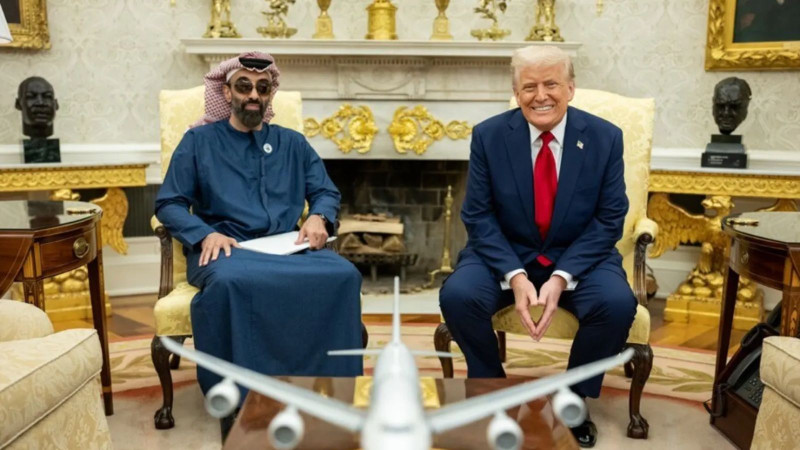
UAE Sheikh’s Stake in Trump-Linked Crypto Firm Raises Questions

A few days before Donald Trump was sworn in for his second term, a little-known crypto company tied to his family quietly changed hands in a very big way.
According to reporting from The Wall Street Journal, an investment network linked to Sheikh Tahnoon bin Zayed al Nahyan, one of the most powerful figures in the United Arab Emirates, agreed to acquire a 49 percent stake in World Liberty Financial, a Trump-associated crypto venture. The price tag was roughly $500 million. The deal was not disclosed at the time.
On its own, that might sound like another splashy foreign investment in crypto. But when you line up the timing, the players involved, and what happened next in Washington, the story is far less routine.
The deal that surfaced after the fact
World Liberty Financial has been marketed as a crypto and stablecoin project aligned with the Trump brand. It has drawn attention before for its political overtones, but the WSJ reporting introduced a new layer entirely.
The Journal reported that the agreement gave Emirati-linked investors just under half the company, enough to wield serious influence without triggering automatic control disclosures. Under the agreement, half of the $500 million was paid upfront, with $187 million flowing to Trump family-controlled entities and at least $31 million going to entities affiliated with the family of Steve Witkoff, the real estate magnate who co-founded World Liberty and was later named U.S. Special Envoy to the Middle East. Witkoff's son Zach is the current CEO of the project.
The timing did not help the optics. The deal was reached days before inauguration, when policy direction for the next four years was coming into focus and foreign governments were jockeying for position.
David Wachsman, a spokesperson for World Liberty Financial, said the company moved forward with Aryam’s investment because it believes the deal supports World Liberty’s long-term growth. He pushed back on the idea that the company should be held to a higher bar than other privately held U.S. firms when raising capital, calling that notion unreasonable and out of step with core American business principles.
Wachsman said neither President Trump nor Steve Witkoff played any role in the transaction, and that neither has been involved in World Liberty Financial’s operations since taking office. He added that Witkoff has never held an operational role at the company. According to Wachsman, the investment does not give any party access to government decision-making or policy influence, and the company follows the same rules and regulatory requirements as others in the industry.
Who is Sheikh Tahnoon?
Sheikh Tahnoon is not a Silicon Valley VC taking a flier on tokens. He is the UAE’s national security adviser, a senior royal, and a central figure in Abu Dhabi’s intelligence, defense, and investment apparatus.
He also oversees or influences a web of firms operating at the intersection of AI, data infrastructure, and geopolitics. That includes G42, an Emirati AI company that has faced scrutiny in the past over its international ties and access to advanced computing technology.
A person familiar with the investment of World Liberty said Sheikh Tahnoon and his team spent months reviewing World Liberty Financial’s business plans before committing capital, ultimately completing the deal alongside several co-investors. The person said the investment did not involve funds from G42.
The source also said the investment was never discussed with President Trump, either during the due diligence process or afterward, and described Tahnoon as a significant investor in the crypto sector.
The AI chip question hovering over everything
One reason this story has legs beyond crypto is what happened after the investment.
Following Trump’s return to office, the administration moved on policies involving advanced AI chips, an area where the UAE has been actively lobbying for expanded access. These chips are tightly controlled, highly strategic, and essential for modern AI development.
No reporting has established a direct quid pro quo. There is no document that says money went in and policy came out.
From a governance perspective, this is exactly the kind of situation ethics experts warn about. Even if no one crosses a legal line, foreign investors with deep political ties may gain goodwill, access, or priority simply by being financially intertwined with the president’s broader business ecosystem.
The legal fight may be narrow, the political fallout less so
Some legal scholars cited in reporting have raised the emoluments clause, the constitutional provision meant to prevent U.S. officials from receiving benefits from foreign states. Trump’s defenders counter that he is not directly receiving payments and that the structure insulates him from day-to-day involvement.
That argument may hold up in court. It often has before.
But the political risk is broader. Even without a legal violation, the appearance of foreign influence is enough to trigger congressional scrutiny, especially with Trump's polarizing nature and Senate Democrats, many anti-crypto, looking for any angle to stifle crypto innovation and hang Trump out to dry...all at the same time. Some Lawmakers have already begun calling for reviews, especially given the national security dimensions of AI and crypto infrastructure.
The Bottom Line
This is not just a Trump story or a UAE story. It is a preview of how crypto-era influence works.
Instead of overt lobbying, capital moves through private deals. Instead of formal control, investors stop at 49 percent. Instead of campaign donations, value flows through equity, tokens, and stablecoin rails.
It is cleaner, quieter, and harder to regulate.
Whether or not this specific deal leads to formal investigations or enforcement, it highlights a structural vulnerability. Crypto allows political proximity, financial upside, and strategic infrastructure to blend in ways legacy systems never quite allowed.
And that is why this episode is likely to be studied long after the headlines fade.