#Senate
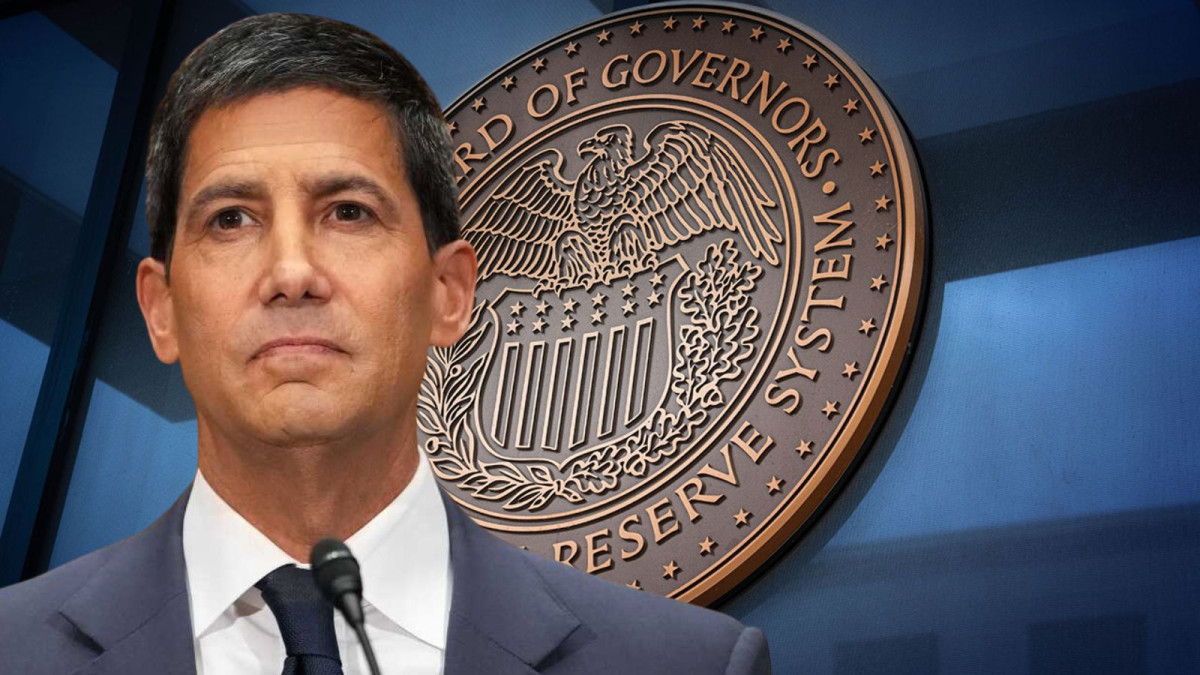
Pro-Crypto Kevin Warsh Confirmed as Fed Chair

The U.S. Senate confirmed Kevin Warsh as the next chair of the Federal Reserve on Wednesday, handing President Donald Trump a long-sought win and putting one of the most crypto-sympathetic figures in recent memory at the helm of the world's most powerful central bank.
The final tally was 54-45, and it wa a bit too close for comfort. In fact, it was the most partisan confirmation vote for a Fed chair in modern history, with only Pennsylvania Democrat Sen. John Fetterman crossing the aisle to support Warsh's nomination. The near party-line split underscores just how politically charged the Federal Reserve has become under Trump, who spent much of the past year publicly haranguing outgoing Chair Jerome Powell for not cutting rates fast enough.
A Confirmation That Almost Wasn't
Getting Warsh to this point was a rocky path. The nomination process stretched over months, at one point stalling entirely when Sen. Thom Tillis (R-NC) refused to let the confirmation advance until the Justice Department dropped a criminal investigation into Powell. That probe, led by DC U.S. Attorney Jeanine Pirro, centered on alleged cost overruns at the Fed's Washington headquarters. A federal judge had ruled the investigation was essentially a pretext to pressure Powell into cutting rates or resigning.
The DOJ eventually closed the probe, clearing the path for Warsh. Though Pirro left the door open to reopening the case if the Fed's inspector general turns up evidence of wrongdoing. For now, the drama is over, and Warsh has his confirmation.
What Warsh Means for Crypto
Warsh isn't exactly a crypto maximalist. He has, at times, referred to certain digital asset projects as fraudulent or worthless. But his disclosed investments tell a deeper story. Earlier this year it emerged he holds positions in Polymarket, the decentralized prediction market, and Solana. He has also stated that Bitcoin "does not make me nervous," a phrase that might seem understated but represents a meaningful shift from the posture of most previous Fed leadership.
During his Senate confirmation hearing in April, Warsh told Sen. Cynthia Lummis (R-WY) that digital assets are "already part of the fabric of our financial services industry" and affirmed he believes they should be incorporated into America's broader financial ecosystem. That was enough for Lummis, one of the most vocal pro-crypto voices in Congress, who said after the vote that digital asset holders "finally have a leader at the Fed who is ready to deliver."
The CFTC's chairman Mike Selig, who has defended prediction markets against a string of state-level lawsuits this year, also welcomed the Warsh confirmation, saying he looked forward to working together. That kind of interagency alignment on digital assets would represent a notable departure from the fragmented, sometimes hostile regulatory environment crypto has dealt with in recent years.
Juan Leon, a senior investment strategist at Bitwise, put the significance plainly: "Kevin Warsh is the first Fed Chair to endorse Bitcoin and describe it as a useful signal for policymakers, reflecting a shift in institutional legitimacy for crypto. While he's known as an inflation hawk, his stated belief that rates can move lower as a result of AI-driven productivity gains provides a plausible path to more accommodative liquidity conditions for crypto assets."
Rate Cuts: Don't Hold Your Breath
Here's where things get complicated. Trump has made no secret of what he expects from Warsh, having reportedly joked earlier this year that he'd sue him if rates don't come down. But market expectations have shifted sharply, and not in the president's favor.
Fresh inflation data released Tuesday showed consumer prices rose 3.85% in the 12 months through April, the highest reading since May 2023 and well above the Fed's 2% target. Traders are pricing in essentially no rate cuts for the rest of the year; some are even calling for a hike, largely because energy prices have climbed sharply following escalating tensions in the Middle East that have snarled tanker traffic in the Strait of Hormuz.
Warsh himself has signaled some openness to easing, particularly if AI-driven productivity gains help cool inflation over time. But he's also a known inflation hawk from his first stint at the Fed between 2006 and 2011, when he was among those who felt post-crisis quantitative easing had gone too far. It's not entirely clear which Warsh shows up to that first FOMC meeting on June 16-17.
And it's worth noting: Warsh is just one of 12 votes on the Federal Open Market Committee. Even as chair, he doesn't have unilateral authority over rate decisions. Powell, for his part, will remain on the Fed's Board of Governors after Friday, when his term as chair expires, retaining his FOMC vote. It's an unusual arrangement, last seen nearly 80 years ago, and Powell has been explicit about his motivations: he wants to protect the institution from what he has described as "unprecedented" legal and political pressure.
A New Era, With a Lot of Asterisks
Warsh also takes the helm at a Fed dealing with serious internal turbulence. Federal Reserve Governor Lisa Cook is locked in a legal fight with the president, who is trying to remove her on allegations of mortgage fraud, a case now making its way toward the Supreme Court. Meanwhile, Warsh will have to divest significant holdings, as he's set to become the wealthiest Fed chair on record, with a portfolio well north of $100 million.
Bitcoin barely reacted to the confirmation news, trading around $79,500 in the hours following the Senate vote, according to CoinGecko. But the longer-term implications could be meaningful. Whether or not rate cuts materialize, Warsh's ascent signals a growing institutional acceptance of digital assets at the highest levels of American financial policy. For a sector that has spent years fighting for legitimacy, that's not nothing.
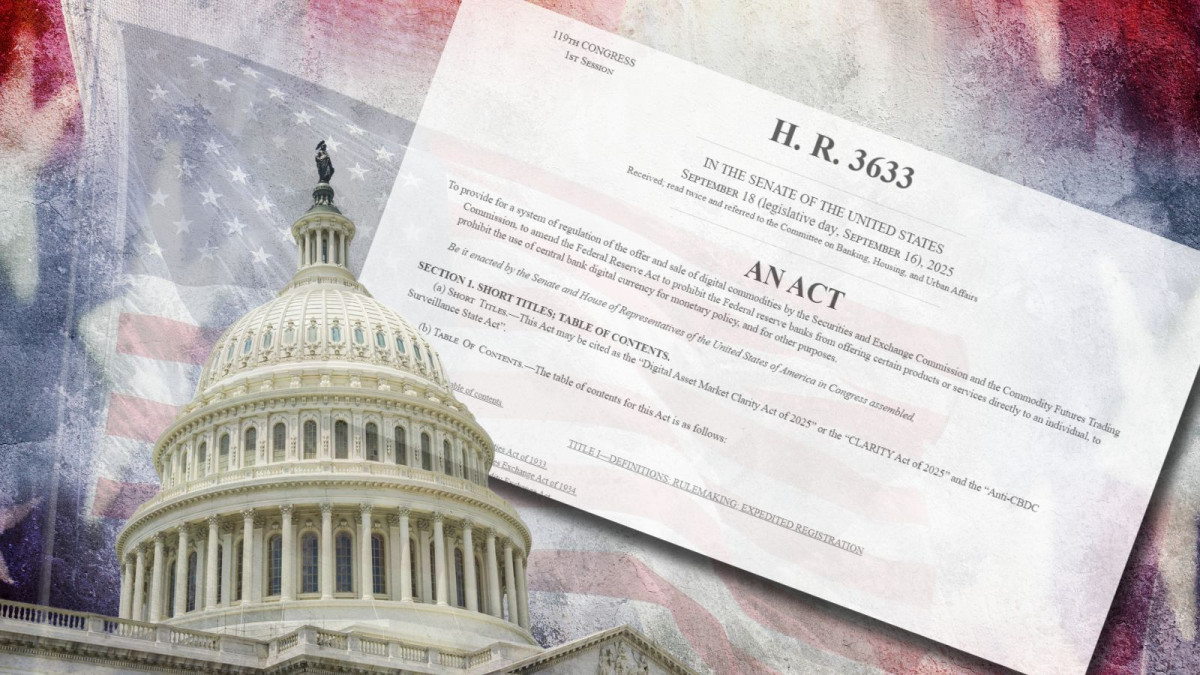
Senate Strikes Stablecoin Yield Deal, Clearing Path for the CLARITY Act

Something shifted in Washington on Friday, and the people who have been watching the CLARITY Act back and forth for months could feel it. Two key lawmakers, Republican Thom Tillis of North Carolina and Democrat Angela Alsobrooks of Maryland, reached an agreement in principle on one of the most stubbornly contested provisions in the bill: stablecoin yield. It is the kind of deal that, when the details finally shake out, may well be remembered as the moment the United States stopped kicking the crypto regulatory can down the road.
The news broke late Friday and was first reported by Politico. Senator Alsobrooks confirmed it plainly. "Sen. Tillis and I do have an agreement in principle," she said. "We've come a long way. And I think what it will do is to allow us to protect innovation, but also gives us the opportunity to prevent widespread deposit flight." The White House's crypto executive director, Patrick Witt, called it a "major milestone" and added that more work remains, but that progress toward passing the CLARITY Act was now real and tangible.
Senator Cynthia Lummis, the Wyoming Republican who chairs the Senate Banking Committee's crypto subcommittee and has been one of the most tireless advocates for this legislation, marked the occasion in her own way. She posted a photo on X of a "yield" sign. No caption needed.
The Stablecoin Yield Standoff, Explained
For months, the stablecoin yield question was the immovable object blocking the CLARITY Act from getting its Senate Banking Committee hearing.
The GENIUS Act, signed into law by President Trump in July 2025, prohibits stablecoin issuers from paying interest directly to holders. The intent was to prevent stablecoins from functioning as de facto bank deposit accounts, which would put them in direct competition with traditional savings products and, as the American Bankers Association argued loudly, threaten deposit flows into community banks. The concern: if Coinbase or another platform could offer users 4% on their dollar-pegged tokens simply for holding them, why would anyone keep money in a checking account?
The problem is that the GENIUS Act only covered issuers. It left a gap for third-party platforms that might offer rewards to customers who hold stablecoins on their systems. The ABA saw this as a loophole and spent months in Washington lobbying to close it. Crypto companies, for their part, said those rewards programs were fundamentally different from deposit interest and should be allowed.
Section 404 of the Senate Banking Committee's draft tried to thread this needle. It prohibits digital asset service providers from paying interest or yield "solely in connection with the holding of a payment stablecoin," while explicitly allowing "activity-based" rewards tied to transactions, payments, platform use, loyalty programs, liquidity provision, and other behaviors. The distinction is real: a reward for moving money through a system is not the same thing as interest paid for parking money in one.
Senator Mike Rounds, a South Dakota Republican on the Banking Committee, captured the nuance at an ABA summit earlier this month: rewards cannot be simply about how much money sits in an account, but they might reasonably be tied to how active that account is. "We're trying to reflect that in the discussions," he said.
Lummis had suggested the final compromise would disallow anything that "sounds like banking product terminology" and bar rewards tied to the size of a user's balance. Coinbase CEO Brian Armstrong, whose withdrawal of support in January helped torpedo a scheduled markup hearing, has been described by Lummis as "really pretty good about being willing to give on this issue."
From 99% to Done
The past week has been a rapid acceleration. As recently as Thursday, sources familiar with the situation described the stablecoin yield issue as being on the verge of resolution. A closed Senate Republican meeting on Wednesday, attended by White House crypto council director Patrick Witt, produced what Lummis told reporters afterward were significant breakthroughs, with "major light bulbs" switched on among the participants.
FinTech Weekly, which has closely tracked the legislative calendar, reported that stablecoin yield negotiations were "99% of the way to resolution" coming out of that meeting. The digital asset provisions of the bill more broadly were described as being in a "good place." The remaining friction, sources said, was not technical but political, specifically around whether community bank deregulation provisions might be attached to the CLARITY Act as part of a broader legislative trade.
Then came Friday's agreement. "We've come a long way," Alsobrooks told Politico, with a formality that understated just how much ground has been covered since January, when the scheduled markup hearing collapsed under the weight of over 100 proposed amendments and an industry revolt over the yield language.
What Comes Next and Why the Timeline Matters
An agreement on yield does not mean the CLARITY Act is done. Several other issues need resolution, decentralized finance remains a live debate, and the bill still needs to clear the Senate Banking Committee before it can go to a full Senate vote. After that, it must be reconciled with the version that passed the Senate Agriculture Committee in January. And before the President can sign it, that combined Senate text has to be reconciled with the House-passed version from July 2025.
But the clock is ticking here. Senate Majority Leader John Thune controls the floor calendar, and it is crowded. Unrelated fights, including the Republican voter-ID bill and ongoing debate over the situation in Iran, are competing for limited floor time. Haun Ventures CEO Katie Haun, in a CNBC interview Friday, put it directly: "The big question on the Clarity Act is, is Congress going to get a bill to the floor on time to vote?"
Lummis has said she expects a Banking Committee hearing in the latter half of April, after the Easter recess. Advocates have been hoping for a May resolution. Prediction markets are currently pricing the odds of the CLARITY Act being signed in 2026 at around 72%, according to FinTech Weekly. Treasury Secretary Scott Bessent has described passage as a spring 2026 target. Ripple CEO Brad Garlinghouse has put the odds at 80 to 90%.
JPMorgan analysts have described CLARITY Act passage by midyear as a positive catalyst for digital assets, pointing to regulatory clarity, institutional scaling, and tokenization growth as the key drivers. The crypto industry committed nearly $150 million to the Fairshake political action committee in the current cycle and announced a $193 million war chest around the Agriculture Committee markup in January. The companies behind that spending are waiting.
What This All Means
The stakes of the CLARITY Act extend well beyond Senate procedure. Markets are waiting. Institutions that have been slowly building out crypto infrastructure, custody solutions, tokenized asset offerings, trading desks, need to know what the rules are before they can fully commit capital and resources. The SEC's interpretation helps, but as Atkins himself acknowledged, it is not a substitute for law.
The CLARITY Act, if signed, would give the CFTC clear jurisdiction over most digital asset spot markets, create a path to register exchanges and brokers, establish consumer protections with real enforcement teeth, and provide the kind of statutory framework that companies can build businesses around. It would, in the language of its Senate Banking Committee sponsors, establish the United States as the crypto capital of the world, not just by rhetoric but by law.
If the bill fails this year, the status quo continues. Crypto companies operate under regulatory uncertainty. The SEC retains broad discretion to treat digital assets as securities. Institutional adoption continues but without a clear statutory framework. And the crypto lobby, which has made clear it will treat failure as a political liability, turns its $193 million war chest into something that looks a lot more like electoral pressure.
Friday's agreement does not guarantee passage. It does something important though. It removes the single biggest substantive obstacle to moving forward. The stablecoin yield question, which derailed a January markup hearing and has consumed months of negotiations, now has a resolution in principle. The path ahead still has obstacles, but for the first time in a while, it looks like an actual path.
Senators Tillis and Alsobrooks just handed the crypto industry something it has been asking for since the last bull market: a credible signal that Washington is finally going to do its job. The deal is in principle, the details are not yet public, and there is still legislative work ahead. But after years of false starts, shelved bills, collapsed markup hearings, and agency standoffs, this is the moment the trajectory changed.
U.S. Senate and State AGs Unveil Landmark Crypto Market Structure Legislation
U.S. Senate and State AGs Unveil Landmark Crypto Market Structure Legislation
After months of build-up the U.S. Senate along with state attorneys general have released a landmark draft of crypto market-structure legislation intended to create a comprehensive regulatory framework for the digital asset industry. The bill seeks to establish clearer rules for exchanges, custodians, stablecoins, and token issuers, signalling a major step in integrating crypto markets into the broader financial-regulatory system.
Key provisions of the legislation
Exchange registration and custody oversight
One of the bill’s cornerstone features is the requirement that platforms offering token trading register as exchanges or alternative trading systems under federal law. Custodial service providers will face enhanced capital, segregation, and reporting standards similar to traditional securities and futures firms. This aims to reduce counterparty risk and improve investor protections.
Stablecoin regulation and redemption guarantees
Stablecoins are addressed explicitly in the legislation. Issuers must maintain redemption rights at par value, hold reserves in approved categories, and submit to regular audits. This creates a regulated pathway for stablecoins to operate under federal oversight rather than piecemeal state rules.
Token classification and issuance protocols
The bill also introduces a clearer set of rules distinguishing when a token is treated as a security versus when it remains a commodity or other asset. Token issuers will face registration or exemption requirements depending on utility, liquidity and decentralization factors. This aims to reduce legal ambiguity for projects and improve market integrity.
Inter-agency coordination and enforcement
The legislation mandates cooperation among the U.S. Securities and Exchange Commission (SEC), Commodity Futures Trading Commission (CFTC) and state regulators. A new federal-state crypto oversight council is proposed to harmonize enforcement, share data and coordinate cross-border investigations.
Investor protection and disclosures
Exchanges and token issuers will be required to disclose meaningful risk information, liquidity metrics and relationship with affiliated entities. Retail investors would gain clearer visibility into where their assets are held, how trades are processed and what rights they possess in the case of insolvency or cyber-attack.
Why this matters for crypto markets
Path to legitimacy
For years the crypto industry has operated across fragmented regulatory regimes with varying standards. This legislation offers the possibility of a unified federal framework that could increase trust, lower friction and bring institutional capital to the space.
Institutional onboarding
Clearer rules for custody, trading and stablecoin issuance reduce operational risk for large players. Institutional funds, fiduciaries and corporates may be more willing to enter crypto markets if they can rely on regulated entities rather than offshore or lightly supervised platforms.
Token projects and innovation
While increased regulation introduces burden the bill simultaneously provides clarity. Projects now have clearer paths to token issuance, less fear of regulatory surprise and improved access to U.S. markets. The transparency could foster broader crypto ecosystem growth, especially for high-quality protocols.
Risks and criticisms
-
Regulatory burden & cost Many smaller projects argue that compliance costs may favour large incumbents and stifle innovation in early-stage ecosystems.
-
Securities law crossover If tokens are treated as securities many projects may face retroactive registration or litigation risk. The timing and grandfathering provisions will matter.
-
Implementation complexity Coordinating federal and state regulators, aligning rules across 50 states and dealing with cross-border issues will be operationally intense.
-
Risk of over-regulation Some stakeholders worry the legislation may push innovation offshore or drive it underground if U.S. rules become too restrictive compared to global peers.
What to watch next
-
Senate floor votes and committee mark-ups The timeline for passing the legislation will influence market sentiment and business planning.
-
Rule-making phases Exchanges, custodians and token issuers will monitor how the SEC, CFTC and new oversight council implement the rules.
-
Stablecoin ecosystem response Will major stablecoin issuers adjust to the new reserve and audit standards and maintain parity?
-
Token classification outcomes How many tokens will be reclassified as securities and how quickly issuers will respond?
-
Global regulatory spill-over Other jurisdictions may adopt similar frameworks or respond to U.S. leadership in crypto regulation.
Final thoughts
The release of this crypto market-structure legislation marks a milestone in the maturation of the digital asset industry. By creating clearer rules for exchanges, custodians and issuers the U.S. is signalling that crypto is not outside the financial system—it is increasingly part of it.
For markets this means the potential for deeper liquidity, institutional participation and broader adoption—but also higher expectations around compliance, governance and transparency. The next phase of crypto may well depend less on token hype and more on regulated infrastructure, institutional trust and sustainable business models.
As this framework moves through Congress regulators and the industry alike will be watching closely. The outcome will shape not just the next bull market, but how crypto fits into global finance for years to come.
Stay Connected
You can stay up to date on all News, Events, and Marketing of Rare Network, including Rare Evo: America’s Premier Blockchain Conference, happening July 28th-31st, 2026 at The ARIA Resort & Casino, by following our socials on X, LinkedIn, and YouTube.