#Crypto Stocks
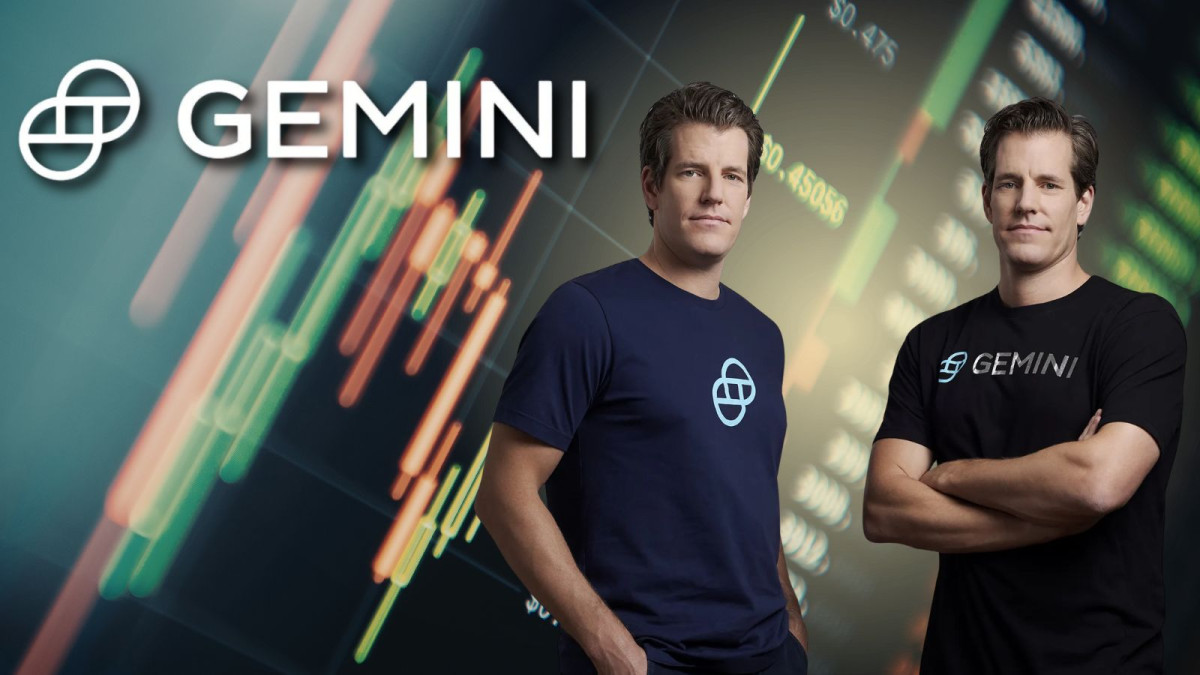
Gemini Stock Rises After Hours on Q4 Results as Investors Back Pivot

Gemini Space Station (NASDAQ: GEMI) got a real boost from Wall Street on Thursday evening. Shares jumped roughly 7% in after-hours trading, climbing to $6.45 after the company reported its fourth-quarter results and laid out a vision for where it is headed next. For a stock that has been taking a real beating the last few months, this feels like it could be a turning point, or at least the beginning of one.
The company went public on the Nasdaq in September 2025, raising around $425 million and generating a lot of excitement. The stock has since pulled back significantly, but Thursday's earnings report finally gave investors something that they can feel good about again.
Gemini Is Moving Beyond Being Just A Crypto Exchange
The headline from the results was not actually about trading at all. For the first time ever, revenue from Gemini's services and interest-based products surpassed what it made from trading fees. Services revenue rose 33% compared to the prior quarter, hitting $26.5 million. That might sound like dry accounting detail, but it matters a lot. It means Gemini is no longer entirely dependent on whether people are actively buying and selling crypto on any given day. That is a big deal for a business trying to grow steadily rather than just riding the waves of a notoriously volatile market.
A lot of that services growth came from Gemini's credit card, which functions like a rewards card but pays cashback in cryptocurrency instead of airline miles or cash. That product processed over $1.2 billion in transactions throughout 2025. Total revenue for the full year came in at $179.6 million, up 26% from the year before, and services revenue more than doubled over the same period. The company is building something that looks less like a pure-play crypto exchange and more like a broader financial platform, one that works even when the crypto market is quiet.
Beyond the credit card, the move that has really captured investors' imaginations is Gemini's push into prediction markets.
Gemini launched its prediction markets product, called Gemini Predictions, in December 2025 after its affiliate Gemini Titan received official approval from the U.S. Commodity Futures Trading Commission. This approval was five years in the making; the company first applied for the license back in March 2020. Receiving it placed Gemini in a very small club of fully regulated prediction market operators in the United States.
The early traction is genuinely encouraging. More than 15,000 users have already traded contracts covering categories from crypto prices to politics to sports. In the shareholder letter published Thursday, Tyler and Cameron Winklevoss made a bold pitch for why they believe this could be one of the most significant financial products in a generation. They argue that prediction markets forecast the future more accurately and more quickly than traditional experts, pollsters, or media organizations, and that Gemini is positioned at the center of that shift. It is an ambitious claim, but the regulatory foundation they have built gives them a real head start over most competitors.
When the CFTC approval was announced back in December, GEMI shares surged nearly 32% in a single session. The market clearly sees the prediction markets business as a meaningful growth engine, and Thursday's results confirmed that the product is gaining real users not just the new, shiny thing with a fancy launch.
Focusing On What Works
One of the things investors responded well to on Thursday was evidence that management is making tough decisions to streamline the business. In February, Gemini announced it would be cutting roughly 25% of its global workforce and closing its exchange operations in the United Kingdom, the European Union, and Australia. It is closing those regional operations and partnering with eToro, another regulated trading platform, to help affected customers transfer their assets.
The Winklevoss brothers described the move plainly: those international markets were hard to compete in, and trying to win them was stretching the company too thin. By pulling back to focus on the U.S., where Gemini has the strongest regulatory footing and the largest user base, management believes it can move faster and reach profitability sooner. The restructuring costs around $11 million, most of it in the first quarter of 2026, but the expected savings over time are significantly larger.
The company's full-year 2025 revenue of $179.6 million came in at the top end of its own preliminary estimates, a small but positive sign that the business is not deteriorating further. Operating expenses were higher than many investors would have liked, but the direction of travel looks more controlled heading into 2026 with the restructuring largely complete.
What's Next?
Gemini is not without its challenges. The company is dealing with several class action lawsuits filed by shareholders who believe the IPO documents did not fully reflect the scale of the restructuring that was coming. A management conference call is scheduled for Friday morning, and investors will want straight answers on the legal strategy, a timeline for replacing several senior executives who departed in February, and more detail on how fast the prediction markets business is actually growing.
Still, the picture Thursday evening was meaningfully better than it has been for most of the past six months. The company is generating real growth in non-trading revenue, it has a licensed and operational prediction markets platform at a time when that category is attracting serious investor and user interest, and management is finally showing a willingness to make hard cuts rather than try to compete on every front at once.
Prediction markets as a category have grown explosively over the past couple of years. Platforms like Kalshi and Polymarket have demonstrated real user demand, and regulators under the current administration have signaled a permissive approach to the space. Gemini's CFTC license gives it a compliance advantage that most rivals cannot replicate quickly, and its existing crypto user base is a ready-made pool of customers who already understand event-based trading.
Whether Gemini can fully execute on the vision Tyler and Cameron Winklevoss have laid out is still an open question. But for the first time in a while, Thursday's report gave investors something to point to beyond the headline loss number, and the after-hours market seemed to appreciate that. The stock sits more than 75% below its IPO price, so there is a lot of ground to recover. A rerating like that does not happen overnight. What Thursday showed, at least, is that the foundation for one might finally be taking shape.
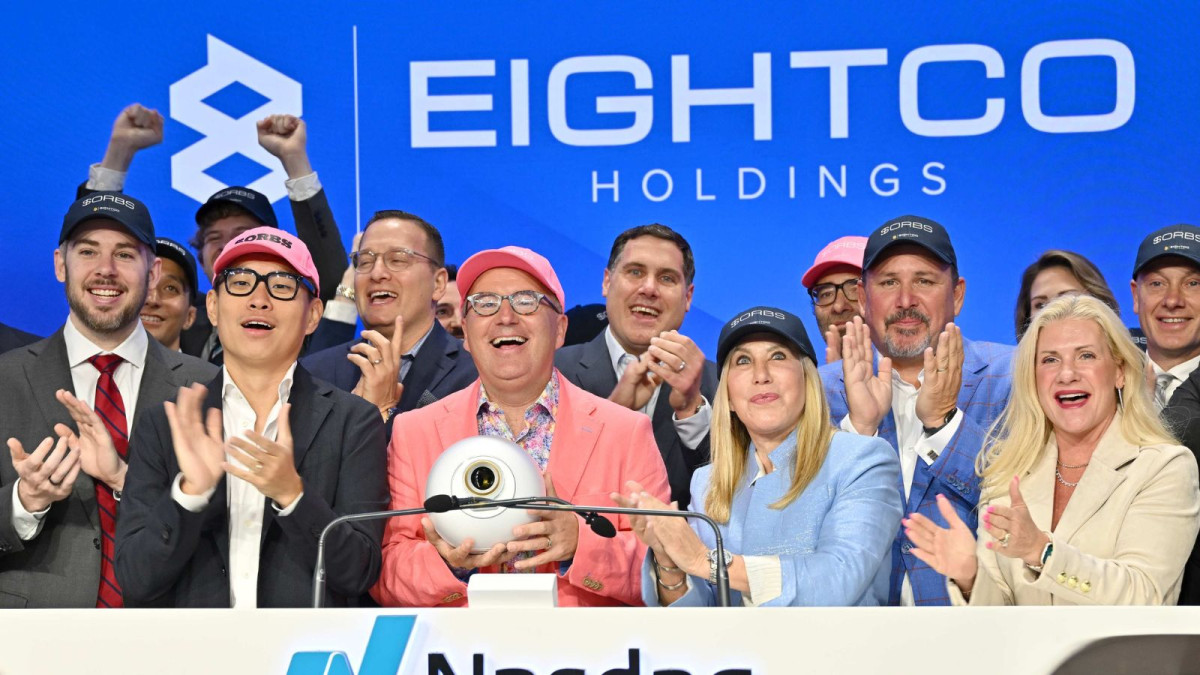
Eightco Shares Jump 25% After $125M Raise Led by Bitmine, ARK Invest, and Kraken

Eightco Holdings (NASDAQ: ORBS) pulled off a real power play on Wall Street Thursday, with shares jumping roughly 25% after the company announced it had locked in $125 million in new institutional commitments from a lineup that includes Bitmine Immersion Technologies, Cathie Wood's ARK Invest, and Payward, the parent company of crypto exchange Kraken.
The raise was led by Bitmine, which committed $75 million, with ARK Invest pledging at least $25 million and Payward rounding out the headline trio with another $25 million of its own. The full investor roster behind ORBS reads like a who's who of the crypto world: Coinfund, Pantera Capital, GSR, FalconX, Discovery Capital Management, and the World Foundation are all listed as backers.
But the capital raise wasn't even the most eyebrow-raising piece of news in Thursday's announcement. Eightco simultaneously disclosed it had already closed initial strategic investments of $50 million into OpenAI and $25 million into MrBeast and Beast Industries.
The OpenAI investment, worth approximately $52.5 million in economic interests in the company's equity, closed on March 6, just days before this announcement.
To understand how we got here, we kind of have to dive a bit deeper. Eightco has had one of the stranger corporate transformations of recent years. The Pennsylvania-based company pivoted from inventory management to cryptocurrencies and is currently developing a universal framework for digital identity and authentication. Not too long ago, its main business was making cardboard boxes through a subsidiary called Ferguson Containers.
Now, the company's identity is built around Worldcoin (WLD), the biometric-based digital identity project co-founded by OpenAI CEO Sam Altman. As of March 5, 2026, Eightco's treasury holdings included 277,222,975 WLD tokens, 11,068 ETH, and $82 million in cash. That WLD position, the company says, represents nearly 10% of the token's circulating supply, making ORBS the largest public market holder of Worldcoin on any exchange.
The company continues to hold Worldcoin and Ethereum as a long-term believer in the world's second-most valuable cryptocurrency, and frames its Worldcoin stake as foundational to a "proof of humanity" authentication layer it's building out.
The vision, as ORBS tells it, is to combine Worldcoin's biometric identity infrastructure with OpenAI's foundational models to create something at the intersection of AI verification, blockchain rails, and mass consumer reach. And it seems that it's clearly a compelling enough pitch to draw in some serious institutional names.
Who's Backing It, and Why
Tom Lee, Chairman of Bitmine, is joining Eightco's Board of Directors, while Brett Winton, Chief Futurist at ARK Invest, will serve as an advisor to the board.
Lee's involvement through Bitmine is notable. Bitmine itself has been on an aggressive crypto treasury strategy of its own, positioning itself as the leading Ethereum treasury company in public markets. Bitmine has combined crypto, cash, and "moonshot" holdings ranging well into the billions, and adding Eightco to that ecosystem tightens the connection between the two companies considerably. Lee getting a board seat means this isn't a passive financial bet.
His take on the investment was direct. Bitmine sees Eightco sitting at the center of some of the most important future needs and developments in AI, with what Lee described as tremendous synergy between Proof of Human via Worldcoin, OpenAI's foundational models, and the reach of the world's biggest content creator in MrBeast.
ARK Invest's Cathie Wood weighed in too, describing ORBS as taking on a unique initiative at the intersection of AI, blockchain, and creator-driven platforms.
Kraken's Arjun Sethi was perhaps the most philosophical about the whole thing. The Payward co-CEO framed it around power-law dynamics, suggesting that a small number of platforms tend to capture a disproportionate share of value in technological revolutions, and that ORBS is trying to position itself at the convergence of AI, cryptographic infrastructure, and global digital distribution.
MrBeast and the Distribution Play
The $25 million bet on Beast Industries deserves its own look. On March 10, Eightco invested approximately $25 million in shares of Beast Industries, with $7 million of that amount structured as committed capital that may be funded within 60 days in exchange for additional stock.
Beast Industries is the broader enterprise behind YouTube megastar Jimmy Donaldson, better known as MrBeast. The company spans entertainment, consumer products, and CPG, with the snack brand Feastables among its faster-growing launches. MrBeast's YouTube channel has over 450 million subscribers and generates more than 5 billion monthly views across all channels.
For a blockchain infrastructure play trying to build out digital identity at scale, having a meaningful stake in the world's most-subscribed YouTube channel is an unusual but not entirely illogical move. Distribution is distribution, and Eightco seems to be betting that the future of human authentication online will require massive consumer reach to actually work.
Taken together, Eightco is making a bold argument that the convergence of AI identity verification, blockchain infrastructure, and mass consumer distribution represents a huge opportunity, and that a small public company out of Pennsylvania is somehow positioned to sit at the center of it.
Whether the OpenAI stake, the MrBeast bet, the Worldcoin treasury, and the Ethereum holdings actually compound into something concrete is still up in the air. The risk disclosures in ORBS's own SEC filings acknowledge this as well, flagging the company's lack of control over private companies where it holds minority stakes, and the ongoing challenges of maintaining Nasdaq listing compliance while burning cash.
But the investor lineup announced today isn't made up of amateurs. Pantera, Brevan Howard, Coinfund, and ARK all know what they're doing, and they all decided this particular combination of bets was worth backing.

Investors Doubling Down on BitMine, Ethereum

Ethereum has been stuck in a prolonged downtrend. Prices are down more than 60 percent from the August 2025 highs, sentiment is shaky, and some analysts are floating scenarios where ETH could revisit the $1,400 level before finding a durable bottom.
And yet, through all that noise, something else is happening in the background.
Investors are still buying BitMine, as BitMine is buying more Ethereum.
Not trimming. Not waiting. Buying. In some cases, buying aggressively.
Ethereum Weakness Sets the Stage
The broader crypto market has been under pressure for months. Spot Ethereum ETFs have seen notable outflows, a sharp contrast to the steady demand flowing into Bitcoin products. That divergence has reinforced the narrative that institutions are leaning toward relative safety in BTC while treating ETH with more caution.
Ethereum’s price action reflects that hesitation. Lower highs, fading rallies, and persistent risk off positioning have defined the tape. Even bullish long term analysts concede that the near term setup remains fragile.
But the selloff has not scared everyone away.
BitMine Is Doubling Down
BitMine Immersion Technologies, (BMNR), has quietly become one of the largest corporate holders of ETH after pivoting to an Ethereum treasury strategy in 2025 under Chairman Tom Lee.
The company has accumulated millions of tokens, building a balance sheet that is heavily exposed to Ethereum. That exposure has not looked pretty on paper during the drawdown. Reports show billions in unrealized losses as ETH retraced from its highs.
Still, BitMine has continued to add.
Rather than slowing purchases during weakness, the company has leaned into the downturn. The logic appears straightforward. If the long term thesis around Ethereum remains intact, lower prices represent opportunity rather than risk.
It is a classic buy the dip strategy, but on a corporate scale.
Ark Invest Adds More Shares
Cathie Wood’s Ark Invest has reinforced that narrative. The firm has repeatedly increased its exposure to BitMine across multiple ETFs, adding millions of dollars worth of BMNR shares even as Ethereum remained under pressure. The firm bought a total of 212,314 shares across three of its exchange-traded funds, worth $4.2 million based on Thursday's closing price.
Ark has a history of leaning into volatility in high conviction themes. Crypto infrastructure and blockchain exposure remain central to its long horizon strategy. In that context, adding BitMine during a downtrend fits the pattern.
For Ark, the weakness in ETH may be noise relative to the structural growth story around smart contracts, tokenization, and onchain financial rails.
BlackRock Increases Its Stake
It is not just Ark.
BlackRock has also boosted its BMNR position significantly, increasing its holdings by more than 165 percent according to recent disclosures. That scale of increase is difficult to ignore, especially in a market where Ethereum linked products have seen soft flows.
The timing is notable. While some funds reduced direct ETH exposure through ETFs, large asset managers appear comfortable gaining exposure indirectly through equity vehicles like BitMine.
For institutions that prefer regulated equity structures over direct token custody, BMNR offers a levered proxy. It packages Ethereum exposure inside a public company wrapper, complete with traditional reporting and corporate governance.
That structure can matter for mandates that limit direct crypto ownership.
Why Buy BitMine When ETH Is Falling
At first glance, the trade looks counterintuitive. Ethereum is in a downtrend. ETF flows are mixed at best. Volatility remains elevated.
But the bull case rests on a few pillars.
First, long term fundamentals. Ethereum still anchors decentralized finance, stablecoin issuance, and a growing tokenization ecosystem. Institutional advocates argue that the network’s utility has not disappeared simply because price momentum has faded.
Second, balance sheet leverage. BitMine’s growing ETH treasury creates a scenario where equity performance can amplify moves in the underlying asset. For investors who believe ETH eventually reclaims higher levels, BMNR can offer outsized upside.
Third, cycle dynamics. Crypto markets have a history of brutal drawdowns followed by sharp recoveries. Accumulating during periods of pessimism has historically rewarded patient capital, even if timing the bottom is nearly impossible.
Investors are clearly looking past the next few quarters and thinking long term on Ethereum.
The Bottom Line
There is a clear split in the market right now.
Short term traders are reacting to chart levels, macro uncertainty, and ETF flow data. Long term allocators appear to be focusing on strategic positioning.
The continued accumulation of BitMine shares by names like Ark Invest and BlackRock suggests that institutional conviction in Ethereum infrastructure has not broken, even if spot prices have.
That does not guarantee a rebound. Ethereum could test lower levels before sentiment turns. Volatility is part of the asset class.
But the steady bid under BitMine tells its own story.
Even in a downtrend, capital is being deployed...with intent.
For now, Ethereum may be drifting lower. BitMine buyers, however, are still stepping in and definitely betting on Ethereum for the long haul.