#Web3
Apple, Google Hiring for Crypto Roles

Apple and Google, two of the largest technology companies, are currently on the lookout for crypto professionals who can help develop and shape their blockchain and payment initiatives.
In an Apple job posting, the technology giant advertised a position for a Financial Product Strategy Lead in the Apple Pay department.
According to the job description, the candidate would be involved in working with the Apple Card and Apple Cash product teams, developing a long-term strategy, assessing new growth opportunities, and managing and coordinating large initiatives that drive growth, with projects including Wallet, Payments, and Commerce.
Although the role particularly seeks candidates with experience in payment strategy, the job description also mentions a deep understanding of and experience with P2P payments, stablecoins, tokenised deposits, and blockchain technology.
For the Google role, the company is seeking a principal architect in the Web3 field, with the job description requiring a minimum of 10 years of experience in system architecture, distributed systems design, and cloud infrastructure.
Qualified candidates are also required to have years of experience architecting, deploying, or operating production-grade Web3 systems, blockchain protocols, institutional digital infrastructure, low-latency blockchain node infrastructure, Zero Knowledge (ZK) infrastructure, and rollup architectures.
The job description specifically mentions that qualified candidates should have institutional experience across different Web3 sectors, including Real World Asset (RWA) tokenisation, stablecoin rails, tokenised deposits, and custody architectures within financial environments, among other technical requirements.
Compared to the role at Apple, the Google role is much more technically demanding and requires candidates to have an in-depth and solid understanding of the inner workings and architecture of blockchain infrastructure and systems.
A Positive Sign for Crypto Adoption
The hiring of crypto professionals by two of the biggest non-crypto technology companies in the world is a good sign that highlights how much exploration and adoption the crypto sector, particularly stablecoins, is beginning to receive.
Although these companies are not entirely new to the crypto sector, there appears to be a big shift in how big tech companies are beginning to view blockchain and crypto, with many already integrating blockchain technology into their infrastructure.
For example, Google launched the Google Cloud Universal Ledger (GCUL), its permissioned, private distributed ledger that supports cross-border payments, tokenisation, and blockchain use cases for financial institutions. It also launched its own agent payment protocol and Pay.sh, a pay-as-you-go payment layer that enables AI agents to make payments.
Solana-Based Hey Wallet Announces Shutdown

Hey Wallet, the non-custodial Solana-based social wallet, has announced it will be shutting down all of its products after nearly five years of operation.
Hey Wallet, which was launched in 2021 during a Solana hackathon, was founded to make sending cryptocurrencies as simple as using social media by allowing people to transfer SOL directly via Twitter/X handles.
Thus, instead of having to copy long wallet addresses, Hey Wallet leverages users' X handles or social usernames. Since it was linked to users' social accounts, Hey Wallet enabled transactions to occur seamlessly in-app through users' social accounts, while allowing users to retain control of their private keys.

Although the team did not explicitly state the reason for the closure, Hey Wallet's shutdown comes at a time when several crypto companies, including crypto wallets, have shut down or strategically pivoted into other sectors such as AI.
On September 1 of this year, the non-custodial wallet Cosmostation ceased its operations after previously announcing that users should export their private keys and assets before the shutdown, a similar move made by Cyberwallet last month.
Other crypto wallets, such as Magic Eden Wallet, have had to repivot and change their operational focus, shifting from being a multi-chain wallet to a Solana-focused wallet.
Coinbase and MetaMask have also made similar changes to their wallet operations. For Coinbase, the Base App was rebranded back to Coinbase Wallet, with a focus on multi-chain trading, while MetaMask split from its parent company, Consensys, and continued operating as an independent consumer-focused wallet company.

MetaMask Becomes Standalone Company as Consensys Splits

Consensys Software Inc. (CSI) has announced plans to split into two independent companies, each with a separate focus and leadership team.
Announcing the split in a press release published on the MetaMask blog, Consensys Software Inc. said it will be rebranded as MetaMask, with Joe Lubin serving as Chairman and Chief Executive Officer.
The second company, which will retain the Consensys name, will be a newly formed entity comprising CSI’s Protocols Group and institutional blockchain infrastructure business, including Linea and its broader portfolio of enterprise and Ethereum protocol infrastructure. Mike Kriak will serve as CEO, David Cunningham as President, and Joe Lubin as Executive Chairman.
Speaking about what both companies are expected to become, Joe Lubin, Chairman and CEO of MetaMask and Executive Chairman of Consensys, said MetaMask will grow beyond being just a self-custodial wallet and become a platform where users can not only hold their assets but also manage their money in diverse forms and across different aspects of their financial lives.
As for the new Consensys entity, Lubin said the company will continue to operate as a protocols company, with the newly formed team bringing Ethereum, Hyperledger Besu, and Linea protocol development together to enable enterprises and institutions to collaborate more effectively.
What Comes Next for Both Companies
MetaMask will continue to be an Ethereum first product company, providing self-custody services that allow users to hold and manage their assets on the platform.
The team will also continue working on its Open Money platform, which represents the company’s vision of transforming the wallet into a platform where users can hold, move, spend, save, invest, and grow their money in one place. As a step toward this goal, the team launched the MetaMask Money Account in June, enabling users to gain greater control over their finances.
Consensys will continue playing a key role in advancing Ethereum and other Ethereum related protocols, including the development of decentralized applications and protocols on the Ethereum blockchain network.
The team will also expand its work helping financial institutions and enterprises deploy blockchain infrastructure, including helping institutions such as banks, asset managers, payment providers, and market infrastructure firms access tokenized financial markets and stablecoins.
Monad Proposes Wallet Upgrade to Protect Against Quantum Attacks and Lost Keys

Monad, the high-performance EVM-compatible Layer-1 blockchain, has published a proposal aimed at giving users greater flexibility and changing how blockchain wallets manage authentication.
The proposal, titled “Flexible and Upgradeable Account Authentication,” was published by Kushal Babel and Jan Camenisch, two senior researchers at Category Labs, the engineering team behind Monad.

At its core, the proposal has one goal: to separate a wallet’s permanent address from the credentials that control it, thereby giving users the flexibility to add, replace, or retire keys without having to change the wallet’s address or move assets.
By publishing the proposal, Monad aims to address a key problem with current blockchain wallets. Since most wallet addresses are permanently derived from a single secp256k1 public key, losing the corresponding private key can make the wallet account unrecoverable.
As a solution to this problem, Monad is proposing an AuthConfig model, where every wallet account holds a mutable AuthConfig. This allows an account to hold multiple authenticators and a separate reconfiguration policy, enabling users to access their wallet accounts even if a private key is lost. At launch, the supported schemes will include secp256k1, P-256, Ed25519, WebAuthn/passkeys, ML-DSA (post-quantum), and a ZK-OAuth verifier.
Although there is currently no quantum computer capable of breaking the cryptographic schemes used by crypto wallets, several reports have projected that this could become possible in the future.
In addition to Monad, other companies, including Ledger and Coinbase, have also taken steps to develop quantum-resistant wallets. Coinbase has established an independent Quantum Advisory Council while also developing a post-quantum security roadmap.
Ledger has also added ML-KEM and ML-DSA, two NIST-standardized post-quantum cryptographic algorithms, to its Ledger SDK as part of its efforts to develop quantum-resistant wallet technology.
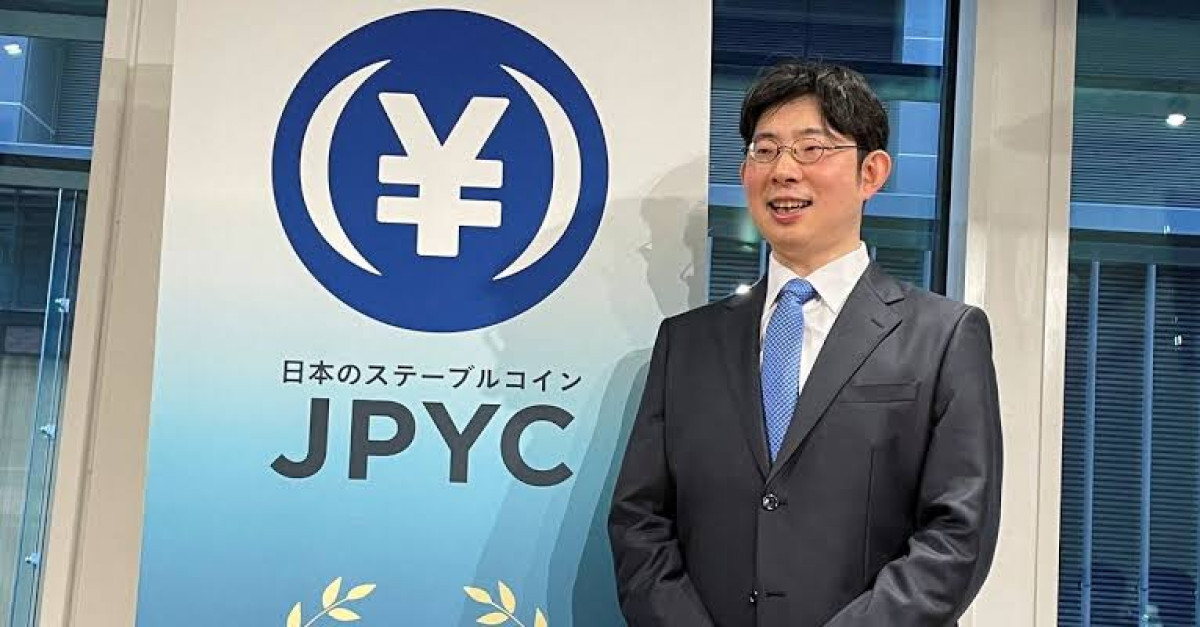
Stablecoin Firm JPYC Inc. Raises $38 Million in Extended Series B Round

Japan-based firm JPYC Inc., the issuer of the Japanese yen-backed stablecoin JPYC, has raised a total of 6 billion yen (about $38 million) in an extended Series B funding round.

The Series B round, which began in February this year and raised $38 million over time, involved venture partners and investors including Asteria, Metaplanet, Yokohama Capital, bitFlyer Holdings, and Hokkaido Bank, among others.
For the extended round, AZ-COM Maruwa Holdings Co., Ltd. became the newest investor in JPYC Inc., with some publications reporting that it led the round after investing an additional 1 billion yen (about $6 million), securing a 2.9% ownership stake in the company.
“The synergy between our ‘JPYC’ currency and the robust logistics network of the AZ-COM Group will form the core foundation of this ‘on-chain finance that integrates commercial, logistics, and financial flows,’” Noritaka Okabe said in a JPYC press release.
Regarding the funds raised, JPYC Inc. said in a recent press release that it aims to expand its presence across both the financial and Web3 ecosystems, accelerating the adoption of the JPYC stablecoin. The company also said, as stated in a previous press release, that the funds will be used to support the development of JPYC’s infrastructure, investments, and partnerships.
About JPYC
JPYC is Japan's first yen-backed stablecoin that maintains a 1:1 peg with the Japanese yen.
Under Japan’s Payment Services Act, JPYC is classified as an electronic payment instrument rather than a cryptocurrency, giving it full redeemability and stronger consumer protection under the strict regulatory oversight of Japan’s Financial Services Agency (FSA).
Since its launch in October last year, JPYC has surpassed 10 billion Yen in onchain circulation volume. The stablecoin is also currently supported by several blockchains, including Ethereum, Avalanche, Polygon, and Kaia. Additionally, transactions using the stablecoin are free of charge.
Zapper Shuts Down After 7 Years

Zapper, the popular DeFi dashboard and portfolio tracker, will wind down its operations after about seven years in the crypto industry.
"After close to seven years building Zapper, I regret to announce that Zapper will be winding down," said Seb Audet, co-founder and CEO. "We evaluated a number of different options, pursued some to the fullest extent possible, and came to the realization that an orderly wind down is the best course of action."
Before its decision to shut down, Zapper allowed users to track and visualize assets, liabilities, NFTs, and DeFi positions, including staking, liquidity pools, and loans, across multiple blockchains in real time. According to Audet, Zapper served more than 2 million monthly users and processed more than $13 billion in peak transaction volume.
Zapper's shutdown will be completed on August 3, with the team discontinuing all of its services, including zapper.xyz, its mobile apps, and its API services. The team also said it will send an email to existing API users to help with the transition.
Zapper's decision to shut down comes shortly after crypto exchange AscendEX wrapped up its operations, citing regulatory pressure and its failure to obtain authorization under the European Union's Markets in Crypto Assets, or MiCA, regulation, which fully took effect on July 1, 2026.
The AscendEX team also cited financial and operational challenges, stating that users will no longer be able to open accounts, deposit assets, trade, swap, stake, lend, or participate in referral or promotional campaigns. Account access will remain available only for limited offboarding purposes.
The shutdowns of Zapper and AscendEX come amid a broader wave of closures across the crypto industry. Since the start of the year, approximately 70 to 75 crypto projects and firms have either shut down or filed for bankruptcy.
Last month, blockchain protocol Radiant Capital shut down after failing to recover from an exploit it suffered months earlier. Tether also discontinued its Alloy platform, citing low user activity and weak market demand. Binance also shut down its NFT marketplace.
Robinhood Launches Mainnet Blockchain

Robinhood Chain, the mainnet blockchain of Robinhood Markets Inc., is now live after about 5 months of running its public testnet.
The mainnet chain, unveiled at the recent "Robinhood Presents: The World is Flat" event at the Old Royal Naval College in London, is built on the Arbitrum blockchain and aims to bridge the gap between traditional and decentralized finance.
“Decentralized finance unlocks possibilities beyond what traditional finance can offer, but historically, it has required technical expertise to navigate,” said Johann Kerbrat, SVP and General Manager of Crypto and International at Robinhood.
“We’re bringing the best of traditional finance and DeFi together, and in doing so, expanding financial ownership to every corner of the globe.”
According to the Robinhood team, Uniswap will serve as the chain's primary public liquidity protocol and will deploy a dedicated Automated Market Maker (AMM), while decentralized trading firm Pleiades will also deploy a proprietary AMM and serve as the chain's primary proprietary trading venue. The chain also features fast block times and a permissionless environment where builders can innovate seamlessly.
Other Product Launches
The Robinhood team also launched new stock tokens that allow eligible users in more than 120 countries to trade directly 24/7 on the Robinhood Chain. Users will be able to trade spot tokens through decentralized exchanges such as Uniswap, Lighter, and 1Inch. The first set of these stock tokens, known as Classic Stock Tokens, will be available to European users through the Robinhood app.
Robinhood Earn, a product that allows users to lend their Global Dollar (USDG) stablecoin at an estimated annual percentage yield (APY) of 7%, was also rolled out. This lending infrastructure is powered by Morpho Protocol.
The launch of the Robinhood Chain comes shortly after Robinhood trimmed its workforce by 10% last month, a move aimed at achieving greater impact with a leaner team. Following its recent entry into Canada and Singapore, Robinhood has also revealed plans to enter the UK market. Robinhood currently serves 28 million users across 38 countries and three continents.
Fomo Raises $75M Series B to Expand On-Chain Trading

Fomo, a cryptocurrency trading platform, has raised $75 million in a Series B funding round led by Index Ventures, with Union Square Ventures and Benchmark also participating.

According to the team, the new funding will be used to expand Fomo’s asset classes, including equities, perpetuals, and prediction markets, while scaling its engineering team and further investing in its trading and social platform.
Through its consumer-focused platform and the removal of some technical barriers associated with on-chain trading, such as unpredictable gas fees, fragmented blockchains, and complex token bridges, Fomo aims to seamlessly onboard users on-chain.
“Most trading products aren’t built with the user in mind. They are dull, hard to understand, and make you want to rip your hair out,” said Paul Erlanger, Co-founder and CEO of Fomo.
“Each decision we make at Fomo is made to bring our users joy. Fomo is accessible, social, and understandable in 15 minutes. We believe people should be able to access global markets instantly, share opinions and convictions through their network, and participate without needing to understand the technical complexity underneath it all.”
By unifying liquidity, automatically routing transactions, and supporting familiar traditional payment methods such as Apple Pay, Fomo aims to make on-chain trading more accessible. With the inclusion of new asset classes, Fomo is positioned to reach more users globally.
About Fomo
Fomo is a consumer-focused, social-first crypto trading app designed to make on-chain trading simple and accessible. Everything it does revolves around its goal of simplifying crypto trading. To achieve this, Fomo integrates social trading features that allow users on the platform to discover trending assets, connect with top-performing traders, and track open positions.
Since launching last year, Fomo has done several impressive things, including becoming the largest cross-chain crypto trading app, raising more than $90 million in seed funding, growing its user base to more than 625,000, and processing over $4 billion in trading volume to date.
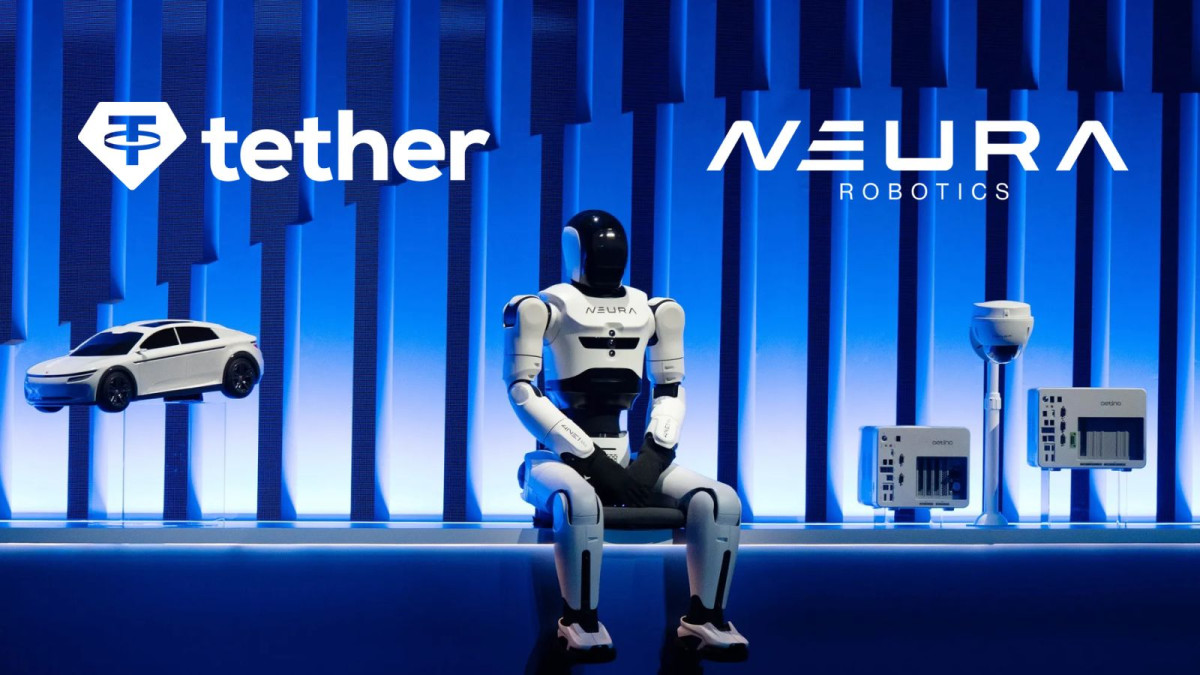
Tether Leads $1.4B Neura Robotics Funding Round

Stablecoin issuer Tether has announced its role as the lead investor in Neura Robotics’ recent Series C funding round. The funding round, which raised an estimated $1.4 billion, included Qualcomm, Amazon, and NVIDIA among other investors.

By investing in Neura Robotics, Tether is extending its influence beyond the digital asset industry, enabling it to deploy some of its core technologies into the humanoid robotics ecosystem. The partnership also enables the integration of Tether’s Wallet Development Kit and Tether’s self-custody wallets into the Neura Robotics system.
Through this integration, Tether provides a foundation that enables Neura Robotics to develop robotic systems that earn micropayments for tasks, transact with other robotic systems, and autonomously facilitate transactions and receive payments between machines without human intervention.
As part of its partnership, Neura Robotics will collaborate on testing, improving, and deploying Tether’s QuantumVerse Automatic Computer, known as QVAC, into its Neuraverse ecosystem. QVAC is Tether’s open-source, decentralized artificial intelligence platform that enables users to run and fine-tune large language models directly on their devices without relying on cloud servers.
“As robotics moves beyond scripted automation and into true autonomy, the infrastructure behind it must evolve as well,” said Paolo Ardoino, chief executive officer of Tether.
“Autonomous machines need the ability to process information locally, make decisions, and transact without relying on centralized intermediaries. QVAC brings that edge-first intelligence to the platform while WDK handles the secure financial layer. Together, they enable machines to execute tasks, account for outcomes, and operate independently. NEURA Robotics shares that vision, and this investment reflects our confidence in what autonomous robotics can become.”
About Neura Robotics
NEURA Robotics is a German-based high technology company that positions itself as a pioneer in cognitive robotics and Physical Artificial Intelligence. It develops artificially intelligent machines that can perceive (see, hear, feel), learn, adapt, and collaborate safely with humans.
So far, the company has developed some cognitive humanoid robots, including MAiRA, MiPA, and 4NE1. It has also developed Neuraverse, an open ecosystem and platform that enables robots to share skills, continuously learn, and expand their capabilities.

Kraken Becomes Official Crypto Exchange Supporter of FIFA 2026

Kraken has been named the official cryptocurrency exchange supporter of the FIFA 2026 World Cup, which is scheduled to begin on June 11.
In a blog post announcing the partnership, Kraken said the collaboration will allow it to leverage its digital technology to enhance the fan experience for the global audience expected to tune in to this year’s World Cup tournament, which will be hosted across three countries: Canada, Mexico, and the United States. The tournament is expected to reach more than 6 billion people worldwide.

“Innovation has always played a central role in how FIFA evolves and enhances the fan experience. As we prepare to welcome the world to the biggest FIFA World Cup in history, we are delighted to partner with Kraken, an organization that shares our commitment to innovation and technology,” said Romy Gai, FIFA Chief Business Officer.
“Together, we look forward to exploring new ways to connect supporters with the tournament, creating memorable experiences that bring fans closer to the game and the moments that make the FIFA World Cup so special.”
With Kraken becoming the official cryptocurrency exchange supporter of this year’s World Cup, the company said it will deliver a series of fan-focused product experiences across North America and Europe. Kraken said the initiatives are designed to introduce new audiences to digital assets while strengthening the connection between football engagement and financial participation.
About Kraken
Kraken is one of the world’s oldest global cryptocurrency exchanges. Launched in 2011, the exchange operates as a full-service digital asset platform offering spot trading, margin trading, futures, staking, over-the-counter services, tokenized equities, and stocks. Its mission is to accelerate the global adoption of crypto by enabling broader access to financial services and promoting financial inclusion.
Since its launch, Kraken has grown to serve millions of users worldwide. Its services are currently available in more than 190 countries and serve over 13 million users globally. To provide non-U.S. users with access to U.S.-listed stocks and IPO opportunities, Kraken launched xChange, a platform that offers tokenized representations of real U.S. stocks and exchange-traded funds to eligible non-U.S. users.
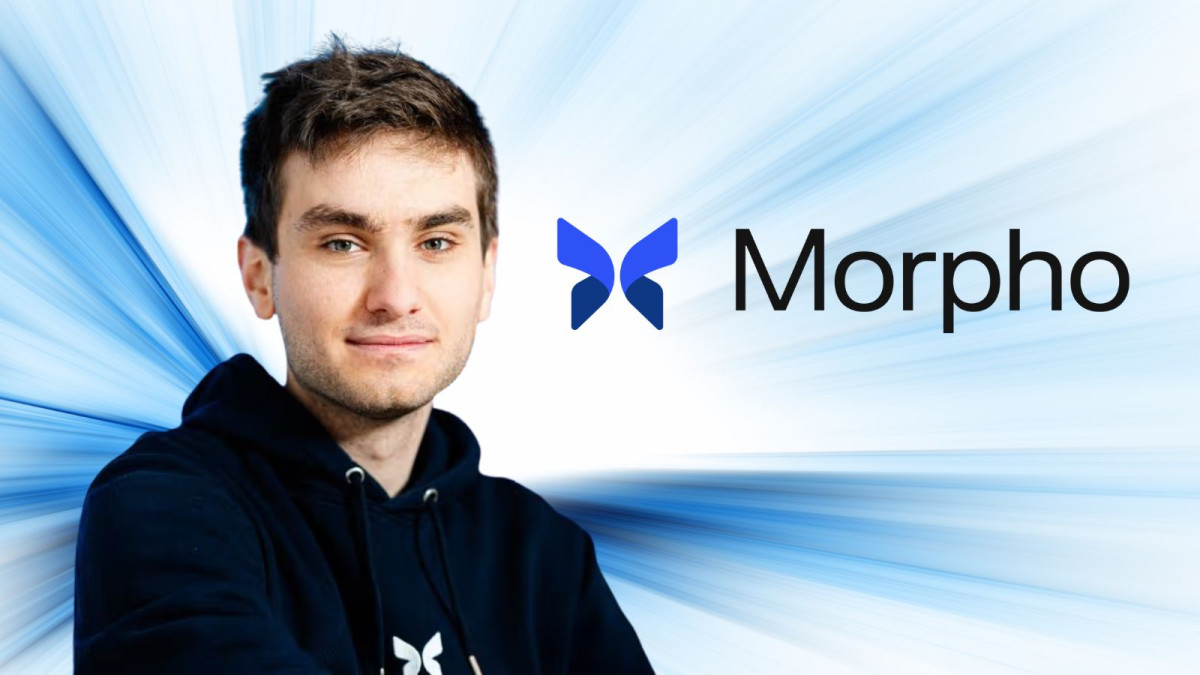
Morpho Raises $175M to Expand DeFi Lending Network

Morpho, a leading decentralized finance lending protocol, has raised $175 million in a funding round led by Paradigm, a16z crypto, and Ribbit Capital. Other firms involved in the round include Apollo Funds, Circle Ventures, VanEck, Ledger Cathay, Variant, Wintermute Ventures, Prelude, IOSG, HashKey, Mirana, NJJ Capital, SBI Group, Bpifrance, and Bam Azizi.

With the funds raised, Morpho aims to further deepen its technical and commercial integrations with strategic partners and continue its mission of developing and strengthening the on-chain infrastructure businesses need to build programmable credit products.
“The true value of finance has always been held back by outdated infrastructure, fragmented systems, and extractive intermediaries,” says Paul Frambot, co-founder of Morpho. “We started Morpho to change that. We’re building the open credit network for the world, connecting those with excess capital to those who need financing globally.”
About Morpho
Morpho is a leading decentralized, permissionless lending protocol operating across Ethereum, Base, and other EVM-compatible blockchain networks. Launched in 2021, Morpho aims to efficiently connect lenders and borrowers globally through its decentralized credit network.
Morpho claims to have facilitated more than $11 billion in deposits since its launch. Its decentralized lending platform is currently used by several institutional clients, including Bitwise, Galaxy, Anchorage Digital, Ledger, Trezor, Bitpanda, Coinbase, Kraken, and Binance. In total, Morpho has raised more than $244 million, with a valuation of approximately $2 billion.
The State of DeFi Lending
On-chain lending remains one of the largest and most mature sectors in decentralized finance. According to data from DeFiLlama, the total value locked in DeFi lending across more than 600 protocols stands at approximately $35.5 billion to $35.8 billion, with Aave, Morpho, and SparkLend holding the largest market shares in the sector.
Institutional adoption in DeFi lending has also accelerated significantly, with blockchain protocols such as Morpho launching Morpho Blue and MetaMorpho vaults, which allow easier integration of the Morpho platform with other centralized finance and institutional platforms. SparkLend has also launched dedicated products targeting institutional clients.
Several other companies, including Gemini, Crypto.com, Fireblocks, Bitwise, J.P. Morgan, and VanEck, have also become involved in institutional DeFi lending through partnerships or the launch of DeFi lending products.
MetaMask Launches AI Agent Wallet for DeFi Trading

MetaMask, one of the major cryptocurrency wallets, has rolled out MetaMask Agent Wallet, a non-custodial wallet that enables AI agents to autonomously execute DeFi activities such as swaps, perpetuals trading, prediction markets, and liquidity provisioning.

According to the MetaMask team, the new wallet is designed for crypto native traders, automators, and builders who already understand on-chain workflows and want these tasks executed by agents. Because the wallet supports multiple agentic platforms, users are not required to adopt a single framework. Compatible platforms include OpenClaw, OpenAI Codex, Claude Code, Nous Research Hermes Agent, and Cursor.
"The next great expansion of the on-chain economy will not be driven by humans alone. Machine intelligences will increasingly transact, coordinate, and verify one another on crypto rails because crypto protocols are uniquely well designed for autonomous actors," Consensys co-founder Joseph Lubin said in a statement.
"Agents will manage real capital and make real financial decisions, and the infrastructure underneath has to be worthy of that. MetaMask Agent Wallet is the first agent wallet built with comprehensive full-stack security for that world, one where agents act with autonomy, security is mandatory, and the person behind the agent stays in control."
To maintain a high level of wallet security, MetaMask has implemented several security mechanisms, including a Trusted Execution Environment (TEE) that protects users' private keys.
The MetaMask team has also implemented Transaction Simulation, which allows users to preview the outcome of a transaction before it is sent on chain; Transaction Shield Threat Scanning, powered by Blockaid, which detects potential threats before execution; Smart Transactions MEV Protection, which scans transactions for potential Maximal Extractable Value (MEV) exploitation; and Transaction Protection Coverage, which provides coverage of up to $10,000 per month. These mechanisms are designed to ensure that AI agents operate within defined security constraints while maintaining a degree of autonomy.
The MetaMask Agent Wallet will initially be available to a limited group of traders and developers through an early access program. The program will provide access to two operating modes: Guard Mode, the default with stricter controls, and Beast Mode, with fewer restrictions.
The launch of the new self-custodial wallet comes shortly after MetaMask co-founder Dan Finlay announced his departure from the company, citing a desire to spend more time with his family. Consensys, MetaMask's parent company, also recently partnered with SG FORGE, a subsidiary of French banking group Société Générale, to integrate the USDCV stablecoin into the MetaMask wallet.