#Artificial Intelligence
Mistral AI Raises €3 Billion in Series D, Valuation Hits €21 Billion

Artificial intelligence company Mistral AI has raised €3 billion in a Series D funding round led by Samsung Electronics, with participation from the Scaleup Europe Fund and PSG Equity.
The round, which comes exactly a year after Mistral AI raised €1.7 billion, brings the company’s valuation to €21 billion. The round is also historic, as it is the largest fundraising ever completed by a European technology company, just three years after its launch.

With the funds raised, Mistral plans to significantly expand its frontier research while scaling its computing capacity to train powerful AI models. Mistral also said the funds will be used to expand its infrastructure, accelerate commercial growth, and strengthen its international presence.
About Mistral AI
Founded in 2023 by three DeepMind and Meta alumni, Arthur Mensch, Guillaume Lample, and Timothée Lacroix, Mistral AI is a French artificial intelligence company that aims to democratize frontier AI by developing open weight models that provide users and organizations with greater control, accessibility, and customizability.
Since its launch, Mistral AI has lived up to its goal of developing competing AI models that are largely accessible and remain under users’ control. The company has also raised approximately €6 billion across several funding rounds, supporting more than 125 enterprises and users in over 20 countries.
Still in the AI sector, Anthropic has abandoned its $6 billion acquisition of Israeli AI startup Decart AI after being in talks with the Decart team for roughly one month.
Although the reason for Anthropic’s decision to walk away from the deal remains undisclosed, speculation has centered on the startup’s lack of scalability and the founder’s refusal to relocate its talent and operations from Tel Aviv to San Francisco.
AI Infrastructure Firm Gimlet Labs Raises $300M at $3B Valuation

Gimlet Labs, an applied AI research and product company, has raised $300 million in a Series B funding round led by Andreessen Horowitz, bringing its valuation to $2 billion.
The funding comes shortly after the company raised $92 million in a previous Series A round and includes participation from other venture capital firms, including Sapphire Ventures, Menlo Ventures, Emergence, Factory, Hudson River Trading, and Wing Ventures, among others.

With these funds, Gimlet Labs plans to expand its computing and data center capacity, particularly as the AI industry sees rapid adoption. As the industry continues to grow, power is increasingly emerging as a critical bottleneck that could hinder further growth.
According to Gimlet Labs, AI data centers consumed approximately 18 GW of power in 2025, with this figure expected to triple by 2030. At this rate, existing resources may eventually be insufficient to meet growing demand, which is why the Gimlet Labs team plans to expand its AI infrastructure and data center capacity to meet this demand.
While the funds will also be used to support the company's expansion and hiring efforts, they will also be used to support Gimlet Labs' first multisilicon cloud infrastructure platform, which it is currently building. Due to its heterogeneous design and architecture, the multisilicon cloud platform disaggregates workloads across chips, GPUs, and CPUs, ensuring more efficient use of power and data center resources.
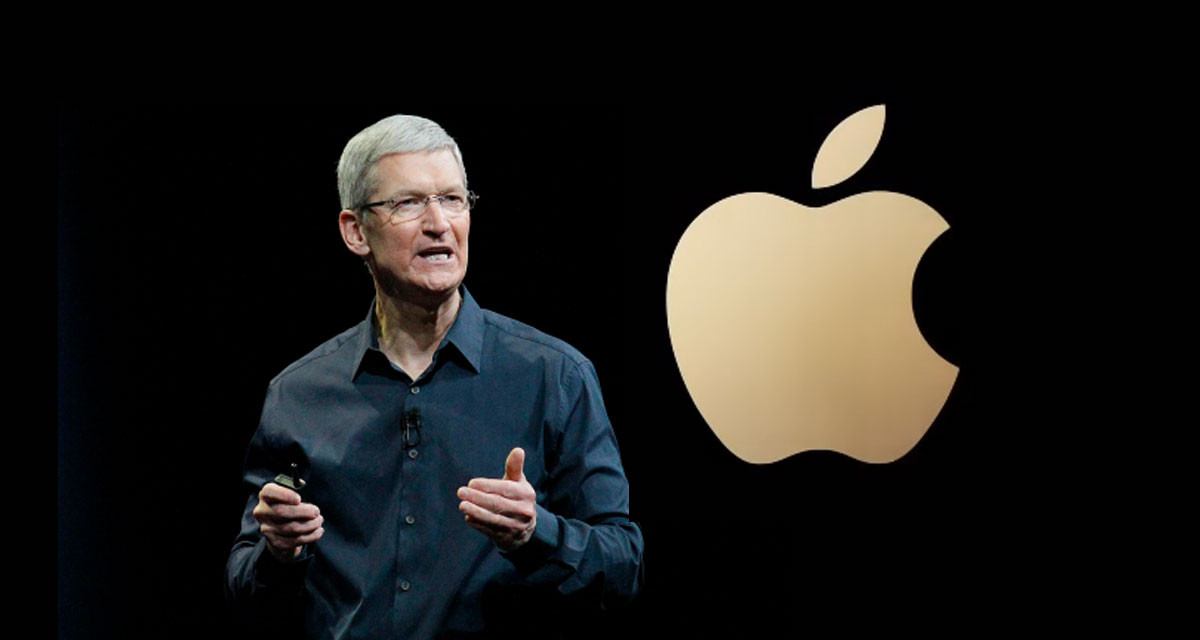
Apple Lays Off Over 200 Staff Amid AI Shift

Apple Inc. is reportedly cutting more than 200 positions across key departments as the tech giant redirects its focus toward artificial intelligence and future hardware.
The job cuts are said to affect the company’s Siri digital assistant, software engineering, and Vision Pro teams, with about 100 of the cuts coming from the Vision Pro department and roughly 100 from the Siri voice assistant team and the Intelligent Systems Experience group, which handles the company’s AI driven software capabilities.
Apple said in a statement through a spokesperson that the layoffs are aimed at evolving its business operations.
“While we will create new roles as part of this change, it will also impact a limited number of existing roles. We are grateful to these team members for their contributions, and we are committed to supporting them throughout their transition, including opportunities to apply for other roles at Apple.”
Despite the reduction in roles in the Vision Pro hardware department, Apple has assured employees that projects involving the Vision Pro hardware line and visionOS operating system will remain active. However, priorities have shifted toward developing smart glasses that do not require complex 3D gaming or immersive media capabilities and are less expensive to build.
The layoffs come at a time when Apple is rebuilding Siri, its voice powered virtual assistant, into a more conversational and context aware version known as Siri AI.
The newer model, which is being built in partnership with Google Gemini, will be able to handle personal data, on screen awareness, multi step tasks, and web knowledge, with a dedicated Siri app expected to be rolled out in beta later this year.
Like Apple, several other tech giants, including Google, Microsoft, and Amazon, have strategically pivoted toward AI or integrated the technology into their infrastructure, as they compete for a leading position in the AI race.
OKX Restricts Hong Kong Staff From Using Anthropic Claude AI

Goldman has restricted its Hong Kong staff from using Anthropic’s Claude AI model, with the restriction reportedly rooted in geographic considerations.
OKX’s restriction on its staff using Claude AI came shortly after the exchange’s Claude account was suspended by Anthropic over noncompliance with its geographic access policies.
Although the suspension of the exchange’s Claude account lasted only a short period, an internal staff message said that OKX would not support the use of Virtual Private Network (VPN) access to Claude for employees visiting Hong Kong or China.
As part of its plans to continue allowing its Hong Kong staff to use AI in their daily workflows, OKX said it would direct its Hong Kong employees to other supported AI models. Meanwhile, Star Xu, OKX CEO, has said that the exchange spends between $6 million and $8 million on multiple large language model (LLM) providers and has even built Oli, an internal AI development platform.
OKX’s restriction on its Hong Kong staff comes shortly after Goldman Sachs imposed a similar restriction on its Hong Kong staff earlier this year. However, unlike OKX’s restriction, which was driven by an account suspension, Goldman Sachs’ restriction stemmed from a strict interpretation of its contract with Anthropic.
After reviewing its contract with Anthropic, Goldman Sachs concluded that the agreement did not permit the use of Anthropic or any of its products, including Claude AI, in Hong Kong, and thus restricted their use.
However, this did not mean that Goldman Sachs was restricting the use of Anthropic’s products or Claude AI overall. In fact, Goldman Sachs has partnered with Anthropic engineers to build AI agents for its trade accounting and client vetting.
Former New York Governor Andrew Cuomo Joins OKX Board of Directors

Former New York Governor Andrew M. Cuomo has been appointed to the Board of Directors of cryptocurrency exchange OKX.
The appointment, announced in a recent OKX blog post, comes three years after Cuomo joined the exchange in 2023 as a member of its advisory team, where he advised the company on its regulatory and institutional strategy in the United States.

Image credit: x.com
"Governor Cuomo has been a thoughtful voice for OKX for years, and his move to the board formalizes a relationship that has already shaped how we approach the U.S. market," said Star Xu, Founder and CEO of OKX.
"As we build OKX into the infrastructure layer for both traditional and digital finance, we need people who understand how governments, institutions, and markets actually think. That's exactly what he brings."
Cuomo's appointment to the OKX Board comes as the exchange accelerates its expansion efforts. Last month, it signed a joint venture with Intercontinental Exchange, the parent company of the New York Stock Exchange, to build next-generation infrastructure for digital assets.
The infrastructure is intended to bridge the gap between traditional finance and the crypto market, giving more than 120 million registered OKX users access to ICE futures and tokenized NYSE-listed equities. Following the partnership, ICE reportedly invested $200 million in OKX, valuing the exchange at $25 billion.
Despite the regulatory challenges it has faced in the United States, including being barred from operating after violating anti-money laundering laws and being ordered to pay $504 million in penalties and forfeitures, OKX has continued to deepen its presence in the country following its relaunch a few months after the ban.
Since its relaunch, OKX has maintained compliance with U.S. laws by strengthening its anti-money laundering and know your customer systems while strategically appointing key executives, including former Barclays executive Roshan Robert as CEO of OKX U.S. and Andrew Cuomo as a board member and Co-Chair of the OKX ICE joint venture.

Bank of America Names New Executives in Move to Bridge Crypto, AI, and Traditional Finance

Bank of America has announced the appointment of senior executives Kevin Milson and Sonali Theisen in its latest move to drive AI adoption and implementation across its global markets group.
Kevin Milson was named Head of Platforms and AI Transformation, where he will help lead the broader implementation of artificial intelligence across the bank's global markets platforms.
Sonali Theisen was appointed Head of Global Digital Assets Platform. In this new role, she will oversee the design and development of the bank's digital asset initiatives while retaining her current position as Head of Global FICC E Trading and Markets Strategic Investments.
FICC, short for Fixed Income, Currencies, and Commodities, is the division that handles sales, trading, market making, research, and risk management across several core asset classes for institutional clients.
According to a memo seen by Reuters, Amy Avery and her Analytics, Modeling and Insights team will also join the bank's Global Platforms group, where she will oversee data-driven insights across the company.
The move by Bank of America comes as several other financial institutions, particularly banks and asset managers, make strategic appointments in an effort to adopt and integrate blockchain technology into their infrastructure.
In January this year, Morgan Stanley appointed Amy Oldenburg to lead its digital asset strategy following the firm's filing for spot Bitcoin and Solana ETFs.
Royal Bank of Canada, JPMorgan, and Standard Chartered have also made strategic appointments, naming executives to lead and expand their digital asset strategies. Meanwhile, Vanguard, one of the world's largest asset managers, has announced that it is seeking its first Head of Digital Assets.
Tether Leads $1.4B Neura Robotics Funding Round

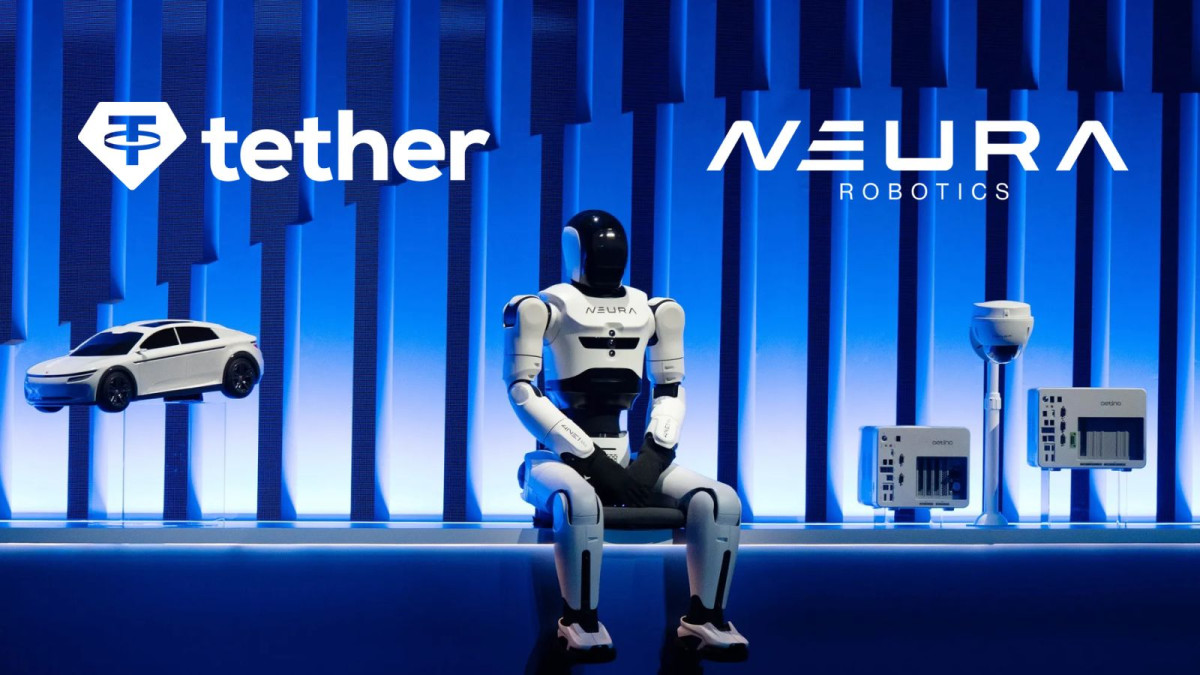
Stablecoin issuer Tether has announced its role as the lead investor in Neura Robotics’ recent Series C funding round. The funding round, which raised an estimated $1.4 billion, included Qualcomm, Amazon, and NVIDIA among other investors.

By investing in Neura Robotics, Tether is extending its influence beyond the digital asset industry, enabling it to deploy some of its core technologies into the humanoid robotics ecosystem. The partnership also enables the integration of Tether’s Wallet Development Kit and Tether’s self-custody wallets into the Neura Robotics system.
Through this integration, Tether provides a foundation that enables Neura Robotics to develop robotic systems that earn micropayments for tasks, transact with other robotic systems, and autonomously facilitate transactions and receive payments between machines without human intervention.
As part of its partnership, Neura Robotics will collaborate on testing, improving, and deploying Tether’s QuantumVerse Automatic Computer, known as QVAC, into its Neuraverse ecosystem. QVAC is Tether’s open-source, decentralized artificial intelligence platform that enables users to run and fine-tune large language models directly on their devices without relying on cloud servers.
“As robotics moves beyond scripted automation and into true autonomy, the infrastructure behind it must evolve as well,” said Paolo Ardoino, chief executive officer of Tether.
“Autonomous machines need the ability to process information locally, make decisions, and transact without relying on centralized intermediaries. QVAC brings that edge-first intelligence to the platform while WDK handles the secure financial layer. Together, they enable machines to execute tasks, account for outcomes, and operate independently. NEURA Robotics shares that vision, and this investment reflects our confidence in what autonomous robotics can become.”
About Neura Robotics
NEURA Robotics is a German-based high technology company that positions itself as a pioneer in cognitive robotics and Physical Artificial Intelligence. It develops artificially intelligent machines that can perceive (see, hear, feel), learn, adapt, and collaborate safely with humans.
So far, the company has developed some cognitive humanoid robots, including MAiRA, MiPA, and 4NE1. It has also developed Neuraverse, an open ecosystem and platform that enables robots to share skills, continuously learn, and expand their capabilities.
Dune Cuts 25% of Staff to Accelerate AI Crypto Data Push

Fredrik Haga, CEO and co-founder of crypto analytics firm Dune, has revealed the firm’s plan to lay off a quarter, or 25%, of its staff, citing AI investments as the reason for this decision.

“We’re restructuring Dune to sharpen our focus around the core data products thousands of customers across the crypto industry rely on. That unfortunately means we’ve let 25% of the team go this week. These are exceptional people I can wholeheartedly recommend. Ping me if you’re hiring top crypto talent,” Haga wrote in a post on X.
The decision to lay off some of its staff, according to Haga, is driven by the firm’s plan to accelerate more quickly with AI, with Dune positioning itself as the only firm to have built an end to end stack for crypto data. Its stack performs key roles in data ingestion, quality assurance, storage, cleaning, normalizing, and querying.
“With Dune MCP, teams and agents can now build dashboards and workflows without needing to know anything about SQL or data infrastructure and associated costs,” Haga said. Dune Model Context Protocol, or MCP, is an open protocol that allows AI tools to connect to external data sources in a structured way. It automates much of the manual work associated with data use.
By cutting its workforce, Dune aims to double down on AI and its end to end crypto data stack, including its model context protocol, which is already being used by some of the industry’s biggest players such as Polygon Labs, 1inch, Base, OP Labs, Blockworks, and COW Protocol.
Tech Layoffs Continue to Rise
Layoffs, especially in the tech and crypto sectors, continue to rise. According to a recent survey, about 81,000 layoffs were recorded in the first quarter of 2026, the highest since 2023, with the number reaching more than 100,000 by early May.
Several crypto companies have reduced their workforces in recent months. Coinbase most recently cut 14% of its workforce, laying off about 700 employees. The company cited a volatile crypto market and a strategic shift toward artificial intelligence focused operations as reasons for the layoffs.
Other companies, including Crypto.com, Gemini, Algorand Foundation, and Block, have also reduced their workforces. Many of these firms have pointed to a volatile crypto market and a broader strategic pivot toward artificial intelligence as contributing factors to the cuts.
OKX Launches AI Agent Payments Protocol for Crypto Commerce

Cryptocurrency exchange OKX has launched Agent Payments Protocol (APP), a new payment protocol that allows AI agents to perform commercial activities.
The new payment protocol, according to OKX, is an open standard that defines how AI agents communicate and negotiate, pay for services, and pay each other. It also, for the first time, allows AI agents to move beyond simple payments and into full-scale commerce.

“In the past few months, AI agents moved from answering questions to running workflows, managing business processes, and acting autonomously on behalf of users,” OKX wrote in a blog post. “The bottleneck shifted from intelligence to commerce - not just paying, but the full cycle of doing business: quoting, negotiating, escrowing funds, metering usage, settling, and resolving disputes.”
This existing problem among AI agents is what OKX aims to solve with its new Agent Payments Protocol (APP), allowing agents not only to manage single payment requests but also to manage payment requests across multiple levels.
Inside the Agent Payment Protocol
The agent payment protocol (APP) from OKX is an open standard designed to work across all chains, especially the Solana and Ethereum blockchains.
APP unlocks new capabilities for AI agents, making it possible for these agents to operate and communicate autonomously across the full commerce lifecycle, pay each other through agent-to-agent payments, and also allowing AI agents to perform upfront and top-up payments, including deductions.
At its implementation layer is the payment software development kit (SDK) that makes it possible for developers to accept and make agent payments with just a few lines of code. According to the blog announcement, the agent payment protocol supports a wide variety of payments, including one-time payments, batch payments, pay-as-you-go, and escrow payments, which OKX says is coming soon.
Embedded within the payment protocol is the OKX self-custodial agentic wallet, which supports over 20 blockchains. Since the wallet is secured by means of a Trusted Execution Environment (TEE), a hardware-based security environment, the wallet’s private keys and sensitive operations are kept highly secure.
Despite its early launch, the OKX agent payment protocol is currently supported by major cloud infrastructure firms, including Amazon Web Services (AWS) and Alibaba Cloud, as well as blockchain companies such as Uniswap, Paxos, MoonPay, Zerion, and Nansen.
With the launch of its payment protocol, OKX joins companies such as Coinbase, Stripe, and OpenAI, which have already launched their payment protocols, namely x402, Agentic Commerce Protocol (ACP), and Machine Payments Protocol (MPP), respectively.
Anthropic’s Most Powerful AI May Not Be Released

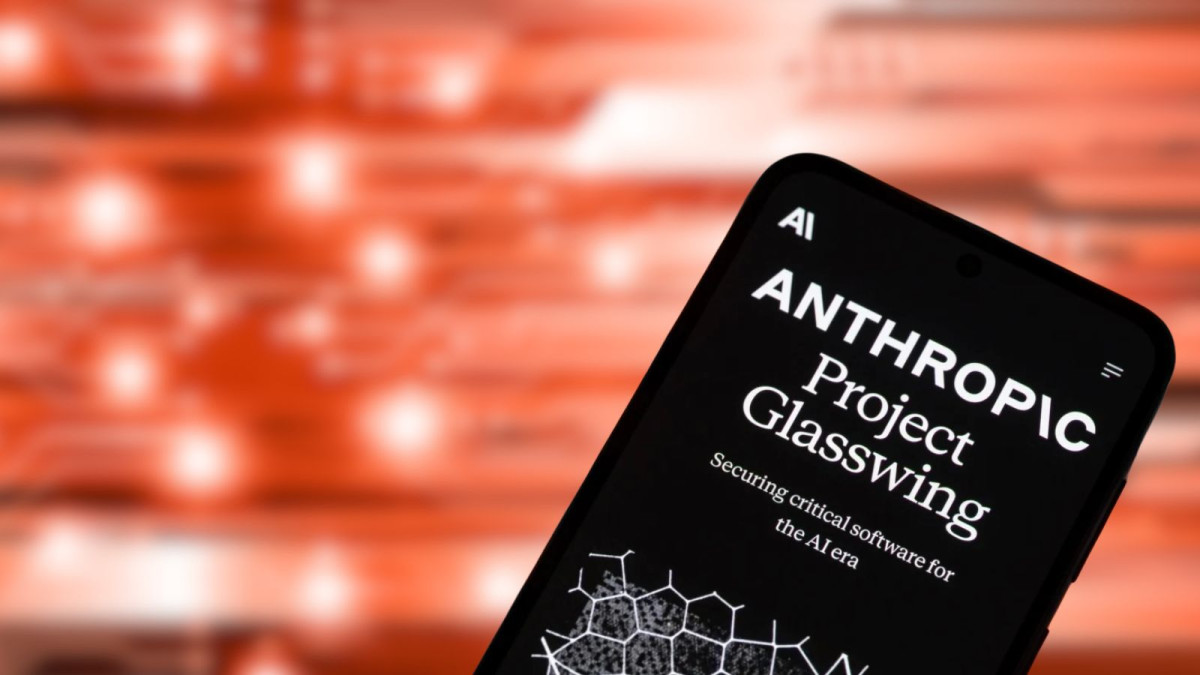
Anthropic built an AI that's great at breaking into software, and doesn’t want to release it. Claude Mythos Preview exists specifically to find and exploit vulnerabilities, and access is locked to a small group of known partners through a program called Project Glasswing. Major companies like Microsoft, Apple, Google, Amazon, Nvidia, Cisco, CrowdStrike, Federal Reserve, and the Linux Foundation are involved in this project.
Scott Bessent and Jerome Powell pulled together some of the most powerful names in American banking at Treasury headquarters to talk about what Mythos and models like it mean for the financial system. Citigroup, Morgan Stanley, Bank of America, Wells Fargo, and Goldman were all in the room according to sources who spoke to Bloomberg and the Financial Times. Jamie Dimon was invited but couldn't make it.
Anthropic describes Mythos Preview as its most capable model to date, with a significant jump in coding and security performance over every prior Claude version. In internal and external evaluations, the model autonomously identified thousands of high severity vulnerabilities across every major operating system and browser Anthropic tested, including zero days that had been sitting undetected in production software for decades. To accompany the launch, Anthropic committed up to $100 million in usage credits and $4 million in direct funding through Project Glasswing, available specifically to open source security organizations so they can run Mythos against widely deployed software and close gaps before anyone with bad intentions finds them first.

In controlled cyber range tests, the model found vulnerabilities together with working exploits, completing full attack simulations that human red teams estimated would take many hours. It found flaws in places where existing automated scanners had run millions of passes and flagged nothing, including in Firefox's JavaScript engine and various multimedia libraries. Fewer than one percent of the vulnerabilities it identified have been fully patched at this point, which gives you a sense of how much ground the security community now has to cover.
Most of the infrastructure the crypto industry depends on sits on top of the same Linux and open source stacks that Mythos is now auditing like exchanges, custodians, node operators, rollup sequencers, DeFi backends. The software shared with banks, hospitals, and government systems, turns out to have been carrying serious vulnerabilities for years that nobody caught. A kernel level bug or a flaw in a widely used library isn't an enterprise problem when you're thinking about crypto, but it's a potential entry point into a hot wallet, a key management system, a bridge validator, or an indexing service. Mythos gives defenders a meaningful head start on finding and closing those gaps, but it also surfaces how much risk has been quietly unnoticed.
For banks, law firms, and any enterprise with sensitive data, the lesson from Mythos is that proprietary systems are not safe from this. Most critical applications and sensitive datasets run on top of operating systems and open source code, and that software now appears to have been carrying vulnerabilities for decades in some cases. The main risk on an institution's balance sheet might not be a counterparty but its own software stack, and models like Mythos are making this clear.
Anthropic framing Mythos as too dangerous to release publicly could just be a marketing stunt. But independent reporting on thousands of real vulnerabilities, bugs with decades of exposure time, and successful end to end attack simulations in controlled environments suggests it’s real. This could be an early version of something much larger, as security researchers broadly expect that within a few years both attackers and defenders will be operating fleets of AI agents 24/7 that test systems continuously, around the clock, at a scale no human team can come close to matching. Systems in both traditional finance and crypto will need AI driven monitoring and response as a baseline and stronger decentralized systems to prevent a single point of failure.