#Stablecoin Yield

OpenTrade Raises $17M to Scale Stablecoin Yield Platform

OpenTrade, an institutional-grade stablecoin yield platform used by fintechs and exchanges, has raised $17 million to scale its stablecoin yield infrastructure.
The capital was raised in a strategic funding round led by Mercury Fund and Notion Capital, with other investors including a16z Crypto, AlbionVC, and CMCC Global also participating in the round, bringing the total funds raised to more than $30 million.

As part of its expansion efforts, the new funding will be used to scale OpenTrade’s permissioned and permissionless blockchain infrastructure, as well as support the growth of its Curation+ investment services. The funding will also be used to expand OpenTrade’s engineering, asset management, and trading teams, while building a dedicated customer support team to serve its growing client base.
OpenTrade was initially designed to provide plug-and-play infrastructure that enables financial institutions, including fintechs, exchanges, and neobanks, to offer multicurrency dollar and euro-denominated stablecoin yield products without having to build their own investment, custody, or infrastructure systems.
However, as the stablecoin yield market expanded, companies began seeking additional capabilities. Asset issuers started looking for distribution channels through decentralized markets. Non-custodial wallets and platforms also began seeking ways to enable users to earn yield without directly handling funds, all without having to build stablecoin yield infrastructure or internal investment teams from scratch.
To meet this demand, OpenTrade expanded its infrastructure to include its permission protocol layer and Curation+ services. Curation+ is a suite of sophisticated vault curation services designed to create and manage complex investment strategies, removing the operational burden associated with yield generation.
This infrastructure, together with OpenTrade’s broader platform, is currently used by companies including Littio, Midas Kripto, and Glim to deliver stablecoin yield products without having to build infrastructure or investment teams from the ground up.
“As we grew, it became clear that our infrastructure could also serve non-custodial platforms, treasuries, and asset issuers that all need the same thing: a safe, scalable way to connect stablecoins to diversified yield strategies,” said David Sutter, OpenTrade’s CEO.
“This raise allows us to scale that infrastructure and support a much broader range of use cases without compromising on risk management or quality of execution.”
OpenTrade recently surpassed $200 million in total value locked, or TVL, after processing more than $250 million in transaction volume last year. The team expects this volume to reach $1 billion by the end of the year and has already processed more than $300 million in transaction volume this year.
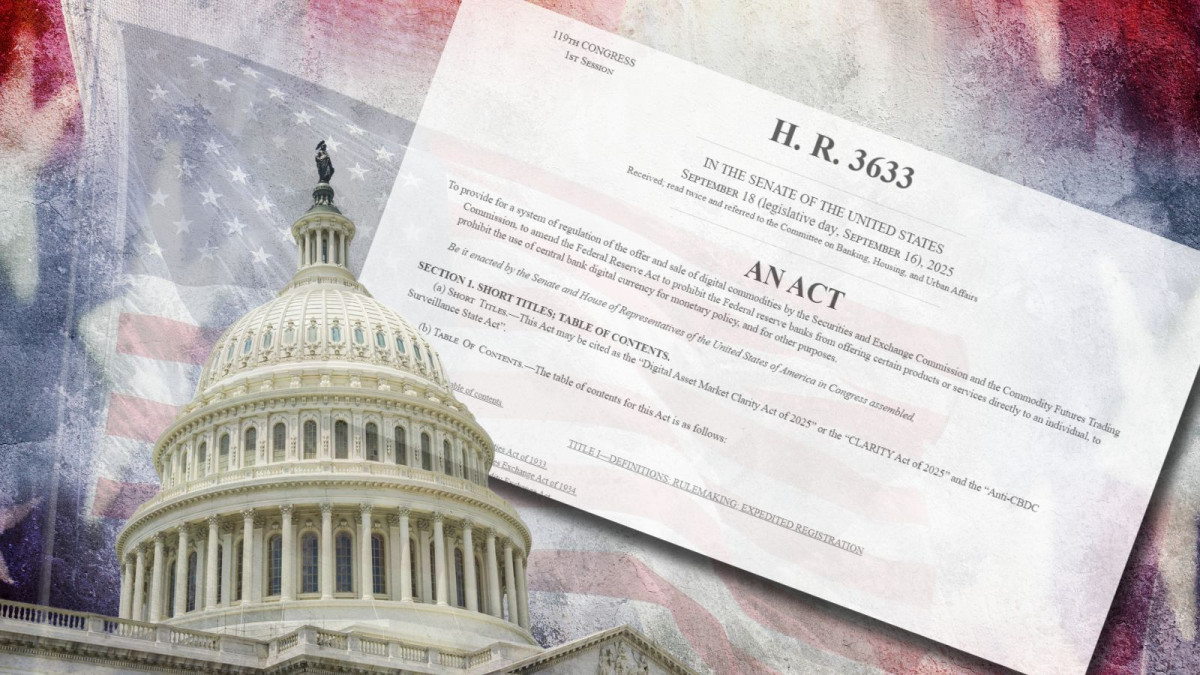
Senators Race to Save the CLARITY Act With Stablecoin Yield Compromise

The room at the Marriott Marquis in Washington was full of community bankers on Tuesday, and Senator Angela Alsobrooks walked straight into the lion's den. Speaking at the American Bankers Association's annual Washington Summit, the Maryland Democrat delivered a message neither side particularly wanted to hear: everyone involved in the Digital Asset Market Clarity Act is going to have to walk away a little bit unhappy.
It was a remarkably candid thing to say in front of 1,400 people who have spent the better part of three months trying to kill the very provision that's been holding up the bill. But Alsobrooks, along with Republican Senator Thom Tillis of North Carolina, is now the central figure in a late-stage push to get the Clarity Act off the Senate Banking Committee floor and into an actual markup hearing before the legislative window closes for good.
The two senators confirmed Tuesday they're actively working on compromise language around stablecoin yield which keeps coming up as the main issue that has stalled what was supposed to be a landmark piece of crypto regulation.
A Bill In Limbo
The Digital Asset Market Clarity Act, or CLARITY Act, was supposed to have its Senate Banking Committee markup in January. That session got pulled at the last minute. The reason was stablecoin yield, specifically, amendments co-sponsored by Alsobrooks and Tillis that would restrict crypto firms from offering interest-like returns to customers who simply hold dollar-pegged digital tokens like USDC or USDT.
Banks had been lobbying hard against any provision that allowed that kind of reward. Their argument, which they've pushed loudly and repeatedly, is that stablecoins offering yield would function like bank accounts without the regulatory obligations of bank accounts. Executives at JPMorgan and Bank of America have cited Treasury Department modeling that suggested banks could lose up to $6.6 trillion in deposits if stablecoin yield programs went mainstream. Their argument is that it would starve the lending market and ultimately destabilize smaller regional banks that are particularly dependent on deposit funding.
The crypto industry dismisses most of that as fearmongering. Coinbase CEO Brian Armstrong called out the banking lobby publicly for what he characterized as anticompetitive blocking tactics and has pulled his support for the bill. In January at Davos, JPMorgan's Jamie Dimon reportedly told Armstrong he was, in quite colorful terms, wrong. The anecdote leaked out and became something of a symbol for just how personal this fight had gotten.
"We absolutely have to have these protections to prevent the deposit flight, but we're going to probably have to make some compromises." — Senator Angela Alsobrooks, D-Md.
The White House Steps In, Then Gets Rejected
By late February, the White House had grown impatient. Administration officials spent weeks brokering what they hoped would be an acceptable middle ground: allow stablecoin yield in limited contexts, particularly for activity tied to payments and transactions, while banning rewards on idle balances that look more like savings accounts. Crypto firms signed off on the framework. The banks did not.
On March 3rd, President Trump went public with his frustration. In a Truth Social post, he wrote that banks should not be trying to undercut the GENIUS Act or hold the CLARITY Act hostage, a shot across the bow that was notable both for its directness and for the fact that it did essentially nothing to move the American Bankers Association. Two days later, the ABA formally rejected the White House compromise anyway.
The March 1st deadline the White House had set for a resolution passed without published compromise text. Prediction markets, which had briefly priced Clarity Act passage at around 80% odds, fell back toward 55% as the stalemate hardened.
What the ABA rejection didn't do, however, is kill the legislation outright. Congress has passed bills over banking lobby opposition before. The question, as analysts and lobbyists have been pointing out all week, is whether there are enough Senate votes to do it again — and whether the calendar allows the time to find out.
Can We Get A Compromise?
The emerging deal that Alsobrooks and Tillis are proposing is a slimmed-down version of what the White House tried. Under the framework being discussed, yield on stablecoin holdings that closely resemble bank deposits would remain prohibited. But rewards tied to specific activities, like using stablecoins for payments or transactions on a given platform, could remain eligible for some form of customer incentive.
Both senators and many crypto advocates actually agree on the premise that pure holding rewards that look and function like savings account interest are a problem. The dispute is over where exactly to draw the line and how to define the categories well enough that neither side can game them after the fact.
Cody Carbone, the CEO of the Digital Chamber, said this week that Tillis has been very receptive to discussions about stablecoin yield and that he's optimistic the industry can get to yes on the bill. Summer Mersinger, the CEO of the Blockchain Association, noted that the White House weighing in on the negotiations and pushing banks to engage in good faith adds important momentum as talks continue.
The banks have maintained, publicly at least, that those assurances aren't enough. Their representatives at the ABA summit this week underlined again what they see as the risks of any yield loophole to their business model. The question of whether a markup hearing happens in late March or gets delayed again, depends entirely on whether Alsobrooks and Tillis can produce language the committee will actually vote on.
Timing Is An Issue
Behind every conversation about the Clarity Act this week is an unspoken anxiety about time. The Senate calendar is tight. Midterm elections are in November, and lawmakers will start dispersing from meaningful legislating sometime around May or June as campaign season accelerates. Unfortunately it seems, Congress prefers to stop working as they try to convince voters to keep them in their jobs. I know, makes perfect sense. If a markup isn't held and a floor vote isn't scheduled by sometime in April, realistically the bill is looking at the next Congress which could be a completely different party in power. And complicating things even more. Despite which party ends up winning the midterms, this could mean another 12 to 18 months of regulatory uncertainty for an industry that has been waiting years for a clear legal framework.
That timeline matters not just for the crypto industry's domestic ambitions, but for its competitive positioning globally. Under the European Union's MiCA framework, stablecoin yield products that are restricted or banned in the U.S. are already legal in European jurisdictions. Coinbase and others have been explicit about the risk that continued regulatory ambiguity in the U.S. will push capital, talent, and product development offshore. Trump made a version of the same argument in his Truth Social post last week, warning that failure would drive the industry to China.
There's also a strategic Bitcoin Reserve angle sitting quietly in the background. According to people familiar with the situation, the Trump administration has determined it needs congressional action to operationalize the planned Strategic Bitcoin Reserve that the president signed an executive order for over a year ago. That creates at least some White House motivation to see the broader Clarity Act process succeed.
What Happens Next
The Senate Banking Committee is targeting a late-March markup. Whether that happens depends on whether the Alsobrooks-Tillis compromise language satisfies enough members to call the vote. If it does, the bill would then need to be merged with a version that already passed the Senate Agriculture Committee on a party-line vote in late 2025. The combined text would require significant Democratic support to clear a full Senate vote, always a tall ask in the current politcal environment and the fact that seven Democratic senators have separately raised concerns about potential conflicts of interest involving senior government officials, including the president himself, who have financial ties to the crypto industry.
Even if the Senate acts, the bill still needs the House, where an earlier version of the CLARITY Act passed committee last year but has yet to reach the floor. The path to a signed law before November is narrow but not impossible. It requires the Senate Banking Committee to move in the next few weeks, the combined bill to hold together politically, and a Senate floor schedule that is packed with little wiggle room.
For the moment, all of it hinges on two senators and a room full of bankers in Washington D.C., trying to decide how much compromise is actually compromise and if they can all agree to leave a bit unhappy about the results for the greater good. Typically the best compromises do make both sides a bit unhappy. In Washington, that usually means the deal is closer than it looks. It also usually means it's harder than it sounds.