#Kevin Warsh
Pro-Crypto Kevin Warsh Confirmed as Fed Chair

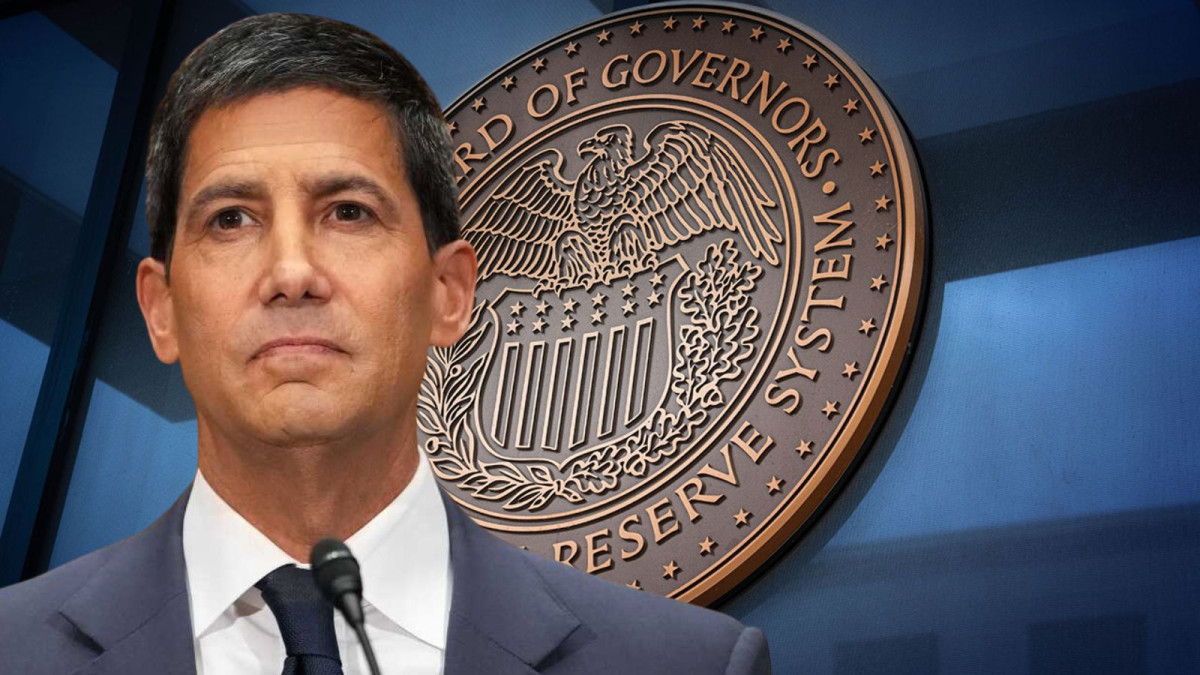
The U.S. Senate confirmed Kevin Warsh as the next chair of the Federal Reserve on Wednesday, handing President Donald Trump a long-sought win and putting one of the most crypto-sympathetic figures in recent memory at the helm of the world's most powerful central bank.
The final tally was 54-45, and it wa a bit too close for comfort. In fact, it was the most partisan confirmation vote for a Fed chair in modern history, with only Pennsylvania Democrat Sen. John Fetterman crossing the aisle to support Warsh's nomination. The near party-line split underscores just how politically charged the Federal Reserve has become under Trump, who spent much of the past year publicly haranguing outgoing Chair Jerome Powell for not cutting rates fast enough.
A Confirmation That Almost Wasn't
Getting Warsh to this point was a rocky path. The nomination process stretched over months, at one point stalling entirely when Sen. Thom Tillis (R-NC) refused to let the confirmation advance until the Justice Department dropped a criminal investigation into Powell. That probe, led by DC U.S. Attorney Jeanine Pirro, centered on alleged cost overruns at the Fed's Washington headquarters. A federal judge had ruled the investigation was essentially a pretext to pressure Powell into cutting rates or resigning.
The DOJ eventually closed the probe, clearing the path for Warsh. Though Pirro left the door open to reopening the case if the Fed's inspector general turns up evidence of wrongdoing. For now, the drama is over, and Warsh has his confirmation.
What Warsh Means for Crypto
Warsh isn't exactly a crypto maximalist. He has, at times, referred to certain digital asset projects as fraudulent or worthless. But his disclosed investments tell a deeper story. Earlier this year it emerged he holds positions in Polymarket, the decentralized prediction market, and Solana. He has also stated that Bitcoin "does not make me nervous," a phrase that might seem understated but represents a meaningful shift from the posture of most previous Fed leadership.
During his Senate confirmation hearing in April, Warsh told Sen. Cynthia Lummis (R-WY) that digital assets are "already part of the fabric of our financial services industry" and affirmed he believes they should be incorporated into America's broader financial ecosystem. That was enough for Lummis, one of the most vocal pro-crypto voices in Congress, who said after the vote that digital asset holders "finally have a leader at the Fed who is ready to deliver."
The CFTC's chairman Mike Selig, who has defended prediction markets against a string of state-level lawsuits this year, also welcomed the Warsh confirmation, saying he looked forward to working together. That kind of interagency alignment on digital assets would represent a notable departure from the fragmented, sometimes hostile regulatory environment crypto has dealt with in recent years.
Juan Leon, a senior investment strategist at Bitwise, put the significance plainly: "Kevin Warsh is the first Fed Chair to endorse Bitcoin and describe it as a useful signal for policymakers, reflecting a shift in institutional legitimacy for crypto. While he's known as an inflation hawk, his stated belief that rates can move lower as a result of AI-driven productivity gains provides a plausible path to more accommodative liquidity conditions for crypto assets."
Rate Cuts: Don't Hold Your Breath
Here's where things get complicated. Trump has made no secret of what he expects from Warsh, having reportedly joked earlier this year that he'd sue him if rates don't come down. But market expectations have shifted sharply, and not in the president's favor.
Fresh inflation data released Tuesday showed consumer prices rose 3.85% in the 12 months through April, the highest reading since May 2023 and well above the Fed's 2% target. Traders are pricing in essentially no rate cuts for the rest of the year; some are even calling for a hike, largely because energy prices have climbed sharply following escalating tensions in the Middle East that have snarled tanker traffic in the Strait of Hormuz.
Warsh himself has signaled some openness to easing, particularly if AI-driven productivity gains help cool inflation over time. But he's also a known inflation hawk from his first stint at the Fed between 2006 and 2011, when he was among those who felt post-crisis quantitative easing had gone too far. It's not entirely clear which Warsh shows up to that first FOMC meeting on June 16-17.
And it's worth noting: Warsh is just one of 12 votes on the Federal Open Market Committee. Even as chair, he doesn't have unilateral authority over rate decisions. Powell, for his part, will remain on the Fed's Board of Governors after Friday, when his term as chair expires, retaining his FOMC vote. It's an unusual arrangement, last seen nearly 80 years ago, and Powell has been explicit about his motivations: he wants to protect the institution from what he has described as "unprecedented" legal and political pressure.
A New Era, With a Lot of Asterisks
Warsh also takes the helm at a Fed dealing with serious internal turbulence. Federal Reserve Governor Lisa Cook is locked in a legal fight with the president, who is trying to remove her on allegations of mortgage fraud, a case now making its way toward the Supreme Court. Meanwhile, Warsh will have to divest significant holdings, as he's set to become the wealthiest Fed chair on record, with a portfolio well north of $100 million.
Bitcoin barely reacted to the confirmation news, trading around $79,500 in the hours following the Senate vote, according to CoinGecko. But the longer-term implications could be meaningful. Whether or not rate cuts materialize, Warsh's ascent signals a growing institutional acceptance of digital assets at the highest levels of American financial policy. For a sector that has spent years fighting for legitimacy, that's not nothing.
Fed Pick Kevin Warsh Brings Deep Crypto Knowledge

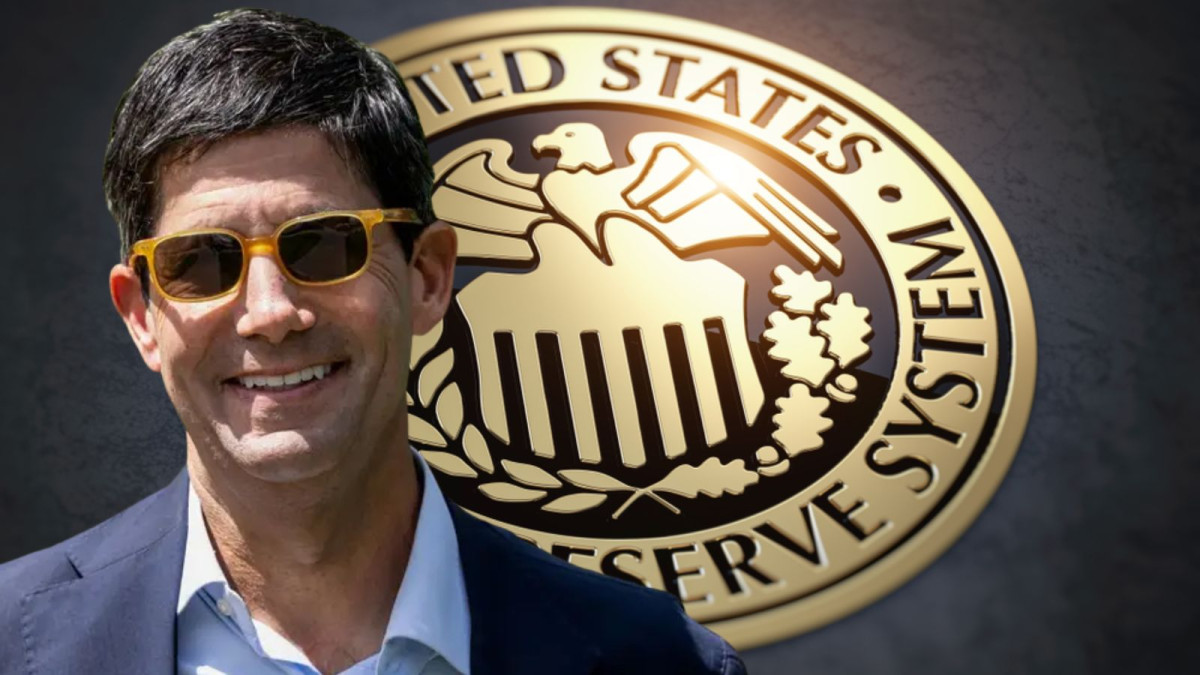
Most Fed chair nominations generate debate about interest rate philosophy, inflation targets, and balance sheet management. Kevin Warsh's confirmation is going to involve a lot of that, sure, but it is also going to involve a fairly lengthy conversation about DeFi lending protocols, Ethereum Layer 2 networks, and a Bitcoin Lightning Network startup.
Warsh, President Trump's nominee to chair the Federal Reserve, cleared the last bureaucratic hurdle before his Senate confirmation hearing when he submitted his required financial disclosure to the U.S. Office of Government Ethics. The filing reveals combined assets with his wife of at least $192 million. But it's the crypto positions scattered throughout the document, held through a web of venture fund structures, that are drawing the most attention from the digital asset industry right now.
Not Just A Casual Holder
Warsh did not just pick up some bitcoin through a Coinbase account during the 2021 bull run and forget about it. Through two fund structures, DCM Investments 10 LLC (via a vehicle called Abstract Holdings) and a series of funds labeled AVF I, AVF II, AVF III, and AVGF I and II, he holds equity positions in more than two dozen blockchain and digital asset companies. The breadth is notable: DeFi lending, decentralized derivatives, Layer 1 and Layer 2 networks, prediction markets, crypto neobanks, and Bitcoin payments infrastructure.
On the DeFi and trading side, the portfolio includes Compound, one of the foundational algorithmic crypto lending protocols, alongside dYdX, a decentralized derivatives exchange, and Lighter, a decentralized exchange protocol. On the infrastructure side, he has exposure to Solana, the high-throughput Layer 1 blockchain, Optimism and Blast, two Ethereum scaling networks, and Zero Gravity, a Layer 2 AI blockchain platform. Bitcoin-specific holdings include Flashnet, a Lightning Network trading platform, and a direct position in the Lightning Network itself.
There are also positions in Polychain and Scalar Capital, two prominent crypto investment firms, plus Polymarket, the prediction market platform, and several crypto-enabled neobanks including OnJuno and Lemon Cash. Rounding it out: Dapper Labs (best known for NBA Top Shot), Friends With Benefits, a Web3 community platform, and Crossmint, an NFT developer tools company. Warsh also previously held a stake in Bitwise Asset Management, the issuer of one of the spot Bitcoin ETFs, though that position does not appear in the current filing.
Selling liquid token positions is straightforward. Unwinding LP stakes in Polychain or venture fund structures is not, and federal ethics rules generally impose a one-year cooling-off period on matters directly affecting recently divested financial interests. That creates a potentially awkward situation given what the Fed has on its plate.
Congress is actively working through stablecoin legislation that would define which institutions can issue and custody stablecoins, directly affecting DeFi protocols and crypto neobanks of the type in Warsh's portfolio. The Fed's supervisory stance on whether banks can custody digital assets remains one of the most contested open questions in the industry. And while political appetite for a U.S. CBDC has cooled considerably, the Fed's ongoing research in that area intersects with the payment network infrastructure Warsh holds exposure to through Lightning Network and Solana.
Could Be Some Complications
The broader financial profile adds another layer. Warsh earned $10.2 million in consulting fees from Duquesne Family Office, the investment arm of Stanley Druckenmiller, one of the more prominent macro investors in the crypto space. Additional consulting income came from GoldenTree Asset Management ($1.55 million), Cerberus Capital Management ($750,000), and Brevan Howard ($750,000), all firms with meaningful digital asset trading operations. His speaking fee circuit in just the first half of 2025 alone topped $780,000 from firms including TPG, State Street, and Warburg Pincus. Combined with spouse Jane Lauder's estimated $1.9 billion net worth, Warsh would enter the Fed as one of the wealthiest chairs in the institution's modern history.
Senate Banking Committee chair Tim Scott said Tuesday that a confirmation hearing is scheduled for next week. However, Senator Thom Tillis of North Carolina is blocking any final vote until the Justice Department drops its criminal investigation of current Fed Chair Jerome Powell, whose term expires May 15. The crypto portfolio will almost certainly come up in questioning.
On one hand, a Fed chair who has personally sought out exposure to DeFi protocols and blockchain infrastructure is unlikely to approach crypto with the indifference or hostility that has characterized past leadership. On the other, the mandatory divestiture and recusal obligations could actively limit his ability to influence policy in the industry's favor during his first year in office, precisely when some of the most consequential regulatory decisions are expected to land. It is a double-edged sword, and the confirmation hearing will be the first real test of how Warsh plans to navigate it.