#interest rates
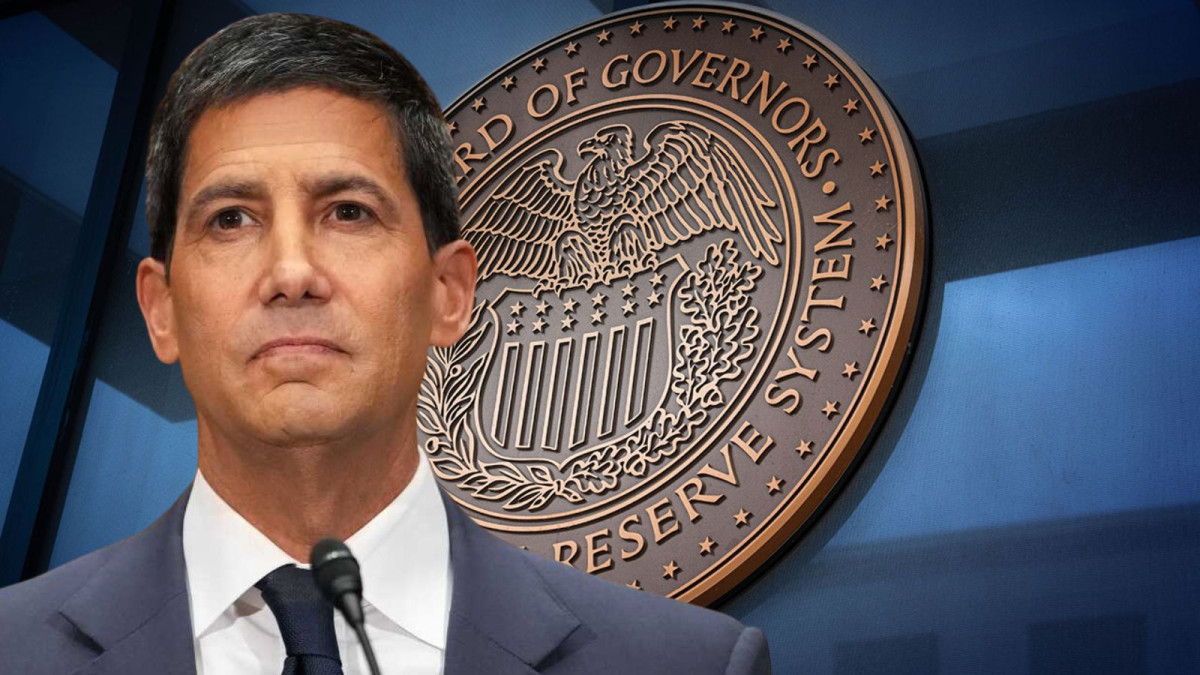
Pro-Crypto Kevin Warsh Confirmed as Fed Chair

The U.S. Senate confirmed Kevin Warsh as the next chair of the Federal Reserve on Wednesday, handing President Donald Trump a long-sought win and putting one of the most crypto-sympathetic figures in recent memory at the helm of the world's most powerful central bank.
The final tally was 54-45, and it wa a bit too close for comfort. In fact, it was the most partisan confirmation vote for a Fed chair in modern history, with only Pennsylvania Democrat Sen. John Fetterman crossing the aisle to support Warsh's nomination. The near party-line split underscores just how politically charged the Federal Reserve has become under Trump, who spent much of the past year publicly haranguing outgoing Chair Jerome Powell for not cutting rates fast enough.
A Confirmation That Almost Wasn't
Getting Warsh to this point was a rocky path. The nomination process stretched over months, at one point stalling entirely when Sen. Thom Tillis (R-NC) refused to let the confirmation advance until the Justice Department dropped a criminal investigation into Powell. That probe, led by DC U.S. Attorney Jeanine Pirro, centered on alleged cost overruns at the Fed's Washington headquarters. A federal judge had ruled the investigation was essentially a pretext to pressure Powell into cutting rates or resigning.
The DOJ eventually closed the probe, clearing the path for Warsh. Though Pirro left the door open to reopening the case if the Fed's inspector general turns up evidence of wrongdoing. For now, the drama is over, and Warsh has his confirmation.
What Warsh Means for Crypto
Warsh isn't exactly a crypto maximalist. He has, at times, referred to certain digital asset projects as fraudulent or worthless. But his disclosed investments tell a deeper story. Earlier this year it emerged he holds positions in Polymarket, the decentralized prediction market, and Solana. He has also stated that Bitcoin "does not make me nervous," a phrase that might seem understated but represents a meaningful shift from the posture of most previous Fed leadership.
During his Senate confirmation hearing in April, Warsh told Sen. Cynthia Lummis (R-WY) that digital assets are "already part of the fabric of our financial services industry" and affirmed he believes they should be incorporated into America's broader financial ecosystem. That was enough for Lummis, one of the most vocal pro-crypto voices in Congress, who said after the vote that digital asset holders "finally have a leader at the Fed who is ready to deliver."
The CFTC's chairman Mike Selig, who has defended prediction markets against a string of state-level lawsuits this year, also welcomed the Warsh confirmation, saying he looked forward to working together. That kind of interagency alignment on digital assets would represent a notable departure from the fragmented, sometimes hostile regulatory environment crypto has dealt with in recent years.
Juan Leon, a senior investment strategist at Bitwise, put the significance plainly: "Kevin Warsh is the first Fed Chair to endorse Bitcoin and describe it as a useful signal for policymakers, reflecting a shift in institutional legitimacy for crypto. While he's known as an inflation hawk, his stated belief that rates can move lower as a result of AI-driven productivity gains provides a plausible path to more accommodative liquidity conditions for crypto assets."
Rate Cuts: Don't Hold Your Breath
Here's where things get complicated. Trump has made no secret of what he expects from Warsh, having reportedly joked earlier this year that he'd sue him if rates don't come down. But market expectations have shifted sharply, and not in the president's favor.
Fresh inflation data released Tuesday showed consumer prices rose 3.85% in the 12 months through April, the highest reading since May 2023 and well above the Fed's 2% target. Traders are pricing in essentially no rate cuts for the rest of the year; some are even calling for a hike, largely because energy prices have climbed sharply following escalating tensions in the Middle East that have snarled tanker traffic in the Strait of Hormuz.
Warsh himself has signaled some openness to easing, particularly if AI-driven productivity gains help cool inflation over time. But he's also a known inflation hawk from his first stint at the Fed between 2006 and 2011, when he was among those who felt post-crisis quantitative easing had gone too far. It's not entirely clear which Warsh shows up to that first FOMC meeting on June 16-17.
And it's worth noting: Warsh is just one of 12 votes on the Federal Open Market Committee. Even as chair, he doesn't have unilateral authority over rate decisions. Powell, for his part, will remain on the Fed's Board of Governors after Friday, when his term as chair expires, retaining his FOMC vote. It's an unusual arrangement, last seen nearly 80 years ago, and Powell has been explicit about his motivations: he wants to protect the institution from what he has described as "unprecedented" legal and political pressure.
A New Era, With a Lot of Asterisks
Warsh also takes the helm at a Fed dealing with serious internal turbulence. Federal Reserve Governor Lisa Cook is locked in a legal fight with the president, who is trying to remove her on allegations of mortgage fraud, a case now making its way toward the Supreme Court. Meanwhile, Warsh will have to divest significant holdings, as he's set to become the wealthiest Fed chair on record, with a portfolio well north of $100 million.
Bitcoin barely reacted to the confirmation news, trading around $79,500 in the hours following the Senate vote, according to CoinGecko. But the longer-term implications could be meaningful. Whether or not rate cuts materialize, Warsh's ascent signals a growing institutional acceptance of digital assets at the highest levels of American financial policy. For a sector that has spent years fighting for legitimacy, that's not nothing.
Bitcoin May Face a Volatile Day as Macro Events Stack Up

Bitcoin is waking up to a market that feels unusually fragile.
Price itself looks calm enough. The range has been tight, daily swings have been muted, and nothing on the surface screams urgency. But anyone paying attention to today’s calendar knows this kind of calm can disappear quickly.
Several macro events are stacked into the U.S. session, all tied to interest rates, inflation, and risk appetite. When those forces collide, Bitcoin rarely sits still.
This is shaping up to be one of those days where volatility does not need a single dramatic headline. It just needs friction.
A Morning That Rarely Stays Quiet
The first real test arrives early, when U.S. jobs data hits the tape around the start of the New York session.
Employment numbers still carry outsized influence over markets. They shape expectations around how tight financial conditions will remain and how much flexibility the Federal Reserve really has. Bitcoin has become increasingly sensitive to these shifts, especially when liquidity is thin.
The initial reaction is often fast and emotional. Sometimes it sticks. Sometimes it fades within minutes. Either way, it tends to wake the market up.
From there, the morning does not get any simpler.
As the session develops, attention turns to Washington. A Supreme Court ruling related to tariffs is expected during the late morning hours. While not crypto-specific, tariff decisions feed directly into inflation assumptions, and inflation is still one of the most important variables in global markets.
Around the same window, a Federal Reserve official is scheduled to speak. That overlap matters. When legal decisions, inflation narratives, and Fed messaging collide, markets can struggle to find a clean interpretation. Bitcoin often reflects that confusion in real time.
Why This Timing Matters for Bitcoin
What makes today feel different is not just the events themselves, but how close together they land.
Bitcoin thrives on liquidity and clear narratives. Days like this offer neither. Instead, traders are forced to process multiple signals that may not point in the same direction.
That is when volatility tends to rise.
A strong jobs report followed by cautious Fed language. A soft report paired with inflation concerns. Even outcomes that are mostly expected can trigger sharp moves if positioning is wrong.
Bitcoin does not need certainty to move. It needs imbalance.
The Quiet Role of Liquidity
Another reason this day feels risky is what has been happening quietly in the background.
Spot Bitcoin ETFs have seen periods of outflows recently, reducing a layer of steady demand that helped stabilize price during previous pullbacks. With that cushion thinner, price reacts more aggressively to macro headlines.
That cuts both ways. Breakouts can extend faster. Pullbacks can feel heavier. The same headline that barely moved Bitcoin a month ago can suddenly matter a lot more.
Midday Calm Can Be Misleading
If Bitcoin survives the morning without a major break, it would not be surprising to see price settle into a narrow range through the middle of the day.
That lull can be deceptive.
Often, midday calm simply reflects traders waiting for confirmation, not confidence that the danger has passed. Volatility can resurface later as markets digest positioning data and prepare for the next global session.
Bitcoin has a habit of making its real move when attention starts to drift.
A Market That Feels Coiled
Recent price action tells a familiar story. Bitcoin has struggled to push decisively higher, but sellers have not taken control either. The result is a compressed range that feels increasingly unstable.
Historically, these conditions do not resolve gently.
When volatility returns after a long period of compression, it tends to overshoot. Direction is still uncertain, but movement feels inevitable.
The Bigger Picture
This is not about predicting whether Bitcoin goes up or down today. It is about recognizing the environment.
Macro pressure is building. Liquidity is thinner. Volatility has been suppressed for too long. And the calendar is packed with catalysts that can disrupt the balance.
For traders, today is about staying alert, not getting comfortable.
For long-term holders, it is another reminder that Bitcoin often chooses moments like this to reassert its personality.
The market may look calm right now, but we'll see how the day plays out. Jobs reports, Supreme Court decisions, and Fed Talks should make it very interesting either way.
Stay Connected
You can stay up to date on all News, Events, and Marketing of Rare Network, including Rare Evo: America’s Premier Blockchain Conference, happening July 28th-31st, 2026 at The ARIA Resort & Casino, by following our socials on X, LinkedIn, and YouTube.
Crypto Surges Ahead of FOMC Decision as Traders Position for Policy Shift
Crypto Market Surges Ahead of the FOMC Decision and What It Means for the Market
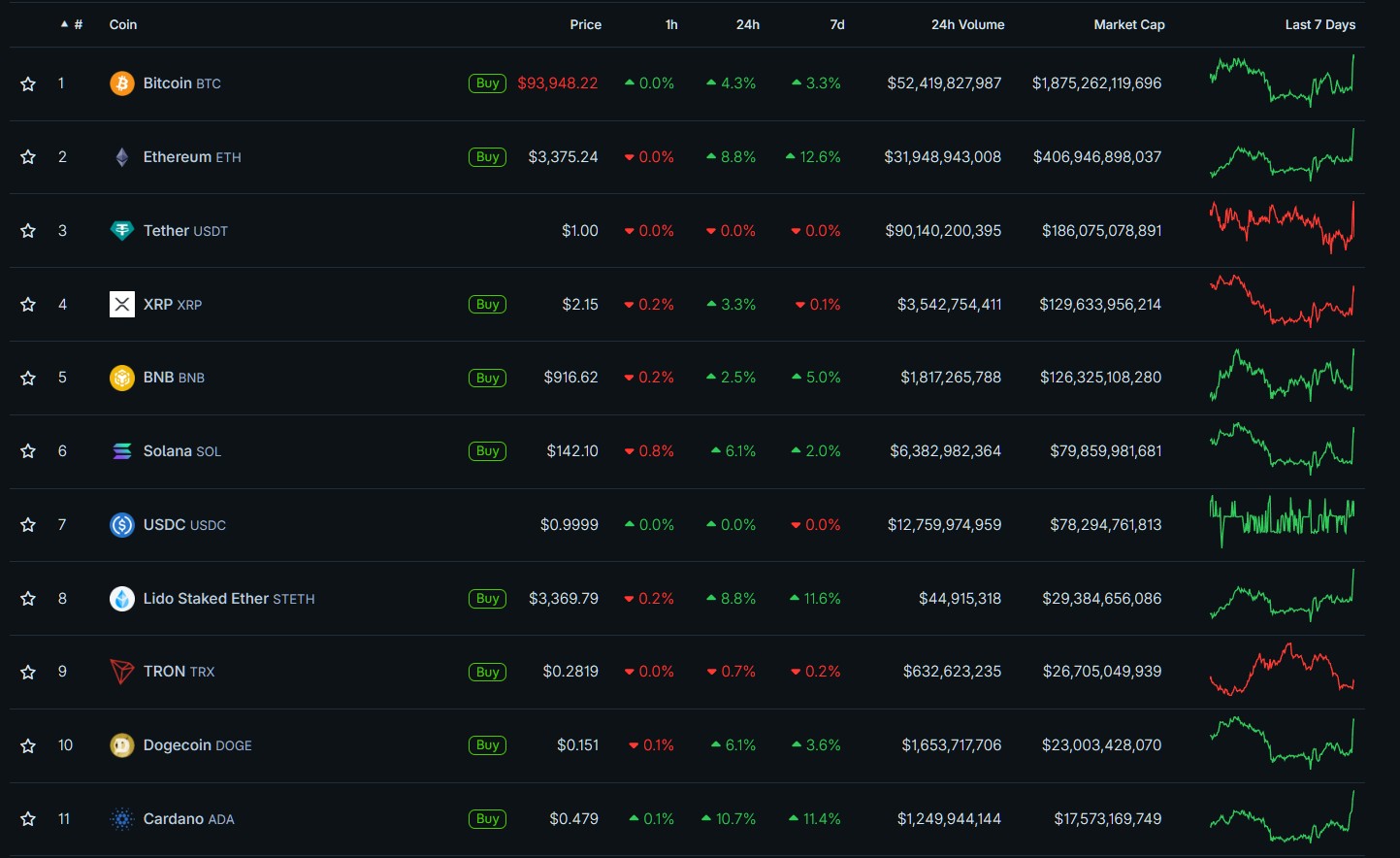
The crypto market has seen a sharp rise in volatility and price movement, with Bitcoin and Ethereum leading the rally. This surge has not come out of nowhere. It is tied closely to speculation surrounding the latest Federal Open Market Committee decision. As traders positioned themselves for potential changes in U.S. monetary policy, the crypto market responded with a wave of buying, short liquidations, and renewed bullish sentiment.
The move is another clear example of how deeply connected crypto has become to broader macroeconomic conditions.
How FOMC Speculation Became the Spark for the Latest Crypto Rally
In the days leading up to the meeting, expectations grew that the Federal Reserve might soften its stance on interest rates. Even the possibility of a rate cut or a more dovish tone tends to shift investors toward higher risk assets. Crypto is usually among the first to react.
Lower interest rates reduce the appeal of cash and bonds, while making speculative and growth oriented assets more attractive. That dynamic has long played out in equities. Now it is becoming increasingly visible in crypto as well.
Bitcoin and Ethereum both climbed into short term highs before the decision. As prices moved up, heavily leveraged short positions began to unwind. This added fuel to the rally as forced liquidations pushed prices even higher. It was a feedback loop that often appears during major macro events and is especially common in the crypto market due to its high leverage environment.
Market Behavior Shows the Fed Still Drives Risk Appetite
Even though crypto operates independently of government control, the industry still reacts strongly to the tone and trajectory of central bank policy.
A few things are becoming clear:
-
Traders treat FOMC guidance as a direct indicator of risk sentiment.
-
Expectations alone can drive price action before the decision is released.
-
Liquidity conditions continue to shape the strength of crypto market rebounds.
-
Bitcoin and Ethereum are increasingly acting like macro assets rather than purely speculative ones.
As the market leaned toward a more accommodative outlook, traders began rotating capital back into large cap cryptocurrencies. Bitcoin and Ethereum benefited the most, but the effect spilled into altcoins as well.
Short term, this created a volatile environment. Longer term, it signals a deeper connection between crypto and global financial cycles.
Why Some Analysts See This as More Than a Temporary Move
While investors always react to big economic events, this moment feels different. The alignment of easing inflation, slower economic pressure, and the possibility of rate cuts creates a setup where risk assets could see more sustained inflows.
Crypto is no longer operating separately from traditional finance. If liquidity improves across the economy, that liquidity tends to find its way into high growth and high volatility markets. Bitcoin and Ethereum fit that profile perfectly.
This raises a question that many in the industry are now considering. Is this the beginning of a broader shift where crypto consistently responds to macro cycles the same way equities and bonds do?
If so, price behavior may become more predictable around central bank events than it was in the early years of the industry.
What Could Go Right and What Could Still Disrupt the Momentum
What Could Go Right
-
If the Fed follows a path of easing or signals greater flexibility, crypto markets could experience a sustained wave of inflows.
-
Investors may shift back toward risk, viewing Bitcoin and Ethereum as core components of a diversified macro portfolio.
-
Lower interest rates increase liquidity across financial markets, which historically supports larger moves in non traditional assets.
-
A clearer link between crypto and macro conditions could attract more institutional traders who specialize in macro driven strategies.
What Could Go Wrong
-
If the Fed holds rates higher for longer or delivers a hawkish message, the market could see an immediate reversal.
-
Liquidations can cut both ways. The same leverage that amplifies rallies can intensify declines.
-
Uncertainty in global markets, geopolitical pressure, or a sudden risk off event could stall any recovery.
-
Crypto may remain highly sensitive to macro shifts, reducing the independence that once drove speculative surges.
What This Phase Means for Investors and the Broader Market
This moment serves as a reminder that crypto does not move in isolation. Bitcoin and Ethereum now sit within the larger financial ecosystem. When central bank policy shifts, these assets feel the impact quickly. That connection is growing stronger, not weaker.
For traders, FOMC weeks will continue to be periods of heightened volatility. Positioning before and after the decision may offer opportunities, but it also increases risk.
For long term investors, understanding macro cycles is becoming just as important as understanding blockchain fundamentals.
For the market as a whole, this could signal a shift toward a more mature ecosystem. If crypto continues to move with global financial cycles, it may attract more institutional interest, more capital, and more stability over time.
The surge before the FOMC decision is not just another short term rally. It is a signal of where the market is heading and how interconnected crypto has become with traditional finance.
Stay Connected
You can stay up to date on all News, Events, and Marketing of Rare Network, including Rare Evo: America’s Premier Blockchain Conference, happening July 28th-31st, 2026 at The ARIA Resort & Casino, by following our socials on X, LinkedIn, and YouTube.