#Banking

Bastion Receives Conditional Approval for National Trust Bank Charter

Bastion, the stablecoin infrastructure provider for global enterprises and financial institutions, has received preliminary conditional approval from the Office of the Comptroller of the Currency (OCC) to establish a national trust bank.

Following the approval, Bastion, through the Bastion Platforms National Trust Company, will now offer regulated digital asset services under OCC supervision, including stablecoin wallets and custody, payment infrastructure, and white-label issuance.
"Enterprises and financial institutions can now access stablecoins through a federally regulated counterparty, with the controls and oversight they already expect from their banks. We’ve built Bastion for this moment from day one,” said Nassim Eddequiouaq, CEO of Bastion.
With OCC approval now in the bag, enterprise clients and financial institutions can fully access Bastion’s products, including its wallet and issuance services such as minting, redemption, and conversion between stablecoins and fiat, with services that meet required regulatory and compliance standards.
Prior to receiving the conditional charter from the OCC, Bastion had secured a limited purpose trust company charter from the New York State Department of Financial Services, which enabled it to offer certain fiduciary and trust services.
It was during that period that Bastion acquired Dibbs Trust Company, which was eventually renamed Bastion Platforms Trust Company, the entity that is now playing a pivotal role in Bastion’s OCC-regulated fiduciary offerings.
Like Bastion, several other financial institutions have received similar conditional or even full trust charters from the OCC, notably Trump-backed World Liberty Financial, Catena, and Agora.

Italy’s Second Largest Bank UniCredit Weighs Crypto Custody

UniCredit, Italy’s second largest bank, is reportedly considering entering the crypto and digital asset custody market, according to a Bloomberg report.
Although UniCredit has yet to publicly announce its intention to offer crypto custody services, Bloomberg, citing people familiar with the matter, reported that the bank is already selecting a provider to build custodial infrastructure that would allow it not only to hold digital assets but also facilitate their buying and selling.
In addition to custodial services, Bloomberg also reported that the bank is considering other areas of crypto, including tokenized investment products and fixed income securities, the use of stablecoins, and exposure to cryptocurrencies, as possible areas of expansion.
UniCredit’s expansion into crypto custody comes at a time when financial institutions are also considering expanding into the sector.
Just recently, Jack Dorsey owned financial technology company Block formally applied to the Office of the Comptroller of the Currency (OCC) to establish a National Trust Bank that would allow it to offer crypto custody services.
In August, Citibank also announced plans to launch a native Bitcoin custody service that would allow its clients to hold Bitcoin alongside traditional assets such as stocks and bonds.
While UniCredit has yet to officially issue a public statement regarding the move, speculation surrounding the bank’s plans to expand into crypto custody could be a significant development for the crypto industry if successful, as it would enhance crypto adoption, bridging the gap between blockchain-based finance and traditional finance.

21 Banks, Including Goldman Sachs, Citi, Form Joint Venture for 2027 Stablecoin Launch

A consortium of 21 banks and financial institutions has formed a joint venture to potentially launch a stablecoin in the first half of 2027.
The consortium, which was first announced in October 2025 and initially comprised just 10 banks, has grown to include 21 major banks across multiple jurisdictions, including North America, Europe, Africa, East Asia and the Middle East.
Some of the financial institutions that make up the consortium include Bank of America, Citi, Goldman Sachs, Wells Fargo, Capital One, PNC, Fidelity Investments, WisdomTree, Deutsche Bank, BBVA, MUFG Bank and Standard Bank, among others.
With its member institutions now fully established, the consortium plans to launch a yet to be named company in the second half of this year, subject to fulfilling various regulatory requirements.
Once established, the company will launch a stablecoin backed by the U.S. dollar for cross border payments and settlements across wholesale, retail and institutional markets in early 2027. Euro pegged stablecoins will follow, paving the way for the launch of stablecoins denominated in other G7 currencies.
The formation of this 21 institution consortium comes at a time when other financial institutions are coming together to support the launch of their own stablecoins.
Notable among these consortia is Qivalis, a consortium made up of 37 banks targeting the launch of a euro pegged stablecoin before the end of the year.
There is also the Open Standard consortium, made up of 140 companies supporting the launch of Open USD, a recently launched stablecoin that allows its members to share in the earnings generated from its reserves.

JPMorgan Signals Potential Stablecoin Launch

JPMorgan Chase, the largest bank in the United States, has signaled its interest in the possibility of launching its own stablecoin, the Wall Street Journal (WSJ) reported.
Although the bank has made no official announcement and has no active plans to launch a stablecoin at present, a JPMorgan spokesperson reportedly told the WSJ that the bank recently held a preliminary discussion about the possibility of creating its own stablecoin.
“While we have no plans to issue a stablecoin, depending on customer demand and the evolution of the regulatory landscape, we would of course evaluate all options in the future.”
If JPMorgan ever decides to move ahead with a stablecoin launch, the stablecoin will be very different from JPM Coin, a digital deposit token the bank launched on its permissioned Kinexys blockchain in 2019 to modernize institutional payments and settlements.
Growing Stablecoin Interest Among U.S. Banks
Like JPMorgan, several other U.S. banks and financial institutions have also been considering launching their own stablecoins.
Bank of America, Wells Fargo, and Santander have formed a global stablecoin venture comprising more than a dozen financial institutions.
Through this venture, the financial institutions plan to launch a dollar backed stablecoin, with possible expansion to stablecoins pegged to the euro and other G7 currencies over time.
Stablecoins have seen growing adoption among large financial institutions in recent times.
According to a recent Fireblocks survey covering about 295 executives from banks and financial institutions, about 49% of these institutions actively use stablecoins for payments, while 23% are reportedly in the pilot phase and 18% plan to integrate stablecoins soon.
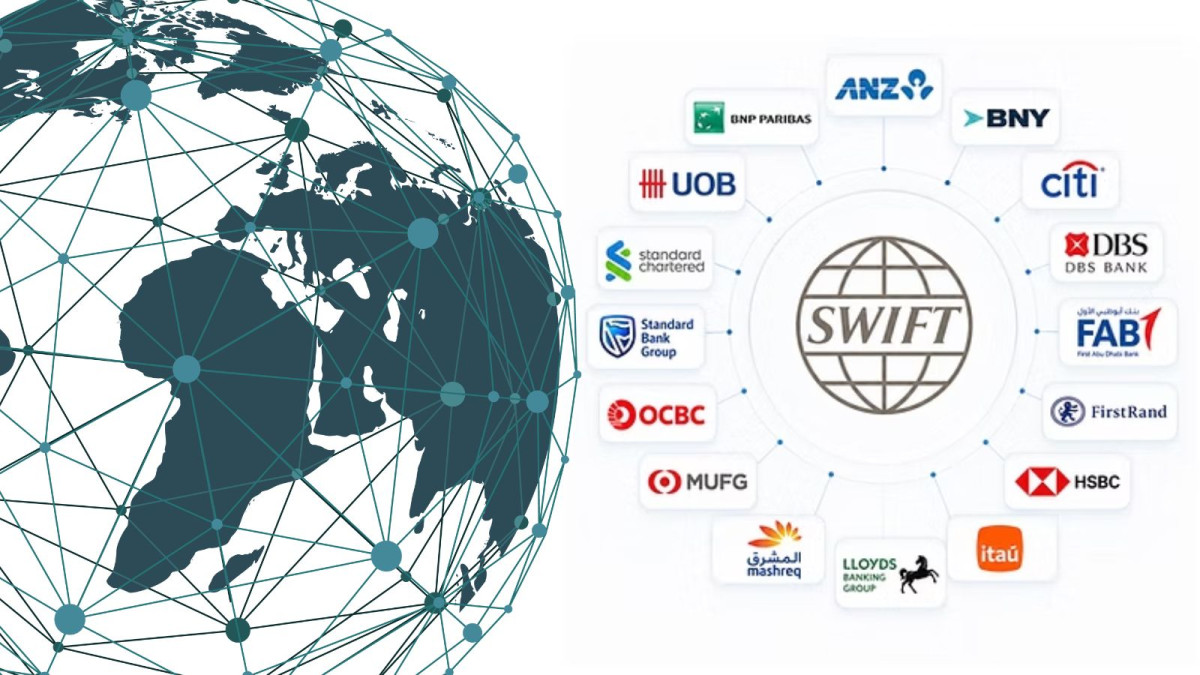
Swift Launches Blockchain Ledger for Cross-Border Payments Pilot With 17 Banks

Swift has launched a blockchain-based ledger that enables banks to execute cross-border payments 24 hours a day, seven days a week, using tokenized deposits while maintaining final settlement on existing infrastructure.

Image credit: x.com
According to Swift, 17 banks from six continents are set to pilot transactions on its blockchain-based ledger. Among the banks participating in the pilot program are Wells Fargo, First Abu Dhabi Bank, Standard Chartered, Bank of New York Mellon, Citibank, HSBC, DBS, and Lloyds Bank, among others.
Swift says the shared ledger will provide participating banks with a secure orchestration layer that allows them to issue tokenized deposits on their respective ledgers, enabling customers' funds to move quickly, including on weekends. Participating banks are also expected to benefit from improved client experience and enhanced global liquidity, without compromising their existing compliance, risk, and operational standards.
"With our new ledger capability, we're extending the trust and stability of established finance into the frontiers of digital money. It allows tokenized value to move across borders with the velocity and flexibility modern commerce expects, while maintaining the same high levels of resiliency, security, and compliance global finance requires," said Thierry Chilosi, Chief Business Officer at Swift.
"The strong support from banks shows the practical value of this approach, one that will help scale benefits globally while creating a foundation for future innovation in areas like programmable money and agentic commerce."
Swift said it took nine months to build the blockchain-based ledger, with the team incorporating feedback from financial institutions throughout the development process. According to the company, 75% of payments on the shared ledger will reach beneficiary banks within 10 minutes, and often within seconds. Swift said it also plans for the network to help meet the G20 target for faster international payments.
About Swift
Swift, short for Society for Worldwide Interbank Financial Telecommunication, is a global entity that enables banks and other institutions to exchange standardized, secure instructions for cross-border payments, securities, trade, and treasury transactions.
Since its inception, Swift has connected more than 11,500 institutions in over 200 countries. Before its most recent blockchain-based ledger pilot, Swift had conducted multiple interoperability pilots, testing tokenized assets, stablecoins, CBDCs, and the integration of traditional financial rails with blockchains.

Japan’s Top Banks to Launch Yen Stablecoin by 2027

Japan’s top three largest banks, Mitsubishi UFJ Financial Group (MUFG), Sumitomo Mitsui Banking Corporation, and Mizuho Bank, Ltd, have announced plans to jointly launch a yen-backed stablecoin by March 2027.
In a recent press release, the three megabanks said plans were already in place for the trio to conduct actual commercial transactions using the stablecoin. This is not a test or pilot program but a real financial infrastructure enabling stablecoin-based payments.
As a major step toward this goal, the three megabanks signed a Memorandum of Understanding (MoU) to establish a voluntary joint council responsible for developing the stablecoin operational framework, including issuance infrastructure, systems, schemes, governance, and future collaboration with other institutions.
Together with the Financial Services Agency (FSA), Japan’s primary financial regulatory authority, the three banks conducted a FinTech Proof of Concept pilot program around November 2025. The goal of the pilot was to assess whether multiple banks could jointly issue the stablecoin while ensuring compliance with all regulatory, legal, and compliance standards.
The Mitsubishi UFJ Financial Group’s partnership with the two other megabanks comes shortly after Mitsubishi Corporation, an entity within the broader Mitsubishi Group, adopted JPMorgan’s Kinexys blockchain network for cash management for its global subsidiaries.
Just like Japan’s megabanks' collaboration to launch a stablecoin, other banks have made similar moves, notable among which is Qivalis, a consortium comprising 37 European banks that are collaborating to launch a stablecoin for the euro.
Stablecoins continue to grow rapidly, with many traditional financial institutions entering the sector. According to a recent report, stablecoin transaction volume exceeded 28 trillion dollars in the first quarter of this year, approaching the 33 trillion dollar annual transaction volume recorded in 2025. US dollar pegged stablecoins still make up a large share of the global stablecoin supply, representing about 97 percent of the total global stablecoin supply.

Qivalis Expands Euro Stablecoin Consortium to 37 Banks

Qivalis, an Amsterdam-based joint venture developing a fully regulated MiCA-compliant euro stablecoin, has expanded its consortium to include 25 new banks.

With this expansion, the Qivalis consortium now comprises 37 banks across 15 European countries, including major names such as ABN AMRO, Rabobank, Nordea, Intesa Sanpaolo, Banco Sabadell, and Bankinter.
Created in early December last year, the Qivalis consortium is a group of European banks that came together to develop a stablecoin pegged to the euro. By launching a euro-pegged stablecoin, Qivalis aimed to create a credible and regulated alternative to the widely used United States dollar stablecoin.
The Qivalis euro-backed stablecoin would also eliminate the need for European banks to launch competing bank-issued stablecoins, as it is interoperable and fully compliant with MiCA across the European Union and the European Economic Area.
The consortium is currently pursuing an Electronic Money Institution license from De Nederlandsche Bank, the Dutch central bank, with plans to launch a euro-backed stablecoin in the second half of this year.
The State of the Stablecoin Market
The stablecoin market continues to grow significantly, with more traditional finance institutions entering and tapping into the expanding sector. According to a recent report, total stablecoin liquidity, or market capitalization, has crossed $320 billion, with US dollar-backed stablecoins accounting for about 95% of the market.
Tether (USDT) remains the most widely used US dollar-backed stablecoin, accounting for about 57.96% of the market, or approximately $ 185 billion in market capitalization. USD Coin (USDC) follows, accounting for about 24% of the market and having a market capitalization of roughly $78-79 billion.
The euro-denominated stablecoin market still represents a small fraction of the global stablecoin market. According to CoinGecko, euro-denominated stablecoins have a combined market capitalization of roughly $670 million, with EURC from Circle and EURS from Stasis being the two most prominent, with market caps of $436 million and $145 million, respectively.

Minnesota Approves Crypto Custody Services for Banks

Minnesota has enacted a law that allows banks and credit unions in the state to offer cryptocurrency custody services, with the law expected to take effect on Aug. 1, 2026.
The bill, HF 3709, was signed into law on Friday by Minnesota state governor Tim Walz, with the state legislature’s website stating that cryptocurrency custody services may now be offered and performed in the state.
While this is a significant milestone for crypto adoption in the state, the law also requires banks and credit unions interested in offering crypto custody services to submit a written notice detailing their risk management frameworks to the Minnesota Commissioner of Commerce at least 60 days before commencing such services.
The Minnesota Commissioner of Commerce will serve as the primary regulator, overseeing crypto custody services offered by banks and credit unions in the state.
Banks and credit unions interested in offering crypto custody services are also required to maintain a comprehensive written policy covering their internal controls, security, risk management, and compliance frameworks, while also segregating their clients’ assets from institutionally owned assets.
According to Representative Bernie Perryman, one of the primary sponsors of HF 3709, the legislation aims to establish a trustworthy framework that enables financial institutions to work with and safeguard Minnesotans' crypto assets, especially as crypto becomes more mainstream.
“House File 3709 is about ensuring that Minnesota-based financial institutions are allowed to evolve alongside their customers and members rather than forcing Minnesotans to rely on unregulated, out-of-state or offshore providers for services that are already in use today,” Perryman said in a March press release.
The passage of HF 3709 comes just a few weeks after the Minnesota governor banned the use and ownership of crypto kiosks and ATMs across the state, citing their growing use in fraud.
With the passage of this bill, Minnesota now joins Wyoming, New York, and Virginia, which have passed similar bills that allow banks and credit unions to offer crypto custody services.

Warren Continues Her Crusade On Crypto

Senator Elizabeth Warren is not letting up. Not after the GENIUS Act. Not after the CLARITY Act. Not after nine crypto firms got federal trust charters. And certainly not after the Office of the Comptroller of the Currency spent the better part of five months quietly waving through some of the biggest names in digital assets.
On Monday, the Massachusetts Democrat and ranking member of the Senate Banking Committee fired off a sharply worded letter to OCC Comptroller Jonathan Gould, accusing his agency of violating the National Bank Act by granting trust charters to at least nine crypto companies, including Coinbase, Ripple, Paxos, BitGo, Circle, Fidelity Digital Asset Services, Crypto.com, Stripe subsidiary Bridge, and Protego. The letter, dated May 18, demands a full accounting of the approvals, along with any communications between OCC officials and the White House or Trump family members, by June 1.
Regulatory Arbitrage, or Smart Business?
At the core of Warren's complaint is a fairly pointed argument: these companies are behaving like banks while holding charters that do not require them to operate like banks. National trust companies are, by design, more limited than full-service institutions. They cannot take FDIC-insured deposits. They do not engage in traditional commercial lending. They are supposed to focus on fiduciary work, managing assets on behalf of clients.
But Warren says the business plans she reviewed tell a different story. Several of the approved firms appear to be pursuing stablecoin issuance, custodial services, payments processing, and lending activities that resemble full-scale banking operations more than traditional trust work. She argues this creates systemic risk and amounts to regulatory arbitrage, writing: “These companies are effectively crypto banks that want to evade the fundamental safeguards and obligations that come with being a bank.”
That argument becomes harder to justify with how the modern banking system already operates. Under fractional reserve banking, traditional banks are permitted to lend out the vast majority of depositor funds while holding only a fraction in reserve, prioritizing leverage, liquidity, and profit generation over true one-to-one custody of customer assets. Critics argue that Warren is defending a legacy system built on counterparty risk while attacking crypto firms that, in many cases, are attempting to offer more transparent and fully reserved financial infrastructure.
The OCC has not responded to requests for comment. Gould, for his part, has been publicly bullish on the move toward crypto integration. When the agency announced its first wave of five conditional charter approvals back in December 2025, he framed it as a win for consumers and competition. "New entrants into the federal banking sector are good for consumers, the banking industry and the economy," he said at the time.
The Trump Angle Warren Will Not Ignore
There is a political dimension here that Warren has been pushing hard, and it involves the Trump family directly. World Liberty Financial, the crypto venture backed by President Donald Trump and his family, is reportedly in the final stages of receiving a conditional OCC approval of its own. Warren and Gould clashed over the pending application at a Senate hearing in February, when Gould declined to commit to delaying or denying it. Warren, visibly frustrated, called him an accomplice to what she described as presidential corruption.
In her latest letter, Warren went further, requesting all emails, text messages, meeting summaries, and call transcripts between OCC staff and Trump, his immediate family, or anyone acting on their behalf, specifically as they relate to any of the nine approved charters. It is a broad ask, and one that almost certainly will not be met without a fight.
Industry Momentum Has Not Slowed Warren Down
The crypto industry has had a genuinely strong stretch in Washington. The GENIUS Act, which created a federal framework for stablecoin issuance, passed into law last year and was hailed across the industry as a landmark moment. The SEC under Chair Paul Atkins has signaled major regulatory relief, including a potential innovation exemption for tokenized securities. Crypto-friendly appointments have reshaped several key agencies.
And still, Warren keeps pushing back. Her office has framed the GENIUS Act as legislation that creates "light-touch regulation for crypto banks" while weakening the consumer protections that took decades to build. The trust charter campaign fits neatly into that critique. From Warren's perspective, every charter granted to a Coinbase or a Ripple is another step toward a two-tiered financial system, where traditional banks operate under strict rules while crypto firms get a cheaper, faster path into the same market.
What Happens Next
The June 1 deadline Warren has set is more political theater than hard deadline. The OCC is not legally obligated to respond on her timeline. But the letter sets up a paper trail, and if the agency stonewalls or the World Liberty Financial approval comes through before then, expect Warren to take that back to the committee floor.
The broader question, one that neither side has fully answered, is whether the OCC's chartering activity actually violates the National Bank Act or whether it represents a reasonable interpretation of existing authority. The agency has defended the charters as consistent with prior interpretive letters, some dating back to 2021. Lawyers on both sides will be watching the OCC's formal response closely, assuming one comes.
For crypto firms, the political noise is mostly background at this point. Charters have been granted. Business plans are moving forward. But Warren's sustained pressure does carry real risk, particularly if Democrats gain ground in 2026 midterms or if any of the chartered institutions runs into trouble. In this regulatory environment, one high-profile failure could reframe the entire debate very quickly.

XRPL Unlocks Private Crypto Transactions for Banks

The XRP Ledger (XRPL), a decentralized public blockchain designed for fast, low cost blockchain transactions, has integrated Boundless zero knowledge proofs (ZKPs) to provide banks and asset managers with confidential yet compliance friendly blockchain transactions.
The integration, announced Tuesday at XRPL Zone Paris during Paris Blockchain Week, will see XRPL leverage Boundless zero knowledge proofs to keep sensitive financial data private while maintaining the auditability and compliance of this data, exactly what banks and financial institutions have long requested on public blockchains.

According to Shiv Shankar, Chief Executive Officer of Boundless, the integration of Boundless zero knowledge infrastructure into the XRP Ledger will enhance institutional level privacy by shielding sensitive transaction details, including transaction size, frequency, and counterparties, from public view while still allowing regulators to audit transactions through selective disclosure and role based access controls.
Unlike most public blockchains, which allow anyone to see all activity on them, the Boundless XRPL integration cryptographically shields sensitive details about blockchain transactions. However, this does not mean that the XRP Ledger will be completely private or difficult for regulators to audit. Through role based access controls, XRP Ledger activity will still be visible and auditable to authorized parties.
This means that while the public will see almost nothing about a transaction, apart from confirmation that it occurred, a bank’s internal compliance team will be able to access more detailed information, and regulators will be able to request and receive comprehensive audit data when there is a valid basis to do so.
With this integration, banks, asset managers, and other large financial institutions will not have to make a trade off between transparency and confidentiality, as the Boundless integration upholds high standards of privacy while enabling regulatory oversight of blockchain transactions.
Blockchain Privacy Gains Momentum
Blockchain privacy continues to grow, evolving from a niche segment into broader institutional adoption among traditional financial institutions.
In March of this year, SWIFT, BNY Mellon, and some of the largest banks in the world, including HSBC, JPMorgan, and Citigroup, announced plans to build a blockchain based shared ledger on Linea, an Ethereum Layer 2 zk rollup developed by Consensys, the team behind MetaMask. Although this shared ledger is intended to facilitate fast cross border payments and the settlement of tokenized assets, it uses zero knowledge proofs to keep sensitive transaction details private.
In 2024, Deutsche Bank, alongside Privado ID, began testing the use of zero knowledge technology for decentralized, privacy preserving digital identity in banking systems and other financial infrastructure.
Swift and Chainlink Drive Blockchain in Banking

Swift and Chainlink just finished another interoperability trial focused on tokenized bond transactions, and it pulled in some serious European banking names: BNP Paribas Securities Services, Intesa Sanpaolo, and Société Générale FORGE all took part, testing how digital assets can move across both blockchain networks and traditional systems without anyone having to rebuild their existing infrastructure. The setup uses Swift's messaging standards alongside Chainlink's Cross-Chain-Interopability-Protocol (CCIP) so institutions can interact with blockchain networks through rails they already know and trust.

This builds on earlier work with over a dozen global institutions including Citi, BNY Mellon, and UBS Asset Management, who were already testing cross chain settlement on existing payment rails. The throughline across all of it is pretty straightforward: banks aren't going to adopt anything that forces them to gut their current systems, so if you can make tokenized asset settlement feel like a natural extension of what they already do, you've actually got a shot at making this work at scale.

Back in 2023, Swift ran experiments with Chainlink alongside Citi, BNY Mellon, BNP Paribas, Euroclear, Clearstream, and a bunch of others. They moved tokenized assets between wallets on the same chain, across public and private chains, and between different public chains entirely. CCIP validated the Swift requests, posted the transactions on chain, tracked execution, and sent confirmations back so banks saw one clean workflow on their end.
Then in 2024, under the Monetary Authority of Singapore's Project Guardian, Swift teamed up with UBS Asset Management and Chainlink to actually settle tokenized fund subscriptions and redemptions. Swift handled the fiat cash side, CCIP handled the on-chain asset side which shows digital asset transactions plugging into the payment systems that over 11,500 institutions across 200 countries already use, rather than needing some separate parallel settlement network nobody has actually built yet.
Legacy systems need to be able to talk to blockchains and right now you've got different CBDCs, tokenized deposits, and all kinds of assets sitting on different ledgers that can't be exchanged easily. By making CCIP the standard cross chain messaging layer, Swift gives banks a way to touch multiple chains without having to rebuild their whole stack every single time a new network shows up. There's identity work layered in too with GLEIF and Chainlink working on verifiable institutional IDs, and you can't have regulated cross border settlement without knowing who's on the other end.
Chainlink has already pulled in hundreds of millions in revenue, and it's coming from a mix of sources. A big chunk is large enterprises paying off-chain for platform access, integrations, usage, and maintenance. On top of that, there are on-chain fees from subscription and per call models, plus revenue sharing arrangements.
Chainlink's CCIP has been processing around $18 billion in monthly cross chain volume back in early 2026, which was up roughly 62 percent from the year before. JPMorgan and UBS both have live blockchain settlement pilots running on it.
March saw some solid activity with Coinbase activated a $5 billion cbBTC bridge to the Monad network, which basically brought their wrapped Bitcoin liquidity into Monad's DeFi ecosystem. Apps like Curvance and Neverland have already adopted related markets because of this. Coinbase also hooked up Chainlink's DataLink to bring premium exchange data on-chain for the first time, and that's powering billions in trading volume now. They were already using Chainlink for Proof of Reserve and as their exclusive bridging solution for wrapped assets, so this felt like the natural next move.
Institutions don’t have to directly use $LINK and can pay however works for them, whether that's fiat, stablecoins, gas tokens, or other digital assets which gets programmatically converted into LINK and deposited into the Chainlink Reserve. Node operators and service providers get paid out in LINK, and staking adds another layer of security on top of that. So, there is some design to keep creating demand for the token as usage grows, rather than just treating it as an afterthought.
Swift is the control panel for global banking, Chainlink CCIP is the router that speaks every blockchain's language, and banks keep doing what they do and the translation layer handles everything else.

Circle Unveils Fully Managed USDC Payments Solution

Circle is pushing even further into the global payments infrastructure. On April 8, the company officially launched CPN Managed Payments, a fully managed stablecoin settlement product built on top of its Circle Payments Network that lets banks, fintechs, and payment processors tap into USDC rails without ever touching digital assets themselves. Yes, you heard that correctly, they never even have to touch USDC.
The solution handles everything on the backend, including USDC minting and burning, payment orchestration, compliance controls, and blockchain infrastructure, so that partner institutions can operate entirely in fiat. In other words, a payment provider signs up, connects once, and Circle does the rest.
That is a huge shift in how stablecoin adoption typically works. Until now, most institutions eyeing blockchain-based settlement had to deal with the full stack: custody arrangements, internal compliance buildout, licensing questions, and the operational headaches that come with managing digital assets on a balance sheet. CPN Managed Payments is designed to help institutions overcome those barriers, including digital asset custody, licensing requirements, compliance complexity, and operational risk.
"With CPN Managed Payments, we're simplifying how institutions adopt and scale stablecoin payments," said Nikhil Chandhok, Circle's Chief Product and Technology Officer. "By combining issuance, liquidity, compliance, and programmable infrastructure into a unified solution, we are enabling financial institutions to embed stablecoin settlement into their existing payment stacks with enterprise-grade reliability and operational readiness."
The launch is an extension of CPN, which Circle first announced in April 2025 and brought live the following month. CPN was designed to connect banks, neo-banks, payment service providers, virtual asset service providers, and digital wallets to enable real-time settlement of cross-border payments using regulated stablecoins. Cross-border payments can still take longer than one business day to settle and cost more than 6%, according to the World Bank, disproportionately impacting emerging markets.
The underlying mechanics are worth understanding. On the sending side, an originating financial institution handles customer onboarding, KYC, and fiat-to-USDC conversion. On the receiving side, a beneficiary institution receives USDC and converts it to local currency for payout. Circle sits in the middle as network operator but is not holding or moving the funds itself, acting instead as a coordination layer between member institutions. With the managed payments product, Circle now absorbs even more of that operational complexity on behalf of its partners.
USDC's market cap currently sits at around $74.8 billion, and Circle reported Q4 2025 revenue of $770 million, 77% better than the same period the prior year. The company has been aggressively expanding its licensing footprint globally and is now leaning into that compliance infrastructure as a competitive moat rather than just a cost center. Circle said that USDC has supported over $70 trillion in "cumulative onchain settlement," with nearly $12 trillion of that amount coming in Q4 2025 alone.
CPN Managed Payments is built on Circle's existing infrastructure, which covers payouts across more than 20 blockchains and domestic payment rails, with connectivity to CPN fiat payout corridors worldwide. The platform is also composable, meaning institutions can start fully managed and gradually take on more of the stack themselves as their internal capabilities develop.
Launch partners include Veem, along with other global payment service providers. Earlier CPN adopters included Alfred Pay, which is using the network to enable stablecoin-to-fiat offramps via PIX and SPEI; Tazapay, supporting compliant fiat disbursements into Hong Kong; and RedotPay, initiating USDC-based payments into Brazil.
The competitive picture is getting crowded. PayPal has had its own stablecoin product on the market for over a year, and Ripple's RLUSD has been gaining ground in cross-border settlement use cases, particularly in corridors where USDC's footprint has been slower to develop. But Circle's bet with CPN Managed Payments is distinct: rather than compete stablecoin-to-stablecoin, it is trying to become the rails that other institutions use, regardless of which digital dollar eventually wins.
Circle is currently focusing on serving organizations transacting in high-value, underserved global trade corridors, with plans to explore expansion into Nigeria, the EU, UK, Colombia, India, the UAE, China, Turkey, the Philippines, Vietnam, and Argentina.
For traditional finance players who have wanted stablecoin efficiency without the crypto balance sheet exposure, the product is about as clean an entry point as the market has offered.