#AAVE Token
Aave “Will Win” Plan Sends Revenue to DAO

Aave Labs has put forward one of the most consequential governance proposals in the protocol’s history. The plan, titled “Aave Will Win,” would redirect 100 percent of revenue generated by Aave-branded products to the Aave DAO, reshaping how value flows across one of DeFi’s largest lending ecosystems.
The proposal arrives at a sensitive moment. Aave remains a dominant force in decentralized finance, but internal debates over revenue allocation, brand ownership, and governance control have intensified over the past year. At the center of it all is a fundamental question: who should capture the economic upside of the Aave brand, the development company building products, or the decentralized autonomous organization that governs the protocol?
A Structural Reset for Revenue
Under the proposed framework, all gross revenue from Aave-branded products would be sent directly to the DAO treasury. That includes income generated through the aave.com front end, the Aave mobile app and card products, institutional and enterprise offerings, real world asset initiatives, as well as interface level swap fees and other third party integrations.
Revenue would be defined as gross product revenue minus any shares owed to external partners. In practical terms, Aave Labs would no longer retain earnings from these business lines. Instead, the DAO would collect and manage those funds, centralizing economic control under token holder governance.
For token holders, this represents a clearer path to value accrual. Historically, the DAO controlled protocol fees generated directly by lending markets, while product level revenues tied to branded interfaces and integrations flowed through Labs. That dual structure created friction and, at times, mistrust. The new proposal attempts to eliminate that ambiguity and reset expectations around who benefits from ecosystem growth.
Aave DAO has seen a sharp rise in revenue over the past year as DeFi volumes rebounded and lending demand strengthened. With tens of millions flowing through the ecosystem, questions around value capture became harder to ignore.
Tensions escalated after community members scrutinized how certain front end integration fees were routed, particularly when some income streams were directed to wallets associated with Labs rather than to the DAO. Delegates argued that product level income tied to the Aave brand should belong to token holders by default.
The debate expanded quickly. What began as a discussion about swap fees evolved into broader conversations about intellectual property, trademark ownership, and the long term governance structure of the ecosystem. Some community members floated proposals to transfer brand ownership to a DAO controlled entity, while others pushed for more aggressive structural changes to redefine the relationship between Labs and the DAO.
“Aave Will Win” appears to be an effort to consolidate those discussions into a single framework. Rather than renegotiating revenue stream by stream, the proposal places all branded product revenue under DAO oversight in one move.
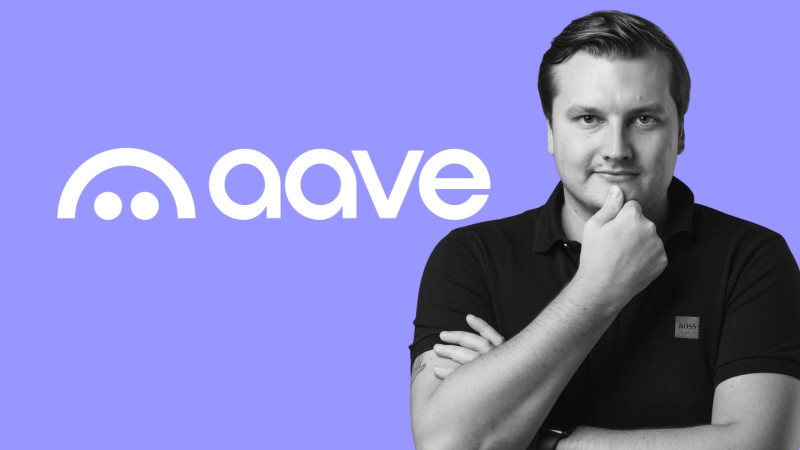
Stani Kulechov, Founder of Aave Labs stated that “The framework formalizes Aave Labs’ role as a long-term contributor to the Aave DAO under a token-centric model, with 100% of product revenue directed to the DAO,” he added that, “As onchain finance enters a decisive new phase, with fintechs and institutions entering DeFi, this framework positions Aave to capture major growth markets and win over the next decade."
The Governance Trade Off
Supporters argue that the change would align incentives more cleanly. If all branded product revenue flows to the DAO, token holders directly benefit from ecosystem expansion, whether that growth comes from retail users interacting through the front end or institutions deploying capital through enterprise channels. That clarity could strengthen valuation narratives and reduce uncertainty for larger investors evaluating the protocol’s sustainability.
It also reinforces the idea that Aave is not a company with a token attached, but a token governed protocol that contracts service providers to execute development.
Critics, however, raise practical concerns. Fully decentralizing revenue control may slow execution. DAOs, by design, move more deliberately than centralized teams. Budget approvals, development funding, and strategic pivots require governance cycles that can stretch for weeks. There is also the question of incentives. If Aave Labs no longer retains product revenue, its compensation model would need to rely on DAO approved budgets or grants. That shift increases transparency, but it also introduces a new layer of dependency on governance votes.
In short, the proposal strengthens decentralization while introducing new operational constraints. Whether that trade off proves beneficial will depend on how efficiently the DAO can allocate capital.
Aave V4 and Expansion Ambitions
The revenue overhaul is intertwined with broader strategic goals, including formal ratification of Aave V4. The next iteration of the protocol is expected to emphasize modular architecture, cross chain liquidity coordination, and expansion into new asset categories. In exchange for this new proposal, Aave Labs is asking for $25 million in stablecoins, 75,000 AAVE tokens (worth roughly $8.3 million), and a mandate to build Aave V4. This has raised some questions among the Aave community.
Real world assets remain a central focus. Institutional interest in tokenized treasuries and structured credit products has accelerated, and Aave has positioned itself as infrastructure for that emerging market. By routing all product revenue to the DAO, the protocol would strengthen its treasury and, at least in theory, expand its capacity to fund long term initiatives in both crypto native and traditional finance adjacent markets.
The framing of the proposal suggests confidence rather than retreat. It presents consolidation under the DAO as a competitive advantage, not merely a governance concession.
Recent movements in AAVE’s token price have reflected sensitivity to governance headlines. Signals that token holders could receive a more direct claim on ecosystem revenue are often interpreted as constructive. That said, price volatility does not resolve deeper governance questions. The more significant issue is whether the DAO can responsibly manage an expanded treasury while continuing to fund innovation at a pace that keeps Aave competitive.
The Bottom Line
The proposal will move through Aave’s standard governance pipeline, beginning with community discussion and formal requests for comment before progressing to an on chain vote. Approval would mark a structural turning point, formalizing Aave’s evolution into a more explicitly DAO centric economic system. Rejection or substantial amendment would signal that the community remains divided on how far decentralization should extend.
Either outcome carries implications beyond Aave. As mature DeFi protocols generate meaningful revenue and develop recognizable brands, informal arrangements between core contributors and token holders become harder to sustain.
Aave is confronting that tension directly. The result may help define how the next generation of decentralized protocols balance decentralization, execution speed, and economic alignment in a sector that is no longer experimental, but increasingly institutional.
Aave Moves to Ease DAO Tensions Over Revenue Sharing and Control

Aave is once again at the center of a familiar DeFi question. Who really controls the protocol, the DAO or the company that builds and maintains it?
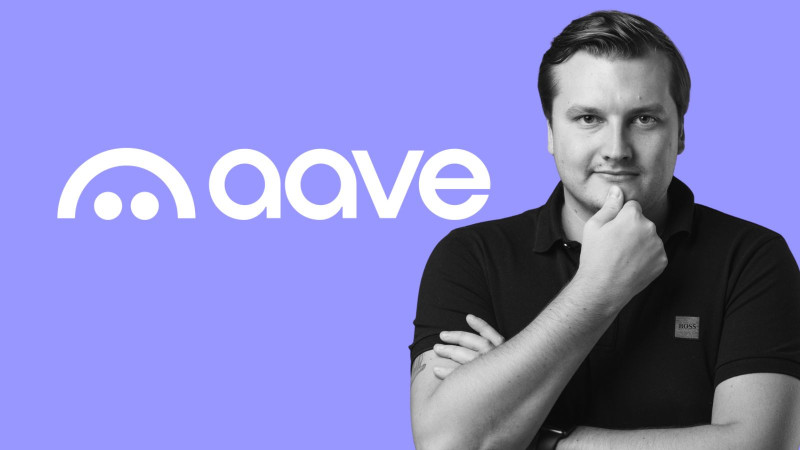
This week, Aave Labs moved to ease growing tensions with the Aave DAO after backlash over how non-protocol revenue is handled. The dispute has exposed deeper cracks in the relationship between token holders and the development team, and raised uncomfortable questions about decentralization, ownership, and incentives in one of crypto’s largest lending platforms. In a governance post on Friday, Aave founder Stani Kulechov wrote that,
"Given the recent conversations in the community, at Aave Labs we are committed to sharing revenue generated outside the protocol with token holders, alignment is important for us and for AAVE holders, and we’ll follow up soon with a formal proposal that will include specific structures for how this works.”
At issue is revenue generated outside Aave’s core smart contracts. Specifically, fees tied to the protocol’s frontend and swap integrations. While these fees are not produced directly by the lending protocol itself, many DAO members argue they should still benefit token holders, especially when the interface is tightly associated with the Aave brand.
The disagreement came into focus after Aave Labs switched its frontend swap provider, a move that redirected fees away from the DAO treasury. Some delegates estimate the change could divert millions of dollars annually that previously flowed to token holders. That sparked immediate criticism, with governance participants accusing Aave Labs of unilaterally monetizing the ecosystem without sufficient community approval.
Aave Labs has pushed back on that framing. The team says the frontend is a separate product that requires ongoing development, maintenance, and legal responsibility. From its perspective, monetizing the interface is a reasonable way to fund operations, and not a violation of DAO governance. The protocol itself, they argue, remains fully controlled by token holders.
Still, the explanation did little to calm concerns. For many in the DAO, the issue is less about the money and more about precedent. If revenue connected to the Aave user experience can be captured outside governance, it raises questions about how much power token holders actually have.
The situation escalated when a proposal surfaced that would move control of Aave’s brand assets into a DAO-controlled legal structure. The vote was rushed to Snapshot, drawing criticism over process and transparency. Some contributors said the proposal appeared without proper consultation, further eroding trust at an already sensitive moment.
Market reaction was swift. AAVE’s price slid as traders weighed the uncertainty, adding financial pressure to an already tense governance environment. Longtime delegates warned that unresolved conflicts between Labs and the DAO could weaken Aave’s standing as a leading DeFi protocol.
In response, Aave Labs has now signaled a willingness to compromise. The team proposed sharing portions of non-protocol revenue with the DAO, framing it as a goodwill gesture rather than an obligation. The move is intended to reset the conversation and bring governance discussions back to alignment rather than escalation.
Whether that will be enough remains unclear. Some DAO members see the offer as a step in the right direction. Others worry it avoids the core issue, which is defining where the DAO’s authority begins and ends.
The broader implications stretch well beyond Aave. As DeFi matures, protocols are increasingly forced to reconcile decentralization ideals with the realities of product development, regulation, and sustainable funding. Aave’s governance clash is becoming a case study in what happens when those lines are left blurry.
For now, both sides appear to be stepping back from the brink. But the debate has made one thing clear. In crypto, decentralization is not a destination, it’s an ongoing negotiation.