#DAOs
A Ghost From Ethereum’s Past Is Becoming a $220 Million Security Fund

Nearly a decade after one of crypto’s most painful episodes, a large pool of forgotten Ether tied to TheDAO is being put back to work. This time, not as a risky experiment, but as a long-term security fund for Ethereum.
Roughly $220 million worth of ETH that has sat unclaimed since the infamous 2016 DAO hack is being transformed into a new, ecosystem-wide security endowment. The goal is simple on paper: fund audits, tools, research, and emergency response efforts that help keep Ethereum and its users safe.
From Crisis to Capital
To understand why this matters, you have to go back to TheDAO itself.
In early 2016, TheDAO was pitched as a radical idea. A decentralized venture fund governed entirely by code and token holders. It quickly became the biggest crowdfunding event crypto had ever seen, pulling in millions of Ether from participants around the world.
Then it broke.
A flaw in the smart contract allowed an attacker to drain a massive portion of the funds. Panic followed. Debates erupted. And eventually, Ethereum hard-forked to reverse the damage, a decision that permanently split the network and created Ethereum Classic.
What was left behind were fragments of that original system. Contracts that never got emptied. ETH that was never claimed. Funds that, for years, were largely ignored.
Now they are coming back into focus.
Where the Money Comes From
The new security fund is built from two main pools of ETH left over from TheDAO era.
The largest portion comes from what is known as the ExtraBalance contract. This Ether was left behind during the original refund process, largely due to overpayments and technical quirks. Today, that balance adds up to more than 70,000 ETH, worth over $200 million at current prices.
Most of that ETH will not be spent outright. Instead, the majority is expected to be staked, generating yield that can fund security work year after year. That turns a one-time windfall into something closer to an endowment.
The second pool is smaller but more immediately usable. Around 4,600 ETH sits in old curator-related wallets connected to TheDAO. Those funds are expected to be deployed more directly toward grants and security initiatives.
Together, they form one of the largest dedicated security funds the Ethereum ecosystem has ever seen.
What the Fund Will Actually Do
Ethereum has no shortage of capital, but security spending has often been fragmented. This fund is meant to change that.
The focus is broad by design. Audits for major protocols. Funding for security tooling and infrastructure. Support for incident response teams when exploits happen. Research into emerging risks across layer 2 networks, wallets, and user-facing applications.
There is also an emphasis on user protection, things like phishing detection, transaction safety tools, and services that help everyday users avoid costly mistakes.
Some of the money will likely go to well-known security firms. Some will go to smaller, community-driven projects that quietly do important work but struggle to secure consistent funding.
Governance, DAO-Style
In a nod to TheDAO’s original vision, the fund will not operate like a traditional foundation grant program.
Instead, distribution is expected to lean heavily on decentralized governance mechanisms. Quadratic funding, retroactive grants, and community voting will all play a role. The idea is to reward impact, not just proposals, and to let a broad set of stakeholders help decide where the money goes.
The Ethereum Foundation will still be involved, particularly in setting guardrails and defining what qualifies as security work. But the ambition is to keep decision-making as open and participatory as possible.
Why This Matters Now
Ethereum is no longer an experimental network. It secures hundreds of billions of dollars in value across DeFi, NFTs, stablecoins, and layer 2 systems. With that scale comes constant pressure from attackers.
Exploits today are faster, more complex, and often more damaging. At the same time, public funding for security work tends to lag behind growth. This fund helps close that gap.
It also reflects a broader shift in how the Ethereum community thinks about risk. Security is no longer something you bolt on at the end. It is infrastructure.
The Bottom Line
There is something poetic about this moment. I love how they are taking one of Ethereum's darkest moments and turning it in to a security fund to try to ensure that something like this would never happen again.
TheDAO hack forced Ethereum to confront its own limits
It exposed the dangers of unaudited code and untested governance. It shaped how the ecosystem thinks about security to this day.
Turning the remnants of that failure into a permanent security fund feels like closing a loop. A way of acknowledging the past without being defined by it.
If the fund works as intended, one of crypto’s earliest disasters may end up funding its future resilience.
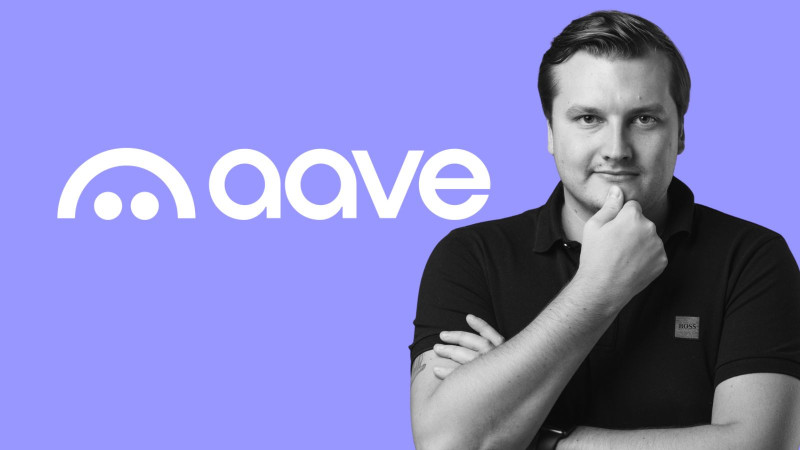
Aave Moves to Ease DAO Tensions Over Revenue Sharing and Control

Aave is once again at the center of a familiar DeFi question. Who really controls the protocol, the DAO or the company that builds and maintains it?
This week, Aave Labs moved to ease growing tensions with the Aave DAO after backlash over how non-protocol revenue is handled. The dispute has exposed deeper cracks in the relationship between token holders and the development team, and raised uncomfortable questions about decentralization, ownership, and incentives in one of crypto’s largest lending platforms. In a governance post on Friday, Aave founder Stani Kulechov wrote that,
"Given the recent conversations in the community, at Aave Labs we are committed to sharing revenue generated outside the protocol with token holders, alignment is important for us and for AAVE holders, and we’ll follow up soon with a formal proposal that will include specific structures for how this works.”
At issue is revenue generated outside Aave’s core smart contracts. Specifically, fees tied to the protocol’s frontend and swap integrations. While these fees are not produced directly by the lending protocol itself, many DAO members argue they should still benefit token holders, especially when the interface is tightly associated with the Aave brand.
The disagreement came into focus after Aave Labs switched its frontend swap provider, a move that redirected fees away from the DAO treasury. Some delegates estimate the change could divert millions of dollars annually that previously flowed to token holders. That sparked immediate criticism, with governance participants accusing Aave Labs of unilaterally monetizing the ecosystem without sufficient community approval.
Aave Labs has pushed back on that framing. The team says the frontend is a separate product that requires ongoing development, maintenance, and legal responsibility. From its perspective, monetizing the interface is a reasonable way to fund operations, and not a violation of DAO governance. The protocol itself, they argue, remains fully controlled by token holders.
Still, the explanation did little to calm concerns. For many in the DAO, the issue is less about the money and more about precedent. If revenue connected to the Aave user experience can be captured outside governance, it raises questions about how much power token holders actually have.
The situation escalated when a proposal surfaced that would move control of Aave’s brand assets into a DAO-controlled legal structure. The vote was rushed to Snapshot, drawing criticism over process and transparency. Some contributors said the proposal appeared without proper consultation, further eroding trust at an already sensitive moment.
Market reaction was swift. AAVE’s price slid as traders weighed the uncertainty, adding financial pressure to an already tense governance environment. Longtime delegates warned that unresolved conflicts between Labs and the DAO could weaken Aave’s standing as a leading DeFi protocol.
In response, Aave Labs has now signaled a willingness to compromise. The team proposed sharing portions of non-protocol revenue with the DAO, framing it as a goodwill gesture rather than an obligation. The move is intended to reset the conversation and bring governance discussions back to alignment rather than escalation.
Whether that will be enough remains unclear. Some DAO members see the offer as a step in the right direction. Others worry it avoids the core issue, which is defining where the DAO’s authority begins and ends.
The broader implications stretch well beyond Aave. As DeFi matures, protocols are increasingly forced to reconcile decentralization ideals with the realities of product development, regulation, and sustainable funding. Aave’s governance clash is becoming a case study in what happens when those lines are left blurry.
For now, both sides appear to be stepping back from the brink. But the debate has made one thing clear. In crypto, decentralization is not a destination, it’s an ongoing negotiation.