#CME Group
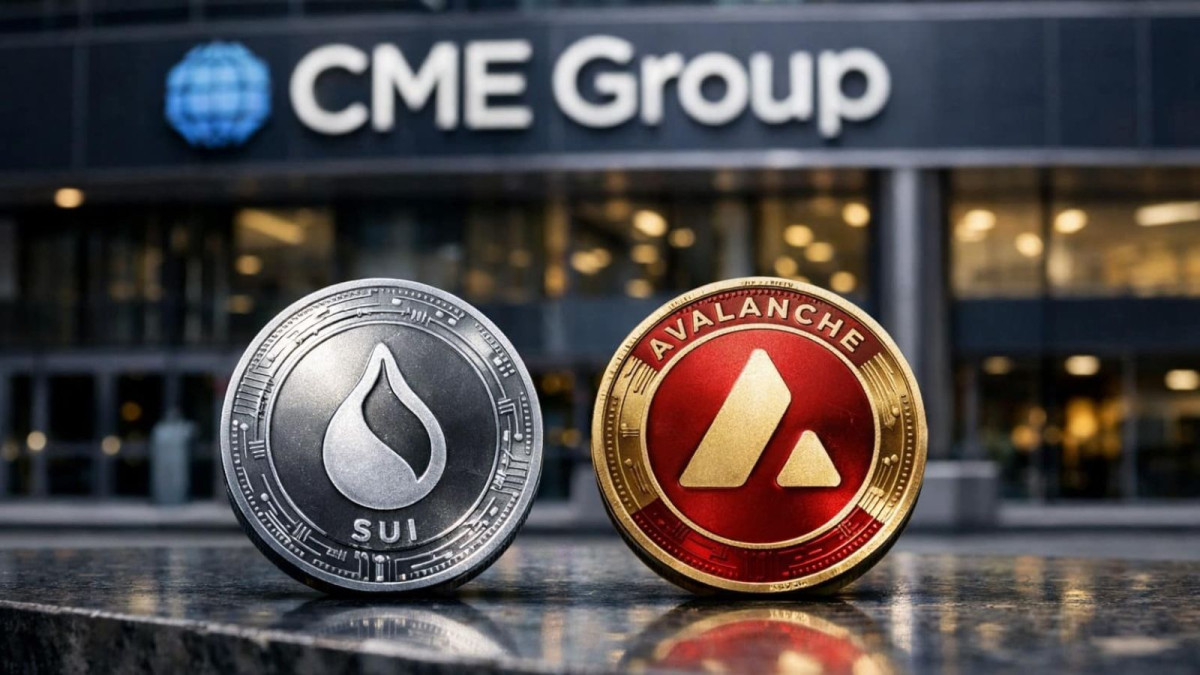
CME to Launch AVAX and SUI Futures

The Chicago Mercantile Exchange (CME), the world’s largest financial derivatives marketplace, has announced plans to launch Avalanche (AVAX) and Sui (SUI) futures contracts on May 4, pending regulatory review by the Commodity Futures Trading Commission (CFTC).
The launch of these contracts, the company says, will allow market participants and traders the option to choose between micro-sized and larger-sized futures contracts, including AVAX futures sized at 5,000 AVAX and micro AVAX futures sized at 500 AVAX, as well as SUI futures contracts sized at 50,000 SUI and micro SUI futures contracts sized at 5,000 SUI.
According to Giovanni Vicioso, CME Group Global Head of Cryptocurrency Products, the launch of this new set of futures contracts is aimed at providing clients and market participants with greater flexibility and more market options, as well as improved capital efficiency across the deeply liquid CME derivatives market.
"We continue to see strong volumes as market participants turn to our markets to manage risk and pursue opportunities, with March average daily volume up 19 percent year over year and nearly $8 billion in average notional value traded daily,” Vicioso said.
The nearly $8 billion in average notional value traded is not insignificant, as CME is one of the most liquid derivatives exchanges. According to a February trading report, the CME derivatives trading platform recorded an all-time daily trading peak of 29.6 million futures contracts in January of this year, a 15 percent year over year increase compared with January of the previous year.
The launch of the Avalanche and Sui contracts comes shortly after CME Group launched Cardano (ADA) futures, Chainlink (LINK) futures, and Stellar (XLM) futures contracts on February 9 of this year, as part of the firm’s ongoing strategy of providing trusted, regulated crypto products to all kinds of market participants.
Crypto Derivatives Market Continues to Boom
The crypto derivatives trading market, primarily the futures and options market, has continued to boom. In the first quarter of this year, crypto derivatives trading accounted for almost 90 percent of the total $20.57 trillion traded in that period, reaching $18.63 trillion, while spot trading accounted for $1.94 trillion.
There has also been an increase in the number of large institutions in recent times, including traditional finance institutions that have moved to tap into this vast section of the crypto market.
In October 2025, the global investment bank Goldman Sachs, in collaboration with DBS Bank, launched the first-ever over-the-counter interbank cryptocurrency options trade. In December last year, JPMorgan Chase, America’s largest bank, also began exploring the launch of crypto spot and derivatives trading services for its institutional clients.

CME Group Considers CME Coin as Tokenization Push Grows

CME Group, the world’s largest derivatives exchange, is exploring the idea of issuing its own digital token, a move that signals how far traditional market infrastructure has come in its engagement with blockchain technology.
The idea, casually referred to as a “CME Coin,” was raised by CME Group CEO Terry Duffy during a recent earnings call. While still early and undefined, the concept centers on using a proprietary digital asset within CME’s own ecosystem, potentially for collateral, margin, or settlement purposes.
This is not about launching a new retail cryptocurrency or competing with bitcoin or ether. Instead, it is about modernizing the technology that supports global derivatives markets, a space where CME plays a critical role.
What CME Is Actually Exploring
Duffy described the initiative as part of an ongoing review into tokenization and digital asset infrastructure. He suggested that CME is evaluating whether issuing a token that operates on a decentralized network could improve how collateral moves between participants in cleared markets.
Details remain scarce. CME has not confirmed whether such a token would be structured as a stablecoin, a settlement asset, or a more limited utility token designed solely for institutional use. The company has also declined to share any timeline or technical framework.
Still, the fact that CME is openly discussing the idea is notable. As a systemically important market operator, CME tends to move cautiously, especially when it comes to new financial instruments that intersect with regulation.
Why Collateral Is the Real Story
The potential importance of a CME-issued token lies in collateral and margin, not payments or speculation.
Every day, CME clears massive volumes of derivatives tied to interest rates, foreign exchange, commodities, equities, and cryptocurrencies. These markets rely on collateral to manage risk, and moving that collateral efficiently is a constant operational challenge.
Today, most collateral still moves through traditional banking rails, with settlement delays, cut-off times, and operational friction baked in. Tokenized collateral could allow assets to move almost instantly, potentially on a 24-hour basis, while remaining within a regulated framework.
That makes a CME Coin fundamentally different from most stablecoins. Its value would not come from being widely traded or used for payments, but from being embedded directly into the risk management systems of institutional markets.
Some industry observers argue that a token used in this way could ultimately matter more to financial infrastructure than consumer-facing digital currencies, simply because of the scale and importance of the markets involved.
Tokenization Without Giving Up Control
Importantly, CME is not signaling any desire to decentralize its role as a central counterparty. The exchange’s interest in tokenization appears focused on efficiency, not ideology.
Any CME-issued token would almost certainly operate within a tightly controlled environment, designed to meet regulatory expectations and preserve CME’s oversight of clearing and settlement. In that sense, it reflects a broader trend among traditional financial institutions that are adopting blockchain technology while maintaining centralized governance.
The token discussion fits neatly into CME Group’s expanding crypto footprint.
CME already offers regulated futures and options on Bitcoin, Ethereum, Solana, and XRP. It has also announced plans to introduce futures tied to Cardano, Chainlink, and Stellar, pending regulatory approval.
These products have positioned CME as one of the main gateways for institutional crypto exposure in the U.S. market. Unlike offshore exchanges or crypto-native platforms, CME’s offerings are deeply embedded in traditional financial workflows, making them attractive to banks, hedge funds, and asset managers.
CME is also planning to expand trading hours for its bitcoin and ether futures to a 24/7 model, reflecting the always-on nature of crypto markets and growing demand from global participants.
Separate from the CME Coin idea, CME is working with Google Cloud on a tokenized cash initiative expected to roll out later this year. That project involves a depository bank and is focused on settlement and payments between institutional counterparties.
Taken together, these efforts suggest CME is methodically experimenting with how tokenized money and assets can fit into regulated financial infrastructure, rather than making a single, headline-grabbing bet.
A Familiar Pattern for CME
This is not CME’s first cautious step into crypto.
When the exchange launched bitcoin futures in 2017, it marked one of the first major points of contact between regulated derivatives markets and digital assets. That move helped legitimize bitcoin as a tradable asset class for institutions, even as skepticism remained high.
Today’s exploration of tokenization follows a similar pattern. CME is not chasing hype. It is watching where market structure could benefit from new technology and testing whether blockchain-based tools can solve real operational problems.
Regulatory Questions Still Loom
Any move toward issuing a proprietary token would inevitably draw scrutiny from regulators, including the Commodity Futures Trading Commission and potentially banking authorities depending on how the asset is structured.
Questions around custody, settlement finality, and classification would all need to be addressed before anything goes live. CME’s history suggests it will not move forward without regulatory clarity, even if that slows progress.
The Bottom Line
For now, the CME Coin remains an idea rather than a product. But the fact that it is being discussed at the CEO level underscores how seriously traditional market operators are taking tokenization.
If CME ultimately moves forward, it could reshape how collateral works in cleared markets and accelerate the adoption of blockchain technology at the core of global finance.
For an industry that once viewed crypto as a fringe experiment, this type of move is very telling.

CME Expands Crypto Futures With Cardano, Chainlink, and Stellar
CME Pushes Deeper Into Altcoins With Cardano, Chainlink, and Stellar Futures
CME Group is continuing its steady march into crypto markets, this time by adding futures tied to Cardano, Chainlink, and Stellar. The move expands the exchange’s growing lineup of regulated digital asset derivatives and signals that institutional interest is no longer confined to Bitcoin and Ether alone.
The new contracts, which are expected to go live in early February pending regulatory signoff, will include both standard and smaller-sized versions. That approach mirrors CME’s recent strategy across crypto products, offering flexibility for large institutions while also lowering the barrier to entry for smaller trading firms and active investors.
For CME, this is less about chasing headlines and more about meeting demand. As crypto markets mature, firms want tools that look and feel familiar. Regulated futures, clear contract specifications, and centralized clearing still matter a great deal to traditional players, especially when volatility remains a defining feature of the asset class.
Why These Tokens Matter
The choice of Cardano, Chainlink, and Stellar is telling. Each represents a different corner of the crypto ecosystem.
Cardano has positioned itself as a research-driven blockchain focused on scalability and governance. Chainlink underpins a huge portion of decentralized finance by supplying real-world data to smart contracts. Stellar has long emphasized cross-border payments and financial inclusion. Together, they reflect how institutional interest in crypto has broadened beyond simple price exposure to Bitcoin.
CME’s contracts will allow traders to hedge or speculate on these networks without touching the underlying tokens. For many institutions, that distinction is critical. Futures provide exposure while avoiding custody, on-chain risks, and operational complexity.
Part of a Larger Derivatives Push
This latest expansion fits neatly into a much bigger picture. Over the past few years, CME has methodically built out its crypto derivatives suite, starting with Bitcoin, then adding Ether, and gradually branching into other high-profile tokens.
The exchange has also leaned heavily into micro contracts, which have proven popular across asset classes. Smaller contract sizes give traders more precision and flexibility, especially in volatile markets where position sizing matters.
Behind the scenes, crypto derivatives volumes at CME have continued to grow, even during quieter periods in the spot market. That suggests the audience for these products is becoming more structural and less driven by short-term hype.
What It Means for the Market
For institutional investors, the arrival of ADA, LINK, and XLM futures adds another layer of legitimacy to altcoin markets. Regulated futures improve price discovery, enable more sophisticated hedging strategies, and make it easier for funds to justify exposure internally.
Retail and professional traders may also benefit indirectly. As liquidity deepens on regulated venues, pricing tends to become more efficient across the broader market. That can reduce fragmentation between offshore platforms and U.S.-regulated exchanges.
There is also a signaling effect. When CME adds a product, it often becomes a reference point for the rest of the industry. Listing a token does not guarantee long-term success, but it does suggest sustained interest and sufficient market depth.
Looking Ahead
CME’s decision to bring Cardano, Chainlink, and Stellar into its derivatives lineup reinforces a clear trend. Crypto markets are no longer just about Bitcoin dominance. Institutions want diversified exposure, and they want it through familiar, regulated instruments.
As more altcoins find their way into traditional market infrastructure, the line between crypto-native and traditional finance continues to blur. For CME, that is likely the point.