#Institutional Trading
BitMEX Unlocks Safer Trading With Zodia Custody Deal

BitMEX, a derivatives-focused cryptocurrency exchange, has partnered with Zodia Custody, an institutional-first digital assets custody firm, to enable off-exchange trading and secure asset custody for BitMEX’s clients.
The partnership, announced this week, will see the integration of Zodia Custody’s Interchange platform into BitMEX. Interchange is an off-venue settlement solution that allows institutional and professional clients to trade directly on BitMEX while keeping their digital assets securely held off-exchange with Zodia Custody.

This partnership, according to Stephan Lutz, BitMEX CEO, draws on lessons learned from past market failures, especially the collapse of the FTX cryptocurrency exchange and the 1.4 billion dollar Bybit hack. These events, Lutz said, exposed the risks associated with unsegregated or compromised exchange-held funds and are key examples of how custody failures or security threats can put client funds at risk.
Through this partnership and the integration of the Interchange platform, BitMEX clients, especially institutional clients that often trade with large amounts of money, do not have to worry about the safety of their funds on the exchange in the event of a hack, as their digital assets are secured in Zodia Custody’s cold, segregated storage wallets.
The partnership also serves to bridge the gap between institutional-grade security and crypto-native liquidity, allowing BitMEX’s professional and institutional clients to access BitMEX’s deep crypto derivatives liquidity while eliminating the need to pre-fund the exchange before trading.
The Growing Need for Security on Crypto Exchanges
Security has been one of the major challenges faced by cryptocurrency platforms over the years. In 2025, over $4 billion was stolen from crypto platforms. This represents a 34 percent increase compared with 2024, when losses stood at $2.2 billion. Unfortunately, the recovery rate of stolen crypto funds remains very low, at less than 8 percent. This is even worse for centralized exchanges, which are often high value targets.
By integrating Zodia Custody’s interchange platform into its crypto infrastructure and allowing clients’ digital assets to be stored in Zodia Custody’s segregated vaults, BitMEX eliminates the trade offs institutional clients face when choosing between derivatives trading access and the safety of their assets. Since Zodia handles the custody of clients’ assets, BitMEX faces minimal damage in the event of a security breach or hack.
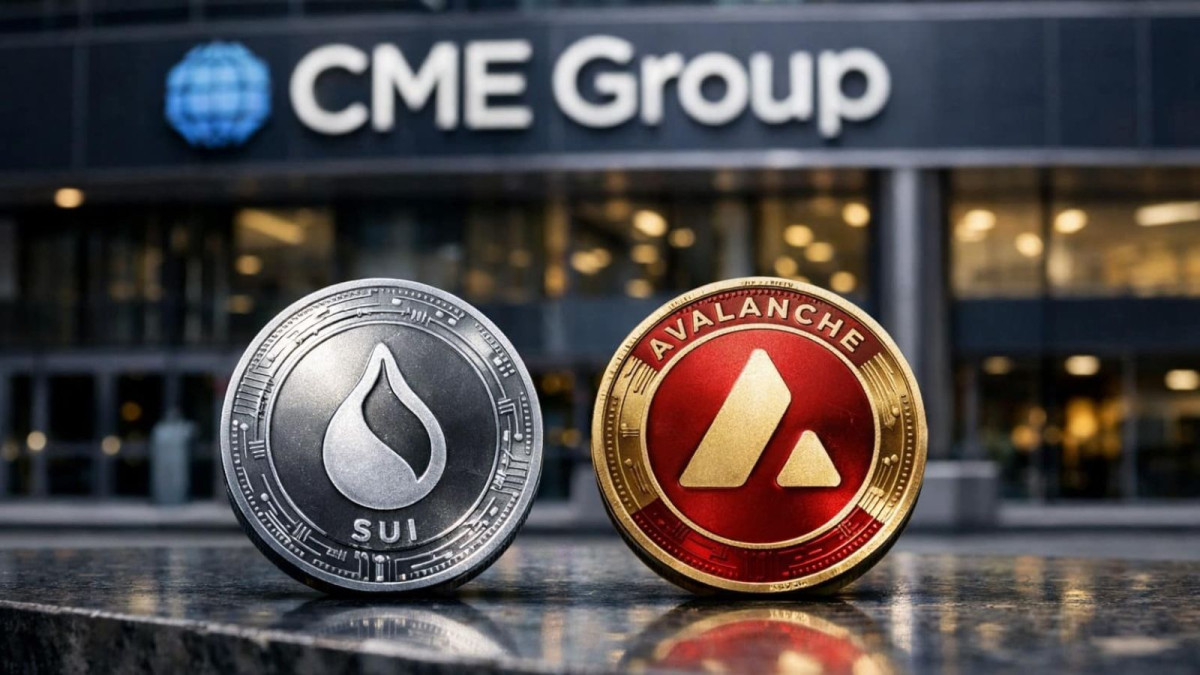
CME to Launch AVAX and SUI Futures

The Chicago Mercantile Exchange (CME), the world’s largest financial derivatives marketplace, has announced plans to launch Avalanche (AVAX) and Sui (SUI) futures contracts on May 4, pending regulatory review by the Commodity Futures Trading Commission (CFTC).
The launch of these contracts, the company says, will allow market participants and traders the option to choose between micro-sized and larger-sized futures contracts, including AVAX futures sized at 5,000 AVAX and micro AVAX futures sized at 500 AVAX, as well as SUI futures contracts sized at 50,000 SUI and micro SUI futures contracts sized at 5,000 SUI.
According to Giovanni Vicioso, CME Group Global Head of Cryptocurrency Products, the launch of this new set of futures contracts is aimed at providing clients and market participants with greater flexibility and more market options, as well as improved capital efficiency across the deeply liquid CME derivatives market.
"We continue to see strong volumes as market participants turn to our markets to manage risk and pursue opportunities, with March average daily volume up 19 percent year over year and nearly $8 billion in average notional value traded daily,” Vicioso said.
The nearly $8 billion in average notional value traded is not insignificant, as CME is one of the most liquid derivatives exchanges. According to a February trading report, the CME derivatives trading platform recorded an all-time daily trading peak of 29.6 million futures contracts in January of this year, a 15 percent year over year increase compared with January of the previous year.
The launch of the Avalanche and Sui contracts comes shortly after CME Group launched Cardano (ADA) futures, Chainlink (LINK) futures, and Stellar (XLM) futures contracts on February 9 of this year, as part of the firm’s ongoing strategy of providing trusted, regulated crypto products to all kinds of market participants.
Crypto Derivatives Market Continues to Boom
The crypto derivatives trading market, primarily the futures and options market, has continued to boom. In the first quarter of this year, crypto derivatives trading accounted for almost 90 percent of the total $20.57 trillion traded in that period, reaching $18.63 trillion, while spot trading accounted for $1.94 trillion.
There has also been an increase in the number of large institutions in recent times, including traditional finance institutions that have moved to tap into this vast section of the crypto market.
In October 2025, the global investment bank Goldman Sachs, in collaboration with DBS Bank, launched the first-ever over-the-counter interbank cryptocurrency options trade. In December last year, JPMorgan Chase, America’s largest bank, also began exploring the launch of crypto spot and derivatives trading services for its institutional clients.

CME Expands Crypto Futures With Cardano, Chainlink, and Stellar
CME Pushes Deeper Into Altcoins With Cardano, Chainlink, and Stellar Futures
CME Group is continuing its steady march into crypto markets, this time by adding futures tied to Cardano, Chainlink, and Stellar. The move expands the exchange’s growing lineup of regulated digital asset derivatives and signals that institutional interest is no longer confined to Bitcoin and Ether alone.
The new contracts, which are expected to go live in early February pending regulatory signoff, will include both standard and smaller-sized versions. That approach mirrors CME’s recent strategy across crypto products, offering flexibility for large institutions while also lowering the barrier to entry for smaller trading firms and active investors.
For CME, this is less about chasing headlines and more about meeting demand. As crypto markets mature, firms want tools that look and feel familiar. Regulated futures, clear contract specifications, and centralized clearing still matter a great deal to traditional players, especially when volatility remains a defining feature of the asset class.
Why These Tokens Matter
The choice of Cardano, Chainlink, and Stellar is telling. Each represents a different corner of the crypto ecosystem.
Cardano has positioned itself as a research-driven blockchain focused on scalability and governance. Chainlink underpins a huge portion of decentralized finance by supplying real-world data to smart contracts. Stellar has long emphasized cross-border payments and financial inclusion. Together, they reflect how institutional interest in crypto has broadened beyond simple price exposure to Bitcoin.
CME’s contracts will allow traders to hedge or speculate on these networks without touching the underlying tokens. For many institutions, that distinction is critical. Futures provide exposure while avoiding custody, on-chain risks, and operational complexity.
Part of a Larger Derivatives Push
This latest expansion fits neatly into a much bigger picture. Over the past few years, CME has methodically built out its crypto derivatives suite, starting with Bitcoin, then adding Ether, and gradually branching into other high-profile tokens.
The exchange has also leaned heavily into micro contracts, which have proven popular across asset classes. Smaller contract sizes give traders more precision and flexibility, especially in volatile markets where position sizing matters.
Behind the scenes, crypto derivatives volumes at CME have continued to grow, even during quieter periods in the spot market. That suggests the audience for these products is becoming more structural and less driven by short-term hype.
What It Means for the Market
For institutional investors, the arrival of ADA, LINK, and XLM futures adds another layer of legitimacy to altcoin markets. Regulated futures improve price discovery, enable more sophisticated hedging strategies, and make it easier for funds to justify exposure internally.
Retail and professional traders may also benefit indirectly. As liquidity deepens on regulated venues, pricing tends to become more efficient across the broader market. That can reduce fragmentation between offshore platforms and U.S.-regulated exchanges.
There is also a signaling effect. When CME adds a product, it often becomes a reference point for the rest of the industry. Listing a token does not guarantee long-term success, but it does suggest sustained interest and sufficient market depth.
Looking Ahead
CME’s decision to bring Cardano, Chainlink, and Stellar into its derivatives lineup reinforces a clear trend. Crypto markets are no longer just about Bitcoin dominance. Institutions want diversified exposure, and they want it through familiar, regulated instruments.
As more altcoins find their way into traditional market infrastructure, the line between crypto-native and traditional finance continues to blur. For CME, that is likely the point.