#TRON
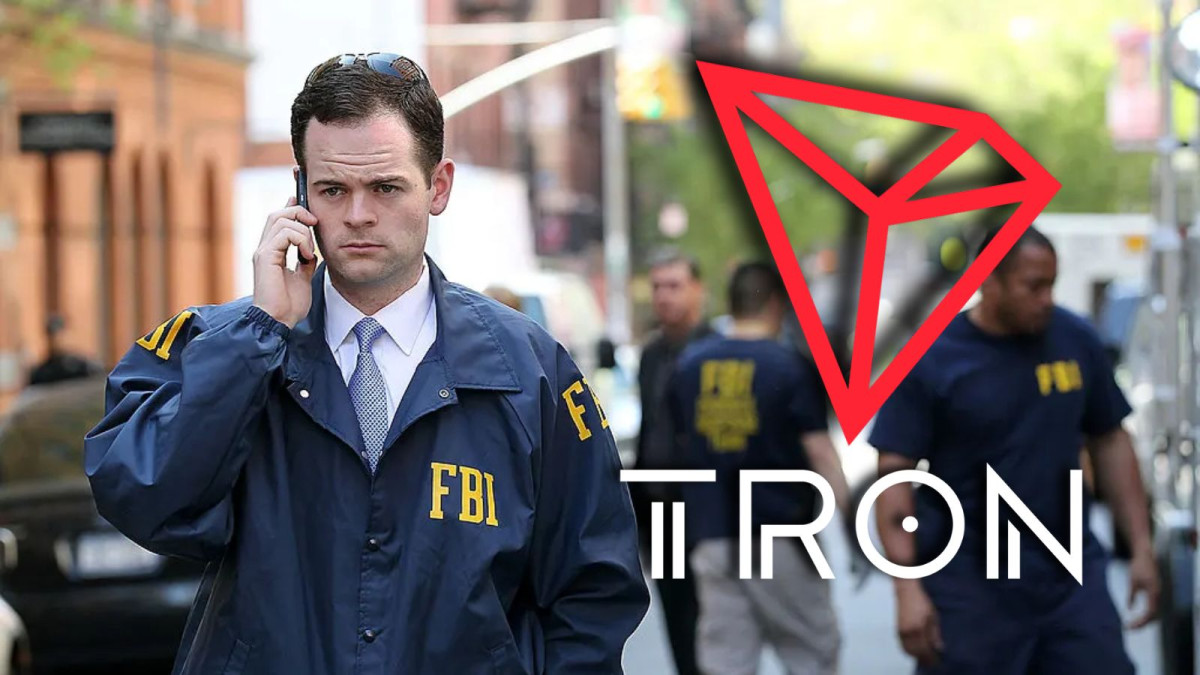
FBI Warns of Fake Tron Token Crypto Scam

The U.S. Federal Bureau of Investigation (FBI) has warned crypto users about a fake token on the Tron blockchain impersonating the agency.
In a post on its New York X account, the FBI said some Tron users have received messages from scammers posing as the agency, asking them to complete an anti-money laundering verification to avoid having their assets frozen and falsely claiming their wallets are under investigation.
The FBI cautioned against falling for such scams. “If you receive a token from an account with the details below, do not provide any identifying information to any website associated with the token,” the agency said.
Users who have already sent their personal information to the scammers were urged to file a complaint with the Internet Crime Complaint Center.
Inside Crypto Phishing Scams
The launch of the fake FBI token is one of several crypto phishing scams that have emerged in recent months. These scams often involve impersonating recognized government agencies, companies, or public figures, tricking users into giving up their personal credentials.
According to Scam Sniffer, about 106,106 victims were affected by crypto phishing scams in 2025, resulting in losses of approximately $83.85 million.
Although this represents a significant drop compared to the $494 million in losses and 332,000 victims recorded the previous year, phishing remains widely used by attackers, especially with the growing use of AI-generated phishing campaigns.
FBI Created Fake Cryptocurrency Token
In 2024, the FBI created a fake artificial intelligence–related token, called NexFundAI, an Ethereum-based cryptocurrency designed to catch scammers.
The NexFundAI token was part of Operation “Token Mirrors,” launched to identify and expose fraudulent market makers and manipulators, including those involved in wash trading and pump-and-dump schemes.
The operation was successful, as it led to the arrest of more than 18 individuals and the seizure of several million dollars from the suspects.

SEC Drops Justin Sun Fraud Charges as Rainberry Pays $10M Fine

After nearly three years of legal battle, the U.S. Securities and Exchange Commission officially dismissed its civil fraud claims against Tron founder Justin Sun, the Tron Foundation, and the BitTorrent Foundation on Thursday. The resolution, entered by the U.S. District Court for the Southern District of New York, comes with one notable condition: Rainberry Inc., the entity that developed the BitTorrent protocol and the BTT cryptocurrency token under Sun's direction, agreed to pay a $10 million civil penalty to the agency.
The final judgment still requires approval from a federal judge, but the terms represent a clean exit from what had been one of the higher-profile enforcement actions of the Gensler-era SEC. Rainberry, previously known as BitTorrent Inc. and acquired by Sun in June 2018, will also be permanently barred from engaging in deceptive market practices for securities, though it did not admit guilt as part of the agreement. Critically, the dismissal against Sun himself and the two foundations was entered "with prejudice," meaning the SEC cannot refile the same allegations in this federal court.
A Case History
The commission first filed the lawsuit in March 2023, during former Chairman Gary Gensler's tenure. The charges were sweeping. The SEC accused Sun and his related entities of orchestrating the unregistered offer and sale of two crypto assets, Tronix (TRX) and BitTorrent (BTT), which it classified as securities. Beyond that, regulators alleged Sun personally directed employees to execute hundreds of thousands of coordinated wash trades in TRX, generating roughly $31 million in artificial trading proceeds and inflating the appearance of legitimate market activity. The complaint also alleged Sun paid celebrity endorsers to promote his tokens without publicly disclosing those payments — a violation of securities laws that require such arrangements to be made transparent to investors.
The SEC argued that Sun had tight personal control over each of the entities involved, calling Tron Foundation, BitTorrent Foundation, and Rainberry his "alter egos" and noting that he had spent significant time on U.S. soil during the relevant period, including approximately 180 days in 2019 alone. The agency said a reasonable investor would have seen Sun as the unified face of the entire TRX and BTT ecosystem.
Sun's legal team did not take the charges quietly. In early 2024, Tron Foundation and Sun's lawyers moved to dismiss the suit on jurisdictional grounds, arguing that the SEC had no authority over Sun as a foreign national residing abroad and that the agency had failed to prove Sun exercised meaningful control over the Tron and BitTorrent networks. Rainberry, incorporated in California, did not contest jurisdiction but sought dismissal on different grounds — primarily that the company had no fair notice that its activities could be subject to securities claims.
The SEC pushed back on those arguments aggressively in an amended complaint filed in April 2024, countering that Sun's physical presence in the United States over multiple years was extensive and well-documented, and that his dominance over each entity was impossible to dispute given his public profile and behavior at industry events.
By late 2024 and early 2025, the political climate had shifted dramatically. Donald Trump's return to the White House brought with it a sharp reversal in the SEC's posture toward crypto enforcement. Gary Gensler stepped down, and the commission came under the acting leadership of Commissioner Mark Uyeda before Paul Atkins, a Washington lawyer widely seen as supportive of the digital asset industry, was confirmed as chairman. In February 2025, the SEC and Sun's legal team jointly asked Judge Edgardo Ramos in Manhattan to put the case on hold while both sides explored a potential resolution, citing the interests of both parties and the public.
What Comes Next For Tron and Sun
The resolution closes a legal chapter, but Sun's year has not been without turbulence. The relationship with World Liberty Financial grew complicated in September 2025 when, days after WLFI tokens became publicly tradable, blockchain data revealed that Sun's wallet address holding roughly 595 million unlocked WLFI tokens was blacklisted by the project's smart contracts. WLFI had fallen sharply from its debut price, and on-chain data showed Sun had made several outbound transfers, including one worth approximately $9 million, to addresses associated with exchanges. The WLFI team cited concerns about suspicious activity. Sun denied any manipulation, publicly appealing to the team to restore his access and invoking the decentralization principles the project claimed to champion. As of late 2025, his tokens reportedly remained frozen and had declined significantly in value.
For the Tron and BitTorrent ecosystems themselves, the dismissal removes a substantial legal overhang. TRX and BTT holders had long operated under uncertainty about whether the tokens could ultimately be classified as securities in federal court. While the settlement does not resolve broader policy debates in Washington about how digital tokens should be classified, it does remove the specific threat of a federal court ruling in this case.
The $10 million Rainberry penalty is notable primarily for what it is not. Given the scale of what was alleged, including hundreds of millions of dollars in token distributions and deliberate wash trading to manipulate market prices, the fine is modest. Critics are likely to point to the figure as further evidence that the current SEC has little appetite for meaningful accountability in the crypto space, while supporters of the settlement structure will argue it brings resolution without years of additional litigation that may have yielded uncertain outcomes anyway.
For Sun, the outcome is a practical victory, even if the legal-ese technically routes the penalty through Rainberry rather than through him directly. He emerged without personal liability in a case where the SEC had once described him as the singular controlling force behind everything. Whether the political dynamics that contributed to that outcome constitute a coincidence or something more transactional is a question that Senate and House oversight committees appear intent on pressing in the months ahead
Kalshi Integrates TRON to Expand On-Chain Liquidity for Prediction Market
Kalshi is gaining deeper onchain liquidity with new TRON integration.
The U.S. regulated prediction market operator has integrated the TRON network, expanding on-chain access to liquidity for what it calls the world’s largest prediction market. The move gives traders new ways to move funds in and out of Kalshi using blockchain rails, while signaling that the company is getting more serious about meeting crypto native users where they already are.
At a basic level, the integration allows users to deposit and withdraw assets like USDT on TRON directly into Kalshi. That may sound incremental, but for a platform built inside the U.S. regulatory perimeter, it is a meaningful shift. Blockchain rails offer faster settlement, lower friction, and access to global liquidity that traditional payment systems still struggle to match.
Kalshi’s bet is that prediction markets work better when capital can move freely.
A Hybrid Market Takes Shape
Kalshi occupies a strange but increasingly important corner of finance. It operates under the oversight of the Commodity Futures Trading Commission, which gives it the ability to offer event based contracts tied to real world outcomes like inflation prints, election results, and economic data releases.
What makes Kalshi different is that it is now trying to blend that regulated structure with crypto infrastructure.
By integrating TRON, and previously Solana, Kalshi is building what amounts to a hybrid market. The core exchange remains regulated and off-chain, but the access points are increasingly on-chain. Users can tap blockchain liquidity while still trading contracts that settle under U.S. rules.
For Kalshi, liquidity is the whole game. Prediction markets only work when there are enough participants on both sides of a trade. Crypto users already understand how to move stablecoins, bridge assets, and arbitrage prices across venues. Bringing those users into Kalshi’s ecosystem could deepen markets that have historically been thinner than traditional financial products.
Why TRON
TRON’s appeal here is straightforward. It is one of the most widely used blockchain networks in the world for real payment activity, particularly stablecoin transfers. A significant portion of global USDT volume already flows through TRON every day, making it a natural fit for a platform focused on liquidity and accessibility.
For Kalshi, that usage matters more than brand perception. TRON offers fast settlement, low transaction costs, and a network that is already embedded in how traders move dollars on-chain. Those characteristics make it easier for both institutional and international users to move capital efficiently without friction eating into trading activity.
TRON’s reach outside the United States is also a feature, not a bug. Prediction markets benefit from diverse participation and constant flow, and TRON’s global footprint helps bring in users who already operate on-chain as part of their daily financial activity.
The integration also reflects a pragmatic approach. Rather than betting on hype cycles, Kalshi is aligning with infrastructure that is already proven at scale. Alongside its work on Solana, TRON adds another high throughput rail that supports Kalshi’s broader goal of making prediction markets more liquid, accessible, and always on.
Regulation Meets Crypto Reality
Kalshi’s regulatory status remains central to its pitch. Unlike fully decentralized prediction markets, Kalshi operates under explicit U.S. approval. That has allowed it to offer contracts that other platforms either cannot or will not touch.
At the same time, regulation comes with constraints. Kalshi cannot simply open the floodgates to every DeFi user worldwide. Integrating blockchains like TRON is a way to expand access without abandoning compliance.
It is a careful balancing act. Too much decentralization risks regulatory pushback. Too little innovation risks irrelevance in a market where crypto native platforms move faster.
So far, Kalshi seems intent on threading that needle.
A Growing Role in Media and Markets
Prediction markets have also become more visible in mainstream discourse, and Kalshi has leaned into that. Its data is increasingly referenced as a real time signal of market expectations, particularly around politics and macroeconomic events.
That visibility matters. Prediction markets tend to gain relevance when people start trusting them as indicators rather than curiosities. More liquidity, especially from crypto users accustomed to trading around the clock, could reinforce that feedback loop.
The more capital flows through these markets, the more informative prices become.
Stay Connected
You can stay up to date on all News, Events, and Marketing of Rare Network, including Rare Evo: America’s Premier Blockchain Conference, happening July 28th-31st, 2026 at The ARIA Resort & Casino, by following our socials on X, LinkedIn, and YouTube.
TRON Integrates LayerEdge for Bitcoin-Anchored Zero-Knowledge Verification
LayerEdge Brings Zero-Knowledge Verification and Bitcoin Security to the TRON Network
The TRON blockchain is taking a major step toward stronger verification and interoperability through its new integration with LayerEdge, a decentralized verification protocol that combines zero-knowledge (ZK) technology with Bitcoin-anchored security.
The partnership introduces a new layer of trust and scalability to TRON, allowing applications across its network to benefit from ZK verification, Bitcoin-backed immutability, and cross-chain interoperability. Together, these tools could reshape how TRON-based systems prove and secure their data.
What LayerEdge Does
LayerEdge is not a typical blockchain or rollup. Instead, it acts as a verification layer that uses zero-knowledge proofs to validate computations and state transitions across multiple blockchains and off-chain environments.
Its key innovation is anchoring verification data on Bitcoin, meaning every verified proof ultimately inherits Bitcoin’s unparalleled security and immutability. In practice, LayerEdge aggregates many individual proofs, such as those from TRON smart contracts or DeFi applications, compresses them into one compact ZK proof, and then records that proof’s hash on Bitcoin’s blockchain.
This gives the TRON ecosystem an independent and tamper-proof method of confirming that its transactions, smart contracts, or data proofs are valid, without relying solely on centralized validators or internal consensus mechanisms.
Why the TRON Integration Matters
TRON has rapidly grown into one of the most active blockchains for stablecoins, DeFi applications, and global payment infrastructure. With millions of daily users and over $50 billion in total value transferred across the network, scalability and trust are critical priorities.
By integrating LayerEdge’s ZK verification and Bitcoin anchoring, TRON gains several key advantages:
-
Enhanced security: Transactions and proofs on TRON can now be independently verified against Bitcoin’s immutable ledger, adding another layer of protection.
-
Cross-chain interoperability: TRON-based apps can interact with other LayerEdge-supported chains through shared verification layers, improving composability.
-
Reduced verification costs: Aggregating proofs minimizes on-chain computation, improving efficiency and transaction throughput.
-
Improved transparency: Developers and auditors can trace TRON proofs anchored on Bitcoin, ensuring end-to-end accountability.
This integration bridges two major blockchain pillars: TRON’s scalable performance and Bitcoin’s proven security. It also introduces the possibility of ZK-verified smart contracts and multi-chain DeFi ecosystems backed by Bitcoin trust.
How It Works
-
Proof Generation:
When TRON smart contracts execute, LayerEdge creates zero-knowledge proofs confirming the correctness of those transactions or computations. -
Proof Aggregation:
Multiple proofs from across the TRON ecosystem, including DeFi apps, stablecoin transactions, or staking programs, are aggregated into one compressed proof. -
Bitcoin Anchoring:
That single proof’s hash is then written to the Bitcoin blockchain. This process anchors the proof, meaning even if TRON were compromised, the verified data remains verifiable through Bitcoin’s immutable ledger. -
Verification and Auditing:
Anyone, including TRON developers, auditors, or users, can confirm proof validity via LayerEdge’s verification tools, ensuring trustless validation across networks.
A New Kind of Cross-Chain Security
This integration also positions TRON as part of a broader cross-chain verification ecosystem. LayerEdge’s architecture allows it to connect with any blockchain that supports proof submission, effectively making Bitcoin the shared “trust anchor” for multiple ecosystems.
For TRON, this opens new doors:
-
Bitcoin-anchored stablecoin security: Proof of reserves, transactions, and liquidity data can be verified across both networks.
-
TRON-based DeFi with external verification: Lending, staking, and liquidity protocols on TRON can now provide provable security assurances to cross-chain users.
-
Regulatory-grade transparency: Proofs of activity anchored to Bitcoin can be shared as immutable records for compliance or auditing, without revealing user data, thanks to zero-knowledge proofs.
Broader Context: ZK and Bitcoin Together
LayerEdge’s model of ZK verification anchored on Bitcoin is part of a larger movement to bring modern scalability and privacy tools to Bitcoin’s foundational security. While most ZK ecosystems have evolved on chains like Ethereum or Polygon, anchoring them to Bitcoin has been rare due to the network’s limited scripting capabilities.
LayerEdge overcomes this by using recursive proof aggregation and off-chain data availability layers to store and compress verification data, with only a minimal commitment recorded on Bitcoin. This approach preserves Bitcoin’s block space and keeps transaction costs low.
In TRON’s case, it effectively gives the network access to Bitcoin-level finality and trust, without compromising TRON’s high-speed, low-cost transaction model.
Historical Significance for TRON
For years, TRON has focused on scaling usability, transaction throughput, and global adoption. With this integration, the network now adds a verification layer comparable to institutional-grade auditing.
Founder Justin Sun has previously emphasized TRON’s commitment to decentralization, security, and interoperability. Partnering with LayerEdge extends that mission by connecting TRON’s ecosystem to Bitcoin, the original symbol of blockchain immutability, through the most advanced verification technology available.
This alignment places TRON among the first major smart contract platforms to incorporate Bitcoin-anchored ZK verification, positioning it ahead of competitors in transparency and cross-chain security.
Challenges and Next Steps
As with any major innovation, integration brings both opportunity and risk. Anchoring proofs on Bitcoin increases transparency and trust, but also introduces dependencies such as Bitcoin network fees and anchoring cadence, which determines how often proofs are written.
Still, TRON’s integration is a milestone. Future updates may include:
-
Broader cross-chain integration beyond Bitcoin anchoring.
-
Expansion of TRON DeFi protocols to use ZK verification for compliance and insurance.
-
Enhanced developer tooling for building ZK-verified TRON dApps.
Final Thoughts
LayerEdge’s integration with TRON marks a turning point for both ecosystems. For TRON, it brings Bitcoin-level security and zero-knowledge transparency to one of the world’s fastest and most active blockchains. For LayerEdge, it demonstrates how Bitcoin’s proof-of-work finality can underpin scalable, privacy-preserving systems across multiple chains.
The collaboration represents more than just a technical upgrade. It is a philosophical bridge that unites the speed and accessibility of TRON with the security and permanence of Bitcoin, powered by the mathematics of zero-knowledge cryptography.
If successful, this model could set a new precedent for Web3: where verification, privacy, and finality coexist seamlessly, and where Bitcoin serves as the ultimate foundation of truth for the decentralized world.
Stay Connected
You can stay up to date on all News, Events, and Marketing of Rare Network, including Rare Evo: America’s Premier Blockchain Conference, happening July 28th-31st, 2026 at The ARIA Resort & Casino, by following our socials on X, LinkedIn, and YouTube.
TRON Sets Revenue Record as Ecosystem Surges
TRON Sets Revenue Record as Ecosystem Surges
TRON posted an all-time quarterly revenue high of US $1.2 billion in Q3 2025, marking a significant milestone for the blockchain’s growth trajectory. Research firms including Messari, Presto Research and RWA.io cite a powerful confluence of stable-coin dominance, high transaction volume and ecosystem expansion as the main levers behind this surge.
What’s Driving the Growth?
Stablecoin and Settlement Layer Leadership
TRON has become a major global settlement layer for dollar-pegged stablecoins, especially USDT. According to Presto Research, the chain handled more than US $24 billion worth of USDT transfers daily, enabled some 9.19 million transactions per day across over 334 million accounts. It now leads stable-coin volumes in numerous emerging markets including India, Brazil, Nigeria and Vietnam.
This burgeoning stable-coin activity has powered a substantial share of TRON’s earnings.
DeFi, Futures and Ecosystem Expansion
Messari’s Q3 report highlights TRON’s DeFi sector as a standout performer. The platform’s core lending protocol (JustLend) grew its total value locked from about US $3.4 billion to US $5.0 billion in the quarter, a near 46 % increase. A newly launched perpetual futures exchange (SunPerp) achieved over US $1.6 billion in trading volume within weeks.
These emerging layers show that TRON isn’t only a settlement chain but is also building deeper financial products.
User Growth and Engagement
On‐chain indicators reflect the momentum: wallet activity, new addresses, stable-coin transfers and non-traditional transaction types all rose. One report noted wallet transfers increased by ~10 % month-over-month; stable-coin transfers also ticked up modestly, while “other” transaction categories surged 38 %. The network remains heavily weighted toward wallet transfers and stable-coin operations but the increasing share of DeFi and niche transactions hints at diversification.
Network Revenue Mechanics
Revenue drivers include transaction and protocol fees, staking and token burns. TRON’s transparent performance shows that high volume of low-fee transactions can still translate into meaningful revenue when scale is achieved. TRON leap-frogged multiple chains in reported protocol revenue for recent quarters, underscoring its efficiency and utility.
Why It Matters
Competing with Big Chains
While many blockchains focus on smart-contract ecosystems, TRON’s standout performance in revenue and stable-coin throughput sets it apart. In Q3 TRON’s earnings outpaced chains typically seen as more dominant. This reversal positions TRON as a serious contender not only in emerging-market rails but also in institutional settlement layers.
Emerging Markets Play
TRON’s strength in markets with high inflation, currency instability and demand for dollar-pegged alternatives gives it a structural advantage. That focus enables it to capture users and flows that legacy chains may not serve as efficiently.
Institutional and Product Implications
High revenue and strong engagement bolster TRON’s story when seeking institutional partnerships, product integrations and global reach. With large-scale stable-coin activity, it becomes an attractive infrastructure layer for enterprises, exchanges and regional payment systems.
What to Watch
-
How TRON continues evolving its DeFi and perpetual-futures stack.
-
Whether stable-coin volumes continue growing or face regulatory or competitive headwinds.
-
TRON’s ability to retain or grow share in emerging-market payment rails.
-
Impact on TRX token economics, governance, staking yields and decentralization narrative.
Final Thoughts
TRON’s record US $1.2 billion Q3 revenue isn’t a flash in the pan — it reflects a mature settlement platform capturing high-volume dollar-denominated flows, combining scale, utility and global market reach. While many chains rely on speculative traffic, TRON’s business model leans into transactional utility and emerging-market settlement rails.
If TRON can continue building deeper financial products, retain stable-coin leadership and serve emerging-market needs, it may shift from being a strong competitor to becoming a foundational layer in global digital finance.