#Enforcement
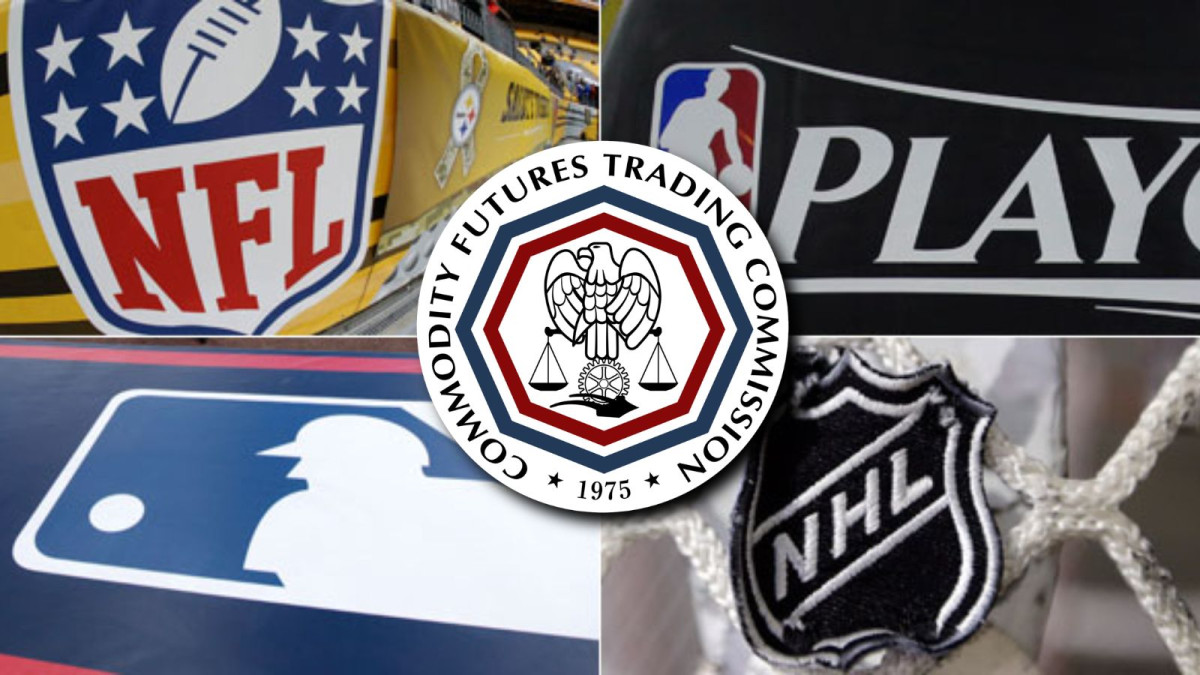
CFTC Works to Prevent Sports Prediction Market Abuse

The U.S. Commodity Futures Trading Commission has been making the rounds. CFTC Chairman Michael Selig confirmed this month that his agency is in active talks with all major professional sports leagues in the United States, as regulators scramble to get ahead of potential insider trading problems on prediction markets.
"We're talking to all the sports leagues because it's critical that they've got the best information as to what's manipulable in their markets and where the insider trading risks are," Selig said on the Faro Radio podcast. The comments come after months of escalating alarm in Washington over the explosion of prediction market trading tied to sports, politics, and military events.
A Market That Grew Too Fast
The numbers tell the story. Monthly trading volume on prediction markets has jumped from around $1.2 billion in early 2025 to over $20 billion by January 2026, according to blockchain research firm TRM Labs. Sports event contracts alone now make up nearly 90% of all bets placed on Kalshi over the past year, according to the Congressional Research Service. That kind of scale, combined with the potential for people with inside knowledge to profit on it, has made regulators nervous.
"The biggest issue that comes up is manipulation and insider trading in these markets," Selig told Front Office Sports. And the regulator isn't just talking. In March 2026, the CFTC and Major League Baseball entered into a first-of-its-kind memorandum of understanding, establishing a formal framework for confidential information-sharing between the federal agency and the league. It was a signal that more deals could be coming.
Leagues Are Moving, Too
The NHL, MLS, and MLB have all inked prediction market partnerships with Polymarket and Kalshi over the past several months. The NBA is reportedly in active talks with both platforms. The NFL has been the notable holdout, citing integrity concerns, and Selig declined to confirm whether those conversations are ongoing. What is clear is that the agency sees league cooperation as essential. The CFTC has told prediction markets it expects them to share information with leagues about which categories of individuals should be restricted from trading, including players, coaches, referees, trainers, and data partners.
The platforms themselves moved to tighten their own rules in March. Kalshi introduced new technological guardrails to block athletes from trading on contracts tied to their own leagues, and politicians from betting on their own races. Polymarket updated its rulebook the same day to prohibit trading on any information that would "violate a preexisting duty or obligation of trust," even when that information was obtained secondhand.
The urgency is partly driven by what has already happened in other markets. In April 2026, the CFTC filed its first-ever insider trading complaint involving event contracts, charging an active-duty U.S. Army soldier with using classified intelligence about a military operation in Venezuela to trade Polymarket contracts, generating more than $400,000 in profit. The DOJ has since signaled it will pursue criminal prosecutions for insider trading on prediction markets as well. Jay Clayton, the U.S. Attorney for the Southern District of New York, said in February that his office expects to bring fraud cases tied to prediction market trading.
Sports have precedent of their own. The NBA's lifetime ban of Jontay Porter and the federal charges hanging over former Miami Heat guard Terry Rozier both stem from sports betting misconduct. Prediction markets are a different product legally, but the underlying concern, that people with privileged access to information are using it to profit, is exactly the same.
Congress Is Watching
Capitol Hill is paying attention, too. A coalition of Democratic lawmakers sent a letter to the CFTC in late April urging the agency to issue a formal rule prohibiting certain types of event contracts and curbing insider trading. The letter, led by Sen. Jeff Merkley of Oregon, described the rapid growth of prediction markets as an "erosion of integrity" that demands regulatory action. Separate legislation has been introduced that would bar government officials from using prediction markets entirely and prohibit event contracts tied to elections, war, and sports.
The CFTC, for its part, published an Advanced Notice of Proposed Rulemaking in March seeking public comment on whether to amend regulations governing prediction market event contracts. Selig has framed the issue in stark terms, drawing comparisons to the offshore drift that plagued crypto markets before FTX. "I'm concerned we'll see the same with prediction markets if we keep pushing it offshore into the unregulated space," he said.
For now, the talks with sports leagues continue. Whether they translate into formal agreements on the scale of the MLB deal, and how quickly, may determine how effectively the CFTC can police the fastest-growing corner of the derivatives market before the next scandal breaks.

SEC Drops Justin Sun Fraud Charges as Rainberry Pays $10M Fine

After nearly three years of legal battle, the U.S. Securities and Exchange Commission officially dismissed its civil fraud claims against Tron founder Justin Sun, the Tron Foundation, and the BitTorrent Foundation on Thursday. The resolution, entered by the U.S. District Court for the Southern District of New York, comes with one notable condition: Rainberry Inc., the entity that developed the BitTorrent protocol and the BTT cryptocurrency token under Sun's direction, agreed to pay a $10 million civil penalty to the agency.
The final judgment still requires approval from a federal judge, but the terms represent a clean exit from what had been one of the higher-profile enforcement actions of the Gensler-era SEC. Rainberry, previously known as BitTorrent Inc. and acquired by Sun in June 2018, will also be permanently barred from engaging in deceptive market practices for securities, though it did not admit guilt as part of the agreement. Critically, the dismissal against Sun himself and the two foundations was entered "with prejudice," meaning the SEC cannot refile the same allegations in this federal court.
A Case History
The commission first filed the lawsuit in March 2023, during former Chairman Gary Gensler's tenure. The charges were sweeping. The SEC accused Sun and his related entities of orchestrating the unregistered offer and sale of two crypto assets, Tronix (TRX) and BitTorrent (BTT), which it classified as securities. Beyond that, regulators alleged Sun personally directed employees to execute hundreds of thousands of coordinated wash trades in TRX, generating roughly $31 million in artificial trading proceeds and inflating the appearance of legitimate market activity. The complaint also alleged Sun paid celebrity endorsers to promote his tokens without publicly disclosing those payments — a violation of securities laws that require such arrangements to be made transparent to investors.
The SEC argued that Sun had tight personal control over each of the entities involved, calling Tron Foundation, BitTorrent Foundation, and Rainberry his "alter egos" and noting that he had spent significant time on U.S. soil during the relevant period, including approximately 180 days in 2019 alone. The agency said a reasonable investor would have seen Sun as the unified face of the entire TRX and BTT ecosystem.
Sun's legal team did not take the charges quietly. In early 2024, Tron Foundation and Sun's lawyers moved to dismiss the suit on jurisdictional grounds, arguing that the SEC had no authority over Sun as a foreign national residing abroad and that the agency had failed to prove Sun exercised meaningful control over the Tron and BitTorrent networks. Rainberry, incorporated in California, did not contest jurisdiction but sought dismissal on different grounds — primarily that the company had no fair notice that its activities could be subject to securities claims.
The SEC pushed back on those arguments aggressively in an amended complaint filed in April 2024, countering that Sun's physical presence in the United States over multiple years was extensive and well-documented, and that his dominance over each entity was impossible to dispute given his public profile and behavior at industry events.
By late 2024 and early 2025, the political climate had shifted dramatically. Donald Trump's return to the White House brought with it a sharp reversal in the SEC's posture toward crypto enforcement. Gary Gensler stepped down, and the commission came under the acting leadership of Commissioner Mark Uyeda before Paul Atkins, a Washington lawyer widely seen as supportive of the digital asset industry, was confirmed as chairman. In February 2025, the SEC and Sun's legal team jointly asked Judge Edgardo Ramos in Manhattan to put the case on hold while both sides explored a potential resolution, citing the interests of both parties and the public.
What Comes Next For Tron and Sun
The resolution closes a legal chapter, but Sun's year has not been without turbulence. The relationship with World Liberty Financial grew complicated in September 2025 when, days after WLFI tokens became publicly tradable, blockchain data revealed that Sun's wallet address holding roughly 595 million unlocked WLFI tokens was blacklisted by the project's smart contracts. WLFI had fallen sharply from its debut price, and on-chain data showed Sun had made several outbound transfers, including one worth approximately $9 million, to addresses associated with exchanges. The WLFI team cited concerns about suspicious activity. Sun denied any manipulation, publicly appealing to the team to restore his access and invoking the decentralization principles the project claimed to champion. As of late 2025, his tokens reportedly remained frozen and had declined significantly in value.
For the Tron and BitTorrent ecosystems themselves, the dismissal removes a substantial legal overhang. TRX and BTT holders had long operated under uncertainty about whether the tokens could ultimately be classified as securities in federal court. While the settlement does not resolve broader policy debates in Washington about how digital tokens should be classified, it does remove the specific threat of a federal court ruling in this case.
The $10 million Rainberry penalty is notable primarily for what it is not. Given the scale of what was alleged, including hundreds of millions of dollars in token distributions and deliberate wash trading to manipulate market prices, the fine is modest. Critics are likely to point to the figure as further evidence that the current SEC has little appetite for meaningful accountability in the crypto space, while supporters of the settlement structure will argue it brings resolution without years of additional litigation that may have yielded uncertain outcomes anyway.
For Sun, the outcome is a practical victory, even if the legal-ese technically routes the penalty through Rainberry rather than through him directly. He emerged without personal liability in a case where the SEC had once described him as the singular controlling force behind everything. Whether the political dynamics that contributed to that outcome constitute a coincidence or something more transactional is a question that Senate and House oversight committees appear intent on pressing in the months ahead