#Zero Knowledge
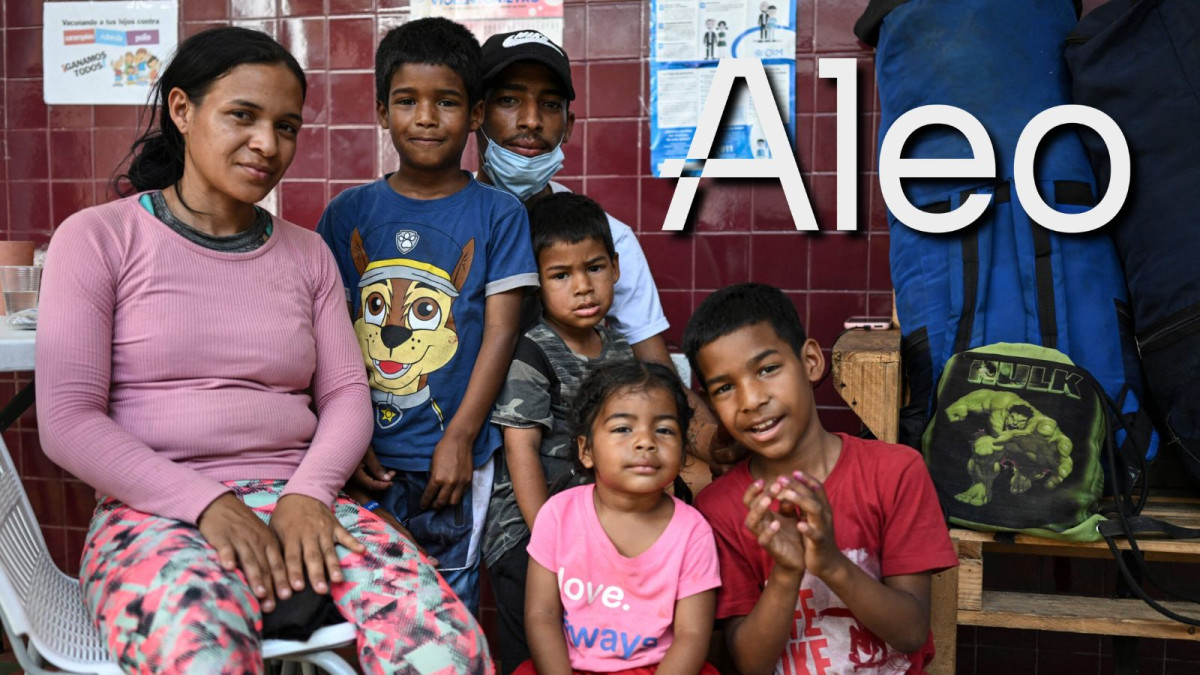
Aleo Pilots Zero-Knowledge Crypto Aid in Colombia

Aleo is revolutionizing zero-knowledge technology use-cases well beyond the whitepaper and it could help benefit millions. The privacy-focused Layer-1 blockchain announced this week that it has launched a pilot program in Colombia designed to deliver stablecoin aid to displaced communities without ever exposing their personal data. It is, by most measures, one of the more ambitious real-world tests of privacy-preserving blockchain technology to date.
The project was developed alongside Mercy Corps, market-making firm GSR and its affiliated Foundation GSR, and implementation partner Humanity Link. Together, they have built a system that runs on Aleo's programmable blockchain and distributes funds using USDCx, a privacy-enabled version of USDC developed in collaboration with Circle. The stablecoin launched on mainnet in January 2026, following a testnet rollout in late 2025.
Why Colombia, and Why Now
Colombia is not a random choice. Mercy Corps has delivered humanitarian assistance to more than 514,000 people in the country since 2019, focusing on Venezuelan refugees, Colombian returnees, and host communities stretched thin by years of conflict and economic strain. Over 30 percent of Colombia's population lacks sufficient income to cover basic needs like food and housing. In that context, the friction involved in traditional aid pipelines, identity registration, exposure of personal data, and the risk of retaliation that can follow, is not just inefficient. It can be dangerous.
That is the problem Aleo's system is designed to solve. Using zero-knowledge proofs, the network can verify whether someone is eligible to receive aid without revealing who they are. Beneficiaries register through WhatsApp and collect funds using a QR code. There is no crypto wallet setup, no public transaction history, and no permanent record of their identity tied to a blockchain ledger. For populations already navigating difficult circumstances, that distinction matters.
The Role of USDCx
Central to the Colombia pilot is USDCx, which Circle and Aleo positioned from the start as a stablecoin built for real-world institutional use. Unlike privacy coins such as Zcash or Monero, which offer anonymity but carry significant volatility and regulatory risk, USDCx is pegged to the US dollar and includes what Circle calls a configurable compliance layer. That means every transaction carries a compliance record accessible to Circle in response to legitimate law enforcement requests, while remaining opaque to outside observers.
Aleo co-founder Howard Wu described the broader design logic plainly: transparent blockchains force users to leak financial data every time they transact. USDCx is meant to offer a middle path, the settlement speed and global reach of blockchain infrastructure, with the confidentiality that institutions and vulnerable populations alike tend to require.
Pilots Expanding Beyond Colombia
The Colombia rollout is not moving along by itself. A separate pilot is already underway with the Danish Refugee Council, and a second deployment is expected shortly through GOAL Global, an international humanitarian response agency. Both expand the geographic and organizational footprint of what Aleo and its partners are positioning as a scalable, privacy-first model for humanitarian cash transfers.
This is a big moment for the aid sector. Blockchain-based cash transfer programs have been discussed for years, but uptake has remained slow, partly because public ledgers create their own transparency problems. Donor organizations and beneficiaries both have legitimate reasons to want transaction data shielded. Aleo's argument is that zero-knowledge infrastructure finally makes that possible without sacrificing auditability or regulatory compliance.
ZK Tech Moves Off the Whitepaper
Aleo is a Layer-1 blockchain built with privacy as a native feature rather than a bolt-on. Its architecture separates off-chain computation, where zero-knowledge proofs are generated, from on-chain verification, where validators confirm correctness without seeing the underlying data. The network's native programming language, Leo, is designed to abstract away the cryptographic complexity for developers building privacy-preserving applications.
The project raised a $200 million Series B in 2022 at a $1.45 billion valuation, backed by SoftBank's Vision Fund 2, Andreessen Horowitz, and others. It launched its mainnet in September 2024. The Colombia pilot represents something of a maturation moment: a transition from infrastructure buildout toward use cases that can be pointed to in the real world.
Whether this particular deployment scales is an open question. But the architecture being tested here, private stablecoin transfers routed through a zero-knowledge network, accessed via smartphone messaging apps, targeted at populations with no existing crypto infrastructure, is an unusual combination. If it holds up in Colombia, the implications stretch well beyond the country's borders and could successfully benefit under-represented communities across the globe.

Midnight Rolls Out in Phases to Strengthen Cardano

During a recent Fireside Dev chat, the Midnight team and Charles Hoskinson walked through how the partner chain model is actually playing out in practice. Rather than simply opening the gates and hoping everything works, they're taking a methodical, phased approach to de-risk the entire network before scaling up just like Cardano. Smart contract deployment is currently limited to an approved list of trusted partners, and any attempt to deploy outside that whitelist gets rejected at the network layer before it even reaches a block producer.
The team identified three specific risks they wanted to eliminate early on with value at risk by preventing exploits in untested contracts that could lock up real funds, privacy at risk by ensuring the ZK proving system is tested in a controlled environment, and state space at risk by avoiding cheap state inflation attacks while they refine their cost models.
These guardrails are designed to be temporary and milestone driven, expected to lift in 60 to 90 days once the network proves itself on value handling, privacy guarantees, and ledger stability. As Charles put it, you have to build the basement before you build the house. Currently Midnight runs on a federated set of high-assurance node operators, including Google Cloud, and this approach delivers the stability and institutional-grade uptime that enterprises require. As technical milestones are hit, the expansion sequence will open the door to broader validator participation and decentralization.
The critical point here is that Midnight isn't operating in isolation. It's built to strengthen Cardano, not compete with it. Every NIGHT token holder is structurally tied back to the Cardano ecosystem through the dual token model: NIGHT is primarily used to secure the network, DUST is generated from simply holding NIGHT and used as gas for transactions. SPOs benefit directly through new staking and operational revenue opportunities while the partner-chain design forces infrastructure upgrades that strengthen the entire Cardano network. When Midnight succeeds, Cardano succeeds. The broader industry has spent too long overlooking this ecosystem.
The team is focused on making the UX easier for end users through the Lace wallet that lets anyone generate DUST directly from their existing Cardano assets. Teams are building passkey-based onboarding so users never need seed phrases, and they're exploring sponsored transactions where enterprises or banks cover DUST costs entirely, meaning users never think about buying gas.
Real integrations are happening right now with SundaeSwap rolling out capacity exchanges with passkey onboarding, letting users create a Midnight-compatible wallet in seconds without dealing with a 24-word phrase. The broader vision includes the Midnight Passport and integrations with everyday tools like Google Drive, biometrics, and QR-code account creation in under 60 seconds. The goal is for a new user to go from zero to fully onboarded without ever seeing the blockchain.
The 1AM Wallet v5.0.1 has officially launched, bringing native Cardano integration that lets users spend, manage, and interact directly with ADA and Cardano assets without any bridges or third-party tools. It also introduces one-click DUST generation from within the wallet itself, along with a complete UI redesign, doubled sync speeds, and a significantly lower memory footprint for a faster and lighter experience overall.

Midnight brings serious credibility to the ecosystem with companies like Google and Vodafone involved from the early stages, along with fresh capital. By offloading private transactions and shielded smart contracts to the sidechain, it reduces mainnet congestion and allows each chain to focus on what it does best. The team is transparent about current limitations instead of overhyping what doesn't exist yet. They're iterating and learning in public, which stands in sharp contrast to the move-fast-and-break-things culture that has torched so many projects in this space.
Midnight isn't taking anything away from Cardano, but it's adding a privacy layer that institutions genuinely need and creating new earning opportunities for operators. The foundation is being laid right now, and the finished structure is going to justify the investment.
Midnight Launches December 8, A New Era of Privacy For Blockchain
Midnight, A New Era Of Privacy For Blockchain
On December 8, Midnight finally goes live. This is the moment the industry has been waiting for. Midnight is not just a new chain and not just another project. It is a fully engineered, zero knowledge powered data protection network that brings real confidentiality to blockchain without sacrificing compliance, security or transparency.
The launch of Midnight marks the beginning of a new era where individuals, developers and global enterprises can use blockchain without exposing everything to the public. Midnight introduces a rational privacy that is programmable, auditable and built for long term scale. There is nothing else like it in the market.
What Makes Midnight So Powerful
Midnight solves the problem that has limited every major blockchain from reaching full global adoption. Public ledgers reveal personal data, business logic, financial activity and sensitive operations. This stops enterprises from deploying real systems on chain. Midnight flips that limitation into strength.
Developers can create smart contracts with confidential logic, private state updates and selective disclosure. Midnight lets you reveal only what is required while keeping everything else shielded through zero knowledge proofs, enabling real-world application.
Because of its privacy centric architecture, Midnight unlocks use cases that have never been possible at scale.
-
Private decentralized finance
-
Confidential business workflows
-
Secure identity systems
-
Tokenized documents and assets with controlled access
-
Encrypted supply chain data
-
Private DAO voting
-
Permission controlled data sharing between institutions
Midnight is built specifically for these high value industries. This is why the launch tomorrow is so significant, a production ready privacy network designed for global use.
The December 8 launch is only the beginning of Midnight’s long term vision. Midnight is following a structured, multi phase roadmap that gradually increases capability, decentralization and real world utility. Each phase expands the network in a controlled and secure way, ensuring that privacy and identity features scale responsibly.
Below is a clear breakdown of Midnight’s roadmap based on the official announcement.
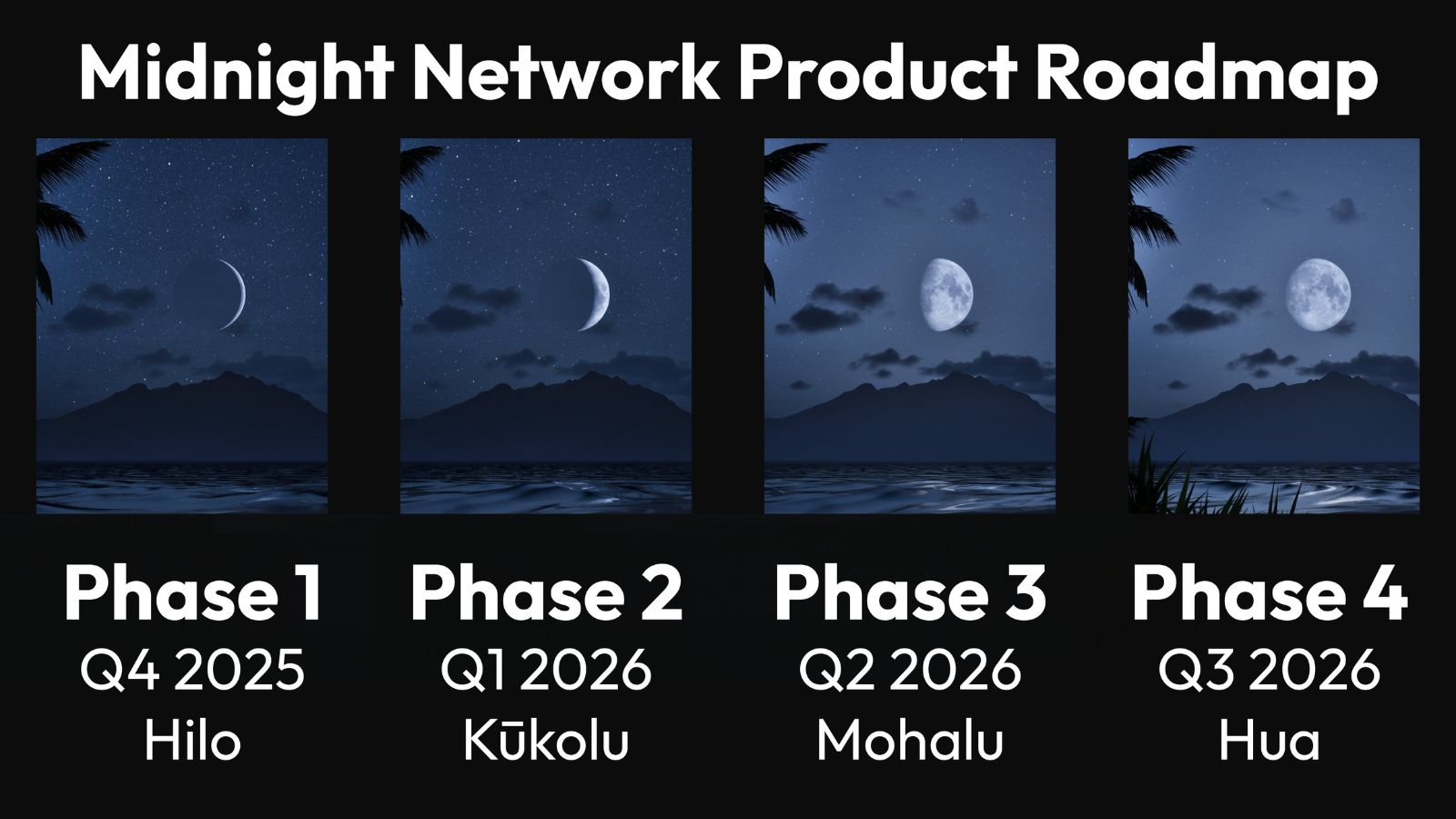
Phase 1: Hilo
Launch and Token Liquidity
This is the phase that begins with the December 8 activation of the Midnight network. Midnight becomes a live, operational chain with NIGHT available as a liquid asset.
Key elements of Phase 1:
-
Network activation and operational readiness
-
NIGHT becomes tradable and usable
-
Early participants, wallets and partners join the ecosystem
-
The foundation is set for developers to begin exploring Midnight’s capabilities
Hilo marks the transition from development into a functioning privacy network that users and builders can interact with directly.
Phase 2: Kūkolu
Federated Mainnet and Privacy Enabled Applications
During this stage, Midnight moves from initial activation into a federated mainnet operated by a combination of foundation validators and trusted partners. This creates a controlled yet fully functional environment for deploying real applications.
Highlights of Phase 2:
-
Federated mainnet with a secure validator set
-
Launch of the first privacy enabled DApps using Midnight’s zero knowledge architecture
-
Real applications begin leveraging features such as selective disclosure, private state, confidential identity and shielded computation
This is where Midnight shifts from infrastructure into a true application platform. Developers begin delivering privacy focused solutions that cannot be built on transparent chains.
Phase 3: Mōhalu
Network Scaling, Increased Participation and the Capacity Market
Mōhalu expands Midnight toward broader community participation. Block production begins opening up to more operators and the network starts preparing for full decentralization.
Core advancements in Phase 3:
-
Wider validator participation including future stake pool operators and community nodes
-
Stress testing and economic validation of the network
-
Activation of the DUST capacity exchange that powers private computation
-
Community involvement in testing scalability, privacy performance and governance mechanisms
This phase transforms Midnight from a limited validator model into an emerging decentralized network with a functioning economic system based on NIGHT and DUST.
Phase 4: Hua
Full Decentralization, Hybrid DApps and Cross Chain Privacy
Phase 4 represents the full maturity of Midnight. The network completes its transition into a decentralized, community governed privacy platform.
Key outcomes of Phase 4:
-
Complete decentralization of block production
-
NIGHT holders govern the network through on chain voting and proposal systems
-
Support for Hybrid DApps that integrate Midnight’s privacy layer into other chains and platforms
-
Cross chain interoperability where other networks can use Midnight as a privacy and identity service
At this stage, Midnight becomes not only a standalone privacy chain but also a universal privacy infrastructure for the broader blockchain industry.
Midnight Brings a New Dawn For Cardano
Even though Midnight is its own network, it operates as a data protection partner chain anchored to Cardano. This creates enormous value for ADA holders, Cardano developers and the entire ecosystem.
Cardano becomes the only major blockchain ecosystem with a production level privacy chain that remains regulation friendly. This is a massive competitive advantage. Cardano can now serve transparent applications and private applications without compromising security.
NIGHT is a Cardano native asset. Anyone who wants to use Midnight must interact with the Cardano ecosystem. This brings new wallets, new users, new liquidity and new developers directly into Cardano from multiple external ecosystems.
Cardano is now positioned as a realistic option for industries that need confidentiality. Finance, healthcare, supply chain, identity, enterprise management systems. These businesses can use Midnight for private computation while relying on the stability and settlement layer of Cardano.
Cardano has always focused on research, formal methods and sustainable architecture. Midnight takes that foundation and adds a powerful privacy dimension. This is the kind of advancement that reshapes how the industry sees Cardano.
Midnight is not a side project. It is a core evolution of the ecosystem.
How to Claim Your NIGHT Tokens
If you earned NIGHT through the Midnight distribution, the process to claim and redeem your tokens is straightforward once you know what to expect.
Step 1: Make Your Claim
Start by heading to the official Midnight Claim Portal. You will be asked for two things.
Your origin address
This is the address from the chain where you qualified. It might be a Cardano address or it could be from another supported chain like Bitcoin, Ethereum, Solana, XRP, BNB, Avalanche, or BAT. Midnight uses this to verify that you were eligible at the snapshot.
Your destination address
This is your Cardano wallet where you want to receive your NIGHT tokens. Any supported Cardano wallet works, as long as it is one you personally control.
Once both addresses are entered, you will need to accept the terms and sign a short verification message. This proves you actually own the origin address. After you submit everything, your NIGHT allocation is officially claimed and locked in the system.
Step 2: Wait for Your Tokens to Thaw
This is where Midnight does things a little differently. Your tokens do not unlock all at once. Instead, your allocation gradually thaws over a 360 day schedule. Midnight splits your total amount into four equal parts and each one unlocks roughly every ninety days.
The first unlock happens at a random time somewhere in the first ninety days after you claim. After that, each remaining quarter unlocks in sequence. It is a slow and steady release rather than a single burst, which helps keep the ecosystem healthy during the first year.
Step 3: Redeem the Unlocked Portion
Once your first portion has thawed, you can redeem it right away.
Go back to the Claim Portal, choose the unlocked portion and confirm the redemption. Your Cardano wallet will ask you to approve a small transaction fee. After the transaction goes through, your NIGHT tokens will appear in your wallet under the correct policy ID.
You can redeem each portion as it unlocks or wait until the end and redeem everything at once. It is entirely up to you.
Step 4: Do Not Miss the Grace Period
When the main redemption window ends, Midnight gives everyone an additional grace period to collect anything they have not redeemed yet. It is always best to stay on top of your thaw schedule, but the grace period gives you a buffer in case you miss something.
Once that time expires, collecting unredeemed tokens becomes a much more manual process, and it is not something you want to deal with if you can avoid it.
A Few Helpful Tips
-
Always use the official Midnight Claim Portal, not third party links.
-
Make sure your origin address comes from a wallet you control, since you need to sign the verification message.
-
Keep a bit of ADA in your Cardano wallet so you can cover redemption fees.
-
Double check your destination address before submitting. It is worth the extra moment.
Midnight Changes Everything
Midnight is not launching as an experiment. It is launching as a fully engineered, privacy centric blockchain ready for real adoption. December 8 is the beginning of a network built for global scale and long term impact.
Midnight brings confidential smart contracts into the mainstream. It gives developers the tools they have needed for years. It gives institutions a way to embrace blockchain without risking sensitive data. It gives Cardano a massive new frontier for growth.
Most of all, Midnight shows the world that privacy and transparency can work together. The chain is built to protect people, empower businesses and open the door to applications that were never possible before.
This is the start of a major shift in the industry. Midnight is ready. December 8 is the breakthrough moment.
Stay Connected
You can stay up to date on all News, Events, and Marketing of Rare Network, including Rare Evo: America’s Premier Blockchain Conference, happening July 28th-31st, 2026 at The ARIA Resort & Casino, by following our socials on X, LinkedIn, and YouTube.
Midnight Sets December 8, 2025 Launch for NIGHT Token and Privacy Network
Midnight Announces NIGHT Token Launch Set for December 8, 2025
A New Era of Programmable Privacy Begins
The Midnight Network is officially preparing for one of the most anticipated launches in the blockchain space. During the Midnight Summit in London, Charles Hoskinson announced the official roadmap and launch date for Midnight’s NIGHT token and its multi phase rollout. The network will go live on December 8, 2025, marking the transition from years of development into a fully functioning, privacy focused blockchain ecosystem.
This launch introduces a fourth generation blockchain designed from the ground up for real world adoption, programmable privacy, regulatory friendly architecture and multi chain interoperability. Midnight is positioning itself as a new standard for privacy, identity protection and on chain compliance, and the four phase roadmap outlines how the network will reach full decentralization.
Until this point, most privacy oriented chains have focused on anonymity or narrow use cases. Midnight aims to redefine the category entirely by blending enterprise compliance with zero knowledge cryptography, creating a system where privacy and regulation are not mutually exclusive but fully compatible.
With the launch date locked in and the phases clearly defined, the coming months will be a critical period for awareness, onboarding, builders and partnerships.
What Is Midnight?
Midnight is a privacy focused blockchain platform developed by Shielded Technologies in partnership with the Midnight Foundation. It is built around the concept of rational privacy, which means users, developers and enterprises can choose what is private, what is shared and what is selectively disclosed. Midnight’s design recognizes that privacy and compliance both matter, and both can coexist through advanced cryptography and modern security frameworks.
Key Architectural Features
-
Zero knowledge proofs and selective disclosure contracts give users control over their data, while still enabling compliance when necessary.
-
A dual token model: NIGHT serves as the governance and utility token, while DUST powers shielded transactions and enables predictable operating costs.
-
Multi chain interoperability allows Midnight to plug into existing blockchain ecosystems rather than compete against them.
-
Developer friendly tooling, including the Compact language, lowers barriers to building private decentralized applications for mainstream adoption.
Midnight’s goal is to become the trusted privacy layer for Web3, supporting individuals, enterprises, institutions and global scale applications.
December 8 Launch and the Four Phase Roadmap
The December 8 milestone is not just a single event. It is the beginning of Midnight’s structured rollout through four major phases, each designed to activate different elements of the ecosystem.
Phase 1: Hilo
Launch Date: December 8, 2025
Hilo marks the official launch of the NIGHT token. Exchange listings, liquidity provision and open trading will begin on this date. Midnight is expected to launch across major exchanges, with widespread listings anticipated on platforms such as Binance, Coinbase and others.
Phase 2: Kukolu
Launch Window: Q1 2026
Kukolu activates privacy enabled decentralized applications on the network. This phase represents the launch of the fully federated mainnet and allows builders to deploy the first wave of privacy centric DApps and enterprise tools.
Phase 3: Mohalu
Launch Window: Q2 2026
Mohalu begins the process of decentralizing the network. Stake pool operators and nodes come online, and the DUST Capacity Exchange is activated. The phase starts fully federated and transitions toward community driven block production. Rare Network has already been running a Midnight node in preparation and is offering ADA staking rewards now, with NIGHT rewards expected to go live upon Mohalu’s rollout.
Phase 4: Hua
Launch Window: Q3 2026
Hua completes Midnight’s decentralization pathway. Stake pool operators become responsible for all block production. The bridging infrastructure goes live and full interoperability with other blockchains is enabled. This is the stage where Midnight matures into a fully decentralized, multi chain privacy network.
This four phase structure reflects Midnight’s commitment to stability, security and participation rather than rushing to mainnet. Each phase activates critical components in sequence to ensure the ecosystem can scale successfully.
Why Midnight Matters
Privacy Built for Real Adoption
Most privacy blockchains struggle because they favor anonymity over usability. Midnight’s programmable privacy model solves this by giving developers and enterprises control over what must remain private and what must be disclosed. This is essential for global adoption in regulated industries.
Major Institutional and Enterprise Partnerships
Midnight has already announced partnerships with well known organizations including Google, Webisoft, Fireblocks and others. These collaborations validate the network’s approach to privacy and hint at significant enterprise adoption on the horizon.
Interoperability and Ecosystem Flexibility
By integrating with existing chains and avoiding isolation, Midnight aligns itself with the growing multi chain reality of Web3. Developers from other ecosystems can build on Midnight and bring privacy to their applications without abandoning their existing infrastructure.
Strong Tokenomics and Predictability
The NIGHT and DUST model aligns incentives across users, developers and enterprises. NIGHT holders earn DUST, and DUST fuels the network’s privacy transactions. This gives projects predictable costs, which is especially valuable for long term enterprise adoption.
Final Thoughts
December 8, 2025 represents far more than a token launch. It marks the start of a major new chapter in blockchain privacy and infrastructure. Midnight has laid out a thoughtful roadmap, established key partnerships, prepared institutional tooling and positioned itself to deliver what many blockchains promise but rarely achieve.
Privacy, compliance, scale and adoption are difficult to combine, yet Midnight aims to deliver them all.
For developers, this is a rare opportunity to build on a technically advanced network that supports identity protection, private DeFi, secure data sharing and tokenized real world assets.
For users and token holders, the countdown to December 8 is more than hype. It is the beginning of a new standard for privacy in Web3 and a powerful new direction for the entire blockchain industry.
If Midnight executes on this roadmap, it may very well set the template for how privacy and regulation coexist in the next era of digital infrastructure.
Stay Connected
You can stay up to date on all News, Events, and Marketing of Rare Network, including Rare Evo: America’s Premier Blockchain Conference, happening July 28th-31st, 2026 at The ARIA Resort & Casino, by following our socials on X, LinkedIn, and YouTube.
TRON Integrates LayerEdge for Bitcoin-Anchored Zero-Knowledge Verification
LayerEdge Brings Zero-Knowledge Verification and Bitcoin Security to the TRON Network
The TRON blockchain is taking a major step toward stronger verification and interoperability through its new integration with LayerEdge, a decentralized verification protocol that combines zero-knowledge (ZK) technology with Bitcoin-anchored security.
The partnership introduces a new layer of trust and scalability to TRON, allowing applications across its network to benefit from ZK verification, Bitcoin-backed immutability, and cross-chain interoperability. Together, these tools could reshape how TRON-based systems prove and secure their data.
What LayerEdge Does
LayerEdge is not a typical blockchain or rollup. Instead, it acts as a verification layer that uses zero-knowledge proofs to validate computations and state transitions across multiple blockchains and off-chain environments.
Its key innovation is anchoring verification data on Bitcoin, meaning every verified proof ultimately inherits Bitcoin’s unparalleled security and immutability. In practice, LayerEdge aggregates many individual proofs, such as those from TRON smart contracts or DeFi applications, compresses them into one compact ZK proof, and then records that proof’s hash on Bitcoin’s blockchain.
This gives the TRON ecosystem an independent and tamper-proof method of confirming that its transactions, smart contracts, or data proofs are valid, without relying solely on centralized validators or internal consensus mechanisms.
Why the TRON Integration Matters
TRON has rapidly grown into one of the most active blockchains for stablecoins, DeFi applications, and global payment infrastructure. With millions of daily users and over $50 billion in total value transferred across the network, scalability and trust are critical priorities.
By integrating LayerEdge’s ZK verification and Bitcoin anchoring, TRON gains several key advantages:
-
Enhanced security: Transactions and proofs on TRON can now be independently verified against Bitcoin’s immutable ledger, adding another layer of protection.
-
Cross-chain interoperability: TRON-based apps can interact with other LayerEdge-supported chains through shared verification layers, improving composability.
-
Reduced verification costs: Aggregating proofs minimizes on-chain computation, improving efficiency and transaction throughput.
-
Improved transparency: Developers and auditors can trace TRON proofs anchored on Bitcoin, ensuring end-to-end accountability.
This integration bridges two major blockchain pillars: TRON’s scalable performance and Bitcoin’s proven security. It also introduces the possibility of ZK-verified smart contracts and multi-chain DeFi ecosystems backed by Bitcoin trust.
How It Works
-
Proof Generation:
When TRON smart contracts execute, LayerEdge creates zero-knowledge proofs confirming the correctness of those transactions or computations. -
Proof Aggregation:
Multiple proofs from across the TRON ecosystem, including DeFi apps, stablecoin transactions, or staking programs, are aggregated into one compressed proof. -
Bitcoin Anchoring:
That single proof’s hash is then written to the Bitcoin blockchain. This process anchors the proof, meaning even if TRON were compromised, the verified data remains verifiable through Bitcoin’s immutable ledger. -
Verification and Auditing:
Anyone, including TRON developers, auditors, or users, can confirm proof validity via LayerEdge’s verification tools, ensuring trustless validation across networks.
A New Kind of Cross-Chain Security
This integration also positions TRON as part of a broader cross-chain verification ecosystem. LayerEdge’s architecture allows it to connect with any blockchain that supports proof submission, effectively making Bitcoin the shared “trust anchor” for multiple ecosystems.
For TRON, this opens new doors:
-
Bitcoin-anchored stablecoin security: Proof of reserves, transactions, and liquidity data can be verified across both networks.
-
TRON-based DeFi with external verification: Lending, staking, and liquidity protocols on TRON can now provide provable security assurances to cross-chain users.
-
Regulatory-grade transparency: Proofs of activity anchored to Bitcoin can be shared as immutable records for compliance or auditing, without revealing user data, thanks to zero-knowledge proofs.
Broader Context: ZK and Bitcoin Together
LayerEdge’s model of ZK verification anchored on Bitcoin is part of a larger movement to bring modern scalability and privacy tools to Bitcoin’s foundational security. While most ZK ecosystems have evolved on chains like Ethereum or Polygon, anchoring them to Bitcoin has been rare due to the network’s limited scripting capabilities.
LayerEdge overcomes this by using recursive proof aggregation and off-chain data availability layers to store and compress verification data, with only a minimal commitment recorded on Bitcoin. This approach preserves Bitcoin’s block space and keeps transaction costs low.
In TRON’s case, it effectively gives the network access to Bitcoin-level finality and trust, without compromising TRON’s high-speed, low-cost transaction model.
Historical Significance for TRON
For years, TRON has focused on scaling usability, transaction throughput, and global adoption. With this integration, the network now adds a verification layer comparable to institutional-grade auditing.
Founder Justin Sun has previously emphasized TRON’s commitment to decentralization, security, and interoperability. Partnering with LayerEdge extends that mission by connecting TRON’s ecosystem to Bitcoin, the original symbol of blockchain immutability, through the most advanced verification technology available.
This alignment places TRON among the first major smart contract platforms to incorporate Bitcoin-anchored ZK verification, positioning it ahead of competitors in transparency and cross-chain security.
Challenges and Next Steps
As with any major innovation, integration brings both opportunity and risk. Anchoring proofs on Bitcoin increases transparency and trust, but also introduces dependencies such as Bitcoin network fees and anchoring cadence, which determines how often proofs are written.
Still, TRON’s integration is a milestone. Future updates may include:
-
Broader cross-chain integration beyond Bitcoin anchoring.
-
Expansion of TRON DeFi protocols to use ZK verification for compliance and insurance.
-
Enhanced developer tooling for building ZK-verified TRON dApps.
Final Thoughts
LayerEdge’s integration with TRON marks a turning point for both ecosystems. For TRON, it brings Bitcoin-level security and zero-knowledge transparency to one of the world’s fastest and most active blockchains. For LayerEdge, it demonstrates how Bitcoin’s proof-of-work finality can underpin scalable, privacy-preserving systems across multiple chains.
The collaboration represents more than just a technical upgrade. It is a philosophical bridge that unites the speed and accessibility of TRON with the security and permanence of Bitcoin, powered by the mathematics of zero-knowledge cryptography.
If successful, this model could set a new precedent for Web3: where verification, privacy, and finality coexist seamlessly, and where Bitcoin serves as the ultimate foundation of truth for the decentralized world.
Stay Connected
You can stay up to date on all News, Events, and Marketing of Rare Network, including Rare Evo: America’s Premier Blockchain Conference, happening July 28th-31st, 2026 at The ARIA Resort & Casino, by following our socials on X, LinkedIn, and YouTube.