#Self Custody

Visa Partners With WeFi to Enable Crypto Payments

Global payments giant Visa has partnered with the decentralized onchain bank WeFi to enable crypto based payments while allowing users to maintain full custody of their digital assets.
The partnership will initially focus on exploring ways in which WeFi’s onchain banking infrastructure can be leveraged to scale stablecoin based payments in selected markets.

“As interest in digital assets grows, our focus is on making these new models practical at scale by connecting them to payment experiences people already trust,” Mathieu Altwegg, Visa’s Head of Product and Solutions in Europe, said. “This collaboration demonstrates how Visa’s global network interacts with onchain models.”
The partnership is significant as it represents a shift in custodial practices, where users often hand over their digital assets to cryptocurrency exchanges. Since WeFi offers self custody, users will be able to maintain full control of their assets while leveraging Visa’s global payment rails and using digital assets to make payments anywhere Visa is accepted.
The rollout will take place one region at a time, with Europe, Asia, and Latin America among the first beneficiaries, while expansion continues into additional markets depending on regulatory approvals and partnerships.
“People expect money to work seamlessly across borders without unnecessary complexity. We see this partnership as a way to work with Visa’s capabilities as we continue to develop WeFi’s debanking offering across key regions,” said Maksym Sakharov, WeFi co founder and CEO.
What is WeFi?
WeFi is a blockchain based decentralized on chain bank (deobank) founded by Maksym Sakharov and Reeve Collins, a co founder of Tether.
Through its mobile first, simple interface, WeFi provides financial services to more than 1.4 billion unbanked people worldwide, allowing them to maintain full custody of their digital assets while facilitating crypto based payments and cross border transfers.
Since its launch last year, WeFi has grown significantly, serving more than 150,000 users across over 80 countries. To support crypto based payments, WeFi has partnered with industry players including LayerZero and has announced integrations with companies such as Binance and Visa.
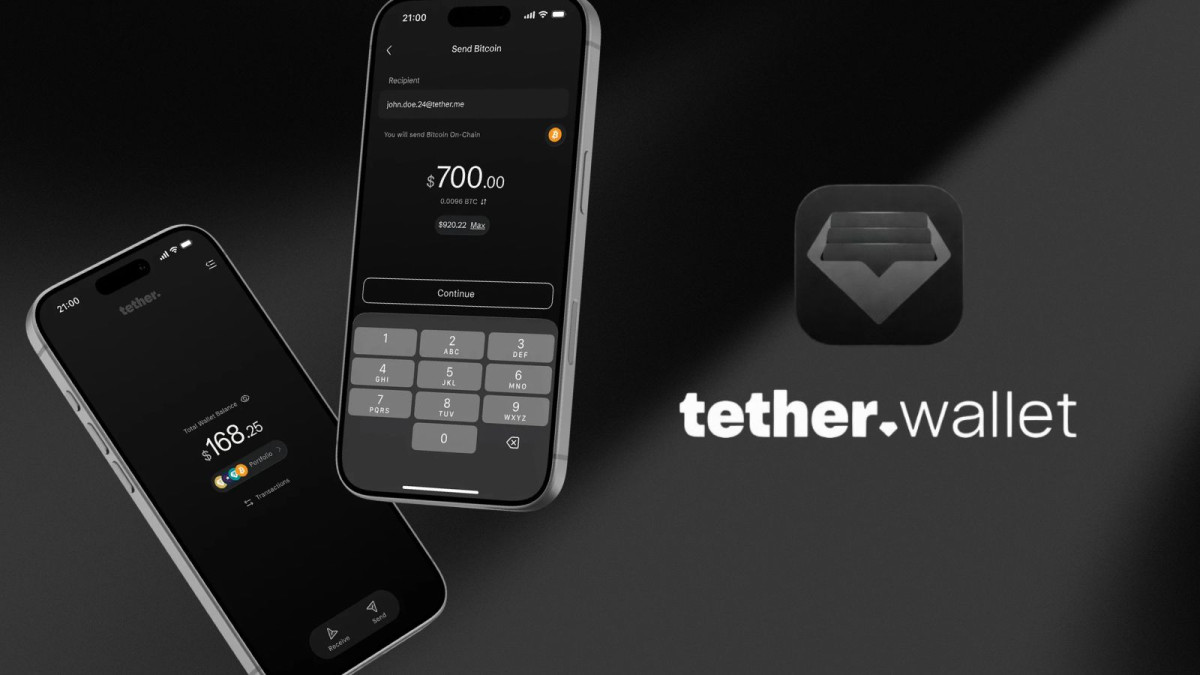
Tether Launches Self-Custodial Wallet for USDT, Bitcoin, and Gold Tokens

The world's largest stablecoin issuer is getting into the wallet game. Tether has officially launched tether.wallet, a self-custodial application that puts its payments infrastructure directly into the hands of end users for the first time.
For more than a decade, Tether's USDT stablecoin quietly powers hundreds of billions in daily trading volume, settlement, and cross-border payments across dozens of blockchains. But, most users never interact with Tether directly. That is about to change
The new app, simply called tether.wallet, supports four assets at launch: USDT, the company's U.S.-market stablecoin USAT, its gold-backed token XAUT, and Bitcoin, available both on-chain and through the Lightning Network. USDT and XAUT run on Ethereum, Polygon, Plasma, and Arbitrum at launch, while USAT is limited to Ethereum for now, with more networks reportedly in the pipeline.
No More Long Wallet Addresses
One of the more practical features is the use of human-readable identifiers, think something like [email protected], instead of the standard hexadecimal wallet strings that have caused users to accidentally send funds to the wrong address for years. Transactions also settle without requiring users to hold separate gas tokens; fees are paid directly in the asset being transferred. For anyone who has fumbled through a failed transaction because they did not have enough ETH to cover gas, that is a genuinely meaningful improvement.
Private keys remain fully under user control. All transactions are signed locally on the device, and Tether says it never holds user funds or keys at any point. It is a fully self-custodial model, which distinguishes it from the exchange-hosted wallets that have drawn scrutiny after a string of high-profile custodial failures in recent years.
570 Million Users, and Counting
Tether says its technology already reaches more than 570 million people across over 160 countries as of March 2026, with tens of millions of new wallets being added each quarter. The company is pitching tether.wallet as the next logical step in that growth, designed for mainstream users who have never touched a crypto wallet before, not just the crypto-native crowd who already know what a seed phrase is.
CEO Paolo Ardoino has been making the rounds with this one. He described the product as "the People's Wallet," framing it as a natural evolution of Tether's role from building the foundation of the digital asset economy to making it directly usable by anyone. His pitch goes further than stablecoins, though. Ardoino has long argued that AI agents will need native, self-custodial wallets for machine-to-machine payments, and the Wallet Development Kit (WDK) that underpins tether.wallet is designed with that kind of future in mind.
tether.wallet is built on Tether's open-source Wallet Development Kit, which the company has been quietly developing for a while now. The WDK had its first significant public deployment in January 2026, when video platform Rumble launched a non-custodial wallet built on the same infrastructure, enabling creator tipping in Bitcoin and USDT across Rumble's 80 million users. That earlier rollout effectively served as a real-world stress test before today's broader consumer launch.
The open source nature means third-party developers, businesses, and potentially AI systems can all build self-custodial wallet products on the same foundation. Tether is positioning this less as a single app and more as the beginning of a distribution layer.
Tether's Big Year...So Far
Tether has had a busy year on multiple fronts. In January, the company launched USAT, a GENIUS Act-compliant U.S.-regulated stablecoin issued through Anchorage Digital Bank, a direct challenge to Circle's USDC in the institutional and regulated segment of the market. In March, Tether engaged KPMG for what it described as the first-ever full financial audit of its $185 billion USDT reserves, a significant departure from the periodic attestations the company has historically relied on. PwC was also brought in to assist with internal systems preparation.
By moving into consumer-facing wallet infrastructure, Tether is entering territory already occupied by MetaMask, Phantom, Trust Wallet, and others. Those players have years of user experience, broad network support, and established reputations. Whether Tether's brand recognition among non-crypto users, combined with the built-in familiarity of USDT, translates into meaningful adoption is the real question. The stablecoin market itself crossed $315 billion in March 2026, an all-time high, and analysts expect this number to grow dramatically over the next few years.
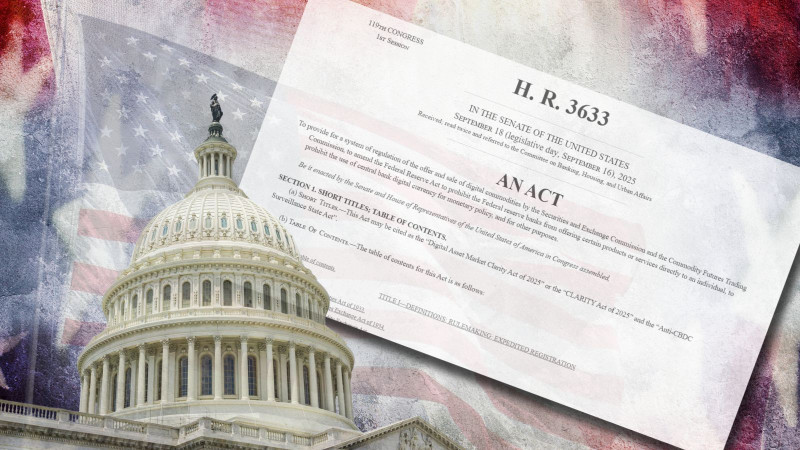
What the CLARITY Act Means for Crypto and Why It Matters So Much

If you have spent any real time building, trading, or working in crypto in the U.S., you already know the pattern. The rules are never fully clear. Guidance usually comes after the fact. And “compliance” often feels less like a checklist and more like a guessing game.
That is the environment the Digital Asset Market Clarity Act, better known as the CLARITY Act, is trying to change.
On January 15, 2026, the Senate Banking Committee is scheduled to hold a critical markup session on the bill. That might sound like inside-baseball legislative procedure, but it is not. A markup is where lawmakers decide what a bill really is. Language gets tightened. Loopholes get closed or widened. Entire sections can disappear.
For crypto, this is one of those moments where the future shape of U.S. regulation is actually being decided.
The problem CLARITY is trying to solve
Right now, crypto regulation in the U.S. is reactive.
The laws that exist were written long before blockchains, tokens, or decentralized networks. Regulators have mostly tried to force crypto into frameworks that were never designed for it, often relying on enforcement actions to define the rules retroactively.
CLARITY is an attempt to stop doing that.
The bill starts from a simple premise: not everything in crypto is the same, so it should not all be regulated the same way.
Launching a token to fund a network is not the same as trading that token years later. Writing open-source code is not the same as holding customer funds. Running a wallet is not the same as running an exchange.
Those distinctions sound obvious inside the industry. CLARITY tries to make them explicit in law.
Tokens are not frozen in time
One of the most important ideas in the bill is that a token’s legal treatment should not be locked forever to how it was first sold.
Under the current system, if a token was ever distributed in a way that looks like fundraising, it can carry securities risk indefinitely. Even if the network decentralizes. Even if the original team steps away. Even if the token functions more like a commodity than an investment.
CLARITY tries to separate:
-
The initial transaction, which may look like an investment contract
-
The token itself, once it is broadly distributed and actively used
That distinction matters because it opens the door to secondary markets operating without constant legal uncertainty, while still keeping guardrails around early fundraising.
What “mature blockchain” actually means
To make that transition possible, CLARITY introduces the concept of a mature blockchain system.
Stripped of legal language, the question is pretty straightforward: does anyone actually control this thing?
If a small group can still unilaterally change the rules, supply, or governance, regulators get more leverage. If control is meaningfully distributed and no one actor is calling the shots, the regulatory burden can ease.
The bill creates a certification process around this idea, with a defined window for regulators to challenge a claim of maturity.
This is one of the most debated sections of the bill. It is also one of the most important. The standard has to be real, but it also has to be achievable. Senate changes here could dramatically affect how useful the bill ends up being.
How token launches could work going forward
CLARITY does not remove oversight from token launches. Instead, it tries to make that oversight fit reality.
The bill allows certain token offerings to proceed under an exemption, but only with meaningful disclosures. Projects would need to explain things like:
-
How token supply and issuance work
-
What rights, if any, token holders have
-
How governance actually functions in practice
-
What the project plans to build and what risks exist
The shift here is away from clever legal gymnastics and toward plain-English transparency. For founders, that could mean fewer surprises and a clearer sense of what is expected.
Why exchanges are watching this so closely
For U.S. crypto exchanges, CLARITY is largely about secondary markets.
Today, listing a token can feel risky even if that same asset trades freely outside the U.S. The legal line between primary fundraising and secondary trading has never been cleanly drawn.
CLARITY tries to draw that line. If it holds, exchanges would finally have a framework designed specifically for spot crypto markets, instead of trying to fit into rules written for something else.
A bigger role for the CFTC
Another major shift is regulatory jurisdiction.
CLARITY gives the CFTC clear authority over spot markets for digital commodities, not just derivatives. It also creates new registration paths for exchanges, brokers, and dealers that are tailored to how crypto markets actually function.
Importantly, the bill pushes for speed. It directs the CFTC to create an expedited registration process, acknowledging that waiting years for clarity is not realistic in fast-moving markets.
DeFi, software, and where things get tricky
DeFi is where the bill walks a tightrope.
CLARITY says that people should not be treated as regulated intermediaries just for building or maintaining software, running nodes, providing wallets, or supporting non custodial infrastructure. It also makes clear that participating in certain liquidity pools, by itself, should not automatically trigger exchange-level regulation.
At the same time, fraud and manipulation laws still apply.
Supporters see this as long overdue recognition that infrastructure is not the same as custody or brokerage. Critics worry about edge cases, especially where front ends, admin controls, or governance tokens blur the lines.
This is an area where Senate edits could have outsized impact.
Federal rules versus state rules
The bill also leans toward stronger federal oversight and narrower state-by-state requirements in certain areas.
For companies, that means fewer conflicting regimes and lower compliance friction. For critics, it raises concerns about losing fast-moving state enforcement in an industry that still sees its share of bad actors.
That tension is not going away, and it will likely surface again during markup.
Self custody, explicitly protected
One of the clearest statements in CLARITY is its protection of self custody.
The bill explicitly affirms the right to hold your own crypto and transact peer to peer for lawful purposes. In an environment where indirect restrictions have been a constant fear, putting this into statute is not symbolic. It is structural.
Developers get some breathing room
CLARITY also addresses a long-running concern among builders.
The bill says that non-controlling developers and infrastructure providers should not be treated as money transmitters simply for writing code or publishing software, as long as they do not control user funds or transactions.
For many developers, this removes a quiet but persistent legal cloud that has hung over the industry.
Why January 15 is such a big deal
The January 15 markup is where all of this either becomes real or starts to unravel.
This is where lawmakers decide how strict the maturity standards are, how wide the DeFi exclusions go, how much authority regulators actually get, and whether the bill delivers usable clarity or just new gray areas.
If CLARITY moves forward in a recognizable form, it becomes the most serious attempt yet to give crypto a durable U.S. market structure. If it does not, the industry likely stays where it is now, building first and hoping the rules catch up later.
How you can get involved?
This is also the moment where voices outside Washington still matter.
Lawmakers are actively weighing feedback. Staffers are reading messages. Offices are tracking where their constituents stand. Silence gets interpreted as indifference, and indifference makes it easier for complex bills to stall or be watered down.
If you believe crypto should have clear rules instead of enforcement-by-surprise, this is the time to say so.
That means contacting your representatives. Find out who your representative is and where they stand on crypto policy. Tell them that market structure clarity matters. Explain why builders, users, and businesses need predictable rules to stay in the U.S. Explain why self custody, open infrastructure, and lawful innovation should be protected, not pushed offshore.
It also means supporting organizations that are trying to organize that voice.
One such organization is Rare PAC, a political action committee advocating for regulatory clarity, innovation, and economic opportunity powered by decentralized technologies. Rare PAC works to ensure that the United States remains a global leader in those decentralized technologies and supports candidates who are committed to building A Crypto Forward America.
Bills like CLARITY do not pass or fail in a vacuum. They pass because people show up, speak up, and make it clear that getting this right matters.
January 15 is not the end of the process, but it is one of the moments that will shape everything that comes after.