#Venture Capital

AI Infrastructure Firm Gimlet Labs Raises $300M at $3B Valuation

Gimlet Labs, an applied AI research and product company, has raised $300 million in a Series B funding round led by Andreessen Horowitz, bringing its valuation to $2 billion.
The funding comes shortly after the company raised $92 million in a previous Series A round and includes participation from other venture capital firms, including Sapphire Ventures, Menlo Ventures, Emergence, Factory, Hudson River Trading, and Wing Ventures, among others.

With these funds, Gimlet Labs plans to expand its computing and data center capacity, particularly as the AI industry sees rapid adoption. As the industry continues to grow, power is increasingly emerging as a critical bottleneck that could hinder further growth.
According to Gimlet Labs, AI data centers consumed approximately 18 GW of power in 2025, with this figure expected to triple by 2030. At this rate, existing resources may eventually be insufficient to meet growing demand, which is why the Gimlet Labs team plans to expand its AI infrastructure and data center capacity to meet this demand.
While the funds will also be used to support the company's expansion and hiring efforts, they will also be used to support Gimlet Labs' first multisilicon cloud infrastructure platform, which it is currently building. Due to its heterogeneous design and architecture, the multisilicon cloud platform disaggregates workloads across chips, GPUs, and CPUs, ensuring more efficient use of power and data center resources.

Tether Backs Ualá as Fintech Unicorn Hits $3.2 Billion Valuation

Stablecoin issuer Tether has invested $20 million in Latin American fintech company Ualá. The funding is part of Ualá's recently completed Series F round, led by Allianz X, which raised $197 million and valued the company at $3.2 billion.
According to a press release, the funds will be used to accelerate Ualá's growth and expand its financial ecosystem across Latin America. Ualá currently serves more than 11 million customers and plans to expand into additional Latin American countries beyond Argentina, Mexico, and Colombia, where it already operates under full banking licenses.
Explaining the rationale behind the investment, Tether CEO Paolo Ardoino said, "Ualá has built one of the most ambitious and widely used digital financial platforms in Latin America."
"Its growth reflects the enormous demand across the region for financial services that are more accessible, efficient, and designed around the needs of consumers. We are pleased to support the Ualá team as they continue investing in technology and expanding their reach."
Tether's investment in Ualá comes shortly after it led Neura Robotics' Series C funding round, which reportedly raised $1.4 billion, making it the largest funding round Tether has participated in so far this year.
About Ualá
Headquartered in Buenos Aires, Argentina, Ualá offers a mobile-friendly financial ecosystem designed to promote financial inclusion across Latin America. Its user-friendly app allows customers to make debit and credit card payments, send peer-to-peer transfers, access loans and credit, invest, and perform a range of other financial services.
Since its launch, Ualá has raised more than $1.1 billion across several funding rounds. It has also grown to serve about 11 million users, with more than 20% of Argentina's adult population, or about 7 million people, using the platform.

Trace Finance Raises $32M to Expand Stablecoin Payment Infrastructure

Trace Finance, a U.S.-based infrastructure company for cross-border banking and payments, has raised $32 million in a Series A round led by CoinFund. Other investors involved include Coinbase Ventures, Haun Ventures, Valor Capital, Jump Capital, Paxos, and HOF Capital.
According to the team, the funds will be used to support Trace’s expansion by scaling its transaction capacity and extending its stablecoin infrastructure beyond its current limits. With this funding, the team also aims to advance its vision of connecting the U.S. with Latin America.
Launched in 2021, Trace Finance was created to address settlement challenges such as poor service, high fees, and operational friction that hindered cross-border settlements and international remittances in Latin America. So far, the Trace team has remained focused on its mission, processing more than $10 billion in cross-border volume while serving as a leading provider for four of the largest global payment companies in Latin America.
“The international payments market has transformed profoundly in recent years. Beyond technological advances, flows are becoming increasingly complex, requiring operators to have deep regulatory knowledge and to operate through local regulated structures,” said Bernardo Brites, co-founder and CEO of Trace Finance.
“This round allows us to deepen the payments, compliance, and settlement infrastructure used by the largest technology companies, exchanges, international banks, and payment companies to connect digital settlement with trusted local financial systems.”
The team also plans to strengthen its product capabilities in foreign exchange, banking connectivity, compliance, and international settlement, while expanding its regulated footprint across the United States, Brazil, Latin America, and the Asia Pacific region.
Stablecoin Companies See Continued Investor Interest
Just as Trace Finance has, several crypto startups, especially stablecoin-focused companies, have attracted millions of dollars in investment. Range, a Switzerland-based company building stablecoin treasury and compliance tools for wallets, banks, and exchanges, recently raised $8.3 million in a Series A round.
Last month, OpenTrade, a company building institutional-grade "yield as a service" infrastructure for stablecoins, raised $17 million in a seed round led by a16z crypto. Checker, a company building a platform that allows financial institutions to access stablecoin liquidity, cross-border payments, treasury management, and credit, raised $8 million. To date, Checker has processed over $8 billion.

Morpho Raises $175M to Expand DeFi Lending Network

Morpho, a leading decentralized finance lending protocol, has raised $175 million in a funding round led by Paradigm, a16z crypto, and Ribbit Capital. Other firms involved in the round include Apollo Funds, Circle Ventures, VanEck, Ledger Cathay, Variant, Wintermute Ventures, Prelude, IOSG, HashKey, Mirana, NJJ Capital, SBI Group, Bpifrance, and Bam Azizi.

With the funds raised, Morpho aims to further deepen its technical and commercial integrations with strategic partners and continue its mission of developing and strengthening the on-chain infrastructure businesses need to build programmable credit products.
“The true value of finance has always been held back by outdated infrastructure, fragmented systems, and extractive intermediaries,” says Paul Frambot, co-founder of Morpho. “We started Morpho to change that. We’re building the open credit network for the world, connecting those with excess capital to those who need financing globally.”
About Morpho
Morpho is a leading decentralized, permissionless lending protocol operating across Ethereum, Base, and other EVM-compatible blockchain networks. Launched in 2021, Morpho aims to efficiently connect lenders and borrowers globally through its decentralized credit network.
Morpho claims to have facilitated more than $11 billion in deposits since its launch. Its decentralized lending platform is currently used by several institutional clients, including Bitwise, Galaxy, Anchorage Digital, Ledger, Trezor, Bitpanda, Coinbase, Kraken, and Binance. In total, Morpho has raised more than $244 million, with a valuation of approximately $2 billion.
The State of DeFi Lending
On-chain lending remains one of the largest and most mature sectors in decentralized finance. According to data from DeFiLlama, the total value locked in DeFi lending across more than 600 protocols stands at approximately $35.5 billion to $35.8 billion, with Aave, Morpho, and SparkLend holding the largest market shares in the sector.
Institutional adoption in DeFi lending has also accelerated significantly, with blockchain protocols such as Morpho launching Morpho Blue and MetaMorpho vaults, which allow easier integration of the Morpho platform with other centralized finance and institutional platforms. SparkLend has also launched dedicated products targeting institutional clients.
Several other companies, including Gemini, Crypto.com, Fireblocks, Bitwise, J.P. Morgan, and VanEck, have also become involved in institutional DeFi lending through partnerships or the launch of DeFi lending products.
Anthropic Hits $965B Valuation, Tops OpenAI in $65B Raise

Anthropoic, the San Francisco-based AI lab announced Thursday it has closed a $65 billion Series H funding round at a post-money valuation of $965 billion, making it the most valuable AI startup in the world and, at least on paper, and nudging it right up to the edge of the trillion-dollar club.
The round was led by Altimeter Capital, Dragoneer, Greenoaks, and Sequoia Capital. Each of those lead investors put in more than $2 billion, according to people familiar with the matter. Co-leaders included Capital Group, Coatue, D1 Capital Partners, GIC, ICONIQ, and XN. A long tail of institutional names also joined, among them Baillie Gifford, Blackstone, Brookfield, DST Global, Fidelity Management and Research, General Catalyst, Insight Partners, Jane Street, Lightspeed Venture Partners, T. Rowe Price, and Temasek. Strategic infrastructure partners Micron, Samsung, and SK Hynix also came aboard.
Roughly $15 billion of the $65 billion total was made up of previously committed investments from hyperscalers, including a $5 billion tranche from Amazon.
Revenue Is the Real Story
Funding rounds at this scale always raise the question of what exactly is being bought. In Anthropic's case, the answer appears to be a business that is already moving fast. The company said its annualized run-rate revenue crossed $47 billion earlier this month, driven by enterprise deployments of its Claude models and a growing base of everyday users. That is an astonishing number, and it frames this raise less as a bet on future potential and more as a capital infusion into something that is already operating at scale.
For context, Anthropic was valued at $380 billion in February after its Series G, which brought in $30 billion. The Series H nearly triples that figure in a matter of months. The pace of that valuation expansion is something the financial world has not seen.
Brad Gerstner, founder and CEO of Altimeter Capital, framed the investment in pertty straightforward terms. The momentum Anthropic has built with enterprise customers, he said, positions the company to lead the next phase of AI development. Dragoneer managing partner Marc Stad pointed to intelligence becoming an increasingly critical ingredient in how businesses operate and deliver products.
Topping OpenAI, For Now
The benchmark everyone is measuring against is OpenAI, which disclosed a $852 billion valuation following a $122 billion funding round back in March. Anthropic's $965 billion post-money figure now tops that. Whether that gap holds, widens, or reverses is anyone's guess, since both companies are raising capital at a pace that makes any static comparison feel temporary. Still, the symbolic weight of Anthropic moving ahead of OpenAI in the private market valuation race is not nothing.
The funding also coincides with what TechCrunch and others have reported could be Anthropic's final private fundraise before an IPO. Both Anthropic and OpenAI are reportedly preparing for public market debuts, possibly as early as this year, partly to access the kind of sustained capital needed to keep building and running frontier models.
Compute Is the Constraint
A chunk of this capital is earmarked for the unsexy but mission-critical problem of compute. Anthropic has reportedly been bumping up against capacity limits in recent months, including imposing usage restrictions during peak hours and nudging users toward off-peak windows by offering more compute then. The company has been moving aggressively to address that. It signed agreements with Amazon for up to five gigawatts of new compute capacity, struck a separate deal with Google and Broadcom for five gigawatts of next-generation TPU capacity, and inked a deal with SpaceX for GPU access across the Colossus 1 and Colossus 2 facilities. Claude is available on AWS, Google Cloud, and Microsoft Azure, with Amazon remaining Anthropic's primary cloud and training partner.
CFO Krishna Rao stated that: the company is experiencing historic demand and the funding is there to serve it, keep Anthropic at the research frontier, and expand Claude into more of the places where work happens.
Political Friction Has Not Slowed the Checks
It is worth noting that all of this is happening while Anthropic remains in a fairly unusual position with the U.S. government. Earlier this year, the company refused a Pentagon demand to remove safeguards blocking Claude from being used for mass domestic surveillance or fully autonomous lethal weapons systems. That refusal resulted in Anthropic being blacklisted from military contracts, and a legal challenge to that blacklisting is still pending. The company holds a $200 million Defense Department contract that now sits in a complicated limbo.
On top of that, cybersecurity researchers have flagged concerns around Anthropic's Claude Mythos model, a specialized system that some experts worry could lower the barrier to advanced cyberattacks. Anthropic said Thursday that Mythos could be made publicly available within weeks as the company finalizes expanded safeguards around it.
None of it appears to have dampened investor enthusiasm. If anything, the sheer breadth of the investor list suggests that the private market has largely decided that Anthropic's safety-first positioning is a feature, not a liability, at least when it comes to enterprise adoption.
Thursday's announcement also landed on the same day the company released Claude Opus 4.8, the latest iteration of its flagship model. It was a very busy day for Anthropic.
Checker Raises $8M to Scale Stablecoin Infrastructure

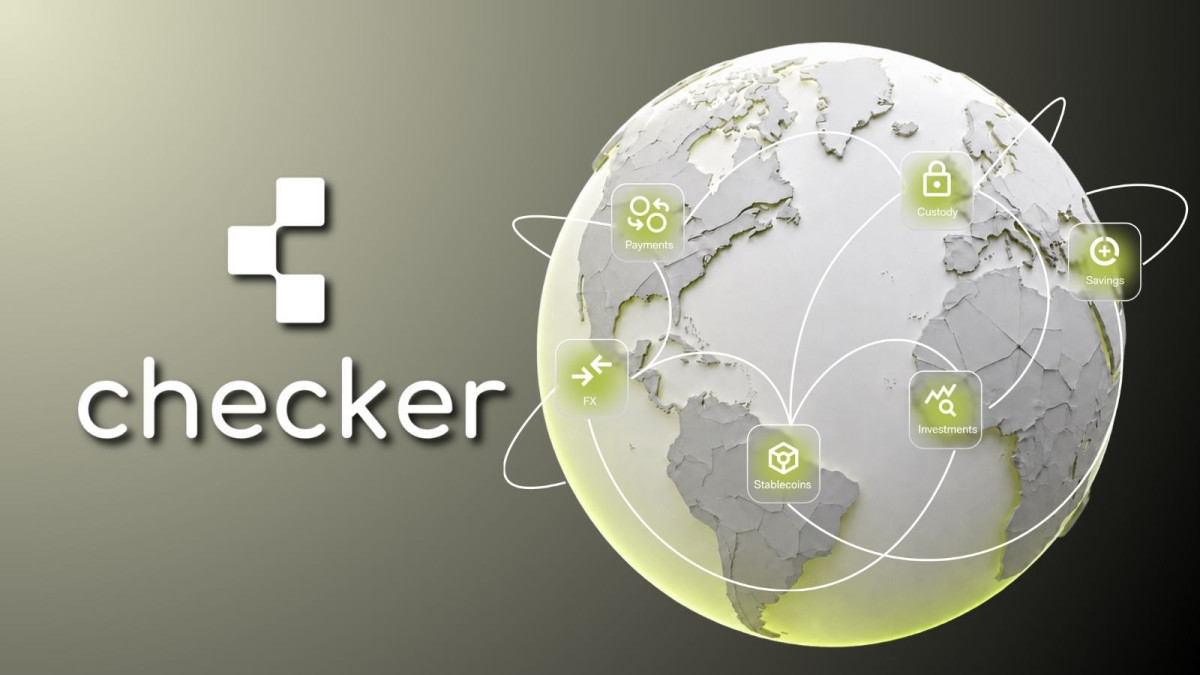
Stablecoin infrastructure startup Checker has just raised over $8 million across pre-seed and seed funding rounds to accelerate development of its stablecoin network.
The funding round was led by Galaxy Ventures, Al Mada Ventures, and Framework Ventures, with participation from Onigiri, IGNIA, Cerulean, Aquanow, Commerce Ventures, Pharsalus Capital, SNZ Capital, DFS Lab, Breed, Overlook, Velocity, Bitso Business, and AirTM.
Other angel investors involved in the round include Stripe, Tala, Flutterwave, Mesh, ComplyAdvantage, and Superstate, among others.

With this new funding, the Checker team aims to accelerate its global expansion plans while building a credit infrastructure embedded within its platform that allows users to lend and borrow without always having to pre-fund their accounts. The team also plans to automate its operations by building AI agents to handle treasury management, back office operations, and predictive analytics, all aimed at helping the platform scale efficiently.
Another goal for the Checker team is to solve the fragmentation problem currently facing stablecoin infrastructure. Despite the growing adoption of stablecoins and tokenized assets, liquidity fragmentation, operational complexity, and compliance hurdles continue to hamper large-scale adoption, particularly among institutions.
While institutions have adopted several makeshift solutions to work around these hurdles, such solutions are often difficult to maintain and scale. This is the problem Checker aims to solve.
Through its single API, institutions can launch and scale products across trading, payments, treasury, and credit markets. Institutions do not need to worry about integrating multiple providers into their platforms, as Checker abstracts these complex integration processes into a single API connection.
About Checker
Checker is a stablecoin infrastructure startup that allows financial institutions access to stablecoin and fiat liquidity through its single API platform. Its platform currently supports over 75 currencies, supporting over 50 liquidity providers, including exchanges, OTC desks, and banks.
Since its launch, Checker has processed several billion dollars, processing over 43 billion within its first 12 months of operation. It also serves several financial institutions across the US, Europe, Latin America, Africa, and Asia, notable among them are Rail, which was acquired by Ripple, and Brasa Bank in Brazil.

Y Combinator Launches NYC Fintech Crypto Interview Event

Leading startup accelerator Y Combinator will be holding the first-ever interview session in New York City, keenly focused on fintech builders developing projects around tokenization, stablecoins, prediction markets, and trading.

According to a YC spokesperson, the New York event will be the first of its kind, as it will focus on a specific sector, with accepted startups joining the Y Combinator Summer 2026 batch, which will begin on June 23 in San Francisco. Once a startup is accepted into the accelerator program, Y Coombinator will invest immediately in the company, even before the summer batch begins.
With New York becoming a major fintech hub in the U.S. and accounting for around 30% of all U.S. fintech investment in 2025, while also being home to roughly 1,500 crypto and fintech startups, Y Combinator is making this move to tap into this fast-growing sector and back more startups in the space.
Y Combinator Investing in Crypto
Through its funding, Y Combinator has helped support some of the most successful companies in the crypto space, with several reaching and surpassing unicorn status.
In 2012, Y Combinator invested about $150,000 into the crypto exchange Coinbase, acquiring an approximately 7% stake in the company. With support from Y Combinator and other early investors, Coinbase has grown into one of the largest crypto exchanges in the world, with a market cap of around $52 billion.
Y Combinator also invested early in the decentralized exchange Uniswap, contributing about $120,000 in 2018. Like Coinbase, Uniswap has grown into one of the largest decentralized exchanges, with a valuation of around $2 billion.
The startup accelerator has also invested in the prediction market sector, backing Kalshi at an early stage. With support from early investors, including Y Combinator, Kalshi has grown into one of the leading prediction market companies and recently raised $1 billion in a Series F round, reaching a valuation of $22 billion.
Other crypto companies that have benefited from Y Combinator’s support include the NFT marketplace OpenSea, blockchain intelligence company TRM Labs, and the Solana-based trading platform Axiom, with all of these companies surpassing the $1 billion valuation mark.

Polymarket Eyes $400M Raise at $15B Valuation

Prediction market platform Polymarket is reportedly in talks with investors to raise 400 million dollars. If successful, this would place the prediction market company at a valuation of 15 billion dollars, up from its current $9 billion.
While there is still no official confirmation from Polymarket regarding this news, the fundraising is expected to drive Polymarket’s growing influence in the expanding prediction market sector, giving it a competitive advantage over its competitors, particularly Kalshi.
This move comes a few weeks after Intercontinental Exchange (ICE), the parent company of the New York Stock Exchange (NYSE), invested 600 million dollars into Polymarket. This followed an earlier investment of 1 billion dollars into the prediction market company a few months prior.
So far, Polymarket has raised over $2 billion across several fundraising rounds from venture capital firms and investors, including Intercontinental Exchange, Blockchain Capital, Polychain Capital, Dragonfly Capital, Coinbase Ventures, 1789 Capital, Ethereum co founder Vitalik Buterin, Aave founder Stani Kulechov, among several other investors.
Prediction Market Firms Grapple With Regulatory Uncertainty
Despite how remarkable the global prediction market sector has grown in recent times, prediction market companies still face several regulatory challenges, ranging from state level lawsuits to nationwide bans.
Several U.S. states, including New Jersey, Maryland, Massachusetts, and Arizona, have taken strict regulatory action against prediction market companies, with many state regulators alleging that these companies offer illegal sports event contracts. At least 12 states in the U.S. have filed civil lawsuits against prediction market companies.
Outside the U.S., prediction market companies have also faced strict regulatory scrutiny. Just this year alone, about four countries in Europe, Portugal, the Netherlands, Bulgaria, and Hungary, have imposed nationwide bans on Polymarket’s activities.
However, despite this harsh regulatory landscape, the global prediction market continues to grow. In the most recent quarter, global trading volume across prediction market companies exceeded $ 26 billion, a 90 percent increase from the previous quarter. This volume, according to the global equity research firm Bernstein, is expected to reach $1 trillion by 2030.