#AI
ZetaChain to Shut Down Layer-1 Network, Migrate to Solana

ZetaChain will shut down its Layer 1 blockchain network and migrate to Solana after receiving almost unanimous approval in a governance vote.
The governance portal for the vote, which closed on Sunday at 14:58:18 UTC, recorded 99.4% of token holders voting in favour, while 0.3% each voted in opposition and abstained. Participation stood at 58%, exceeding the 40% quorum.

Stating the reasons for the ZetaChain to Solana migration, the team, in a recent blog post, gave a number of reasons, including the privacy features of the Solana blockchain and the infrastructure that Solana has been building for private AI.
According to the ZetaChain team, the subsecond and subcent finality features of the Solana blockchain, including its transaction confirmation time of 400 milliseconds and its one tenth of a cent fee, make it possible for AI agents to perform at scale.
In a test, the team claimed that the Solana blockchain handled more than 100,000 transactions per second, a result the team says is ideal for agents that are being built to execute transactions at machine speed.
Following the completion of a second governance proposal and the subsequent migration to the Solana network, the native ZETA token will be converted 1:1 to the Solana SPL ZETA, which will continue to be used to access Anuma, ZetaChain’s privacy AI platform.
About ZetaChain
Founded in 2021, ZetaChain is a Layer 1 blockchain network that was built to serve as an interoperability layer that connects blockchains without the need for traditional bridges.
Prior to its migration plans, the ZetaChain team had raised $27 million and processed hundreds of millions of transactions while onboarding millions of users and wallets.
However, the team made a strategic shift to AI this year with its first consumer multimodal AI app, which lets users carry one encrypted, user-controlled memory across dozens of AI models, including Claude, GPT, Gemini, and Grok.
With accessibility tied to the ZETA token, Anuma has grown to more than 300,000 users since its launch in February.

FinTax Secures Seed Funding in Round Led by YZi Labs

FinTax, a crypto native financial platform, has completed a seed funding round led by YZi Labs through EASY Residence, with participation from other investors, including Amber, Hash House, Pundi AI, Waverider International, and Nexus Holdings.
Although the amount raised has yet to be disclosed, FinTax now has a post money valuation of $40 million. According to the FinTax team, the new funding will be used to expand the company’s global coverage and further develop its use of AI for complex financial and tax workflows.

Despite primarily offering crypto native solutions, such as a crypto asset financial ERP, a global tax compliance platform, a blockchain audit platform, and an institutional grade financial product aggregation hub, AI remains at the core of FinTax’s operations.
With the new funding, the FinTax team plans to expand beyond Asia Pacific and North America into Europe and the Middle East. The company currently serves more than 70 institutional clients, including crypto exchanges, mining companies, and publicly listed crypto companies, while claiming an annual client retention rate of nearly 90%.
In a separate development in the crypto funding sector, crypto project City Protocol also raised $11 million in a funding round that included Dragonfly, Jump Crypto, CMT Digital, Stratified Capital, Adaverse, and Mirana.
The funding will be used to expand the city protocol’s tokenization efforts, including its plan to bring structured investment strategies on-chain.
Crypto funding continues to attract significant interest from venture capital firms looking to invest in crypto startups and companies with strong growth potential. According to a recent report from The Block, more than $8.1 billion has been invested in the sector this year alone.
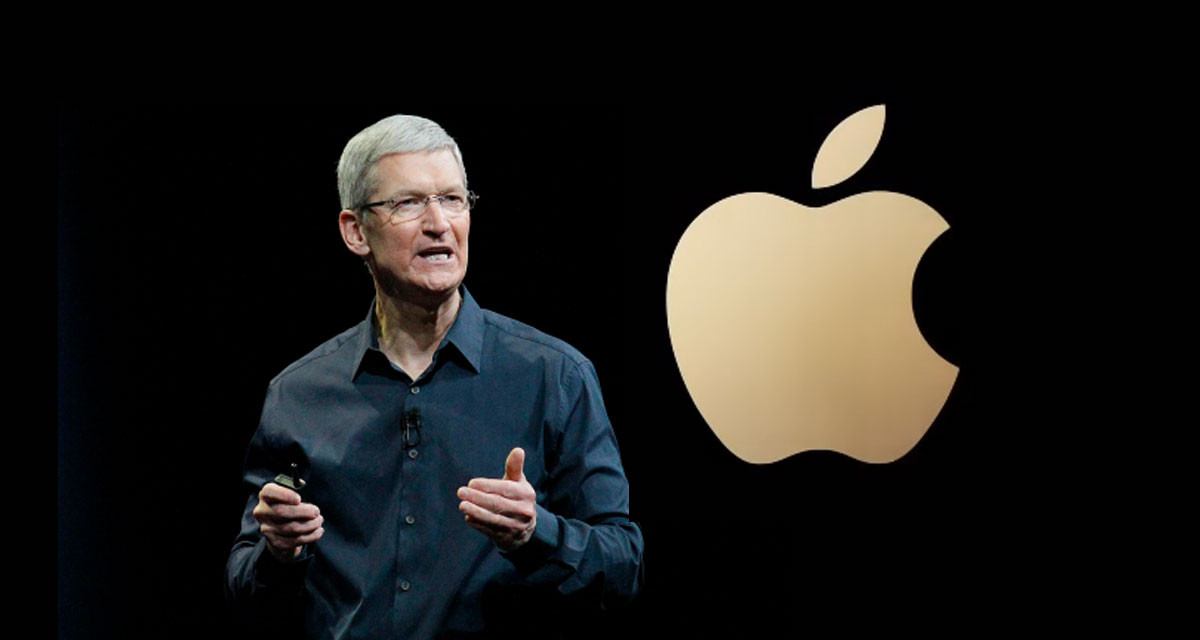
Apple Lays Off Over 200 Staff Amid AI Shift

Apple Inc. is reportedly cutting more than 200 positions across key departments as the tech giant redirects its focus toward artificial intelligence and future hardware.
The job cuts are said to affect the company’s Siri digital assistant, software engineering, and Vision Pro teams, with about 100 of the cuts coming from the Vision Pro department and roughly 100 from the Siri voice assistant team and the Intelligent Systems Experience group, which handles the company’s AI driven software capabilities.
Apple said in a statement through a spokesperson that the layoffs are aimed at evolving its business operations.
“While we will create new roles as part of this change, it will also impact a limited number of existing roles. We are grateful to these team members for their contributions, and we are committed to supporting them throughout their transition, including opportunities to apply for other roles at Apple.”
Despite the reduction in roles in the Vision Pro hardware department, Apple has assured employees that projects involving the Vision Pro hardware line and visionOS operating system will remain active. However, priorities have shifted toward developing smart glasses that do not require complex 3D gaming or immersive media capabilities and are less expensive to build.
The layoffs come at a time when Apple is rebuilding Siri, its voice powered virtual assistant, into a more conversational and context aware version known as Siri AI.
The newer model, which is being built in partnership with Google Gemini, will be able to handle personal data, on screen awareness, multi step tasks, and web knowledge, with a dedicated Siri app expected to be rolled out in beta later this year.
Like Apple, several other tech giants, including Google, Microsoft, and Amazon, have strategically pivoted toward AI or integrated the technology into their infrastructure, as they compete for a leading position in the AI race.
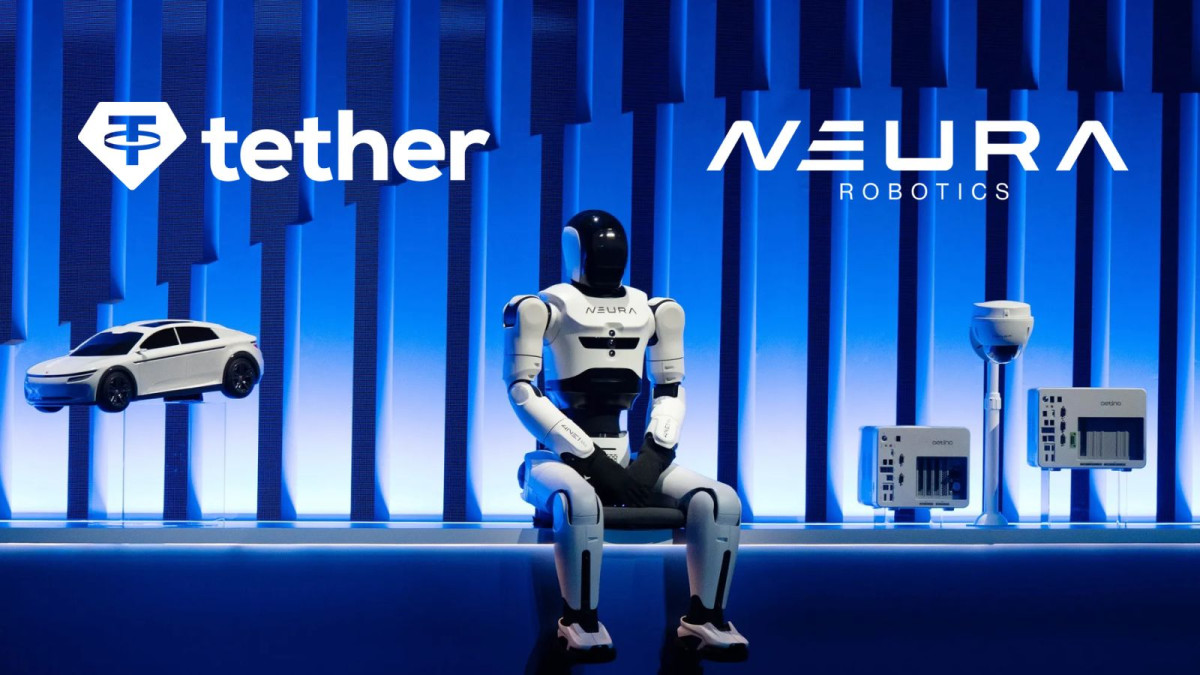
Tether Leads $1.4B Neura Robotics Funding Round

Stablecoin issuer Tether has announced its role as the lead investor in Neura Robotics’ recent Series C funding round. The funding round, which raised an estimated $1.4 billion, included Qualcomm, Amazon, and NVIDIA among other investors.

By investing in Neura Robotics, Tether is extending its influence beyond the digital asset industry, enabling it to deploy some of its core technologies into the humanoid robotics ecosystem. The partnership also enables the integration of Tether’s Wallet Development Kit and Tether’s self-custody wallets into the Neura Robotics system.
Through this integration, Tether provides a foundation that enables Neura Robotics to develop robotic systems that earn micropayments for tasks, transact with other robotic systems, and autonomously facilitate transactions and receive payments between machines without human intervention.
As part of its partnership, Neura Robotics will collaborate on testing, improving, and deploying Tether’s QuantumVerse Automatic Computer, known as QVAC, into its Neuraverse ecosystem. QVAC is Tether’s open-source, decentralized artificial intelligence platform that enables users to run and fine-tune large language models directly on their devices without relying on cloud servers.
“As robotics moves beyond scripted automation and into true autonomy, the infrastructure behind it must evolve as well,” said Paolo Ardoino, chief executive officer of Tether.
“Autonomous machines need the ability to process information locally, make decisions, and transact without relying on centralized intermediaries. QVAC brings that edge-first intelligence to the platform while WDK handles the secure financial layer. Together, they enable machines to execute tasks, account for outcomes, and operate independently. NEURA Robotics shares that vision, and this investment reflects our confidence in what autonomous robotics can become.”
About Neura Robotics
NEURA Robotics is a German-based high technology company that positions itself as a pioneer in cognitive robotics and Physical Artificial Intelligence. It develops artificially intelligent machines that can perceive (see, hear, feel), learn, adapt, and collaborate safely with humans.
So far, the company has developed some cognitive humanoid robots, including MAiRA, MiPA, and 4NE1. It has also developed Neuraverse, an open ecosystem and platform that enables robots to share skills, continuously learn, and expand their capabilities.
Deloitte Taps Blocknative Team to Advance Web3 and AI Strategy

Deloitte, one of the Big Four professional services firms, has acquired Blocknative, a crypto infrastructure company, in a talent acquisition deal following Blocknative’s plan to wind down its operations.
The acquisition is not a full company buyout but rather a transfer of Blocknative’s talent pool to Deloitte, with the former Blocknative team set to drive Web3 innovation across Deloitte’s client portfolio.

The move, according to Blocknative, is aimed at leveraging blockchain and cryptographic technology to address the trust, coordination, and verification problems that hinder enterprise adoption of agentic artificial intelligence, particularly as several traditional financial institutions, including JPMorgan, Goldman Sachs, and Morgan Stanley, develop their own agentic AI solutions.
“This chapter of our work in the ecosystem is coming to a close: on mempool visibility, transaction orchestration, block building, MEV auctions, private order flow, transaction pricing, and more,” said Matt Cutler, Blocknative founder and chief executive officer.
“That work was shaped by our customers, the protocol teams, wallet builders, researchers, and institutions who pushed for better answers.”
With Blocknative winding down its operations, the company has announced that it will shut down its application programming interface (API) services on June 19, 2026, alongside its gas network, which relies on the API. Teams and companies that depend on the Blocknative API have been advised to begin migration planning, including testing, swapping, and confirming operational readiness, before the June 19 deadline.
The shutdown of Blocknative comes amid a wave of crypto company closures over the past few months. The last quarter saw more than 20 crypto companies restructuring or shutting down due to declining market conditions, high operational costs, and strategic pivots toward artificial intelligence, including Dmail, Balancer Labs, Magic Eden, and Tally.
About Blocknative
Blocknative is a San Francisco-based blockchain infrastructure company that specializes in real-time observability and optimization tools for public blockchains, particularly Ethereum and other EVM-compatible Layer 1 and Layer 2 networks.
Before its planned shutdown, Blocknative had raised around 34 million dollars from investors and built a decentralized oracle gas network that provides real-time gas pricing data across more than 40 networks.
It has also served several notable blockchain companies, including the Ethereum Foundation, Curve Finance, and Tally.

Dune Cuts 25% of Staff to Accelerate AI Crypto Data Push

Fredrik Haga, CEO and co-founder of crypto analytics firm Dune, has revealed the firm’s plan to lay off a quarter, or 25%, of its staff, citing AI investments as the reason for this decision.

“We’re restructuring Dune to sharpen our focus around the core data products thousands of customers across the crypto industry rely on. That unfortunately means we’ve let 25% of the team go this week. These are exceptional people I can wholeheartedly recommend. Ping me if you’re hiring top crypto talent,” Haga wrote in a post on X.
The decision to lay off some of its staff, according to Haga, is driven by the firm’s plan to accelerate more quickly with AI, with Dune positioning itself as the only firm to have built an end to end stack for crypto data. Its stack performs key roles in data ingestion, quality assurance, storage, cleaning, normalizing, and querying.
“With Dune MCP, teams and agents can now build dashboards and workflows without needing to know anything about SQL or data infrastructure and associated costs,” Haga said. Dune Model Context Protocol, or MCP, is an open protocol that allows AI tools to connect to external data sources in a structured way. It automates much of the manual work associated with data use.
By cutting its workforce, Dune aims to double down on AI and its end to end crypto data stack, including its model context protocol, which is already being used by some of the industry’s biggest players such as Polygon Labs, 1inch, Base, OP Labs, Blockworks, and COW Protocol.
Tech Layoffs Continue to Rise
Layoffs, especially in the tech and crypto sectors, continue to rise. According to a recent survey, about 81,000 layoffs were recorded in the first quarter of 2026, the highest since 2023, with the number reaching more than 100,000 by early May.
Several crypto companies have reduced their workforces in recent months. Coinbase most recently cut 14% of its workforce, laying off about 700 employees. The company cited a volatile crypto market and a strategic shift toward artificial intelligence focused operations as reasons for the layoffs.
Other companies, including Crypto.com, Gemini, Algorand Foundation, and Block, have also reduced their workforces. Many of these firms have pointed to a volatile crypto market and a broader strategic pivot toward artificial intelligence as contributing factors to the cuts.
Crypto’s Moment: The Shift Has Happened



Alchemy Tackles AI Payment Chaos with AgentPay

Blockchain infrastructure company Alchemy has launched AgentPay, an interoperability tool designed to enable communication between AI payment systems.
AgentPay was introduced with the goal of addressing the fragmentation that exists among AI payment agents. By unifying different payment agents regardless of the payment protocols they use, AgentPay enables agents, including those from major payment companies such as Coinbase, Stripe, Visa, and Circle, to work together and communicate with one another.
The Fragmentation Problem
There has been a shift in recent times in the way AI agents are used, with AI agents evolving from being chat assistants like ChatGPT into autonomous economic actors.
These AI agents do not only assist or provide feedback. They are able to independently discover services, compare options, negotiate, and execute payments without human intervention. This development has been described by some as the agentic commerce era.
With major technology and finance institutions such as OpenAI, Anthropic, Google, Coinbase, Stripe, Visa, Mastercard, and Circle actively developing and deploying AI agents capable of conducting real transactions, the adoption of AI in commercial activity has accelerated over the past year. Because these agents often rely on different payment protocols, communication between AI payment agents and systems can be complex.
This fragmentation, if left unresolved, could hinder the growth of businesses integrating AI into their platforms. Analysts project that up to 90 percent of business-to-business purchases could be facilitated by AI agents by 2028, making compatibility with AI agents increasingly important for businesses, regardless of the underlying protocol used by the agent.
If an AI agent is not compatible with a business’s application programming interface (API) or service, it may simply move on to another platform that is compatible. In this environment, the most compatible platform may gain a significant advantage. This challenge is what Alchemy’s AgentPay aims to address.

Image credit: Alchemy
Instead of requiring businesses to build separate integrations for every protocol used by AI agents, businesses can register their existing application programming interface endpoints with Alchemy. After that, AgentPay generates a proxied endpoint, which is a single, uniform URL that AI agents can use to make payments regardless of the protocol they use, including x402, MPP, A2P, or L402.

Algorand Foundation Cuts 25% of Staff Amid Crypto Slump

The Algorand Foundation, the organization behind the Algorand layer-1 blockchain network, announced on Wednesday that it is laying off 25% of its staff.
The foundation described the decision as “difficult” and attributed it to the downturn in the crypto market. “This decision was not taken lightly and is in response to the uncertain global macro environment as well as the broader downturn in crypto markets,” it said.
Describing the affected employees as “best-in-class contributors,” the foundation said it would support them through the transition. Following the layoffs, the foundation believes it is now more closely aligned with its long-term business, technology, and ecosystem goals.

About the Algorand Foundation
Founded in 2019 by MIT professor and Turing Award winner Silvio Micali, the Algorand Foundation is responsible for guiding, funding, and growing the Algorand blockchain ecosystem.
The aim of the foundation is to make real-world adoption of blockchain technology easier, and to build an open and accessible system where digital assets can be transferred instantly and securely. The foundation is often described as building infrastructure for the future of finance and the broader digital economy.
The Algorand Foundation offers a diverse suite of blockchain-related products that serve both end users and developers in the crypto space. Some of its products include:
- Algokit: A developer toolkit designed to simplify smart contract development and deployment, as well as to help builders create applications on the Algorand blockchain.
- Rocca Wallet: A self-custodial wallet that makes it easy for both beginners and experienced users to manage their digital assets. According to the Algorand roadmap, the Rocca Wallet is expected to launch later this year.
- Commercial toolkit: A set of tools that enables enterprises to integrate the Algorand blockchain more easily into their operations.
The Reality of Working in the Crypto Space
While the crypto industry is known for offering some of the highest-paid and most sought-after jobs, it has recently experienced a wave of layoffs, with many companies re-pivoting and restructuring due to changing market conditions.
Just last month, Block Inc., the company behind Square, Cash App, and Afterpay, cut approximately 40% of its workforce, laying off about 4,000 employees. The layoffs were part of a broader restructuring and a shift toward artificial intelligence (AI).
More recently, this month, the crypto exchange Crypto.com laid off around 20% of its staff as part of a strategic shift toward AI-focused operations. Web3 infrastructure company Eclipse Labs also laid off about 65% of its workforce during a major restructuring in August.

Coinbase Launches Agentic Wallets on Base

Coinbase is not introducing AI agents to crypto. Those have been here for years.
What Coinbase is doing now is different. It is trying to formalize and secure that reality.
With the release of what it calls Agentic Wallets, Coinbase is offering wallet infrastructure built specifically for autonomous AI agents. Not dashboards with AI features. Not analytics copilots. Actual wallets engineered so software agents can hold and move funds in a way that is safer, cleaner, and more production ready than the duct taped setups many teams rely on today.
Agentic Infrastructure
Erik Reppel, who leads engineering on the Coinbase Developer Platform, has been fairly direct about the problem they are solving.
Today, when developers say an agent “has a wallet,” that often means a private key is sitting somewhere it probably should not be. Maybe in a config file. Maybe in memory. Maybe loosely protected. If that agent gets manipulated, exploited, or simply misbehaves, the blast radius can be severe.
Reppel’s argument is that key isolation needs to be non negotiable. With Agentic Wallets, private keys are stored in secure execution environments, separated from the agent’s reasoning layer. The agent never directly touches raw key material. Instead, it interacts through controlled sessions with predefined permissions and limits.
He has described this architecture as orders of magnitude safer than letting an AI system operate with exposed keys.
That framing is important. Coinbase is not claiming to invent autonomous agents. It is trying to make them viable in production environments where security and compliance actually matter.
Built on Base and Wired Through x402
Two technical components sit at the core of this release: Base and x402.
Agentic Wallets are designed to run natively on Base, Coinbase’s Ethereum layer 2 network. Base offers lower fees and faster settlement compared to mainnet Ethereum, which makes it more practical for continuous automated activity. Bots and agents do not sleep. They monitor, adjust, and transact around the clock. Running that on a cheaper, faster chain is not a luxury, it is a necessity.
Then there is x402, Coinbase’s machine-to-machine payments protocol.
If that name sounds obscure, the idea is straightforward. x402 is built to allow services to pay other services directly onchain. It has already processed tens of millions of transactions in scenarios where APIs, compute layers, or other digital services require automated payment.
In the context of Agentic Wallets, x402 becomes the settlement layer for autonomous systems. An agent can pay for API access, purchase data feeds, cover inference costs, or settle fees with other services without a human approving every transaction. It is programmable, onchain, and designed for machines transacting with machines.
Put differently, Base provides the execution environment. x402 provides the payment rails. Agentic Wallets sit on top as the secure container that ties everything together.
Agents Already Trade. This Makes It Cleaner.
It is worth saying clearly: AI driven trading is not new.
Quant desks, DeFi vaults, MEV bots, and arbitrage engines have been programmatically making trades for years. In many cases those systems are highly sophisticated. But the wallet layer underneath them has often been an afterthought. Keys get managed in inconsistent ways. Access control is custom built. Security depends heavily on the engineering discipline of each individual team.
What Coinbase is offering is a standardized wallet layer designed for autonomous operation from day one.
With Agentic Wallets, developers can:
- - Set configurable spend caps per transaction or per session
- - Limit what contracts or addresses an agent can interact with
- - Isolate keys from the model or decision engine
- - Monitor transactions through built in compliance tooling
That does not suddenly give agents new superpowers. They were already capable of executing trades, reallocating liquidity, and managing positions. What this does is reduce the fragility in how those systems are wired into capital.
For teams building serious onchain automation, that difference matters.
Guardrails Are the Product
The safety architecture is arguably the most important part of this launch.
Prompt injection attacks, model manipulation, and logic exploits are not theoretical. If an agent is given broad financial authority and can be tricked into executing malicious instructions, the damage can be immediate and irreversible.
Coinbase’s model is to narrow the surface area.
Private keys live in secure enclaves. Agents operate through session credentials rather than raw key access. Developers can define how much value an agent can move and under what conditions. Transaction monitoring tools screen for high risk interactions before they are finalized.
None of this eliminates risk. Autonomous systems interacting with open financial networks will always carry some degree of unpredictability. But compared to the common practice of handing a bot a hot wallet and hoping for the best, this is a structural upgrade.
The Bottom Line
Zooming out, this fits into Coinbase’s broader strategy.
The company has been expanding its developer platform, pushing Base as a default settlement layer, and experimenting with tools that make onchain activity easier to embed into applications. Agentic Wallets extend that logic into the AI domain.
If AI systems continue to mediate financial activity, whether that is portfolio management, payments, or automated strategy execution, they will need infrastructure. Wallets are the choke point. Whoever controls that layer controls a meaningful slice of the stack.
Coinbase clearly wants to be that provider.
There are still regulatory and philosophical questions hanging over all of this. When an autonomous agent executes a trade or interacts with a protocol, who ultimately bears responsibility? The developer? The operator? The infrastructure provider? Those debates are just beginning.
But in practical terms, agents are already here. They are already trading. They are already moving markets.
Autonomous systems are currently participating in crypto. The wallet layer just needs to catch up.
Agentic Wallets are an attempt to do exactly that.

Coinbase Launches AI-Ready Crypto Payments Protocol
Coinbase Launches AI-Ready Crypto Payments Protocol, Paving the Way for Autonomous Finance
Coinbase has unveiled a major new initiative: a payments protocol that enables artificial intelligence agents to hold wallets and send stable‐coin payments autonomously. This move marks a meaningful step toward machine-to-machine commerce and could reshape how value moves online.
The protocol, called Payments MCP, builds on the earlier x402 standard and allows AI systems from major providers to open wallets, receive funding and complete stable‐coin transfers without human input. Coinbase states that this represents a new frontier in digital payments — one where software becomes an economic actor, not just a tool.
What the Protocol Does and Why It Matters
Payments MCP integrates with large language models and AI systems such as those from leading AI companies. It lets agents create wallets, execute payments in stablecoins (like USDC) and interact with on-chain infrastructures while enforcing compliance controls and spending limits.
For example, an AI agent could pay for cloud services, API access or digital content automatically based on consumption. Through this protocol, the underlying blockchain becomes an operational layer for autonomous finance, not just a ledger for human transactions.
This development comes at a time when global tech companies are merging AI with blockchain. Goldman analysts say that stable-coins may serve as the fuel for agent-based commerce, and firms such as Google have introduced open-source frameworks around AI payments that involve Coinbase’s infrastructure. These collaborations underscore the potential scale and strategic importance of this innovation.
Why This Shift Is Significant
Enterprise-Grade Digital Economy
By enabling AI agents to transact with wallets and stablecoins, Coinbase is helping create a financial infrastructure suited for modern software ecosystems. Expense payments, vendor services and subscription models could all become automated-first rather than human-first.
Crypto Broader Than Trading
This protocol moves crypto beyond speculation and token trading into real-world utility. Stablecoins and payment rails become tools for software, apps and AI flows — opening new use cases and revenue models in the digital economy.
Accelerating Standards and Interoperability
The creation of open protocols like x402 and Payments MCP signals that crypto firms are building foundational infrastructure for the next Internet wave. These tools lay down standards that are interoperable, scalable and ready for enterprise adoption.
What to Watch Going Forward
-
Adoption rate: How many AI platforms and enterprise software providers integrate MCP or x402 protocols in 2026 and beyond.
-
Regulatory clarity: How governments respond to autonomous value transfers between agents and how compliance frameworks evolve.
-
Stable-coin use cases: Whether stablecoins really become the native “fuel” for agentic finance and how firms build around that.
-
Game-changing applications: Which early use-cases emerge—agent-based micropayments, cloud resource payments, autonomous vendor services.
-
Network effects: Whether this infrastructure leads to an ecosystem where agents, wallets and services interoperate seamlessly at scale.
Final Thoughts
Coinbase’s launch of an AI-powered payments protocol represents a bold step toward an autonomous, software-driven economy. By enabling AI agents to transact with wallets and stablecoins, the firm is pushing crypto technology into new territory—beyond human transactions and into autonomous finance.
For the crypto sector this is a signal that blockchain infrastructure is evolving from niche token swaps into foundational payment rails for AI, software and Web3 systems. The future of value transfer may not just involve people, it may involve software acting independently—and Coinbase is at the forefront.