#Web3 Security

THORChain Halts Trading After $10M Exploit

THORChain, the decentralized cross-chain liquidity protocol that enables asset swaps between blockchains, has paused trading on its platform following reports by security researchers, including ZachXBT and PeckShield, that the platform was exploited for more than $10 million.

Following alerts from security researchers, THORChain halted all trading activities, citing abnormal and suspicious behavior it had detected. According to the team, one of its six Asgard vaults was compromised, resulting in a loss of approximately $10 million.
However, the team said in a post on X that user funds were safe and that only protocol-owned funds were affected.

“Investigation is still ongoing to determine the root cause. Contributors are actively working on the issue and we will report updates as we progress toward a solution,” the team said.
“We are asking all node operators to immediately review their infrastructure, hosts, key management systems, and operational security for any signs of compromise or abnormal behavior, and to report anything suspicious in Discord.”
Following the team's confirmation of the exploit, RUNE, the native crypto asset of THORChain, fell by nearly 15%, wiping out more than $27 million in market capitalization. Its market capitalization dropped to around $182 million. At the time of writing, RUNE was trading at $0.50, down 13.8% from its pre-hack price of $0.58.
Latest of Several Attacks
This is not the first time THORChain has been exploited by attackers. In 2021, it suffered three separate exploits, resulting in losses of over $16 million.
In the first exploit, it lost approximately $350,000 due to a vulnerability in the way the protocol handled ERC-20 deposits. In the second exploit, which occurred just one month after the first, THORChain suffered losses of between $4.9 million and $8 million. In the third exploit, the protocol lost about $8 million due to a refund logic vulnerability.
The THORChain exploits are among the latest and largest of the 11 decentralized finance exploits recorded this month. Exploits in decentralized finance remain widespread, with the previous quarter recording more incidents than the first quarter of 2025.

Binance Launches Wallet Lockdown Feature to Stop Wrench Attacks

Binance, the world’s largest cryptocurrency exchange, has just rolled out a new wallet feature to combat the rising cases of wrench attacks against crypto holders.
Announcing the launch of this feature, Binance wrote in a Monday blog post, “Most security advice you will read about crypto assumes that the threat is digital. Some of the main threats include malicious phishing links, imposter scams, SIM swaps, and compromised seed phrases, and the industry has built strong defenses against them.”
“But there is a category of risk that those defenses do not cover: physical coercion. These are situations where someone is pressured, in person, to move their own funds. Such cases are rare, but when they happen, the losses can be severe and irreversible.”
When activated, this new withdrawal protection feature blocks all on-chain withdrawals from a user's Binance account for a preset lockdown period, during which no one, not even the owner of the wallet, can move crypto assets out of the wallet.
The new withdrawal protection feature can be enabled from the settings section of the Binance wallet. While 48 hours is the default lockdown period, a user can choose to change this to anywhere between 1 and 7 days, depending on their preferences.

To enhance flexibility, Binance added a toggle feature that allows users to end the lockdown period early, especially in emergency cases when a user needs to move crypto assets from their wallet. It is also important to note that this feature only restricts withdrawals, thus users can still trade, hold positions, and carry out other in-wallet activities even when the withdrawal protection feature is enabled.
Crypto Wrench Attacks on the Rise
Crypto wrench attacks have steadily risen over the last few years. According to a CertiK report, there were 72 verified cases of physical attacks and coercion against crypto holders in 2025, an increase of nearly 71% from the 41 cases recorded the previous year, with losses amounting to over $41 million.
This year has not been an exception, as there have been several recorded cases of wrench attacks, with France being an epicenter of these attacks.
Just last month, a family of five in France was held captive by two men who invaded their home and extorted approximately €700,000 worth of cryptocurrencies.
In another attack in France, a mother and her son were kidnapped by four armed men who demanded about $471,000 for their release. The victims were held hostage for about 20 hours before they were eventually released, and the suspects were arrested by law enforcement officers.

Polymarket Taps Chainalysis to Tackle Insider Trading

Polymarket, the world’s largest prediction market company, has partnered with blockchain analytics firm Chainalysis to help curb insider trading activities amid its recent move to raise $400 million from investors.
The partnership will see Chainalysis deploy several investigative tools, including the Chainalysis Data Solutions tool, a first-of-its-kind on-chain solution designed to monitor trading activity on prediction markets while mapping insider trading patterns and enforcing market integrity rules across the Polymarket platform.

The prediction market platform will also benefit from Chainalysis’s on-chain security capabilities, which are pivotal in preventing threats, as well as a dedicated team of Chainalysis professionals who will not only help deploy Chainalysis Data Solutions but also train the Polymarket team on how to proactively use the solution to maintain transparency on the platform.
The solution to be deployed is also dynamic, meaning Polymarket can continually refine its detection methods to identify and curb insider trading activities, thereby maintaining transparency and protecting the platform from emerging threats.
By partnering with and leveraging Chainalysis's institutional expertise, Polymarket is clearly signaling its stance against all types of fraud and market manipulation and that those who attempt to engage in any such activities will be promptly identified and prosecuted.
"Polymarket was built on chain because transparency matters, and our platform shows what markets can look like when trades are open, traceable, and accountable by design," said Shayne Coplan, Founder and Chief Executive Officer of Polymarket.
"Every market deserves that standard. This partnership with Chainalysis pairs that transparency with the monitoring and enforcement infrastructure to back it up and helps us continue to build the most trusted source of truth in markets."
Insider Trading Concerns in Prediction Market Platforms
Insider trading, which is the illegal practice of leveraging material non-public information (MNPI) or confidential information to gain an edge over other market participants, has long been a problem for prediction market platforms.
To curb insider trading, the U.S. Senate unanimously passed a measure banning its members from trading on prediction markets. Most recently, a group of congressional Democrats led by Sen. Jeff Merkley has pressed the Commodity Futures Trading Commission (CFTC), urging the regulator to address the lack of integrity caused by insider trading activities on prediction market platforms.
Due to this mounting pressure, Kalshi, Polymarket, and other prediction market platforms have rolled out several restrictions to address these concerns, which is also the main factor behind the Polymarket Chainalysis partnership.

Hyperbridge Hack Leads to $237K ETH Loss on Ethereum

Hyperbridge, a cross-chain interoperability protocol built on Polkadot, was recently hit by a hack that led to the loss of approximately 108.2 ETH, roughly $237,000.
The attack, which occurred in the early hours of Monday, was caused by the exploitation of a smart contract vulnerability in the protocol’s token gateway contract on Ethereum.

By taking advantage of this vulnerability, the attacker forged a cross-chain message and proof that allowed them to bypass the Merkle proof verification of Hyperbridge’s Ethereum HandlerV1 contract. As this contract is central to security and proof verification on Hyperbridge’s Ethereum side, the attacker was able to gain unauthorized administrative control over the bridged DOT token contract on Ethereum.
With this administrative authority, the attacker minted approximately one billion fake bridged DOT tokens in a single transaction. The tokens were then immediately dumped into various liquidity pools through Uniswap V4 and other crypto aggregators such as Odos. However, due to poor liquidity and limited trading activity for the bridged DOT token on Ethereum, the attacker was only able to extract about 108 ETH, valued at roughly $237,000.
Polkadot acknowledged the incident in a statement on its official X account, noting that it was aware of the situation. The team stated that the breach only affected DOT tokens on Ethereum, and confirmed that its native DOT cryptocurrency, as well as DOT bridged through other platforms, remained unaffected.
To contain the issue, Hyperbridge temporarily paused the protocol. Seun Lanlege, founder of Polytope Labs, the team behind Hyperbridge, stated that the issue was under investigation shortly after the incident occurred.

Hyperbridge April Fool Joke
The Hyperbridge hack comes shortly after the team made an April Fool's joke on the 1st of April about being hacked, dismissing the idea as a joke and boasting that the protocol was unhackable, a move that sparked criticism about the team’s overconfidence.

Lanlege, the protocol’s founder, was also called out, with some in the crypto community accusing him of ignoring and rejecting security feedback and tests from white hat researchers who had identified flaws in the protocol’s security system.
The Hyperbridge exploit is one of almost 10 smart contract vulnerability exploits we have seen this year. In January, DeFi protocol Truebit and decentralized exchange aggregator Swapnet were hit by smart contract vulnerability exploits that led to the loss of approximately 26.4 million dollars and $13.4 million, respectively.
Solv Protocol and CrossCurve were also hit in the following months by smart contract vulnerability exploits. So far, over $400 million has been lost to crypto-related hacks and exploits this year.

Solana Foundation Moves To Strengthen Its Ecosystem Security

The Solana Foundation, in collaboration with blockchain security firm Asymetric Research, has launched new security initiatives aimed at strengthening the security of the Solana network.
In a blog post on Monday, the foundation announced the launch of new security initiatives designed to provide an extra layer of protection for protocols built on the network. Among these initiatives are STRIDE, a security framework, and SIRN, a network of security firms focused on protecting the Solana ecosystem.

The STRIDE Framework
STRIDE, which stands for Solana Trust, Resilience and Infrastructure for DeFi Enterprises, is a structured security framework and program launched by the Solana Foundation. It is aimed at evaluating, monitoring, and escalating security across all projects built on the Solana network.
The STRIDE framework is built on eight key pillars: program security, governance and access control, oracle and dependency risk, infrastructure security, supply chain security, operational security, monitoring and incident response, and log management and forensics.
These pillars will be used by the foundation’s partner, Asymmetric Research, to evaluate the security strength of all protocols on the Solana blockchain. Protocols with a total value locked of more than $10 million that pass the STRIDE evaluation will receive continuous operational security and active threat monitoring, funded by Solana Foundation grants. The higher the evaluation result, the greater the level of protection and funding they will receive.
Protocols with a total value locked of more than $100 million that pass the STRIDE evaluation will also receive, in addition to grants, formal fund verification. The foundation describes this as a mathematical, proof based method that exhaustively guarantees the correctness of smart contracts.
The findings of the STRIDE framework will be published publicly. According to the foundation, this is intended to give users and investors insight into the protocols they use and rely on.
SIRN: A Network of Security Firms
Among the initiatives launched by the Solana Foundation is SIRN, short for Solana Incident Response Network, a network of security firms that will respond and act in the event of a security incident.
Although SIRN will be available to all blockchain protocols on the Solana network, priority will be given to protocols with higher total value locked, similar to the additional benefits that protocols with higher total value locked will receive under the STRIDE program.
Interested in knowing who makes up SIRN?
The Solana Incident Response Network comprises Asymmetric Research, OtterSec, Neodyme, Squads, and ZeroShadow, a combination of cybersecurity firms that includes Web3 and traditional security firms as well as a smart contract auditing firm.
Increase in DeFi attacks
The programming initiatives launched by the Solana Foundation are in response to the over $280 million attack on Drift Protocol, the largest decentralized perpetual exchange on the Solana blockchain. The attack is, so far, the most devastating DeFi attack this year and the second largest in the history of the Solana blockchain, following the 2022 Wormhole attack, which resulted in losses exceeding $325 million.
Step Finance, a DeFi aggregator built on Solana, was also affected by a DeFi hack earlier this year, which led to losses of about $40 million. According to DeFiLlama, over $168 million was stolen across 34 blockchain protocols in the first quarter of this year, prior to the Drift incident.
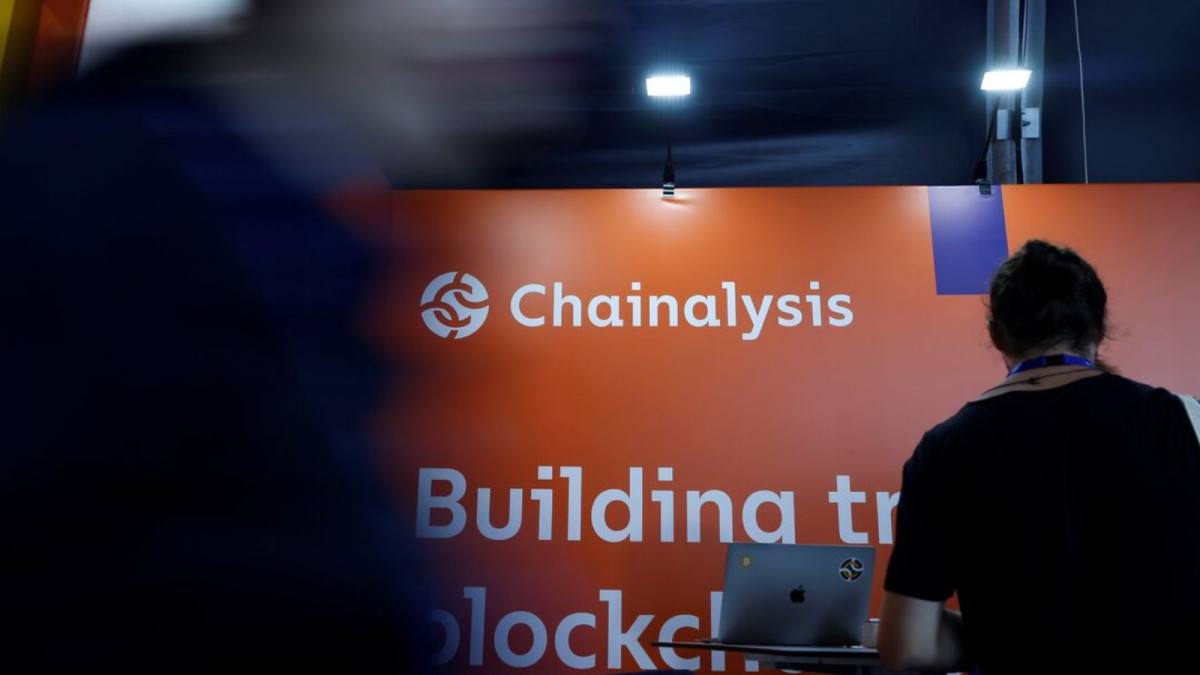
Chainalysis Launches AI Blockchain Intelligence Agents

Blockchain data analytics company Chainalysis announced on Tuesday at its annual Links conference in New York the introduction of its blockchain intelligence agents, designed to scale investigations and compliance for security professionals and organizations.
According to the company’s CEO and co-founder, Jonathan Levine, the AI agents are not a “new product” or a “bolted-on chatbot feature,” but rather an evolution of the company’s existing platform and experience, built on insights from billions of transactions screened and more than ten million investigations conducted over the past decade.
"Chainalysis blockchain intelligence agents put the full depth of our platform, our data, products, and institutional expertise, into the hands of anyone in your organization,” Levine wrote in a company blog post. “From seasoned investigators and compliance analysts to executives, Chainalysis agents provide insights and amplify what your team can do.”

To ensure transparency and reliability in its use, the Chainalysis team built its blockchain intelligence agents around four key principles: data quality, context and reasoning, auditable results, deterministic workflows, and human control. These principles are designed to help the agents deliver accurate and consistent insights.
The blockchain intelligence agents will begin rolling out over the summer, and the team expects that, over time, they will be used by professionals across a range of roles to unlock new levels of blockchain insight.
Chainalysis Joins the AI Agents Race
Prior to Chainalysis's integration of AI agents into its blockchain intelligence platform, several blockchain companies had already developed and launched their own AI-powered tools.
On March 25, blockchain intelligence firm and Chainalysis competitor TRM Labs announced the launch of its Co-Case Agent, an embedded AI investigative assistant that enables investigators to use plain-language prompts for complex on-chain tasks such as tracing funds, auditing transaction graphs, and maintaining immutable audit logs for Suspicious Activity Reports (SARs).
Blockchain analytics and crypto intelligence platform Nansen also launched its Nansen AI agent earlier this year. The conversational assistant supports on-chain research and agentic trading, helping users analyze wallets, identify market signals, and suggest trades.
These AI agent releases followed the introduction of Elliptic’s Copilot. In April 2025, the blockchain analytics and crypto compliance firm launched its AI-powered assistant to streamline compliance workflows and risk management.
Elliptic’s Copilot is widely regarded as one of the earlier AI assistant tools introduced by a blockchain intelligence company.

Balancer Labs Shuts Down After $116M DeFi Hack

Balancer Labs, the core team behind the decentralized finance (DeFi) protocol Balancer, has announced plans to wind down after a $116 million exploit that occurred in November.
The decision, according to CEO Marcus Hardt, was driven by the impact of the hack. Despite continuing to generate revenue, Balancer Labs’ economic model was no longer sustainable in the aftermath of the hack.
“We were spending too much to attract liquidity relative to what that liquidity was actually generating in revenue,” Hardt said. “We were diluting BAL holders to sustain a system that, in my view, was no longer serving the protocol well. At some point, you have to be honest about that.”
With Balancer Labs winding down its operations, the protocol is expected to be managed by the Balancer Foundation and its decentralized autonomous organization (DAO), an approach supported by co-founders Hardt and Fernando Martinelli.
DAO members have been asked to vote on a proposal to restructure the protocol and its tokenomics. If approved, BAL emissions will end, all fees will be routed to the treasury, and the protocol’s share of swap fees will be reduced. The team size will also be cut.
So, while Balancer Labs, the core development team, is winding down, the protocol will continue operating under new management with a leaner structure.
The Balancer Protocol Exploit
On November 3, 2025, Balancer Protocol suffered a smart contract exploit targeting its V2 composable stable pools, resulting in the theft of significant amounts of cryptocurrency.
Although Balancer had a permission system in place, a bug in the smart contract allowed the attacker to bypass these controls. The attacker exploited the vulnerability to gain unauthorized access to the protocol’s shared vault system, enabling them to drain assets from multiple liquidity pools across different blockchains simultaneously.
The hack had a severe impact on Balancer, causing its total value locked (TVL) to drop from about $775 million to $258 million within days of the exploit, according to a report. Its native token, BAL, also fell by about 30%.
The shutdown of the Balancer Labs team comes weeks after crypto aggregator Step Finance announced its own shutdown following a January 31 hack that reportedly led to losses of between $26 million and $40 million from the protocol’s treasury.
Bunni, a decentralized liquidity protocol built on Uniswap V4, also shut down around October last year after suffering a hack that resulted in losses of about $8.4 million.

Venus Protocol Hit by $3.7M Supply-Cap Attack

Decentralized crypto lending and borrowing platform Venus Protocol was recently targeted in a supply cap/flash-loan attack, resulting in an estimated $3.7 million loss.
The team said Sunday that it detected unusual activity in the Thena token (THE) pool. Withdrawals and deposits were temporarily paused while the team conducted an investigation. Additional details about the incident have since been released.

According to Allez Labs, the risk manager for the Venus Protocol, the attack occurred in two stages. In the first stage, the attacker gradually acquired 84% of Thena’s (THE) 14.5 million token supply, which represents the platform’s maximum supply. THE is the native cryptocurrency of the Thena decentralized finance platform.
The accumulation of the Thena token began as early as March 2025 and continued over a nine-month period, Allez Labs reported.
To bypass Thena’s 14.5 million token supply cap on Venus, the attacker moved to the second stage of the exploit, transferring tokens directly to the protocol’s contract and pushing the supply to 53.2 million tokens.
Timeline of the Thena Token Supply Cap Breach, according to Allez Labs:
- 11:00 UTC: 12,200,000 THE supplied (84% of the cap, within limits)
-
12:00 UTC: 49,500,000 THE supplied (341% of the cap)
-
12:42 UTC: 53,200,000 THE supplied (367% of the cap)
After accumulating a large amount of Thena tokens (THE), the attacker used 53.2 million of them as collateral to borrow other cryptocurrencies, including 6.67 million CAKE, 1.58 million USDC, 2,801 BNB, and 20 BTC. CAKE is the native token of the PancakeSwap decentralized exchange.
Although Thena initially had low on-chain liquidity, the attacker’s repeated use of it as collateral, along with additional purchases, caused its price to spike from around $0.27 to nearly $0.53, Allez Labs said. Out of caution, Venus Protocol paused withdrawals and borrowing of THE and CAKE tokens on its platform.
Analyzing the scale of the attack, Wu Blockchain reported that the attacker’s wallet obtained roughly 20 BTC, 1.5 million CAKE, and 200 BNB, totaling more than $3.7 million.
The Thena token (THE), which was primarily used in the flash loan attack, has seen its price decline by more than 17% over the past 24 hours. As of the time of publication, THE was trading at around $0.1949.

Trust Wallet Adds Address Poisoning Protection Feature

Trust Wallet has introduced a new address-poisoning protection feature that prevents crypto users from falling for address-poisoning attacks.
According to the company, this new feature automatically checks the destination address against a database of known scam and lookalike addresses to prevent malicious transactions. Because the feature runs automatically, users will receive real-time warnings if a risk is detected.
For now, the feature will be supported on 32 Ethereum Virtual Machine (EVM) chains, including Ethereum, BNB Smart Chain, Polygon, Optimism, Arbitrum, Avalanche, and Base.
The Menace of Address Poisoning
Address poisoning is a phishing-style attack in which scammers trick users into sending cryptocurrency to the wrong wallet address, usually one that closely resembles a legitimate address.
Here’s how address poisoning works:
- A scammer generates a look-alike wallet address, typically one that shares the same first and last characters as a legitimate address.
- The attacker then sends a tiny, or “dust,” amount of crypto to an unsuspecting user.
- The fake address subsequently appears in the victim’s transaction history.
- Because crypto transactions are irreversible, the user may mistakenly send funds to the poisoned address, losing them permanently.
While address poisoning may not look as sophisticated or complex as other forms of crypto attacks, it has had a long history of success for scammers.
In May 2024, a user accidentally sent 1,155 Wrapped Bitcoin (WBTC) worth approximately $68 million to a fake address. The attacker created a fake address that looked like the legitimate address, and due to lack of proper scrutiny, the user fell for it.
While in May 2025, a trader lost $2.6 million after falling for two address poisoning scams, and later that year, another trader lost $50 million in USDT after sending them to a poisoned wallet address.
Address Poisoning is Just a Numbers Game
Knowing that most crypto users rarely fall for address poisoning scams (roughly 1 success per 10,000 attempts), attackers often rely on scale to succeed.
Between July 2022 and June 2024, over 270 million address poisoning attempts were recorded across the Ethereum and BNB Chain, with 6,633 of these attempts successful, leading to a loss of over $83 million.
In another address poisoning campaign, scammers used 82,031 fake addresses on 2,774 victims. The result? Over $69 million was lost.
And just last year, there were about 32,290 recorded address poisoning attacks in September, which affected over 6,000 victims.