#Legal News

Appeals Court Upholds Sam Bankman-Fried FTX Conviction

A federal appeals court, the U.S. Court of Appeals for the Second Circuit in Manhattan, has upheld the conviction of Sam Bankman-Fried, the founder of the now-defunct FTX cryptocurrency exchange.
Following his conviction on March 28, 2024, Bankman-Fried’s lawyers filed a direct appeal with the U.S. Court of Appeals on April 11, 2024. His legal team argued that the trial was unfair, citing alleged judicial bias by Judge Lewis Kaplan, disputed jury instructions, and other procedural issues.
Through the appeal filing, Bankman-Fried’s legal team sought to overturn the conviction and secure a new trial before a different judge. However, the appeals court rejected the request, stating that there was “robust” evidence supporting the conviction.
“The overwhelming evidence presented at trial proved that Bankman-Fried knowingly and intentionally committed large-scale fraud against FTX’s customers,” Judge Barrington Parker wrote.
“While he was publicly reassuring customers, investors, and regulators that FTX customer funds were safe, he was simultaneously using FTX as his own personal piggy bank, spending customer funds on real estate, political contributions, and investments.”
Following the decision, Bankman-Fried’s legal team has the option of requesting an en banc review, in which all active judges on the Second Circuit would rehear the case. This request must typically be filed within 14 days, although the exact deadline depends on the court’s rules. If the review is denied, his lawyers could petition the U.S. Supreme Court to consider the case.
The appeals court’s rejection of Bankman-Fried’s retrial bid comes shortly after he reportedly filed for a presidential pardon from former President Donald Trump. The request does not seek to shorten or reduce his sentence, but instead aims to restore certain civil rights associated with a felony conviction.
Before the appeals court ruling, Bankman-Fried had filed a request for a new trial in February, arguing that there was newly discovered evidence. However, the request was denied by Judge Lewis Kaplan on April 28, 2026.
The former founder of what was once the world’s largest cryptocurrency exchange is currently serving a 25-year sentence after being convicted on multiple charges, including conspiracy to commit wire fraud, securities fraud, commodities fraud, and money laundering.

Kalshi Gains Federal Support in Ohio Court Battle

The Commodity Futures Trading Commission (CFTC) has filed an amicus brief in the United States Court of Appeals for the Sixth Circuit following a United States District Court decision involving Kalshi in Ohio.

Through this filing, the CFTC seeks to assert its exclusive jurisdiction over prediction markets and to overturn the ban previously imposed by Chief Judge Sarah D. Morrison of the United States District Court for the Southern District of Ohio.
“The federal district court in Ohio took an improperly narrow view of the Commission’s jurisdiction, and we are asking the Court of Appeals to correct that error,” said CFTC Chairman Michael S. Selig. “As I’ve said repeatedly, the CFTC will not allow overzealous state governments to undermine the agency’s longstanding authority over these markets.”
Kalshi’s Case Against Ohio
The March ban on Kalshi by an Ohio district court dates back to early 2025, when the Ohio Casino Control Commission (OCCC) issued a cease-and-desist order to Kalshi, instructing it to stop offering its sports event contracts in the state, alleging that those contracts were illegal.
Following this order, Kalshi sued state regulators and other state officials, seeking a preliminary injunction to block enforcement of the cease-and-desist order. However, the case was dismissed when Judge Sarah D. Morrison ruled against Kalshi, allowing state regulators to enforce the ban and later impose a $5 million fine on Kalshi for continuing to offer sports event contracts in the state.
Kalshi has now appealed to the United States Court of Appeals for the Sixth Circuit, seeking to overturn the ban. In its amicus brief filing, the Commodity Futures Trading Commission (CFTC) not only argues for the removal of the ban but also seeks to protect prediction market companies from what it describes as an ongoing campaign of state encroachment.
As part of its protective efforts, the CFTC has engaged in legal disputes with several U.S. states, including Wisconsin, Illinois, Arizona, Connecticut, and New York, over their regulatory stance and enforcement actions against prediction market companies.
Despite the challenging regulatory environment faced by prediction market companies, the sector has grown significantly. In 2025, annual trading volume across prediction market platforms rose to approximately $63.5 billion from $15.8 billion in 2024. The number of users across prediction market companies has also increased, with institutional investors showing greater interest and contributing more capital to these platforms.

Argentina Blocks Polymarket Over Illegal Gambling

An Argentine court has ordered a nationwide block on the prediction market platform Polymarket over unauthorized gambling activities.
The ruling, issued by the Criminal, Misdemeanor and Offenses Court No. 31 in Buenos Aires, directs the country’s national communications and media regulator, the Ente Nacional de Comunicaciones (ENACOM), to block access to Polymarket and its variants.

In the ruling, Judge Susana Beatriz Parada, the presiding judge of the court, instructed ENACOM to carry out all possible blocking measures, directly, indirectly, or through internet service providers (ISPs), and to promptly inform the court of any obstacles that could prevent full compliance with the ruling.
In addition to the nationwide ban, the court ordered the removal of the Polymarket application from Android and iOS stores, effectively preventing existing users from accessing it.
While the ruling appears severe, it follows an investigation into a complaint filed by the Buenos Aires City Lottery (LOTBA), the government agency responsible for regulating legal gambling activities in Argentina’s capital.
After receiving the complaint, the court, presided over by Judge Susana Parada, instructed Juan Rozas, head of the City’s Specialized Gambling Prosecutor’s Office (FEJA), to conduct an investigation that ultimately led to the decision.
According to Argentine authorities, Polymarket offers features that “significantly increase risks for users.” These include the ability to conduct transactions using cryptocurrencies and credit cards, as well as a lack of identity and age verification, allowing anyone to create an account within minutes.
Authorities say these features raise serious concerns about minors, who can easily access the platform and begin gambling without oversight.
Polymarket and Regional Bans
With this ban, Argentina joins more than 33 countries and regions that have restricted or prohibited the activities of Polymarket, many citing the company’s unlicensed gambling operations.
Colombia was the first South American country to block Polymarket. In late 2025, Coljuegos, the country’s gambling regulator, declared Polymarket’s activities illegal, stating that the company was offering unauthorized online betting.
SEC Drops Case Against BitClout Founder Nader Al-Naji

The U.S. Securities and Exchange Commission (SEC) has dropped its two-year case against Nader Al-Naji, founder of the blockchain-based social media platform BitClout.
The stipulation of dismissal was filed in the U.S. District Court for the Southern District of New York, and, according to the US regulator, the dismissal was based on a reassessment of evidentiary records.

Since the dismissal was issued with prejudice, the SEC will not be able to file the same charges against Al-Naji or any of the relief defendants named in the case, including his wife, mother, or any companies associated with him.
However, the SEC cautioned against treating the dismissal as a precedent for other cases. “The Commission’s decision to exercise its discretion and seek dismissal of this litigation is based on the particular facts and circumstances of this case and does not necessarily reflect its position on any other case,” it said.
Reacting to the dismissal, Nader Al-Naji, founder of BitClout, described the initial lawsuit as unreasonable. “In the coming days and weeks, I will be hopping on some podcasts to tell the whole story,” Al-Naji said.
Why the Sec Filed a Lawsuit Against Al-Naji
On July 30, 2024, the U.S. Securities and Exchange Commission (SEC) filed a civil lawsuit against Al-Naji. The regulator alleged multiple complaints against him, including offering unregistered securities. According to the SEC, Al-Naji failed to register BTCLT, BitClout’s native token, which he sold to investors, raising over $257 million from its sales.
The SEC also accused Al-Naji of fraud and misrepresenting the use of investor funds, claiming he spent more than $7 million on luxury properties in Beverly Hills and extravagant cash gifts for family members.
In addition to the SEC’s civil case, the U.S. Department of Justice (DOJ) alleged that Al-Naji committed wire fraud by misleading investors about the use of their funds, leading to his arrest in July 2024. However, these criminal charges were later dropped.
An Increase in the Number of Case Dismissals by the SEC
The dismissal of the BitClout case is one of several recent SEC case dismissals, particularly since the start of the Trump administration.
In January 2026, the SEC jointly dismissed its lawsuit against Gemini Trust Company and Gemini Earn. The regulator had initially alleged that Gemini Earn offered unregistered securities but dropped the charges without imposing penalties.
In 2025, the SEC voluntarily dismissed its case against the blockchain platform Dragoncoin, which it had accused of making misrepresentations. The case was closed with prejudice, and no penalties were imposed.

Kalshi Loses Ohio Court Fight Over Sports Contracts

A federal court in Ohio has denied a motion filed by prediction market company Kalshi to stop state regulators from overseeing sports contracts on its platform.
On Monday, Chief Judge Sarah Morrison of the U.S. District Court for the Southern District of Ohio rejected Kalshi’s request for a preliminary injunction that would have blocked the Ohio Casino Control Commission and the state attorney general from regulating the sports betting contracts offered by Kalshi.

Image credit: CourtListener
The judge ruled that Kalshi failed to prove its sports event contracts were exclusively supervised by the Commodity Futures Trading Commission (CFTC).
“Even if this court were to find that sports event contracts are swaps subject to the CFTC’s exclusive jurisdiction, Kalshi has not shown that the Commodity Exchange Act (CEA) would necessarily preempt Ohio’s sports gambling laws,” the opinion and order stated.
“Kalshi argues that Ohio’s sports gambling laws are field- and conflict-preempted by the CEA when it comes to sports event contracts traded on its exchange [...] Kalshi fails to establish that Congress intended the CEA to preempt state laws on sports gambling,” the opinion and order added.

Image credit: Court Listener
For clarity, here's a breakdown of what's going on:
- Kalshi asked an Ohio court to block the Ohio Casino Control Commission and the state’s attorney general from regulating its sports contracts, arguing that the contracts were already under the oversight of the CFTC, a federal regulator.
- The court denied the request, stating that Kalshi had not proven that the sports contracts on its platform were actually being regulated by the CFTC.
- The court further noted that although the CFTC had not taken action against the contracts, that does not make them legal under federal law.
Kalshi's Back-and-Forth Battle With Regulation
Despite CFTC Chair Michael Selig stating in February that federal regulators have exclusive jurisdiction over prediction markets, Kalshi and other prediction market companies continue to face challenges from state regulators seeking oversight.
In March 2025, the Nevada Gaming Control Board issued a cease-and-desist order against Kalshi, ruling that its sports event contracts constituted illegal sports wagers. Kalshi responded by filing a federal lawsuit, which resulted in a temporary restraining order and preliminary injunction, allowing the company to continue operating in the state.
However, a federal judge in Nevada later lifted the preliminary injunction, ruling that Kalshi must comply with the state’s gaming regulations.
Earlier this year, the Tennessee Sports Wagering Council sent cease-and-desist letters to Kalshi and other prediction market companies, stating that offering contracts on sports events was illegal in the state and constituted unlawful sports betting.
In response, Kalshi filed a lawsuit against state regulators in federal court and obtained a temporary restraining order preventing Tennessee authorities from enforcing the cease-and-desist order.
SBF Seeks New Trial in FTX Fraud Case
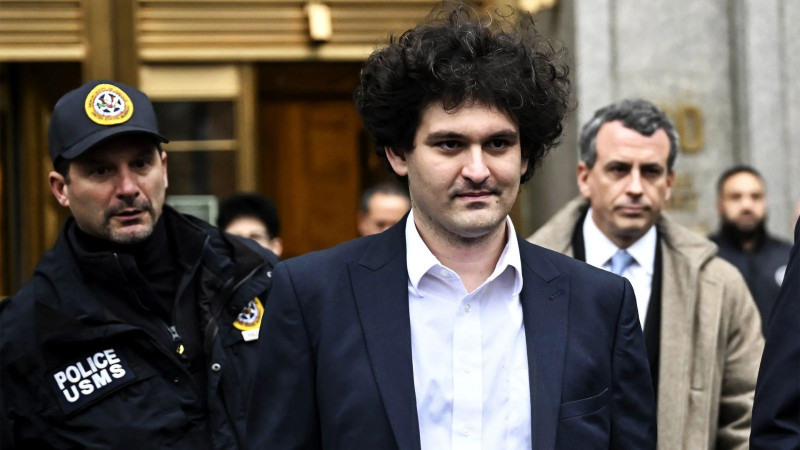
More than two years after FTX collapsed and reshaped the crypto industry, Sam Bankman-Fried is still fighting.
The former FTX CEO, now serving a 25 year federal prison sentence, has formally moved for a new trial in Manhattan federal court. The filing argues that key evidence was excluded, important testimony never reached the jury, and that the original proceedings did not present the full picture of what was happening inside the exchange before its implosion.
It is a long shot. But it keeps one of crypto’s biggest scandals squarely in the headlines.
A Quick Reset: How We Got Here
FTX was once valued at $32 billion and marketed itself as the responsible face of crypto trading. Bankman-Fried cultivated relationships in Washington, testified before Congress, and presented himself as a regulator-friendly industry leader.
That narrative unraveled in November 2022.
After a liquidity crunch exposed a multibillion-dollar hole in FTX’s balance sheet, the exchange halted withdrawals and filed for bankruptcy. Prosecutors later alleged that customer deposits were secretly routed to Alameda Research, Bankman-Fried’s trading firm, where the funds were used for speculative bets, venture investments, loans to executives, and political donations.
The case moved quickly. By late 2023, a jury found Bankman-Fried guilty on seven counts including wire fraud, securities fraud, and conspiracy. Several former executives, including Caroline Ellison and Nishad Singh, testified for the government. In 2024, Judge Lewis Kaplan sentenced him to 25 years in prison.
It was one of the most significant criminal convictions in crypto’s short history.
The Argument for a New Trial
Bankman-Fried’s latest filing hinges on a legal mechanism that allows courts to grant a new trial if newly discovered evidence could materially affect the verdict, or if there were serious procedural errors.
His motion makes a few central claims.
First, that certain testimony from former FTX and Alameda insiders was either excluded or not fully presented to the jury. According to the filing, that testimony could challenge the government’s portrayal of FTX as hopelessly insolvent and operating as a straightforward fraud.
Second, the defense argues that FTX’s collapse was more akin to a bank run than an inevitable implosion. In this telling, the exchange had assets and would have recovered if not for the sudden withdrawal panic that followed public reporting about its balance sheet. That argument goes directly to intent, which was central to the prosecution’s case.
Third, the motion questions the credibility of cooperating witnesses. Bankman-Fried claims some testimony evolved under government pressure and suggests that early statements made by insiders painted a more ambiguous picture of events than what jurors ultimately heard.
The filing also calls for Judge Kaplan to step aside from reviewing the request, alleging bias in evidentiary rulings during trial.
None of this is easy to prove. Courts rarely grant new trials once a conviction has been secured and upheld through sentencing. The legal threshold is high, particularly in complex financial cases where juries have already weighed extensive testimony.
The Broader Legal Strategy
The new trial motion is separate from Bankman-Fried’s ongoing appeal. That appeal focuses on whether the trial court made reversible legal errors, including limiting certain lines of defense.
Appeals courts typically give trial judges considerable leeway in managing evidence and courtroom procedure. Overturning a conviction requires demonstrating more than disagreement. It requires showing that errors materially affected the outcome.
For now, the new filing appears to be part of a layered strategy. Preserve every argument. Challenge every ruling. Keep procedural options open.
The Bottom Line
FTX’s collapse triggered one of the most severe credibility crises crypto has faced. Billions in customer assets were trapped. Venture capital firms wrote down massive stakes. Regulators in the U.S. and abroad accelerated enforcement and oversight efforts.
Even as the industry shifts toward ETF approvals, institutional adoption, and regulatory frameworks, the FTX saga remains a reference point. It is cited in congressional hearings, enforcement actions, and investor debates about custodial risk.
Bankman-Fried’s continued legal maneuvers keep the story alive, even if the odds of a successful retrial remain slim.
For many in crypto, the question is less about whether he gets a second trial and more about what the case ultimately represents. Was FTX an isolated failure of governance and internal controls, or proof that parts of the industry scaled too quickly without guardrails?
The courts will decide the narrow legal questions. The market, as always, is deciding the broader narrative in real time.
For now, one of crypto’s most infamous founders is still arguing that the story jurors heard was incomplete. Whether a judge agrees is another matter entirely.