#Proof of Work
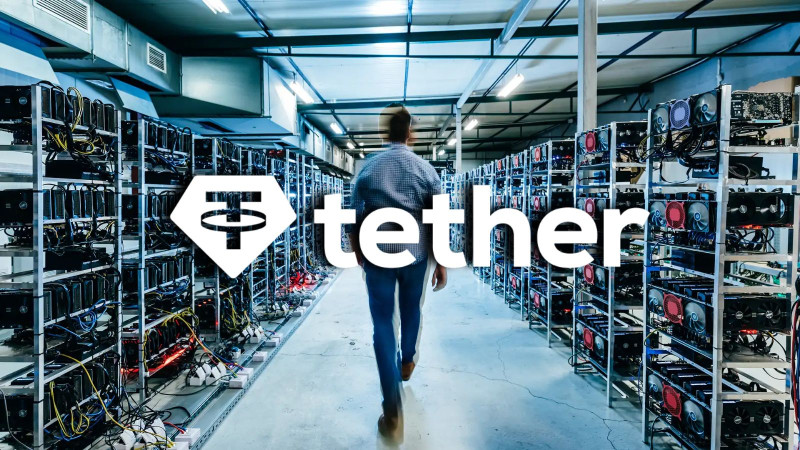
Tether Launches Open Bitcoin Mining Operating System

Tether is best known for issuing USDT, the stablecoin that underpins much of the crypto market’s daily liquidity. But over the past few years, the company has been quietly expanding far beyond stablecoins. Its latest move pushes it even deeper into Bitcoin’s core infrastructure.
Tether has launched an open-source operating system designed specifically for Bitcoin mining. The software, called MiningOS, is meant to compete with the proprietary platforms that currently run much of the global mining industry. Unlike those systems, MiningOS is free, open to inspection, and designed to operate without centralized control.
It is a technical release, but also a philosophical one. At a time when Bitcoin mining is increasingly dominated by large, well-funded players, Tether is positioning itself as a company willing to open the tooling layer and lower at least some of the barriers to participation.
What MiningOS Is and Why It Matters
MiningOS is software that helps miners manage and coordinate their machines. It handles things like monitoring performance, configuring devices, managing power usage, and scaling operations across large numbers of mining rigs.
That may not sound exciting, but in mining, software choices matter a lot. Most large mining firms rely on closed, proprietary systems that are licensed and often tied to specific hardware vendors. These platforms work well, but they come with fees, restrictions, and limited transparency.
MiningOS takes a different approach. It is modular, meaning operators can adapt it to different setups and environments. It can run on lightweight hardware for small operations, but it is also designed to scale to industrial mining sites with thousands of machines.
One of the more interesting aspects is its peer-to-peer architecture. Instead of relying on centralized servers, devices communicate directly with one another. That design choice can reduce infrastructure costs and make operations more resilient, especially in environments where connectivity or uptime is a concern.
By making the software open source, Tether is also allowing anyone to inspect the code, modify it, or build on top of it. That alone is a big departure from how mining software has traditionally been distributed.
Why Tether Is Doing This Now
This release fits into a much broader shift inside Tether. The company has been steadily moving into mining, energy infrastructure, and artificial intelligence, positioning itself as more than just a stablecoin issuer.
Timing also matters. Bitcoin mining has become a tougher business, especially after the most recent halving cut block rewards again. Margins are tighter, competition is intense, and efficiency is everything. For miners trying to stay profitable, cutting software costs and gaining more control over operations can make a real difference.
At minimum, MiningOS gives miners another option. At best, it could force existing software providers to compete harder on transparency, pricing, and flexibility.
A Direct Challenge to Proprietary Mining Software
The mining software market rarely gets attention, but it has real influence. Whoever controls the software often controls how hardware is deployed, optimized, and integrated with pools and power systems.
An open-source alternative disrupts that model. Miners can audit the code themselves, customize it for specific environments, or adapt it to unusual power setups. They are no longer forced to trust a black box or depend on a vendor’s roadmap.
For smaller and mid-sized miners, this could be especially valuable. Licensing fees may not be the biggest expense in mining, but when margins are thin, every recurring cost matters. Removing software fees lowers the break-even point and gives operators more room to adapt.
There is also a broader network effect to consider. Bitcoin’s security depends on distributed hash power. Anything that makes it easier for independent miners to stay online and competitive helps reinforce that foundation, even if the impact is gradual rather than immediate.
Limits and Open Questions
This is not a magic solution. Mining is still capital-intensive and energy-dependent. Open-source software does not solve access to cheap electricity, hardware supply, or regulatory pressure.
Adoption will also take time. Mining operators tend to be conservative with infrastructure changes, especially when uptime and reliability are critical. MiningOS will need to prove itself in real-world deployments, not just in theory.
There is also the question of trust. Tether remains a controversial company in parts of the crypto world. Even with open-source code, some miners and developers may be hesitant to engage until the project builds a track record and an active community.
Still, the fact that the code is open means the software can outgrow its origin. If it is useful, the ecosystem can take it in directions Tether itself may not control.
The Bottom Line
I like this move. Open-sourcing mining software feels overdue in an industry that depends so heavily on closed systems most people never see. For all the talk about decentralization in Bitcoin, a surprising amount of the mining stack has remained locked behind proprietary tools and vendor agreements. This at least pushes in the opposite direction.
Will this suddenly make Bitcoin mining accessible to everyone? No. Power, hardware, and capital still matter, probably more than software ever will. But removing one layer of friction does count, especially at a time when miners are under real pressure to cut costs and stay flexible.
I am also glad this is open source rather than another branded platform with a free tier and strings attached. Anyone can inspect it, improve it, or fork it if they want. That alone changes the power dynamic. Even miners who never run MiningOS may benefit if existing software vendors are forced to be more transparent or more competitive as a result.
Tether is a complicated company, and skepticism around anything it touches is fair. But good ideas do not stop being good just because they come from a controversial source. Open infrastructure tends to outlive the companies that release it, and that is sort of the point.
If Bitcoin is going to stay resilient over the long run, it needs more open tools at the base layer, not fewer. On that front, this feels like a step in the right direction, and I am genuinely happy to see it happen.

Kadena Shuts Down Operations, Token Plummets: What’s Next for the Blockchain?
The team behind Kadena announced that it will cease operations and end active maintenance of the Kadena blockchain. While the network will continue to run independently, the company confirmed it can no longer sustain operations or fund development.
Following the announcement, the KDA token suffered a steep drop of nearly half its value in a single day, signaling a major loss of market confidence.
The statement emphasized that the Kadena blockchain itself is not owned or controlled by any single entity and will continue through its decentralized miner network. However, the departure of the core company leaves its future uncertain.
What Kadena Was Built to Be
Kadena launched in 2020 as a proof-of-work smart contract platform designed to combine high throughput with Bitcoin-level security. Its unique Chainweb architecture braided multiple parallel chains together to scale transaction capacity without compromising decentralization.
Founded by former JPMorgan blockchain engineers Stuart Popejoy and Will Martino, Kadena aimed to become the “blockchain for business.” The project positioned itself as a next-generation Layer 1 solution blending enterprise reliability with decentralized power.
At its peak, Kadena’s token reached multi-billion-dollar valuations and was considered one of the most promising proof-of-work alternatives to Ethereum.
Why the Shutdown Happened
Market Pressures
The company cited prolonged market weakness and funding challenges as reasons for ending operations. Maintaining a Layer 1 blockchain in a competitive market proved too difficult without consistent capital inflows or large-scale user adoption.
Ecosystem Struggles
Despite technical innovation, Kadena struggled to build a large developer community or attract mainstream decentralized applications. Competing with dominant ecosystems like Ethereum, Solana, and Avalanche drained resources without producing strong network effects.
Investor Uncertainty
With the company’s withdrawal, token holders now face an uncertain future. Questions remain about who will maintain core code, manage token economics, or coordinate future upgrades.
What Happens Next
The network will remain operational through miners and independent developers, though without centralized coordination. A new node update has been released to ensure continued block production and validation.
For token holders, the drastic price drop highlights a critical loss of trust. Without a clear business roadmap or dedicated funding, the KDA token’s value may continue to fluctuate heavily.
Projects building on Kadena face new risks. Without official support, development resources, or grant programs, teams may migrate to more active blockchains.
The broader crypto industry will likely view Kadena’s collapse as a warning for small and mid-tier Layer 1 ecosystems: strong technology alone is not enough without traction, liquidity, and community scale.
The Road Ahead
The Kadena community will now play a key role in determining what happens next. Miners can continue maintaining the network, and community developers may take over tooling and governance.
For investors, the key will be transparency around future token releases, mining rewards, and whether an independent foundation or collective steps in to oversee development.
The collapse also raises questions about sustainability in the blockchain sector. Dozens of alternative networks launched during the 2021 boom now face similar financial pressure, and many may follow the same path.
Final Outlook
Kadena’s story is a cautionary example of the challenges facing emerging blockchains. It had cutting-edge technology, a clear mission, and respected founders, but lacked the long-term business model and ecosystem growth needed to survive.
The network will continue to exist, but without its founding company, its future depends entirely on the strength of its community and miners. The KDA token crash represents not just lost value but a shift in how blockchain projects must evolve to stay viable.
If the community can organize around governance, funding, and developer growth, Kadena could yet find a second life as a truly decentralized network. If not, it risks joining the list of once-promising chains that faded after their founding teams moved on.