#Earnings
Gemini Stock Rises After Hours on Q4 Results as Investors Back Pivot

Gemini Space Station (NASDAQ: GEMI) got a real boost from Wall Street on Thursday evening. Shares jumped roughly 7% in after-hours trading, climbing to $6.45 after the company reported its fourth-quarter results and laid out a vision for where it is headed next. For a stock that has been taking a real beating the last few months, this feels like it could be a turning point, or at least the beginning of one.
The company went public on the Nasdaq in September 2025, raising around $425 million and generating a lot of excitement. The stock has since pulled back significantly, but Thursday's earnings report finally gave investors something that they can feel good about again.
Gemini Is Moving Beyond Being Just A Crypto Exchange
The headline from the results was not actually about trading at all. For the first time ever, revenue from Gemini's services and interest-based products surpassed what it made from trading fees. Services revenue rose 33% compared to the prior quarter, hitting $26.5 million. That might sound like dry accounting detail, but it matters a lot. It means Gemini is no longer entirely dependent on whether people are actively buying and selling crypto on any given day. That is a big deal for a business trying to grow steadily rather than just riding the waves of a notoriously volatile market.
A lot of that services growth came from Gemini's credit card, which functions like a rewards card but pays cashback in cryptocurrency instead of airline miles or cash. That product processed over $1.2 billion in transactions throughout 2025. Total revenue for the full year came in at $179.6 million, up 26% from the year before, and services revenue more than doubled over the same period. The company is building something that looks less like a pure-play crypto exchange and more like a broader financial platform, one that works even when the crypto market is quiet.
Beyond the credit card, the move that has really captured investors' imaginations is Gemini's push into prediction markets.
Gemini launched its prediction markets product, called Gemini Predictions, in December 2025 after its affiliate Gemini Titan received official approval from the U.S. Commodity Futures Trading Commission. This approval was five years in the making; the company first applied for the license back in March 2020. Receiving it placed Gemini in a very small club of fully regulated prediction market operators in the United States.
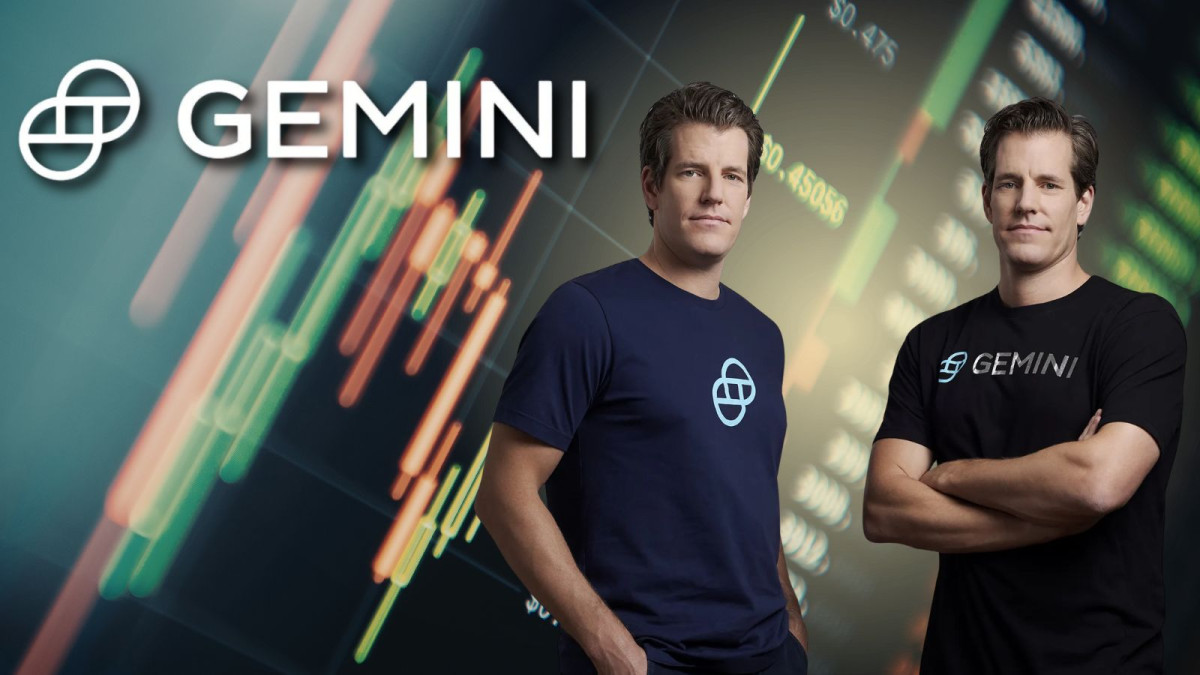
The early traction is genuinely encouraging. More than 15,000 users have already traded contracts covering categories from crypto prices to politics to sports. In the shareholder letter published Thursday, Tyler and Cameron Winklevoss made a bold pitch for why they believe this could be one of the most significant financial products in a generation. They argue that prediction markets forecast the future more accurately and more quickly than traditional experts, pollsters, or media organizations, and that Gemini is positioned at the center of that shift. It is an ambitious claim, but the regulatory foundation they have built gives them a real head start over most competitors.
When the CFTC approval was announced back in December, GEMI shares surged nearly 32% in a single session. The market clearly sees the prediction markets business as a meaningful growth engine, and Thursday's results confirmed that the product is gaining real users not just the new, shiny thing with a fancy launch.
Focusing On What Works
One of the things investors responded well to on Thursday was evidence that management is making tough decisions to streamline the business. In February, Gemini announced it would be cutting roughly 25% of its global workforce and closing its exchange operations in the United Kingdom, the European Union, and Australia. It is closing those regional operations and partnering with eToro, another regulated trading platform, to help affected customers transfer their assets.
The Winklevoss brothers described the move plainly: those international markets were hard to compete in, and trying to win them was stretching the company too thin. By pulling back to focus on the U.S., where Gemini has the strongest regulatory footing and the largest user base, management believes it can move faster and reach profitability sooner. The restructuring costs around $11 million, most of it in the first quarter of 2026, but the expected savings over time are significantly larger.
The company's full-year 2025 revenue of $179.6 million came in at the top end of its own preliminary estimates, a small but positive sign that the business is not deteriorating further. Operating expenses were higher than many investors would have liked, but the direction of travel looks more controlled heading into 2026 with the restructuring largely complete.
What's Next?
Gemini is not without its challenges. The company is dealing with several class action lawsuits filed by shareholders who believe the IPO documents did not fully reflect the scale of the restructuring that was coming. A management conference call is scheduled for Friday morning, and investors will want straight answers on the legal strategy, a timeline for replacing several senior executives who departed in February, and more detail on how fast the prediction markets business is actually growing.
Still, the picture Thursday evening was meaningfully better than it has been for most of the past six months. The company is generating real growth in non-trading revenue, it has a licensed and operational prediction markets platform at a time when that category is attracting serious investor and user interest, and management is finally showing a willingness to make hard cuts rather than try to compete on every front at once.
Prediction markets as a category have grown explosively over the past couple of years. Platforms like Kalshi and Polymarket have demonstrated real user demand, and regulators under the current administration have signaled a permissive approach to the space. Gemini's CFTC license gives it a compliance advantage that most rivals cannot replicate quickly, and its existing crypto user base is a ready-made pool of customers who already understand event-based trading.
Whether Gemini can fully execute on the vision Tyler and Cameron Winklevoss have laid out is still an open question. But for the first time in a while, Thursday's report gave investors something to point to beyond the headline loss number, and the after-hours market seemed to appreciate that. The stock sits more than 75% below its IPO price, so there is a lot of ground to recover. A rerating like that does not happen overnight. What Thursday showed, at least, is that the foundation for one might finally be taking shape.