#cryptocurrency news
KuCoin Settles CFTC Case With $500K Penalty

Peken Global Limited, the parent company of cryptocurrency exchange KuCoin, has agreed to pay $500,000 in a settlement in a case brought by the Commodity Futures Trading Commission (CFTC), which alleged that the company operated an unregistered trading platform for U.S. users.
In a Monday press release, the CFTC announced that the U.S. District Court for the Southern District of New York had entered a consent order with Peken Global Limited to resolve the case with the U.S. commodities regulator. As part of the agreement, Peken is permanently restrained from future violations.
According to the CFTC, the settlement was reached as a result of Peken’s cooperation during the investigation and related proceedings. The agency also stated that neither it nor the court would be seeking or imposing disgorgement of profits from Peken.
The CFTC Case With Kucoin
The CFTC case involving crypto exchange KuCoin officially began on March 26, 2024, when the U.S. commodity regulator filed a civil lawsuit against KuCoin and its related entities, including Peken Global Limited, Mek Global Limited, PhoenixFin PTE Ltd., and Flashdot Limited.
The CFTC accused KuCoin and its affiliates of violating several U.S. financial laws, including operating an unregistered trading platform, offering high-risk and unregistered crypto products, failing to properly verify users, and violating U.S. anti-money laundering (AML) and know-your-customer (KYC) requirements.
KuCoin agreed to settle the charges, paying penalties totaling nearly $300 million and committing to exit the U.S. market for at least three years.
This is not the first time KuCoin has faced regulatory challenges in the United States. In 2023, the New York Attorney General accused the exchange of operating in the state without proper registration, resulting in a $22 million settlement and an order to cease operations in New York.
KuCoin has also faced regulatory actions outside the U.S.
In 2022, the Ontario Securities Commission in Canada identified it as an unregistered crypto exchange, resulting in a $2 million penalty. In 2025, Canada’s Financial Transactions and Reports Analysis Centre (FINTRAC) imposed a $19.5 million fine on the exchange for allegedly violating anti-money laundering laws. More recently, Austria’s Financial Market Authority (FMA) restricted the exchange from registering new users until it complied with local AML regulations.
US Prosecutors Oppose Sam Bankman-Fried Retrial Request

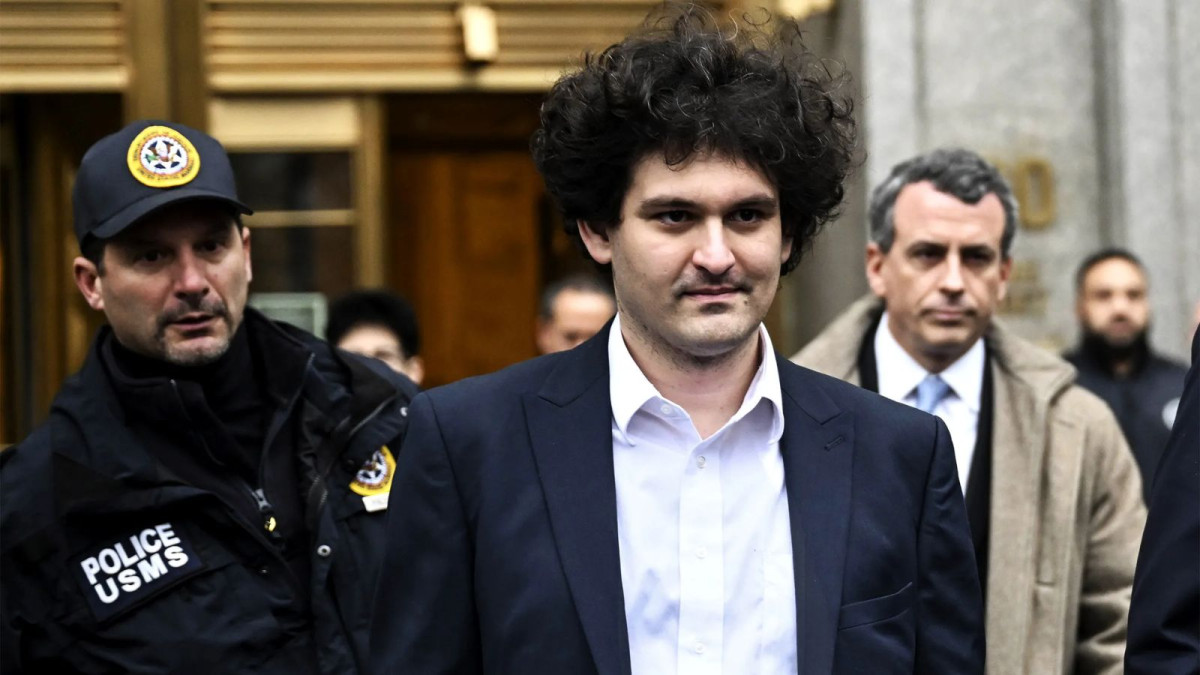
Sam Bankman-Fried, the former CEO of the defunct crypto exchange FTX, filed a motion in February seeking a retrial in his case. However, the request is reportedly being opposed by some U.S. prosecutors.
Some U.S. prosecutors have filed a motion in the United States District Court for the Southern District of New York, seeking to block Bankman-Fried’s latest request for a retrial, Bloomberg reports.
According to the prosecutors, Bankman-Fried’s argument that new witnesses could change the outcome of his case does not meet the standard for a retrial. They said the two witnesses he wants to call, Daniel Chapsky and Ryan Salame, both former FTX executives, do not qualify as new witnesses because they were already known to the defense and could have testified at the original trial.
“The defense’s decision not to put the witnesses on his witness list or compel their testimony forecloses any claim that their post-trial views are newly discovered,” prosecutors said.
The prosecutors also rejected Bankman Fried's claim that he was being weaponized by the Department of Justice, calling it "incoherent."
"The defendant was one of the largest Democratic donors in 2020 and 2022, and his campaign finance crimes were in furtherance of making those contributions, so the notion he was targeted for his Democratic politics by the prior presidential administration is fanciful," prosecutors added.
Although the motion has just been filed, the judge has not ruled on whether it will proceed. Nevertheless, this is Bankman-Fried’s third attempt to appeal his case.
Is a Presidential Pardon in Sight?
After President Trump granted a presidential pardon to Changpeng Zhao, founder of Binance, rumors circulated that he might also pardon Sam Bankman-Fried.
Trump, however, has dismissed these rumors in several interviews, stating that he has no plans to pardon Bankman-Fried. Despite this, some online groups continue to speculate about a potential, well-funded effort to secure a pardon.
Until a pardon is issued, Bankman-Fried’s legal options remain limited to filing appeal motions. Otherwise, he must continue serving his 25-year prison sentence on multiple federal charges, including fraud, conspiracy, and money laundering.

Binance.US Appoints Stephen Gregory as New CEO

The world's largest cryptocurrency exchange, Binance, has appointed Stephen Gregory as the chief executive officer (CEO) of its U.S. affiliate, Binance.US.
On Tuesday, March 11, Binance.US announced the appointment of compliance lawyer Stephen Gregory as CEO of the exchange. Stephen will take over from Norman Reed, who, according to the exchange, is stepping down to serve in an advisory role.
“I am honored to lead the Binance.US team as we write the next chapter for what we believe is the best platform for U.S. crypto investors to buy, trade, and earn digital assets,” Stephen said. “The Binance.US brand is extremely powerful, with a founder, Changpeng Zhao (CZ), who has continuously advocated for making the U.S. the crypto capital of the world,” he added.
Norman, the former Binance.US CEO, also expressed confidence in Stephen. “As we look to the next phase of growth for Binance.US, Stephen brings an entrepreneurial approach to leadership that I am confident will deliver for our customers in a meaningful way,” Norman said.
About Stephen Gregory
Stephen is a lawyer with nearly two decades of experience in the compliance industry. Before entering the crypto and fintech sectors, he worked in the U.S. Senate as a staff member for Senators Paul G. Kirk and Ted Kennedy and held roles at other government-affiliated agencies.
He later transitioned into private practice, working as a litigation and regulatory law expert for several law firms, including D'Ambrosio Brown LLP, McCormick & O'Brien LLP, Quinn Emanuel Urquhart & Sullivan, and Gage Spencer & Fleming LLP.
Entering into Crypto
In 2016, Stephen entered the crypto industry as a compliance officer at Gemini, where he helped the exchange navigate regulations and secure licenses for its U.S. crypto operations.
He did, however, move up the ranks in the compliance industry, serving as Chief Compliance Officer at crypto exchange CEX.IO, where he led the company’s global compliance program and oversaw its regulatory frameworks, including Anti-Money Laundering (AML) and Know Your Customer (KYC) programs.
In 2021, Stephen joined Currency.com as CEO, where he led the exchange’s U.S. operations, oversaw regulatory strategy, and expanded its services in the United States before its acquisition by CXNEST Ltd in May 2025.
Trust Wallet Adds Address Poisoning Protection Feature

Trust Wallet has introduced a new address-poisoning protection feature that prevents crypto users from falling for address-poisoning attacks.
According to the company, this new feature automatically checks the destination address against a database of known scam and lookalike addresses to prevent malicious transactions. Because the feature runs automatically, users will receive real-time warnings if a risk is detected.
For now, the feature will be supported on 32 Ethereum Virtual Machine (EVM) chains, including Ethereum, BNB Smart Chain, Polygon, Optimism, Arbitrum, Avalanche, and Base.
The Menace of Address Poisoning
Address poisoning is a phishing-style attack in which scammers trick users into sending cryptocurrency to the wrong wallet address, usually one that closely resembles a legitimate address.
Here’s how address poisoning works:
- A scammer generates a look-alike wallet address, typically one that shares the same first and last characters as a legitimate address.
- The attacker then sends a tiny, or “dust,” amount of crypto to an unsuspecting user.
- The fake address subsequently appears in the victim’s transaction history.
- Because crypto transactions are irreversible, the user may mistakenly send funds to the poisoned address, losing them permanently.
While address poisoning may not look as sophisticated or complex as other forms of crypto attacks, it has had a long history of success for scammers.
In May 2024, a user accidentally sent 1,155 Wrapped Bitcoin (WBTC) worth approximately $68 million to a fake address. The attacker created a fake address that looked like the legitimate address, and due to lack of proper scrutiny, the user fell for it.
While in May 2025, a trader lost $2.6 million after falling for two address poisoning scams, and later that year, another trader lost $50 million in USDT after sending them to a poisoned wallet address.
Address Poisoning is Just a Numbers Game
Knowing that most crypto users rarely fall for address poisoning scams (roughly 1 success per 10,000 attempts), attackers often rely on scale to succeed.
Between July 2022 and June 2024, over 270 million address poisoning attempts were recorded across the Ethereum and BNB Chain, with 6,633 of these attempts successful, leading to a loss of over $83 million.
In another address poisoning campaign, scammers used 82,031 fake addresses on 2,774 victims. The result? Over $69 million was lost.
And just last year, there were about 32,290 recorded address poisoning attacks in September, which affected over 6,000 victims.
Florida Passes First State-Level Stablecoin Bill in U.S.

Florida lawmakers have cleared Senate Bill 314 (SB-314), a state-level stablecoin bill, with final approval now pending from the governor.
In a recent post on X, Samuel Armes, founder of the Florida Blockchain Association, said the Florida Senate had cleared Senate Bill 314 with a unanimous 37–0 vote. With this clearance, the bill now awaits final approval from Governor Ron DeSantis.

According to Armes, “the bill has now passed the Senate and the House and will be signed by DeSantis within the next 30 days.” Once signed by DeSantis, SB-314 will become law.
What is the Senate Bill (SB-314)?
Introduced by Senator Bryan Burton on October 31, 2025, Senate Bill 314 (SB 314) creates a state regulatory framework for companies issuing stablecoins in Florida.
SB 314 was introduced to ensure clarity in how stablecoins are issued amid ongoing regulatory disparities, particularly at the state level.
By approving SB 314, the Florida Legislature aims to:
1. Provide regulatory clarity for crypto businesses operating in the state.
2. Prevent fraud and financial instability. The bill requires stablecoin issuers to hold actual reserves, protecting users’ funds.
3. Position Florida as a crypto-friendly hub, attracting both blockchain and fintech companies.
If SB-314 eventually gets signed into law, stablecoin companies would need Florida’s licensing and approval before they can operate.
And to get licensed, these companies would need to show proof of 1:1 reserves backing their stablecoins, have their reserves independently audited, and maintain clear redemption policies that allow users to convert stablecoins to dollars.
Remember the TerraUSD collapse, one of the largest stablecoin failures in 2022, which resulted in losses exceeding $40 billion after the UST coin lost its dollar peg? The SB-314 bill aims to prevent similar events by requiring stablecoin issuers to have their reserves regularly audited.
The State of Crypto in Florida
Unlike some U.S. states that have imposed strict anti-crypto policies, Florida has positioned itself as one of the most crypto-friendly.
In January 2023, the Florida Senate amended the state's Money Services Business (MSB) law to include virtual currency, defining it at the state level and reducing regulatory ambiguity for crypto businesses.
In October 2025, the Florida Senate filed House Bill 183, concerning crypto investment authority, and House Bill 175, aimed at stablecoin registration flexibility. If signed into law, the bills would allow Florida’s Chief Financial Officer to allocate up to 10% of certain state funds into Bitcoin and other digital assets, while also easing compliance requirements for stablecoin issuers.

Will Altcoin Spot Crypto ETF Approvals Deliver Craziest Uptober Rally Ever?
Every October, crypto traders joke about “Uptober” — a magical month when prices tend to rise. But this year, Uptober might be more than a meme. The U.S. SEC has a packed calendar of decisions coming up on multiple spot crypto ETFs.
If these get approved, Uptober could finally have real fuel behind it. If not, it could turn into “Upvember.”
What’s on the Table
The SEC has to make calls this month on several spot ETFs — funds that directly hold crypto like Solana, XRP, and Cardano. These are big deals because they give regular investors (and big institutions) a way to buy crypto through a regulated stock market product, without needing wallets, exchanges, or private keys.
Here’s how the deadlines lined up before the government shutdown:
-
Solana (SOL): Decisions expected Oct. 7–16.
-
Dogecoin (DOGE) & Hedera (HBAR): Both lined up for Oct. 8.
-
Cardano (ADA): Around Oct. 26.
-
XRP: Late October into early November.
Normally, ETF approvals take months. But in September, the SEC changed the rules, making the process faster and easier — which is why so many are pointing to October as a potential “yes” month.
Why Solana Looks Like the Favorite
Most analysts think Solana has the best shot. It’s one of the biggest and most liquid blockchains, with institutional money already flowing into Solana-based funds. Bloomberg analysts and prediction markets like Polymarket are giving Solana ETF approval odds of over 90–99%.
In other words: the market is treating a Solana ETF as almost a done deal. If approved, that could open the door for XRP, Cardano, and even Dogecoin to follow.
Prediction Markets Are Buzzing
Here’s how odds are shaping up for October approvals, according to betting markets and analyst forecasts:
-
Solana: 90–99%
-
XRP: 70–85%
-
Cardano: 60–70%
-
Dogecoin: 50–55%
-
Hedera: 40–45%
The message is simple: Solana is nearly certain in the eyes of traders, while the rest are in “maybe” territory.
The Wild Card: U.S. Government Shutdown
Here’s the catch: the U.S. government is still facing a shutdown. If SEC staff are furloughed or slowed down, decisions could get delayed. That doesn’t mean the ETFs are dead — it just means approvals will slip into November.
What It Could Mean for Prices
If multiple ETFs get approved in October:
-
Solana could lead a rally, with analysts floating $300+ targets.
-
XRP, Cardano, Dogecoin, Hedera, and Litecoin could ride the wave as new capital pours in.
If approvals are delayed or staggered, the rally might still come — just later. Uptober might stretch into “Upvember.” But the odds are that it is coming.
Uptober Has Real Shot
This year’s Uptober feels different. It’s not just about seasonal optimism, it’s about real structural change. If the SEC follows through and approves even one or two altcoin spot ETFs, it could be the first time mainstream investors can easily access more than just Bitcoin and Ethereum.
For retail investors, the play is simple: watch the SEC’s decisions. The moment a press release drops approving Solana (or more), expect headlines, liquidity, and yes...maybe the Uptober rally everyone’s been waiting for.
Because for once, Uptober might not just be a meme. It could be the start of a new ETF era for crypto.