#Sam Bankman-Fried
Appeals Court Upholds Sam Bankman-Fried FTX Conviction

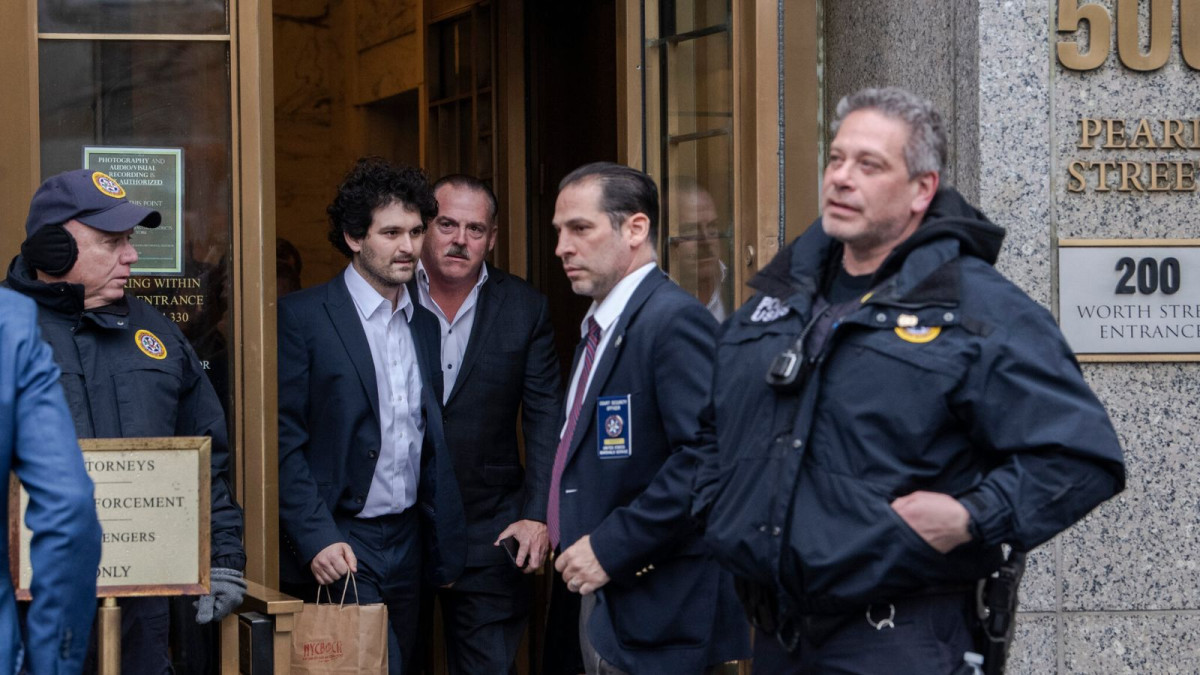
A federal appeals court, the U.S. Court of Appeals for the Second Circuit in Manhattan, has upheld the conviction of Sam Bankman-Fried, the founder of the now-defunct FTX cryptocurrency exchange.
Following his conviction on March 28, 2024, Bankman-Fried’s lawyers filed a direct appeal with the U.S. Court of Appeals on April 11, 2024. His legal team argued that the trial was unfair, citing alleged judicial bias by Judge Lewis Kaplan, disputed jury instructions, and other procedural issues.
Through the appeal filing, Bankman-Fried’s legal team sought to overturn the conviction and secure a new trial before a different judge. However, the appeals court rejected the request, stating that there was “robust” evidence supporting the conviction.
“The overwhelming evidence presented at trial proved that Bankman-Fried knowingly and intentionally committed large-scale fraud against FTX’s customers,” Judge Barrington Parker wrote.
“While he was publicly reassuring customers, investors, and regulators that FTX customer funds were safe, he was simultaneously using FTX as his own personal piggy bank, spending customer funds on real estate, political contributions, and investments.”
Following the decision, Bankman-Fried’s legal team has the option of requesting an en banc review, in which all active judges on the Second Circuit would rehear the case. This request must typically be filed within 14 days, although the exact deadline depends on the court’s rules. If the review is denied, his lawyers could petition the U.S. Supreme Court to consider the case.
The appeals court’s rejection of Bankman-Fried’s retrial bid comes shortly after he reportedly filed for a presidential pardon from former President Donald Trump. The request does not seek to shorten or reduce his sentence, but instead aims to restore certain civil rights associated with a felony conviction.
Before the appeals court ruling, Bankman-Fried had filed a request for a new trial in February, arguing that there was newly discovered evidence. However, the request was denied by Judge Lewis Kaplan on April 28, 2026.
The former founder of what was once the world’s largest cryptocurrency exchange is currently serving a 25-year sentence after being convicted on multiple charges, including conspiracy to commit wire fraud, securities fraud, commodities fraud, and money laundering.
Sam Bankman-Fried Files Presidential Pardon Request With Trump
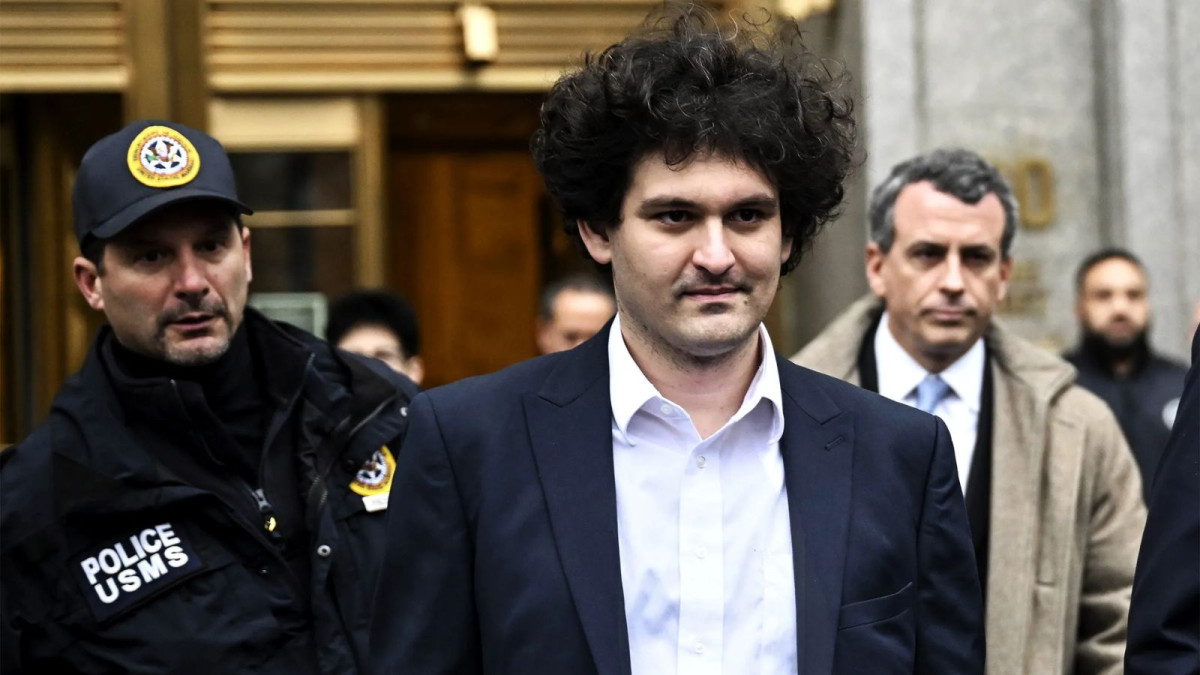
Sam Bankman-Fried, CEO of the now-defunct FTX cryptocurrency exchange, has formally submitted an application to the U.S. Department of Justice's Office of the Pardon Attorney, seeking a presidential pardon from U.S. President Donald Trump.
The application, which falls under the category of "Pardon after completion of sentence," does not request that Trump shorten or end Bankman-Fried's 25-year prison sentence. Instead, it seeks a presidential pardon that would formally forgive his federal convictions for fraud and related charges, restore certain civil rights, and remove the legal stigma associated with a felony conviction.
Speaking in a phone interview with Fox Business correspondent Susan Li, Bankman-Fried acknowledged that he would welcome a presidential pardon from Trump. However, he declined to comment on whether his parents or anyone close to him had contacted the White House on his behalf.
With the application now filed, the Office of the Pardon Attorney will conduct a thorough review of the petition and verify the information provided. Since the application was submitted just two years into his 25-year sentence, the process could take months or even years to reach a decision. If approved by the reviewing authorities, the recommendation will be forwarded to the president, who may choose to grant, deny, or take no action on the request.
The pardon application comes just months after Bankman-Fried sought a retrial in March, requesting the introduction of new witnesses. The move was later opposed by some U.S. prosecutors.
Bankman-Fried is currently serving a 25-year prison sentence for his role in the collapse of the FTX cryptocurrency exchange. He was convicted of fraud after prosecutors accused him of secretly diverting customer funds to purchase luxury real estate, make large political donations, and engage in other forms of financial misconduct.
At trial, Bankman-Fried was found guilty of wire fraud, securities fraud, commodities fraud, and money laundering. He was subsequently sentenced to 25 years in prison. Despite his conviction, he continues to argue that the prosecution was unjust.
"I didn't steal user funds either," Bankman-Fried said during his phone interview with Susan Li of Fox Business. "Customers have been repaid now 170% or so on their deposits. I can only tell you what I think and, you know, ultimately, customers have been repaid again nearly twice what they had on the platform, and it's a great disservice to them that it has taken three years."
US Prosecutors Oppose Sam Bankman-Fried Retrial Request
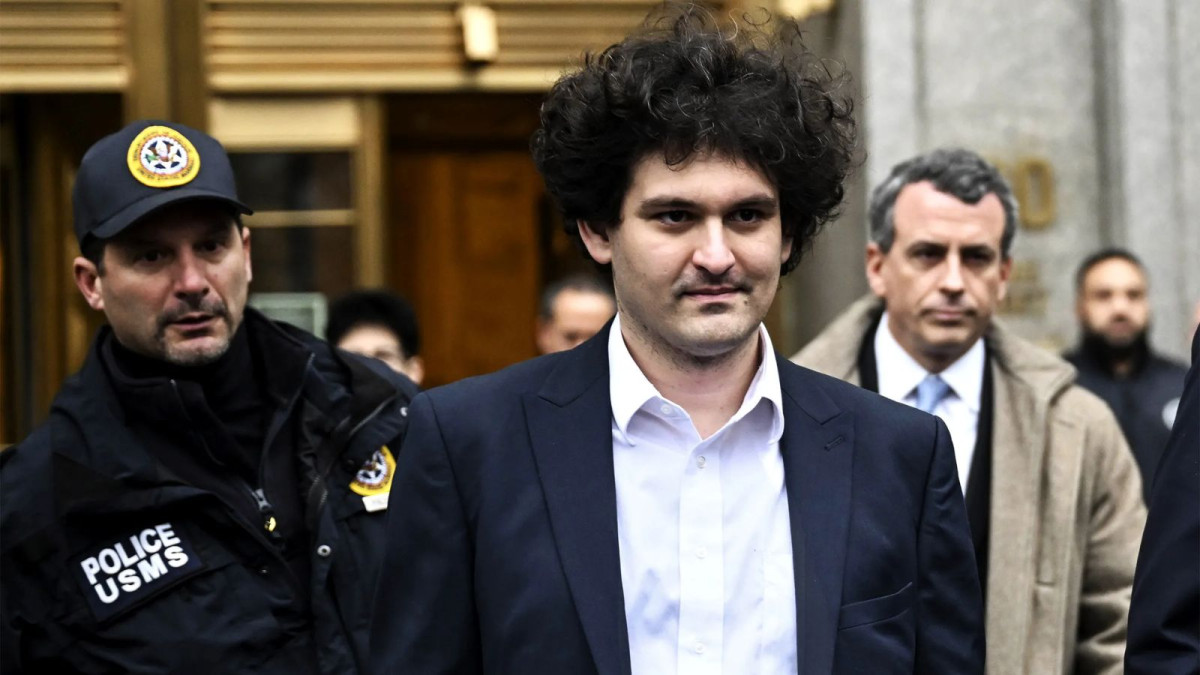
Sam Bankman-Fried, the former CEO of the defunct crypto exchange FTX, filed a motion in February seeking a retrial in his case. However, the request is reportedly being opposed by some U.S. prosecutors.
Some U.S. prosecutors have filed a motion in the United States District Court for the Southern District of New York, seeking to block Bankman-Fried’s latest request for a retrial, Bloomberg reports.
According to the prosecutors, Bankman-Fried’s argument that new witnesses could change the outcome of his case does not meet the standard for a retrial. They said the two witnesses he wants to call, Daniel Chapsky and Ryan Salame, both former FTX executives, do not qualify as new witnesses because they were already known to the defense and could have testified at the original trial.
“The defense’s decision not to put the witnesses on his witness list or compel their testimony forecloses any claim that their post-trial views are newly discovered,” prosecutors said.
The prosecutors also rejected Bankman Fried's claim that he was being weaponized by the Department of Justice, calling it "incoherent."
"The defendant was one of the largest Democratic donors in 2020 and 2022, and his campaign finance crimes were in furtherance of making those contributions, so the notion he was targeted for his Democratic politics by the prior presidential administration is fanciful," prosecutors added.
Although the motion has just been filed, the judge has not ruled on whether it will proceed. Nevertheless, this is Bankman-Fried’s third attempt to appeal his case.
Is a Presidential Pardon in Sight?
After President Trump granted a presidential pardon to Changpeng Zhao, founder of Binance, rumors circulated that he might also pardon Sam Bankman-Fried.
Trump, however, has dismissed these rumors in several interviews, stating that he has no plans to pardon Bankman-Fried. Despite this, some online groups continue to speculate about a potential, well-funded effort to secure a pardon.
Until a pardon is issued, Bankman-Fried’s legal options remain limited to filing appeal motions. Otherwise, he must continue serving his 25-year prison sentence on multiple federal charges, including fraud, conspiracy, and money laundering.
SBF Seeks New Trial in FTX Fraud Case
More than two years after FTX collapsed and reshaped the crypto industry, Sam Bankman-Fried is still fighting.
The former FTX CEO, now serving a 25 year federal prison sentence, has formally moved for a new trial in Manhattan federal court. The filing argues that key evidence was excluded, important testimony never reached the jury, and that the original proceedings did not present the full picture of what was happening inside the exchange before its implosion.
It is a long shot. But it keeps one of crypto’s biggest scandals squarely in the headlines.
A Quick Reset: How We Got Here
FTX was once valued at $32 billion and marketed itself as the responsible face of crypto trading. Bankman-Fried cultivated relationships in Washington, testified before Congress, and presented himself as a regulator-friendly industry leader.
That narrative unraveled in November 2022.
After a liquidity crunch exposed a multibillion-dollar hole in FTX’s balance sheet, the exchange halted withdrawals and filed for bankruptcy. Prosecutors later alleged that customer deposits were secretly routed to Alameda Research, Bankman-Fried’s trading firm, where the funds were used for speculative bets, venture investments, loans to executives, and political donations.
The case moved quickly. By late 2023, a jury found Bankman-Fried guilty on seven counts including wire fraud, securities fraud, and conspiracy. Several former executives, including Caroline Ellison and Nishad Singh, testified for the government. In 2024, Judge Lewis Kaplan sentenced him to 25 years in prison.
It was one of the most significant criminal convictions in crypto’s short history.
The Argument for a New Trial
Bankman-Fried’s latest filing hinges on a legal mechanism that allows courts to grant a new trial if newly discovered evidence could materially affect the verdict, or if there were serious procedural errors.
His motion makes a few central claims.
First, that certain testimony from former FTX and Alameda insiders was either excluded or not fully presented to the jury. According to the filing, that testimony could challenge the government’s portrayal of FTX as hopelessly insolvent and operating as a straightforward fraud.
Second, the defense argues that FTX’s collapse was more akin to a bank run than an inevitable implosion. In this telling, the exchange had assets and would have recovered if not for the sudden withdrawal panic that followed public reporting about its balance sheet. That argument goes directly to intent, which was central to the prosecution’s case.
Third, the motion questions the credibility of cooperating witnesses. Bankman-Fried claims some testimony evolved under government pressure and suggests that early statements made by insiders painted a more ambiguous picture of events than what jurors ultimately heard.
The filing also calls for Judge Kaplan to step aside from reviewing the request, alleging bias in evidentiary rulings during trial.
None of this is easy to prove. Courts rarely grant new trials once a conviction has been secured and upheld through sentencing. The legal threshold is high, particularly in complex financial cases where juries have already weighed extensive testimony.
The Broader Legal Strategy
The new trial motion is separate from Bankman-Fried’s ongoing appeal. That appeal focuses on whether the trial court made reversible legal errors, including limiting certain lines of defense.
Appeals courts typically give trial judges considerable leeway in managing evidence and courtroom procedure. Overturning a conviction requires demonstrating more than disagreement. It requires showing that errors materially affected the outcome.
For now, the new filing appears to be part of a layered strategy. Preserve every argument. Challenge every ruling. Keep procedural options open.
The Bottom Line
FTX’s collapse triggered one of the most severe credibility crises crypto has faced. Billions in customer assets were trapped. Venture capital firms wrote down massive stakes. Regulators in the U.S. and abroad accelerated enforcement and oversight efforts.
Even as the industry shifts toward ETF approvals, institutional adoption, and regulatory frameworks, the FTX saga remains a reference point. It is cited in congressional hearings, enforcement actions, and investor debates about custodial risk.
Bankman-Fried’s continued legal maneuvers keep the story alive, even if the odds of a successful retrial remain slim.
For many in crypto, the question is less about whether he gets a second trial and more about what the case ultimately represents. Was FTX an isolated failure of governance and internal controls, or proof that parts of the industry scaled too quickly without guardrails?
The courts will decide the narrow legal questions. The market, as always, is deciding the broader narrative in real time.
For now, one of crypto’s most infamous founders is still arguing that the story jurors heard was incomplete. Whether a judge agrees is another matter entirely.

Tiffany Fong Brings You Live Updates from the SBF Trial as Caroline Ellison Takes the Stand
In the bustling heart of New York City, a courtroom drama of epic proportions is unfolding, and the eyes of the world are fixed upon it. This high-stakes trial involves none other than Sam Bankman-Fried, the prominent figure in the cryptocurrency world. And bringing you the latest live updates from the frontlines is none other than the intrepid journalist, Tiffany Fong.
Caroline Ellison's Shocking Testimony
Today marked a pivotal moment in the trial as Caroline Ellison, one of Sam Bankman-Fried's top deputies and his former romantic partner, took the stand. The revelations that poured forth during her testimony sent shockwaves through the courtroom and the entire cryptocurrency community.
Ellison, who once oversaw the day-to-day operations at Alameda Research, a crypto trading firm controlled by Bankman-Fried, made some truly startling admissions. She testified that she was, in fact, directed by Bankman-Fried himself to engage in a series of financial misdeeds. Among her shocking claims, Ellison asserted that Alameda Research had taken a jaw-dropping $14 billion from FTX customers to repay debts accrued by the company.
A Trailblazing Reporter on the Scene
In the midst of this riveting courtroom drama, one journalist stands out for her dedication and commitment to delivering the latest updates straight from the scene. Tiffany Fong, the dynamic and fearless reporter, has positioned herself in the heart of the action. Despite the trial's non-televised nature and strict restrictions on electronic devices, Tiffany Fong is on the frontlines, ensuring that you don't miss a single development.
Following Tiffany Fong for Real-Time Updates
As this trial continues to captivate audiences worldwide, Tiffany Fong's reporting is your go-to source for real-time insights and in-depth analysis. Her dedication to delivering accurate and up-to-date information is nothing short of commendable. While other news outlets might be playing catch-up, Tiffany Fong is ahead of the curve. https://twitter.com/TiffanyFong_