#DePIN
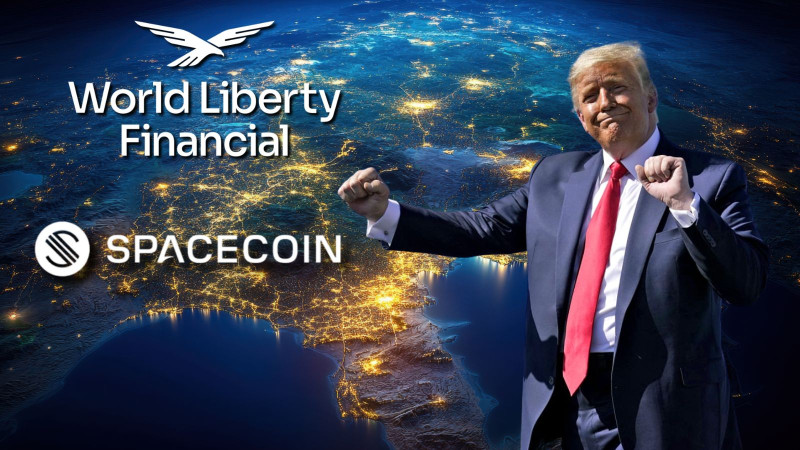
WLFI and Spacecoin Push Crypto Payments Into Orbit With Satellite Internet Deal

World Liberty Financial, the crypto project behind the USD1 stablecoin, has announced a partnership with Spacecoin, a blockchain-native satellite internet company, to bring crypto payments directly into satellite connectivity networks. The goal is simple in theory but ambitious in execution, combine decentralized finance with decentralized internet access, starting in regions where both are limited or nonexistent.
The partnership signals a growing shift in crypto away from purely digital experiments and toward physical infrastructure, particularly in space.
What the Partnership Actually Does
At the core of the deal is the integration of WLFI’s USD1 stablecoin into Spacecoin’s satellite network. The two projects completed a strategic token swap, tying their ecosystems together and aligning incentives long term.
USD1 is intended to act as the settlement layer for payments and services across Spacecoin’s network. In practice, that means users who connect to Spacecoin’s satellite internet could also transact financially using a dollar-pegged digital asset, without relying on traditional banks or local payment rails.
This is not just about paying for internet access. The broader vision is to enable commerce, remittances, and digital services in areas where stable connectivity and reliable currencies are both hard to come by.
Who Is Spacecoin
Spacecoin is part of a growing wave of DePIN projects, or decentralized physical infrastructure networks. Instead of building centralized telecom systems, Spacecoin is deploying low-Earth orbit satellites that interact with blockchain infrastructure on the ground. The company recently launched three satellites into orbit as part of the company's place to exand global internet access.
According to Spacecoin, satellite-based connectivity requires an integrated financial layer. The company sees USD1 as a way to allow new users to transact digitally as soon as they gain internet access. While it remains early stage compared to incumbents like Starlink, Spacecoin is positioning itself as a permissionless alternative, one that treats connectivity as an open network rather than a closed service.
Why WLFI Is Betting on Satellites
World Liberty Financial has drawn attention in part due to its political associations, but strategically the project is trying to do something familiar in crypto, expand the reach of a stablecoin beyond exchanges and trading desks.
USD1 is designed to be a transactional stablecoin, not just a store of value. WLFI has been exploring debit cards, points programs, and onchain incentives. Plugging USD1 into a satellite network takes that logic further, pushing the asset into environments where traditional finance struggles to operate.
For WLFI, satellites offer a way to bypass fragile local infrastructure and leap directly into global usage.
The Bigger Picture
This deal sits at the intersection of several fast-moving trends.
Satellite internet is expanding rapidly as launch costs fall and demand for global connectivity rises. At the same time, stablecoins are quietly becoming one of crypto’s most widely used tools, especially in emerging markets where currency volatility is a daily concern.
By combining the two, WLFI and Spacecoin are effectively testing whether crypto can function as a default financial layer in places that skipped earlier generations of banking and broadband.
It is a bold idea, but also a risky one.
The Challenges Ahead
Satellite-based payments are not trivial. Latency, reliability, and security all become more complex when transactions are routed through orbit. Regulatory uncertainty is another major factor, especially when stablecoins cross borders without clear oversight.
There is also competition. Spacecoin is entering a crowded satellite market dominated by well-funded players with existing user bases and proven performance. Convincing users, developers, and governments to adopt a decentralized alternative will take time.
And then there is execution. Many crypto-infrastructure partnerships sound compelling on paper but struggle to move from announcement to real-world usage.
Why This Still Matters
Even with those risks, the partnership stands out because it points toward a version of crypto that is less abstract and more physical.
Instead of arguing about narratives and token prices, this model asks a practical question. What happens when internet access and money are delivered together, from space, without intermediaries?
If WLFI and Spacecoin can make even a fraction of that vision work, it could reshape how people think about both connectivity and finance in the most underserved parts of the world.
Crypto has always promised to be global. This time, it is trying to prove it literally.
World Mobile Stratospheric Could Disrupt Starlink and Transform Global Connectivity
World Mobile Stratospheric Could Disrupt Starlink and Transform the Future of Global Connectivity
A new wave of high-altitude connectivity is beginning to emerge, and it could challenge everything we thought we knew about satellite internet. World Mobile Stratospheric, an initiative within the World Mobile ecosystem, is developing stratospheric aircraft and airships that beam internet and mobile service from the sky. These platforms could deliver lower latency, broader coverage, and cheaper deployment than satellite networks, including SpaceX’s Starlink. World Mobile Stratospheric say they are on the verge of making internet-beaming from the stratosphere, the layer of Earth's atmosphere roughly 6 miles to 31 miles above the planet, a reality. They also claim their approach will be better and more affordable than satellite megaconstellations in low Earth orbit, and another huge step forward towards their goal of connecting the world’s unconnected.
If successful, this approach may not only compete with Starlink, it could outperform it in many real-world scenarios and reshape the future of global connectivity.
What World Mobile Stratospheric Is Building
World Mobile Stratospheric is a program built around high-altitude aircraft and drones designed to operate around 60,000 feet. At this altitude, the aircraft can cover enormous geographic areas, potentially up to 15,000 square kilometers per platform, using steerable radio beams that deliver 5G, broadband, and mobile connectivity directly to user devices.
This aerial layer connects to the World Mobile Chain, a decentralized network that uses a combination of ground nodes, community-run AirNodes, and blockchain-based incentives. By combining telecom infrastructure with decentralized economics, World Mobile offers a model where communities and individuals participate in coverage and receive rewards for contributing bandwidth and infrastructure.
In simple terms, the system blends high-altitude platforms with a decentralized telecom economy to create a flexible, cost-effective connectivity network.
Why Stratospheric Aircraft Could Outperform Starlink
Starlink remains a powerful solution for fixed broadband and rural homes, but it has limitations that World Mobile’s architecture directly addresses.
Lower Latency and Faster Response
Stratospheric aircraft are far closer to Earth than low-Earth-orbit satellites. That shorter distance means lower latency, faster speeds, and a better experience for latency-sensitive applications. While LEO satellites perform better than traditional satellite internet, they still cannot match the physics of a platform tens of thousands of feet away instead of hundreds of miles.
Cheaper Deployment and Greater Flexibility
Launching satellites is extremely expensive, and updating or repairing them is even more costly. Stratospheric aircraft can land, undergo maintenance, be repositioned, or even be replaced at a fraction of that cost. This allows for rapid deployment, rapid scaling, and easy optimization when coverage needs change.
Better for Emerging Markets and Rural Regions
Remote and underserved regions are expensive to cover with ground towers or satellite networks. World Mobile Stratospheric has a stronger economic case for developing countries because it requires less capital than building tower networks and does not need a massive satellite constellation.
Mobile-Friendly, Not Just Broadband
While Starlink focuses primarily on fixed broadband, World Mobile’s airborne platforms are designed to integrate directly with mobile networks. They can deliver 5G or LTE signals straight to phones, something Starlink cannot currently do without additional hardware or specialized spectrum agreements.
Stratospheric platforms may not fully replace satellite networks in every case, but they have a strong chance to outperform them in several mass-market use cases, especially where mobile connectivity is essential.
If WMS scales globally, Starlink may lose dominance in the mobility and emerging-market segments of the connectivity economy.
The Role of World Mobile Chain and Decentralized Infrastructure
A major differentiator for World Mobile is its decentralized model. Instead of relying solely on a centralized operator, World Mobile distributes infrastructure across community operators. AirNodes, EarthNodes, and third-party operators help run the system while earning rewards through the World Mobile Chain.
This makes the network more resilient, more economically inclusive, and more scalable. It turns connectivity into a shared community resource rather than a top-down service offered only by large corporations.
This model pairs naturally with stratospheric platforms, which serve as ultra-high-coverage layers that tie all ground infrastructure together.
Key Milestones and Industry Signals
World Mobile Stratospheric is gaining momentum with several important developments:
-
Multiple test flights and trials have demonstrated high-altitude connectivity performance and long-range coverage.
-
A partnership with Protelindo positions World Mobile to serve Indonesia, one of the world’s most challenging geographies for telecom infrastructure.
-
Flight tests scheduled with Britten-Norman aircraft aim to validate 5G connectivity, multi-beam broadcasting, and integration with local mobile networks.
-
Reports indicate the system may support more than half a million simultaneous mobile connections per platform.
These milestones reflect growing confidence that stratospheric platforms can operate at scale.
Challenges That Still Need to Be Solved
While the promise is enormous, World Mobile Stratospheric must address important challenges:
-
Aviation and spectrum regulations require coordination with multiple authorities.
-
Long-duration high-altitude flight must be validated for safety and reliability.
-
Ground integration must be seamless across different regions and mobile operators.
-
Large-scale manufacturing and aircraft deployment must reach commercial feasibility.
-
Competition from other high-altitude platform providers, as well as Starlink’s future upgrades, will remain intense.
The technology must prove itself not only in isolated trials, but in real-world, long-term commercial deployment.
Final Thoughts
World Mobile Stratospheric represents one of the most innovative connectivity models in the world. By combining high-altitude aircraft, decentralized telecom infrastructure, and blockchain-powered economics, WMS is aiming to reshape how the world connects.
Starlink changed the satellite industry. World Mobile now wants to change the entire connectivity ecosystem.
If high-altitude platforms can deliver the performance, cost efficiency, and flexibility promised, they could disrupt satellite broadband and become the preferred solution for mobile coverage, rural connectivity, and rapid deployment around the globe.
The future of the internet may not be in orbit. It may be floating quietly above the clouds, bringing fast and affordable connectivity to the entire world, allowing the world to reclaim power over their connectivity.
Stay Connected
You can stay up to date on all News, Events, and Marketing of Rare Network, including Rare Evo: America’s Premier Blockchain Conference, happening July 28th-31st, 2026 at The ARIA Resort & Casino, by following our socials on X, LinkedIn, and YouTube.
World Mobile - A Community Driven Revolution

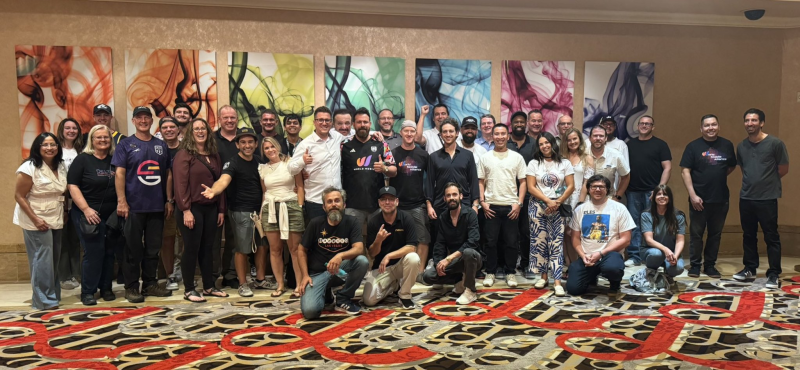
The World Mobile Alliance (WMA) has grown from a small community gathering into a major force within the World Mobile Network ecosystem. What started as a chance meeting at Rare Evo in Denver in 2022 has now transformed into an organized movement that actively supports and promotes World Mobile’s mission of decentralizing telecom infrastructure through blockchain technology.
We had the privilege to sit down with Rob and Clover Nodes of WMA to learn about the roots of the alliance and how community is the driving force of this ever-growing business. Here’s what we got:
The Birth of the World Mobile Alliance
The World Mobile Alliance came to life when a handful of passionate individuals discovered that Will Reid, a World Mobile team member, would be attending Rare Evo in Denver in 2022. Seeing this as an opportunity, a group of enthusiasts—including Clover, Rob, and others—organized an impromptu meetup by a waterfall, drawing 13 attendees who mostly held Earth Node reservations.
This was the first in-person gathering of community members planning to operate within the World Mobile Network. At the time, engagement with World Mobile was limited to occasional AMAs and promotional videos, leaving the community craving more interaction. The WMA quickly took matters into their own hands, organizing weekly Twitter Spaces and live streams, which became the backbone of a vibrant, growing community.
Expanding the Alliance
Encouraged by their initial success, the WMA pushed for greater involvement at Rare Evo 2023 in Denver. They lobbied the World Mobile team, securing a booth and a main-stage speech by Micky Watkins, World Mobile CEO. Their relentless advocacy ensured that the community had a place at the table, hosting dedicated meetups for Earth Node operators and fostering a deeper connection among supporters.
By Rare Evo 2024 in Las Vegas, the Alliance had cemented itself as a key player, running a booth gifted by the Rare Evo team. Recognizing their commitment and influence, World Mobile decided to hand over booth operations entirely to the Alliance, placing their trust in the community to represent the brand. The success of this collaboration has set the stage for an even bigger presence at Rare Evo 2025, marking the fourth consecutive year of WMA’s involvement.
Unprecedented Growth and Global Reach
The Alliance has experienced exponential growth, with attendance at meetups doubling or tripling each year. From the original 13 attendees, the numbers have skyrocketed, with projections indicating another doubling in 2025 as members from Europe, South America, and beyond join the movement.
A testament to World Mobile’s commitment to decentralization, the company has consistently empowered the community. Micky Watkins once observed Alliance members engaging attendees at a booth and later remarked, “You guys get it; we don’t even need to be here.” This confidence led to the WMA’s official role in hosting booths at major events, showcasing the depth of community expertise and dedication.
How the Community Can Get Involved
Participation in the World Mobile ecosystem extends beyond running booths. The Alliance is spearheading initiatives such as World Mobile Day at Rare Evo 2025, which will feature:
- Educational seminars
- Meetups for Earth Node operators, Air Node operators, and Hex Guardians
- Collaborations with projects like Minutes Network
- Networking opportunities to enhance adoption
Additionally, WMA continues to host weekly X Spaces and bi-weekly YouTube live streams, providing platforms for project discussions, discussing blockchain-based ventures, and the launch of the World Mobile Chain.
Understanding World Mobile’s Technology
World Mobile operates on a sharing economy model, incentivizing individuals to participate in telecom infrastructure rather than just subscribing to it. Here’s how:
- Earth Nodes: The blockchain backbone of the network, responsible for processing and storing data securely on-chain. Operators are rewarded in WTMX, the World Mobile cryptocurrency.
- Air Nodes: Physical broadcast devices that transmit the World Mobile network signal. Owners can host them locally or remotely, earning a share of network revenue.
- Hexes and Scanning: The world is divided into hexagonal coverage zones, and users can scan and map network availability using a mobile app, earning rewards while providing critical data for deployment.
By leveraging these technologies, World Mobile is building a decentralized, community-powered telecom network, rewarding those who contribute to its expansion.
The Road Ahead: Rare Evo 2025 and Beyond
As the Alliance prepares for Rare Evo 2025, they plan to make an even greater impact. The vision includes:
- World Mobile Day with panels, workshops, and networking events
- Expanding educational efforts on blockchain-based telecom solutions
- Engaging new markets and international communities
- Organizing social and networking events, ensuring strong community bonds
From just 13 individuals in 2022 to potentially over 200 dedicated members in 2025, the World Mobile Alliance has transformed from a grassroots initiative into an influential decentralized movement. As they say, “We’re here because of each other, and we’re bringing more people into the vision of a truly decentralized, community-run mobile network.”
For those looking to join the movement, follow @WorldMobilers on X for updates and engagement opportunities.
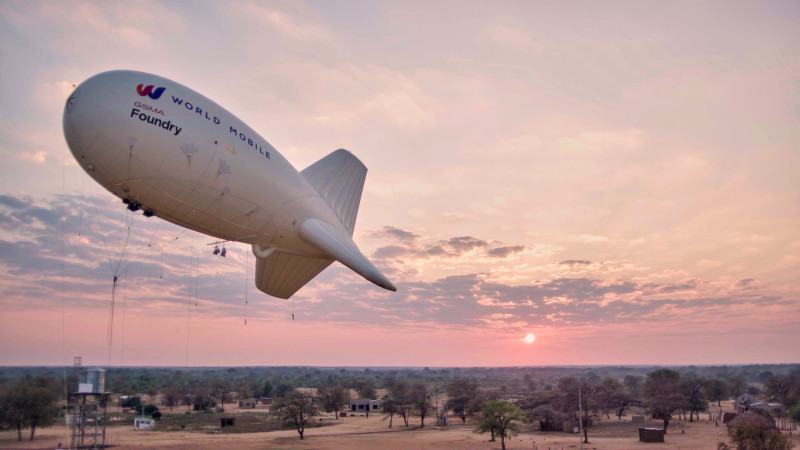
Bridging the Digital Divide: World Mobile Launches First Commercial Telecom Aerostat in Mozambique

In a world where digital connectivity has become synonymous with progress and opportunity, millions of individuals in rural areas still find themselves left behind by the digital divide. In Mozambique, a country with striking disparities in digital access, only 23 percent of the population had access to the internet in 2022. It's a shocking figure, especially considering that nearly 62 percent of Mozambique's residents live in rural areas. This glaring digital gap perpetuates inequalities in access to healthcare, education, and economic opportunities, trapping communities in a cycle of disadvantage.
The World Bank highlights that a significant portion of the unconnected population can't afford internet services or the devices required to access them. This digital exclusion is the result of various factors, including the concentration of infrastructure and resources in urban areas, limited access to electricity in rural regions, high costs associated with internet services and devices, and the unavailability of traditional telecom networks in remote locations.
However, a beacon of hope has emerged over the rural landscapes of Mozambique, quite literally. World Mobile Group, a visionary company, is determined to address the digital divide head-on. They're leveraging blockchain technology and a sharing economy model to provide accessible, affordable, and sustainable mobile network solutions. A recent milestone in this endeavor is the launch of a groundbreaking aerostat near the rural village of Massingir.
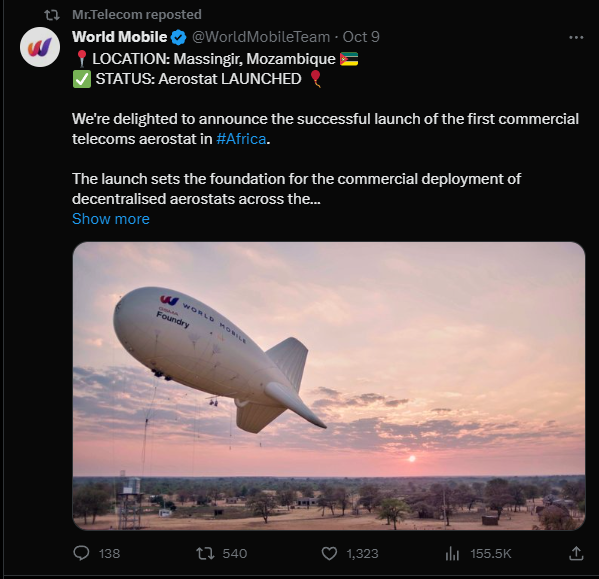
Micky Watkins, CEO of World Mobile, expresses the significance of this achievement, stating, "We are delighted to announce the launch of our first commercial aerostat in Mozambique, a landmark achievement for World Mobile, for Africa, and the rest of the world. Our vision is to connect everyone, everywhere while advocating for economic freedom and dignity. With our aerostats, we can profitably bring internet access to millions of people who have been left behind by the digital divide."
World Mobile's aerostats, tethered approximately 300 meters into the air, represent a new era of connectivity for rural communities. These airborne devices provide last-mile connectivity using a custom radio payload, enabling direct connections for internet-connected devices, much like traditional cell towers. What's truly remarkable is that aerostats offer standard cellular coverage over a vast radius of up to 130 kilometers, overcoming the usual challenges of difficult terrain, infrastructure limitations, and prohibitive costs that hinder the expansion of traditional mobile networks.
What sets World Mobile apart from conventional mobile network operators is its foundation on blockchain technology. This innovation imbues the network with unparalleled transparency, efficiency, and security. The immutable nature of blockchain ensures that data and transactions are tamper-proof, enhancing the integrity of the network.
Moreover, World Mobile's adoption of blockchain technology paves the way for a distributed sharing economy within the trillion-dollar global telecom market. Individuals and business owners worldwide can participate by operating nodes on the network, bringing their communities online, and earning revenue in the process. This model aligns with the ethos of blockchain, democratizing access and benefits.
World Mobile's mission is not confined to Mozambique alone; it resonates globally. By harnessing blockchain technology, they are pioneering a movement that transcends borders, connecting communities and uplifting lives. As rural landscapes evolve, powered by the gentle hum of aerostats and the robust security of blockchain, the digital divide narrows, and the promise of economic freedom and dignity becomes ever more attainable. World Mobile's vision is not just about connecting Mozambique; it's about connecting the world and bringing the light of opportunity to every corner, no matter how remote. Learn more about World Mobile - https://worldmobile.io/ Grab your early bird tickets to Rare Evo 2024! General Admission - $100 VIP - $400 These early bird prices will go up October 24th. VIP tickets will be airdropped our Rare Perks NFT! Purchase Tickets Here