#Crypto Banking
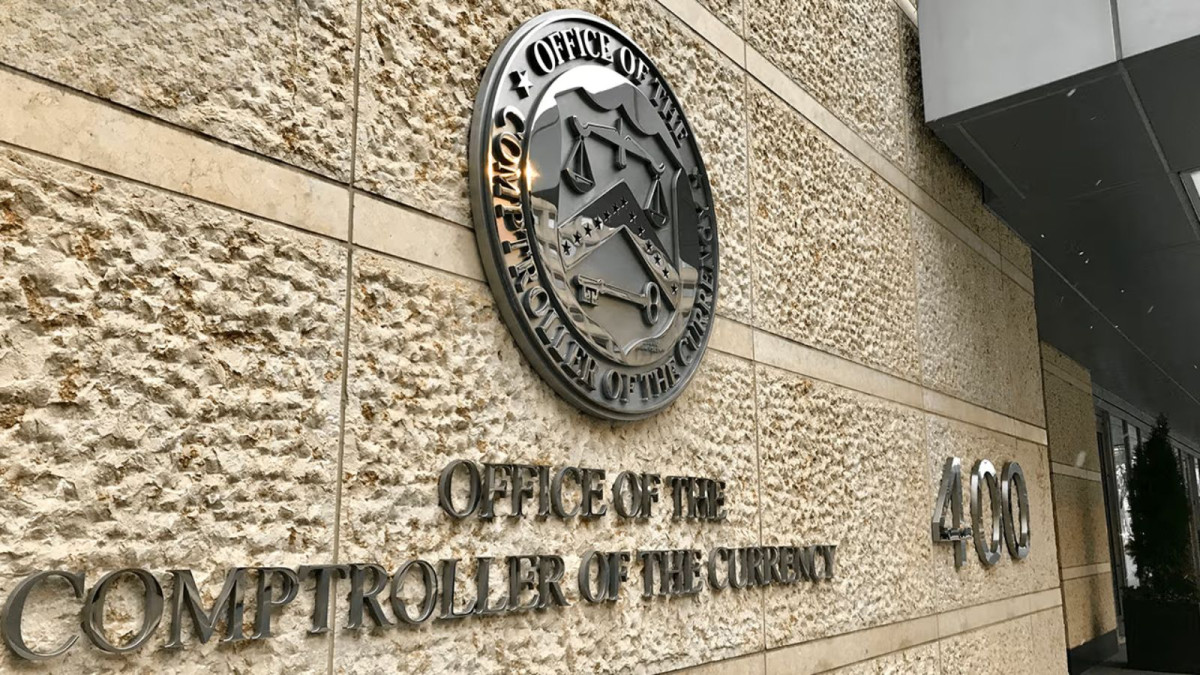
Block Files OCC Charter to Establish Crypto Custody Bank

Financial technology company Block Inc. has formally submitted an application to the Office of the Comptroller of the Currency (OCC) to establish Builders Bank & Trust, N.A. (“Builders Bank”), an uninsured national trust bank.
If approved, the charter will enable Block to operate as a federally regulated national trust bank under the supervision of the OCC, allowing it to provide fiduciary and custody services for digital assets such as Bitcoin and stablecoins.
“Combining Block’s digital asset expertise, our experience with Square Financial Services, and the deep banking expertise of our team, we believe Builders Bank is well positioned to support Block’s broader vision of economic empowerment,” said Lee Woolley, who is expected to serve as president and CEO of Builders Bank.
Although the charter will not allow Builders Bank to accept customer deposits or make loans like traditional banks, if approved, it will enable the bank to operate as an uninsured, non-deposit taking national trust bank under the OCC’s regulatory framework.
Block’s application comes at a time when several financial institutions have made similar filings with the OCC to establish national trust banks.
Just last month, digital asset infrastructure provider Zero Hash applied to establish a national trust bank focused exclusively on digital assets. The application followed similar filings by fintech firm Dakota, Catena, and Payward in preceding months.
President Trump-backed World Liberty Financial and Sony Bank also recently received conditional trust charters from the OCC to establish national trust banks, while stablecoin issuer Circle was granted a New York trust charter.
Kraken Gains Federal Reserve Master Account Access

The cryptocurrency industry crossed an important milestone this week after Kraken Financial secured access to a Federal Reserve master account. The approval allows the crypto company to connect directly to the U.S. central bank’s payment infrastructure, something that has historically been reserved for traditional banks.
For years, crypto firms have operated on the edges of the banking system, often relying on partner banks to move dollars between trading platforms and the broader financial network. Kraken’s approval changes that dynamic in a meaningful way. By gaining direct access to the Fed’s core payment rails, the company can settle transactions without depending on intermediaries.
While the decision does not give Kraken every privilege a commercial bank receives, it still marks one of the clearest signals yet that digital asset firms are beginning to integrate more deeply into the traditional financial system.
A Breakthrough for Crypto and Banking
Kraken’s banking subsidiary, Kraken Financial, reportedly received approval for a Federal Reserve master account that allows the firm to participate directly in the U.S. central bank’s payment infrastructure. That includes systems such as Fedwire, which processes large value payments between financial institutions across the country.
The ability to connect directly to Fedwire is significant. It means Kraken can move dollars through the same infrastructure used by banks, rather than relying on external banking partners to process deposits, withdrawals, or settlements.
For crypto exchanges, this has long been a major operational hurdle. Most platforms depend on third party banks to handle dollar transactions, which introduces additional delays, costs, and risk if banking relationships change.
Direct access removes several of those obstacles.
What a Federal Reserve Master Account Actually Means
A master account is essentially an institution’s primary account with the Federal Reserve. Banks use these accounts to settle payments with one another and to interact with the central bank’s financial infrastructure.
Institutions that hold master accounts can send and receive funds through the Federal Reserve’s payment networks. In practice, this allows them to move money across the financial system with high speed and reliability.
For traditional banks, this setup is standard. For crypto companies, it has historically been out of reach.
That gap has forced exchanges to rely on sponsor banks, which act as intermediaries between the crypto industry and the Federal Reserve’s systems.
Kraken’s approval suggests that the line separating digital asset firms from traditional financial institutions may be starting to blur.
Despite the milestone, Kraken’s access appears to be somewhat restricted compared with a typical bank’s relationship with the Federal Reserve.
Reports suggest the account functions as a limited or “skinny” master account. This type of account provides access to payment rails but does not necessarily include all the privileges commercial banks receive.
For example, Kraken would not be able to earn interest on reserves held at the Fed or access certain emergency lending facilities.
Still, the ability to connect directly to the payment system is what many crypto firms have been seeking. Even with limitations, the operational advantages are substantial.
Why Crypto Firms Have Been Pursuing Fed Access
The push for direct Federal Reserve connectivity has been building for several years.
Crypto companies have often struggled with inconsistent banking relationships. Some exchanges have seen partners abruptly end services during periods of regulatory pressure or market volatility.
These disruptions can cause delays in deposits and withdrawals, which frustrates users and creates liquidity challenges.
By securing a master account, a firm can remove much of that dependency on partner banks.
There are also practical benefits. Direct access can improve settlement speed, reduce transaction costs, and provide greater reliability when moving dollars between crypto markets and traditional finance.
Kraken has been positioning itself for this type of approval for years.
The company established Kraken Financial as a Wyoming chartered special purpose depository institution, a type of bank designed specifically for digital asset businesses. Wyoming created the SPDI framework to give crypto firms a regulated pathway into banking.
Unlike traditional banks, SPDIs are structured to hold customer deposits at full reserve while providing services tailored to digital assets.
Kraken’s banking subsidiary was among the earliest institutions to pursue this model, which helped place it in a stronger position to seek Federal Reserve access.
The company has also expanded its services well beyond basic crypto trading. Kraken now operates across multiple markets including derivatives, institutional trading, custody services, and tokenized assets.
That broader financial footprint likely helped support its case for deeper integration with the traditional financial system.
What This Could Mean For Crypto
Kraken’s approval may open the door for other crypto companies to pursue the same path.
If additional firms gain access to Federal Reserve payment systems, the impact could extend across several areas of the crypto market.
Institutional trading could become more efficient as dollars move faster between exchanges and financial institutions.
Crypto platforms may also become more attractive to large investors who require reliable settlement infrastructure before committing capital.
There could also be broader competitive effects. Exchanges that secure direct payment access may gain operational advantages over those still dependent on partner banks.
In the long term, these developments could accelerate the merging of crypto infrastructure with traditional financial systems.
For much of its history, the crypto industry operated largely outside the traditional banking system.
Exchanges often struggled to maintain stable banking relationships, and many financial institutions were reluctant to engage directly with digital asset businesses.
Kraken’s new level of access suggests that the landscape may be changing.
Direct connectivity to the Federal Reserve’s payment infrastructure represents one of the clearest signs yet that cryptocurrency companies are moving closer to the core of the financial system.
Whether other firms follow Kraken’s path remains to be seen, but the precedent has now been set.
Revolut Ditches Bank Buyout Plan, Goes All-In on Federal License Bet

Revolut has scrapped its plan to buy a U.S. bank, deciding instead to apply for a brand new federal banking license directly from the Office of the Comptroller of the Currency. It's a notable gamble that the regulatory winds have shifted enough under the Trump administration to make the slower, riskier path actually the faster one.
The pivot comes after Revolut apparently concluded that acquiring an existing American bank would take longer and create more headaches than originally expected. Sources familiar with the matter say the acquisition route would have forced the digital-only company into owning physical branches, which is basically the opposite of everything Revolut stands for. Not exactly ideal when your whole pitch is "banking on your phone, no branches needed."
Reading the regulatory tea leaves
Here's where it gets interesting. Revolut is clearly betting that the new administration's much friendlier stance toward fintech and crypto companies means they can actually get a de novo charter approved in a reasonable timeframe. That would have been borderline laughable just two years ago.
The OCC under Biden basically shut the door on crypto firms and fintechs looking for national bank charters. But things changed fast after Trump took office. By late 2025, the agency started conditionally approving charters for companies like Circle and Ripple, which would have been unthinkable under the previous regime. The regulatory floodgates didn't just open, they got ripped off the hinges.
So Revolut's calculation seems to be: why spend months or years trying to negotiate an acquisition, deal with integration nightmares, and inherit a bunch of branches we don't want, when we might be able to get a fresh charter approved faster than ever before?
The de novo difference
For those not deep in banking arcana, a de novo license means starting from scratch. You're building a new bank rather than buying an existing one. It's traditionally been the longer, harder path because regulators scrutinize new applications intensely.
But for a company like Revolut, it has some real advantages. They get to build exactly what they want without dealing with legacy systems, outdated tech stacks, or that branch in Des Moines that somehow still uses fax machines. Everything can be designed for mobile-first customers who expect instant everything.
The company already has experience running banks in other markets. They've held a European banking license since 2018 and got a restricted UK banking license in 2024. So it's not like they're starting completely fresh, they know how this game works.
Coming from a position of strength
Revolut isn't exactly limping into this application process. The company hit a $75 billion valuation in a secondary share sale back in November 2025, making it one of the most valuable private tech companies in Europe. That funding round pulled in heavy hitters like Coatue, Greenoaks, and even Nvidia's venture arm.
The financials back up the hype too. Revolut reported $4 billion in revenue for 2024, up 72% year over year. Pre-tax profit jumped 149% to $1.4 billion. They've got over 65 million users across 39 countries. These aren't struggling startup numbers, this is a company that's figured out how to grow profitably at scale.
Right now, Revolut operates in the U.S. through a partnership with Metropolitan Commercial Bank, which limits what they can offer. A full federal banking license would unlock deposit accounts, loans, overdraft protection, basically the full menu of services that would let them actually compete as a primary bank rather than a secondary account people use for travel.
Why the U.S. matters so much
The American market is the big prize that Revolut hasn't quite cracked yet. It's the world's largest financial market and arguably the toughest nut to crack for foreign fintechs. But the potential upside is massive.
U.S. consumers have shown they're willing to ditch traditional banks for digital alternatives. Chime has millions of customers. SoFi went public. There's clearly appetite for what Revolut does, they just need the regulatory approvals to do it properly.
The company calls itself "the world's first global financial superapp," which is the kind of ambitious branding you'd expect from a $75 billion fintech. But you can't really claim to be global if you're hamstrung in the U.S. market.
Part of a bigger push
The U.S. license application fits into Revolut's broader expansion blitz. They applied for a banking license in Peru in January 2026, their fifth market in Latin America after Mexico, Colombia, Argentina, and Brazil. They've also moved into India, got regulatory approval in the UAE, and announced a $1.1 billion investment in France over three years.
Latin America in particular seems ripe for disruption. In Peru, the top four banks control over 82% of total loans. That kind of concentration creates opportunities for newcomers, especially ones focused on remittances and cross-border payments where traditional banks tend to charge hefty fees.
The crypto angle
Revolut's crypto capabilities might actually help its case, which would have sounded absurd a few years ago. The company runs a crypto exchange called Revolut X and has a MiCA license from Cyprus to offer regulated crypto services across the European Economic Area.
Under Trump, the OCC has made clear that crypto activities are fair game for national banks, assuming they have proper risk controls. The agency issued multiple interpretive letters throughout 2025 clarifying that banks can do crypto custody, stablecoin activities, and participate in blockchain networks.
The GENIUS Act passed in July 2025 created a federal framework for payment stablecoins, requiring full reserve backing and putting federal banking regulators in charge of oversight. That kind of regulatory clarity is exactly what banks need to feel comfortable offering crypto services without worrying they'll get slapped down later.
So Revolut's crypto experience could actually be a selling point rather than a liability, depending on who's reviewing the application.
But it's not all smooth sailing
Revolut has some baggage to deal with. The company's customer service has been criticized pretty heavily, with some customers reporting major difficulties resolving fraud claims or getting help with account issues.
In 2023, Action Fraud in the UK received 10,000 reports of fraud naming Revolut, which was more than Barclays, one of Britain's biggest banks. Consumer organization Which? has warned people not to keep large amounts of money with Revolut, citing concerns about fraud reimbursement.
Those aren't the kind of headlines that make regulators eager to approve your banking license application. The OCC is going to want to see evidence that Revolut has seriously upgraded its consumer protection and customer support operations. A few bad reviews are one thing, but systematic problems with fraud response could sink the whole application.
What's next
Revolut confirmed it's exploring multiple paths for U.S. expansion but the de novo license is currently the priority. They haven't said when they'll formally submit the application or how long they expect the process to take.
The OCC typically aims to make decisions within 120 days of accepting an application, though that timeline can stretch depending on complexity. Given Revolut's size, international operations, and the breadth of services they want to offer, this probably won't be a quick rubber stamp approval.
Still, the recent approvals for crypto-focused companies suggest the regulatory environment is about as friendly as it's been in years. If there was ever a time to roll the dice on a de novo application, this is probably it.
Bigger picture for fintech
Revolut's strategic flip illustrates how quickly regulatory changes can reshape business strategy. Two years ago, every fintech was looking at acquisitions as the realistic path into U.S. banking. Now the calculus has completely reversed for some companies.
The Trump administration's lighter touch on fintech and crypto regulation has opened a window that might not stay open forever. Companies are rushing to get applications in while the getting's good. Whether this regulatory approach proves sustainable long-term is anyone's guess, but for now it's created opportunities that simply didn't exist under the previous administration.
For Revolut specifically, cracking the U.S. market is kind of the final boss level in their quest to become a truly global financial platform. They've got strong financials, solid user growth, and a regulatory environment that's actually receptive to innovation for once.
The next few months will show whether their bet on going the de novo route pays off, or if U.S. banking regulation proves too complex even for a $75 billion company to navigate smoothly. Either way, it's going to be an interesting case study in how fintechs approach regulatory strategy in an era of rapid political change.
One thing's for sure though: if Revolut pulls this off, expect every other major fintech to start reconsidering their U.S. market strategies too.