#Web3 Policy
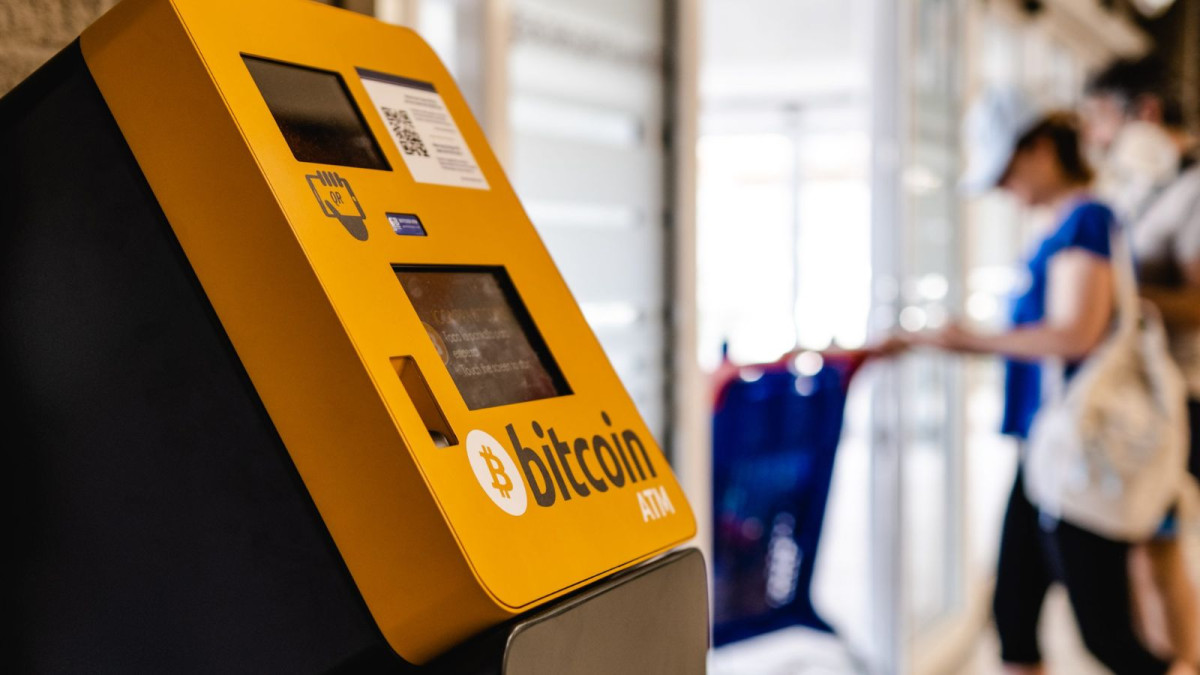
Tennessee Bans Crypto ATMs Statewide

Tennessee has placed a statewide ban on crypto ATMs, becoming the second state in the United States, after Indiana, to have outright banned crypto ATMs.
The ban on crypto ATMs in the state comes after Bill Lee, Tennessee’s governor, signed House Bill 2505 into law, following its unanimous approval by both the Tennessee House of Representatives and the Senate.
House Bill 2505, which has now been passed into the state’s legal code, prohibits the installation or operation of virtual currency kiosks, otherwise known as Bitcoin ATMs, in the state. Any violation of the law will be treated as a criminal offense classified as a Class A misdemeanor, with offenders facing up to one year in prison and a fine of $2,500.

Image credit: capitol.tn.gov
The law also treats business owners who allow these crypto ATMs to be hosted on their property as accomplices, making them liable under the same offense. Although the bill was signed into Tennessee’s legal code last Thursday, it will take effect on July 1.
Indiana First to Ban Crypto ATMs
Tennessee’s ban on crypto ATMs comes shortly after Indiana, which on March 9 signed House Enrolled Act 1116 (HEA 1116 into law, banning crypto ATMs in the state and becoming the first U.S. state to do so. The move was prompted by the high levels of fraud and widespread scams associated with crypto kiosks.According to FBI data, about $333 million was stolen through crypto kiosks in 2025 alone.
Prior to the ban, Indiana had nearly 900 crypto ATMs in operation. However, all of these machines were effectively deactivated immediately after Indiana Governor Mike Braun signed House Enrolled Act 1116 into law.
Tennessee Takes a Strong Stance on Prediction Markets
Tennessee has, for some time now, taken strong action against prediction market platforms, targeting operators such as Kalshi and Polymarket. In January of this year, the Tennessee Sports Wagering Council (SWC) issued cease and desist orders against major platforms including Polymarket, Kalshi, and Crypto.com, demanding that they stop offering sports event contracts in the state.
Kalshi, however, sued the state in the U.S. District Court for the Middle District of Tennessee and won a preliminary injunction. The ruling allowed Kalshi to continue operating in the state while the case proceeds.

New Bipartisan Senate Crypto Bill Targets Developer Liability

As the U.S. Senate pushes towards markup for the CLARITY Act, a new bipartisan push in the U.S. Senate is trying to answer another question that has come up again and again in crypto.
When does writing software turn into running a financial business?
At the center of the debate is a bill reintroduced by Senators Cynthia Lummis (R-WY) and Ron Wyden (D-OR) that aims to clarify when crypto developers, open-source maintainers, and infrastructure providers should, and should not, be treated as money transmitters under federal law. The proposal does not try to deregulate crypto wholesale. Instead, it tries to draw a hard line between publishing code and controlling user funds.
That distinction might sound obvious to engineers. To prosecutors, it has been anything but.
Why this suddenly matters so much
For years, the idea of “developer liability” lived mostly in white papers, legal panels, and late-night conference debates. That changed when U.S. authorities began testing aggressive theories that treat certain privacy tools and non-custodial software as unlicensed financial businesses.
Cases involving Tornado Cash and Samourai Wallet turned a theoretical concern into a real one. The message many developers heard was simple and chilling: if people use your software to move money, you might be responsible for how they use it, even if you never touched the funds yourself.
That fear has started to shape behavior. Some teams have shut down. Others have avoided building in the U.S. entirely. Many have quietly redesigned products to remove any feature that could be interpreted as “control.”
This Senate bill is a direct response to that climate.
The core idea: code is not custody
The proposal, often referred to as the Blockchain Regulatory Certainty Act, rests on a single principle. Developers and infrastructure providers should not be treated as money transmitters if they do not have custody of user assets and do not have the unilateral ability to move or control those assets.
In other words, liability should follow control, not authorship.
If you run an exchange, a broker, or a custodial wallet, this bill does nothing for you. You are still squarely in regulated territory. But if you publish open-source software, operate a node, maintain a wallet interface, or provide routing infrastructure without custody, the bill aims to put you outside money transmitter rules.
That matters because money transmitter classification is not a small thing. It can trigger state-by-state licensing, federal registration, AML obligations, and in some cases criminal exposure if regulators decide you crossed the line without permission.
Even if a developer ultimately wins in court, the cost and risk of getting there can be enough to stop innovation cold.
Why “control” is the battlefield
The word that does all the work in this bill is “control,” and that is exactly where the fight will be.
In clean cases, the distinction is easy. Exchanges custody funds. Non-custodial wallets do not. But crypto is full of gray areas.
Upgradeable smart contracts with admin keys. Front ends that can block addresses. Protocols with pause buttons. Governance structures that look decentralized on paper but concentrated in practice.
Regulators may argue that these forms of influence amount to control. Developers will argue they do not.
The Senate bill tries to anchor the definition to something narrow and concrete: the legal right or unilateral technical ability to move someone else’s assets. Whether that language survives negotiations intact is an open question.
How this fits into the broader crypto regulation fight
This developer liability push is happening alongside a much bigger legislative effort to overhaul U.S. crypto market structure more broadly. That larger framework aims to clarify which assets are securities, which are commodities, and which agencies oversee what.
What is becoming clear is that developer liability has become a quiet pressure point in those negotiations. Many lawmakers may be willing to compromise on market structure details, but fewer are comfortable backing a system that could criminalize software developers for publishing neutral tools.
In that sense, developer protections are no longer a niche issue. They are a prerequisite for passing broader crypto legislation at all.
What would change if this becomes law
If enacted, the bill would not end debates about crypto and compliance. But it would shift them.
First, it would give open-source developers and infrastructure providers a clearer legal lane, especially those building non-custodial systems.
Second, it would encourage business models that minimize custody by design. Expect more architectures that deliberately strip out admin powers, key control, and unilateral intervention.
Third, it would push regulators to focus enforcement elsewhere. Centralized onramps, custodians, stablecoin issuers, and brokers would remain the primary choke points for AML and sanctions policy.
That shift may frustrate some policymakers. It will reassure many builders.
The bigger question Congress is really answering
Strip away the legal language and the crypto politics, and this debate boils down to something fundamental.
Is publishing financial software more like writing code, or more like running a bank?
The Lummis-Wyden approach says it depends on whether you control the money. That principle is simple, intuitive, and easy to explain. The hard part will be writing it into law tightly enough to protect neutral builders without giving cover to businesses that function as intermediaries in everything but name.
That fight is just getting started.
Stay Connected
You can stay up to date on all News, Events, and Marketing of Rare Network, including Rare Evo: America’s Premier Blockchain Conference, happening July 28th-31st, 2026 at The ARIA Resort & Casino, by following our socials on X, LinkedIn, and YouTube.

The Cardano Constitution: Building a Decentralized Future in Buenos Aires
The Cardano Constitution: Building a Decentralized Future in Buenos Aires
The recent gathering in Buenos Aires marked a significant milestone for Cardano, as the global community came together to draft the Cardano Constitution—a framework poised to guide the ecosystem’s decentralized governance. This event was not merely about drafting a document; it was a celebration of the progress, collaboration, and shared vision that define the journey that is Cardano.
The End of the Beginning
“Welcome to the end of the beginning,” opened Charles Hoskinson, the founder of Cardano. His words resonated deeply with the audience, encapsulating the transition from an era of building foundational technologies to one focused on community-led governance. For over a decade, Cardano has evolved through distinct eras, each represented by phases like Byron, Shelley, Goguen, Basho, and Voltaire. With the technical roadmap largely complete, the baton has now been passed to the community to shape the future.
A Dream Realized
The gathering in Buenos Aires was symbolic. Flags from across the globe adorned the venue, representing the diverse nations that contribute to Cardano’s mission. Hoskinson’s reflections emphasized that behind every nation, every building, and every institution, there were founders—individuals who dared to dream and took action. Similarly, Cardano’s journey has been built on the dreams and efforts of its global community.
“It was a dream I had for a long time,” Hoskinson shared. “Everything in the world that we have—this building we stand in, the governments we live under, the languages we speak—had a founder. It came from somewhere, from some idea, big or small.”
Overcoming Challenges Together
Cardano’s evolution has not been without challenges. The past decade saw moments of triumph and setbacks. From the launch of smart contracts to navigating global crises like the COVID-19 pandemic and economic downturns, the ecosystem persevered. Hoskinson candidly reflected on the hurdles, acknowledging both the mistakes made and the lessons learned.
“The antidote to mistakes isn’t pity or deeper self-reflection,” he said. “It’s realizing that in something as complicated as this, the only way forward is to make it everybody’s problem.” This ethos underscores the importance of decentralized governance, where collective intelligence and collaboration drive progress.
The Cardano Constitution: A Collaborative Vision
The drafting of the Cardano Constitution is a pivotal step in the Voltaire era, which focuses on governance and sustainability. This document aims to provide a set of principles and rules that the community can adapt and evolve over time. Unlike traditional systems that rely on centralized decision-making, Cardano’s governance model is built on equality and inclusivity.
“Every person behind those flags could potentially be a person in our ecosystem,” Hoskinson noted. “And all that makes them special can be ours, can be part of this, and make us better.”
The Constitution is not just about establishing rules; it’s about fostering a culture of collaboration, accountability, and innovation. It serves as a reminder that governance is not static but a living, breathing process that evolves with the needs and aspirations of the community.
A Symbol for the Future
The Buenos Aires event highlighted the transformative potential of collective action. Hoskinson drew parallels to historic achievements, such as humanity’s journey from the Wright brothers’ first flight to landing on the moon. These milestones were achieved through collaboration and determination—qualities that define the Cardano community.
“We are truly the stewards of the future,” Hoskinson proclaimed. “If we don’t like the way the world works, we’re not going to complain about it; we’re just going to change it.”
The Road Ahead
While the drafting of the Constitution is a significant achievement, it is only the beginning. The next steps involve onboarding more members, addressing diverse perspectives, and ensuring that the governance model scales effectively. Hoskinson emphasized the importance of continuing this journey with inclusivity and dedication.
“My roadmap’s over; your roadmap has begun,” he concluded. “The Cardano community’s roadmap will be a reflection of the culture that is here and not yet represented. Together, we can keep moving forward and show the world what is possible.”
The Cardano Constitution is more than a document—it is a testament to the power of unity, resilience, and shared purpose. It is a blueprint for a decentralized future, driven by a community determined to make the world a better place.