#Blockchain Governance
A Ghost From Ethereum’s Past Is Becoming a $220 Million Security Fund

Nearly a decade after one of crypto’s most painful episodes, a large pool of forgotten Ether tied to TheDAO is being put back to work. This time, not as a risky experiment, but as a long-term security fund for Ethereum.
Roughly $220 million worth of ETH that has sat unclaimed since the infamous 2016 DAO hack is being transformed into a new, ecosystem-wide security endowment. The goal is simple on paper: fund audits, tools, research, and emergency response efforts that help keep Ethereum and its users safe.
From Crisis to Capital
To understand why this matters, you have to go back to TheDAO itself.
In early 2016, TheDAO was pitched as a radical idea. A decentralized venture fund governed entirely by code and token holders. It quickly became the biggest crowdfunding event crypto had ever seen, pulling in millions of Ether from participants around the world.
Then it broke.
A flaw in the smart contract allowed an attacker to drain a massive portion of the funds. Panic followed. Debates erupted. And eventually, Ethereum hard-forked to reverse the damage, a decision that permanently split the network and created Ethereum Classic.
What was left behind were fragments of that original system. Contracts that never got emptied. ETH that was never claimed. Funds that, for years, were largely ignored.
Now they are coming back into focus.
Where the Money Comes From
The new security fund is built from two main pools of ETH left over from TheDAO era.
The largest portion comes from what is known as the ExtraBalance contract. This Ether was left behind during the original refund process, largely due to overpayments and technical quirks. Today, that balance adds up to more than 70,000 ETH, worth over $200 million at current prices.
Most of that ETH will not be spent outright. Instead, the majority is expected to be staked, generating yield that can fund security work year after year. That turns a one-time windfall into something closer to an endowment.
The second pool is smaller but more immediately usable. Around 4,600 ETH sits in old curator-related wallets connected to TheDAO. Those funds are expected to be deployed more directly toward grants and security initiatives.
Together, they form one of the largest dedicated security funds the Ethereum ecosystem has ever seen.
What the Fund Will Actually Do
Ethereum has no shortage of capital, but security spending has often been fragmented. This fund is meant to change that.
The focus is broad by design. Audits for major protocols. Funding for security tooling and infrastructure. Support for incident response teams when exploits happen. Research into emerging risks across layer 2 networks, wallets, and user-facing applications.
There is also an emphasis on user protection, things like phishing detection, transaction safety tools, and services that help everyday users avoid costly mistakes.
Some of the money will likely go to well-known security firms. Some will go to smaller, community-driven projects that quietly do important work but struggle to secure consistent funding.
Governance, DAO-Style
In a nod to TheDAO’s original vision, the fund will not operate like a traditional foundation grant program.
Instead, distribution is expected to lean heavily on decentralized governance mechanisms. Quadratic funding, retroactive grants, and community voting will all play a role. The idea is to reward impact, not just proposals, and to let a broad set of stakeholders help decide where the money goes.
The Ethereum Foundation will still be involved, particularly in setting guardrails and defining what qualifies as security work. But the ambition is to keep decision-making as open and participatory as possible.
Why This Matters Now
Ethereum is no longer an experimental network. It secures hundreds of billions of dollars in value across DeFi, NFTs, stablecoins, and layer 2 systems. With that scale comes constant pressure from attackers.
Exploits today are faster, more complex, and often more damaging. At the same time, public funding for security work tends to lag behind growth. This fund helps close that gap.
It also reflects a broader shift in how the Ethereum community thinks about risk. Security is no longer something you bolt on at the end. It is infrastructure.
The Bottom Line
There is something poetic about this moment. I love how they are taking one of Ethereum's darkest moments and turning it in to a security fund to try to ensure that something like this would never happen again.
TheDAO hack forced Ethereum to confront its own limits
It exposed the dangers of unaudited code and untested governance. It shaped how the ecosystem thinks about security to this day.
Turning the remnants of that failure into a permanent security fund feels like closing a loop. A way of acknowledging the past without being defined by it.
If the fund works as intended, one of crypto’s earliest disasters may end up funding its future resilience.
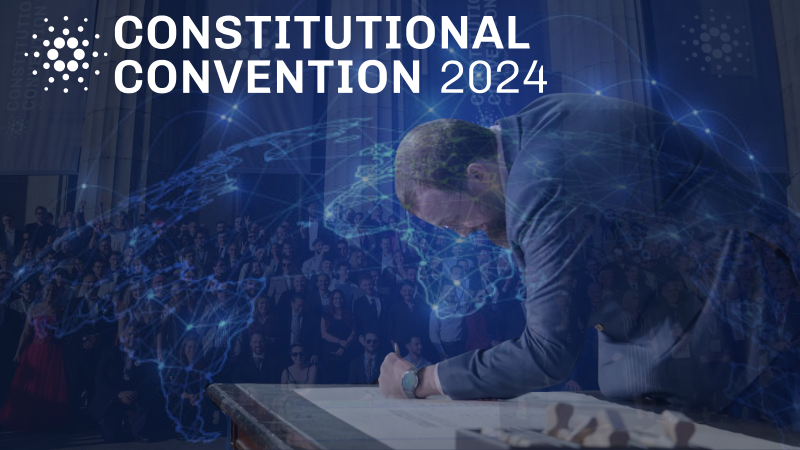
The Cardano Constitution: Building a Decentralized Future in Buenos Aires
The Cardano Constitution: Building a Decentralized Future in Buenos Aires
The recent gathering in Buenos Aires marked a significant milestone for Cardano, as the global community came together to draft the Cardano Constitution—a framework poised to guide the ecosystem’s decentralized governance. This event was not merely about drafting a document; it was a celebration of the progress, collaboration, and shared vision that define the journey that is Cardano.
The End of the Beginning
“Welcome to the end of the beginning,” opened Charles Hoskinson, the founder of Cardano. His words resonated deeply with the audience, encapsulating the transition from an era of building foundational technologies to one focused on community-led governance. For over a decade, Cardano has evolved through distinct eras, each represented by phases like Byron, Shelley, Goguen, Basho, and Voltaire. With the technical roadmap largely complete, the baton has now been passed to the community to shape the future.
A Dream Realized
The gathering in Buenos Aires was symbolic. Flags from across the globe adorned the venue, representing the diverse nations that contribute to Cardano’s mission. Hoskinson’s reflections emphasized that behind every nation, every building, and every institution, there were founders—individuals who dared to dream and took action. Similarly, Cardano’s journey has been built on the dreams and efforts of its global community.
“It was a dream I had for a long time,” Hoskinson shared. “Everything in the world that we have—this building we stand in, the governments we live under, the languages we speak—had a founder. It came from somewhere, from some idea, big or small.”
Overcoming Challenges Together
Cardano’s evolution has not been without challenges. The past decade saw moments of triumph and setbacks. From the launch of smart contracts to navigating global crises like the COVID-19 pandemic and economic downturns, the ecosystem persevered. Hoskinson candidly reflected on the hurdles, acknowledging both the mistakes made and the lessons learned.
“The antidote to mistakes isn’t pity or deeper self-reflection,” he said. “It’s realizing that in something as complicated as this, the only way forward is to make it everybody’s problem.” This ethos underscores the importance of decentralized governance, where collective intelligence and collaboration drive progress.
The Cardano Constitution: A Collaborative Vision
The drafting of the Cardano Constitution is a pivotal step in the Voltaire era, which focuses on governance and sustainability. This document aims to provide a set of principles and rules that the community can adapt and evolve over time. Unlike traditional systems that rely on centralized decision-making, Cardano’s governance model is built on equality and inclusivity.
“Every person behind those flags could potentially be a person in our ecosystem,” Hoskinson noted. “And all that makes them special can be ours, can be part of this, and make us better.”
The Constitution is not just about establishing rules; it’s about fostering a culture of collaboration, accountability, and innovation. It serves as a reminder that governance is not static but a living, breathing process that evolves with the needs and aspirations of the community.
A Symbol for the Future
The Buenos Aires event highlighted the transformative potential of collective action. Hoskinson drew parallels to historic achievements, such as humanity’s journey from the Wright brothers’ first flight to landing on the moon. These milestones were achieved through collaboration and determination—qualities that define the Cardano community.
“We are truly the stewards of the future,” Hoskinson proclaimed. “If we don’t like the way the world works, we’re not going to complain about it; we’re just going to change it.”
The Road Ahead
While the drafting of the Constitution is a significant achievement, it is only the beginning. The next steps involve onboarding more members, addressing diverse perspectives, and ensuring that the governance model scales effectively. Hoskinson emphasized the importance of continuing this journey with inclusivity and dedication.
“My roadmap’s over; your roadmap has begun,” he concluded. “The Cardano community’s roadmap will be a reflection of the culture that is here and not yet represented. Together, we can keep moving forward and show the world what is possible.”
The Cardano Constitution is more than a document—it is a testament to the power of unity, resilience, and shared purpose. It is a blueprint for a decentralized future, driven by a community determined to make the world a better place.